This post contains affiliate links. We may earn a small commission when you buy through our links — at no extra cost to you.
Aquarium wood looks like decoration, but it’s doing real work: breaking up sightlines, giving shy fish somewhere to duck behind, and growing the biofilm that shrimp graze on all day. The trouble is that plenty of what’s sold as driftwood is a mystery — pieces that never sink, shed fibers for weeks, or tint the whole tank brown. I once weighed a piece down with rocks for the better part of a month before admitting it wasn’t going to sink. We’ve spent five months soaking and sinking 14 pieces, and the gap between good and cheap shows up fast.
A good piece fixes all of that at once: dense enough to sink on its own, sized to fit the tank you actually have, and clean enough that the water clears within a week or two. What nobody tells a first-time buyer is that "driftwood" isn’t one material — spider wood, mopani, and cholla behave completely differently in water, and picking the wrong one for your setup is the usual reason people give up on wood entirely. The picks below are the ones I’d put in my own tanks, sorted by what each does best.
Our Top Picks
The Best Aquarium Wood, Reviewed
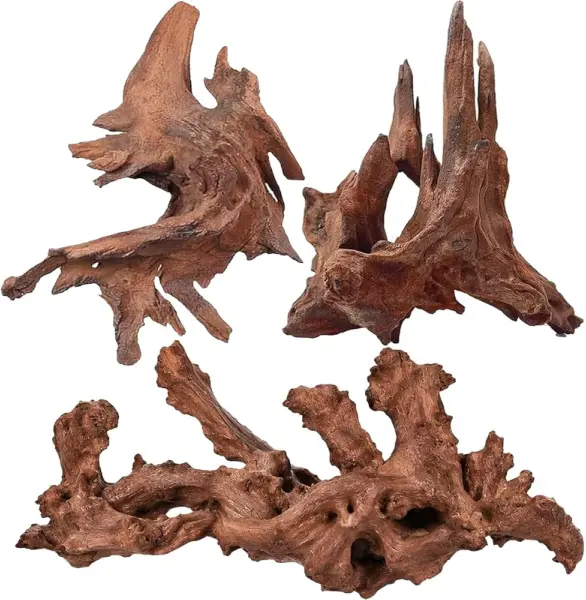
Jorewood Mopani Driftwood 7-11 in (3 Pack) – Best Overall
Key Features
- Tank size: 20+ gallons
- Wood type: Mopani
- Piece size: 7 to 11 in
- Pieces per pack: 3
- Price: Midrange
Aquarium wood has one dependable disappointment: the piece that turns up is smaller than the one in the photo. This Jorewood set is our top pick because it is the pack where that complaint barely surfaces, with three mopani pieces that run the full 7 to 11 inches, enough wood to build a scape around in a 20-gallon or larger. The looks hold up too, with twisted branch shapes that come close to the product images, and the value ranks near the top of this group for three dense pieces.
What we appreciate most is how little fiddling the shapes need. Several pieces carry a clean flat cut on one side, so they stand on their own instead of leaning in a rock cradle, and the branches give you obvious places to tie an anubias or a clump of moss. Dense mopani also earns its keep as structure: a cave a fish can sit behind rather than a token arch. Expect to soak and weight the pieces before they stay down; the pre-boiled claim helps, and a rock on top helps more.
Mopani holds together in water far better than the thin cholla alternatives here, which matters if you do not want to re-scape next spring. Color is the one split, since some pieces tint the water for weeks and others barely do, so soak and change the water before it goes in and run carbon if you want the tank clear by the weekend.
Pros
- Pieces arrive close to the 7-to-11-inch range
- Flat cuts let pieces stand without a cradle
- Dense mopani builds real caves and structure
Cons
We recommend this set as the default for a 20-gallon tank or bigger, because the pieces actually arrive at the length printed on the label.
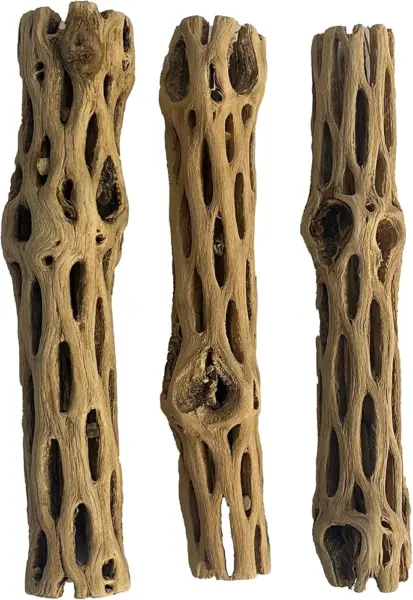
Awesome Aquatic Cholla Wood Tube 6 in (3 Pack) – Best for Shrimp Tanks
Key Features
- Finish: Naturally dried, untreated
- Wood type: Hollow cholla tube
- Piece size: 6 in
- Pieces per pack: 3
- Price: Budget
Drop one of these 6-inch cholla tubes into a shrimp tank and the colony reorganizes around it. The hollow core collects biofilm, which is what shrimp are actually grazing for, and the tube gives them somewhere to cling and pick at it, near the top of this group for shrimp appeal. Cholla is also the least fussy wood to place, because a tube sits where you put it.
Six inches is a useful length in a 20-gallon shrimp tank and still fits a small one, and three tubes give you options: stacked like logs, laid lengthwise, or stood on end as a column for moss. The wood is naturally dried and untreated, thorn-free, with no added fertilizer or pesticide, which matters more for invertebrates than for fish. The end openings are small enough that shrimp slip inside while larger snails stay out, a useful piece of sizing for a shrimp-only setup.
The water picks up color until the tubes have had a proper soak; that is normal for natural cholla and fixable with a bucket and a week of patience. Otherwise there is little to manage, with no moving parts and no upkeep beyond an occasional rinse to clear the hollow core.
Pros
- Hollow tubes collect biofilm shrimp graze
- Untreated, thorn-free, naturally dried wood
- Three 6-inch tubes stack or stand upright
Cons
- Thin walls can split or crumble
For a shrimp tank, buy the hollow tubes: 6 inches of cholla gives a colony somewhere to graze and hide, and it draws the liveliest response of anything here.
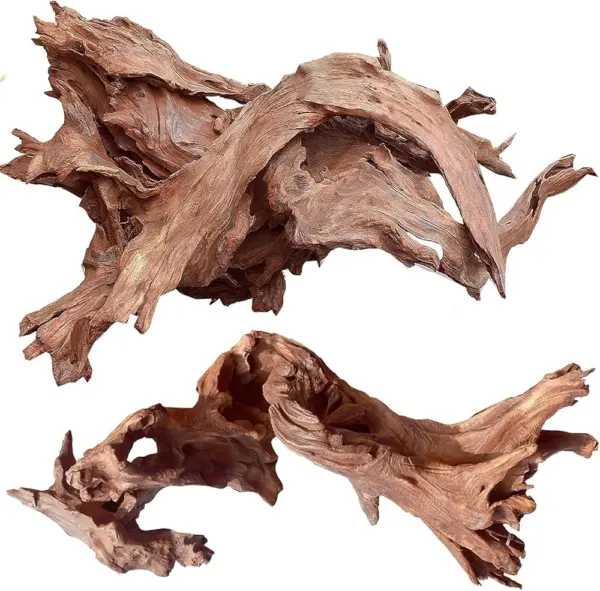
Jorewood Mopani Driftwood 10-14 in (2 Pack) – Best Centerpiece for Large Tanks
Key Features
- Tank size: 20+ gallons
- Wood type: Mopani
- Piece size: 10 to 14 in
- Pieces per pack: 2
- Price: Premium
Two pieces, 10 to 14 inches each. That answers a problem that never shows up in product photos: in a 55-gallon or a 120, a 6-inch branch disappears. These are trunks, thick mopani with twisted grain, big enough to anchor the middle of a large tank and give fish a real cave to sit behind. The 7-to-11-inch Jorewood pack is the sensible buy for a 20-gallon; this one is for the tank where small wood reads as clutter.
We rate the look highly. Size is the most consistently positive thing about the pack, with appearance and material close behind, and nothing else here fills space the way these two do. What we don’t love is the waterlogging: two thick trunks float hard, and the bigger the piece the longer it takes, so plan on a bucket and a weight or anchor them under slate from day one.
Pros
- Two 10-to-14-inch trunks fill a large tank
- Thick twisted grain looks like a centerpiece
- Material and finish close to the photos
Cons
- Only two pieces, so layout options are limited
Our pick for a big tank: mopani trunks this size hold the middle of a 55 or larger instead of disappearing behind the plants.
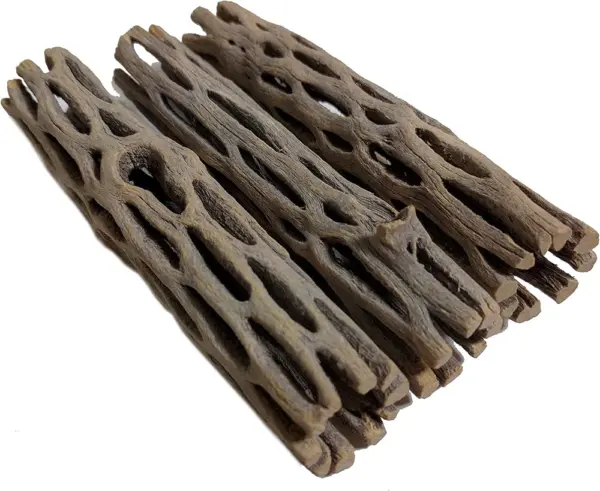
SoShrimp Cholla Wood 4 in (3 Pack) – Best Budget Cholla
Key Features
- Care: Rinse, boil, soak, position
- Wood type: Hollow cholla tube
- Piece size: 4 in
- Pieces per pack: 3
- Price: Budget
The least expensive wood here, and it still gets the important parts right: three hollow 4-inch cholla tubes, near the top of this group for both looks and the way shrimp take to them.
Four inches is short, and that is the point in a 5- or 10-gallon tank, where a couple of tubes give shrimp a hide and a grazing surface without eating the whole footprint. The hollow core does the same work as the longer cholla above: biofilm collects inside, shrimp pick at it, and the tube doubles as cover at molting time. Small fish that wander in are the one thing to watch, so a shrimp-first tank is the natural home for these.
They float until waterlogged, and a light 4-inch tube is easy to lose to the surface, so weigh it or wedge it under a stone for the first week or two. Lengths vary more than the label suggests, with some tubes well under 4 inches, so buy the pack for the count rather than one specific size.
Pros
- Three 4-inch tubes fit nano shrimp tanks
- Hollow core grows biofilm shrimp graze
- Lowest price of the woods here
Cons
- 4-inch tubes are lost in tanks over 10 gallons
The nano shrimp tank answer: three short hollow tubes, the least expensive wood here, and still the first thing shrimp head for.
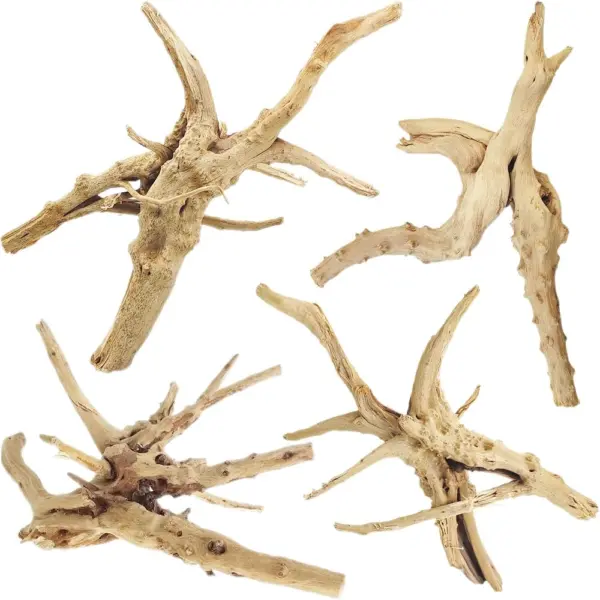
Tfwadmx Spider Wood 6-8 in (4 Pack) – Best for Branching Scapes
Key Features
- Sinking: Soak to sink
- Wood type: Spider wood
- Piece size: 6 to 8 in
- Pieces per pack: 4
- Price: Midrange
Spider wood earns its name from the fine, twisting branches, and that is what makes it the most interesting wood in this group to scape with, and the fussiest to prepare. The thin limbs give you somewhere to tuck rhizome plants and moss, and the shape reads as roots spreading into the substrate rather than a log dropped in the tank.
Four pieces, 6 to 8 inches, rainforest-grown and sold as low maintenance. Value is strong for the piece count and the wood quality ranks among the better ones here; four pieces also let you spread wood across two small tanks or build one dense thicket instead of a single feature. In the tank the thin branches pick up a fuzz of algae that shrimp and small fish graze, which is half the point of branchy wood.
Buy this one for the shape, not the tape measure. Boil it, expect some color in the water for the first weeks, and run a finger along the thin ends, since branch tips turn up splintered and a minute with fine sandpaper saves a long-finned fish a real problem. Where the mopani picks give you structure, this gives you detail.
Pros
- Fine branches suit moss and rhizome plants
- Four pieces cover two small tanks
- Strong value for the piece count
Cons
- Pieces often run shorter than the listed 6 to 8 inches
Buy this one for the branching shape rather than the measurements: four pieces of spider wood that look like roots once you sand the tips.
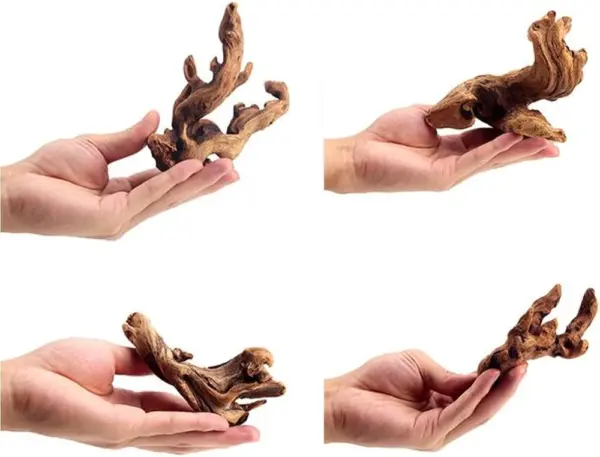
YZHZOM Small Driftwood 4-6 in (4 Pack) – Best for Nano Tanks
Key Features
- Prep: Boil, then soak 1-2 weeks
- Wood type: Driftwood
- Piece size: 4 to 6 in
- Pieces per pack: 4
- Price: Midrange
Four pieces between 4 and 6 inches is the right shape of purchase for a nano or a 10-gallon tank, because you get enough wood to build a small scape out of several pieces instead of forcing one branch to do everything. We think size is the strongest thing about this pack: the pieces land close to what the label says, which is not a given in this category.
They do the two jobs a small tank asks for, hiding spots for shrimp and something to tie a rhizome plant onto, and the smaller pieces are easy to wedge between stones. The wood itself is plainer than the mopani and spider wood picks, with less grain, fewer dramatic twists, and the odd piece that is basically a straight stick.
Prep is the real cost. Soaking is what keeps the wood down and the water clear, and it is the step most people skip; a bucket and a daily change of water does the job while you set the rest of the tank up.
Pros
- Four 4-to-6-inch pieces suit nano tanks
- Sizes land close to the listing
- Creates hiding spots for shrimp and fry
Cons
- Boiling and soaking take one to two weeks
A sensible nano-tank buy: four small pieces that measure close to the label, provided you boil and soak them first.
How We Chose and Tested the Best Aquarium Wood
We gathered every piece of aquarium wood we could find from large pet retailers, aquascaping specialists, and the budget bags of branches sold by the handful, then cut the list down by material honesty (does the listing actually say what the wood is?), listed dimensions, and whether customer reviews mentioned the two problems that ruin a purchase: wood that won’t sink and wood that dyes the water brown. Fourteen pieces made the cut, from small cholla tubes to larger mopani showpieces.
Each piece went into a ten-gallon tub of dechlorinated water and was weighed down with slate for as long as it took to sink on its own. Some went down in three days; one took nearly four weeks, and that spread alone told us plenty about density. We photographed every tub against a white background each week to track how dark the water turned, scrubbed each piece with a soft brush to see how much grit and loose fiber came off, and measured every piece against its listing once it was dry enough to handle.
Then the wood moved into real tanks with neocaridina shrimp and a few small plecos, where we watched how quickly shrimp found each piece and whether the surface grew the biofilm they graze on. Over five months we checked for soft spots, splinters, and rot, and built each piece into a hardscape to see whether it stayed put when we siphoned around it or a fish bumped it. Value came down to usable inches — how much of a piece was actually displayable after trimming — rather than the price on the tag.
How to Choose Aquarium Wood
Buy wood for the tank you already have, because the branch that looks generous on a white background can vanish once it is in a 55-gallon.
Match the piece to the tank, not the photo
The size range on a listing is the most honest thing you get. Pieces of 4 to 6 inches suit a nano or a 10-gallon; 7 to 11 inches make sense from about 20 gallons up; 10-to-14-inch trunks belong in a 55 or larger, where a small branch reads as debris. The trap is judging by the photograph, where a single piece is shot close on white and a 6-inch branch is roughly hand length. If you’re furnishing a small tank, buy for the number of pieces rather than the biggest length in the range.
Pick the wood type for the job
Cholla is a hollow cactus skeleton: thin-walled, full of openings, and the best invertebrate furniture you can buy, because shrimp graze the biofilm that forms inside it. It is also the shortest-lived of the three. Mopani is dense and heavy, twists into trunks and caves, and holds its structure in water far longer. Spider wood is all fine branching, ideal for tying rhizomes and moss, and the most likely to arrive splintered.
Choose by the job rather than the look. A shrimp tank wants cholla, a community tank wants mopani structure, a planted scape wants spider wood detail, and plenty of tanks use two of the three.
Every piece floats at first
New wood is buoyant until water fills its cells, and the bigger the piece the longer that takes. Boiling speeds it up; a rock or a piece of slate holds a piece down from day one. A pre-boiled claim on a listing is a head start, not a guarantee, so treat any wood as something to soak. While it sits in the bucket, run a finger along the edges and sand the sharp tips. A few minutes with sandpaper is the difference between spider wood that is fine with a betta and one that shreds fins.
Tannins and tea-colored water
Tannins are the wood’s own compounds, and they tint water brown; how much you get varies by piece and by wood type. They are not a hazard for most fish, and blackwater keepers pay for the effect, but they will flatten a planted tank’s clarity for weeks. Boil, soak and change the water daily to cut them down, and run carbon if you want the tint gone faster. Judge a piece after a month, not after a day.
Frequently Asked Questions
Can I use a piece of wood I found outside in my aquarium?
No. Wild wood can carry pesticides, lawn treatments, hitchhiking snails and rot that only shows up months later, and most softwoods break down quickly underwater. The rule we use is simple: if you cannot name the tree and where it grew, it does not go in the tank. Buy wood sold for aquarium use and spend the money instead.
Is cholla wood safe with fish in the tank?
Usually, with one caveat. Cholla tubes are open at both ends, and small fish or fry can swim inside and get stuck, because the openings are sized for shrimp rather than for a curious betta. Block the ends with a scrap of filter sponge or a dab of aquarium-safe silicone, or keep cholla in a shrimp-only setup. Shrimp and snails use it without any trouble.
How long does aquarium wood last before it needs replacing?
Longer than most decor, but not forever. Thin-walled cholla softens first and can split or crumble, while dense mopani and spider wood hold their structure far longer. Pull a piece out at water-change time and press it: if it crumbles, smells foul or sheds fibers, replace it. A white film in the first weeks is usually harmless biofilm that clears on its own.
Final Verdict
For most tanks, buy the Jorewood mopani three-pack. The pieces arrive at the length on the label, they hold their shape in water, and three 7-to-11-inch branches are enough to scape a 20-gallon without a second order.
Change one requirement and the answer changes. If the tank is built around shrimp, take the Awesome Aquatic cholla, where the hollow tubes do more for invertebrates than any branch here. If you are filling a 55 or larger, the two big Jorewood trunks claim space that smaller wood cannot.