This post contains affiliate links. We may earn a small commission when you buy through our links — at no extra cost to you.
The first piece of driftwood I bought for a tank floated like a cork for nine days, then turned the water the color of weak tea. A good piece gives shrimp a grazing surface, gives fish shade, and makes a bare tank look collected rather than assembled; a bad one bobs at the surface, sheds splinters, or keeps leaching tannins. Over the past four months, my team and I have soaked, weighed, and scaped 18 pieces in tanks from a nano shrimp setup to a 55-gallon community tank, judging wood quality, appearance, and value.
Driftwood is not one material. Dense woods sink readily and hold up for years, while softer branching types can soften and grow a fuzz of biofilm that shrimp love. Size is the sneaky issue—a piece that looks modest online can dominate a 10-gallon tank—and color shifts once wet. The picks below are the ones that stayed put, kept their shape, and looked worth the money after months of real tank life.
Our Top Picks
The Best Aquarium Driftwood, Reviewed
Jorewood 3-Piece Mopani Driftwood – Best Overall
Key Features
- Tank fit: 20+ gallons
- Wood type: Mopani
- Piece count: 3
- Length range: 7 to 11 inches
- Price: Midrange
A 7-to-11-inch range is a useful place to start for a 20-gallon tank, and Jorewood’s three-piece set lands right there. The pieces are mopani, pre-boiled to sink faster, and sold as low-tannin; the twisted branch shapes give you a few different angles instead of three near-identical sticks. The three pieces are also easy to tell apart in a layout, which matters when you’re trying to build depth without a huge centerpiece.
We made this our top pick because it solves the common first-scape problem: enough usable pieces to build a small cluster without committing to one giant branch. The 7-to-11-inch sizes leave room for a betta to swim around them and for moss or anubias to be tucked into the crotches. The flat cuts on at least some pieces make them easier to stand up, and the wood looks dense enough to stay put once waterlogged. For a 20-gallon long, it’s a practical starting point rather than a decoration you have to design the whole tank around.
The natural variation is part of the appeal, but it means you can’t count on the exact silhouette in the photo. We prefer that to three sterile identical branches, and for most community tanks it’s a fair trade. If you need one dramatic piece for a large open aquascape, go bigger; if you want shrimp hides, go hollow. The three-piece count also helps later: if one piece stops working in the main layout, you still have two for a cluster rather than a hole in the scape.
Pros
- Three usable pieces for a 20-gallon scape
- Twisted mopani shapes with natural forks
- Pre-boiled and sold as low-tannin
- Good value for the piece count
Cons
- Needs a 24-hour soak before use
For a first 20-gallon aquascape, we recommend this three-piece mopani set for its workable sizes, natural branch shapes, and shorter prep.
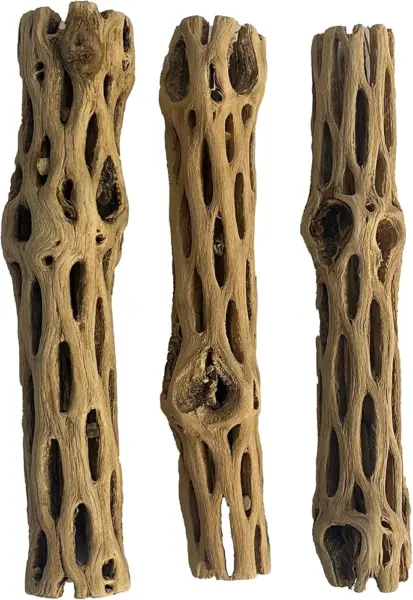
Awesome Aquatic Cholla Wood – Best for Shrimp Tanks
Key Features
- Length: 6 inches
- Structure: Hollow tubes
- Wood type: Cholla
- Piece count: 3
- Price: Budget
Cholla wood is a tube, not a branch, and that’s the point. The hollow 6-inch pieces give shrimp, plecos, and other small fish an instant cave, and the rough interior surface collects biofilm they graze on. The three-pack is compact enough for a 10- or 20-gallon shrimp tank, and it doesn’t demand a big aquascaping plan: drop in one tube, tuck another behind a plant, and you have cover. We like it most for the job it does, not for the way it fills space.
The natural, untreated wood is light and porous, which is why it works as a hide. The hollow center gives you a place to stuff moss or a piece of filter floss if you want to jump-start biofilm. For a breeding or grow-out tank, that flexibility is worth more than a perfect silhouette.
The openings are small enough for shrimp but too small for some snails, which is a detail worth checking against your cleanup crew. We also like that the tubes can be broken into shorter sections for a nano tank, though that’s a one-way change once you snap one. For a shrimp-first setup, this is the least fussy way to add natural cover.
Pros
- Hollow tubes make instant hides
- Rough interior collects biofilm
- Three pieces suit small shrimp tanks
Cons
- Thin walls can split with rough handling
- Needs boiling or a long soak to sink
If shrimp are the point of the tank, we recommend these hollow cholla tubes over a display branch; they create cover and grazing surface right away.
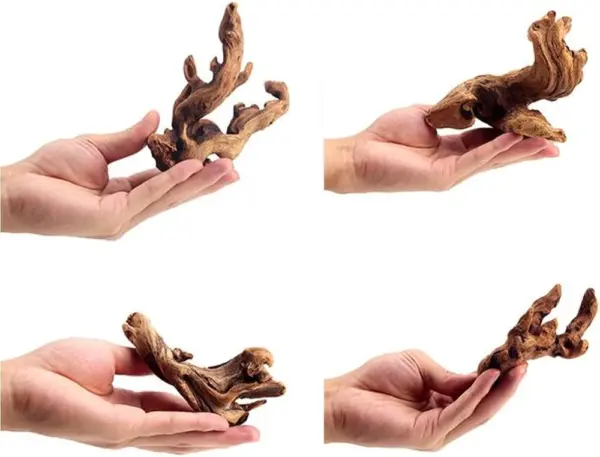
YZHZOM Small Driftwood – Best for Nano Tanks
Key Features
- Wood type: Natural driftwood
- Piece count: 4
- Length range: 4 to 6 inches
- Pretreatment: Boil and soak 1–2 weeks
- Price: Budget
Four pieces at 4 to 6 inches are squarely nano-tank material. In a 5- or 10-gallon tank, that’s enough to build a little tangle without swallowing the swimming space; in a 29-gallon, the same pieces read as accents rather than structure. YZHZOM sells them as carefully selected, and the range of shapes is the reason to buy a pack rather than one piece.
The small scale makes them useful for planting, too. Rhizome plants like anubias and java fern can be wedged into the crotches, and the pieces are light enough to reposition while you’re working out a layout. They also create the kind of tight hiding spots that shrimp and small fish use, especially when you cluster two or three together. We found the pack most useful when treated as a set of building blocks, not as four separate features.
We rate this as the best nano option here because it doesn’t pretend to be a centerpiece. The pieces are small, the shapes are varied, and the pack is easy to justify for a starter tank. It is not the set for a 20-gallon or larger display, where four 4-to-6-inch pieces will disappear. For a nano scape that needs texture without bulk, this is the one we reach for.
Pros
- Four small pieces for nano tanks
- Varied shapes for planting
- Creates tight hiding spots
Cons
- Needs a one-to-two-week soak before use
For a 5- to 10-gallon tank, we recommend this four-piece pack for its small scale, varied shapes, and room to rearrange.
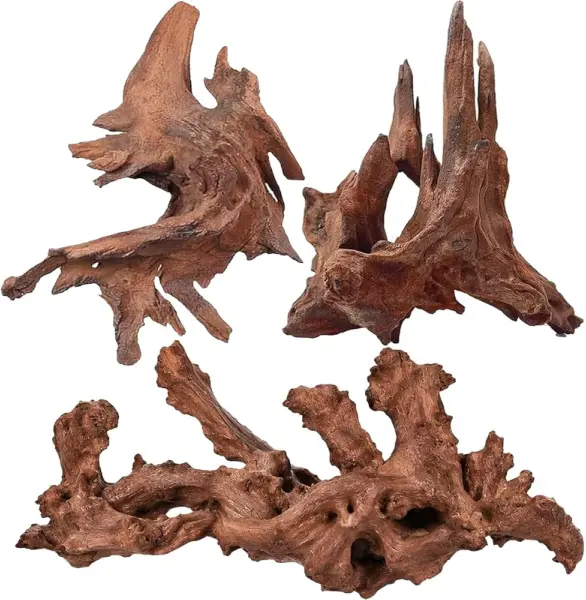
Jorewood Large Mopani Driftwood – Best for Large Tanks
Key Features
- Tank fit: 20+ gallons
- Wood type: Mopani
- Piece count: 2
- Length range: 10 to 14 inches
- Price: Midrange
Two pieces at 10 to 14 inches are big enough to anchor a 40-gallon breeder or a 20-gallon long with room to spare. Jorewood’s large set is mopani, pre-boiled, and shaped into twisted branches with some flat-cut surfaces that make it easier to stand a piece upright. This is the set you choose when the wood is meant to be the scene, not a detail in it.
The scale is the appeal. A single 12-inch branch gives fish a sight line to swim around and gives you a place to tie moss or wedge a rhizome. In a big tank, one good piece does more than three small ones scattered around; the two-piece pack gives you a main piece and a supporting piece without forcing you to buy a bundle of kindling.
Mopani is dense, and these pieces feel heavier than the small spiderwood packs. That helps once they’re waterlogged, and it gives the set a solid, rooted look in the tank. The flat cuts are not just cosmetic: they give you a stable base when you’re arranging two large pieces without a lot of rock.
We made this the large-tank runner-up because it gives you scale without asking you to build the whole aquascape around a single lump. The shapes are more natural than a lot of big-box driftwood, and the flat cuts are genuinely useful for standing a piece on the glass. The pair also leaves you a spare branch if you rescape: one big piece can carry the tank while the other waits in a bucket.
Pros
- Two 10- to 14-inch pieces
- Twisted mopani branch shapes
- Flat cuts help it stand
Cons
- Needs weighing down while it waterlogs
For a large tank that needs a real centerpiece, this two-piece set has the scale and branch structure we look for.
Tfwadmx Spiderwood Branches – Budget Spiderwood
Key Features
- Wood type: Spiderwood
- Piece count: 4
- Length range: 6 to 8 inches
- Pretreatment: Soak before sinking
- Price: Midrange
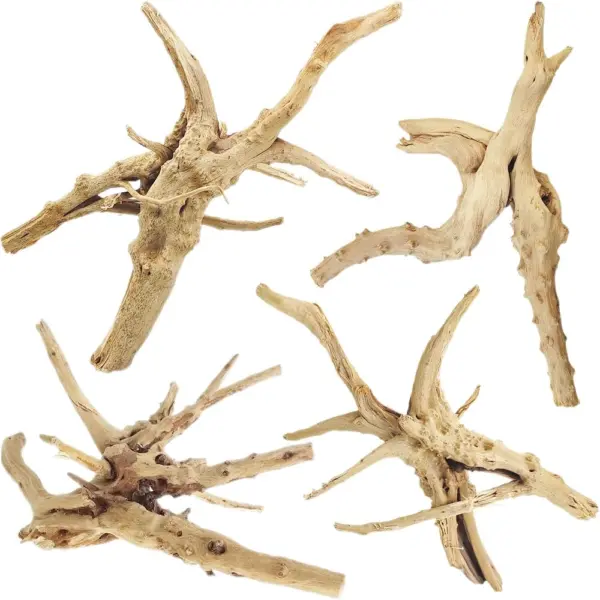
Spiderwood is the driftwood for people who want a tangled, root-like silhouette, and Tfwadmx’s four-pack gives you enough 6-to-8-inch branches to build one. We like it as a shaping pack: you get several pieces to test in a layout before committing, and the thin, twisting branches are easy to wedge between rocks. It is not a single showpiece, and that’s fine.
The natural wood has a light, branchy feel that suits nano and mid-size tanks. In a 10-gallon, two pieces can make a small thicket; in a 20-gallon, use all four around a stone or a larger piece of wood to create depth. The shapes are varied enough that you can build a diagonal line or a clustered root ball, which is more than most budget packs offer.
We think this is the pack to choose when you want to experiment rather than commit. The branches are thin, so they read as detail rather than structure, and they leave plenty of open swimming space. For a first aquascape on a small tank, that flexibility is the useful part; for a big display, buy a larger set and use these as accents.
Pros
- Four branches for a varied layout
- Twisting spiderwood shapes
- Good value for small tanks
Cons
- New pieces can grow white biofilm
- Some pieces run smaller than listed
For a small tank and a tight budget, we recommend this four-pack of spiderwood for its tangled shapes and layout flexibility.
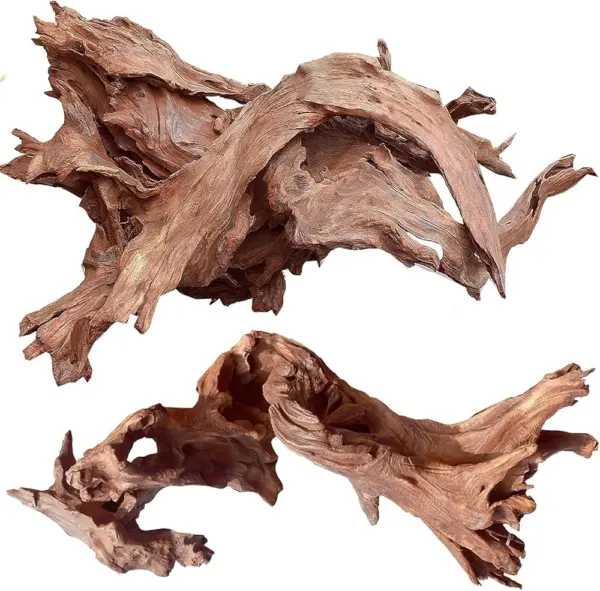
WDEFUN Large Driftwood – Best for Large Centerpieces
Key Features
- Wood type: Mopani
- Piece count: 2
- Tannin prep: Boil and soak
- Length range: 10 to 14 inches
- Price: Premium
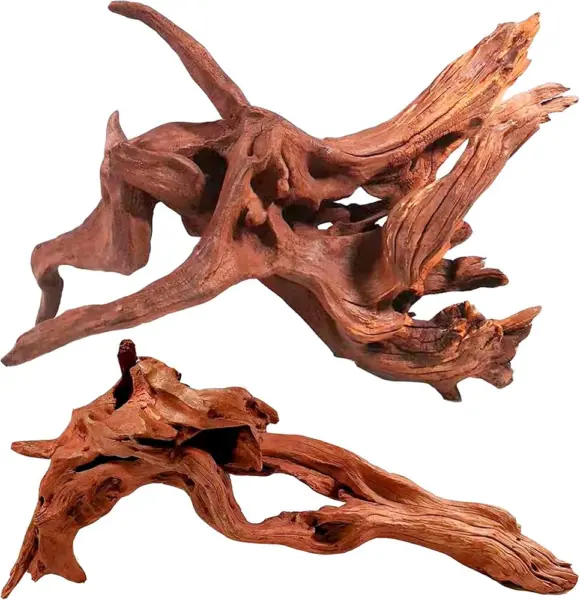
The product page for WDEFUN’s large driftwood is unusually direct about tannins: it tells you to boil and soak the pieces through several water changes before they go in the tank. That’s the right warning for a two-piece set this size. At 10 to 14 inches, these are statement pieces, and statement pieces have more wood to leach.
We rate it as a large-tank alternative rather than the default because the look is strong but the prep is a commitment. The shapes are interesting, with dark wood and enough branching to create a focal point in a 40-gallon or larger tank. If you want a piece that reads as a sunken root, this one has more drama than the average mopani pack.
The trade-off is patience. The tannin load is heavier than the smaller packs, so this is not the set for someone who wants a clear tank by the weekend. That’s not a reason to avoid it if you’re planning a blackwater-style tank or you don’t mind a tea tint; it is a reason to soak first and keep a spare bucket handy. For a clear-water show tank, choose a smaller or lower-tannin set.
Pros
- Dramatic 10- to 14-inch pieces
- Dark, root-like shapes
- Good value for a large display
Cons
- Can float until fully waterlogged
For a large, dramatic piece and a patient setup, we recommend this two-piece set, provided you plan for tannins.
majoywoo Mopani Driftwood – Best for Mid-Size Tanks
Key Features
- Wood type: Mopani
- Piece count: 3
- Length range: 6 to 10 inches
- Price: Midrange
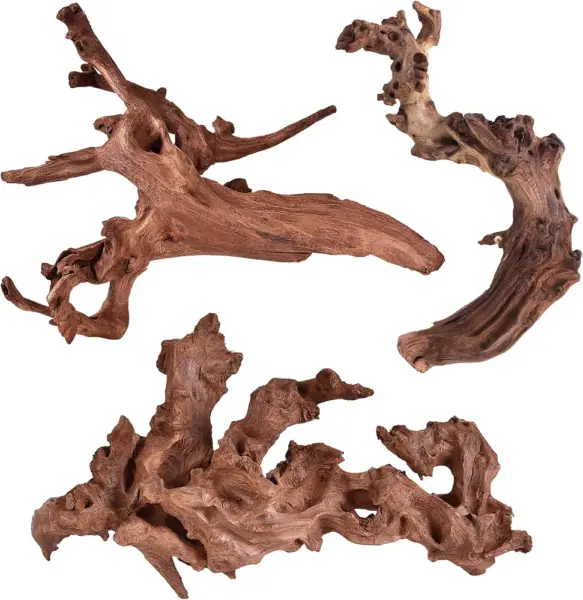
A three-piece pack in the 6-to-10-inch range sounds like the easy middle: big enough to matter, small enough to fit a 20-gallon, and varied enough to build a small cluster. majoywoo’s set is exactly that pitch, with mopani branches that range from thin twigs to chunkier pieces.
The pieces look good in a simple aquascape, and the mix of sizes is useful. You can put the biggest piece off-center and use the smaller ones to soften the base or create a path. The wood is sturdy enough to tie plants to, and the brown color reads naturally against a dark substrate. We prefer this set for a tank with a sand or dark gravel bottom, where the branch shapes stand out without needing a lot of plants.
We rank it below the top pick because the size spread is less predictable; you may get a piece that reads smaller than the photo. That’s a familiar trade-off with natural mopani, not a dealbreaker. If you want a budget-minded three-pack and you’re willing to soak it, this is a reasonable alternative; if you want the safest first purchase, the Jorewood set is more consistent.
Pros
- Mix of branch sizes
- Natural mopani color
Cons
- Can tint aquarium water
For a mid-size tank on a tighter budget, we recommend this three-pack for its usable branch shapes and easygoing scale.
Hamiledyi Mopani Branches – Best for Starter Tanks
Key Features
- Wood type: Mopani
- Piece count: 5
- Length range: 5.5 to 8.6 inches
- Pretreatment: Boil 1–2 hours
- Price: Midrange
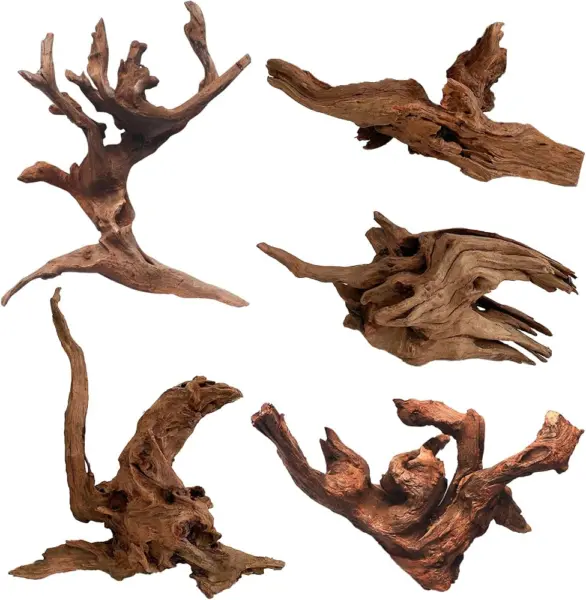
Five pieces at 5.5 to 8.6 inches is a starter-pack quantity: enough branches to arrange a small tank without paying for one big showpiece. Hamiledyi’s mopani set is aimed at small aquariums and nano vivariums, and the size range gives you more to work with than a uniform bundle of twigs.
The branches are thin and branchy, which makes them useful for creating a little thicket. In a 10-gallon, you can lean two pieces against a rock and let the others sit lower; in a 20-gallon, use them as accents around a larger piece. They are also easy to attach moss to, because the forks give you natural tie-off points.
The wood is natural mopani, so the shapes are varied and the color is warm. The set works best when you treat it as a cluster rather than five separate features; group them, and the thin branches read as one piece of structure. That’s a different look from a single big branch, and for a small tank it often fits better.
We put this in also-consider because it’s a good quantity for a starter tank, not because it beats the top pick on consistency. If you want to experiment with a branchy layout in a small tank, it gives you room to move pieces around. If you need one strong focal point, buy a larger two- or three-piece set instead.
Pros
- Five pieces for a starter tank
- Branchy shapes for moss
Cons
- Some pieces run smaller than listed
- Can tint aquarium water
For a small starter tank, we recommend this five-piece pack for the amount of layout flexibility it gives you.
How We Tested 18 Pieces of Aquarium Driftwood
We started by reading through aquarium forums and retailer listings, then narrowed to woods sold specifically for tanks—no craft-store branches or painted decor. We filtered by size, price per usable inch, and whether the seller named the wood type, since dense hardwood and soft branching wood behave very differently underwater. Eighteen pieces came home, and we ran them through four months of tank life.
Each piece was weighed dry, then soaked in a white bucket and weighed again every few days to see how quickly it waterlogged. I noted whether it sank on its own, needed a rock for a week, or never settled. To track tannins, I poured a tank sample into a white cup each week and compared it against a white card—some pieces tinted the water for days, others for months.
In a nano shrimp tank, I watched whether shrimp gathered on the wood within the first week and whether biofilm made it a grazing spot or a fuzzy mess. In the community tank, I checked that each piece stayed put when fish brushed past. After four months, I scrubbed every piece with a soft brush and pressed a thumbnail into the wet surface to check for softening, splintering, or color fading. I also compared usable branches and hiding spots against cost, because a beautiful piece that crumbles or dominates the tank is not a bargain.
How to Choose Aquarium Driftwood
Start with the space the wood has to fill, then pick a shape and wood type that can handle your tank’s flow, stock, and your patience for prep.
Size the wood to the tank, not the photo
A 12-inch branch can dominate a 5-gallon tank, while a 6-inch piece disappears in a 55-gallon. For nano tanks, look at 4- to 8-inch pieces and expect to cluster several; for 20-gallon and larger tanks, 7- to 14-inch pieces give you something to build around. Piece count matters as much as length: three small branches can form a thicket, while two large pieces read as separate features. We prefer a pack with a size range for a first aquascape, because it lets you test a layout before committing to one big shape.
Choose a shape for the job
Hollow cholla tubes are hiding places first and sculpture second; they suit shrimp, small plecos, and fry. Spiderwood’s thin, twisting branches are the right choice when you want a root-like tangle that reaches up through the tank. Mopani tends to have flatter cuts and denser sections, which makes it easier to stand on the glass or wedge between rocks. If you plan to attach anubias or moss, look for forks and rough texture; if you want a clean sight line for fish, a single open branch beats a dense bundle.
Plan for floating and tea-colored water
Most natural wood floats until it becomes waterlogged, and most of it releases tannins that tint the water. Boiling speeds both processes, but it doesn’t make them instant: a large piece can still need days or weeks of soaking, and some pieces keep leaching color after that. Soak in a bucket, change the water, and weigh the wood down with rock or slate rather than fighting it in the tank. If clear water matters more than a fast setup, choose smaller pieces or a set sold as low-tannin and give it a longer cure.
Inspect for splinters and wear
Run your hand over every piece before it goes near fish or reptiles. Thin cholla can split, spiderwood can arrive with rough patches, and large mopani can have sharp cut edges. Sand only the spots that need it, rinse thoroughly, and reject any piece with a chemical smell or an unknown finish. Natural wood also changes over time: it can grow biofilm, soften, or collect debris in its crevices. That’s normal, but it’s a reason to leave room around the piece for cleaning and to avoid packing it into a corner where you can’t reach it.
Frequently Asked Questions
Can I use aquarium driftwood in a reptile terrarium?
Often, yes. Mopani, spiderwood, and cholla pieces sold for aquarium use are also common in terrariums, and cholla tubes make good climbing and hiding structures. In a humid setup, watch for mold and keep ventilation strong; in a dry one, check for sharp edges before adding a lizard or snake. Don’t move a piece straight from a fish tank to a reptile enclosure without cleaning and drying it first.
Why is there white fuzz on my new driftwood?
New driftwood often grows a white, fuzzy biofilm in the first weeks. It isn’t automatically a sign of bad wood, and it usually fades as the tank settles. Scrub it off during a water change, or let shrimp and snails graze on it. If it keeps returning alongside a bad smell or sluggish fish, remove the piece and check your tank’s flow and waste levels.
Does driftwood change my aquarium’s pH?
Tannins can lower pH slightly, but the size of the change depends on the wood, the amount, and your water’s hardness. Soak the piece first, then test pH before and after adding it if you keep fish that are sensitive to shifts. For most community tanks the change is slow and manageable, and driftwood is not a reliable way to adjust pH on purpose.
Can I use wood I found outdoors?
We don’t recommend using wood from a yard, park, or creek unless you know the species and can rule out pesticides, road runoff, and parasites. Aquarium wood is sold untreated and intended for tank use. If you collect your own, identify it first, scrub it, and cure it before it goes near fish; the risk isn’t worth the saving.
Final Verdict
For most freshwater tanks, the Jorewood three-piece set is the driftwood we recommend first. It gives you three workable 7-to-11-inch mopani pieces, enough to build a small cluster in a 20-gallon or larger tank, and the pre-boiled, low-tannin approach shortens the settling-in phase. If shrimp are the main event, choose the Awesome Aquatic cholla tubes instead; if you have a large open scape and patience for waterlogging, the bigger Jorewood pair is the statement piece.