This post contains affiliate links. We may earn a small commission when you buy through our links — at no extra cost to you.
Most low-tech aquarium plant listings promise ‘easy’ growth, but the real challenge isn’t the plant itself—it’s matching the right species to your tank’s conditions and your tolerance for surprises like snail hitchhikers or temporary melt.
A single plant that outgrows its spot or a bundle that arrives with dead leaves can quickly turn an exciting start into a frustrating one. The difference between success and failure often comes down to choosing a proven species for your tank size, light, and water flow.
This guide breaks down the trade-offs between variety bundles and single-species packs, focusing on the plants that consistently perform in low-light, no-CO2 setups—so you can get green leaves without guesswork.
Top Picks
Best for Beginner Starter Bundle
Big Pete’s Java Fern + Anubias Bundle

Rating: 4.3 ★ | Price: $ | Plant Type: Rhizomatous (Java Fern, Anubias) | Light Requirement: Low light | Size at Purchase: Small-medium | Quantity: 2 plants
Java fern and anubias are two of the most forgiving freshwater plants for low-light, no-CO2 setups. Both grow from a rhizome that attaches to wood or rock instead of being buried in substrate, which eliminates one of the common beginner mistakes. Getting both species in one order costs less than buying them separately, giving a new tank instant variety without the usual guesswork.
Plants may arrive smaller than the listing photos suggest, but they are healthy and establish quickly under consistent care. Occasional snail hitchhikers have been noted — a tradeoff common with many tank-raised plants that is manageable with a quick inspection before adding to the aquarium.
This bundle suits new aquarists stocking a 10–30 gallon low-tech tank who want two species that forgive missed water changes and low light. Experienced hobbyists looking for large, mature specimens or a specific foreground or background plant will find the arrival size underwhelming and may prefer individual, larger orders.
Pros
- Two classic low-tech species in one affordable bundle
- Thrives in low light and no CO2, forgiving of beginner mistakes
- Attaches to hardscape — no burying needed, reduces planting errors
- Widely praised for surviving inconsistent care and poor water conditions
Cons
- Plants can arrive smaller than the photos suggest, requiring patience to grow out
- Occasional snail hitchhikers may appear; worth inspecting before adding to tank
For a new aquarist on a budget, this bundle delivers two hardy species that survive beginner mistakes — just keep expectations modest on arrival size.
Best for Tall Background Plant
Marcus Fish Tanks Amazon Sword 3-Pack

Rating: 4.6 ★ | Price: $$ | Plant Type: Rooted (Amazon Sword) | Light Requirement: Low to moderate | Size at Purchase: 7–12 inches | Quantity: 3 plants
The Marcus Fish Tanks Amazon Sword 3-pack delivers large, well-rooted plants that quickly grow into a dense backdrop. Unlike compact foreground species like the top pick’s Java fern, these swords need vertical and horizontal room — ideal for 20-gallon aquariums and larger. Buyers should expect some leaf melt during transition and the occasional snail hitchhiker; neither is a permanent issue but worth planning for.
This bundle suits low-tech beginners who want a fast-growing, tall plant without CO2 or high light. The three swords offer immediate size and strong root systems that anchor easily. For keepers who can’t risk snails or prefer a slower-growing plant, the top pick’s anubias is a safer alternative. Snail removal before planting and trimming melted leaves are simple tasks worth the visual payoff.
Pros
- Healthy, well-rooted plants with vibrant green leaves
- Three large, established swords at a mid-range price
- Low-maintenance growth in low-tech setups
Cons
- Possible bladder snail hitchhikers requiring inspection before planting
- Leaves may melt temporarily during acclimation to new water parameters
For low-tech hobbyists with a 20-gallon or larger tank who value tall greenery and don’t mind minor setup hiccups, this three-pack is a reliable, cost-effective background solution.
Best for Hardy Low-Tech Staple
AquaLeaf Java Fern Bare Root

Rating: 4.2 ★ | Price: $ | Plant Type: Rhizome (Java Fern) | Light Requirement: Low light | Size at Purchase: Up to 10 inches | Quantity: 1 plant
This Java fern’s resilience in low light without CO2 is one of its strongest draws – it can survive conditions that would melt many other species. Compared to the top pick bundle, which includes a second plant and more consistent sizing, this bare-root fern trades predictability for a lower price and the freedom to attach it exactly where you want.
This plant suits beginners and aquascapers who want to attach plants to wood or rock and don’t need instant lush coverage. However, the size upon arrival can be small, and the condition isn’t guaranteed – some specimens arrive damaged or melt after introduction. Buyers should be prepared for possible disappointment in appearance and allow time for recovery.
Pros
- Thrives in very low light without CO2 or added fertilizer.
- Can be tied or glued to wood and rock – the rhizome must stay above substrate.
- One of the most forgiving freshwater plants, ideal for first-time planted tank owners.
Cons
- Arrival condition can vary – plants may arrive with damaged leaves or melt within the first weeks.
- Individual plants can be smaller than expected for the price, making a lush look a longer wait.
For low-tech tank owners who value resilience over guaranteed size, this Java fern is a classic choice – just buy with realistic expectations about the plant you’ll receive.
Best for Unique Textured Accent
SubstrateSource Anubias Barteri Wrinkle Leaf
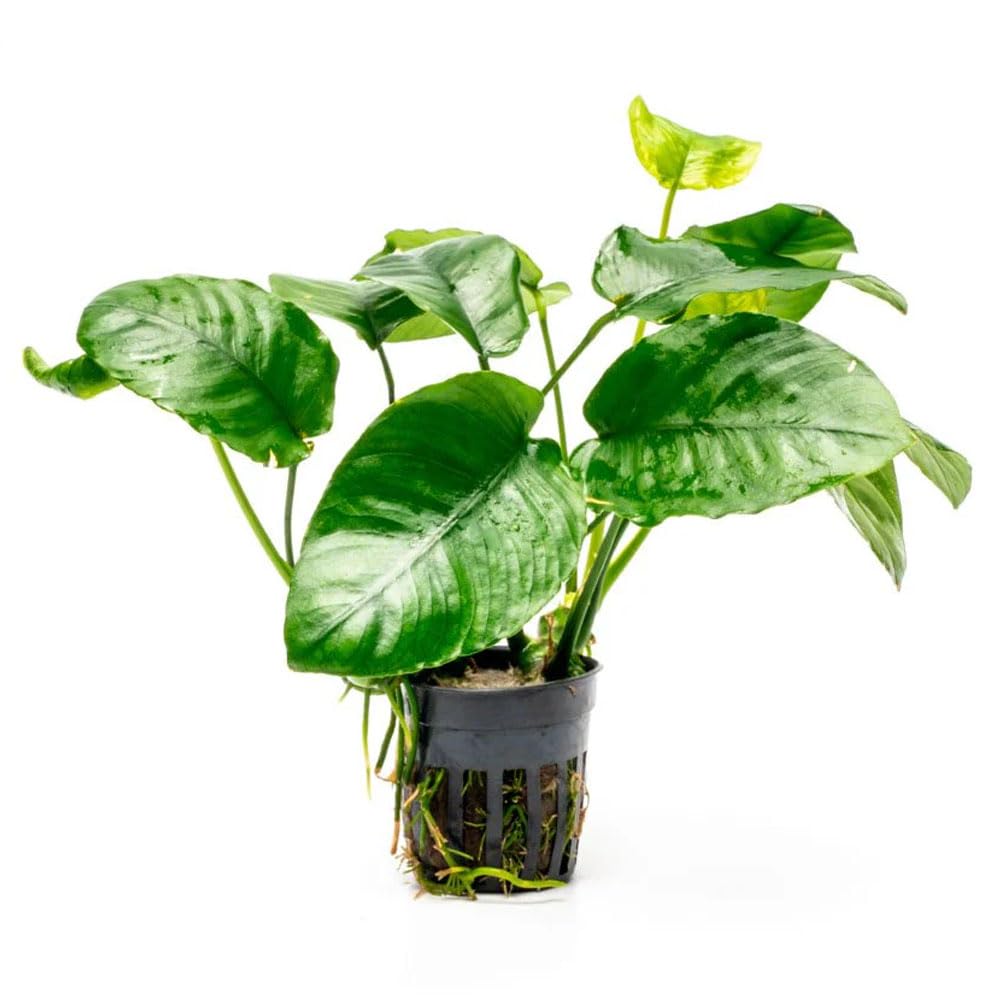
Rating: 4.5 ★ | Price: $$ | Plant Type: Rhizome (Anubias) | Light Requirement: Low light | Size at Purchase: 4–6 inches | Quantity: 1 pot
SubstrateSource’s Anubias Barteri Wrinkle Leaf arrives consistently healthy — a fact borne out by every recorded customer comment on plant condition. The leaves emerge a uniform deep green with a puckered, almost crinkled surface that immediately sets it apart from the smooth-leaved anubias included in many beginner bundles. Being an anubias, it attaches to rock or driftwood rather than needing to be planted, and it won’t require CO₂ injection or strong lighting to keep its color.
This plant suits hobbyists wanting a distinctive midground specimen without increasing maintenance. The leaves typically top out around 4–6 inches, which some may find smaller than expected, and growth is glacial — a few new leaves per year at most. That slow pace means it won’t overrun a tank, but it’s a poor choice for quickly filling bare areas. If fast background coverage matters, a tall stem plant or sword would be more appropriate. However, for a low-tech tank where patience is part of the appeal, the textured foliage earns its place.
Pros
- Healthy plants with vibrant green leaves and zero browning on arrival
- Deeply textured wrinkle leaves add visual contrast to smoother-leaved plants
- Potted in rock wool with well-developed roots, making attachment to driftwood or rock straightforward
Cons
- Leaves may be smaller than expected for some
- Growth is slow, not suited for quickly filling empty space
For a midground accent that demands nothing more than low light and the occasional water change, this wrinkly anubias delivers consistently healthy plants with character that plain anubias lack.
Best for Colorful Surface Cover
Aquarigram Red Root Floaters 60+ Leaves

Rating: 4.3 ★ | Price: $$ | Plant Type: Floating | Light Requirement: Moderate to high | Size at Purchase: Small leaves, long roots | Quantity: 60+ leaves
Unlike mass-surface-covering floaters that prioritize rapid expansion, Aquarigram’s Red Root Floaters bring vivid red roots and green leaves that act as a living nitrate filter. The vibrant roots hang several inches into the water, offering a visual anchor for betta and shrimp tanks. However, surface agitation from filters or air stones can cause leaves to melt. The plant thrives when positioned away from direct outflows, where still water lets it develop its signature color.
This plant suits small, low-flow setups under 10 gallons where gentle filtration allows the floaters to spread without disturbance. The 60+ leaf portion starts modestly, so instant blanket coverage isn’t guaranteed — patience is required for the mat to fill in through natural propagation. Shrimp and betta keepers who value root cover and color over rapid coverage will find it a fitting choice. High-flow aquariums and those wanting immediate surface density should look elsewhere.
Pros
- Beautiful red roots and green leaves add striking color to the water surface
- Helps control algae and remove nitrates from the water column
- Roots provide hiding places and grazing surfaces for shrimp and fry
Cons
- The initial 60+ leaves may leave a larger tank sparsely covered, requiring patience for natural multiplication
- Surface agitation from filters or air stones can cause the leaves to melt
This floater delivers vivid color and algae control for tanks with calm water, but it won’t blanket the surface overnight — ideal for betta and shrimp keepers willing to wait for it to fill in.
Best for Diverse Planted Tank
Swimming Creatures 10-Species Bundle
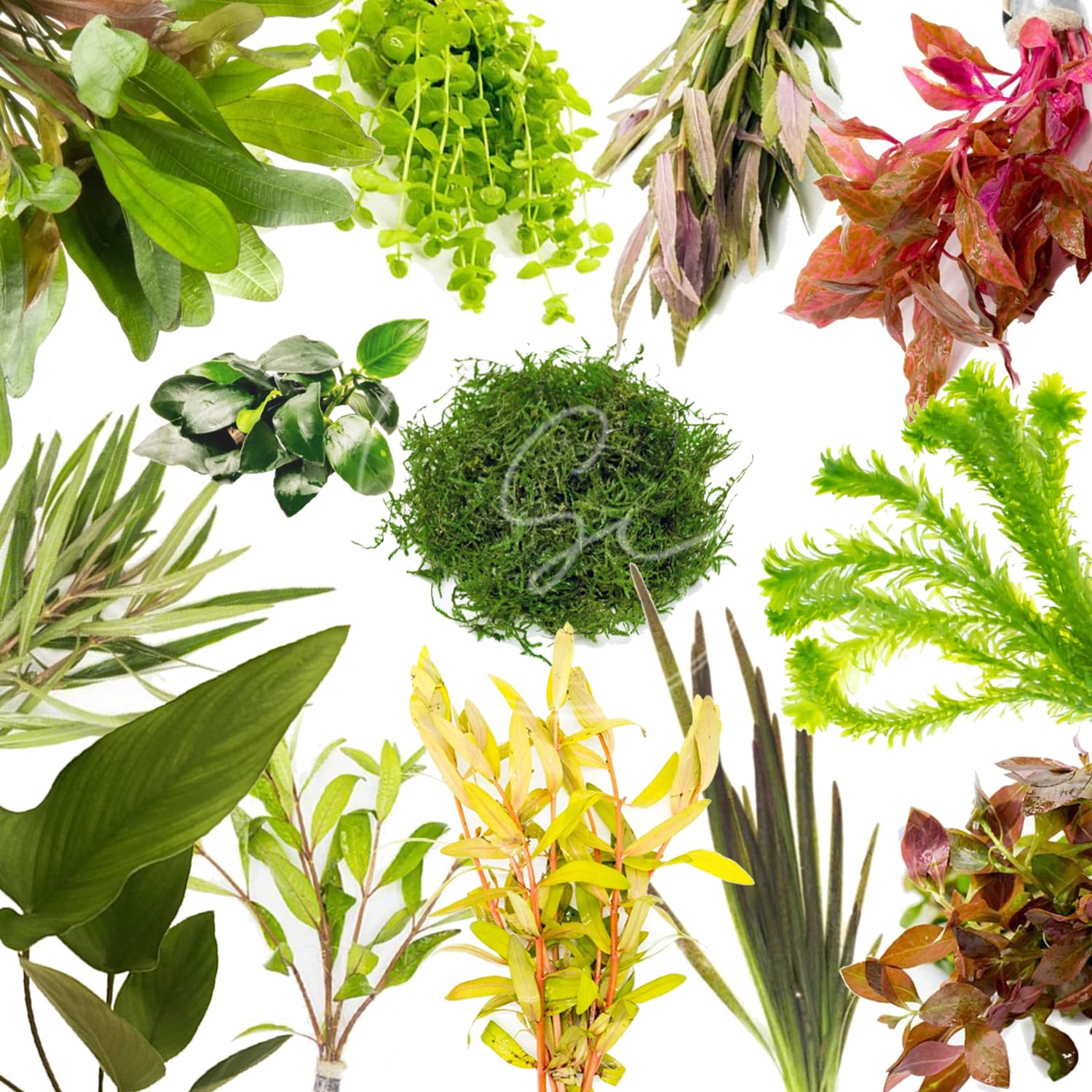
Rating: 4.2 ★ | Price: $$$ | Plant Type: Mixed (10 species) | Light Requirement: Various | Size at Purchase: Assorted | Quantity: 10 portions
The Swimming Creatures bundle delivers ten different plant species in a single order – a time-saver for hobbyists who want a diverse tank without hunting for individual plants. Portion sizes are generous for many species, giving a head start on filling a tank. The tradeoff is that some plants may arrive in poor condition, and there are no labels or care instructions included, leaving the buyer to identify and research each species independently.
This bundle suits experienced hobbyists who can absorb occasional losses and are comfortable Googling each plant’s needs. Beginners will find the lack of guidance and the possibility of dead-on-arrival plants frustrating; the top pick (the Java fern + anubias bundle) offers a safer, labeled alternative with easier species.
Pros
- Ten different plant species in one purchase for instant tank diversity.
- Generous portion sizes for many species, giving a strong start.
- Large bundle reduces the hassle of ordering multiple separate plants.
Cons
- Some plants may arrive in poor condition, with no way to predict which will recover.
- No labels or care instructions are included; each species requires independent research.
This bundle works best for experienced aquascapers who want variety and can absorb losses – beginners should start with a smaller, labeled pack like the top pick.
Best for Budget Background Option
Water Plants Amazon Sword 3-Pack

Rating: 4.4 ★ | Price: $ | Plant Type: Rooted (Amazon Sword) | Light Requirement: Low light | Size at Purchase: 20–50 cm mature | Quantity: 3 plants
The Amazon Sword is a classic background plant that grows tall quickly, even under low light and without CO2 — ideal for low-tech setups. However, this three-pack from Water Plants carries some risk: individual shipments may arrive with wilted or damaged leaves, and bladder snails have been known to hitchhike in. For buyers on a tight budget with a tank over 15 gallons who are willing to accept occasional replanting, it offers good value when it arrives healthy.
Pros
- Creates a tall, dramatic background in low-tech tanks with rapid growth.
- Thrives under low light and poor substrate without CO2 or fertilizer.
Cons
- May introduce bladder snails into the aquarium along with the plants.
- Plant condition on arrival can vary — some shipments arrive with wilted or damaged leaves.
Worth a try for budget-conscious aquascapers with a large tank who can handle possible replanting and don’t mind a little uncertainty.
Best for Nano Tank Foreground
Marcus Anubias Nana Petite Potted

Rating: 4.6 ★ | Price: $$ | Plant Type: Rhizome (Anubias) | Light Requirement: Low light | Size at Purchase: Small – 20–30 leaves | Quantity: 1 pot
This potted anubias arrives with vibrant dark green leaves and robust root systems, exactly what you want from a low-light foreground plant. Its petite size is a genuine asset in 5–10 gallon tanks where every inch matters, but that same trait can surprise buyers expecting a fuller specimen — this stays small. Slow growth means it won’t rush to fill in, which suits patient aquascapers but frustrates anyone hoping for quick coverage. For nano setups or detailed foreground work, the size and low-light tolerance make it a precise fit; for larger tanks or instant impact, look to faster-growing options.
Pros
- Healthy, clean plants with strong roots and vibrant dark green leaves
- True dwarf variety – stays small, perfect for foreground or nano tanks
Cons
- Very small size may be surprising for those expecting a larger plant
- Slow growth requires patience before the plant fills in
A precise choice for nano tank owners who value true dwarf proportions and are willing to wait for slow, steady growth.
Best for Cheapest Surface Cover
APC Giant Duckweed 30 Plants

Rating: 4.3 ★ | Price: $ | Plant Type: Floating | Light Requirement: Partial shade | Size at Purchase: Small floating plant | Quantity: 30 plants
Giant duckweed is one of the fastest-growing floaters, soaking up nitrates and covering the surface in weeks. At this price, it’s an economical choice for ponds or large tanks where rapid coverage is wanted. However, the plants frequently arrive with pest snails or worms, and some batches may not thrive after arrival. For pristine display tanks, the risk of pest contamination is too high. This works well for experienced aquarists who can quarantine new plants and are comfortable with duckweed’s invasive growth habit.
Pros
- Covers the surface quickly and absorbs excess nutrients
- Budget-friendly way to jumpstart nitrate control
Cons
- Growth can be inconsistent – some plants may not adapt after arrival
Best for pond owners or experienced hobbyists who need cheap, fast surface cover and can handle the potential pest hitchhikers.
Best for Large Tank Accent
Marcus Tiger Lotus Lily Bulb

Rating: 4.3 ★ | Price: $$ | Plant Type: Rooted (Tiger Lotus) | Light Requirement: Moderate to high | Size at Purchase: Small sprouted bulb | Quantity: 1 bulb
This tiger lotus produces fast-growing red leaves that become a striking focal point in medium-to-large aquariums. It adds bold color and structure, but the plant demands moderate to high light to maintain red pigmentation and steady growth – less suited to very low-light setups. Bulb size and viability are inconsistent; some bulbs arrive small or fail to sprout entirely. Best for experienced hobbyists who want a dramatic centerpiece and can accept the gamble on bulb quality, especially in tanks with adequate lighting.
Pros
- Fast-growing with vibrant red leaves
- Creates an eye-catching centerpiece
Cons
- Bulb size and sprouting success vary – some bulbs arrive small or fail to grow
- Needs moderate to high light to keep red leaves and steady growth
Worth a try if you have a medium-to-large tank with decent lighting and want a bold red centerpiece, but consider buying an extra bulb to hedge against failure.
Best for Ultra-Budget Java Fern
Generic Java Fern 3-Pack

Rating: 4.3 ★ | Price: $ | Plant Type: Rhizome (Java Fern) | Light Requirement: Low light | Size at Purchase: 5–12 inches | Quantity: 3 plants
Java ferns are a natural fit for low-tech tanks, needing only low light. This three-pack is budget-friendly, but quality control is inconsistent. Some plants arrive with small rhizomes and a single leaf; not all survive the adjustment period. When they do establish, they display vibrant green leaves that adapt easily. That variance keeps the pack from a higher tier, but for buyers who order extra to account for a potential loss, the per-plant cost is compelling.
Pros
- Vibrant green leaves that thrive in low-light conditions without CO2.
- Three plants for a price that makes it a low-risk way to add greenery to a budget setup.
Cons
- Rhizomes and leaves can be smaller than expected upon arrival, reducing immediate coverage.
- Occasional plants fail to survive the adjustment period, leaving gaps in the tank.
Suited for hobbyists who can order extra to account for possible duds; for guaranteed large, healthy plants, a more consistent source is the smarter play.
How to Choose
Selecting the right low-tech plant starts with understanding how its growth habit matches your tank’s size, light, and water movement.
Plant Type and Growth Habit
Rooted plants like Amazon Swords need nutrient-rich substrate and can quickly fill the background, but they also demand regular trimming. Rhizomatous plants (Java fern, Anubias) must never be buried—attach them to wood or rock. Floating plants absorb nutrients directly from the water column but require gentle surface flow, or they’ll rot.
Matching the growth habit to your tank’s layout prevents constant rearranging. A sword in a 10-gallon tank will soon dominate, while a slow-growing Anubias Nana Petite in a 40-gallon will barely register.
Light Requirement
All plants listed here tolerate low light, but ‘low’ isn’t a single value. Some, like Java fern, grow well under a standard LED strip. Others, like Red Root Floaters, need moderate-to-high light to develop their red pigmentation. If you keep floating plants under a weak light, they stay green and may not multiply.
The real trade-off: low-light tolerance means slower growth. That’s fine for low-maintenance, but if you want fast coverage, you’ll need to bump up the light or accept longer fill-in times.
Size at Purchase and Mature Size
A 3-inch Amazon Sword will eventually reach 12–16 inches, but a ‘petite’ Anubias stays under 4 inches. Many buyers are disappointed when plants arrive smaller than the listing photo. That’s normal for tissue-cultured or recently trimmed stock—the key is to know mature dimensions and plan your spacing.
Overcrowding from ignoring mature size is the top reason new planters end up pulling plants out. A good rule: leave twice the space you think you need.
Quantity or Coverage per Package
A 3-pack of Swords gives you a quick background wall. A single Java fern leaf can grow into a bush over months. Bundles with multiple species often provide smaller portions of each—you get variety but not instant coverage. If you want a fully planted look immediately, buy multiple portions of the same species.
The hidden cost of bundles: if one plant dies, you lose that species entirely. Single-species packs let you replace individual losses without rebuying a set.
FAQ
How do I prevent snails from hitchhiking on new live aquarium plants?
Quarantine new plants in a separate container for at least a week. A bleach dip (1:19 ratio of bleach to water, 2–3 minutes) kills snail eggs and larvae, but rinse thoroughly and use dechlorinator. Alternatively, a salt dip (1 tablespoon per gallon for 5 minutes) works for most plants. Even after treatment, inspect leaves for visible egg clutches.
Why do my new aquarium plants melt and turn brown after a few days?
Melting is normal when plants adapt from emersed (grown above water) to submerged conditions. Leaves that grew in air will die back within 1–2 weeks. Remove only fully dead leaves; the plant will send out new submerged growth from the base. Avoid trimming healthy green leaves—those still provide energy.
Can I keep low-tech aquarium plants without CO2 or strong lighting?
Yes. Species like Java fern, Anubias, Amazon Sword, and floaters (Red Root Floater, Water Spangle) are proven to grow in low light without injected CO2. The trade-off is slower growth and less vibrant colors compared to high-tech tanks. For most beginner tanks, a standard LED light running 8–10 hours is sufficient.