This post contains affiliate links. We may earn a small commission when you buy through our links — at no extra cost to you.
Betta fish are carnivores, and their food should be high in protein and small enough for their tiny mouths. But many ‘floating’ pellets sink as soon as they hit the water, and oversized bits go uneaten, clouding the tank.
The truth is, marketing descriptions often don’t match real-world behavior. Some pellets stay afloat for minutes; others sink in seconds. And portion control matters more than most owners realize—a betta needs just a few pellets per meal.
This guide cuts through the confusion by focusing on what actually works: pellet size, floatability, ingredient transparency, and value. Whether your betta is a picky eater or a senior, you’ll find a food that fits its needs and your budget.
Top Picks
Best for Most Betta Owners
Hikari Bio-Gold 3pk

Rating: 4.8 ★ | Price: Mid-Range | Pellet Size: ~1mm baby | Floatability: Stays afloat long | Ingredient Quality: Color-enhancing | Packaging: Resealable bag
The pellet size is about 1mm, small enough for juvenile and senior bettas to eat comfortably. These pellets float longer than many competing foods, giving fish time to feed before any sink — a practical advantage for surface feeders.
Best for owners who want a reliable daily staple at a sensible per-ounce price. The three resealable bags offer convenience for stocking up, though the snip-open packaging can require a careful cut to control portions — some users transfer pellets to a small bottle for easier use.
Pros
- Pellet size is suitable for bettas of all ages, including small juveniles.
- Pellets stay afloat longer than most competitors, reducing waste.
- Three bags provide good value for a mid-range price.
Cons
- Bag dispenser can be awkward to cut and portion accurately.
- Not ideal for those who strongly prefer a rigid bottle dispenser.
For most betta owners, this is the consistent choice — appropriately sized floating pellets at a price that makes stocking up easy.
Best for Picky Bettas
Ultra Fresh Shrimp Patties

Rating: 4.6 ★ | Price: Premium | Pellet Size: 1.5mm | Floatability: Sinks quickly | Ingredient Quality: 50% shrimp, probiotics | Packaging: Pouch
This shrimp-based formula delivers exceptional palatability that even selective bettas accept, with 50% Sword Prawns and Akiami Shrimp providing natural protein and probiotics for improved color and vitality. The pellet size is small enough for bettas to eat in one bite, and the probiotics help maintain water cleanliness. It’s best suited for owners who want to boost their betta’s vibrancy and don’t mind adjusting feeding technique.
Pros
- Exceptional palatability – picky bettas readily accept it.
- Natural ingredients with no artificial additives.
Cons
- Pellets can sink quickly rather than floating, requiring hand-feeding or removal.
A smart pick for fussy eaters, as long as you’re prepared for sinking pellets.
Best for Floatability Seekers
Ocean Nutrition Betta Pellets

Rating: 4.6 ★ | Price: Premium | Pellet Size: Small, uniform | Floatability: Stays afloat | Ingredient Quality: Natural ingredients | Packaging: Small container
Ocean Nutrition Betta Pellets float consistently and remain on the surface longer than most, with tiny uniform pellets that suit bettas with small mouths. The formula does not cloud water, making it a strong choice for owners focused on tank clarity. Best for those who run a single tank and value floating reliability above all else.
Pros
- Stays on the surface longer – less sinking and waste.
- Tiny pellets are easy for small-mouthed bettas to eat in one bite.
- Helps maintain water clarity by not clouding the tank.
Cons
- The small container yields a higher per-ounce cost compared to larger options; less economical for multiple tanks.
A premium floating pellet that delivers on its promises – choose it when water clarity and pellet size matter more than the cost per serving.
Best for Natural Protein
Fluval Bug Bites Betta

Rating: 4.6 ★ | Price: Mid-Range | Pellet Size: 0.25–1.0mm | Floatability: Slow-sinking | Ingredient Quality: Insect-based, natural | Packaging: Jar
Black soldier fly larvae and salmon drive this formula — natural, insect-based protein that supports betta health without filler. The 0.25–1.0mm micro granules are sized for betta mouths, and the high-protein content suits owners who prioritize clean ingredients. The tradeoff: these are slow-sinking granules that drop almost immediately, so they work best for bettas that feed from the water column rather than the surface. Owners who prefer floating pellets will need to feed one granule at a time or pre-soak to slow the descent.
Pros
- Insect-based protein from black soldier fly larvae and salmon — natural and sustainable.
- Micro granule size (0.25–1.0mm) matches betta mouths for easy consumption.
Cons
- Granules sink almost immediately, so surface-feeding bettas may miss them when given all at once.
A strong daily staple for owners who value ingredient purity and don’t mind hand-feeding sinking pellets.
Best for Variety Seekers
Tetra BettaMin Variety Pack

Rating: 4.6 ★ | Price: Budget | Pellet Size: Flakes, pellets, shrimp | Floatability: Mixed | Ingredient Quality: Variety pack | Packaging: 3-compartment can
Three food types in a single canister keep picky bettas interested, avoiding the refusal that often comes with a monotonous diet. This budget-friendly pack bundles flakes, pellets, and shrimp so you can rotate textures without buying separate containers—a low-risk way to test what a bored eater prefers.
It suits owners whose bettas lose enthusiasm for a single pellet, though those who prioritize crystal-clear water may want to steer clear. The flake compartment may shed fine particles that cloud the tank, so use it sparingly or stick to the cleaner pellets and freeze-dried shrimp.
Pros
- Three distinct food types prevent bettas from losing interest at mealtime.
- A cost-effective way to provide dietary rotation without stocking multiple separate products.
Cons
- Flakes can produce fine dust that clouds aquarium water.
If your betta ignores a single-food diet, this low-cost trio can rekindle feeding interest—just be prepared to manage the dusty flakes.
Best for Ingredient Purity
Omega One Betta Buffet
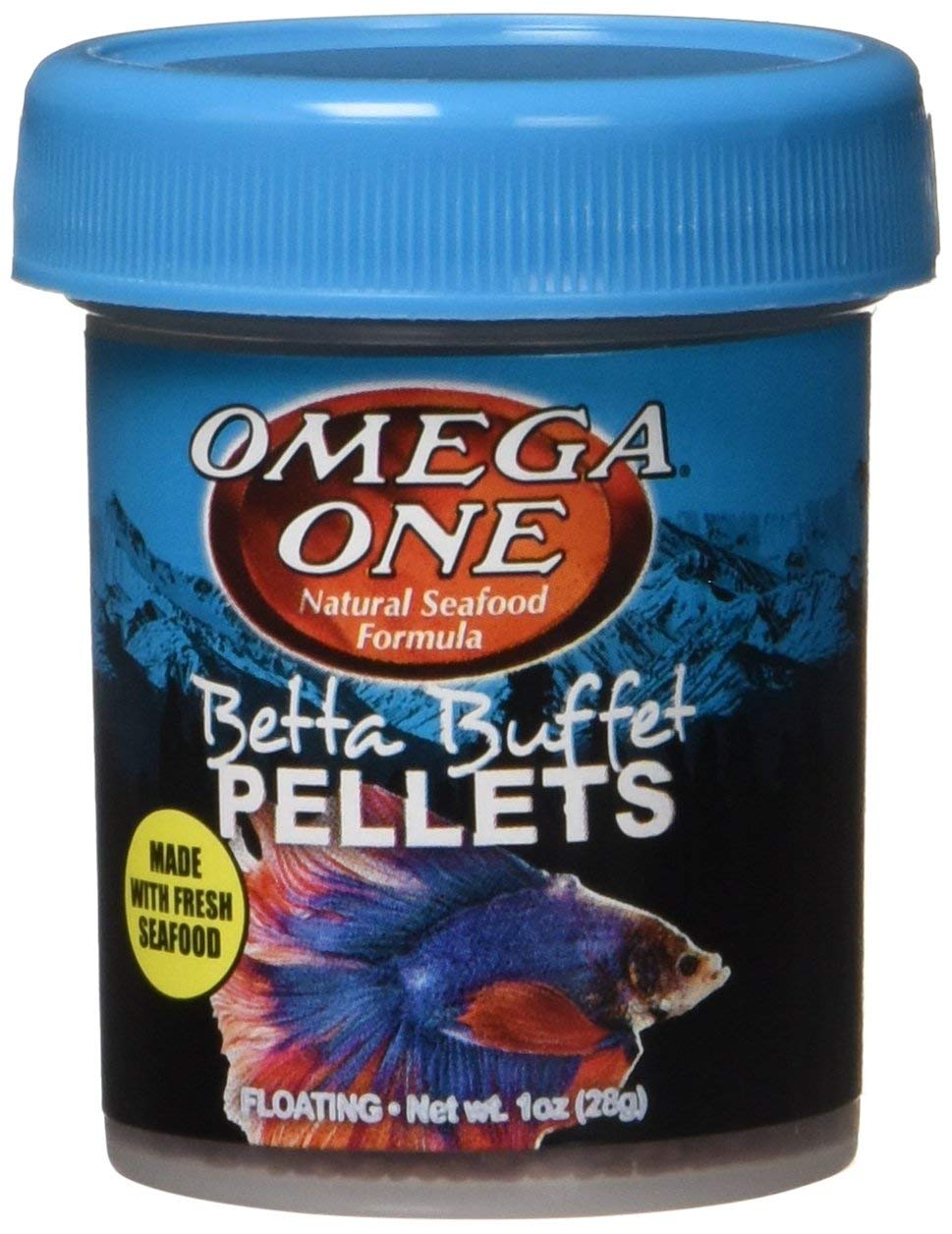
Rating: 4.6 ★ | Price: Mid-Range | Pellet Size: 1.5mm | Floatability: Sinks quickly | Ingredient Quality: Whole fish, no filler | Packaging: Bottle
Omega One Betta Buffet is made from whole herring, salmon, and shrimp with zero fillers — a level of ingredient purity that enhances natural coloration and overall health. The 1.5mm pellets are appropriately sized and rich in Omega 3 and 6 fatty acids. This formula is best for owners who prioritize clean ingredients and have bettas comfortable chasing food below the surface. For surface feeding, the top pick in this category offers a different feeding experience.
Pros
- Whole fish ingredients with no fillers or meals support natural coloration and health.
- Rich in Omega 3 and 6 fatty acids for betta vitality.
Cons
- Pellets sink quickly despite being marketed as floating — best for bettas that chase food rather than surface feeders.
Best for ingredient-conscious owners with active bettas that hunt sinking pellets – the purity justifies the tradeoff in floatability.
Best for Budget, Large Bettas
TetraBetta PLUS Mini Pellets

Rating: 4.5 ★ | Price: Budget | Pellet Size: Large | Floatability: Floats | Ingredient Quality: Natural color enhancer | Packaging: Resealable pouch
TetraBetta PLUS offers the lowest cost per serving among floating betta pellets, and most fish accept it readily. However, the pellet size can be too large for smaller bettas or juveniles, making it a better fit for larger adult bettas or other mid-sized top-feeders.
Pros
- Affordable per-ounce cost for budget-conscious owners.
- Good acceptance rate and quality ingredients with omega-3s.
Cons
- Pellet size may be too large for smaller bettas or fussy eaters.
This pellet is the right call for large bettas on a budget, but smaller fish need a smaller pellet.
Best for Clean Ingredients
Northfin Betta Bits
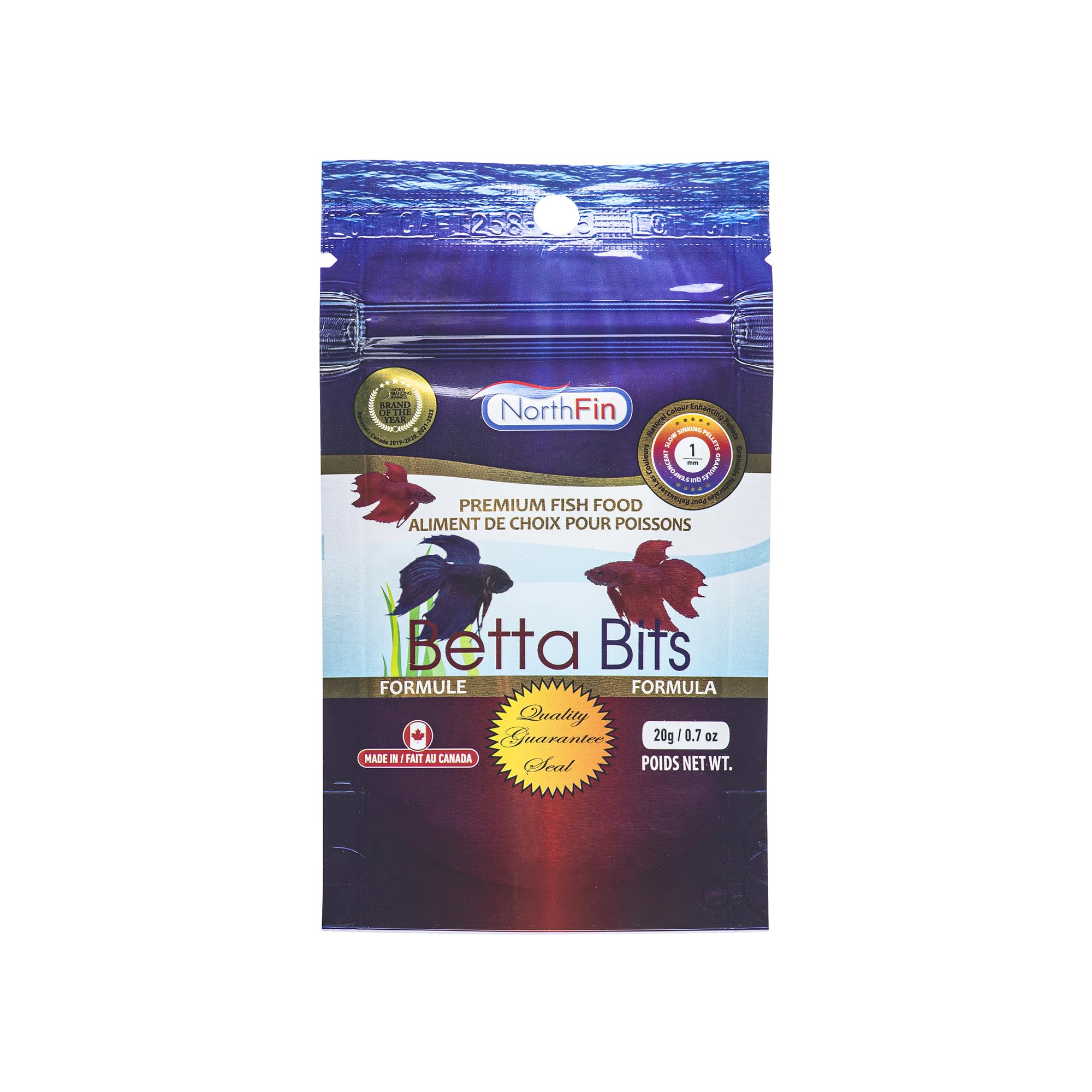
Rating: 4.5 ★ | Price: Premium | Pellet Size: 1mm | Floatability: Sinks quickly | Ingredient Quality: Whole krill, no fillers | Packaging: Foil pouch
Northfin Betta Bits deliver the cleanest ingredient label you’ll find — whole Antarctic krill, no fillers, no artificial additives. The 1mm pellets are ideal for small mouths, but the resealable pouch makes dispensing fussy; this food rewards ingredient purity over daily convenience.
Pros
- Whole Antarctic krill as first ingredient with zero fillers or artificial additives.
- Supports vibrant coloration and overall health in bettas.
Cons
- Pellets sink immediately despite ‘floating’ claim — not suitable for bettas that prefer surface feeding.
Best for keepers who prioritize ingredient purity over feeding convenience — hand-feeding sinking pellets from a pouch is the tradeoff.
Best for Bottom Feeders
API Betta Food Pellets

Rating: 4.5 ★ | Price: Budget | Pellet Size: Standard | Floatability: Sinks immediately | Ingredient Quality: Reduces ammonia | Packaging: Container
API’s Betta Food is an affordable option that claims to reduce ammonia in the tank, and at this price point it delivers decent value for those who don’t mind food that sinks straight to the bottom. The pellets do not float as marketed, which makes them better suited for bottom-dwelling tankmates or bettas that actively forage below the surface rather than waiting for floating bites.
Pros
- Budget-friendly price for a basic betta pellet.
- May help maintain clearer water with reduced ammonia.
Cons
- Pellets sink upon contact with water despite the floating claim – an issue for bettas that feed at the surface.
Pick this only if your betta doesn’t mind chasing sinking food or if you have bottom feeders in the tank.
Best for Value Pack
Aqueon Color Pellets 3pk

Rating: 4.6 ★ | Price: Mid-Range | Pellet Size: Standard | Floatability: Mixed | Ingredient Quality: Shrimp, seafood | Packaging: 3-pack bottles
This three-pack of color-enhancing betta pellets offers good value per ounce and is generally accepted by fish that eat pellet foods. However, the customer reviews may describe a different product (flakes rather than pellets), making it difficult to rely on feedback for this specific formula. Proceed with caution if you want verified performance data.
Pros
- Three-pack delivers solid value per ounce compared to single containers.
- Pellets are well-accepted by bettas comfortable with pellet-based diets.
Cons
- Water clarity can become cloudy if pellets are fed in heavy amounts.
A sensible buy for existing Aqueon owners who want a cost-effective three-pack.
Best for Treat
Fluval Bloodworms

Rating: 4.5 ★ | Price: Premium | Pellet Size: Whole bloodworms | Floatability: Sinks | Ingredient Quality: Freeze-dried | Packaging: Small container
Bettas find these freeze-dried bloodworms highly enticing — whole pieces with good texture that hold together. This is a treat, not a complete diet, best used to stimulate appetite or add variety. Its premium price and limited nutritional completeness make it a supplement, not a staple.
Pros
- Bettas are drawn to the taste, making it effective for picky eaters or as a treat.
- Whole bloodworms stay intact, not crumbly or hollow, offering good texture.
Cons
- Small container size leads to a premium per-ounce cost, not economical as a staple.
Best for owners who need a high-appeal treat to coax a picky betta, accepting the premium cost and occasional need to break larger pieces.
How to Choose
The single most important thing to know about betta fish food: they are strict carnivores that need small, high-protein meals – and most owners feed twice as much as needed.
Pellet Size Matters for Small Mouths
Betta fish have upward-facing mouths adapted for surface feeding. Pellets larger than 1.5mm are often too big for smaller adults and juveniles, leading to spit-out food that sinks and rots. A 1mm to 1.5mm pellet fits comfortably and ensures every bite is eaten.
Floating Pellets Keep Water Clean
Many ‘floating’ pellets sink within seconds due to density or moisture absorption. Pellets that sink immediately force your betta to chase food to the bottom, which can lead to overeating and bloating. True floating pellets stay at the surface for at least a minute, allowing your betta to feed naturally and leaving less waste.
High Protein Supports Carnivore Health
Bettas are insectivores that require 40-50% protein in their diet. Lower-protein foods use fillers like wheat that offer little nutrition and can cause swim bladder issues. Look for whole fish, shrimp, or insect larvae as the first ingredient to ensure adequate protein.
Whole Ingredients Beat Processed Meal
The best betta foods list whole fish or shrimp as the primary ingredient, not fish meal or by-products. Whole ingredients retain more natural fats and amino acids, which enhance color and growth. Artificial additives and preservatives offer no benefit and can trigger allergic reactions in sensitive fish.
Easy Dispensing Prevents Mess
Bag-style packaging often makes portion control difficult – you either spill too many pellets or have trouble resealing. A hard bottle with a flip-top or shaker lid allows precise dispensing and keeps food fresh longer. Consider transferring bagged food to a small jar if the original packaging is clumsy.
FAQ
Why do my betta pellets sink instead of floating?
Many pellets are denser than water or absorb moisture quickly, causing them to sink. Soak pellets for a few minutes before feeding to help them stay afloat longer. If they consistently sink, choose brands specifically noted for floatability like Ocean Nutrition.
How many pellets should I feed my betta per day?
Feed 2-4 pellets once or twice a day, depending on size and activity. Overfeeding leads to bloating and water quality issues. A good rule: only feed what your betta can eat in 30 seconds.
Can I feed my betta the same food as my tropical community fish?
Not ideal. Betta-specific foods have higher protein and smaller pellet sizes suited for carnivores. Tropical flakes often contain plant matter that bettas cannot digest properly, leading to swim bladder problems.
What is the best pellet size for a baby betta?
Baby bettas need micro pellets or crushed flakes, around 0.5-1mm. Look for products labeled ‘baby’ or ‘micro’ like Hikari Bio-Gold Baby Pellets or Fluval Bug Bites (0.25-1mm granules). Larger pellets can cause choking.