This post contains affiliate links. We may earn a small commission when you buy through our links — at no extra cost to you.
Koi are famously picky eaters. A food that works for one pond might be completely ignored in another, even if the ingredients look similar on the label. That’s the real challenge when buying koi food — not nutrition but acceptance.
The foods here have earned consistent praise from both fish and owners across thousands of ponds. Each pick serves a specific pond size, fish size, and budget. The key is matching food to your fish’s actual preferences, not just the marketing claims.
Start by testing a small bag before committing to bulk. That single step will save you more frustration than any ingredient list.
Top Picks
Best for Most Koi Ponds
TetraPond Koi Vibrance Soft Sticks

Rating: 4.8 ★ | Price: $$ | Protein Focus: Maintenance with color enhancement | Pellet Size: Soft stick (variable) | Float / Sink: Floating | Season: All-season | Additives: Color enhancers
The soft sticks float briefly before slowly softening, giving smaller koi and goldfish a chance to feed alongside larger pondmates. Koi usually take to them on the first toss, surfacing eagerly within seconds. The color-enhancing formula produces visible results — deeper reds, brighter oranges, and crisper white markings appear within a few weeks of regular feeding. Water stays clearer than with many alternatives; the sticks hold their shape and don’t disintegrate into fine particles that cloud the pond.
This is a maintenance diet, not a growth accelerator. Owners looking to pack on size for show or rapid development should look instead to a high-protein growth formula. The one persistent limitation: a small subset of koi simply ignore these sticks. For ponds with notoriously picky eaters, picking up a modest bag first is the sensible move. For everyone else, this is the lowest-risk staple you can drop into a mixed pond and expect most fish to accept immediately.
Pros
- Exceptional value for a maintenance food that consistently delivers on its promises.
- Noticeably deepens koi coloration, especially reds and oranges, within a few weeks.
- Highly palatable — most koi and goldfish rush to the surface for these sticks.
Cons
- A small fraction of fish may refuse the sticks entirely, regardless of preparation.
If your koi accept these sticks, you’ll get a cost-effective staple that noticeably brightens colors without fouling the pond.
Best for Large Ponds, Budget
Kaytee Koi’s Choice

Rating: 4.6 ★ | Price: $ | Protein Focus: 35% protein, fish meal | Pellet Size: Large (varies) | Float / Sink: Floating | Season: All-season
Kaytee Koi’s Choice offers the lowest cost per pound of any floating koi food we evaluated — a clear draw for large ponds with hungry fish. Unlike the top pick TetraPond Koi Vibrance, which has near-universal acceptance, this food may be ignored by some fish entirely. Best for owners with established ponds of non-picky koi over 6 inches who prioritize budget over consistency.
Pros
- Excellent value per pound — one of the cheapest bulk koi foods available.
- Most fish accept it eagerly, making it a reliable staple for non-picky ponds.
- Pellets float well, allowing easy monitoring of feeding activity.
Cons
- Pellet integrity can vary — bags may contain dust from crushed pellets, so storing in an airtight container is advisable.
- Some fish refuse to eat this food entirely, making it a risky first purchase for unknown palatability.
If your koi are enthusiastic eaters and you need bulk food on a budget, this is the most cost-effective option — but test a small bag first to confirm acceptance.
Best for Young Growing Koi
TetraPond Koi Growth 4.85lb

Rating: 4.7 ★ | Price: $$ | Protein Focus: High-protein growth | Pellet Size: Soft stick (variable) | Float / Sink: Floating | Season: All-season
Unlike the top pick’s maintenance-plus-color formula, TetraPond Koi Growth packs extra protein to accelerate growth in young koi when water temperatures are warm. Most fish take to these soft sticks eagerly, making it a practical way to boost size during the growing season. The tradeoff: this is a seasonal supplement, not a complete daily diet—protein levels are too high for cooler weather and for fish that already get enough growth from a maintenance food.
This bag suits owners focused on getting young koi up to size quickly in spring and summer, and who don’t mind rotating back to a lower-protein staple in fall. The sticks soften faster than harder pellets, which can create some dust in the water, and a small number of fish may refuse them entirely.
Pros
- Speeds up growth in young koi during warm months
- Highly palatable to most fish
Cons
- Some koi may ignore these sticks completely
- Soft sticks break down faster in water, creating some dust
If you have young koi that need a summer growth boost and you’re willing to buy a separate maintenance food for the rest of the year, this formula works well—just test a small bag first to confirm acceptance.
Best for Cold Winter Ponds
Blue Ridge Cool Water 5lb

Rating: 4.7 ★ | Price: $$ | Protein Focus: Low-protein, wheat-based | Pellet Size: 3/16 inch | Float / Sink: Floating | Season: Cool water (below 60°F)
The wheat-based formulation is easy on koi’s metabolism during cold months, making it a go-to choice for ponds in regions with genuine winters. This is a seasonal tool, not a year-round staple – plan to switch back when water warms above 60°F. Best for owners who want a low-protein diet that supports healthy digestion through fall and winter without stressing the fish.
Pros
- Specifically formulated for low metabolism, aiding digestion in cool water.
- Keeps fish healthy through the cold months with a tailored nutrient profile.
Cons
- Some fish may refuse these pellets; palatability can vary.
Essential for cold-climate pond owners who need a safe winter feeding option, but keep a separate year-round food for warmer months.
Best for Show-Quality Color
Blue Ridge Platinum Pro 14lb

Rating: 4.7 ★ | Price: $$$ | Protein Focus: Premium show diet | Pellet Size: 3/16 inch | Float / Sink: Floating | Season: All-season | Additives: Probiotics, spirulina
Blue Ridge Platinum Pro stands apart from the top pick with its probiotic-spirulina-canthaxanthin blend aimed at show-quality color and immune support. Owners report visible deep reds and oranges, and the 14‑pound tub offers good value for a premium formulation. The tradeoff: pellet size suits average koi (6–12 inches), but fish under 4 or over 18 inches may struggle, and occasional refusal has been noted—some koi simply don’t enjoy the taste. This food is best for dedicated koi keepers willing to pay a premium for health add-ons, as long as they confirm their fish accept the flavor first.
Pros
- Probiotics and spirulina support immune health and vibrant coloring.
- Visible color enhancement from spirulina and canthaxanthin.
- Large tub is cost-effective for a premium formula.
Cons
- Pellet size may be too small for koi over 18 inches.
- Some fish may refuse the taste and spit pellets out.
If your pond houses average-sized koi and you prioritize immune boosters and show-quality color over universal palatability, this is a strong premium option—but a trial bag is recommended before committing to the full tub.
Best for Large Ponds, Bulk
Mazuri Floating Nuggets 20lb

Rating: 4.8 ★ | Price: $$ | Protein Focus: Complete maintenance | Pellet Size: Nugget (variable) | Float / Sink: Floating | Season: All-season
The 20-pound bag delivers the lowest cost per pound among quality maintenance diets for large koi ponds. Owners report consistent color improvement and no cloudiness after feeding, thanks to sustainable fishmeal and a formulation that stays intact in the water.
This bulk value suits budget-conscious owners with many koi that empty a bag quickly. The nuggets run small, so very large koi may need a different size—something to check before committing to 20 pounds.
Pros
- Bulk 20-pound bag at a low per-pound cost for a quality diet
- Formulation supports color development without clouding pond water
- Sustainable fishmeal provides complete nutrition for maintenance feeding
Cons
- Pellet size may be too small for very large koi—worth checking before buying
If you have a large pond with fish that accept these nuggets, this bag offers unbeatable value for keeping them healthy and colorful.
Best for Breeder-Quality Color
Hikari Gold 11lb Bulk
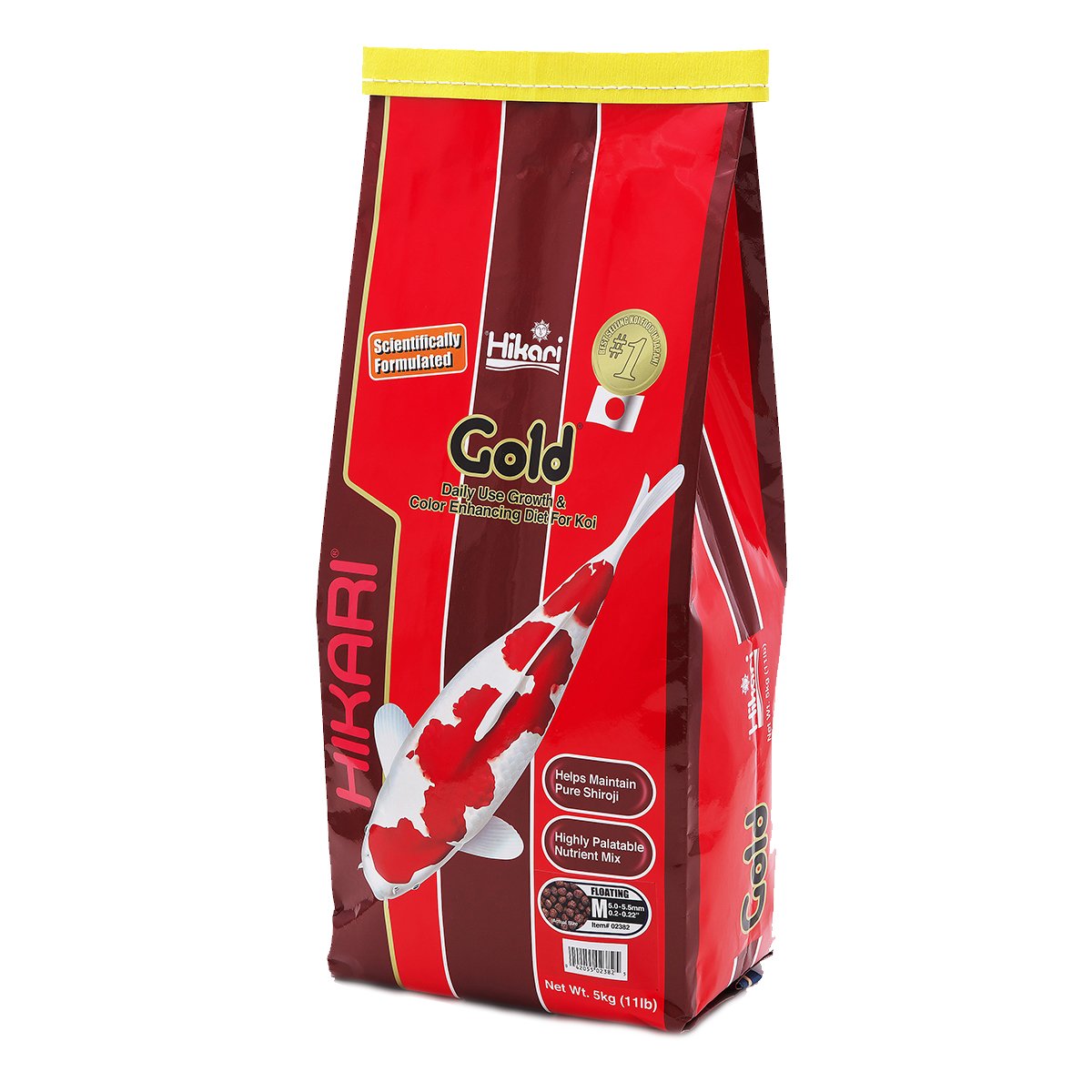
Rating: 4.7 ★ | Price: $$ | Pellet Size: Medium (smaller than expected) | Float / Sink: Mostly floating | Season: All-season | Additives: Color enhancers, Vitamin C
This Hikari Gold formula uses a Japanese breeder-tested recipe that enhances color and supports overall health. Koi readily accept it. However, the ‘medium’ pellets are smaller than expected — suited for fish up to 12 inches — and some pellets sink instead of floating, which is worth checking against your feeding setup.
Pros
- Breeder-preferred recipe produces vivid color and strong health.
- Fish accept it readily, reducing wasted food.
Cons
- Pellet size is smaller than typical medium pellets, and some may sink rather than float.
A good option if your koi are under 12 inches and color is a priority; verify floating action in your pond first.
Best for Small Ponds, Goldfish
Hikari Staple Mini 17.6oz

Rating: 4.8 ★ | Price: $ | Pellet Size: Mini | Float / Sink: Floating | Season: All-season | Additives: Vitamin C
Hikari’s mini floating pellets deliver stabilized vitamin C and immune support with minimal water clouding — small fish eagerly take them. The 17.6-ounce bag suits small ponds or adding variety, but the mini size and modest quantity make it impractical as a sole staple for a pond with large koi.
Pros
- Fish consistently take these pellets — palatability is a strong point.
- Minimal water clouding helps maintain pond clarity.
Cons
- Mini pellet size may be too small for larger koi over 10 inches.
Best suited for small ponds with goldfish or as a supplementary treat alongside larger pellets.
Best for Goldfish, Baby Koi
TetraPond Pond Flakes

Rating: 4.8 ★ | Price: $ | Pellet Size: Flake | Float / Sink: Floating | Season: All-season
TetraPond Pond Flakes come at a budget-friendly price and float well on the surface, making them eagerly taken by goldfish and very small koi. However, this flake is not formulated as a complete primary diet for koi over 6 inches – it is best suited for small garden ponds with goldfish or as a supplement to a pellet-based diet. Overfeeding can cloud the water, so portion control matters. For anyone looking for a dedicated koi staple, this product is outside that purpose.
Pros
- Budget-friendly for small ponds
- Goldfish and small koi eagerly consume the flakes
Cons
- Not intended as a primary diet for koi over 6 inches – this flake is best for small goldfish or as a supplement
A good match for small goldfish ponds or as an occasional treat for tiny koi, but not the right food if you need a complete staple for adult koi.
How to Choose
The biggest mistake koi owners make is buying a large bag of a new food without testing a small portion first.
Protein Content: Growth vs Maintenance
Protein level determines whether the food fuels growth or maintains current size. High-protein formulas (around 35%+) are meant for warm months when koi are actively growing and their metabolism is high. Feeding them in cold water slows digestion and can lead to health issues.
Maintenance diets (28–32% protein) work year-round for adult koi or as a base diet. If you want faster growth in young fish, a dedicated growth formula is worth the switch during spring and summer.
Pellet Size: Match to Your Fish
Koi under 6 inches need mini or small pellets — large pellets can cause choking or be ignored. Fish between 6 and 12 inches handle medium pellets well. Large koi (over 12 inches) prefer bigger pellets or soft sticks they can grab easily.
Beware of labeling: a "medium" pellet from one brand may be smaller than another’s "small." Check the actual diameter in inches or read reviews from owners with similar-size fish before buying.
Floating vs Sinking
Floating food lets you watch how much your fish eat, so you can adjust portions and spot health issues early. It also reduces leftover waste that clouds water. Most koi food is designed to float, but some pellets sink quickly — check reviews for floatability.
Sinking food is rarely needed for koi; it’s more for bottom feeders. Stick with floating unless you have a specific reason otherwise.
Seasonal Formulation
Koi metabolism changes with water temperature. Above 60°F, they digest high-protein food easily. Below 60°F, their system slows and needs a low-protein, wheat-based diet to avoid digestive upset. Feeding a high-protein growth food in winter can cause bloating or worse.
Many owners switch to a cool-water formula when autumn arrives and stay on it until spring. If your pond stays above 60°F year-round, you don’t need a seasonal food.
Additives: Probiotics and Color Enhancers
Color enhancers like spirulina and canthaxanthin help deepen reds and oranges, but they won’t turn a pale fish into a show champion — they only amplify existing color. Probiotics claim to improve digestion, but real-world results vary. Most koi don’t need added probiotics if they’re eating a balanced diet.
Don’t pay extra for additives unless you have a specific goal (e.g., preparing for a show or recovering from illness). For daily feeding, a solid maintenance formula without flashy additives often works just as well.
FAQ
Why do my koi refuse to eat new food even though the ingredients look good?
Koi develop strong preferences for familiar textures and flavors. Even premium foods can be rejected if the pellet size, hardness, or taste doesn’t match what they’re used to. Always buy the smallest bag first and mix a few pellets with their current food for a few days. If they still ignore it, move on — no single food works for every pond.
Can I feed my koi floating pellets all year round, or do I need a special winter food?
If your pond water drops below 60°F in winter, you should switch to a cool-water formula with lower protein and higher wheat content. High-protein pellets are hard to digest at low temperatures and can cause serious digestive issues. In warm climates where water stays above 60°F, a standard maintenance pellet works year-round.
What size pellets are best for koi that are 6 to 12 inches long?
Fish in that range do best with pellets around 3/16 inch in diameter, which most brands label as ‘medium’ or ‘small’. Avoid mini pellets (too tiny for them to bother with) and large pellets (too big to swallow comfortably). Check the product’s actual diameter in the description — sizes vary between brands.
Does koi food with probiotics really make a difference in fish health?
Probiotic additives can support gut health, but their effect is subtle and hard to measure in a typical pond. Most koi get enough beneficial bacteria from their environment and a balanced diet. Unless your fish are recovering from illness or you’re managing a very high-stock pond, a quality maintenance diet without probiotics will keep them healthy.