This post contains affiliate links. We may earn a small commission when you buy through our links — at no extra cost to you.
Choosing aquarium gravel means sifting through products that look similar but can mean the difference between a healthy tank and a disaster. Dyed or coated rocks are the hidden landmine – they can leach toxins and kill fish within hours, yet they dominate search results with flashy colors and high ratings.
The real solution is natural, uncoated rock that’s been used safely for decades. But even among natural options, grain size, weight per bag, and polishing waxes create trade-offs. Some pebbles are too fine for bottom feeders, others are too large for a planted tank, and many bags simply don’t cover the area you expect.
This guide cuts through the confusion by focusing on pure river rock and slate that won’t put your fish at risk. The choice often comes down to consistency versus color variety – more uniform gravel usually means fewer surprises during setup.
Top Picks
Best for Freshwater Tanks
FANTIAN Pea Gravel

Rating: 4.8 ★ | Price: Mid-Range | Grain Size: 1/4 inch | Bag Weight: 5 lb | Material: Natural river rock | Surface Finish: Natural | Best Use: Aquarium substrate
The gravel arrives with minimal dust and rinses clear quickly, saving time during tank setup. Its natural 1/4-inch river rock appearance blends well with plants and decor, creating a substrate that looks like a streambed rather than a craft project. No artificial dyes or coatings means no leaching worries for live fish.
This bag is best suited for standard freshwater community tanks and natural aquascaping up to about 20 gallons for a moderate depth. If you want a thicker layer (2+ inches) in a 20-gallon tank, plan on buying a second bag. The gravel is not meant for dyed or themed tanks – it is intentionally understated. For larger tanks over 40 gallons, the cost of multiple bags may add up compared to bulk options.
Pros
- Natural appearance that looks great underwater and blends with live plants and decor.
- Easy to clean with minimal dust – rinses quickly before adding to the tank.
- No artificial dyes or coatings – safe for live fish with no toxicity concerns.
Cons
- Bag size may require purchasing two for a 20-gallon tank if you want a deep substrate layer.
For standard freshwater tanks, this is the most straightforward choice – natural, clean, and safe without the guesswork of dyed gravels.
Best for Turtle Tanks
Zoo Med Turtle Pebbles
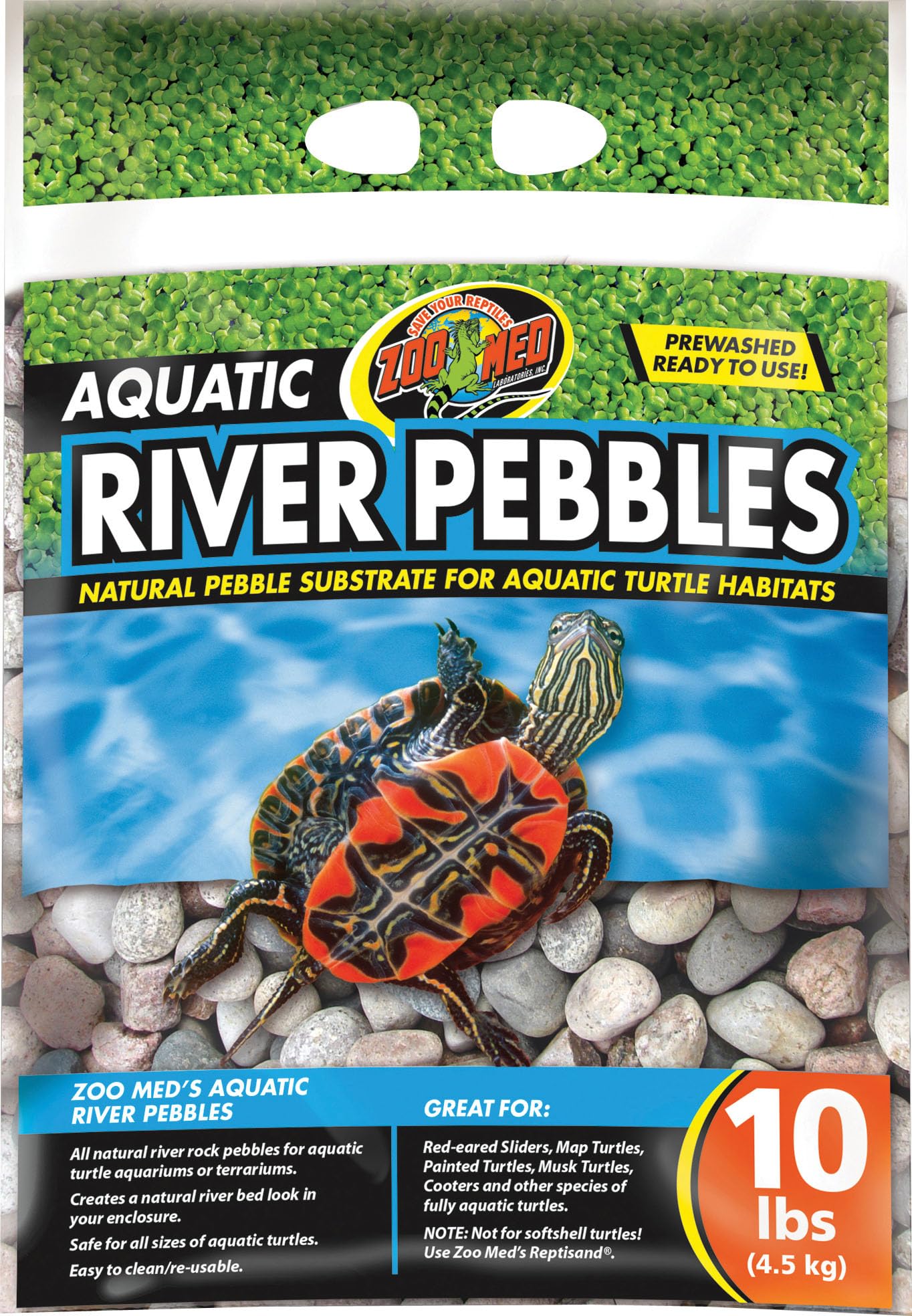
Rating: 4.7 ★ | Price: Mid-Range | Grain Size: 0.5-1 inch | Bag Weight: 10 lb | Material: Natural river pebble | Surface Finish: Natural | Best Use: Turtle tanks
These 10-pound bags of river pebbles are sized precisely for aquatic turtles — large enough to prevent swallowing but comfortable underfoot. The pre-washed stones arrive with minimal dust, unlike many bulk gravels that require extensive rinsing. While finer gravel suits fish tanks, these pebbles are built for reptile enclosures.
This product is designed specifically for turtle tanks and reptile habitats, not for small fish aquariums. Turtle owners appreciate the balance of size and texture. One tradeoff: the pebbles can appear darker or greyer in person than the product photos suggest, so adjust expectations if color consistency matters.
Pros
- Perfect size for turtles – too large to swallow but comfortable to walk on
- Clean, pre-washed pebbles with minimal dust
Cons
- Color may appear darker or greyer than product photos
For turtle keepers who want a no-fuss substrate that’s safe and easy to clean, this bag delivers practical value at a mid-range price.
Best for Aquascaping
Slate Hardscape Stones

Rating: 4.6 ★ | Price: Premium | Grain Size: 1-3 inch | Bag Weight: 2 lb | Material: Natural slate | Surface Finish: Natural | Best Use: Hardscape
These USA-sourced slate pieces lay flat and stack securely, making them a natural fit for Iwagumi layouts or nano tanks where precise rock placement matters. The natural grey-blue tones blend well with planted tanks, and each piece arrives clean with flat surfaces. However, the 2-pound bag is light — stones tend closer to 1 inch than 3, so you’ll need multiple bags for a full hardscape. Best for aquascapers adding accent rocks or climbing structures, not for budget builds or full substrate coverage.
Pros
- Flat, clean pieces that stack securely for rock formations.
- Natural grey-blue color that enhances planted aquascapes.
Cons
- Stones tend toward the smaller end of the advertised 1–3 inch range.
- Only 2 lbs — not enough for a substantial hardscape without buying multiple bags.
Works well as accent stone in nano tanks, but plan on buying multiple bags for any substantial scape.
Best for Planted Tanks
Aqua Natural Black Sand

Rating: 4.5 ★ | Price: Mid-Range | Grain Size: 1-2 mm | Bag Weight: 10 lb | Material: Natural black quartz | Surface Finish: Natural | Best Use: Planted substrate
The deep black color of this 1–2mm quartz gravel sparkles when dry, and its fine texture lets plant roots establish easily while being gentle on bottom-feeders like corydoras. That same fineness, though, means it can get pulled into filter intakes and is tricky to vacuum clean without a proper gravel vac.
This substrate suits experienced hobbyists setting up planted or blackwater biotopes who are comfortable rinsing thoroughly and adding pre-filter sponges. Some bags contain light flecks, and water cloudiness may occur despite rinsing – occasional fish health issues have been noted, so this isn’t the best choice for tanks with delicate livestock or strong filtration intakes.
Pros
- Deep black color that sparkles when dry, enhancing aquascape contrast.
- Fine 1–2mm grain allows easy root penetration and safe foraging for bottom feeders.
Cons
- Fine grains can be sucked into filter intakes and are hard to clean without a gravel vac.
- Some bags contain light flecks, and water may cloud despite rinsing – possible risk for sensitive fish.
A good fit for planted-tank enthusiasts who want black sand and can handle fine-grain maintenance and occasional bag inconsistency.
Best for Small Tanks
OUPENG Natural Pebbles

Rating: 4.6 ★ | Price: Mid-Range | Grain Size: 0.5-1.2 inch | Bag Weight: 2 lb | Material: Natural river rock | Surface Finish: Polished (wax) | Best Use: Small tanks, accents
OUPENG’s polished pebbles deliver vibrant natural color and a smooth finish that makes them a natural choice for accenting small aquariums or dressing up houseplant pots. However, the 2 lb bag at a mid-range price means you’re paying a premium per pound – better suited for a 5-gallon tank or top dressing than covering a standard 10-gallon substrate. Some pieces run up to 1.5 inches, which can look oversized in smaller setups. Best for aquarists who prioritize appearance over quantity, and for plant enthusiasts needing a handful of polished stones for pots.
Pros
- Natural mixed-color stones with a smooth polished finish.
- Works well in small aquariums, planters, and craft projects.
Cons
- Some pieces measure up to 1.5 inches, larger than the advertised 1.2-inch max.
- Only 2 lbs per bag at a mid-range price – coverage is limited for larger tanks.
If you need a small quantity of beautiful polished stones for a nano tank or planter accent, the OUPENG pebbles deliver; for deeper substrate coverage, the top pick’s 5 lb bag offers better value.
Best for Mid-Sized Tanks
YISZM 5lb Aquarium Gravel

Rating: 4.6 ★ | Price: Mid-Range | Grain Size: 1/4 inch | Bag Weight: 5 lb | Material: Natural river rock | Surface Finish: Natural | Best Use: Aquarium substrate
These stones bring more color variation than the top pick, with a blend of browns, tans, and grays that suit natural aquascapes. Best for mid-sized freshwater tanks (10–20 gal) where a slightly wider palette is desired over absolute uniformity. However, some bags may contain a few undersized pieces or dust, so rinsing is advisable – a minor extra step that won’t bother most hobbyists.
Pros
- Pleasant natural color mix with mostly uniform 1/4-inch pebbles.
- Versatile for aquariums, terrariums, succulent pots, and vase fillers.
Cons
- Some bags arrive with a few undersized pieces or dust – rinse and sift before use.
- Priced higher per pound than basic hardware store pea gravel, though comparable to other branded natural gravel.
A capable alternative for aquarists who want more color variety than the top pick and don’t mind a quick rinse before setup.
Best for Terrariums
YISZM Fine Pebbles

Rating: 4.6 ★ | Price: Mid-Range | Grain Size: 1/5 inch | Bag Weight: 2 lb | Material: Natural stone | Surface Finish: Polished | Best Use: Succulent top dressing
These polished pebbles offer consistent small size and attractive mixed colors that complement greenery in tiny pots and fairy gardens. However, the 2 lb bag is insufficient for any aquarium substrate, and the stones arrive very dusty, requiring thorough rinsing before use.
Pros
- Consistent 1/5-inch size ideal for small pots and fairy gardens.
- Mixed natural colors that enhance the look of succulents and terrariums.
Cons
- Stones arrive dusty and require thorough rinsing before use.
A good choice for succulent top dressing or small craft projects if you’re willing to rinse the stones, but not suitable for aquarium substrate.
Best for Statement Decor
FANTIAN 5lb River Rocks

Rating: 4.6 ★ | Price: Premium | Grain Size: 1-2 inch | Bag Weight: 5 lb | Material: Natural river rock | Surface Finish: Polished | Best Use: Large accents
These polished river rocks deliver striking color and a smooth finish safe for fish. At this premium price and large 1-2 inch size, the 5 lb bag suits decorative accents in big tanks or ponds rather than general aquarium substrate.
Pros
- Beautiful high-polish finish with vibrant mixed colors
- Smooth, fish-safe surface
Cons
- Premium-priced compared to other 5 lb river rock options
Ideal for adding a polished accent to large tanks or ponds where the size and cost are justified by the visual impact.
Best for Lucky Bamboo
YISZM Jade Pebbles
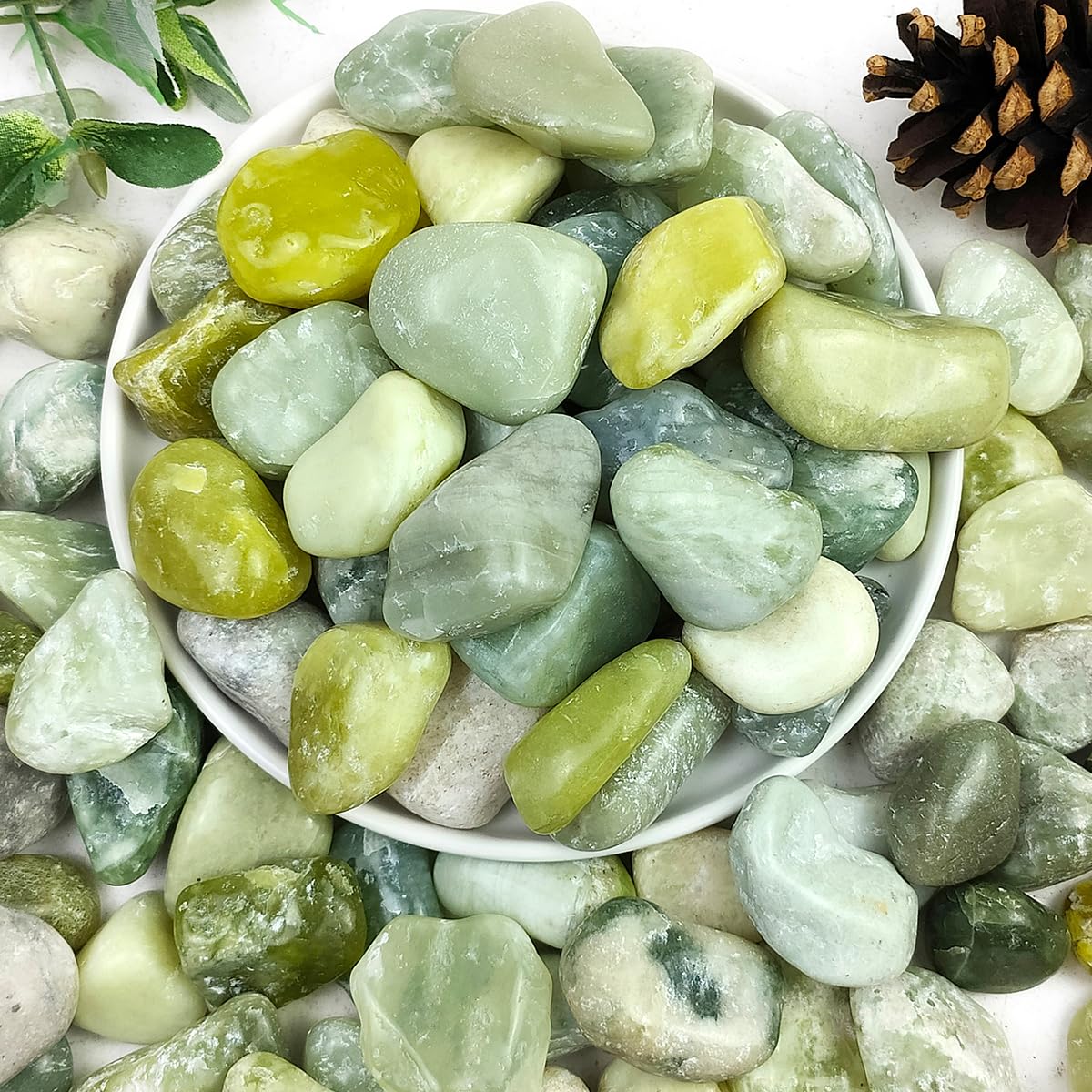
Rating: 4.6 ★ | Price: Mid-Range | Grain Size: 1-2 inch | Bag Weight: 2 lb | Material: Natural river rock | Surface Finish: Polished | Best Use: Decorative filler
These jade-colored river rocks have a glossy finish that adds a clean accent to lucky bamboo arrangements and vase displays. The 1–2 inch size hides soil well but restricts submerged use—the stones are too large for most aquarium substrates. At just 2 pounds, the cost per pound is higher than typical gravel, making this a decorative choice for visible areas rather than a practical fill for tanks.
Pros
- Distinct jade green color stands out in planters and vases.
- Polished surface rinses clean quickly with minimal dust.
Cons
- 1–2 inch size limits use in aquariums and makes it unsuitable for standard substrate.
Works well as a decorative accent for houseplant top dressing or vase filler, but the premium price and large size make it a poor fit for aquarium substrate.
Best for Vase Filler
Virekm Mixed Pebbles

Rating: 4.5 ★ | Price: Budget | Grain Size: 0.5-1.2 inch | Bag Weight: 1 lb | Material: Natural river rock | Surface Finish: Polished | Best Use: Crafts
These naturally polished stones have a smooth finish and attractive earth tones, making them suitable for small vase fillers and craft projects. However, the bag contains only 1 lb, and the stones often measure smaller than advertised, resulting in very low value per pound. For anyone looking to cover a fish tank base or do substantial landscaping, this isn’t the right pick.
Pros
- Naturally polished stones with appealing earth tones.
- Smooth finish with no sharp edges – safe for handling.
Cons
- Only 1 lb of stones – limits use to tiny accents, not economical for larger projects.
Fine for adding a decorative touch to a small vase or a craft project, but skip this if you need enough rocks for an aquarium or any larger-scale use.
Best for Vase Filler
SACKORANGE 2lb Gravel

Rating: 4.4 ★ | Price: Budget | Grain Size: 0.5-1 inch | Bag Weight: 2 lb | Material: Natural river rock | Surface Finish: Polished | Best Use: Crafts
These polished river rocks clean up easily and have a natural earth-tone mix that looks nice in vases or small craft projects. But the stones run larger than the advertised size—some near 1.5 inches—and the 2 lb bag feels lighter than expected, making it a poor value for aquarium substrate where consistent sizing and actual weight matter.
Pros
- Smooth polished surface rinses clean with minimal effort
- Natural mixed earth tones add a subtle, organic look to crafts
Cons
- Stone size can vary significantly, with individual pieces reaching about 1.5 inches rather than the advertised range
A reasonable pick for small decorative accents like vase fillers or craft projects, but skip it for aquarium gravel where consistent size and proper weight per bag are needed.
How to Choose
The most important decision when buying aquarium rocks is whether to choose natural uncoated stone or dyed/coated gravel – because coatings can leach toxins and harm fish, while natural rock simply requires proper rinsing.
Grain Size
Grain size affects fish safety, plant rooting, and cleaning ease. Gravel 1/4 inch or smaller is ideal for most freshwater fish and allows plants to root easily, but fine sand (under 2 mm) can be sucked into filters and is harder to clean without disturbing the substrate. Larger pebbles (0.5–1 inch) are safer for turtles to avoid swallowing but leave gaps where uneaten food can rot.
Weight per Bag
Bag weight directly determines coverage: a 10-gallon tank typically needs 10–15 lbs for a 1–2 inch layer. Small 1–2 lb bags are fine for accents or top dressing but will disappoint if you expect a full substrate. Calculate your tank’s footprint in cubic inches and compare to the bag’s weight – many buyers regret underestimating how much gravel they need.
Natural vs. Coated
Natural river rock has no artificial coatings and is chemically inert once rinsed. Dyed or fluorescent gravel uses paint or resin that can chip, fade, or leach toxins into the water. Multiple user reports link coated gravel to fish deaths within 24 hours. If you want color, use natural stones with permanent mineral colors (like jade or black quartz), not painted ones.
Polished vs. Rough
Polished stones are smooth and gentle on bottom-dwelling fish like corydoras and loaches, but some polishes use paraffin wax that can cloud water initially. Natural rough gravel provides better grip for plants and beneficial bacteria colonization. For planted tanks, unpolished, irregular stones hold substrate in place better than perfectly smooth pebbles.
Intended Use
Aquarium gravel is not the same as decorative pebbles for vases or crafts. Hardscape stones like slate are meant for building structures, not covering the tank floor. Using craft pebbles as primary substrate often leads to floating, shifting, or chemical leaching. Always check that the product is labeled for aquarium use and contains no coatings or dyes.
FAQ
Can I use any river rock in my aquarium?
Only if it’s natural, uncoated river rock that has been thoroughly cleaned. Avoid rocks from hardware stores that may contain limestone or metal traces – test with a drop of vinegar; if it fizzes, it can alter pH. Stick to products clearly labeled for aquarium use or known inert stones like slate, quartz, and river pebbles.
How do I know if aquarium gravel is safe for my fish?
Look for ‘natural river rock’ or ‘natural quartz’ in the material list – no mention of dyes, coatings, or ‘fluorescent’ finishes. Read recent reviews specifically about fish health. If multiple users report fish deaths within hours of adding the gravel, avoid it regardless of overall star rating. Rinse gravel 3–5 times until water runs clear before use.
Why did my aquarium gravel turn the water cloudy?
Cloudiness usually comes from dust or polishing residue. Even ‘pre-washed’ gravel should be rinsed until water runs clear. If the cloudiness persists after rinsing, the gravel may have a wax coating (common on polished stones) that can take days to settle. Using a fine filter pad can speed up clearing.
What size gravel is best for bottom-feeding fish like corydoras?
Corydoras and other soft-bellied bottom feeders need smooth, fine gravel under 2 mm (like sand) or round polished pebbles no larger than 1/4 inch. Sharp or large gravel can damage their barbels and fins. Avoid coarse, rough stones – natural play sand or fine quartz sand is ideal for these fish.