This post contains affiliate links. We may earn a small commission when you buy through our links — at no extra cost to you.
Setting up a planted tank should be exciting, but many aquasoils turn the first few weeks into a waiting game. Cloudy water and ammonia spikes are common surprises, especially with active soils that release nutrients as they settle.
The key is knowing which soil matches your setup – and your patience. Some soils need weeks of cycling, others work from day one with minimal disturbance. This guide breaks down the trade-offs so you can pick a substrate that fits your tank size, plant goals, and timeline.
The right soil won’t fix everything, but it removes the most common frustrations: murky water, stunted growth, and lost shrimp.
Top Picks
BEST NATURAL CLAY GRAVEL FOR AQUASCAPING:
Best for Planted Tanks
Fluval Plant & Shrimp Stratum
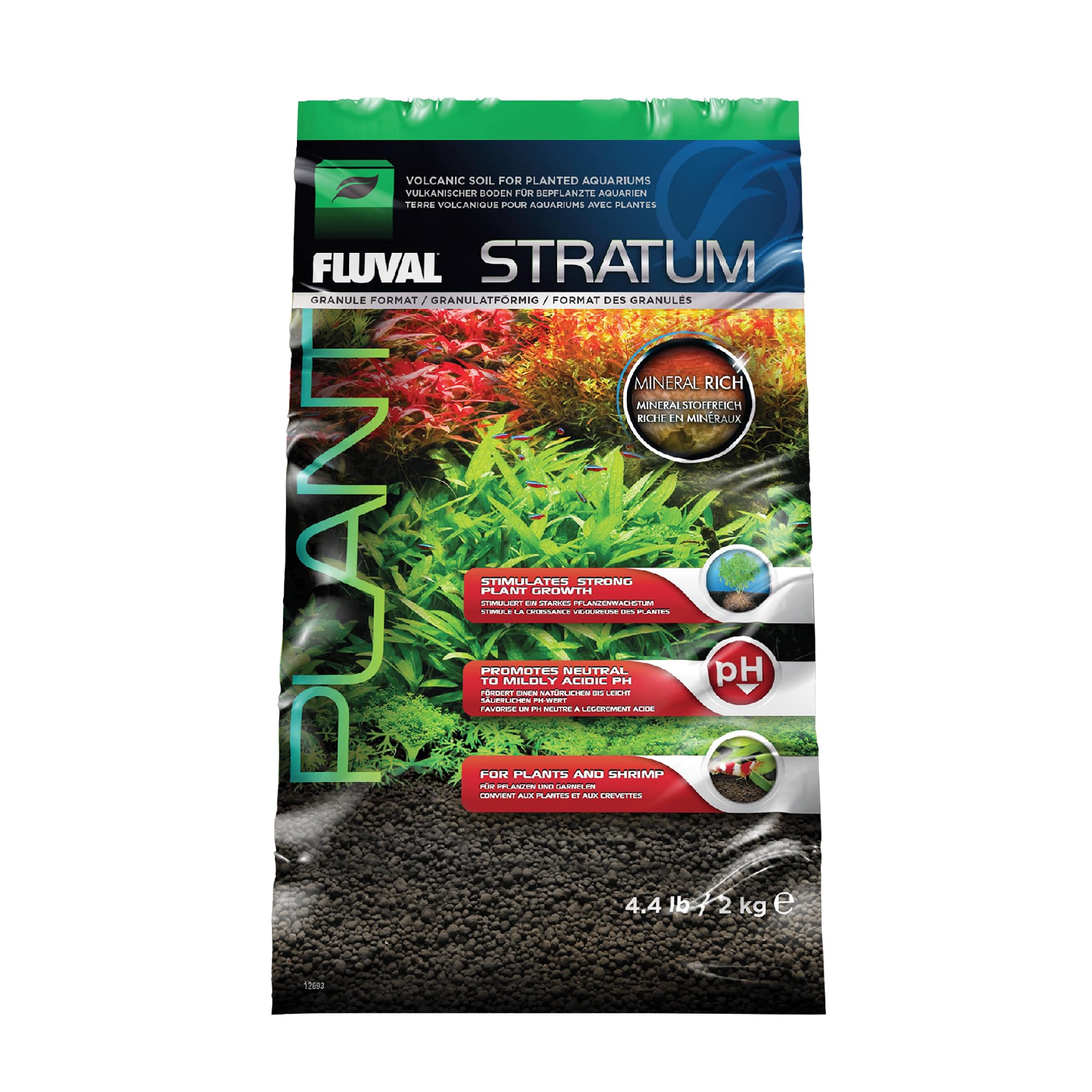
Rating: 4.7 ★ | Price: Mid-Range | Nutrient Content: Fertilized | Buffering Capacity: Neutral to slightly acidic | Bag Size: 4.4 lbs
Fluval Stratum delivers consistent plant growth and shrimp safety across the widest range of setups, from nano shrimp tanks to medium planted aquariums. Plant roots establish quickly, and the neutral-to-slightly-acidic pH supports most freshwater plants and shrimp without needing root tabs initially. Extensive community feedback confirms that plants thrive and shrimp remain healthy, making it a default recommendation for low-to-medium tech tanks.
This is the go-to choice for beginners and hobbyists building a planted tank. The tradeoff: water will be cloudy for 1–2 days after setup despite careful pouring, so patience is necessary before adding livestock. For those who want zero cloudiness on day one, rinse-heavy inert gravels may be a better fit. The bag size suits tanks up to about 20 gallons; larger setups require multiple bags.
Pros
- Supports strong root development and lush plant growth.
- Safe for shrimp and other delicate invertebrates.
- Widely used and recommended by aquascapers for consistent results.
Cons
- Water may appear murky for 1–2 days after initial fill, even with careful pouring.
For most planted freshwater tanks, Fluval Stratum offers the best balance of nutrient content, pH buffering, and community trust — just plan for the cloudiness period.
Best for Large Planted Tanks
CaribSea Eco-Complete 20lb
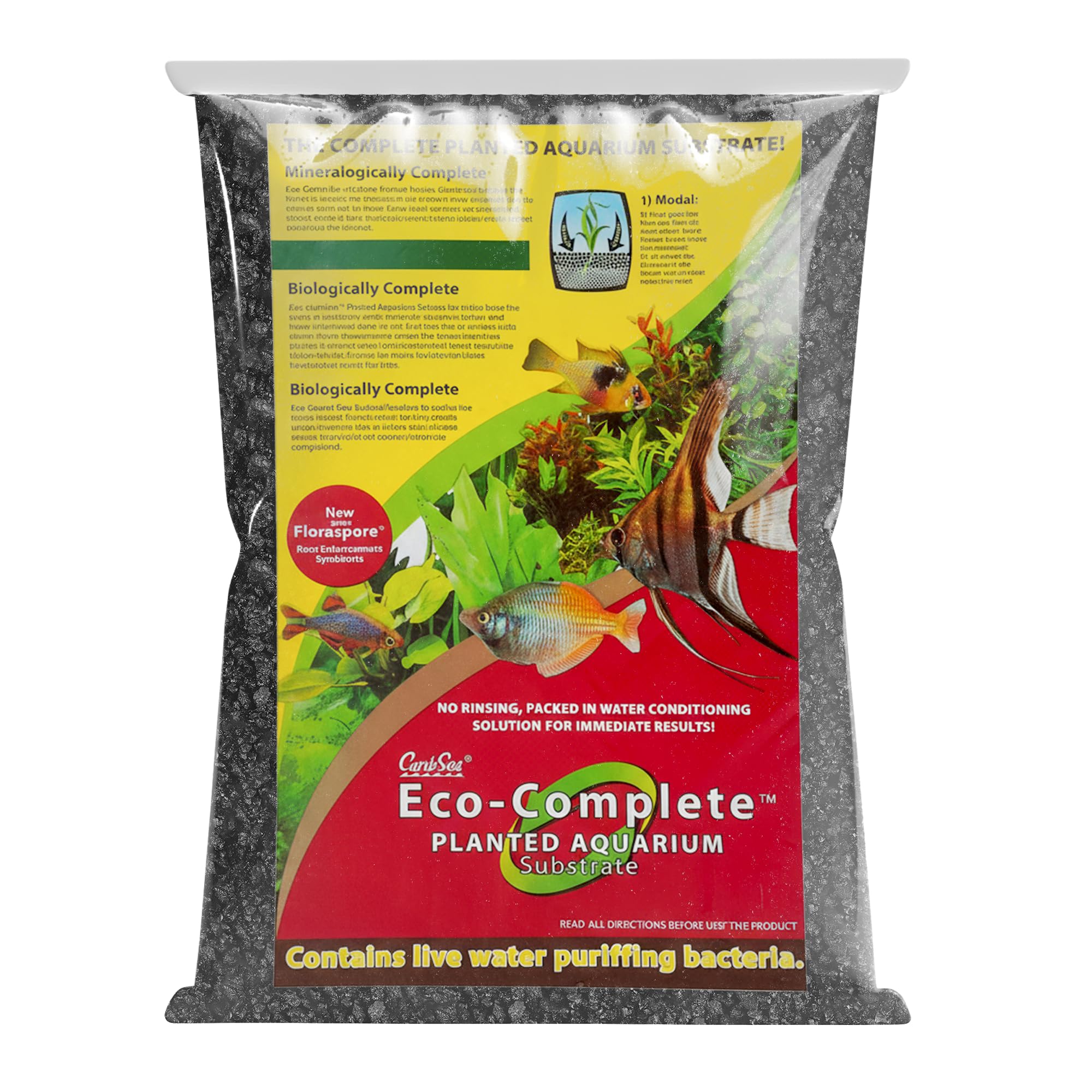
Rating: 4.6 ★ | Price: Mid-Range | Nutrient Content: Trace elements | Buffering Capacity: Neutral | Particle Size: 2-4 mm | Bag Size: 20 lbs
CaribSea Eco-Complete offers the biggest bag at the best price per pound, with trace elements that support plant roots from day one. The black gravel creates a rich backdrop that enhances fish and plant colors. This substrate works well for large low-tech setups where budget and volume are priorities – it is not designed for high-tech CO2 tanks that need precise pH buffering.
Pros
- Largest bag size among picks – most substrate per dollar
- Black color enhances tank visuals and makes fish stand out
- Built-in trace elements support healthy plant growth without immediate fertilization
Cons
- Initial cloudiness may appear after filling, lasting a few hours to days in some cases
Best value for large planted tanks where volume and cost matter more than pH control.
Best for High-Tech Planted Tanks
ADA Amazonia Ver 2 9L

Rating: 4.7 ★ | Price: Premium | Nutrient Content: Very rich, includes supplement | Buffering Capacity: Lowers to 5.5-6.5 pH | Particle Size: 2-5 mm | Bag Size: 9L
ADA Amazonia Ver 2 drives faster, denser plant growth than any competing aquasoil, making it the clear choice for CO2-injected aquascapes. However, it releases ammonia during cycling and buffers pH down to 5.5, which can harm sensitive shrimp and requires weeks of cycling before adding livestock. This is for experienced aquascapers with high-tech setups who can manage the extended cycling period – not for beginners or shrimp keepers aiming for stable neutral pH.
Pros
- Exceptional soil quality that supports strong plant growth.
- Promotes rapid plant growth, with high growth rates reported.
Cons
- Lowers pH significantly, which may harm sensitive shrimp species.
- Releases ammonia during cycling, requiring several weeks before adding livestock.
If you’re building a high-tech planted tank and have the patience to cycle properly, this is the most effective soil available – otherwise, the top pick is more forgiving.
Best for Nano Tanks
Aqueon Plant & Shrimp 5lb

Rating: 4.6 ★ | Price: Mid-Range | Nutrient Content: Limited nutrients, inert | Bag Size: 5 lbs
Spherical clay granules rinse cleanly and hold shape, making this substrate notably easy to set up and maintain in nano tanks. Compared to the top pick Stratum, it lacks built-in nutrients for heavy plant growth – root tabs are needed for anything beyond easy plants. The 5-pound bag size limits use to tanks up to 10 gallons; larger setups require multiple bags, reducing the cost advantage.
Pros
- Works well for planted and shrimp tanks.
- Dark color and spherical grains look clean and natural in small tanks.
- Rinses easily and holds its shape during maintenance.
Cons
- Requires multiple bags for tanks over 10 gallons.
- Limited nutrients; root tabs recommended for heavy plant growth.
A solid entry-level choice for small shrimp or plant tanks where ease of cleaning matters more than nutrient density – but for larger or high-tech planted tanks, a nutrient-rich substrate like Stratum is a better fit.
Best for Aquascaping
Seachem Flourite Black 15.4lb

Rating: 4.6 ★ | Price: Mid-Range | Nutrient Content: None, absorbs from water | Buffering Capacity: Does not alter pH | Particle Size: 2-5 mm | Bag Size: 15.4 lbs
The Seachem Flourite Black Clay Gravel delivers a deep black colour and porous structure that holds up across multiple tank setups – just rinse and reuse. Unlike the top pick’s active soil, this inert gravel relies on root tabs or liquid fertilisers to support plant growth. Plants root firmly into the clay and show strong growth when supplemented. The tradeoff comes during initial setup: the substrate requires thorough rinsing (4-5 times) to avoid prolonged cloudiness. This suits aquascapers who want a natural look and long-term reusability over a no-mess installation.
Pros
- Deep black colour enhances aquascape contrast and makes fish colours stand out.
- Plants root well and grow vigorously in the porous clay structure.
- Never needs replacing – rinse, reuse, and maintain across multiple tank setups.
Cons
- Requires thorough rinsing (4-5 times) to avoid weeks of cloudy water.
For aquascapers who value a natural black look and reusability over in-box convenience, this substrate delivers lasting aesthetics with an upfront rinsing commitment.
Best for Planted Tanks
LANDEN Aqua Soil 10lb

Rating: 4.6 ★ | Price: Mid-Range | Nutrient Content: Rich in organic acids | Buffering Capacity: Buffers to 6.0-6.5 pH | Particle Size: 3-5 mm | Bag Size: 10 lbs (5L)
Buffers pH to 6.0-6.5 and provides nutrients that fuel plant growth, approaching premium soil performance for less. Cycling ammonia spikes can be intense, demanding water changes, and some bags contain organic debris that needs removal. A solid choice for planted tanks willing to handle the extra prep.
Pros
- Promotes robust plant growth in planted aquariums
- Good quality active soil suitable for planted tanks and shrimp
Cons
- May release significant ammonia during cycling, requiring extended water changes before adding livestock
A budget-friendly active soil for planted tanks where pH buffering matters and you can manage a longer cycling period.
How to Choose
The most important decision is whether you want an active soil that buffers pH and releases ammonia, or an inert substrate that gives you full control over water chemistry.
Nutrient Content
Active aquasoils contain organic matter that breaks down and feeds plants for months. They reduce the need for liquid fertilizers but release ammonia during the first few weeks, requiring a full cycle before adding fish.
Inert substrates like clay gravel have no built-in nutrients. Plants rely entirely on root tabs or water column dosing. This gives you control but demands consistent fertilization. Choose based on how much maintenance you want upfront versus ongoing.
Buffering Capacity
Some soils actively lower pH and hardness, ideal for soft-water plants and shrimp. The stronger the buffer, the faster it can drop pH – ADA Amazonia drops to 5.5, which is too low for many fish and sensitive shrimp.
Neutral soils (like CaribSea or Seachem) leave pH untouched. They work for hard-water setups or when you want to maintain a specific pH without fighting the substrate. Match the buffer to your livestock’s tolerance.
Particle Size
Larger particles (3-5 mm) allow deeper root penetration and better water flow, reducing compaction over time. They’re easier to plant in but may look less natural in small tanks.
Finer particles (1-2 mm) pack tighter, holding delicate plant roots well, but can suffocate root zones if not aerated. For shallow nano tanks, fine grains work; for deep planted beds, choose medium-sized grains.
Bag Size
A 2-inch depth is the minimum for rooted plants, so calculate volume: tank length (inches) x width x 2, then divide by the soil’s volume. Most bags are labeled by weight (lbs) or volume (L) – 1L of dry soil covers roughly 1 square foot at 1 inch depth.
A 4.4 lb bag typically covers a 10-gallon tank to about 1 inch – you’ll need two bags for a proper 2-inch layer. Larger bags (20 lbs) are more economical per ounce, especially for tanks over 20 gallons.
FAQ
How long does it take for aquarium soil to stop clouding the water?
Most aquasoils cloud water for 1-3 days after setup if poured slowly or rinsed beforehand. Severe cloudiness lasting a week usually means the soil wasn’t rinsed enough or the tank was filled too aggressively. Use a plate or bowl to pour water gently, and run the filter with fine pads – clarity returns within 48 hours for well-prepared soils.
Do I need to rinse aquasoil before adding it to my tank?
Yes, unless the package says ‘no rinse’ (most don’t). Rinse in a bucket until the water runs mostly clear – some dust is normal. Over-rinsing can strip nutrients from active soils, so stop when the water is just lightly tinted. Inert clay gravel needs more thorough rinsing (4-5 times) to avoid weeks of murky water.
Can I use aquarium soil for shrimp tanks?
Yes, but choose carefully. Soils that buffer pH below 6.0 (like ADA Amazonia) can harm sensitive shrimp like Caridina species that need stable parameters. Fluval Stratum and Aqueon have milder pH effects and are widely used with shrimp. Always cycle the tank fully and test pH before adding shrimp.
Why does my aquasoil release ammonia?
Active aquasoils contain organic matter that breaks down, releasing ammonia as part of the natural cycling process. This is normal and helps establish the nitrogen cycle. Ammonia levels can spike to 4-8 ppm for 2-4 weeks. Do not add fish until ammonia and nitrite read zero. The ammonia is a feature, not a defect – it feeds plants once the cycle completes.