This post contains affiliate links. We may earn a small commission when you buy through our links — at no extra cost to you.
Shrimp can be surprisingly picky eaters. A food that sends one colony into a feeding frenzy might be completely ignored by another. That unpredictability makes choosing a shrimp food more about matching your colony’s habits than picking the highest-rated option.
This guide focuses on the real differences that matter: the form of the food, the protein source, and whether you need a daily staple or a targeted supplement. Different setups — a small Neocaridina tank, a Caridina breeding project, or a mixed community — call for different approaches.
The right choice comes down to what your shrimp will actually eat and what you want to achieve, from vibrant color to strong molting to thriving babies. No single food does it all, but the five picks here cover the most common scenarios.
Top Picks
Best for Small Colonies Staple
Hikari Shrimp Cuisine

Rating: 4.7 ★ | Price: $ | Form: Pellet | Protein Source: Spirulina, seaweed | Sinking Speed: Sinks well | Use Type: Daily staple | Key Additive: Astaxanthin
Shrimp actively chase and consume these sinking pellets the moment they hit the water. The tiny, water-stable granules stay intact for grazing, while astaxanthin intensifies reds and other colors. Spirulina, seaweed, and alfalfa meal provide a plant-based protein base that supports healthy molting cycles and steady growth. Even picky colonies adjust quickly, and breeders frequently see berried females and shrimplet survival increase after switching to this food — making it the go-to staple for small-scale Neocaridina and Caridina keepers.
The 0.35 oz bottle is best for colonies of 5–30 shrimp, where it remains a cost-effective daily diet. For larger setups, the price per ounce climbs quickly; keepers with extensive racks may prefer to reserve this as a high-palatability treat rather than the sole feeding. Its near-universal acceptance means it works for almost any freshwater dwarf shrimp, but the economics shift decisively once you cross roughly two dozen adults.
Pros
- Shrimp immediately swarm and devour pellets, ensuring no leftovers to decay.
- Astaxanthin and vitamins promote vivid coloration and smooth molting cycles.
- Encourages breeding activity, with owners seeing more berried females and shrimplets.
Cons
- Shrimp unfamiliar with pellets may ignore them initially before accepting.
- The 0.35 oz package is small; cost per feeding climbs for colonies over 30 shrimp.
A no-fuss staple that small to medium colonies thrive on, with wide palatability and visible color improvement that new and experienced keepers can count on.
Best for Breeding Biofilm Booster
GlasGarten Bacter AE

Rating: 4.8 ★ | Price: $$$ | Form: Powder | Protein Source: Biofilm bacteria | Sinking Speed: Disperses | Use Type: Supplement | Key Additive: Biofilm bacteria
Where the top pick covers daily nutrition, Bacter AE focuses on building biofilm — the continuous grazing layer that baby shrimp need to survive and grow. A tiny scoop (start with half the recommended amount) triggers a visible bloom of beneficial bacteria and micro-organisms, which keep shrimplets fed around the clock. This makes it a targeted tool for breeders rather than a general staple.
Best for keepers focused on colony expansion and shrimplet survival, not for those wanting a single all-in-one food. The main tradeoff: overdosing can cause bacterial blooms or ammonia spikes, and the powder may cloud the water if not mixed first. Works best alongside a balanced pellet or wafer for adult shrimp.
Pros
- Dramatically increases biofilm for continuous natural grazing, especially for baby shrimp
- Essential for shrimplet survival — greatly improves growth and survival rates
- Long-lasting; a tiny dose goes a long way, so the jar lasts months
Cons
- In small tanks, following the package amount can cause bacterial blooms or ammonia spikes
- Powder may cause temporary cloudiness if sprinkled directly into the tank rather than pre-mixed
A biofilm booster that earns its place in any breeding tank, but only as a supplement — pair it with a proper daily staple for best results.
Best for Natural Protein Daily
Ultra Fresh Shrimp

Rating: 4.7 ★ | Price: $$ | Form: Tablet/pellet | Protein Source: Sword prawn, silkworm | Sinking Speed: Floats partially | Use Type: Daily staple
With 50% fresh sword prawn and silkworm pupae content, this pellet triggers feeding frenzies that spur breeding and vibrant color — a protein-rich staple with a clean, non-clouding profile. The 7:3 meat-to-plant ratio supports growth and leaves water clear, while the absence of artificial additives appeals to purists.
A minority of colonies may not take to this food, and some pellets float unless pressed under water — quick fixes for a food that delivers natural, high-protein nutrition where it counts. This suits breeders and keepers who prioritize whole ingredients and are fine with minor coaxing.
Pros
- Exceptionally high palatability – shrimp swarm the pellets immediately
- Clean, non‑clouding formula that leaves little residue
- Natural ingredients with no artificial additives, supporting healthy growth and color
Cons
- Some pellets may float if air bubbles attach, requiring a quick press to sink
- Not all shrimp colonies will accept this food; a minority may ignore it
If you value natural, high-protein feeding over set-and-forget convenience, this mid-range pellet rewards with stronger color and breeding — the floating pellet quirk is a minor price for ingredient quality.
Best for Community Tank Mix
Invert Aquatic Micro Mix

Rating: 4.5 ★ | Price: $ | Form: Mixed discs/pellets | Protein Source: Fish meal, spirulina | Sinking Speed: Sinks well | Use Type: Daily mixed | Key Additive: Spirulina
The Invert Aquatics Micro Mix is the option to consider when your tank houses snails, shrimp, and bottom-feeding fish together. Its sinking discs and pellets hold together well without instant disintegration, and the bag size offers good value for mixed setups. The trade-off: some shrimp colonies show no interest, so it works best as part of a varied diet rather than a sole shrimp staple.
Pros
- Sinking discs stay intact long enough for bottom feeders to graze without immediate clouding.
- Cost-effective way to feed snails, shrimp, and corydoras from a single product.
Cons
- Overfeeding may cloud the water — careful portioning is needed.
Best for keepers who want a single food for a mixed community tank and are okay supplementing with a more shrimp-focused staple for picky colonies.
Best for Insect-Based Protein
Fluval Bug Bites Shrimp

Rating: 4.7 ★ | Price: $$ | Form: Granule | Protein Source: Black soldier fly, salmon | Sinking Speed: Slow-sink | Use Type: Daily staple | Key Additive: Omega 3/6
Black soldier fly larvae is the first ingredient — a sustainable whole-protein source that shrimp and small fish both chase actively. Compared to the top pick’s universal acceptance, this formula offers cleaner ingredient sourcing and higher omega content. It’s best for keepers who value eco-friendly protein and feed mixed tanks, though shrimp-only colonies will also appreciate the nutrition.
Pros
- Insect-based protein from black soldier fly larvae and whole salmon – shrimp and nano fish actively seek it out.
- Slow-sinking granules allow shrimp and bottom-dwelling fish to feed at depth without excessive floating.
- Sustainably sourced, whole-ingredient formula free of fish meal.
Cons
- Small 1.06 oz bottle may need frequent replacement for larger shrimp colonies.
A solid choice for shrimp keepers who prioritize insect-based protein and feed mixed tanks, as long as the small bottle size fits your colony’s appetite.
Best for Budget Molting Aid
Aqueon Shrimp Discs

Rating: 4.6 ★ | Price: $ | Form: Disc/wafer | Protein Source: Soybean meal | Sinking Speed: Crumbles quickly | Use Type: Daily staple | Key Additive: Bentonite clay
Aqueon’s shrimp discs include bentonite clay to support molting, a practical addition for budget-minded keepers. However, inconsistencies in palatability and disc durability prevent it from being a consistent daily staple. This food works best for tanks where shrimp already accept it, or in community setups where snails and bottom feeders will consume leftovers.
Pros
- Large jar at a budget-friendly price offers good value per serving.
- Bentonite clay content supports molting and shell strength.
Cons
- Some shrimp may show no interest in the discs, making it a gamble for picky colonies.
- Discs can break apart quickly in water, leaving uneaten debris that may affect water quality.
Best for keepers on a tight budget whose shrimp already accept it, or as a supplemental food in community tanks with scavengers.
Best for Calcium Supplement
KatsAquatics Ca+ Tablets
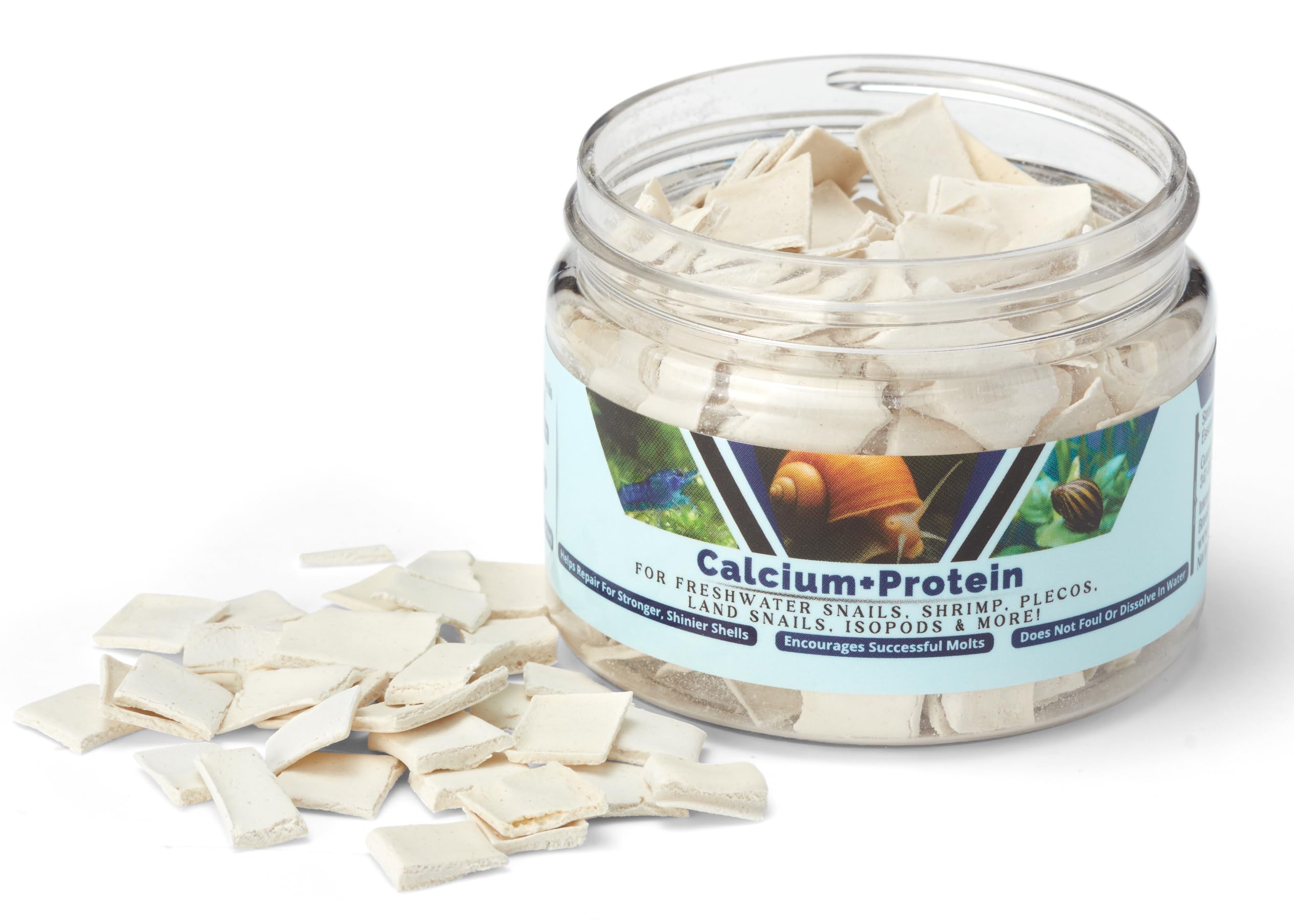
Rating: 4.6 ★ | Price: $$$ | Form: Tablet | Protein Source: Egg protein | Sinking Speed: Stays intact | Use Type: Supplement | Key Additive: Calcium
These calcium + protein tablets strengthen shells and improve molt success without clouding the water — a clear benefit for keepers dealing with shell erosion or failed molts. They are not a complete diet, and some shrimp and snails may refuse them. The small jar is priced at a premium, so this works best as a targeted supplement alongside a reliable daily staple for the rest of the colony.
Pros
- Targeted calcium support visibly improves shell condition and molting success in shrimp and snails.
- Tablets remain intact in water, avoiding cloudiness and nutrient waste.
Cons
- Some shrimp and snails may refuse the tablets — palatability is not universal.
Best for keepers specifically addressing molting issues or shell erosion, where its targeted delivery and water clarity benefits outweigh the cost and selective palatability.
Best for Immune Booster
GlasGarten Shrimp Fit

Rating: 4.7 ★ | Price: $$$ | Form: Powder | Protein Source: Beta-glucans | Sinking Speed: Disperses | Use Type: Supplement | Key Additive: Beta-glucans
GlasGarten Shrimp Fit delivers beta-glucans and mannan-oligosaccharides that bolster shrimp immune response, making it a targeted tool for colonies with persistent health issues. The fine powder disperses across the tank, reaching even baby shrimp. However, this is a specialty supplement, not a daily food – its high price per ounce and small bag limit it to emergency or breeding use. Overdosing can cloud water; starting with half the recommended amount avoids problems.
Pros
- Beta-glucans actively strengthen shrimp immune systems, improving survival during infections.
- Fine powder disperses throughout the tank, accessible to adult and baby shrimp alike.
Cons
- Easy to overdose – recommended dosage can cause water quality issues; starting with half or less is advisable.
Only reaches its potential for shrimp keepers facing recurring health problems or wanting to stabilize a breeding colony – not a general maintenance food.
Best for Larger Crustaceans
Invert Crab & Crayfish

Rating: 4.6 ★ | Price: $ | Form: Pellet | Protein Source: Spirulina, seafood | Sinking Speed: Sinks quickly | Use Type: Daily staple
These pellets sink fast and hold together well in flow, making them easy for bottom feeders to find — crabs, crayfish, and even snails will readily eat them. The bag is generously sized for the price, which keeps costs low for mixed-species tanks. However, the pellets are designed for larger crustaceans: small shrimp may ignore them, and the ingredient list (fish meal, grains) isn’t as clean as whole-food alternatives. This makes the food a decent filler for community setups, but not a suitable staple for a dedicated shrimp colony where consistent, species-appropriate nutrition matters.
Pros
- Sinks quickly and stays intact, even in flow — easy for bottom feeders to locate.
- Very affordable for the bag size; budget-friendly for multi-species tanks.
Cons
- Pellet size and formula target larger crustaceans — small shrimp may show little interest.
- Ingredients include fish meal and grains, less natural than whole-food blends.
Works well as a low-cost option for tanks with crayfish or crabs alongside shrimp, but keepers focused on a shrimp-only colony will want to look at a dedicated food with finer particles and cleaner ingredients.
Best for Breeder Premium
Dennerle Shrimp King

Rating: 4.6 ★ | Price: $$$ | Form: Stick | Protein Source: Aquatic invertebrates | Sinking Speed: Sinks quickly | Use Type: Daily staple | Key Additive: Broadleaf leaves
This natural formula supports breeding and coloration with water-stable sticks that sink quickly. Variable palatability among shrimp colonies and sticks that may need breaking for nano tanks make it a niche choice for dedicated breeders.
Pros
- Broadleaf leaves and tree bark support natural digestion and promote breeding activity.
- Sticks sink quickly and remain stable in water, allowing shrimp to graze without disintegrating.
Cons
- Higher cost than many alternatives, making it a premium investment for dedicated breeders.
Best for experienced breeders who value natural ingredients and have colonies that take to this food.
How to Choose
Shrimp feeding isn’t one-size-fits-all; the best food depends on your colony’s size, species, and whether you’re breeding or maintaining.
Form
The physical form of the food determines how your shrimp interact with it. Pellets and sticks sink quickly and stay intact, which is ideal for large colonies that need a focused feeding spot. Powders disperse throughout the tank, creating a natural grazing environment that benefits baby shrimp and biofilm feeders, but they require careful dosing to avoid water quality issues.
Wafers and discs often contain binders that help them hold shape, but some crumble too fast — leading to uneaten bits that can foul the substrate. Choose a form that matches your feeding routine: a single daily target (pellet) versus constant grazing (powder).
Protein Source
Protein quality directly affects growth, color, and breeding frequency. Animal-based proteins (fish meal, insect larvae, whole shrimp) provide complete amino acid profiles and are more readily digested by shrimp than plant proteins like soybean meal. Insect protein, especially black soldier fly larvae, offers a sustainable alternative with a natural fatty acid profile that mimics wild shrimp diets.
Marketing often trumpets ‘natural ingredients,’ but the first ingredient on the label tells the real story. If you see fish meal or soybean meal before any whole-food source, the protein is likely lower quality. For breeding colonies, a 7:3 meat-to-plant ratio (like Ultra Fresh) provides the extra protein females need for egg production.
Sinking Speed
Shrimp are bottom feeders, so food that floats or stays suspended may never reach them. Foods that sink rapidly — pellets, sticks, heavy discs — put the meal exactly where shrimp expect it. Powder and granules that drift down slowly can be eaten in the water column by fish or snails first, reducing what shrimp get.
A hidden trade-off: fast-sinking foods that hit the substrate may get buried in gravel or sucked into a filter intake. Foods that float partially (like some Ultra Fresh pellets) can be pressed underwater with a finger to force sinking, a minor extra step that many keepers are fine with.
Use Type
Not every food is designed to be a complete daily diet. Staple foods (pellets, sticks, granules) provide balanced nutrition for everyday feeding. Supplements like Bacter AE (biofilm) or KatsAquatics (calcium) target specific needs — boosting baby survival or improving molting success — but lack the full nutrient profile for long-term health.
Relying solely on a supplement without a staple can lead to deficiencies. Conversely, using a heavy protein staple without a biofilm source may leave young shrimp without enough microscopic food. The best approach is a rotation: a high-quality staple most days, with a supplement added once or twice a week based on your colony’s life stage.
Key Additive
Additives like astaxanthin (color), bentonite clay (molting), and beta-glucans (immunity) are not just marketing claims — they address real physiological needs. Astaxanthin is a carotenoid that shrimp cannot synthesize; they must get it from food to develop deep reds and oranges. Bentonite clay provides a calcium-like mineral that supports exoskeleton hardening, especially important during rapid growth or after molting.
Be cautious with immune boosters (beta-glucans, mannan-oligosaccharides): they are useful for stressed or diseased colonies but unnecessary for healthy shrimp. Overuse can tax the shrimp’s metabolism. Only add them when you have a specific problem, like unexplained die-offs or persistent infections.
FAQ
Why does my shrimp food float instead of sinking?
Some foods, particularly certain pellets and granules, trap air during manufacturing or packaging. Shrimp are bottom feeders and may ignore floating food. Press the food underwater with your finger or a feeding stick before releasing it, or switch to a brand that sinks reliably. The issue is not a defect — it’s a handling quirk that often resolves after the food absorbs water for a few seconds.
Can I feed my shrimp the same food as my fish?
You can, but it’s not ideal. Most fish foods are designed to float or stay suspended, which shrimp at the bottom may never reach. Fish foods also tend to be higher in protein and phosphorus, which can spike nitrate levels in a shrimp tank. If you must share food, choose a sinking pellet or wafer that both species can eat, and monitor water parameters closely. Dedicated shrimp foods are formulated with the right calcium-to-phosphorus ratio for healthy molting.
How much Bacter AE should I really use in a 10-gallon tank?
The manufacturer recommends one scoop (about 0.2 g) for 10 gallons, but many experienced keepers advise starting with half that — one scoop is known to cause bacterial blooms and ammonia spikes in small tanks. For a 10-gallon, use a quarter to a half scoop (a pinch) once or twice a week. Mix the powder in a cup of tank water before adding to avoid clumping. Adjust based on how quickly your shrimp consume the biofilm; you should see glass and plants develop a slight film, not cloudy water.
Are shrimp foods with copper harmful to my shrimp?
Copper in trace amounts — as a micronutrient — is essential for shrimp health and is present in most quality shrimp foods. The danger comes from copper-based medications or high levels in tap water. Foods that list copper sulfate or other copper compounds near the end of the ingredient list are safe; the concentration is far below toxic levels. If you are concerned, check the guaranteed analysis: levels below 0.01% are fine. Avoid adding liquid copper treatments to a shrimp tank.