This post contains affiliate links. We may earn a small commission when you buy through our links — at no extra cost to you.
Goldfish food isn’t one-size-fits-all. Fancy varieties like orandas need sinking pellets to avoid swim bladder issues, while pond comets thrive on floating sticks. Many ‘koi and goldfish’ blends miss the mark for smaller mouths or produce cloudy water.
The real difference comes down to food form, pellet size, and how well the ingredients match your fish’s digestive system. Overfeeding a floating stick to a fancy goldfish can cause buoyancy problems; choosing a flake for a pond can leave a mess.
This guide matches the right food to your specific goldfish setup – whether you keep a single tank or a backyard pond – so you can feed with confidence and stop guessing which bag to grab.
Top Picks
Best for Common Goldfish Starters
Tetra Goldfish Variety Pellets
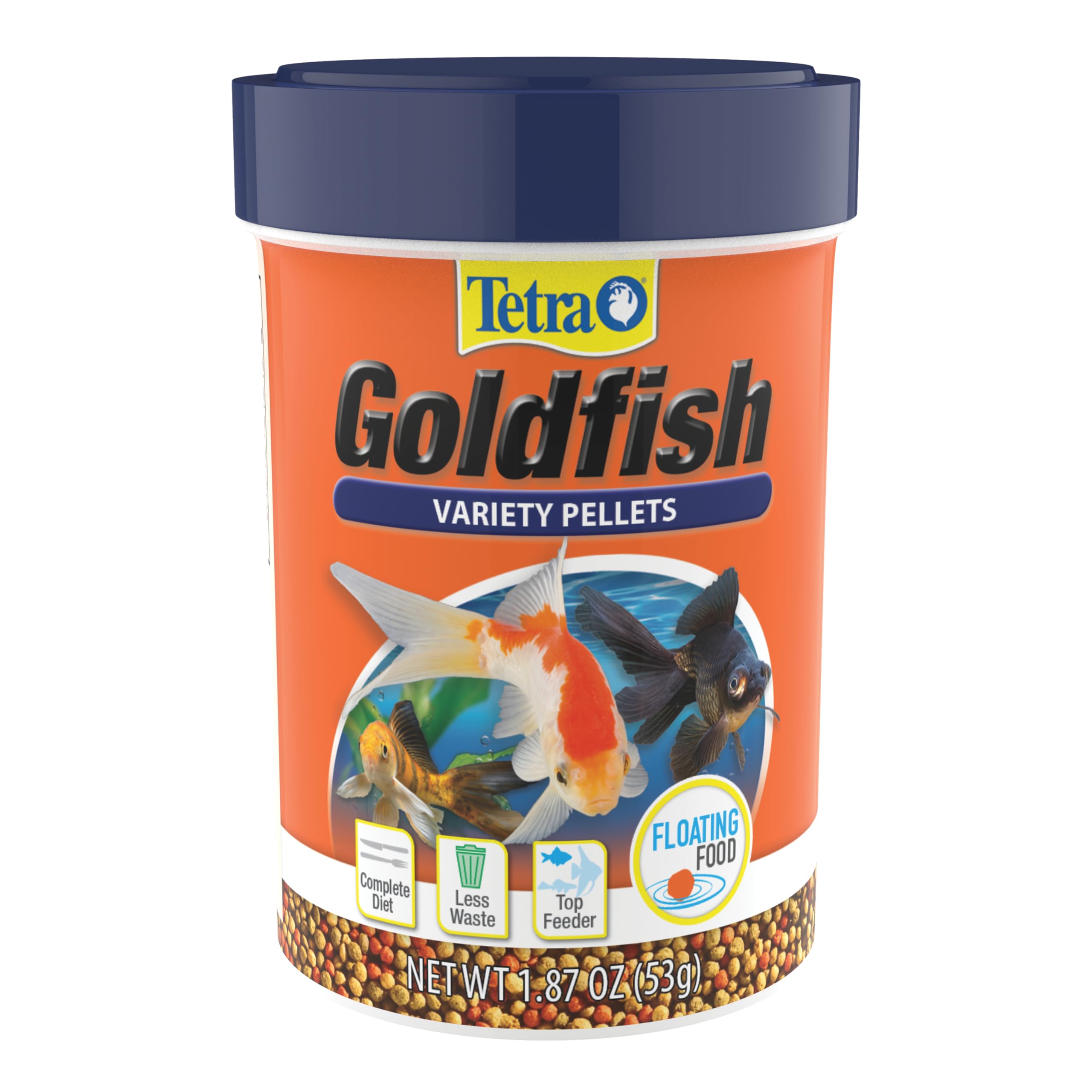
Rating: 4.7 ★ | Price: $ | Food Form: Floating pellets | Goldfish-Specific: Yes (all life stages) | Color Enhancement: No | Water Clarity: Mixed | Fish Acceptance: Very high
Tetra Goldfish Variety Pellets solve the problem of picky eaters with a balanced floating mix that goldfish routinely gobble up within seconds. The multi-colored pellets include fish meal, shrimp, and algae with added probiotics for digestion, and they produce less solid waste than typical flakes, which helps keep the tank clearer over time.
This is the right food for beginners keeping one or two common goldfish in an aquarium. It’s cheap, widely available, and works when other brands get ignored. For fancy goldfish prone to swim bladder issues, the floating pellets can be a problem — sinking formulas suit those breeds better. Large pond goldfish may find the pellets too small to feel satisfied; they’ll need a larger stick or wafer.
Pros
- Goldfish eagerly accept the pellets, turning feeding into a clear, active moment.
- The container size relative to cost makes it a low-risk staple that lasts months for a small tank.
- Less waste than flakes means fewer suspended particles and slower water fouling.
Cons
- In some setups, water may become cloudy despite the formula’s clear-water claims.
- Pellet size is small enough that large goldfish may not feel full after feeding.
The ideal entry-level goldfish food when you need something that fish will actually eat — just keep portions moderate to avoid minor water clarity tradeoffs.
Best for Fancy Goldfish
Hikari Saki Fancy Goldfish

Rating: 4.7 ★ | Price: $$$ | Food Form: Sinking granules | Goldfish-Specific: Yes (fancy goldfish) | Color Enhancement: Yes (astaxanthin) | Water Clarity: High | Fish Acceptance: High
Unlike budget-friendly goldfish staples, Hikari Saki is engineered for the specific needs of fancy breeds like orandas and ranchus. Its sinking granules discourage surface air gulping, a common trigger for buoyancy issues, while astaxanthin and spirulina intensify reds and whites without muddying the water.
This is a dedicated feed for aquarists keeping show-quality fancy goldfish indoors. The fast-sinking pellets and premium price tag make it a poor match for pond goldfish that feed at the surface or for owners managing a large, cost-sensitive collection.
Pros
- Digestive support tailored to fancy goldfish, reducing buoyancy issues.
- Vibrant color enhancement, especially in reds and whites.
- Probiotics aid waste breakdown, helping maintain water clarity.
Cons
- Pellets sink rapidly; surface-feeding pond goldfish may ignore them.
- Small 7 oz bag drives a higher cost per ounce than bulk alternatives.
For dedicated fancy goldfish keepers, this is the benchmark for swim bladder care and coloration—at a premium per ounce.
Best for Pond Goldfish
TetraPond Pond Sticks

Rating: 4.8 ★ | Price: $$ | Food Form: Floating sticks | Goldfish-Specific: Yes (pond) | Color Enhancement: Yes (carotenoids) | Water Clarity: Very high | Fish Acceptance: Very high
The strongest reason to choose TetraPond Pond Sticks is water clarity: the floating formula won’t cloud your pond, and both goldfish and koi take to them readily. The stick size may be too large for very small goldfish (breaking them helps), and the bag’s zipper seal can lose its grip over time, making airtight storage a challenge. This is the right pick for pond owners with medium-to-large goldfish who value clear water above all else and are willing to transfer food to a separate container.
Pros
- Won’t cloud pond water, keeping the view clear for you and your fish.
- Goldfish and koi eagerly eat these sticks — high acceptance reduces wasted food.
- A large bag at a fair price offers good value for regular feeding.
Cons
- Stick size may be too large for very small goldfish — breaking them into pieces is a workaround.
- Bag’s zipper seal can fail, making it difficult to maintain an airtight closure.
If clear water and eager fish are your priorities, these sticks deliver — just plan to transfer to an airtight container once opened.
Best for Show-Quality Color
Blue Ridge Platinum Pro Pellets

Rating: 4.7 ★ | Price: $$$ | Food Form: 3/16" pellets | Goldfish-Specific: Yes (koi/goldfish) | Color Enhancement: Yes (spirulina) | Water Clarity: High | Fish Acceptance: High
Blue Ridge Platinum Pro Pellets uses spirulina and canthaxanthin to deepen reds and oranges in goldfish, with probiotics that help reduce solid waste and keep pond water clearer. The 3/16" floating pellets work well for common pond goldfish and larger fancy varieties, though some fish may need a gradual transition from their previous food. The premium price reflects the ingredient quality – this is a targeted choice for owners who prioritize color and health over cost.
Best for goldfish keepers who want visible color improvement and are willing to invest in a higher-cost food. Not the right fit for budget-conscious buyers or fish that have shown pickiness with new foods – trying a smaller bag first is advisable.
Pros
- Noticeable color enhancement from spirulina and canthaxanthin
- Probiotics aid digestion and reduce waste output
- Floating pellets suit surface-feeding goldfish well
Cons
- Higher cost than standard goldfish foods – a premium investment
- Some fish may refuse the pellets initially and require a transition period
A clear choice for goldfish owners seeking vibrant color and digestive support, provided the premium price and possible acceptance lag are acceptable.
Best for Large Pond Fish
Kaytee Koi’s Choice Pellets

Rating: 4.6 ★ | Price: $$ | Food Form: Floating pellets | Goldfish-Specific: Yes (large pond) | Color Enhancement: No | Water Clarity: Good | Fish Acceptance: Moderate
With 35% protein and a 10-pound bag, Kaytee Koi’s Choice offers the most cost-effective bulk value in this set for large pond fish. The floating pellets keep feeding visible and the high protein supports growth and weight gain. This suits owners of large koi and pond goldfish that feed eagerly and want to minimize reordering. For small goldfish, the pellet size can be too large, and some fish may refuse the food entirely—so it’s a gamble. Unlike the top pick’s near-universal acceptance, this one prioritizes value over palatability. Best tested with a smaller bag first, and the 10-pound bag lasts a long time for a single pond, reducing trips to the store while offering consistent nutrition.
Pros
- High protein content (35%) supports growth and weight gain in pond fish.
- Cost-effective bulk – 10-pound bag at a low per-pound price.
- Floating pellets allow easy observation of feeding behavior.
Cons
- Pellet size may be too large for small goldfish – smaller fish can struggle to eat them.
- Some fish may refuse the food entirely, making acceptance uncertain.
A cost-effective bulk choice for large pond fish that eat eagerly, but palatability and size limit its appeal for smaller or picky fish.
Best for Color Enhancement Ponds
TetraPond Koi Vibrance Sticks

Rating: 4.8 ★ | Price: $$ | Food Form: Floating soft sticks | Goldfish-Specific: Yes (pond goldfish) | Color Enhancement: Yes (carotenoids) | Water Clarity: Good | Fish Acceptance: Very high
This color-specific formula visibly brightens reds and oranges in pond goldfish within weeks. It suits medium-to-large goldfish that can handle the stick size. However, sticks are too large for small goldfish under 4 inches – break them or choose a smaller option. Best used as a supplement, not a standalone staple.
Pros
- Fish show visibly brighter reds and oranges after a few weeks of feeding.
- Large 2.42 lb bag provides good value for pond keepers feeding multiple fish daily.
Cons
- For small goldfish under 4 inches, the stick size may be too large – breaking or switching to a smaller food is needed.
A solid choice for pond owners with medium-to-large goldfish who want color enhancement, but not suitable for small or fancy goldfish as a standalone food.
Best for Mixed-Size Ponds
TetraPond Variety Blend

Rating: 4.7 ★ | Price: $$ | Food Form: Mixed sticks | Goldfish-Specific: Yes (pond) | Color Enhancement: Yes (mix) | Water Clarity: Good | Fish Acceptance: Very high
This bag combines Pond Sticks, Koi Vibrance, and Spring & Fall formulas into one convenient mix, making it easy to offer dietary rotation without buying separate bags. The variety of textures and sizes works for ponds with both large and small goldfish—pieces are small enough for juveniles yet substantial enough for adults. The mid-range price delivers good value for a season’s worth of food. However, the bag’s zipper can fail, requiring a transfer to a separate container, and some fish may only eat certain components (often ignoring the smallest pieces). For pond keepers who want dietary variety and don’t mind occasional selective eating or a container swap, this is a practical option. It’s less suited for fancy goldfish that need a single consistent formula or for very small tanks where the bag size is excessive.
Pros
- Variety keeps fish interested with a mix of textures and nutrients.
- Good value for a multi-formula bag that lasts a full season.
Cons
- Bag zipper may fail, requiring transfer to another container.
Best for pond owners with multiple fish sizes who want dietary rotation and don’t mind an occasional selective eater or transferring the food to a resealable container.
Best for Budget Flake Lovers
TetraFin Plus Goldfish Flakes

Rating: 4.8 ★ | Price: $ | Food Form: Flakes | Goldfish-Specific: Yes (all goldfish) | Color Enhancement: No | Water Clarity: Mixed | Fish Acceptance: High
TetraFin Plus Goldfish Flakes offer strong palatability for goldfish accustomed to flake food, and the algae content supports digestion. The large bottle is budget-friendly. However, the flake form can cloud water more than pellets, and some bottles arrive with crushed flakes — a tradeoff for owners who keep a close watch on water clarity or prefer consistent texture.
Pros
- High acceptance from goldfish that prefer flakes
- Cost-effective large bottle
Cons
- Flakes can cloud water and some arrive crushed
A budget-friendly choice for goldfish that already eat flakes and where slight water cloudiness is manageable.
Best for Young Fish Growth
Blue Ridge Mini Growth Pellets

Rating: 4.6 ★ | Price: $$ | Food Form: Mini pellets | Goldfish-Specific: Yes (small fish) | Color Enhancement: No | Water Clarity: Good | Fish Acceptance: Moderate
The mini pellet size suits young goldfish and supports visible growth, making it a strong option for pond owners raising juveniles. However, some fish may refuse the pellets, and the bag can arrive with broken pieces or dust. Start with a small bag to test acceptance before committing to the 5-pound size.
Pros
- Perfect size for small goldfish – easy to eat and digest.
- Promotes visible growth in young fish.
Cons
- Some goldfish may refuse these pellets – a trial bag is advisable before buying in bulk.
Best for owners raising young goldfish who are willing to test palatability – buy the smallest bag first.
Best for Texture Variety
TetraPro Goldfish Crisps

Rating: 4.7 ★ | Price: $ | Food Form: Crisps | Goldfish-Specific: Yes (goldfish) | Color Enhancement: No | Water Clarity: Mixed | Fish Acceptance: Very high
Goldfish readily accept the unique crisp texture, offering a change from flakes by floating initially then sinking gradually to suit all feeding zones. The bottle is compact though, and overfeeding can cloud water — this works best as a supplement or rotation food for small tanks where the modest size and slight clarity risk are manageable.
Pros
- Goldfish quickly take to the crisp texture, often gobbling them up during feeding
- Fl oats then sinks slowly, making the food accessible to fish at any level in the tank
Cons
- Overfeeding can cloud the water — portion control matters to maintain clarity
Best as a treat or variety option for goldfish in smaller tanks, not a primary daily food
How to Choose
Goldfish food selection hinges on matching the food form and pellet size to your fish’s mouth and feeding behavior, not just brand reputation.
Food Form and Pellet Size
Floating pellets work for top-feeding pond goldfish but can cause fancy goldfish to gulp air, leading to swim bladder issues. Sinking granules prevent that problem by letting fish feed from the bottom. Flakes disperse quickly and are best for small tanks where you can control portions.
Pellet size matters equally. A stick too large for a 3-inch fancy goldfish will be ignored or must be broken. Mini pellets suit juveniles and small mouths, while larger sticks are for 6+ inch pond fish.
Goldfish-Specific Formulation
Many ‘koi and goldfish’ blends have protein levels better suited for fast-growing koi. Goldfish need a lower protein (30-40%) and higher fiber (5-10%) profile to digest efficiently and avoid constipation. Look for foods explicitly labeled for goldfish, especially for fancy breeds.
Color Enhancement Claims
Carotenoids like astaxanthin and canthaxanthin brighten reds and oranges, but the effect depends on the base diet. A fish already eating a varied diet may show less change. Foods with spirulina or krill often deliver the most visible results within a few weeks, especially for lighter-bodied goldfish.
Water Clarity Impact
Flakes and high-waste foods can cloud water quickly if overfed. Floating sticks with high digestibility (low ash/filler) produce less debris. Sinking foods may leave leftovers on the bottom that decompose. Overfeeding any form will compromise water quality – feed only what fish consume in 2-3 minutes.
Fish Acceptance Rate
Even highly rated foods can be rejected by individual fish. A food that works for one pond may be ignored in another. Start with a small bag or sample size, and transition gradually over a week by mixing with the current food. If refusal persists, try a different form (e.g., flakes instead of pellets).
FAQ
Will goldfish food meant for koi work for my fancy goldfish?
Koi food typically has higher protein (35-40%) and less fiber than fancy goldfish need, which can lead to constipation or swim bladder issues. While occasional use is fine, a goldfish-specific formula (especially sinking pellets) is better for daily feeding. Stick to brands that target fancy goldfish for long-term health.
Why does my goldfish food make the water cloudy?
Cloudy water usually comes from overfeeding or low-digestibility ingredients like excessive fillers or flake dust. Floating sticks with high digestibility (e.g., Tetra Pond Sticks) produce less waste, while flakes and some pellets break down faster. Feed only as much as your fish eat in 2-3 minutes and consider a food with probiotics to improve waste breakdown.
How do I transition my goldfish from flakes to pellets?
Mix the new pellets with the old flakes in a 25/75 ratio for a few days, then gradually increase the pellet proportion over a week. Soak pellets for 30 seconds if your fish struggle with hard pieces. Most goldfish adapt within a week; if refusal persists, try a different pellet size or a sinking version.
What size pellets should I feed my 3-inch goldfish?
For a 3-inch goldfish, choose mini pellets (1.5-2 mm) or small flakes. Large sticks or 3/16" pellets are too big for their mouths and may be ignored or cause choking. As they grow beyond 4 inches, you can gradually move to larger pellets (3 mm or small sticks).