This post contains affiliate links. We may earn a small commission when you buy through our links — at no extra cost to you.
Many aquarium plants sold as ‘low light’ actually need moderate light to maintain color and growth. That leaves hobbyists with dim tanks watching their plants slowly melt away. This guide cuts through the marketing by focusing on species and sellers with a proven track record under basic LED lighting.
From rooted background plants to floating cover, each recommendation is matched to a specific tank size and purpose. No more guessing which plant will work in your 10-gallon Betta tank or your 20-gallon community aquarium.
Top Picks
Best for Large Tank Background
Marcus Amazon Sword (3-pack)

Rating: 4.6 ★ | Price: $$ | Light Tolerance: Low tolerant | Growth Rate: Medium | Plant Type: Rooted rosette | Packaging: Bare root
Amazon Sword plants from Marcus arrive at 7–12 inches with vibrant green leaves and a dense root system that grabs the substrate immediately. They tolerate standard LED lighting and even dimmer conditions without melting, making them one of the more forgiving background options for low-tech tanks.
This pack suits beginners setting up a 20-gallon or larger tank who want tall greenery with minimal fuss. The height works well for the back or midground, but will overrun smaller tanks — stick to 10+ gallons. A quick quarantine after arrival can prevent any hitchhiker snails. If you’re tempted by the cheaper three-pack from Water Plants, expect smaller plants and higher loss rates.
Pros
- Arrive with healthy green leaves and robust roots that plant easily.
- Consistent size often larger than expected for the price.
- Strong root system anchors quickly and helps the plant establish.
Cons
- Some shipments may include snail hitchhikers if plants aren’t quarantined.
- Leaves can be eaten by herbivorous fish like goldfish or plecos.
The Marcus 3-pack is a straightforward choice for anyone setting up a low-tech tank with moderate to tall backgrounds — no guesswork on size or health.
Best for Nano Foreground
Marcus Anubias Nana Petite

Rating: 4.6 ★ | Price: $$ | Light Tolerance: Low | Growth Rate: Slow | Plant Type: Rhizome | Packaging: Potted
For shrimp tanks or nano setups, this potted Anubias stays compact at 1–2 inches, with dark green leaves that add rich color without overwhelming. In larger tanks, the small size may get lost, so it’s best kept in foregrounds where its slow growth and low-light tolerance make it a tidy, low-maintenance choice.
Pros
- Healthy plants with strong roots – arrives ready to grow.
- Compact dark green foliage adds rich color to foregrounds.
- Careful packaging ensures live arrival.
Cons
- Very small leaves may be nearly invisible in tanks over 10 gallons.
- Slow growth means it won’t fill in gaps quickly – requires patience.
Best for nano and shrimp tank owners who want a low-light foreground plant that stays tidy – not for those needing quick coverage or visible impact in larger tanks.
Best for Unique Centerpiece
SubstrateSource Anubias Wrinkle Leaf
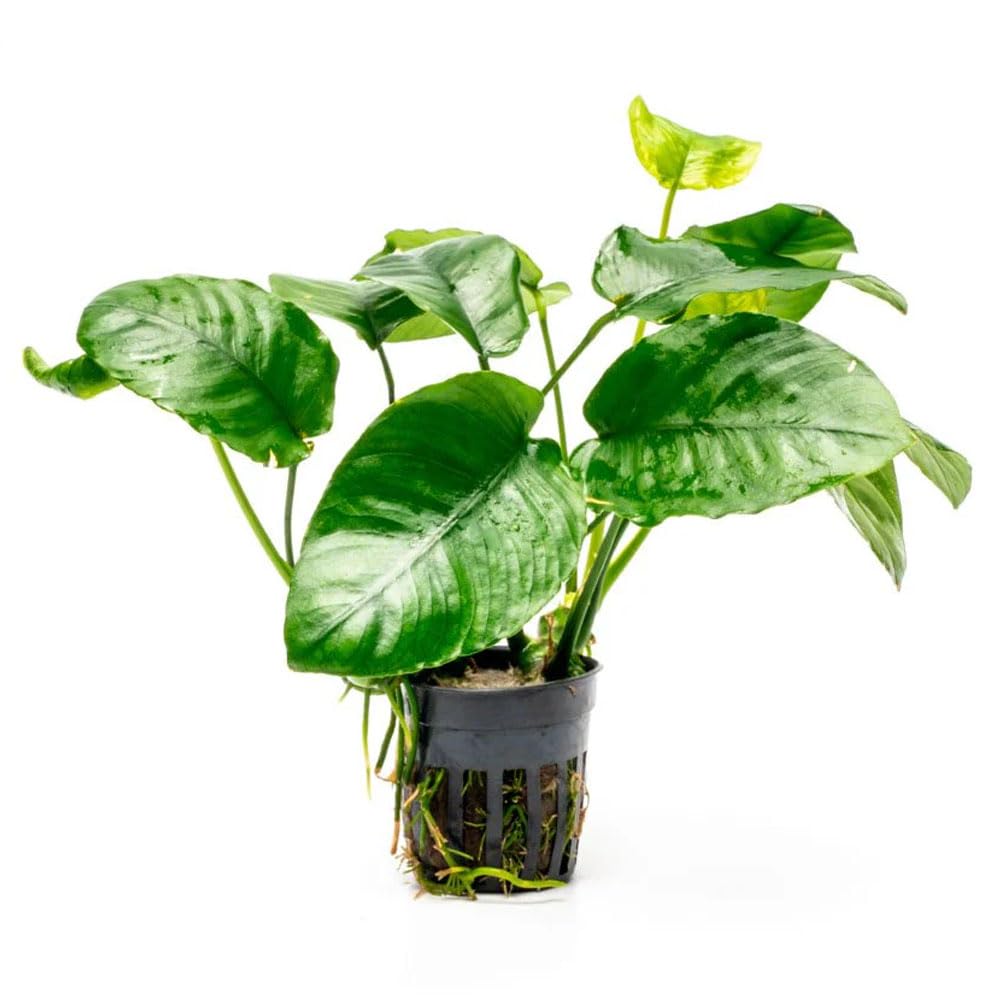
Rating: 4.5 ★ | Price: $$ | Light Tolerance: Low | Growth Rate: Slow | Plant Type: Rhizome | Packaging: Potted
The wrinkle-leaf variety gives this Anubias a distinctive look that stands out from standard broad-leaf types, and health reports are consistently positive. It grows slowly and plants may arrive smaller than the advertised size — a tradeoff for the unique leaf texture. This makes it a reasonable fit for hobbyists who want a centerpiece plant to attach to hardscape in low-light setups, provided they don’t need fast growth or a precise size guarantee.
Pros
- Unique wrinkle leaf texture adds visual interest to aquascapes
- Healthy root systems and robust plants on arrival
- Packaging includes heat packs in cold weather, protecting plants during transit
Cons
- Plants may arrive smaller than the listed 4-6 inches — worth verifying sizes before purchasing
A healthy, uniquely textured Anubias for low-tech tanks — best for aquascapers who value leaf character over fast growth.
Best for Budget Variety
Big Pete’s Java Fern & Anubias

Rating: 4.3 ★ | Price: $ | Light Tolerance: Low | Growth Rate: Slow | Plant Type: Rhizome | Packaging: Bare root
This budget bundle pairs a Java Fern with a broadleaf Anubias—two species that handle dim tanks without CO2—giving new aquarists an affordable way to add variety. Neither plant needs nutrient-rich substrate; simply attach the rhizomes to driftwood or rock and they’ll settle in under basic LEDs, slowly growing into textured midground accents.
Plant size and health are inconsistent. Orders can include specimens that are tinier than expected or struggle after transit. That makes this bundle a sensible pick for those who can absorb an occasional dud—not for anyone needing guaranteed, instant greenery. With patience and a bit of luck, the survivors become resilient, low-care additions that suit nano tanks and 10-gallon setups.
Pros
- Affordable entry point to try both Java Fern and Anubias at once.
- Typically arrives alive and well-packaged.
- Thrives in low light with no CO2 or special substrate needed.
Cons
- Specimens may be smaller than expected for the price.
- In some shipments, plants may arrive dead or fail shortly after.
The Java Fern and Anubias bundle is a sensible gamble for beginners who want to test two species cheaply and can handle the occasional undersized or unhealthy plant—not for those who need guaranteed instant greenery.
Best for Low-Light Floating
APC Water Spangle (12 plants)

Rating: 4.2 ★ | Price: $ | Light Tolerance: Low to medium | Growth Rate: Fast | Plant Type: Floating | Packaging: Bare root
Water spangle handles low to medium light without complaint, making it one of the few floaters that actually works under basic aquarium LEDs. Once settled, it doubles in size quickly, providing surface cover that helps control algae and gives fry a place to hide. The catch is that some plants arrive with blackened leaves or fail to grow, and the portion can feel smaller than expected. A few snails may hitchhike in, so rinsing before introduction is worth the time.
This is a solid option for beginners with low-tech tanks who want cheap surface coverage and don’t mind occasional dead-on-arrival plants. It’s not suited for high-flow setups — water spangles dislike agitation — and those needing pest-free guarantees should look elsewhere. For the price, it delivers where many floaters fail: growing under dim light without CO2 or strong fertilizer.
Pros
- Grows well under basic LEDs with no special setup needed
- Fast-spreading once acclimated, covering the surface in days
- Plants arrive green and healthy in most cases
Cons
- Some plants may arrive with blackened leaves or fail to grow
- Can introduce snails; worth rinsing before adding to the tank
If you need a low-light floating plant on a budget and can tolerate a small risk of dead leaves or hitchhikers, this water spangle delivers exactly what it promises.
Best for Budget Background
Water Plants Amazon Sword (3pk)

Rating: 4.4 ★ | Price: $ | Light Tolerance: Low tolerant | Growth Rate: Medium | Plant Type: Rooted | Packaging: Bare root
Amazon Sword plants at the lowest price for a three-pack — a clear budget entry point for low-light tanks. Leaves typically arrive green and healthy, and the value is hard to beat. However, some plants can arrive dead or undersized, making this a better fit for those willing to absorb occasional losses or experienced enough to revive stressed specimens. Compared to the top pick, health consistency is lower, which is why this sits as a budget alternative.
Pros
- Leaves arrive green and healthy in most cases
- Budget-friendly pricing for a three-pack of Amazon Sword
Cons
- Plants may arrive dead or significantly undersized
Buy this if your budget is tight and you’re comfortable treating aquarium plants as a consumable — otherwise the top pick offers more consistent condition.
Best for Popular Java Fern
AquaLeaf Java Fern

Rating: 4.2 ★ | Price: $ | Light Tolerance: Low | Growth Rate: Slow | Plant Type: Rhizome | Packaging: Bare root
Java Fern is a proven low-light, low-maintenance plant that attaches easily to wood or rock. AquaLeaf’s version is the most widely sold – over a million units – but the tradeoff is variable condition: some orders arrive with small, wilted, or yellowed leaves. For buyers who can tolerate occasional losses and want the lowest price per plant, the cost makes it worth trying. If consistent size and health are critical, a more consistent seller is a safer bet.
Pros
- Thrives under basic aquarium LEDs with no CO₂ or special care
- Extremely high sales volume reflects broad buyer interest
Cons
- In some cases, plants arrive wilted, dead, or much smaller than expected
Works well enough for low-light setups if you can accept the occasional dead or tiny plant – best for budget-focused buyers who want volume over consistency.
Best for Ultra-Cheap Cover
APC Giant Duckweed (30pk)

Rating: 4.3 ★ | Price: $ | Light Tolerance: Medium to low | Growth Rate: Fast | Plant Type: Floating | Packaging: 30 plants
This is the cheapest way to get 30 floating plants, and most arrive healthy and green. However, giant duckweed requires medium light rather than low light, and growth is not guaranteed — some batches fail to multiply.
Pros
- 30 plants at a budget-friendly price
- Healthy, green plants on arrival
Cons
- Pest snails or worms can hitchhike on the plants
Worth considering if you have medium light and need cheap floating cover for a large tank.
Best for Fast-Growing Stem
Marcus Anacharis (3-pack)
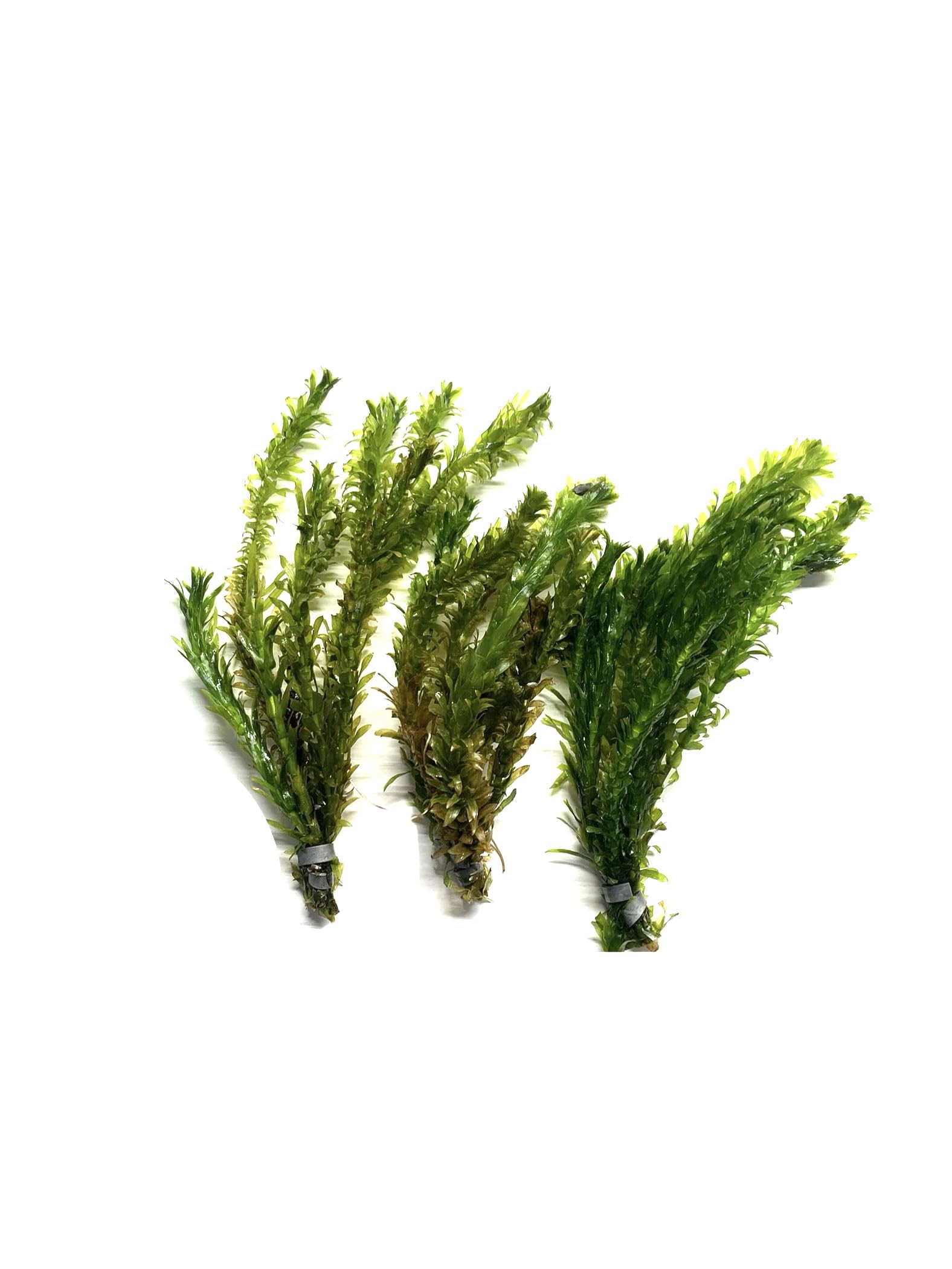
Rating: 4.4 ★ | Price: $$ | Light Tolerance: Low tolerant | Growth Rate: Fast | Plant Type: Stem | Packaging: Bundle
This three-pack of Anacharis delivers vigorous growth under standard aquarium LEDs, making it a solid choice for filling out a background in low-tech setups. The bunches arrive full, though individual stems may separate during transit — worth ordering with a return-friendly seller.
Pros
- Arrives in healthy, vibrant green stems.
- Generous bunch size for covering background quickly.
Cons
- Stems may break or separate during shipping.
Best for low-light tanks where rapid stem growth is the priority — not the choice for buyers who need guaranteed intact arrival.
Best for Carpet Plant
Marcus Dwarf Sag (15-pack)

Rating: 4.3 ★ | Price: $$ | Light Tolerance: Low tolerant | Growth Rate: Slow | Plant Type: Rooted | Packaging: 15 plants
This 15-pack offers a budget-friendly way to start a low-light foreground carpet. Plants generally root well under dim conditions, but some may arrive small or dead – worth inspecting. Possible hitchhiker snails have also been noted. These quality control issues keep it from matching the reliability of top foreground options.
Pros
- Fifteen plants provide enough volume to cover a large foreground area affordably.
- Thrives under low-light conditions, making it suitable for beginner low-tech tanks.
Cons
- Hitchhiker snails may be present on some plants.
Best for budget-focused beginners who can inspect arrivals and accept occasional imperfections.
Best for Red Root Floaters
Aquarigram Red Root Floaters

Rating: 4.3 ★ | Price: $$$ | Light Tolerance: Moderate-high | Growth Rate: Fast | Plant Type: Floating | Packaging: 60+ leaves
These red root floaters arrive healthy and develop strong colors under adequate lighting, plus they pull nitrates from the water well. The main catch: they need moderate to high light to thrive, so low-light tanks risk leaf melt. At a premium price, they suit hobbyists who already have strong LEDs and want visual pop, not beginners running basic aquarium lights.
Pros
- Healthy plants with vivid red roots under proper light
- Helps reduce nitrates in the water column
Cons
- Needs moderate to high light – not a fit for dim tanks
A good choice if your tank gets strong light and you’re after red accents and nitrate control, but skip this if you’re searching for a low-light floating plant.
Best for Water Spangle
Generic Water Spangles (60+ leaves)
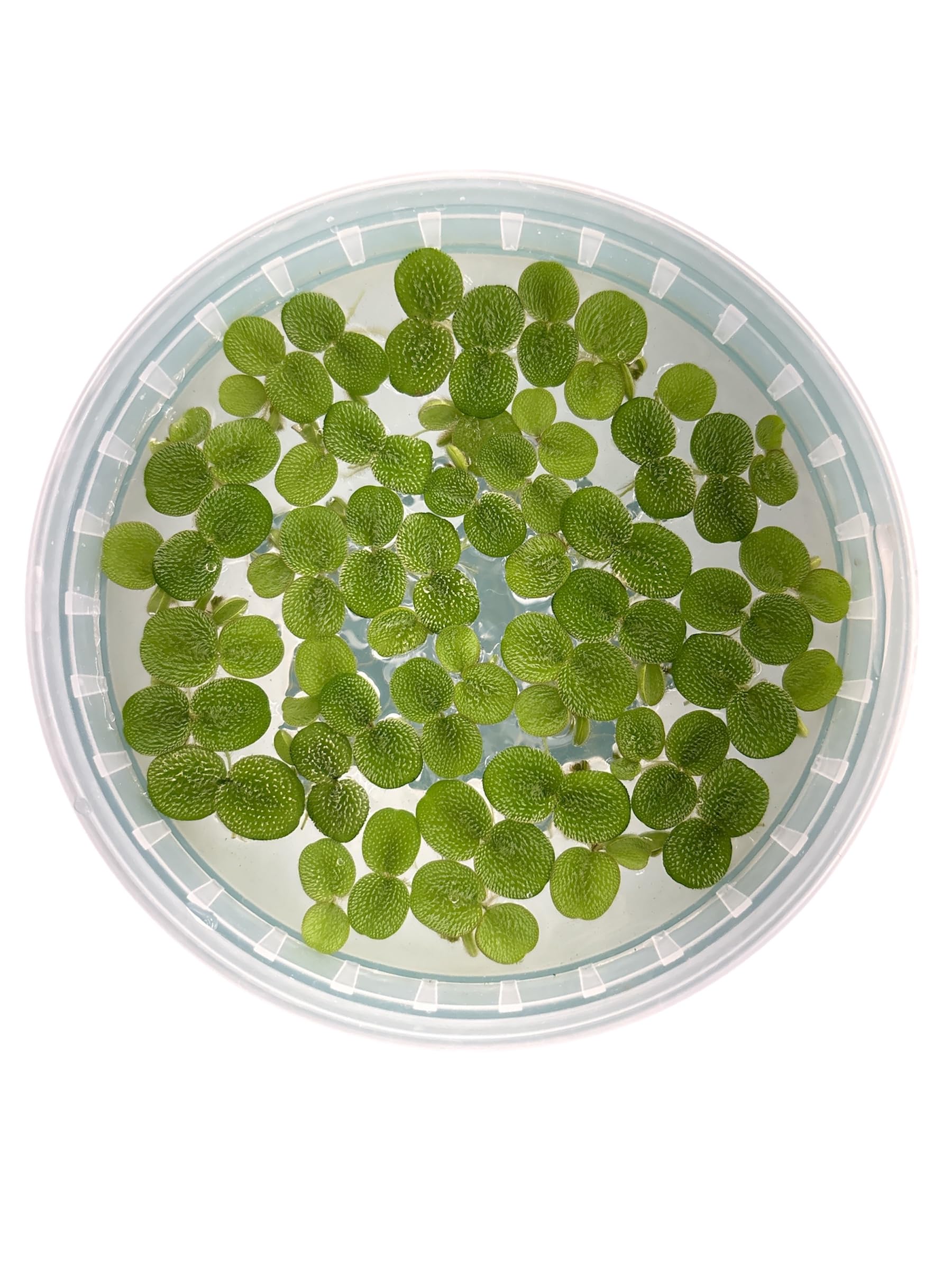
Rating: 4.6 ★ | Price: $$ | Light Tolerance: Medium-high | Growth Rate: Fast | Plant Type: Floating | Packaging: 60+ leaves
These water spangles arrive healthy and pest-free, with an attractive appearance and fast growth that quickly covers the surface. The catch is that they need medium to high light – in dim tanks, growth stalls and plants may die off.
Pros
- Arrives healthy and pest-free, ready to spread across the water surface.
- Fast-growing and visually appealing, quickly forming a lush floating canopy.
Cons
- Requires medium to high light – will struggle or fail in dimly lit tanks.
A good option if you have strong aquarium lighting, but not the right pick for low-light setups.
Best for Budget Java Fern
Marcus Java Fern (3-pack)

Rating: 4.3 ★ | Price: $ | Light Tolerance: Low | Growth Rate: Slow | Plant Type: Rhizome | Packaging: Bare root
This three-pack delivers the lowest cost per Java Fern on the market. The plants arrive as tiny rhizomes that may not survive the transition — best for experienced keepers who can handle small starts and accept some die-off in exchange for budget pricing.
Pros
- Budget-friendly three-pack
- Plants arrive with healthy green coloration
Cons
- Plants may arrive as very small rhizomes that take time to establish
Best for experienced keepers who can handle small starts and want to stock a tank on a budget.
Best for Premium Floaters
Generic Red Root Floaters (60+)
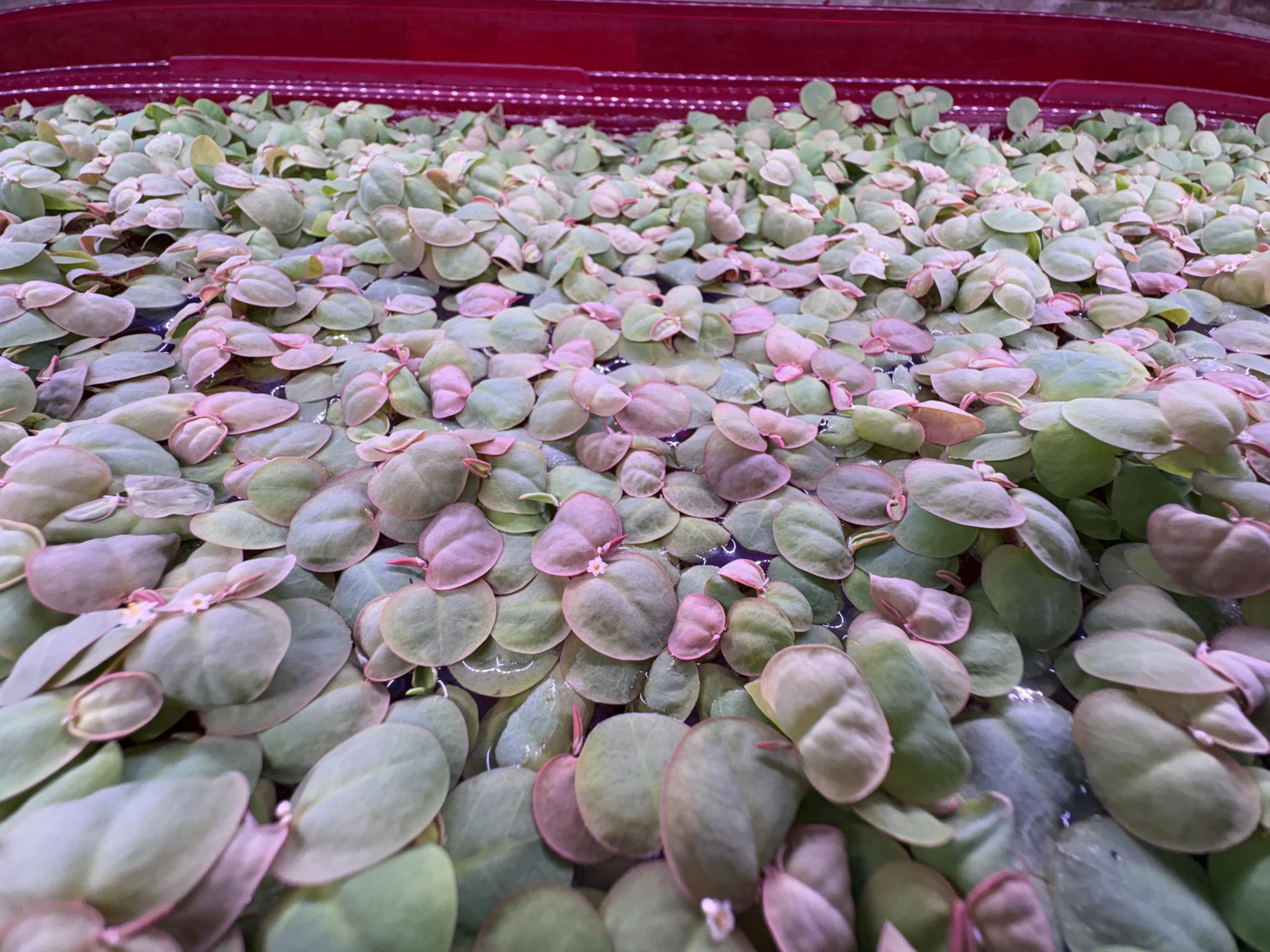
Rating: 4.4 ★ | Price: $$$ | Light Tolerance: Moderate-high | Growth Rate: Fast | Plant Type: Floating | Packaging: 60+ leaves
These floaters produce deep red roots and multiply quickly when given enough light. The tradeoff is clear: they need moderate to high light to thrive, so low-light tank owners will see poor results. The premium price makes sense only for aquascapers willing to dial in strong lighting.
Pros
- Deep red roots add strong visual contrast to green plants.
- Faster growth than most floaters under adequate light.
Cons
- Requires moderate to high light – not suitable for dimly lit tanks.
Works well for tanks with strong LED or sunlight where vivid color is the goal, but not the right pick for low-light setups.
How to Choose
Not all low-light claims are equal – a plant’s survival in dim conditions depends more on its species and provenance than the label.
Light Tolerance
Low light means fewer photons for photosynthesis. Plants like Anubias and Java Fern have broad, dark leaves that capture what little light is available. A standard LED strip (~0.5 watts per gallon) is enough for these species.
Be wary of plants listed as ‘partial shade’ – many will stretch or lose color. The safest bet is to choose species that are proven to grow under 0.2–0.5 watts per gallon, not those that merely survive.
Growth Rate
Slow growers like Anubias require little trimming but take months to fill in. Fast growers like water spangle and duckweed multiply weekly, which can shade out other plants if not thinned.
Match the growth rate to your maintenance tolerance: slow for low-effort tanks, fast for quick coverage or nitrate export. Stem plants like Anacharis are a middle ground with moderate speed.
Plant Type
Rooted plants (Amazon Sword, Dwarf Sag) need nutrient-rich substrate to anchor and feed. Rhizome plants (Anubias, Java Fern) must not have their roots buried – they attach to wood or rock. Floating plants need calm surface water and can block light to plants below.
Choose based on your hardscape: if you have gravel-only substrate, rhizome or floating plants are easier. If you have aquasoil, rooted plants will thrive.
Packaging
Potted plants arrive with rock wool and suffer less root disturbance when planted. Bare-root plants are cheaper but may require acclimation and can be more fragile in transit.
Sellers with heat packs and insulated packaging have a lower risk of melt during extreme weather. The top picks in this guide all have strong live arrival records.
Pest Risk
Hitchhiker snails and worms are common with floating plants and bundles from budget sellers. Even healthy-looking plants can carry eggs.
A short quarantine in a separate container for 3–5 days allows you to spot pests. A diluted bleach dip (1:20 with water for 1–2 minutes) can kill snail eggs without harming most hardy species.
FAQ
Why did my Amazon Sword arrive with brown leaves?
Brown leaves are often a sign of shipping stress or insufficient light. Trim off the damaged leaves, plant the healthy roots, and give it a week under your normal lighting. If new leaves come in green, the plant will recover.
Can Java Fern survive in a low light tank without fertilizer?
Yes, Java Fern is one of the most undemanding plants. It can thrive under basic LEDs and only needs fish waste as nutrients. Adding root tabs or liquid fertilizer will boost growth, but it’s not required.
How do I remove snails from live aquarium plants before planting?
Quarantine plants in a separate container for a few days to spot snails manually. A bleach dip (1 part bleach to 20 parts water for 1–2 minutes) kills eggs and adults, but rinse thoroughly. For sensitive plants, a potassium permanganate rinse is a safer alternative.
Will duckweed grow in a low light aquarium with no CO2?
Yes – duckweed is extremely tolerant and will grow in low light, though it may stay smaller and multiply slower. It does not need CO2 injection. However, it can easily overgrow and block light to other plants, so thin it weekly.