This post contains affiliate links. We may earn a small commission when you buy through our links — at no extra cost to you.
Many aquarium water testers end up unused because they don’t match the owner’s actual needs. A freshwater planted tank keeper doesn’t need a salinity meter, and a reef aquarist would never rely on a TDS pen for salt levels. The mismatch leads to frustration and wasted money.
The market offers everything from $8 TDS pens to $130 multiparameter probes. The cheap ones are fine for checking RO/DI filters, but pH meters at that price often drift within weeks. The trick is knowing which parameter matters most for your setup and where to invest.
For most freshwater keepers, a simple TDS/EC meter with a large user base is the sweet spot. For marine tanks, a refractometer beats any digital salinity pen in accuracy per dollar. This guide isolates those decisions so you buy once.
Top Picks
Best for Freshwater Tds/ec
HoneForest TDS/EC Meter

Rating: 4.5 ★ | Price: $ | Measured Parameters: TDS, EC, Temp | Ease of Use: Dip-and-read, backlit | Durability: Titanium alloy probe
The HoneForest TDS/EC meter delivers readings that align with more expensive testers, making it a consistent tool for tracking dissolved solids and conductivity in freshwater tanks. Its titanium alloy probe and auto-lock backlit display simplify the process — dip, wait for the lock, read.
In use, the meter holds calibration between sessions, so re-zeroing isn’t needed each time. The backlit screen remains readable in bright light or dim aquarium rooms, and the auto-off feature preserves battery life when the meter is left on.
This meter suits freshwater aquarists monitoring TDS and EC for planted tanks, checking RO/DI filter efficiency, or mixing hydroponic nutrients. It does not measure pH or salinity — for reef tanks or saltwater setups, a separate refractometer or pH meter is required.
Pros
- TDS/EC readings match those of costlier meters.
- Simple dip-and-read operation with backlit display.
- Budget-friendly price for dependable performance.
- Corrosion-resistant titanium alloy probe.
Cons
- Only measures TDS and EC — no pH or salinity tracking, so reef keepers need separate gear.
- Not designed for lab-grade certified accuracy — sufficient for hobbyist use.
For freshwater TDS and EC monitoring, this meter delivers consistent accuracy at a budget-friendly price, with the backing of a large user base.
Best for Advanced Multi-Parameter
Apera PC60 5-in-1

Rating: 4.5 ★ | Price: $$$ | Measured Parameters: pH, EC, TDS, Sal, Temp | Ease of Use: Replaceable probe, calibration kit | Durability: IP67 waterproof
Where the top pick focuses exclusively on TDS/EC, the Apera PC60 covers all five parameters a freshwater or reef tank demands. The probe delivers pH readings within ±0.05, EC accuracy to ±2% F.S., and salinity measurements that track against refractometers — all from one pocket-sized body.
Build quality sets it apart from plastic-only budget meters. The IP67 housing shrugs off accidental submersion, and the kit includes stable calibration solutions in sealed bottles. Calibration is guided on-screen, and once set, the meter rarely drifts between sessions — a direct benefit for weekly tank checks that require speed over repeated tweaking.
This meter fits advanced aquarists who juggle CO2-injected planted tanks, marine salinity targets, and nutrient dosing schedules. It replaces a drawer of single-purpose testers. The premium price reflects the sensor precision and included accessories; casual freshwater keepers who only need TDS will find the same core function in the top pick for a fraction of the cost. Occasional probe failure has been documented, but Apera’s support typically sends a replacement — and the probe itself is field-swappable when it does wear out.
Pros
- Delivers lab-grade pH, EC, TDS, and salinity accuracy with consistent repeatability
- Intuitive calibration process with clear instructions; readings stay stable for weeks
- Comes with a protective case, calibration solutions, and lanyard — ready out of the box
- Probe is replaceable, extending the meter’s lifespan beyond typical disposable pens
Cons
- Premium price puts it beyond reach for freshwater keepers who only need TDS checks
- Probe can fail within months on some units; responsive support and replaceable design reduce long-term risk
For multi-tank aquarists and reef keepers who monitor pH, EC, and salinity daily, the Apera PC60 merges four instruments into one accurate, submersible meter.
Best for Saltwater Salinity
Agriculture Solutions Refractometer

Rating: 4.6 ★ | Price: $ | Measured Parameters: Salinity | Ease of Use: Distilled water calibrate, ATC | Durability: Plastic case
Accurate salinity measurement at a low cost – this refractometer outperforms hydrometers for marine and reef tanks. The optical design with automatic temperature compensation gives direct PPT and specific gravity readings without batteries or electronics. For aquarists who want reliable salinity checks without the expense of a digital meter, this is the right tool.
The tradeoff is hands-on calibration: the scale can drift, so a quick re-zero with distilled water before each session is necessary. The plastic case and lens are also fragile – worth handling with care to avoid scratches or cracks. These are manageable if you treat the instrument as a precision tool rather than an indestructible gadget.
Pros
- Delivers accurate salinity readings for marine and reef aquariums.
- Simple calibration process using distilled water.
- Budget-friendly price compared to digital salinity meters.
Cons
- Plastic case and lens may scratch or crack if dropped or stored carelessly.
- Calibration can drift between uses; a re-zero with distilled water is required each time.
For saltwater aquarists who don’t mind a brief pre-use calibration, this refractometer gives accurate salinity readings at a fraction of the cost of digital meters – just keep it in a safe spot.
Best for Basic Tds Checks
HM Digital TDS-3

Rating: 4.6 ★ | Price: $ | Measured Parameters: TDS, Temp | Ease of Use: One-button operation
The HM Digital TDS-3 offers consistent ±2% accuracy for TDS and temperature readings, backed by a solid plastic housing that feels more robust than most budget pens. A carrying case is included, which keeps the meter protected between uses and makes it easy to tuck into a freshwater aquarium toolkit.
Compared to the top pick, the TDS-3 focuses solely on TDS and temperature — it cannot measure electrical conductivity or salinity. This trade-off simplifies operation (one button, hold function, auto-off) and eliminates the calibration hassles that multi-parameter meters sometimes bring. The factory calibration is generally trustworthy, though no calibration fluid is included for independent verification.
This meter is a natural fit for freshwater aquarists who need to verify RO/DI system performance or spot-check tank TDS without worrying about extra parameters. If you keep a saltwater tank or need EC readings, look elsewhere — the lack of those capabilities is a hard boundary, not a flaw.
Pros
- Consistent ±2% accuracy for TDS and temperature readings.
- Durable construction with a protective carrying case included.
- Simple one-button operation with hold and auto-off functions.
Cons
- Cannot measure electrical conductivity or salinity — limited to TDS and temperature.
- No calibration solution included; factory calibration may need verification for peace of mind.
For freshwater aquarists who only need TDS and temperature, this pen offers dependable performance at a budget-friendly price — just be aware it won’t handle EC or salinity.
Best for Budget Tds/ec
MEXYBE 4-in-1 TDS Meter

Rating: 4.4 ★ | Price: $ | Measured Parameters: TDS, EC, Temp | Ease of Use: Large display, pre-calibrated | Durability: Titanium alloy probe
The MEXYBE 4-in-1 is the easiest way to start monitoring TDS and EC in a freshwater aquarium — no calibration, no fuss. The 25% larger backlit LCD makes readings visible even in dim cabinet light, and the titanium alloy probe holds up to regular use. At a budget price, it delivers instant feedback on water quality with minimal setup.
The trade-off for that convenience is unit-to-unit consistency. While most units provide stable readings, a small portion may show slight variations on the same sample. This variability matters less for routine trend tracking — where you care about changes over time rather than absolute precision — but if you need tight accuracy for dosing adjustments, the top pick’s tighter calibration may be worth the extra step.
Pros
- Ready to use straight from the package — no calibration required.
- Large backlit display readable in low-light aquarium setups.
- Measures TDS, EC, and temperature in one device at a low cost.
Cons
- Readings can vary slightly between individual units on the same water sample.
- No pH or salinity measurement — limited to TDS/EC/temperature only.
A sensible first meter for freshwater aquarists who want a quick, no-calibration check of TDS and EC — just keep an eye on consistency if you switch units.
Best for Budget Tds/ec
VARIFY 4-in-1 TDS Meter
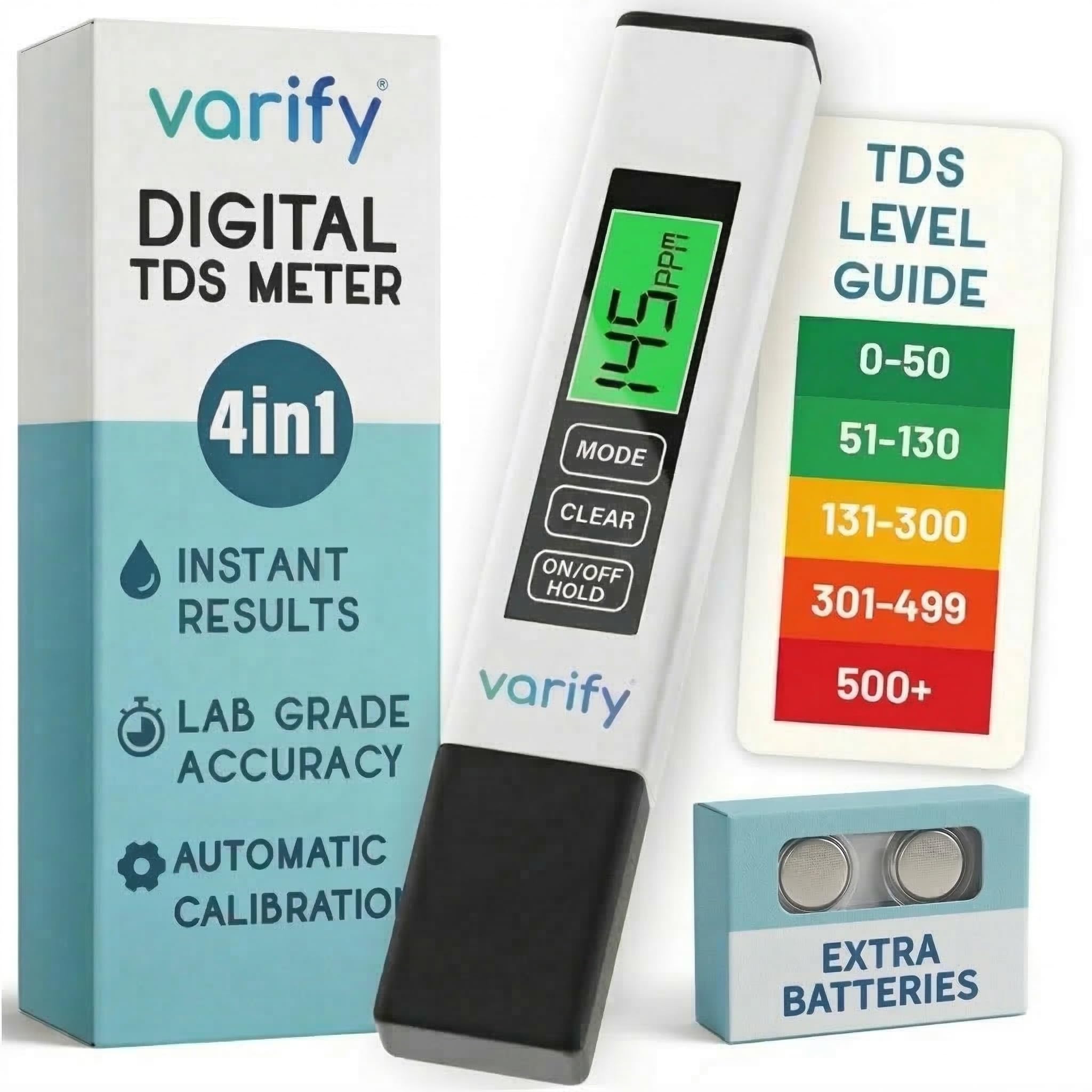
Rating: 4.5 ★ | Price: $ | Measured Parameters: TDS, EC, Temp | Ease of Use: Backlit LCD, auto-lock | Durability: Titanium alloy probe
The VARIFY 4-in-1 delivers consistent TDS readings for freshwater aquariums and RO/DI systems, with a backlit display and simple one-button operation. Its titanium alloy probe resists corrosion, making it suitable for regular use. That said, its track record is less established than the top pick from HoneForest, so some units may show minor variation in readings. Calibration verification is recommended before critical use, especially since no standard solutions are included. For budget-conscious freshwater hobbyists who don’t need pH or salinity, this meter provides good value without overpromising.
Pros
- Consistent TDS readings for freshwater and RO/DI monitoring.
- One-button operation with backlit display for easy reading in low light.
- Titanium alloy probe resists corrosion from water exposure.
Cons
- Calibration verification recommended before critical use — no solutions included.
- No pH or salinity measurement — limited to TDS, EC, and temperature.
A sensible option for budget-focused freshwater aquarists who need only TDS/EC data and accept minor compromises.
Best for Ultra-Budget Tds
Arendsace 4-in-1 TDS
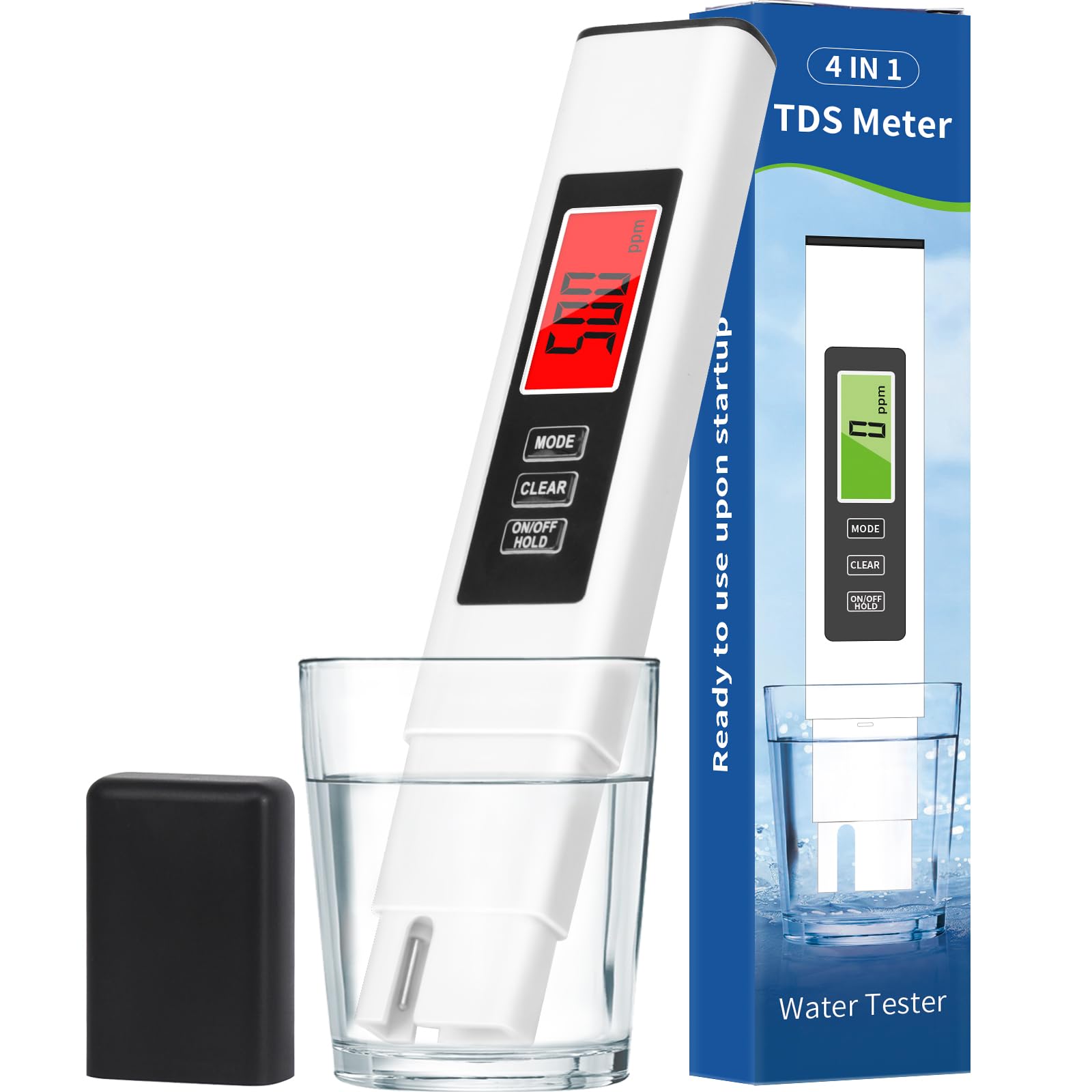
Rating: 4.5 ★ | Price: $ | Measured Parameters: TDS, EC, Temp | Ease of Use: Color-change display | Durability: Titanium alloy probe
This 4-in-1 TDS meter measures TDS, EC, and temperature with a titanium alloy probe. The backlit display changes from green to red at 40 ppm, making water quality checks quick at a glance. It’s a straightforward tool for freshwater aquarium owners who just need TDS and EC readings on a tight budget. However, the smaller number of long-term owners means its durability under frequent daily use is less documented compared to more established picks. For occasional checks or monitoring multiple tanks without a big spend, it does the job without fuss.
Pros
- Color-changing backlight provides instant visual warning at 40 ppm threshold.
- Consistent TDS readings without drift between tests.
- Includes TDS, EC, and temperature for under eight dollars.
Cons
- No pH or salinity measurement — limited to TDS, EC, and temperature.
- Fixed color-change threshold at 40 ppm may not suit aquariums with higher target TDS levels.
Best for freshwater aquarium owners on a tight budget who only need TDS/EC readings and prefer a quick visual check — the limited track record is a minor risk for casual use.
Best for Simple Tds
Pmlilb TDS Meter

Rating: 4.4 ★ | Price: $ | Measured Parameters: TDS | Ease of Use: Auto-off, simple | Durability: Titanium alloy probe
The Pmlilb TDS Meter delivers accurate readings right out of the box in a compact, portable design — fine for a quick check on dissolved solids in freshwater aquarium water. However, it measures only TDS, skipping EC and temperature. For aquarists who want those additional parameters or need to monitor salinity or pH, this single-purpose pen falls short of more capable alternatives that offer broader functionality at a similar price.
Pros
- Accurate TDS readings immediately after unpacking.
- Compact and easy to carry for on-the-go use.
- Automatic shutoff after 5 minutes extends battery life.
Cons
- No measurement of electrical conductivity or water temperature — limits usefulness for planted tanks or saltwater setups.
- Requires a separate meter for pH or salinity monitoring.
A reasonable choice for freshwater aquarists who only need TDS readings and want a budget-friendly, no-frills pen.
Best for Budget Tds/ec
MAROJAP 4-in-1 TDS
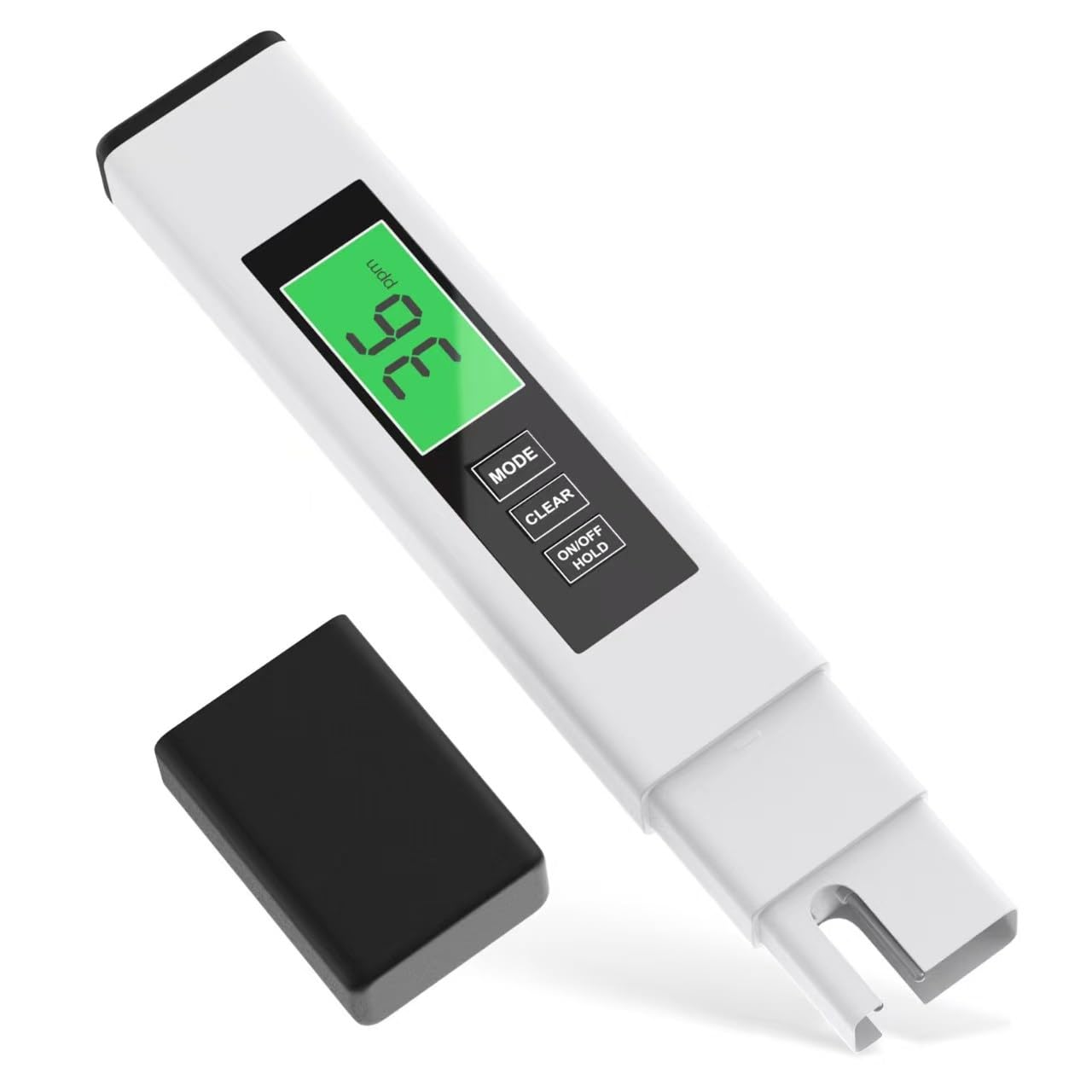
Rating: 4.5 ★ | Price: $ | Measured Parameters: TDS, EC, Temp | Ease of Use: Color-change display | Durability: Titanium alloy probe
The MAROJAP 4-in-1 TDS meter delivers accurate readings for home use, with a color-changing backlight (red above 40 ppm, green below) that makes it simple to assess water quality at a glance. It measures TDS, EC, and temperature at a budget-friendly price, suiting quick checks in freshwater aquariums. However, the top picks in this category have a longer track record and a larger body of long-term feedback. With a smaller user base, this unit’s longevity under regular use is less established.
Pros
- Color-changing backlight offers instant visual feedback on water quality.
- Accurate readings for home water quality checks.
- Budget-friendly price includes TDS, EC, and temperature measurement.
Cons
- Long-term durability under regular aquarium use is less well-documented than the category’s top sellers.
- Color indicator is a helpful guide, but the exact TDS value still needs to be read from the digital display.
A good pick for casual freshwater aquarium keepers who want a quick TDS check without spending more, provided they are comfortable with a less established track record.
Best for Basic Tds
Craft911 TDS Meter
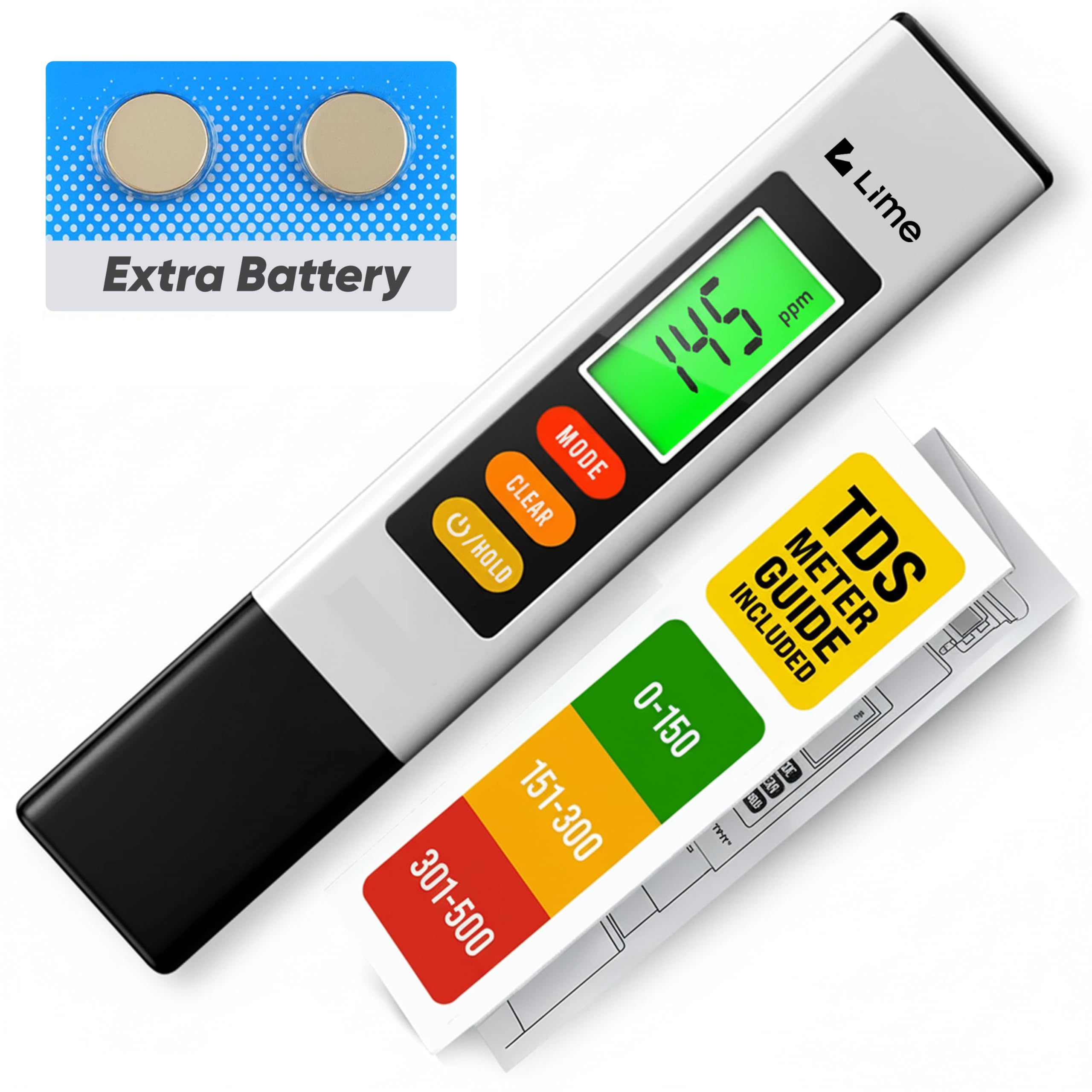
Rating: 4.5 ★ | Price: $ | Measured Parameters: TDS | Ease of Use: Auto-lock, backlit | Durability: Titanium alloy probe
This budget TDS meter delivers quick readings and includes spare batteries, making it a straightforward tool for occasional tap water checks. However, accuracy can vary between units, which limits its reliability for aquarium monitoring where consistent readings matter. The backlit display and auto-lock are useful touches, but the mixed precision feedback means it’s best reserved for casual use. For dependable aquarium TDS readings, alternative options like the HoneForest TDS/EC meter offer more consistent performance at a similar price point.
Pros
- Quick and simple operation with an easy-to-read backlit display
- Great value package includes spare batteries
Cons
- Accuracy can vary between units, making it less suited for applications needing consistent precision
- Only measures TDS; no EC or temperature readings
This meter works for basic tap water checks or travel use. For aquarium monitoring, a more accurate TDS meter is a better choice.
Best for Budget Ph/tds
VIVOSUN pH/TDS Combo Kit

Rating: 4.1 ★ | Price: $ | Measured Parameters: pH, TDS, EC, Temp | Ease of Use: Included calibration buffers
The VIVOSUN kit offers the lowest price for a pH/TDS combo, bundling two meters and calibration buffers. It’s easy to set up for beginners checking hydroponic nutrient solutions. However, its performance boundaries make it a better match for temporary or backup testing than daily aquarium monitoring, where pH stability is essential.
Pros
- Straightforward operation — no complex setup required out of the box.
- Includes both pH and TDS meters plus calibration buffers for immediate testing.
Cons
- pH readings can drift between uses, requiring frequent recalibration to stay accurate.
- Probe durability may be limited under regular use — consider a backup unit.
Best suited as a backup or temporary meter for budget hydroponic growers who can calibrate before each use — not a suitable choice for daily aquarium pH monitoring.
Best for Budget Backup
YINMIK 4-in-1 pH EC TDS

Rating: 4.3 ★ | Price: $ | Measured Parameters: pH, EC, TDS, Temp | Ease of Use: 3-pt auto calibration
The YINMIK 4-in-1 brings together pH, EC, TDS, and temperature in a single compact pen at a budget-friendly price, helping aquarists cut cost and clutter for occasional water checks. Calibration can be finicky—some units struggle to hold their settings—and pH accuracy may drift after limited use. This makes it better suited as a temporary solution or a spare meter rather than a daily driver for a display tank. Hobbyists willing to tweak calibrations and accept some inconsistency will find it adequate for low-stakes monitoring.
Pros
- Combines pH, EC, TDS, and temperature in a single pen to save space and cost.
- Quick and easy setup with intuitive controls.
Cons
- Calibration can be inconsistent; some units may not hold pH calibration.
- pH accuracy may degrade after short-term use, limiting its use for continuous monitoring.
For aquarists needing a supplemental meter for occasional spot-checks or a low-stakes hydroponic setup, the YINMIK provides multi-parameter readings at a minimal cost. Consistent pH monitoring in a main aquarium warrants a more consistent instrument.
Best for Saltwater Combo
Hofun 5-in-1 Salinity/PH Meter
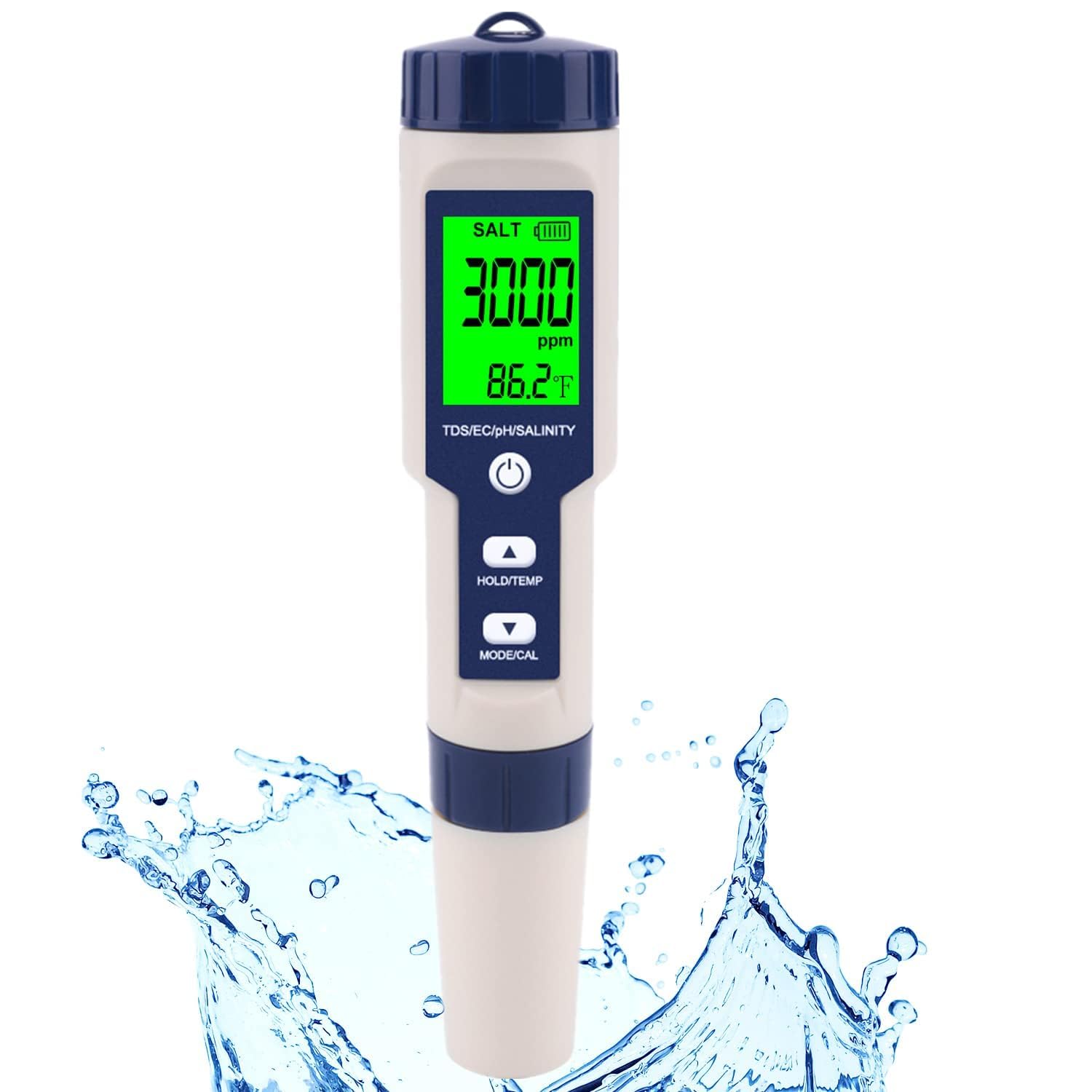
Rating: 4.3 ★ | Price: $$ | Measured Parameters: Sal, pH, TDS, EC, Temp | Ease of Use: Multifunction LCD, simple | Durability: Titanium alloy probe
Combining salinity, pH, TDS, EC, and temperature into a single pen, this meter simplifies routine water checks for saltwater pools and basic aquariums. pH accuracy is the main compromise—readings can drift 0.5–1.0 units even after calibration, which rules it out for pH-sensitive reef tanks. Salinity values may not align perfectly with a dedicated refractometer, so it works best as a quick spot-check tool rather than a precision instrument. For casual saltwater pool owners who want a single gadget to monitor salt and pH trends, the trade-off is manageable and keeps clutter to a minimum.
Pros
- Covers five key parameters—salinity, pH, TDS, EC, and temperature—in one device for convenient saltwater pool and aquarium checks.
- No setup required; ready to use out of the box for quick readings without navigating menus or calibration for basic tasks.
Cons
- Salinity readings can deviate from reference test kits; occasional cross-checking with a refractometer may be needed for critical adjustments.
- pH measurements can be off by 0.5–1.0 units after calibration, limiting precision for reef tanks or pH-critical freshwater setups.
This meter belongs in a saltwater pool owner’s kit as an all-in-one trend tracker, not a lab instrument. For reef keepers who demand tight pH control, a purpose-built pH meter or the optical refractometer pick in this set will be a better fit.
How to Choose
The most important decision is whether you need to measure pH or salinity — because if you only need TDS, a $10 meter works fine, but cheap pH meters often fail within weeks.
Measured Parameters
TDS (total dissolved solids) and EC (electrical conductivity) are the same measurement expressed differently. For freshwater planted tanks, tracking TDS helps monitor nutrient load and water change timing. pH meters are essential for reef tanks but useless in a pure freshwater setup.
Salinity measurement is a separate category: hydrometers and refractometers measure salt content, while TDS pens cannot distinguish salt from other dissolved solids. If you keep marine fish, you need a salinity tool, not a TDS meter.
Accuracy and Calibration Stability
TDS/EC meters are inherently stable because they measure conductivity directly. A $10–$15 meter will typically stay within ±2% for years with no calibration. pH meters, by contrast, rely on a glass electrode that drifts with use and needs weekly calibration and proper storage in storage solution.
Many budget pH meters ship uncalibrated or lose calibration within days. If you need pH, invest in a meter that holds calibration (like the Apera) or accept that you will need to recalibrate frequently. The cheap combos are more trouble than they save.
Ease of Use and Readability
Backlit displays and auto-lock features make reading simple in low light. One-button operation is standard on budget pens. Refractometers require a drop of water and a visual read, which takes practice but is straightforward.
Color-changing displays (red/green) give an instant visual cue if TDS is above a threshold. For quick checks, this is faster than reading numbers. But for precise tracking, a numeric readout is better.
Durability and Waterproofing
Most TDS pens use titanium alloy probes that resist corrosion. For occasional freshwater use, IP ratings are not critical. If you work around saltwater, an IP67-rated meter (like the Apera) can survive accidental submersion.
Refractometers have plastic bodies and delicate lenses; they can crack if dropped. Handle them with care and store in a dry place. Digital salinity meters often have the same durability as TDS pens but are less accurate than refractometers at the same price.
FAQ
Why does my pH meter give different readings every time I dip it?
Most likely the electrode is dry, dirty, or needs calibration. pH meters require the glass bulb to stay hydrated; storing it dry damages the membrane. If you haven’t calibrated in two weeks, do that first. If readings still jump, replace the probe. For consistent pH, invest in a meter that holds calibration and store it properly.
Can I use a TDS meter to measure aquarium salt level?
No. A TDS meter reads total dissolved solids, not just salt. In a saltwater tank, it will show a high number but won’t tell you the salinity in ppt or specific gravity. You need a refractometer or hydrometer for accurate salt measurement. TDS meters are for freshwater and RO/DI monitoring only.
How often should I calibrate my aquarium water test meter?
TDS/EC meters rarely need calibration — once on first use and then every six months is enough. pH meters should be calibrated weekly if used regularly, or every two weeks for occasional use. Always rinse and store the pH probe in storage solution. Refractometers need a distilled water zero-check before each use.
Is a refractometer better than a hydrometer for saltwater aquariums?
Yes. Refractometers are far more accurate and easier to use than swing-arm hydrometers, and they cost about the same. They need only a drop of water and adjust for temperature automatically (ATC). Hydrometers can be off by 0.002 specific gravity due to bubbles and temperature. For reef tanks, a refractometer is the standard.