This post contains affiliate links. We may earn a small commission when you buy through our links — at no extra cost to you.
Keeping a reef tank’s water level stable should be simple, but budget auto top-off systems often turn into a maintenance headache. Pumps die within months, sensors drift, and a single overflow can ruin a morning.
The problem isn’t that reliable ATOs don’t exist—it’s that marketing claims of ‘dual sensors’ and ‘AI safety’ rarely match real-world performance. This guide cuts through the noise to show which models actually deliver consistent top-offs without the flood risk.
Whether you’re topping off a nano cube or a 100-gallon reef, the right choice comes down to sensor type, warranty, and a willingness to clean optics weekly. We’ll help you pick the ATO that fits your tank and your tolerance for tinkering.
Top Picks
Best for Reef & Safety
FZONE QST2.0 ATO

Rating: 4.1 ★ | Price: Mid-Range | Sensor Type: Dual optical | Safety Features: QST 2.0, dry-run | Lift Height: 2 m | Pump Flow: 74 GPH
The FZONE QST2.0 ATO pairs a 2-year warranty with dual optical sensors and overfill protection, bringing peace of mind that cheaper alternatives skip. Setup is straightforward thanks to strong magnets and clear documentation, and the pump runs quietly enough for a bedroom tank. A pause/resume button on the controller makes water changes or sensor cleaning less of a hassle.
This unit suits reef keepers who prioritize salinity stability and are willing to perform regular maintenance. The dual sensors and dry-run protection reduce the chance of overflow when installed correctly, but precise placement is critical—overflow incidents have been reported, typically tied to setup errors rather than hardware defects. Some pumps may stop working after weeks or months, so this isn’t a set-and-forget system; it’s a dependable tool for those who monitor their tank and expect occasional component quirks.
Pros
- Magnets hold the sensor securely; instructions guide first-time users through setup.
- Quiet pump operation doesn’t disturb a bedroom aquarium.
- Pause and resume button simplifies maintenance without unplugging.
Cons
- Pump failure can occur within weeks or months, requiring a replacement.
- Controller indicator light may be too bright in a darkened room.
For reef keepers who value safety features and manufacturer backup over the lowest price, this offers the best balance of peace of mind and cost.
Best for Budget Beginners
Fzone Green ATO

Rating: 4.0 ★ | Price: Budget | Sensor Type: Dual optical | Safety Features: QST 2.0, EFTT, AFT | Lift Height: 2 m | Pump Flow: 74 GPH
The Fzone Green delivers basic automatic top-off at a price that undercuts any other pump-based system. Installation takes under ten minutes, and the compact optical sensor sits unobtrusively in the tank. However, the pump and sensor can require attention – some owners find the pump stops working within the first year, and the overflow protection may not always engage.
This ATO suits first-time users who want to try automated water level maintenance without a large investment. It also works well for multiple tanks where cost per unit matters. Some units may arrive with issues – treat the pump as a consumable item that may need replacement within the first year.
Pros
- Lowest cost among pump-based ATOs – budget-friendly entry point
- Quick installation – less than 10 minutes out of the box
- Compact optical sensor that doesn’t block tank view
Cons
- Pump life can be short in some cases – may need replacement within the first year
- Overflow protection may occasionally be inconsistent
Buy this if you need budget-friendly ATO functionality and are willing to treat the pump as a replaceable component.
Best for Stable Salinity
Kamoer ATO One 2 SE

Rating: 4.2 ★ | Price: Mid-Range | Sensor Type: Optical (S1,S3+opt) | Safety Features: Anti-dry, timeout | Lift Height: 1.5 m
The Kamoer ATO One 2 SE stands out for its solid component quality — the pump and optical sensors feel more substantial than entry-level units, and the external controller includes a timeout alarm that adds peace of mind. Set up and calibration take minutes, and the optical sensors respond consistently when kept clean. That said, the 1.5 m max lift height between reservoir and tank does limit placement flexibility, and a small number of units arrive with a non-functional pump or controller, so inspecting on delivery is wise.
This ATO suits reef keepers who prioritize salinity stability and are willing to spend a bit more for better materials. If the top pick’s longer warranty and quieter pump matter less, the Kamoer delivers comparable day-to-day performance at a lower price — just verify functionality early to account for potential unit variance.
Pros
- Components feel well-made — pump and sensors hold up better than budget alternatives
- Quick setup with clear calibration steps and external controller indicators
Cons
- Some units may arrive with a non-working pump or controller — test immediately
- Optical sensors need periodic cleaning to maintain accurate level detection
A solid mid-range ATO for reef keepers who want better build quality than entry-level options and can tolerate occasional unit checks — the Fzone top pick offers more peace of mind for a similar price.
Best for Nano Tanks
MagTool Green ATO

Rating: 4.1 ★ | Price: Budget | Sensor Type: Dual optical | Safety Features: Built-in controller | Lift Height: 8.2 ft | Pump Flow: 74 GPH
MagTool’s Green ATO packs the sensor and controller into a single compact unit that clings firmly with a strong magnet, making it a natural fit for nano aquariums where every inch matters. Setup is plug-and-play, and at this price it’s an easy entry point for budget builders.
The tradeoff comes down to longevity. Pump failures have been noted within the first year, and the pump’s modest flow suits lift heights under 4–5 feet — fine for small tanks with minimal head pressure. This unit works best for hobbyists comfortable swapping a pump annually and who prioritize size over long-term peace of mind.
Pros
- Smallest combined optical sensor and controller — fits into tight sump compartments
- Magnet holds securely on thin glass or acrylic panels
- Plug-and-play setup with no external controller box
Cons
- Pump may need replacement within the first year — plan for an annual swap
- Overflow events have occurred in some setups, worth checking float switch alignment
For nano tank owners who value a tiny footprint and can accept periodic pump swaps, this is a cost-effective entry point. If you prefer set-and-forget reliability, budget for a different pump or look at the warranty-backed FZONE QST2.0.
Best for Controller Upgrade
MagTool Duetto V2026
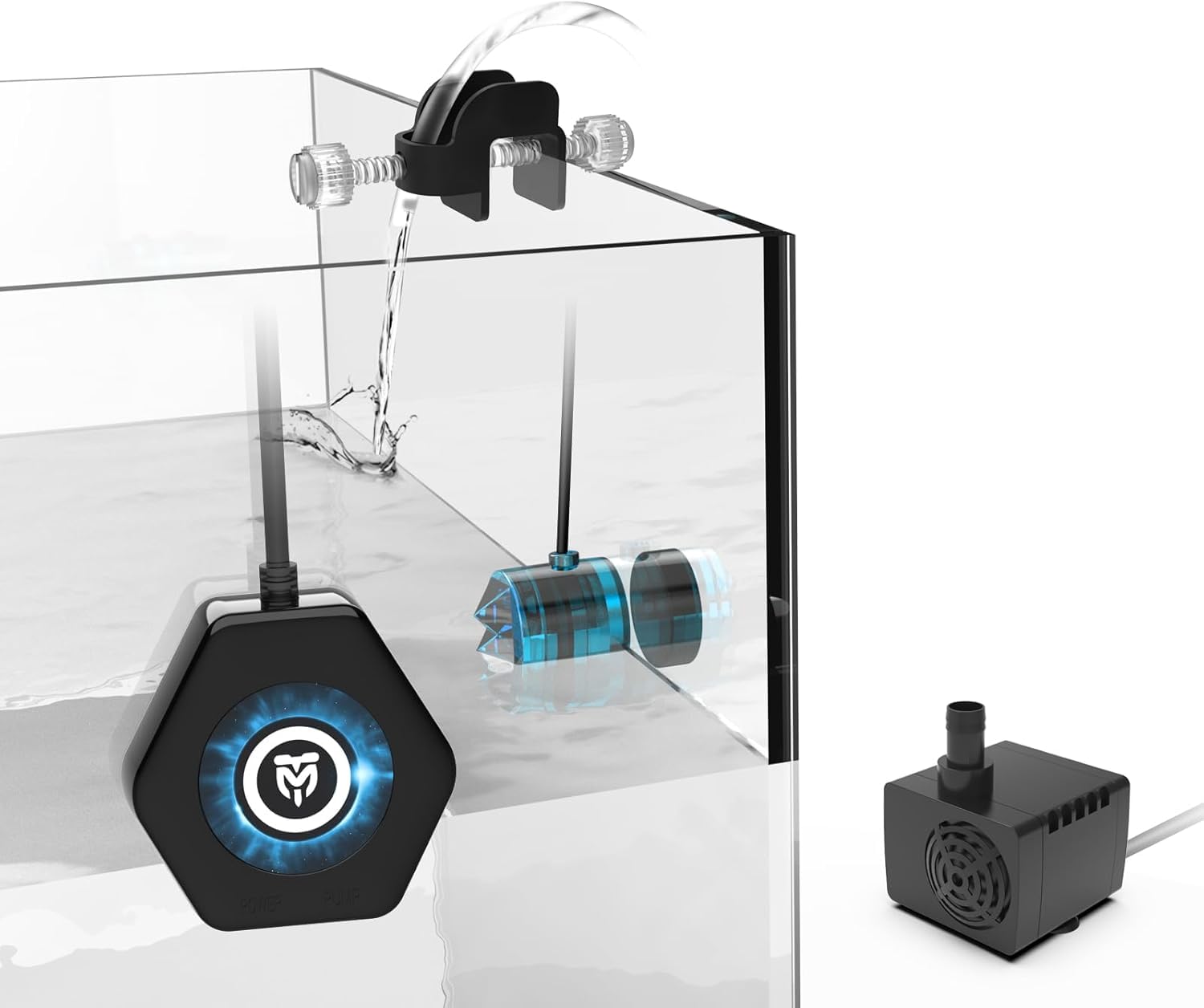
Rating: 4.0 ★ | Price: Mid-Range | Sensor Type: Dual optical | Safety Features: Ext. controller, alarm | Lift Height: 8.2 ft | Pump Flow: 74 GPH
The MagTool Duetto V2026 adds a welcome external controller with visible status lights and a one-touch pause for maintenance. Setup is straightforward. However, like others from this brand, long-term reliability data is thin—some units may experience pump or sensor issues within months. It suits those who prioritize controller convenience and are comfortable with this durability trade-off.
Pros
- External controller with clear status lights and one-touch pause simplifies maintenance and monitoring.
- Straightforward installation and calibration process.
Cons
- Some units may develop pump or sensor issues within months – a risk for buyers seeking long-term dependability.
Best for hobbyists who value the external controller’s pause and alarm features enough to accept the reliability uncertainty – a convenience-focused pick in the mid-range ATO space.
Best for Float Switch Fans
Qwakay ATO
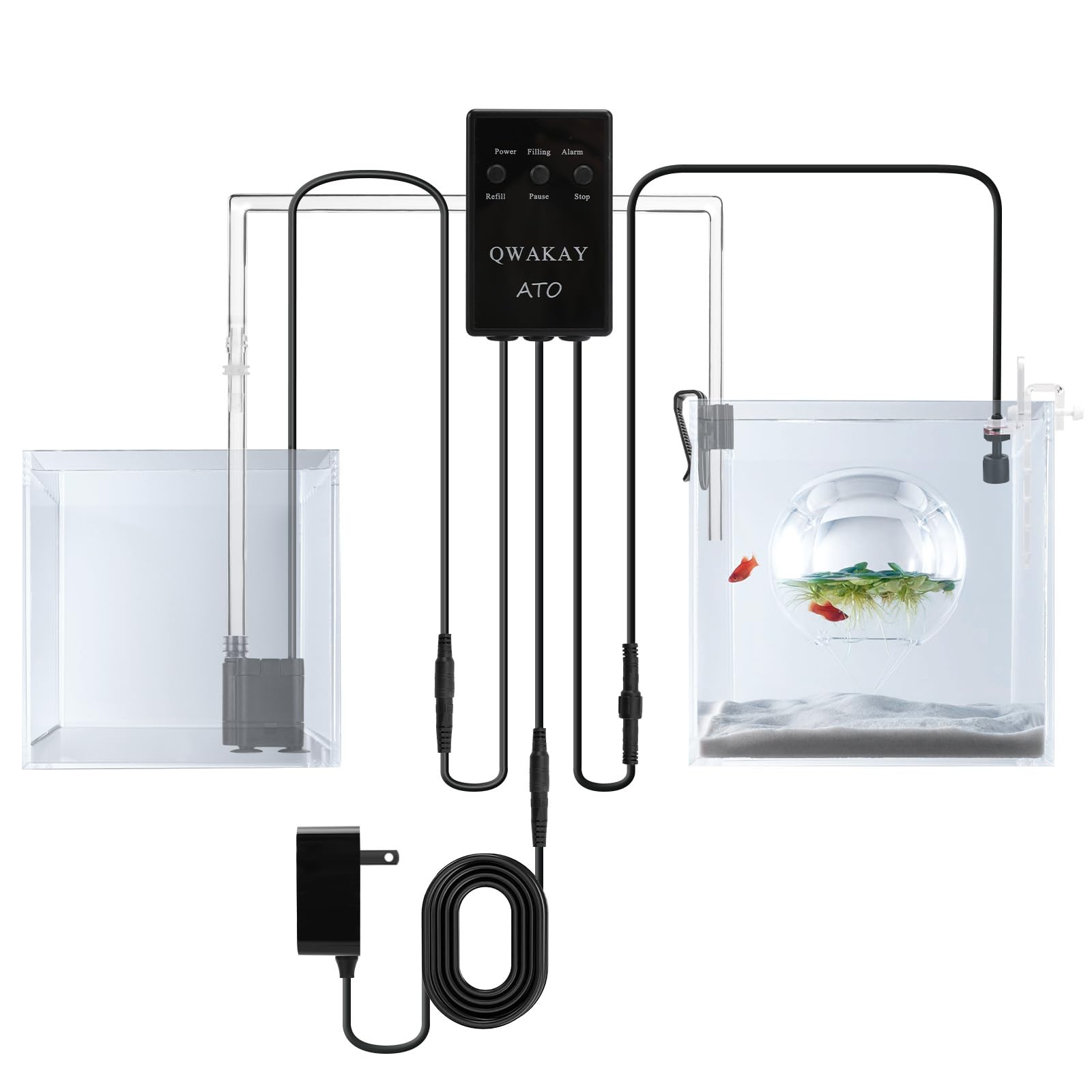
Rating: 4.1 ★ | Price: Budget | Sensor Type: Float switch | Safety Features: Ext. alarm, pause
This auto top-off system uses a mechanical float switch, eliminating the need for optical sensor cleaning. It’s budget-friendly and the pump runs quietly. However, backflow prevention can fail, and the float switch is less precise than optical sensors, making it best for low-evaporation tanks where minor water level fluctuations are acceptable.
Pros
- Quiet and efficient pump operation
- Clear video instructions simplify setup
Cons
- Plastic bracket can snap during installation
Suits hobbyists who distrust optical sensors and have low-evaporation tanks, provided the bracket is handled with care.
Best for Budget Experimenters
ATET Blue ATO
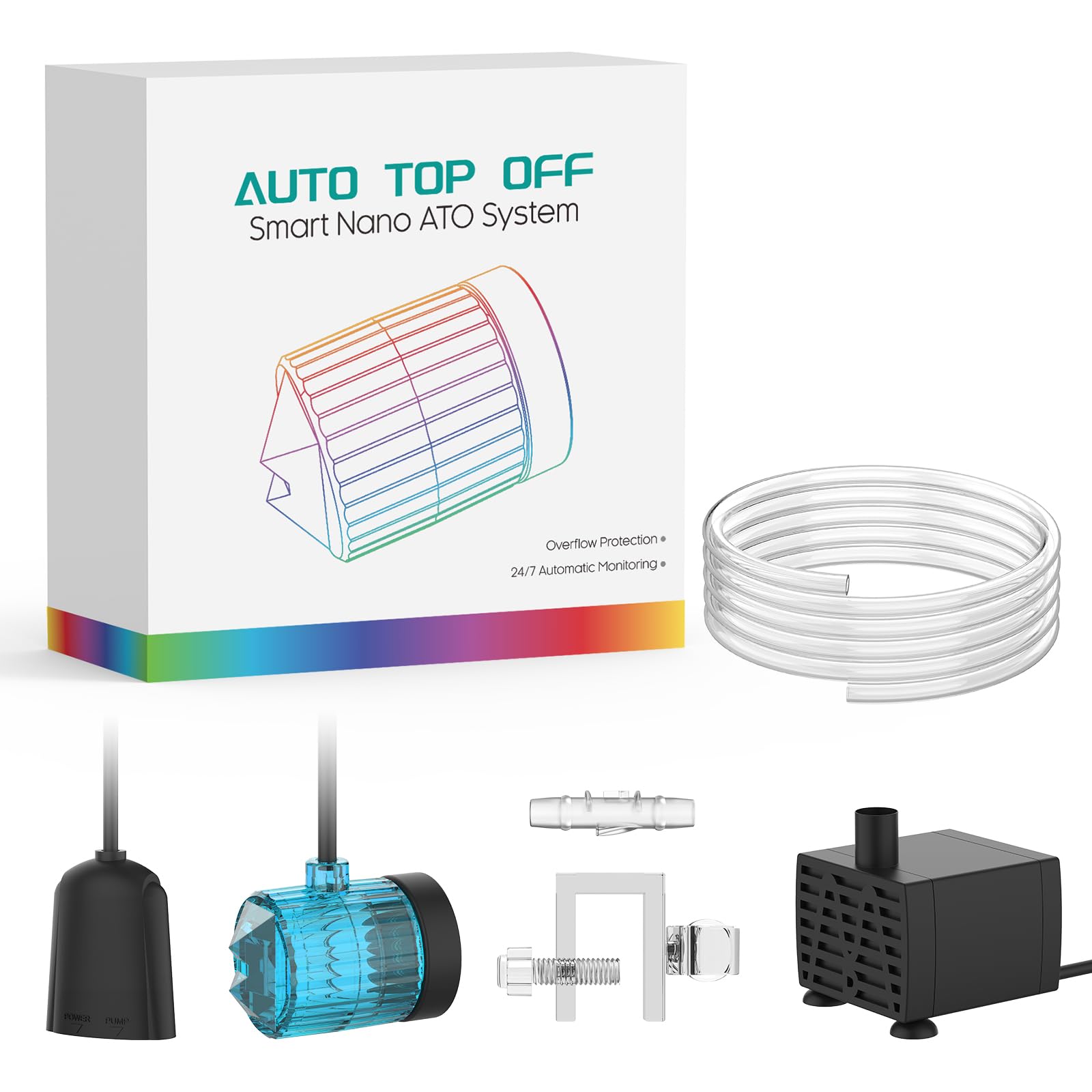
Rating: 4.1 ★ | Price: Budget | Sensor Type: Optical nano | Safety Features: QST, dual anti-overflow | Lift Height: 2.5 m | Pump Flow: 74 GPH
The ATET ATO provides a low-cost optical sensor and 74 GPH pump for small tanks, with simple setup and steady water top-off out of the box. Long-term durability under heavy use lacks extensive real-world verification, and the low-water warning is visual only — no audible alarm. This suits hobbyists willing to accept uncertainty for a lower price.
Pros
- Optical sensor and 74 GPH pump deliver consistent water top-off for several months of use.
- Simple setup process with clear instructions — no complex wiring needed.
Cons
- Low-water alert is a visual indicator only, no audible alarm — requires line-of-sight to notice.
A cost-effective ATO for small tanks when you’re willing to accept limited track record and a visual-only alarm.
Malida Power Free Ato
MALIDA Power Free ATO
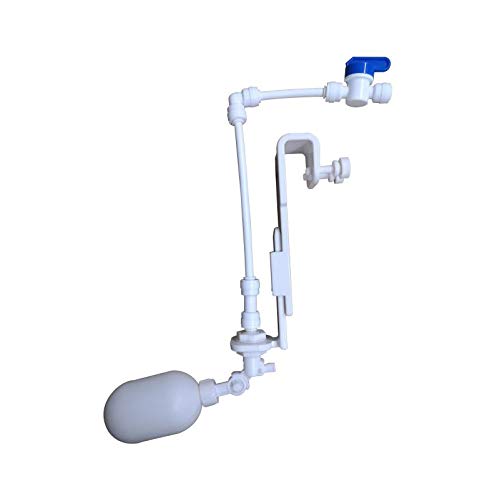
This mechanical float valve keeps the aquarium topped off without electricity, connecting directly to a RO/DI line or an elevated reservoir. It includes all necessary fittings for a clean install. However, it’s not a drop-in ATO for most tanks — it demands a permanent pressurized water source or gravity feed, which limits its use to hobbyists with a dedicated water line nearby.
Pros
- Maintains water level automatically with no power — ideal if you have a dedicated RO/DI line.
- Budget-friendly alternative to pump-based ATOs for plumbed setups.
Cons
- Float valve adjustment can be finicky in some setups — may require patience to dial in.
Best for reef keepers with an existing RO/DI line who want a no-power, low-maintenance top-off — skip this if you need a plug-and-play ATO.
How to Choose
Most cheap ATOs share the same core components, so the real difference comes down to warranty length and how often you’re willing to clean the sensor.
Sensor Type: Optical vs. Float
Optical sensors use a beam of light to detect water level – accurate but prone to false readings when covered by salt creep or biofilm. Float switches are mechanical and less finicky, but they can stick if debris gets lodged, risking overflow.
For a reef tank where salinity stability matters, optical sensors are preferred. But you must wipe them clean weekly. Float switches work fine for low-evaporation freshwater tanks where precision is less critical.
Dual Sensors for Overflow Protection
A secondary high-water sensor acts as a backup if the primary fails. In practice, many budget ATOs run both sensors off the same controller logic, so a single electrical fault can disable both. Real redundancy requires independent circuits – rare at this price.
Still, dual sensors catch about 80% of overflow scenarios. The remaining risk comes from siphon breaks failing or the pump running dry. Never rely solely on electronics; leave a physical gap between the reservoir outlet and the tank water surface.
Pump Flow Rate and Lift Height
Higher flow (e.g., 74 GPH) fills faster but can overshoot if the sensor response is slow. Lift height matters more: a pump rated for 2 meters may struggle to push water to a sump 5 feet above the reservoir. Measure your vertical distance before buying.
For standard tank–sump setups, 74 GPH at 2–2.5 m is sufficient. If your reservoir is in a cabinet below the tank, check that the pump can handle the head pressure – underpowered pumps will run hot and fail early.
Warranty and Support
Most sub-$50 ATOs offer one year or none. A two-year warranty from FZONE or MagTool gives some protection, but read the fine print – many exclude pump wear and tear. Customer support responsiveness varies widely; check return policies before buying.
If a warranty isn’t listed, treat the unit as disposable. Budget for a spare pump (around $10–15) if you choose a cheaper model. A short warranty doesn’t mean the product will fail, but it raises the risk if it does.
Compactness and Mounting
Nano tanks and rimless aquariums demand a small sensor footprint. Magnetic mounts are common – strong magnets hold well on glass up to 10 mm thick. All-in-one sensors (controller built into the probe) save space but expose the electronics to splash damage.
External controllers like the MagTool Duetto keep the brains dry but require an extra cable. For tight spaces, a sensor that sits flush against the glass and a small pump that fits in a corner reservoir matter more than extra features.
FAQ
Why does my auto top off keep overflowing despite having dual sensors?
Overflow usually happens when salt creep or biofilm covers the sensor, causing it to misread water level. Clean both sensor lenses weekly with a soft cloth. If that doesn’t help, the controller board may have a faulty relay – try a different power outlet or replace the unit.
How often should I clean the optical sensor on my aquarium ATO?
At least once a week. Salt creep, algae, and mineral deposits build up quickly, especially in high-evaporation reef tanks. Use a damp microfiber cloth or a vinegar soak for stubborn film. Set a reminder – skipping a week is the most common cause of sensor drift.
Can I use a mechanical float valve instead of a pump-based ATO?
Yes, if you have a direct RO/DI water line or a gravity-fed reservoir above the tank. Float valves are reliable and need no electricity, but they require permanent plumbing and a water source under pressure. They’re not a drop-in replacement for a self-contained pump ATO.
What does the red flashing light mean on my FZONE ATO controller?
A red flashing light on the FZONE controller indicates a dry-run alarm – the pump has been running without water detected. Check your reservoir level and ensure the sensor is submerged. If the reservoir is full, the sensor may be dirty; clean it and power cycle the unit.