This post contains affiliate links. We may earn a small commission when you buy through our links — at no extra cost to you.
The koi pond pump market is flooded with sub-$30 models that look almost identical and often fail within months. Owners frustrated by constant replacements quickly learn that a pump’s flow rate at zero lift means little when it can’t survive a single season.
The real cost isn’t the purchase price—it’s the time and money spent replacing pumps, cleaning clogs, and dealing with dead fish from stopped circulation. This guide focuses on pumps that deliver consistent flow at your pond’s actual lift height, handle debris without constant maintenance, and offer a realistic lifespan of years, not months.
Top Picks
Best for Small Ponds
Danner Pondmaster 500

Rating: 4.6 ★ | Price: $$$ | Max Flow (GPH): 500 GPH | Max Lift (ft): 10.5 ft | Wattage: 45W
The Pondmaster 500 uses an epoxy-filled, magnetic-drive design that eliminates shaft seals and reduces wear. Owners routinely report service lives exceeding a decade, and the 5-year warranty backs that expectation. At 45W, it draws less power than many 300 GPH budget pumps while maintaining consistent flow.
When fully submerged, the pump operates nearly silently — the magnetic drive has no direct motor-to-impeller contact, so the only sound is water movement. Inline installation may produce a low hum, but the unit is quiet enough for a backyard koi pond where ambient noise already masks it. A few units have shown impeller noise variability, typically noticeable only in very quiet settings or when the pump is not fully immersed.
This pump suits owners of small koi ponds (150–550 gallons) who prioritize long-term reliability over upfront cost. The 500 GPH flow is sufficient for aeration and filtration in that range, but ponds with waterfalls over 2 feet high or larger volumes will need higher-flow models. The premium price reflects the repairable build — you can replace the impeller or volute instead of buying a new pump every couple of years.
Serviceability is a standout feature. The front cover and impeller are user-replaceable, and Danner stocks parts for many past models. This makes the Pondmaster 500 a workhorse for those comfortable with basic maintenance — a quick annual cleaning and part swap keeps it running, whereas cheaper pumps are simply discarded.
Pros
- Magnetic-drive design eliminates seals, reducing wear and enabling decade-long service life.
- User-replaceable impeller and volute parts extend pump life beyond typical budget models.
- Operates near silently when submerged, suitable for noise-sensitive backyards.
- Five-year limited warranty provides a strong safety net against manufacturing variance.
- Energy-efficient 45W motor runs 24/7 for less than $5 per month in most regions.
Cons
- Flow rate of 500 GPH may be insufficient for ponds over 550 gallons or for waterfalls above 2 feet.
- In very quiet environments, some units produce a faint impeller hum that is less noticeable with full submersion.
- Premium pricing sits significantly above budget alternatives with similar rated flow.
For small pond owners who value repairability and decades of service, the Pondmaster 500 delivers a lower total cost of ownership than any disposable pump — if your pond fits within its flow limits, it’s the clear choice.
Best for Large Debris Ponds
Tetra Debris-Handling
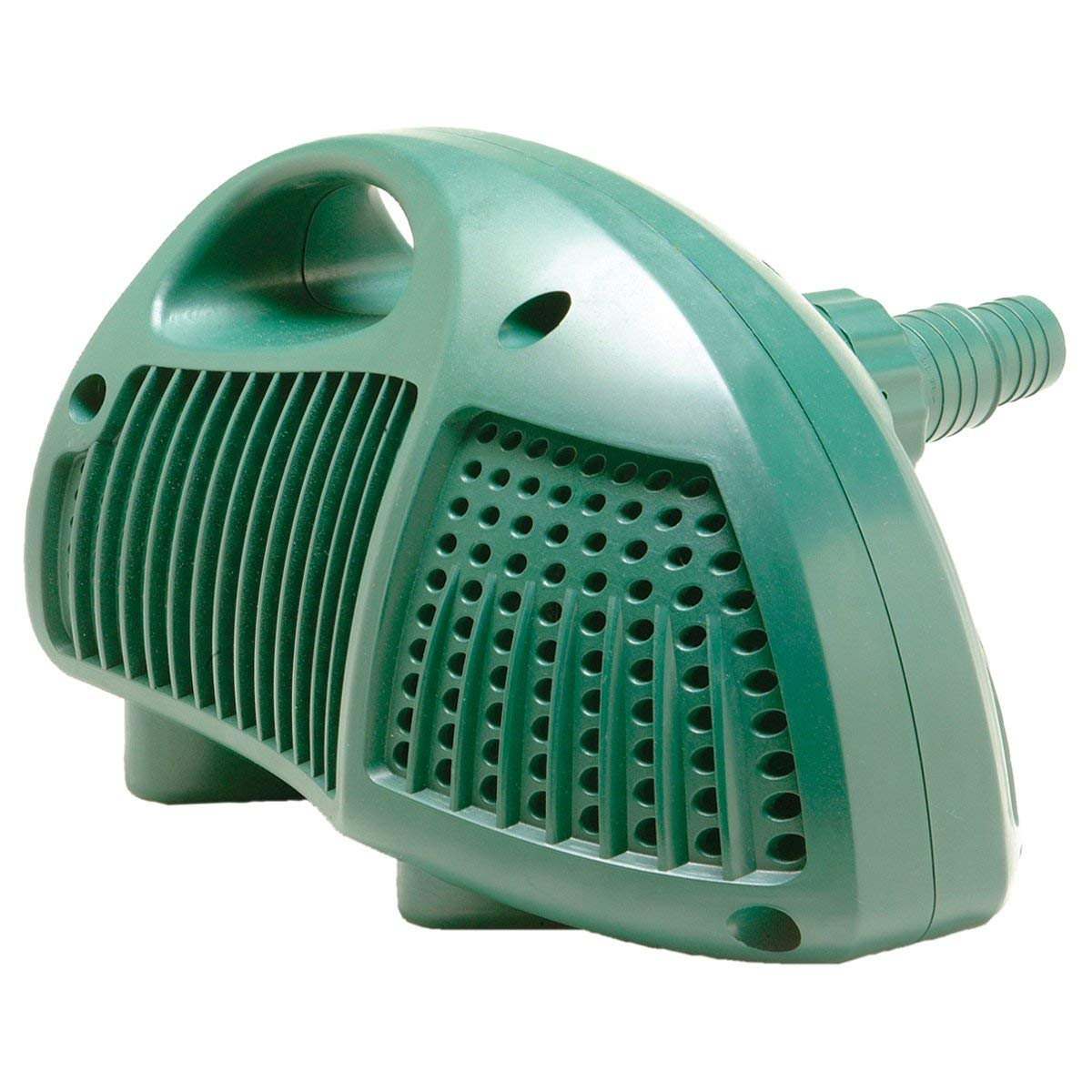
Rating: 4.5 ★ | Price: $$$ | Max Flow (GPH): 3000 GPH | Max Lift (ft): 11.6 ft
The Tetra Pond Debris-Handling Pump moves 3000 gallons per hour while passing solids up to 1/4 inch through its impeller, meaning less time spent unclogging skimmers and pre-filters. Owners of ponds surrounded by trees or heavy foliage report that leaves and debris flow through without the constant maintenance required by narrower pumps. Cleaning the pump body itself is straightforward — the intake cage and impeller chamber open without tools, making seasonal maintenance faster than models with sealed housings.
This pump suits ponds in the 1500–3000 gallon range where debris is a regular issue, but it carries tradeoffs worth checking. The price sits in premium territory, and the hose outlets may not match standard tubing sizes — measure your existing plumbing or plan for adapter fittings. Some units have shown motor wear after three to four years, so while the debris-handling capability is strong, long-term durability isn’t guaranteed across all examples. For buyers who prioritize clog resistance over upfront cost and can verify their hose connections, this remains a capable workhorse.
Pros
- Handles leaves and twigs without clogging, even during heavy shedding seasons
- Strong flow capacity for ponds up to 3000 gallons, supporting filtration and water movement
- Simple to disassemble and clean without tools, reducing maintenance time
Cons
- Motor life can shorten after a few seasons in some setups
- Hose fittings may require non‑standard adapter sizes, adding to setup cost
A dedicated debris-handler for owners who need a pump that keeps running through leaf season — just confirm your hose size and accept that longevity is not a sure bet.
Best for Waterfall Ponds
Alpine PAL3100

Rating: 4.4 ★ | Price: $$ | Max Flow (GPH): 3100 GPH | Max Lift (ft): 21.5 ft | Wattage: 276W
The Alpine PAL3100 delivers 3100 GPH with a max lift over 21 feet, making it one of the strongest submersible pumps available for under $140. It operates with a low hum even at full output — a noticeable advantage over noisier alternatives in this flow class. Where the top debris-handling pump (Tetra) commands a premium for its ability to pass solids, this Alpine is best suited for clear-water circulation and waterfall applications where cost per GPH matters most.
This pump is a strong match for pond owners with 1500 to 3000 gallons who want high flow for waterfalls and are working with a limited budget. The intake cover may detach over time, so a zip tie is a sensible precaution to prevent small fish from being drawn in. Durability varies — some units develop motor or impeller issues within the first year — so this isn’t a set-and-forget choice, but for those willing to accept that tradeoff, the upfront savings are substantial.
In practice, the pump moves water effectively for its price tier. Reports of motor or impeller issues appear within the first year of continuous operation, while other units continue running for several seasons without trouble. The quiet operation and strong flow make it a practical option for budget-conscious setups, provided the owner is comfortable with periodic checks and potential replacement sooner than pricier magnetic-drive pumps.
Pros
- Pushes 3100 GPH with a max lift over 21 feet — among the strongest per dollar in this price range.
- Operates at a low hum, even when circulating large volumes of water.
- Cost-effective choice for ponds between 1500 and 3000 gallons, especially with waterfall applications.
Cons
- Motor or impeller issues may arise within the first year of continuous operation.
- Intake cover may detach — small fish could be drawn into the pump if not secured with a zip tie.
For pond owners who need maximum flow on a budget and are comfortable adding a zip tie and accepting some risk, this pump offers more GPH per dollar than anything else in its class.
Best for Small-Medium Ponds
Danner Pondmaster 700
Rating: 4.5 ★ | Price: $$ | Max Flow (GPH): 700 GPH | Max Lift (ft): 11.66 ft | Wattage: 70W
The Danner Pondmaster 700 uses a magnetic drive with a ceramic shaft that reduces friction and wear over time. The impeller can be replaced, so a seized pump doesn’t mean replacing the whole unit. Danner backs it with a five-year limited warranty, which is notably longer than most pumps in this price tier.
In use, the pump’s noise level depends on installation. Placed directly on a hard surface without vibration dampening, the hum can be noticeable in quiet garden seating areas. The advertised 700 GPH flow is measured at zero head; at a typical lift of 3–5 feet, the output drops, and some owners find it closer to 500–600 GPH.
This pump suits owners of ponds between 150 and 550 gallons who want a repairable unit with a strong warranty. It is not the quietest option for noise-sensitive backyards, nor is it suitable for ponds requiring sustained flow above 700 GPH. For smaller ponds under 500 gallons where noise is less of a concern, the smaller Pondmaster 500 offers even longer value per year.
Pros
- Magnetic drive with ceramic shaft reduces internal wear over years of use
- Replaceable impeller extends pump life without needing a full replacement
- Works as a submersible or inline pump, fitting multiple pond setups
- Five-year limited warranty provides long-term coverage uncommon at this price
Cons
- In quiet garden seating areas, the pump hum may be distracting without vibration dampening
- At higher lift heights, actual flow can fall noticeably below the advertised 700 GPH
For pond owners who value repairability and a five-year warranty over whisper-quiet operation, this pump delivers consistent circulation for medium-sized setups.
Best for Quiet Medium Ponds
VIVOSUN 1600GPH

Rating: 4.4 ★ | Price: $$ | Max Flow (GPH): 1600 GPH | Max Lift (ft): 15 ft | Wattage: 100W
Unlike the magnetic-drive pumps that dominate the mid-range market, the VIVOSUN delivers near-silent operation at a fraction of the cost — barely audible even at full flow. For pond owners who prioritize a quiet backyard over decades of service, this is a clear advantage.
This pump suits medium ponds (500–1000 gallons) where the primary goal is quiet circulation and filtration. The rated flow of 1600 GPH drops noticeably above 5 feet of lift, so it works best in setups with short or moderate hose runs. Given that some units may develop impeller or seal issues within months, plan for easy access and the possibility of replacement rather than a set-and-forget installation.
Pros
- Operates at near-silent levels, barely audible in a quiet backyard.
- Delivers strong flow for its price, making it a cost-effective option.
- Removable strainer and handle simplify setup and cleaning.
Cons
- Some units may develop impeller or seal problems within months of use.
- Flow at 5+ feet lift may be lower than rated, affecting performance in taller waterfalls or longer hose runs.
A quiet, budget-friendly pump for medium ponds where you can easily access and replace it — but not a set-and-forget solution for continuous duty.
Best for Small Ponds
TetraPond 325GPH

Rating: 4.4 ★ | Price: $$ | Max Flow (GPH): 325 GPH | Max Lift (ft): 6.5 ft
TetraPond’s 325 GPH pump runs quietly and maintains steady flow for small water features, drawing little power over months of continuous use. Its output drops noticeably at higher lifts, so it is best suited to ponds under 500 gallons rather than setups requiring strong water movement for fish health.
For a small ornamental pond or a temporary circulation solution, this pump offers decent value. If your goal is a stocked koi pond that needs consistent flow for filtration and aeration, the modest head pressure and potential for early wear make a magnetic-drive model with a longer warranty a more solid choice.
Pros
- Consistent performance for small ponds
- Energy efficient and quiet
Cons
- Flow rate may be insufficient for ponds over 500 gallons or higher lifts
- Durability can be an issue; impeller shaft wear has been noted within the first year
This pump fits small ornamental ponds up to 500 gallons; for stocked koi ponds requiring continuous flow and longer life, a higher-end magnetic-drive model is a better investment.
Best for Medium Ponds
Danner Pondmaster 950

Rating: 4.5 ★ | Price: $$$ | Max Flow (GPH): 950 GPH | Wattage: 93W
Danner Pondmaster 950 delivers 950 GPH flow suitable for medium koi ponds up to 1100 gallons, supporting filtration and aeration needs. Its magnetic-drive design and 5-year warranty support long-term use, though some units may show impeller or seal wear that the warranty addresses. The pump runs quieter than many competitors at this flow rate, but the hum or rattle may be noticeable in very quiet settings. Compared to the 700 GPH model, the 950 offers higher flow at a premium price, making sense only if you need that extra capacity. Quality control variance means checking the unit upon arrival is wise.
Pros
- Long-lasting magnetic-drive design backed by a 5-year warranty.
- Easy to service with accessible components.
- Quieter operation than many pumps of similar output.
Cons
- Impeller or seal failure may occur within months for some units.
- Hum or rattle can be audible in quiet environments.
A fitting option if you need 950 GPH and are comfortable with the warranty covering potential early issues – not the choice if you value whisper-quiet operation or minimal QC risk.
Best for Medium Ponds Budget
VIVOHOME 2700GPH
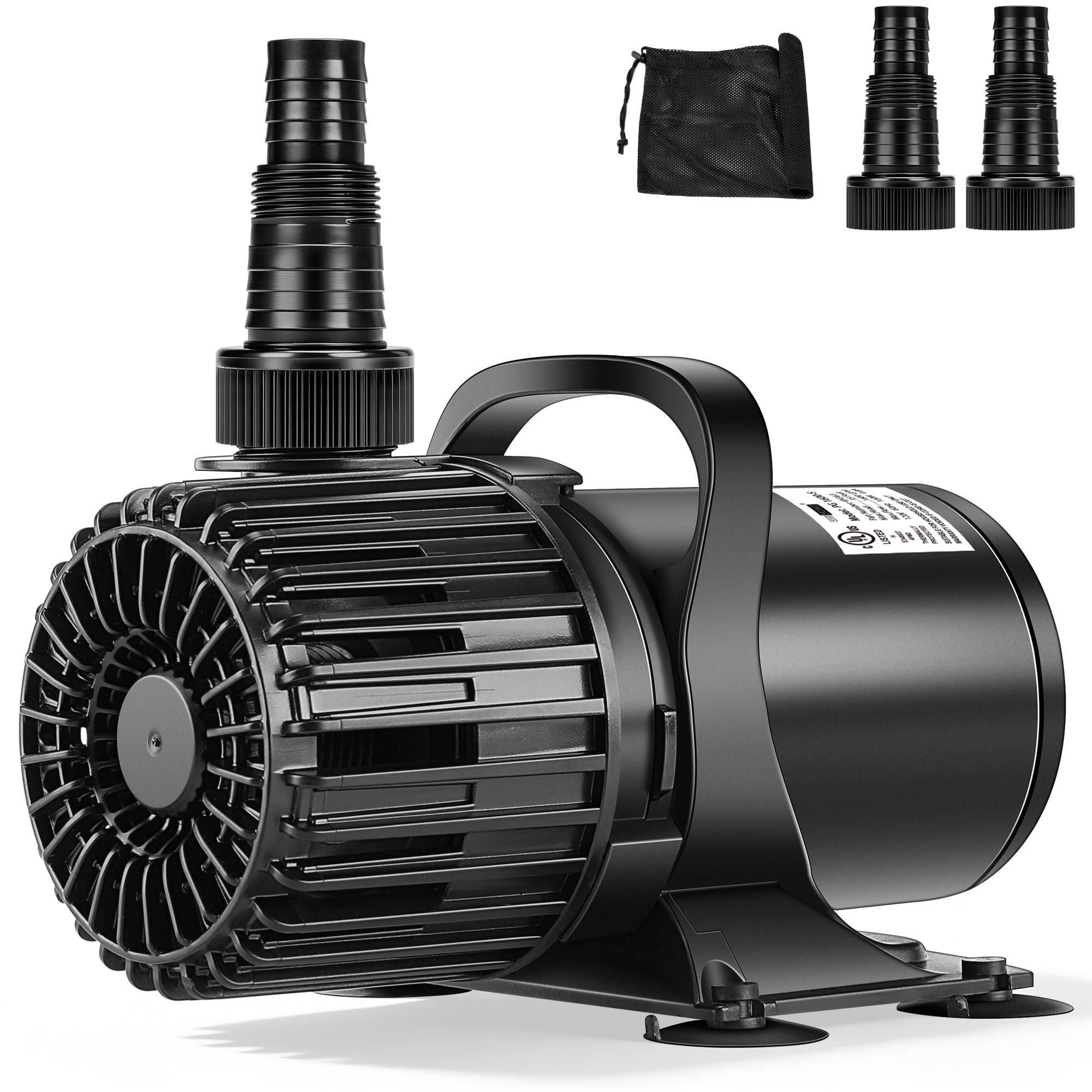
Rating: 4.4 ★ | Price: $ | Max Flow (GPH): 2700 GPH | Max Lift (ft): 15 ft | Wattage: 120W
This pump moves a substantial volume of water for its price, and the quiet operation is a plus for backyard ponds. The outflow adapter may not fit standard 1-inch tubing without additional fittings, and some units have experienced motor or impeller issues within the first year. For the money, the flow rate is hard to beat, but the durability tradeoff makes it a short-term solution for those on a tight budget.
Pros
- Moves a high volume of water for the price.
- Operates quietly, making it suitable for noise-sensitive settings.
Cons
- Some units may stop working within the first year due to motor or impeller issues.
- Outflow adapter may require additional fittings to connect to standard 1-inch tubing.
Best suited for buyers on a tight budget who need strong water movement and can accommodate minor plumbing adjustments and a shorter lifespan.
Best for Mid-Range Ponds
WaterRebirth 1700GPH

Rating: 4.5 ★ | Price: $ | Max Flow (GPH): 1700 GPH | Max Lift (ft): 14 ft | Wattage: 120W
The WaterRebirth 1700GPH delivers strong flow and quiet operation for its price point, making it a capable choice for medium ponds. Durability can be inconsistent — some units may require replacement within a year, and warranty support can be challenging to access. For the cost, the flow and quietness are hard to beat, but this pump suits buyers comfortable with occasional replacement rather than long-term worry-free operation.
Pros
- Delivers strong flow suitable for medium ponds and waterfalls.
- Runs quietly, keeping backyard noise to a minimum.
- Good value per gallon of flow compared to pricier alternatives.
Cons
- Durability can vary; some units may need replacement within a year.
- Warranty assistance may be limited, making support frustrating.
For medium ponds where flow matters more than longevity, this pump offers excellent value.
Best for Waterfall Medium
Pond Boss 2300GPH
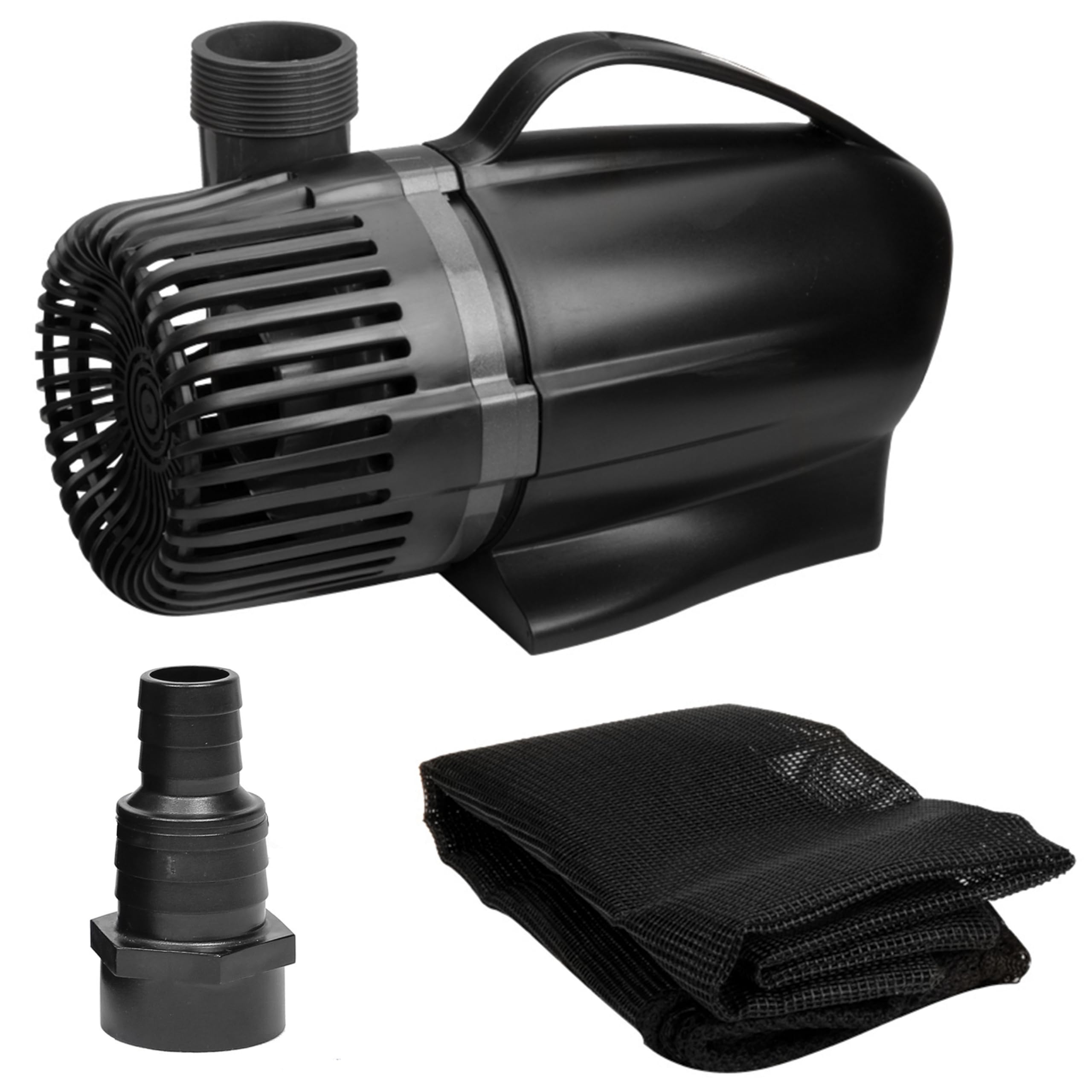
Rating: 4.6 ★ | Price: $$ | Max Flow (GPH): 2300 GPH | Max Lift (ft): 16 ft
The Pond Boss 2300 GPH pump provides substantial water movement for medium waterfall features, with energy consumption lower than many pumps in its flow class. The design is submersible and handles lifts up to 16 feet. However, longevity is uneven — some owners report the pump running for years, while others experience issues within months. The noise level, while not excessive, is more audible than premium alternatives. For buyers who accept the gamble on lifespan, the upfront cost is attractive. Those wanting more predictable service should consider Danner or Tetra models with stronger track records.
Pros
- Powerful water movement for medium waterfalls
- Energy efficient relative to other 2300 GPH pumps
Cons
- In quiet environments, the pump’s humming sound may be noticeable
- Long-term durability varies — some units may need replacement in under a year
Suitable for medium waterfall setups where lower upfront cost is the priority and the owner is comfortable with potential variability in lifespan.
How to Choose
Flow rate at zero lift is misleading; the actual flow at your pond’s lift height determines performance.
Flow Rate at Zero Head vs. Actual Lift
Pump flow rates are always advertised at zero lift—meaning no hose or height. Once you add even a few feet of vertical rise, the flow drops significantly, often by 30-50% at 5 feet. A pump rated 3000 GPH at zero head may only deliver 1500 GPH at your waterfall’s height.
Check the manufacturer’s flow curve chart to see what GPH you’ll actually get at your pond’s head height. If that chart isn’t provided, assume a 40% loss per 5 feet of lift as a rough rule of thumb.
Maximum Lift Height
The maximum lift (or head) rating tells you the highest vertical distance the pump can push water before flow stops completely. Running a pump near its max lift dramatically reduces flow and increases wear on the motor.
For reliable operation, choose a pump with a max lift at least 1.5 times your actual needed head. If your waterfall is 6 feet high, a pump with 10+ feet max lift will deliver steady flow and last longer.
Wattage and Energy Efficiency
Wattage directly affects your monthly electric bill. A 100W pump running 24/7 costs about $8-10 per month at average US rates, while a 45W pump costs half that. However, lower wattage often means lower flow, so balance energy use with your pond’s circulation needs.
Magnetic-drive pumps (like Danner’s Pondmaster line) are generally more efficient than direct-drive models for the same flow, and they also tend to run cooler and quieter.
Warranty and Parts Availability
A longer warranty (3-5 years) indicates the manufacturer’s confidence in the pump’s durability. But warranty length alone isn’t enough—replacement impellers, seals, and volutes must be available for purchase years later. Pumps with sealed, non-serviceable units are disposable; you throw the whole thing away when a $10 impeller fails.
Danner and Tetra both offer replacement parts for their Pondmaster and TetraPond lines, which is why owners often keep these pumps running for over a decade.
Debris Handling Ability
Koi ponds collect leaves, algae, and fish waste. A pump with a fine intake screen clogs quickly, requiring daily cleaning. Pumps with a debris-handling impeller (like the Tetra Debris-Handling pump) can pass particles up to 1/4 inch without jamming.
If your pond is under trees or has heavy plant debris, prioritize a pump with a wide intake opening and a pre-filter cage. Otherwise, be prepared to clean the pump weekly during fall and spring.
FAQ
Why does my koi pond pump lose flow after a few months?
The most common cause is debris buildup around the impeller or in the intake screen. Even small amounts of algae or leaves can reduce flow by 50%. Open the pump and clean the impeller chamber and volute every 2-4 weeks during active growing season. If cleaning doesn’t restore flow, the impeller may be worn and need replacement—check the manufacturer’s parts availability.
Can I use a submersible pump inline for a koi pond waterfall?
Yes, many submersible pumps like the Danner Pondmaster series can be used either submerged or inline (above water). Inline installation reduces head loss from long hoses and makes cleaning easier, but you need to install it below the water level to maintain prime. Check the pump’s manual to confirm it supports inline use—some budget pumps cannot run dry and will burn out.
How often do I need to clean a pond pump to prevent clogging?
For koi ponds with moderate debris, clean the pump’s intake screen and pre-filter every 2 weeks. During heavy leaf fall, weekly cleaning is needed. Pumps with dedicated debris-handling impellers (like the Tetra Debris-Handling pump) can go 4-6 weeks between cleanings. Always unplug the pump before cleaning and inspect the impeller for damage.
What size pond pump do I need for a 1000 gallon koi pond?
Aim for a pump that circulates the entire pond volume at least once per hour—so 1000 GPH at the actual lift height of your waterfall or filter. Most 1000 GPH pumps lose about 30-40% flow at 5 feet of lift, so look for a pump rated at 1500-1700 GPH at zero head to achieve 1000 GPH in practice. The Danner Pondmaster 700 or VIVOSUN 1600GPH are reasonable options.