This post contains affiliate links. We may earn a small commission when you buy through our links — at no extra cost to you.
Many betta pellets marketed as ‘floating’ sink within seconds due to ingredient density. Others labeled ‘mini’ are still too large for a betta’s small mouth — a mismatch that leads to uneaten food and water quality issues. The result is wasted money and a frustrated owner.
This guide helps you avoid those disappointments by focusing on pellet size, float consistency, and ingredient quality. We break down which pellets float longest, which are small enough for even baby bettas, and which use whole-food ingredients without fillers. These three factors determine whether a pellet works as a daily staple or ends up as waste.
For most owners, a mid-range pellet with reliable float and small size is the safest bet. But if you prioritize ingredient purity over floatability, there are strong options too — as long as you’re willing to accept some sinking. No single pellet works for every betta, but the right match is worth the effort.
Top Picks
Best for All Bettas
Hikari Betta Baby Pellets

Rating: 4.8 ★ | Price: $$ | Pellet Size: Baby tiny | Floatability: Floats well | Pack Size: 3-pack | Container: Bag
The baby pellet size requires no crushing — it fits juvenile bettas and full-grown adults alike. The pellets stay afloat longer than most competing foods, giving surface feeders ample time to eat without waste sinking to the substrate.
Three separate containers in one purchase reduce the per-feeding cost while providing backup supply. Many owners report improved coloration and sustained activity levels over weeks of use, which aligns with the nutrient-dense formulation.
This food suits betta owners who want a primary diet with minimal rejection risk and consistent sizing. The floating nature works well for surface feeders, and the small pellets accommodate picky eaters. One tradeoff: the bag-style dispenser can make portion control tricky — some owners pour the pellets into a bottle or jar for easier measuring.
Pros
- Pellet size is small enough for all betta life stages, from fry to adult.
- Floats longer than most alternatives, reducing wasted food in the tank.
- Three-pack format offers good value per serving and extended supply.
- Supports vibrant coloration and overall vitality with regular feeding.
Cons
- Bag dispenser makes it difficult to control the exact portion size without practice or transferring to a different container.
If you want a betta food that works from the start — no crushing, no sinking surprises, and no rejection — this is the one to buy.
Best for Daily Staple
Ocean Nutrition Betta Pellets

Rating: 4.6 ★ | Price: $$ | Pellet Size: Small uniform | Floatability: Stays afloat long | Pack Size: 0.53 oz | Container: Bottle
The Ocean Nutrition Betta Pellets float on the surface longer than most pellets in this price range, giving bettas a clear window to feed without chasing sinking pieces. The small, uniform size fits typical betta mouths well, and the formula leaves the water clear — no clouding from uneaten bits. Where the top pick (Hikari) wins on size suitability for tiny mouths, this option offers stronger float retention for owners who prefer a pellet that stays visible.
This food is a good fit for owners who want a low-mess, balanced daily staple with natural color enhancers. A minority of pellets may sink before being eaten — though far fewer than competing brands, it’s worth a quick check after feeding. Bettas that are not particularly picky accept it readily; for extremely selective fish, other options may be needed.
Pros
- Pellet size is small and uniform, fitting betta mouths without needing to crush.
- Floats on the surface for an extended time, giving bettas ample feeding opportunity.
- Natural color enhancers and high protein content with no water clouding.
Cons
- A small number of pellets may sink before being eaten, requiring a quick surface check after feeding.
For owners who value floating reliability and balanced nutrition at a fair price, this pellet delivers — the occasional sinker is minor and infrequent.
Best for Health-Conscious
Northfin Betta Bits 1mm
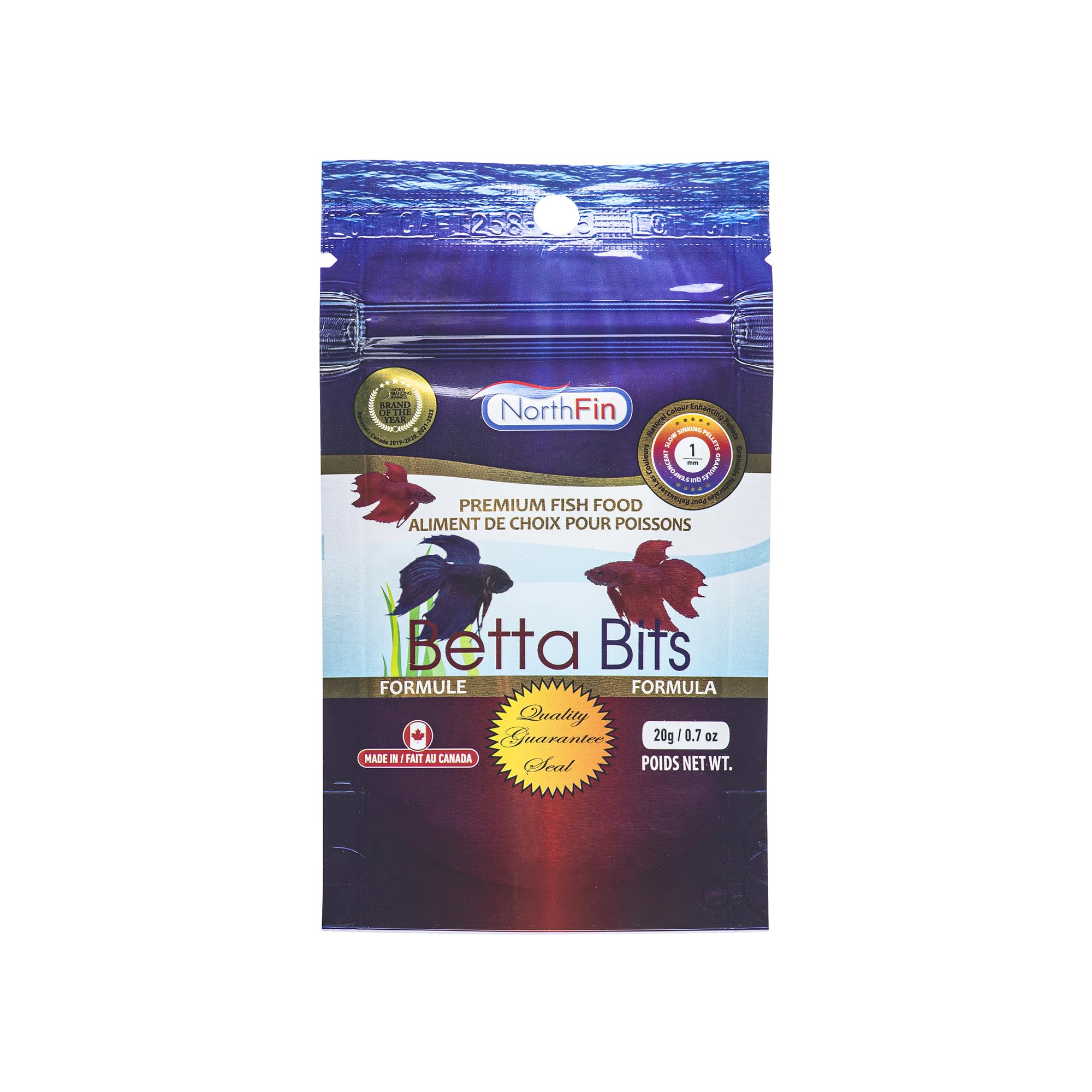
Rating: 4.5 ★ | Price: $$$ | Pellet Size: 1mm small | Floatability: Some sink | Pack Size: 20 g bag | Container: Bag
Northfin Betta Bits delivers a level of ingredient transparency that is rare in betta pellets. No fillers, hormones, or artificial pigments – just Antarctic krill meal as the first ingredient. Owners who read labels will appreciate the absence of cheap extenders, and the food’s effect on fish color and overall condition has drawn strong praise.
This food suits health-conscious owners who prioritize ingredient purity over feeding convenience. The pellets do not float consistently – some sink, which can lead to uneaten food settling on the substrate. The foil bag makes portion control fussy; transferring to a small jar or shaker bottle solves the dispensing issue.
Pros
- No fillers, hormones, or artificial pigments – pure Antarctic krill meal.
- Whole-food ingredients support fish health and vitality.
- Visible improvement in natural color without artificial enhancers.
Cons
- Inconsistent float: some pellets sink, reducing feeding control.
- Foil bag requires careful pouring or transfer to avoid overdosing.
Best for owners who put ingredient quality above all else – accept the float variance and bag hassle for a cleaner, more natural diet.
Best for Young Bettas
Northfin Super Betta
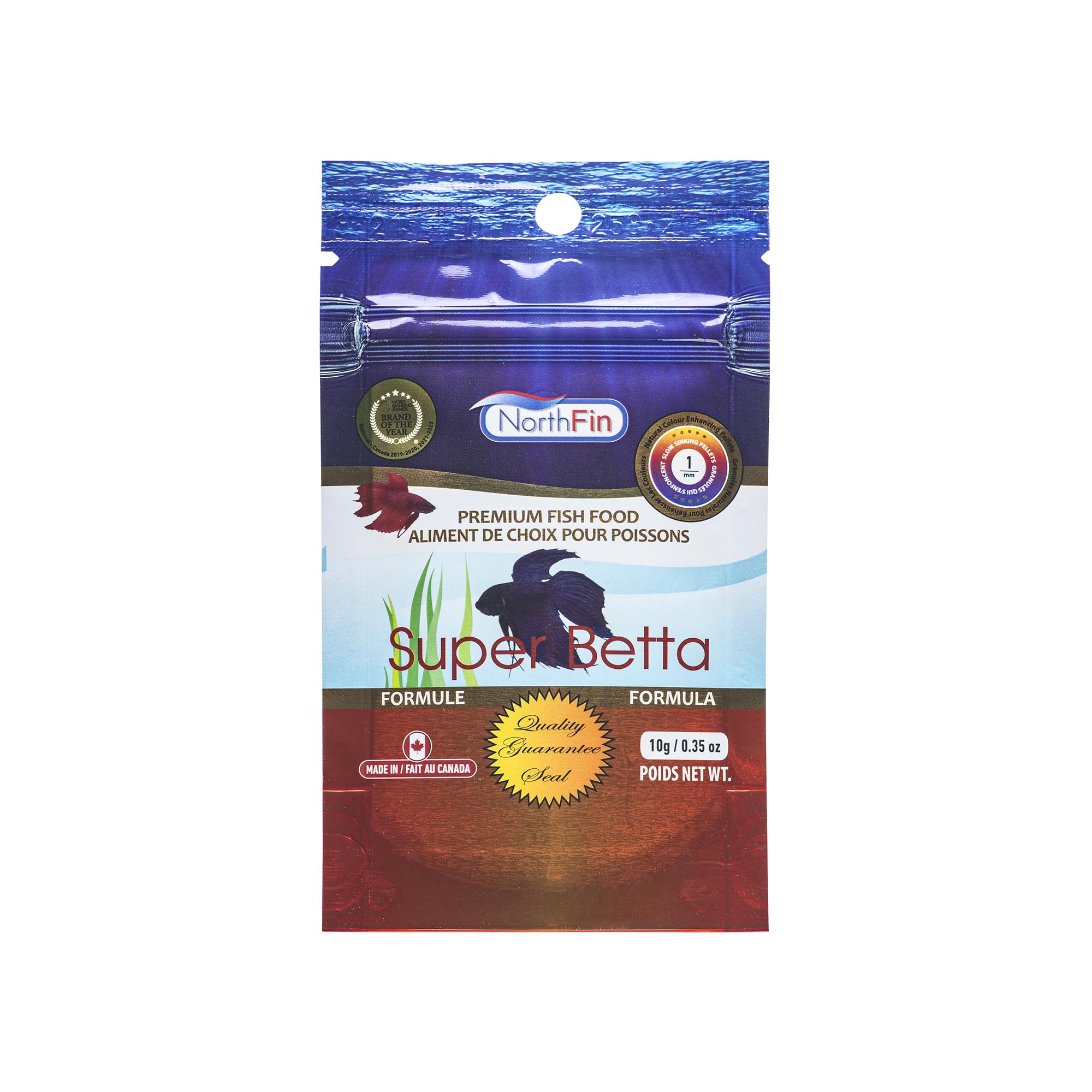
Rating: 4.5 ★ | Price: $ | Pellet Size: Small juvenile | Floatability: Mixed float | Pack Size: 10 g pouch | Container: Pouch
Northfin Super Betta pairs whole Antarctic krill meal with a budget-friendly price tag, making it one of the most affordable options for owners who want no-filler ingredients. The small pellet size is a deliberate fit for juvenile or newly purchased bettas that may struggle with larger foods.
This food works best for keepers who value ingredient transparency over guaranteed acceptance — some bettas may refuse the taste, and floatability can be inconsistent, with certain pellets sinking quickly. Owners whose fish are known to be picky or who insist on floating food should consider alternatives, but for young bettas on a budget, the ingredient quality-to-price ratio is hard to beat.
Pros
- Affordable price for a formula with whole Antarctic krill meal and no fillers.
- Pellet size is small enough for juvenile and small-mouthed bettas.
Cons
- Some pellets may sink quickly rather than floating, which can be an issue for bettas that prefer surface feeding.
- Taste acceptance varies — some bettas may refuse the pellets altogether.
Northfin Super Betta delivers exceptional ingredient value for owners willing to work around variable float and pickiness — ideal for young bettas on a budget.
Best for Eco-Conscious
Aqueon Nutrinsect Betta

Rating: 4.4 ★ | Price: $$ | Pellet Size: Small juvenile | Floatability: Floats well | Pack Size: 1.41 oz | Container: Bottle
This formula replaces fish meal with insect protein and krill oil — a more sustainable protein source. The pellets are consistently small and float well, making them accessible for young and juvenile bettas. That’s a contrast to many whole-seafood options that sink quickly or are too large for small mouths. Early feedback confirms acceptance among many bettas, though picky individuals may need time. For owners who prioritize sustainability over the broader acceptance of the top-selling alternative, this is a compelling choice.
Best for environmentally conscious owners who want to avoid fish-based ingredients, especially those raising young bettas. The 1.41 oz bottle is compact and mid-range priced. For extremely picky eaters, palatability is less certain — testing with a small amount before committing is wise.
Pros
- Insect-protein formula eliminates fish meal for a more sustainable diet.
- Small pellets float well, making them accessible for young and juvenile bettas.
- Includes krill oil and algae for balanced nutrition alongside insect protein.
Cons
- Some bettas may reject the taste and spit out the pellets — palatability varies by individual.
A solid sustainable alternative for young bettas — worth trying for eco-conscious owners.
Best for Whole-Food Fans
Omega One Betta Buffet
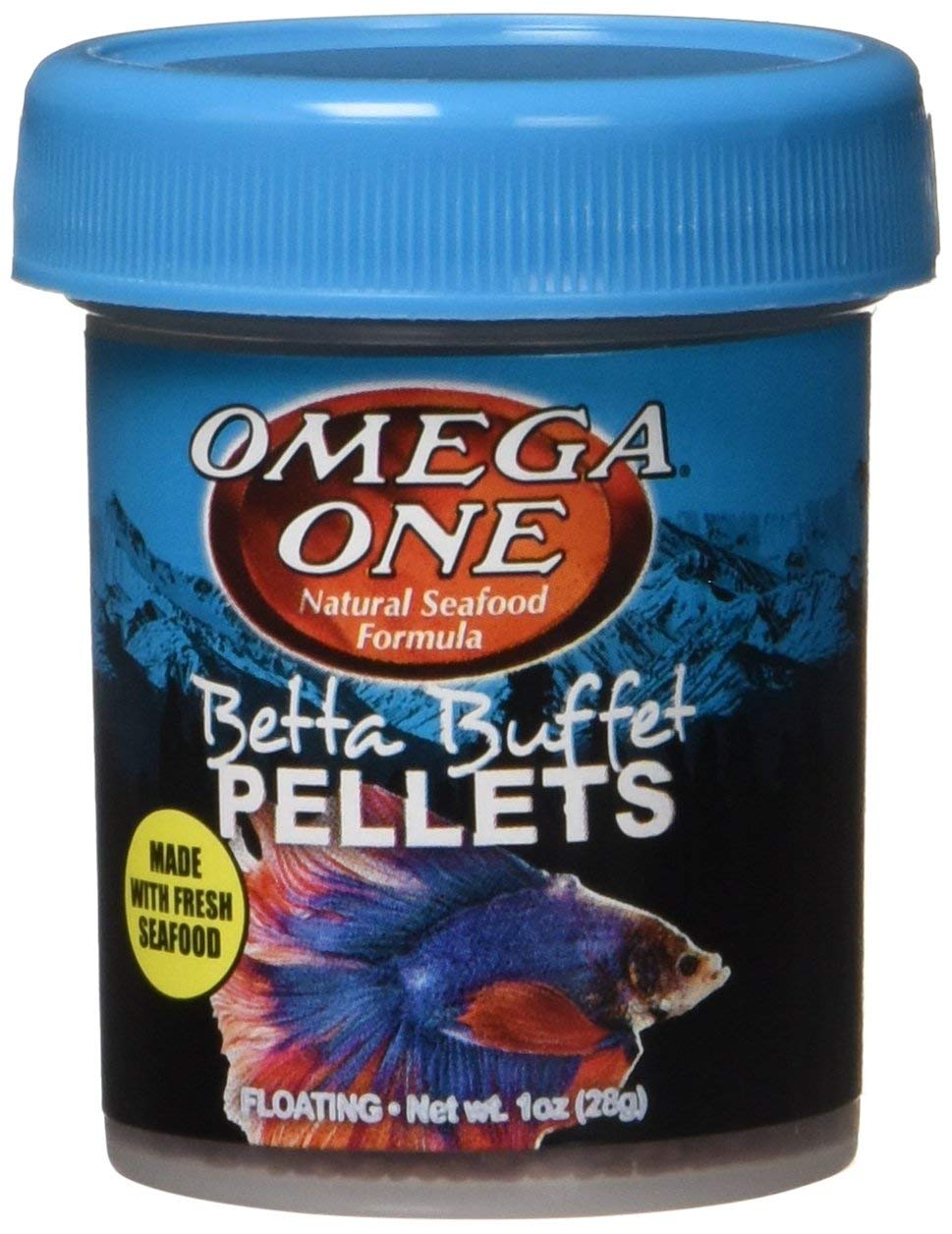
Rating: 4.6 ★ | Price: $$$ | Pellet Size: 1.5mm | Floatability: Many sink | Pack Size: 1 oz | Container: Bottle
Omega One Betta Buffet is the only dry food built around fresh whole seafood—herring, salmon, and shrimp—with zero meal fillers. This ingredient-first approach delivers high protein and natural color enhancers that support fish health and vibrancy.
This food works best for owners who prioritize ingredient quality over floating convenience. Pellets can sink quickly and the 1.5mm size may be too large for small or juvenile bettas. Larger bettas that actively forage will adapt well, but those expecting guaranteed floating performance should consider other options.
Pros
- Made from whole fresh seafood with no meal fillers
- High protein and natural color enhancers support fish health
- Fish actively seek out these pellets, indicating strong palatability
Cons
- Some pellets sink quickly, requiring monitoring and removal of uneaten food
- 1.5mm pellet size can be too large for bettas with smaller mouths
If whole-food ingredients are your top priority, this is the cleanest option—just be prepared to manage sinking pellets and size limitations.
Best for Large Bettas
TetraBetta PLUS Mini Pellets

Rating: 4.5 ★ | Price: $ | Pellet Size: Oversized mini | Floatability: Floats | Pack Size: 1.2 oz | Container: Pouch
TetraBetta PLUS floating mini pellets offer solid nutrition at an entry-level price point. However, the pellets are sized too large for many bettas — owners of smaller fish will need to crush them manually or risk their betta refusing to eat. This trade-off makes the product best suited for owners with larger or more aggressive bettas who can swallow the pellets whole, or for budget-conscious buyers willing to crush each pellet before feeding.
Pros
- Extremely low price point makes it one of the cheapest betta food options.
- Ingredients are well-received by fish that can eat the pellets.
Cons
- Pellets are too large for typical bettas and may require crushing before feeding.
Ideal for owners with larger bettas who want the lowest-cost food, provided they are comfortable crushing pellets for smaller fish.
Best for Color Seekers
Extreme Color Betta Bits

Rating: 4.3 ★ | Price: $$ | Pellet Size: Large | Floatability: Claimed float | Pack Size: 1.5 oz bag | Container: Bag
Invert Aquatics Extreme Color Betta Bits deliver noticeable color enhancement thanks to natural astaxanthin and quality protein sources. However, the pellets are sized for larger fish—most bettas cannot eat them whole and require crushing before feeding. This extra step can lead to occasional rejection if not crushed finely enough. For owners willing to crush each serving, these bits offer vibrant results, but the size limitation makes them impractical as a convenient daily staple.
Pros
- Contains natural astaxanthin for effective color enhancement
- High-quality protein sources support overall health
Cons
- Pellets are too large for most bettas to eat whole
- Bettas may spit out crushed pellets if not prepared finely enough
Best for owners who prioritize color vibrancy and are willing to crush pellets before each feeding; not a set-and-forget option.
Best for High-End Food
New Life Spectrum Betta

Rating: 4.3 ★ | Price: $$$ | Pellet Size: Regular mixed | Floatability: Semi-floating | Pack Size: 25 g jar | Container: Jar
This food uses a high-quality protein blend with garlic that supports immune health and digestibility. However, pellet sizes can vary and some bettas simply refuse to eat these pellets. Because of these inconsistencies, this premium option is best suited for owners willing to experiment with soaking and whose bettas are not picky.
Pros
- Protein blend with garlic supports immune health
- Digestible formula reduces bloating in some fish
Cons
- Pellet size can vary, with some too large for smaller bettas
- Palatability issues may lead to refusal to eat
Consider this food if your betta is not a picky eater and you prioritize immune-boosting ingredients over guaranteed acceptance.
Best for Sinking Pellet Fans
API Betta Food Pellets

Rating: 4.5 ★ | Price: $ | Pellet Size: Standard | Floatability: Sinks despite claim | Pack Size: 0.78 oz | Container: Bottle
API Betta Food Pellets offer a budget-friendly price and a decent nutrient blend that supports health and color. However, the pellets sink immediately despite the ‘floating’ claim, making them suitable only for owners who intentionally want sinking food. Additionally, water clarity may be affected sooner compared to alternatives. If you prioritize low cost and don’t mind sinking pellets, this is a viable option, but betta owners seeking reliable floating performance or pristine water should look elsewhere.
Pros
- Good nutrient blend supports betta health.
- Owners notice enhanced color over time.
Cons
- Pellets sink immediately despite being labeled as floating.
- Water may cloud faster compared to other brands.
Works well as a budget sinking pellet option for owners who prioritize low cost and don’t mind the instant sink or possible cloudiness.
Best for Large Bettas
Zoo Med Betta Micro 2pk

Rating: 4.4 ★ | Price: $$ | Pellet Size: Micro oversized | Floatability: Floats well | Pack Size: 2 x 0.65 oz | Container: Bottle slide dispenser
This two-pack floats longer than most betta pellets, staying on the surface for extended feeding sessions. Fish that can handle the size tend to eat them eagerly. However, the pellet diameter is noticeably larger than what most betta mouths can comfortably manage — owners of standard-sized bettas will need to crush each pellet before feeding. That makes this a practical option only for those with larger bettas or willing to do extra prep work.
Pros
- Pellets remain floating on the water surface for a long time, reducing waste
- Fish readily accept and enjoy the food when pellet size isn’t an issue
Cons
- Pellets are too large for most bettas despite being labeled ‘micro’ — crushing is required for smaller fish
If you keep a large betta that can handle bigger pellets and you value long floatation, this works well. For typical bettas, the size mismatch makes it a hassle.
How to Choose
Pellet size and floatability are the two factors that most determine whether a betta will eat and thrive, yet they are the most commonly misrepresented on packaging.
Pellet Size
A pellet that is too large for your betta’s mouth will be spit out or ignored, leading to wasted food and tank pollution. Bettas have small mouths, and even adult males often struggle with pellets above 1.5mm. The ideal size is around 1mm or smaller for most bettas.
Check recent review photos to see the pellet alongside a coin or a betta’s mouth. Many brands label pellets as ‘mini’ or ‘micro’ when they are actually too large. If your betta is a juvenile or has a small mouth, prioritize 1mm or baby-size pellets.
Floatability
Betta fish are surface feeders by nature, so a pellet that sinks before they can grab it defeats the purpose. Floating pellets stay visible and accessible, giving the fish time to eat. Pellets that sink quickly can also rot on the substrate if uneaten.
Ingredient density determines buoyancy. Pellets high in whole seafood or oils tend to sink faster than those with more air or starch. Pre-soaking can make a floating pellet sink, but that defeats the purpose. If your betta refuses to chase sinking food, stick with pellets that reviews confirm float consistently.
Ingredient Quality
The first ingredient should be a named protein source like whole fish, krill meal, or insect meal — not a filler like wheat flour or soy. Whole-food proteins provide better digestibility and natural color enhancement. Avoid pellets with artificial dyes or unspecified ‘fish meal’.
Premium pellets often use whole Antarctic krill or fresh seafood, which boosts palatability and health. However, these can be more expensive and sometimes have floatability trade-offs. Balance ingredient quality with your betta’s feeding habits.
Packaging Convenience
Bags and pouches are cheaper but harder to dispense precise portions, often leading to overfeeding or spills. Bottles and jars with shaker tops or slide dispensers offer better control. If you buy a bag, consider transferring the pellets to a small bottle for daily use.
Some containers have poor resealability, causing pellets to go stale or absorb humidity. Look for airtight closures, especially if you buy in bulk. A 3-pack of small containers can be more practical than one large bag.
Value Per Serving
The cheapest pellets per ounce often have the highest risk of being rejected by your betta due to size or taste, making them poor value. A mid-range pellet that is eaten completely is more cost-effective than a budget pellet that ends up in the filter.
Multi-packs lower the cost per feeding and let you rotate freshness. However, they only save money if your betta eats the pellet. Start with a single container before committing to a multi-pack.
FAQ
Why do my betta pellets sink instead of floating?
Most sinking is due to ingredient density — pellets with high protein or oil content are heavier and sink faster. Some brands also use a manufacturing process that reduces buoyancy. If your betta refuses to chase sinking food, switch to a pellet that reviews confirm stays afloat, like Hikari or Ocean Nutrition.
What size pellet is best for a betta fish?
For adult bettas, pellets around 1mm to 1.5mm are ideal. Juveniles and small females do best with 1mm or ‘baby’ size pellets. Many ‘mini’ pellets are actually too large, so check the actual diameter in reviews and compare it to your betta’s mouth before buying.
How can I get my picky betta to eat pellets?
Soak the pellet in tank water for a few seconds to soften it and release scent. If your betta still refuses, try a different brand — some bettas strongly prefer one protein source over another. Rotating two or three foods (pellets plus frozen or freeze-dried treats) often increases acceptance.
Can I use baby betta pellets for adult bettas?
Yes, baby pellets are small enough for adults and often easier to eat. They also reduce the risk of overfeeding because you can offer several small pellets per meal. Many owners use baby pellets as a staple for all life stages.