This post contains affiliate links. We may earn a small commission when you buy through our links — at no extra cost to you.
Most pond plants arrive looking tired – smaller than advertised, with yellow leaves or damaged roots. That’s normal: shipping stress hits aquatic plants hard, and they need a week or two to bounce back.
This guide focuses on varieties that consistently recover well and deliver the coverage, filtration, or blooms you expect. Whether you need fast floating shade for koi or a hardy oxygenator for clear water, the right choice depends on growth rates, hardiness, and recovery timelines.
Patience is the most important accessory for any pond plant order.
Top Picks
Best for Fish Shade & Filtration
Water Hyacinth (3 Pack)

Rating: 4.3 ★ | Price: Mid-Range | Plant Type: Floating | Growth & Coverage: Fast, spreads quickly | Hardiness Zone: Zone 9+ (annual) | Size at Arrival: Large plants
Each plant arrives large and intact, with a healthy root system that starts growing within days. Within a few weeks, the rosettes multiply across the water surface, creating shade that keeps koi ponds cooler and slows algae growth. The lavender flowers add an unexpected ornamental touch.
This is the right choice for pond owners in zones 9 and above who want quick biomass and nutrient absorption. Below zone 9, the plants will not survive winter unless moved indoors or replaced annually. For a cold-hardy perennial alternative, the water lily from the same category provides lasting structure but at a slower pace.
Pros
- Large, healthy plants with active root systems on arrival
- Spreads quickly, providing natural water filtration and fish shade
- Produces lilac blooms within weeks of planting
Cons
- Some leaves may arrive yellow or brown from shipping stress
- In zones below 9, the plants must be overwintered indoors or replaced each season
For koi pond owners in warm climates who want fast coverage and water-cleaning roots with minimal effort, this is the strongest performer in the floating-plant category.
Best for Cold-Hardy Centerpiece
White Water Lily (Virginalis)
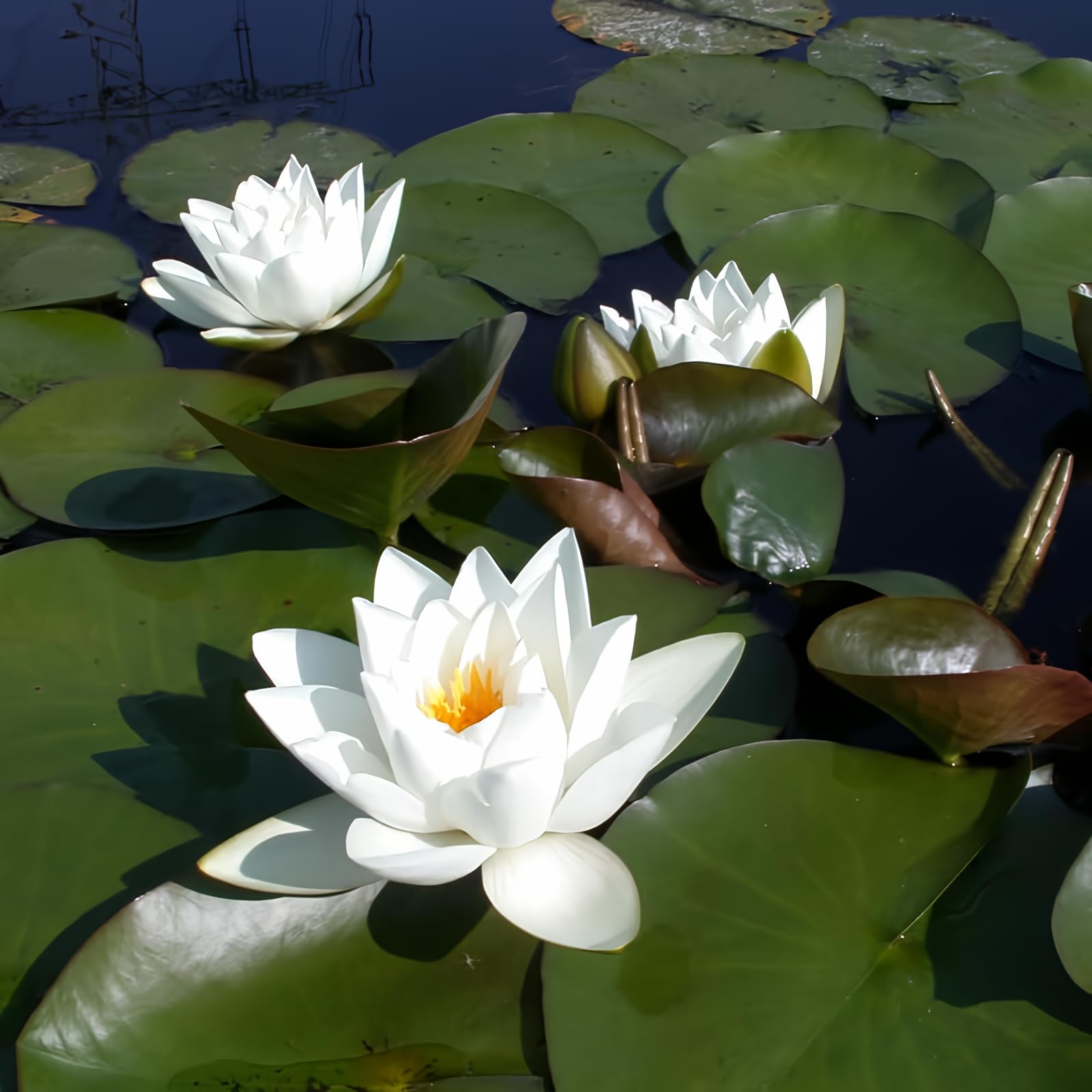
Rating: 4.3 ★ | Price: Premium | Plant Type: Rooted | Growth & Coverage: Large pads, spreads well | Hardiness Zone: Zone 3+ (overwinters) | Size at Arrival: Large, healthy
For pond owners who want a long-term centerpiece, this hardy white lily offers deep root systems and large bare-root specimens that settle in quickly. Shipping can cause minor leaf browning or soft stems, and the first blooms may take a couple of weeks to appear. It suits buyers in cold climates (Zone 3+) who prefer a classic flowering plant that overwinters without fuss, though it needs at least 2 square feet of surface area.
This water lily is best for pond owners who want a reliable perennial centerpiece with white double blooms from spring to fall. The tradeoff: it won’t provide instant shade like floating plants, and a small container pond won’t accommodate its spread. If you have a larger pond and can wait a few weeks for the first flowers, this is a straightforward choice.
Pros
- Large, healthy bare-root specimens with strong root systems
- Clear planting instructions and beginner-friendly setup
- Prolific white double blooms from spring through fall
Cons
- Shipping can cause minor leaf damage or soft stems that need trimming
One of the most reliable hardy lilies available online — healthy roots and clear instructions make it a strong choice for cold-climate ponds that can spare a few weeks for the first bloom.
Best for Oxygen & Fry Cover
Hornwort (1 Bunch)
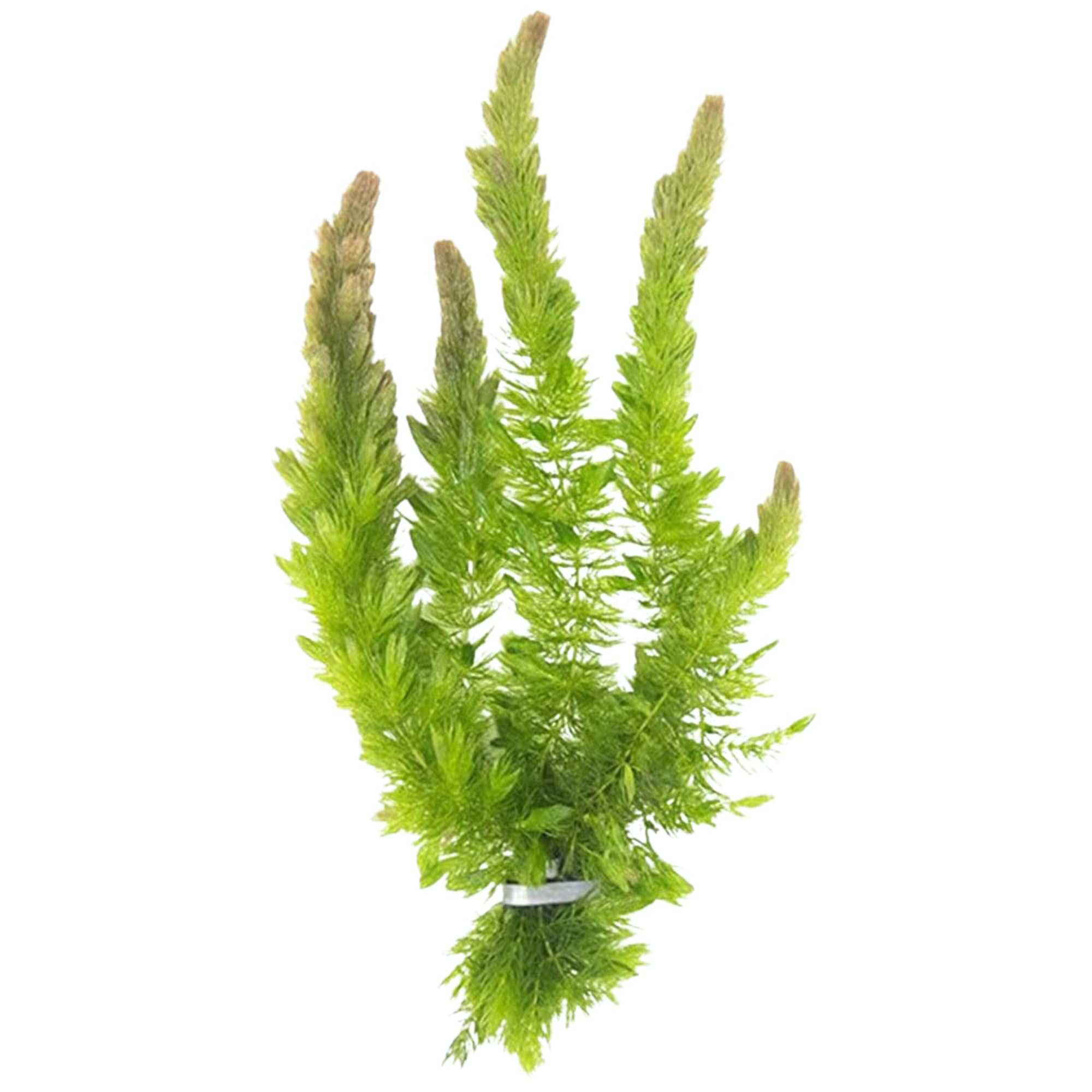
Rating: 4.3 ★ | Price: Budget | Plant Type: Oxygenator | Growth & Coverage: Fast, resilient | Hardiness Zone: Very hardy | Size at Arrival: Large, full
Hornwort delivers unmatched resilience for pond oxygenation. It sheds needles when disturbed, so place it and leave it — no need to fuss. Some shipments may include snails, but for koi or goldfish ponds needing fast nitrate reduction and dense cover for fry, this plant recovers quickly and grows aggressively without demanding high light or special care.
Pros
- Large, healthy plants that establish quickly after arrival.
- Rapid growth reduces nitrates and adds oxygen to the water.
- Dense needle-like foliage creates excellent cover for fry and shrimp.
Cons
- Needle leaves shed when the plant is moved or stressed.
- May carry bladder snails or pest eggs in the bunch.
Right for pond owners who need a hardy oxygenator and can leave it undisturbed — it’s the most resilient plant for the job.
Best for Budget Pond Cover
Giant Duckweed (30 Plants)

Rating: 4.3 ★ | Price: Budget | Plant Type: Floating | Growth & Coverage: Fast, multiplies quickly | Hardiness Zone: Partial shade | Size at Arrival: 4" circle coverage
This giant duckweed pack offers the most cost-effective entry to floating coverage — 30 plants for under $7, backed by a live arrival guarantee. Unlike the tiny azolla, these larger spirodela plants create an instant canopy that multiplies quickly, making them ideal for budget-conscious pond owners who want visible results fast.
The tradeoff is that occasional snails or worms may arrive with the plants. Best suited for buyers who can quarantine the duckweed for a week before adding to a main pond — a minor step that keeps the value intact.
Pros
- Plants arrive in great condition and grow vigorously.
- Multiplies quickly to fill a pond surface.
- Costs less than pet store alternatives for the same coverage.
Cons
- May introduce small snails or worms; quarantine is recommended before adding to main pond.
A smart buy for instant floating cover on a budget — just plan for a short quarantine.
Best for Pond Edge Groundcover
Creeping Jenny (2 Plants)

Rating: 4.2 ★ | Price: Mid-Range | Plant Type: Marginal groundcover | Growth & Coverage: Spreads 18" quickly | Hardiness Zone: Zones 4–9 | Size at Arrival: Small pots
Creeping Jenny delivers chartreuse foliage that softens pond edges and tolerates partial shade well—ideal for zones 4–9 where many marginals struggle. Plants arrive as small pots (sometimes smaller than advertised) and need a few weeks of growth to cover bare soil. The vigorous spreading habit fills in gaps reliably, but the initial size means patience is required. Best suited for buyers who want a low-maintenance groundcover for damp, shaded margins and don’t mind waiting for full coverage.
Pros
- Healthy, vigorous plants that establish and spread quickly once planted
- Bright chartreuse color brightens shaded pond edges and wet soil areas
- Spreads reliably to cover bare ground and control erosion
Cons
- Pots can arrive noticeably smaller than advertised, requiring extra weeks to fill the intended area
- Some plants may show browning or wilted leaves on arrival, though many recover with proper planting
A good value marginal for shaded pond edges if you’re okay with a few weeks of growth before the coverage you expect.
Best for Red Accent Plant
Tiger Lotus (1 Bulb)

Rating: 4.3 ★ | Price: Mid-Range | Plant Type: Rooted bulb | Growth & Coverage: Fast, new leaves days | Size at Arrival: Variable bulb
The tiger lotus bulb pushes up new leaves within days, with red and green foliage that draws attention in any pond. Unlike hardy lilies that bloom white and grow gradually, this one’s appeal is immediate color—but it demands higher light and protection from fish digging.
Best for shallow planting zones where you can secure the bulb. Bulb size varies; some arrive tiny and may not sprout. Leaves often melt during acclimation, but the plant typically recovers and resumes growth.
Pros
- New leaves appear within days of planting.
- Striking red color adds dramatic contrast.
- Bulbs arrive pest-free with strong roots.
Cons
- Some bulbs arrive tiny and may not sprout.
- Leaves may disintegrate during acclimation before new growth appears.
A visual standout for shallow ponds or planted tanks if you’re patient with the bulb’s establishment—requires protection from fish and consistent light.
Best for Small Pond Cover
Water Spangle (12 Plants)

Rating: 4.2 ★ | Price: Budget | Plant Type: Floating fern | Growth & Coverage: Doubles quickly | Size at Arrival: 4" circle coverage
Arrives as tiny individual plants that quickly double in size under bright light. Covers small surface areas reliably but needs a few weeks to become noticeable. Best suited for small ponds or aquariums where low current and adequate light are provided.
Pros
- Arrives green and alive with minimal die-off
- Doubles in size quickly, accelerating surface coverage
Cons
- Individual plants are very small on arrival, so coverage takes a few weeks to develop
Fits small pond setups where patience for coverage is acceptable; not for instant fill.
Best for Two Species Combo
Water Lettuce & Hyacinth Bundle

Rating: 4.0 ★ | Price: Mid-Range | Plant Type: Floating combo | Growth & Coverage: Fast, spreads rapidly | Size at Arrival: 3–5" each
This bundle conveniently combines water lettuce and water hyacinth for varied pond coverage and natural filtration. However, plant health on arrival can be poor — some plants arrive half-dead or very small, needing time to recover. For buyers willing to accept this variability and allow regrowth, the combination offers fast propagation and effective algae control.
Pros
- Two floating species for varied coverage and natural filtration.
- Fast growth once established helps shade water and shelter fish.
Cons
- Plants may arrive in poor condition or smaller than expected, requiring recovery time.
Only worth it if you’re prepared for arrival variability and can wait for plants to bounce back.
Best for Budget Starter Plant
Water Lettuce (1 Plant)
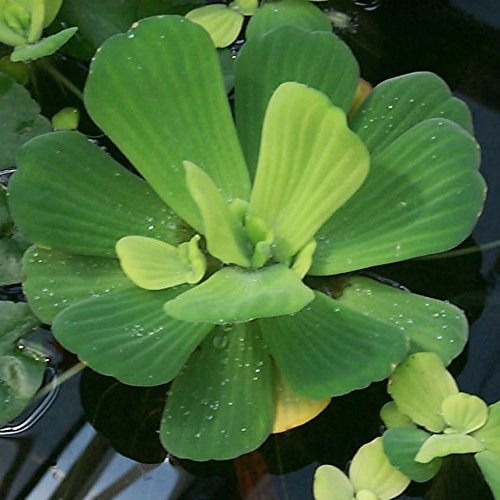
Rating: 4.2 ★ | Price: Budget | Plant Type: Floating | Growth & Coverage: Fast, multiplies rapidly | Size at Arrival: 3–5" diameter
This single water lettuce plant delivers fast multiplication and natural biofiltration at a budget-friendly price. However, the arrival size is often smaller than advertised, and leaves may die back from shipping stress before recovering. Best suited for patient pond owners who can wait for it to propagate.
Pros
- Fast multiplication for small ponds once established
- Good value for a single floater with natural biofiltration
Cons
- Arrival size may be smaller than advertised, requiring waiting for full coverage
This fits if you have a small patio pond and don’t need instant coverage, accepting that a single plant will take weeks to multiply.
Best for Koi Food Source
Duckweed (1200 Plants)

Rating: 4.1 ★ | Price: Premium | Plant Type: Floating | Growth & Coverage: Fast | Hardiness Zone: Full sun to partial shade | Size at Arrival: 1200 plants
This bulk duckweed delivers 1200 plants that grow rapidly, making it a practical food source for koi or goldfish. However, parasite reports and a premium price mean it suits feeding over cover—quarantine is advisable.
Pros
- Large quantity supports heavy feeding needs without frequent reordering.
- Fast growth provides a steady, renewable harvest for fish.
Cons
- Parasites (worms, micro-creatures) may appear and require quarantine before introducing to the pond.
This works best for koi owners who need a steady food source and can quarantine plants, but it’s not the cheapest option or ideal for tidy pond cover.
How to Choose
Expect a 1–2 week recovery period for pond plants after shipping; nearly all arrive smaller or stressed than advertised.
Plant Type
Floating plants (water hyacinth, duckweed) provide quick shade and nutrient absorption but are often annuals in cold climates. Rooted plants (water lilies, lotus) need a planting basket and soil but can overwinter in many zones. Marginals (creeping jenny) grow along the edges and stabilize banks.
The choice determines how much maintenance and winter care you’ll need. Floaters are easiest for beginners; rooted plants reward patience with perennial blooms.
Growth Rate and Coverage
Fast-growing plants like hyacinth and duckweed can double in a week under good light, but that also means they may need thinning to avoid covering the entire surface. Slower growers like water lilies spread gradually over a season and require less intervention.
Consider your pond size: a small patio pond can be overwhelmed by aggressive floaters, while a large koi pond needs fast coverage to lower water temperature and reduce algae.
Hardiness Zone
Hardy plants (e.g., water lily ‘Virginalis’, hardy to zone 3) survive winter ice and return each spring. Tropical or annual plants (water hyacinth, water lettuce) die when temperatures drop below 50°F and must be replaced or moved indoors.
If you want a permanent planting, focus on plants labeled with zone ratings. For seasonal color, annuals are fine – just budget for replacements each year.
Size at Arrival
Most sellers ship young plants or trimmed portions that are smaller than the mature size shown in photos. Water lettuce often arrives with roots trimmed to 1–2 inches; it will regrow in a week. Duckweed packs come as a small cluster that expands rapidly.
Don’t judge the plant by its first-day appearance. A healthy root system and green tissue – even if small – is a good sign. If leaves are yellow or mushy, contact the seller within the guarantee window.
Pest and Disease Resistance
Some floating plants (hornwort, duckweed) can carry snails, worms, or hydra from cultivation ponds. While not harmful to fish, they can be a nuisance. A 1–2 week quarantine in a separate container lets you inspect and treat with alum dips if needed.
Plants grown in tanks (tissue culture) are pest-free but cost more. For most pond owners, the occasional snail is manageable and even beneficial for algae control.
FAQ
How long does it take for water lettuce to recover after shipping root loss?
Water lettuce often loses most of its roots during shipping. Under bright light and calm water, new roots appear within 3 to 5 days, and the plant resumes growth in about a week. Avoid moving it during this period.
Can I put water hyacinth in a small pond without a filter?
Yes – water hyacinth is an excellent natural filter. Its thick roots absorb excess nutrients and reduce algae. In a small pond without a mechanical filter, you’ll need to remove excess plants every few weeks to prevent overcrowding and oxygen depletion at night.
Why are my floating pond plants turning yellow and dying?
Yellowing is usually caused by shipping stress, low light, or temperature shock. After arrival, give plants bright light (full sun or strong grow light) and keep water temperature between 65–80°F. Most will recover within 10 days. If leaves rot instead of yellowing, remove them to prevent water fouling.
What is the best oxygenating plant for a koi pond?
Hornwort is the top choice for koi ponds. It floats freely, tolerates a wide temperature range, grows rapidly, and provides dense cover for fry. It removes nitrates efficiently and does not require planting. Avoid in strong currents, as hornwort prefers calm water.