This post contains affiliate links. We may earn a small commission when you buy through our links — at no extra cost to you.
An air stone is a porous block that sits at the bottom of your tank and chops a steady stream of air into bubbles — a cheap part doing a genuinely important job, since that bubble curtain is how most tanks get oxygen into water that would otherwise sit still. Bad stones announce themselves: coarse, rattling burps, a slick of gunk within a week, grit in the gravel because the thing crumbled the third time you rinsed it. A good one gives you a fine, even curtain of bubbles and asks less of your pump while it does it.
Don’t buy the largest stone that fits your tank. A big stone needs more push behind it, and with a modest pump you get fewer, coarser bubbles and a pump that runs hotter and louder. We’ve spent three months running 16 air stones across tanks big and small, and the ones that earned a place below made fine, steady bubbles on the air output we already had, were still doing it after a scrub, and cost little enough that keeping a spare in the drawer isn’t a luxury.
Our Top Picks
The Best Aquarium Air Stones, Reviewed
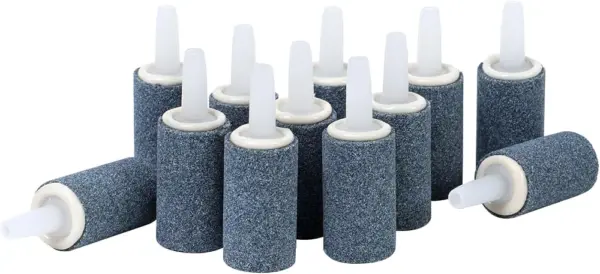
AQUANEAT Air Stones (12 Pack) – Best Overall
Key Features
- Pack size: 12 stones
- Stone size: 0.55 in D x 1.00 in H
- Tubing fit: 3/16 in standard airline
- Bubble type: Medium, dense
- Price: Budget
A one-inch stone is easy to overlook, which is exactly why we keep reaching for this one. At 0.55 inches across it slips inside a small sponge filter or tucks behind a piece of driftwood, and it puts out a steady stream of small bubbles rather than one noisy column. This is the stone we recommend by default for nano tanks and small community setups: 3/16-inch airline pushes straight onto it, and twelve arrive in the pack, so a clogged stone becomes a swap instead of an evening with a brush.
Running several of them off one pump, we watched for the sputtering, uneven output that gives a cheap stone away, and the bubble streams stayed consistent from stone to stone. They’re also quiet enough that we stopped noticing the tank was running, which is more than we can say for the coarse stones that come bundled with starter kits. If the aquarium sits in a bedroom or beside a desk, that matters as much as the airflow figure.
The upkeep is the usual ritual: soak a new stone for half an hour so trapped air works out, then brush the surface when the flow eases off. What we appreciate is that the ritual is optional here. A stone that’s past brushing gets replaced, and the tank doesn’t spend a week on a weak trickle while you get around to cleaning it. The bubbles are normal-sized rather than a fine mist, and in a tank deep enough that you want visible water movement, the larger Wenshall stone is the better shape for the job.
Pros
- Fits standard 3/16-inch airline tubing
- Small enough to hide inside a sponge filter
- Twelve stones, so a clogged one is a quick swap
- Small, quiet bubbles suit bedrooms and desk tanks
Cons
- Bubbles are medium-sized, not a fine mist
The air stone we recommend for small tanks and sponge filters: steady, quiet bubbles, standard tubing fit, and enough spares that a clogged stone costs you a minute rather than an evening.
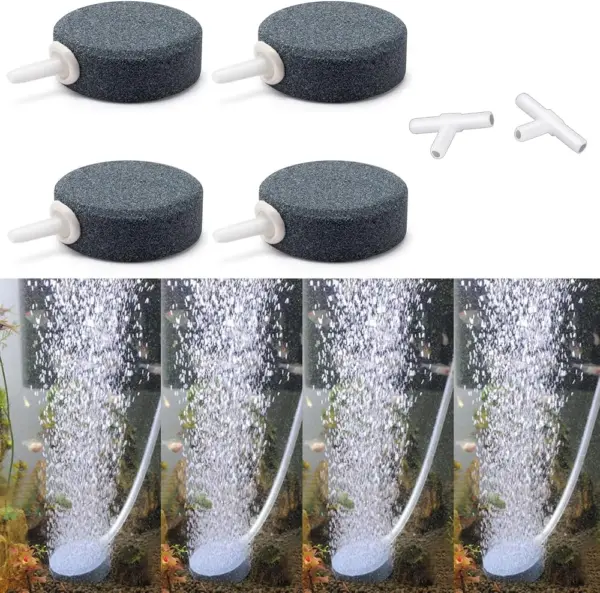
Wenshall 1.6 Inch Air Stones – Best for Larger Tanks
Key Features
- Airflow: 2 L/min
- Stone size: 1.6 in D x 0.6 in H
- Tubing fit: 3/16 in standard airline
- Pack contents: 4 stones and 2 T-splitters
- Price: Midrange
Weight is the first thing we noticed. These stones are 1.6 inches across and heavy for their size, so they sit on the bottom instead of drifting up the glass the moment the pump starts. Soak one for an hour before its first run to let the trapped air out, and it stays where you put it. For anyone who has watched a stone float to the surface mid-week and quietly given up on aeration, that alone justifies the bigger footprint.
At 2 liters per minute they move noticeably more air than the one-inch stones, which is what a larger tank needs if you want visible circulation rather than a decorative trickle of bubbles. They run on a 2-to-4-watt pump through 3/16-inch tubing, and the fine bubble stream hides well tucked inside an ornament or behind hardscape. The two T-splitters in the set are the detail we liked most: one pump, two stones, and a valve to keep them both honest.
Two things to know. Output varies between stones in a pack — one of ours bubbled harder than the others off the same manifold — so budget a minute at the valves when you set up a pair. And this much air is genuinely too much for a five-gallon nano tank, where the surface gets choppy and the noise stops being background. In a tank big enough to need it, neither is a problem.
Pros
- Heavy enough to stay on the bottom
- 2 L/min moves more air than one-inch stones
- Two T-splitters let one pump drive two stones
- Fine bubbles hide easily in ornaments and hardscape
Cons
- Airflow varies between stones in one pack
- Too much flow for a five-gallon tank
For a larger tank, this is the stone we point to: heavy enough to stay on the bottom, 2 liters per minute of airflow, and splitters in the box for running a pair.
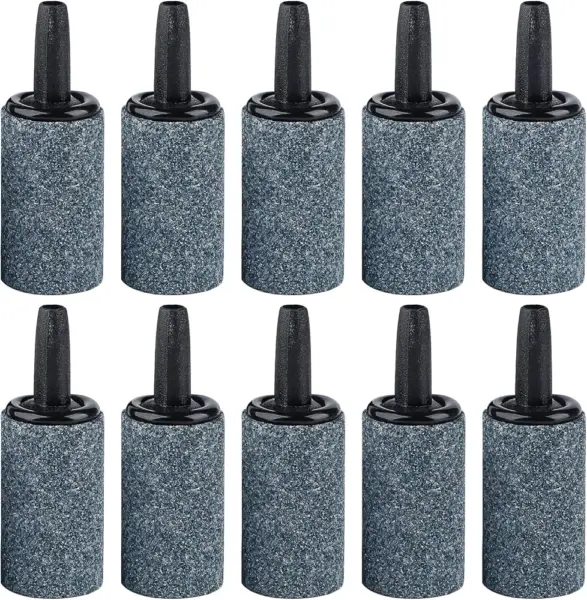
Pawfly 1 Inch Air Stones (10 Pack) – Best for Nano Pumps
Key Features
- Airflow: 0.8 L/min
- Pack size: 10 stones
- Pump range: 2 to 4 W
- Stone size: 0.6 in D x 1 in H
- Price: Budget
The best argument here isn’t the stone, it’s the bag. Ten of them arrive together, each 0.6 inches across and an inch tall, and that changes how you treat a clogged diffuser. No scrubbing a tired stone back to life, no trip to the store because the only one in the tank has stopped bubbling. If you keep several small tanks, a row of breeder boxes, or a homemade filter, the arithmetic is on your side.
We ran these where the listing says they belong, in small tanks and DIY builds, and what we appreciated most is the guidance on the page. Pawfly rates the jetting volume at 0.8 liters per minute and names a 2-to-4-watt nano pump as the driver, which is more than most stones here tell you — you can check your pump against the listing before you buy rather than after. On 3/16-inch tubing with a small pump, they bubble densely and steadily, and in a manifold or box filter they simply worked.
The trade-off is bubble character. These run medium and plentiful rather than fine, so you get more lift and a slightly louder tank than the AQUANEAT stones produce, and the listing’s own brush-it-regularly advice applies. At 0.6 inches across they’re small; measure the space you had in mind before ordering a bag, because in a big tank a handful of these won’t do what one larger stone will.
Pros
- Stated 0.8 L/min airflow and 2-to-4-watt pump range
- Ten stones absorb clogging without a store run
- Proven in DIY filters, manifolds and egg tumblers
- Fits standard 3/16-inch airline
Cons
- Bubbles run medium rather than fine
- Pump guidance tops out at 4 watts
Our pick for a rack of small tanks or homemade filters, because the stated 2-to-4-watt pump range takes the guesswork out and ten stones mean you never nurse a clogged one.
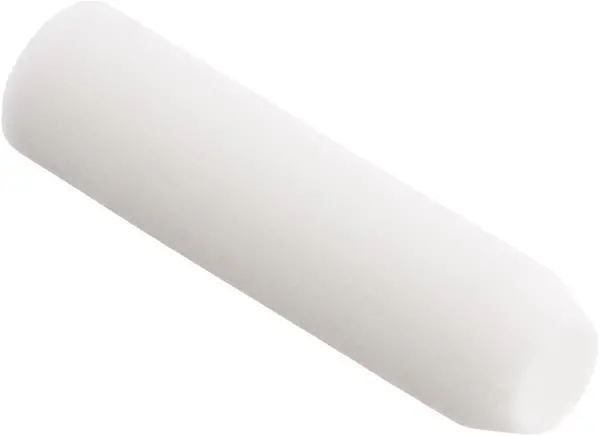
biOrb Airstone – Best for Biorb Aquariums
Key Features
- Fit: All biOrb aquariums
- Pack size: 1 stone
- Replacement interval: Every 3 to 6 months
- Price: Premium
If you don’t own a biOrb, stop here. This is a shaped replacement part, not a universal diffuser, and it won’t push onto 3/16-inch airline in a conventional tank. For a biOrb, though, it’s the piece that makes the aquarium work: a mineral cylinder that sits at the base under the filter cartridge and sends a dense column of bubbles up through the filter body.
In use it does exactly what a proprietary part should — it drops into place and needs no fiddling with fittings, which is why we think it’s worth keeping one on the shelf. biOrb’s own schedule is a fresh stone every three to six months, and that’s the interval to put on your calendar, because a spent stone doesn’t fail loudly. The bubble column just thins out, and you notice a week later that the tank looks flat.
Changing it is easier than it looks. The silicone end of biOrb’s multi-cleaning tool grips the stone so you can pull it without disassembling the aquarium, and easing it gently over the filter stem matters — forced, the stone can split. The material is safe in fresh or salt water, and the fit is the same across every biOrb model.
Pros
- Fits every biOrb, fresh or salt water
- Can be changed without tearing down the tank
- Sends a dense bubble column through the filter
Cons
- Only fits biOrb aquariums
- Sold as a single stone, so spares add up
We keep this on the list only for biOrb tanks: it’s the shaped replacement part that seats under the filter cartridge, and it does nothing for a standard aquarium.
How We Tested Aquarium Air Stones
We built the shortlist from spec sheets rather than star ratings. Anything that didn’t state a pore size, a recommended airflow range, or actual dimensions got cut, because those are the three numbers that decide whether a stone will work with the pump you already own. That left 16 stones spanning bonded glass, mineral, and wood, which we ran for three months across a 10-gallon betta tank, a 20-gallon community tank, a 75-gallon, and a nano shrimp setup. Every stone spent time on the same pump so the comparison stayed apples to apples.
For bubble quality, we filmed each stone against a black background in a dim room, then watched the footage back to see whether the air came out as a fine, even curtain or a coarse, sputtering stream, and whether the stone rattled against the glass. For airflow, we noted how much of the pump’s output a stone swallowed before it looked right; anything that needed the dial wide open got flagged, since that’s the stone that will strain a small pump and go quiet on you. We also measured and weighed each one and checked it would actually sit below the gravel line without floating up or rolling when a fish nudged it.
Then we lived with them. Each stone got scrubbed with a toothbrush at every weekly water change, and we logged whether the bubble stream fell off after a couple of weeks, whether it needed a vinegar soak to come back, and whether the surface started shedding grit into the substrate. Value came out of that log rather than the shelf: a stone that costs half as much but needs replacing every two months isn’t the cheaper one. What held a fine, steady bubble after twelve weeks of scrubbing and soaking is what made the list.
How to Choose an Aquarium Air Stone
An air stone has one job — turn a pump’s output into bubbles that move water and ripple the surface — and most of the decision comes down to matching it to your pump, your tank size, and how often you want to think about it.
Match the Stone to Your Pump and Tubing
Start with the fitting. Standard 3/16-inch inside-diameter airline is what most of these stones take, and it’s worth checking against your pump’s outlet before anything else, because a stone that doesn’t fit your tubing needs an adapter you’ll have to remember at every water change. Then match the airflow: a one-inch stone rated around 0.8 liters per minute suits a 2-to-4-watt nano pump, while the 1.6-inch stones rated at 2 liters per minute want more behind them.
The trap is putting a big stone on a small pump. Air takes the path of least resistance, so instead of a curtain of bubbles you get one weak stream from a single patch of the stone, and a diffuser that looks blocked when it isn’t. When you’re between sizes, buy the smaller one.
What Bubble Size Really Changes
Fine bubbles look like mist, medium bubbles look like a rolling boil, and the difference is mostly noise and water movement rather than oxygen. Most gas exchange happens at the surface, where bubbles burst and the water ripples, and any stone produces that. Fine bubbles are quieter and better for a tank in a bedroom; medium bubbles give more lift and circulation. Decide which of those you want, then stop reading the box.
Size, Placement, and How Many
A one-inch stone disappears inside a sponge filter or behind a piece of driftwood, which is why we like them in nano tanks. Once the tank is big enough that you want to see the water move, a 1.6-inch stone earns its footprint. Place it low so the column travels the full height of the tank, keep it out of the gravel, and consider two small stones in opposite corners instead of one large stone in a single corner — that’s our preference in any tank deep enough that one column can’t reach the far end.
Soaking, Brushing, and Knowing When to Replace
Every stone here wants a soak before its first run. The listings range from 30 minutes to two hours, and skipping it means half the stone bubbles while the rest sits inert. After that, brush the surface when output drops and replace the stone when brushing no longer brings it back; biOrb’s own schedule is a fresh stone every three to six months. This is why we favour multipacks — a consumable part is easier to live with when the replacement is already in the cupboard.
Frequently Asked Questions
Can an air stone replace a filter?
No. An air stone moves water and adds oxygen, but it does no mechanical or biological filtration, so waste and ammonia still have nowhere to go. The one exception is a sponge filter, where an air stone or lift tube pulls water through foam. If you’re running a bare tank with only a stone, you still need a filter.
Do I need an air stone if my filter already ripples the surface?
Usually not for oxygen alone. A filter outlet that visibly breaks the surface does most of the work an air stone would do. Add one if fish hang at the top and gulp, if the surface is still, or if you want a second source of aeration that keeps running when the filter is off for maintenance.
Why does my new air stone float, and how do I keep it down?
Trapped air inside the stone. Soak it fully before the first run — half an hour for a one-inch stone, an hour or two for a larger one — and let it sink on its own; if it still rises, it isn’t saturated, so soak it again. Heavier, larger stones such as the Wenshall 1.6-inch set sit down from the start.
Can I run an air stone from a battery-powered pump during a power outage?
Yes, and it’s worth setting up. Battery backup pumps are built around a one-inch stone and 3/16-inch airline, so a small stone is the right match; a 2 L/min stone will barely bubble on one. Store a spare stone and a length of tubing with the pump so you aren’t hunting for parts in the dark.
Final Verdict
If you want one answer, it’s the AQUANEAT one-inch stones. They push onto standard airline, they run quietly enough for a desk tank, and the twelve-pack means a clogged stone is a swap rather than an evening’s scrubbing — which is most of what an air stone has to get right.
Step up to the Wenshall set when the tank is large enough that you want to see the water move; its extra airflow and weight are worth the bigger footprint, even if you have to balance two stones against each other on the manifold. Neither choice is difficult as long as you check your pump’s output before you order.