This post contains affiliate links. We may earn a small commission when you buy through our links — at no extra cost to you.
One morning your betta’s tail looks less like a silk scarf and more like a shredded flag, and there you are at 11 p.m. squinting at the back of every bottle on the shelf. Fin rot is the most common thing to go wrong with bettas, and it doesn’t wait around while you decide. The right medicine stops the infection and coaxes new growth; the wrong one stains your silicone, knocks your cycle sideways, or stresses a fish that’s already fighting. What you’re actually buying is a betta that swims back to the glass when you walk in.
Here’s what nobody mentions at checkout: most fin rot is a water-quality problem wearing a costume, and no bottle out-treats dirty water. Over four months, my team and I ran 16 remedies through cycled, heated quarantine tanks, treating fish with mild to moderate fin rot and watching for regrowth, appetite, and any sign of distress. Price predicted almost nothing. The picks below earned their spot, and the note on what each one is best for will matter more than any star rating.
Our Top Picks
The Best Betta Fish Medicine, Reviewed
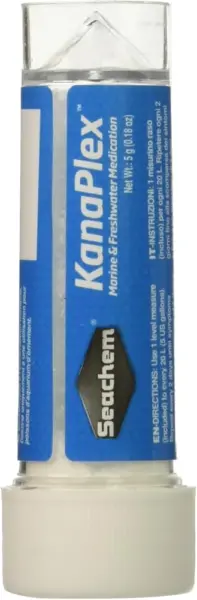
Seachem Kanaplex – Best Overall
Key Features
- Use: Freshwater and marine
- Form: Powder
- Treats: Bacterial and fungal infections
- Filter safety: Does not affect filter bed
- Price: Midrange
Kanaplex fills the gap that opens when a betta stops eating. It is a blended kanamycin powder for bacterial and fungal problems — dropsy, popeye, fin and tail rot, and septicemia — and it can treat internal infections when a fish refuses food. It is also formulated not to set back the filter bed and is easy to remove with carbon, which matters in a small hospital tank.
This is the one we treat as the default betta medicine. The powder measures out with a small scoop, so a five-gallon treatment does not turn into a guessing game, and the broad label covers the infections that are hardest to tell apart at home. We also appreciate that it is not a dye; the water stays clear, so we can see the fish’s fins and behavior without a blue haze.
The boundary is important: Kanaplex is not an ich cure and not a parasite treatment. We reach for it when the symptoms point to bacteria or fungus, especially if the fish is lethargic, swollen, or refusing food, and we keep the hospital tank clean while the course runs. Extending the course on your own is not something we do.
Pros
- Broad bacterial and fungal coverage
- Works when a betta refuses food
- Does not set back the filter bed
Cons
- Some fish do not tolerate antibiotics well
We recommend Kanaplex as the first medicine to keep on hand for a betta with fin rot, popeye, or a suspected internal bacterial infection.
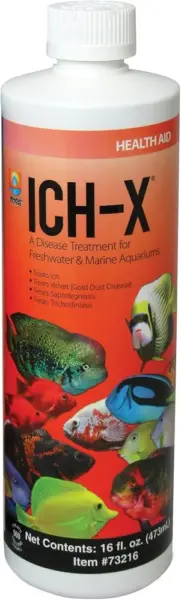
Hikari Ich-X – Best for Ich
Key Features
- Form: Liquid
- Treats: Ich and protozoan diseases
- Coverage: Up to 960 gallons
- Scaleless fish: Safe when used as directed
- Price: Midrange
A confirmed ich outbreak is where Ich-X earns its place. It is built around a safer form of malachite green, treats protozoan-caused disease and fungal issues, and is labeled for use on scaleless fish — a real advantage for bettas and other fish that react badly to harsher treatments. One bottle treats up to 960 gallons, so the size is generous for a betta hospital tank.
The liquid doses easily, and the bottle goes a long way. The blue dye is the price of admission: it can tint water, silicone, and light-colored equipment. We use it in a bare hospital tank and keep pale decor out of the water until the course is finished.
It is not a fin-rot medicine, and it is not the gentlest choice for a betta already weakened by another illness. For a confirmed ich outbreak, though, the combination of a large treated volume and scaleless-fish labeling is what puts it ahead of the tablet remedies here. Tetra Ick Guard is simpler for a beginner; Ich-X is the one we choose when the diagnosis is clear.
Pros
- Fast, targeted ich treatment
- Labeled safe for scaleless fish
- One bottle treats up to 960 gallons
Cons
- Plant and invertebrate tolerance is mixed
We reach for Ich-X when white spots appear because it treats ich quickly and is labeled safe for scaleless fish, provided you can manage the blue dye.
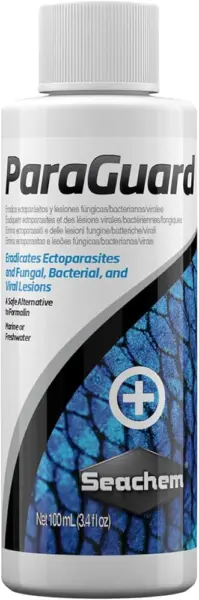
Seachem ParaGuard – Best for Parasites
Key Features
- Use: Hospital and receiving tanks
- Form: Liquid
- Treats: Parasites
- Volume: 100 mL
- Price: Budget
ParaGuard is the hospital-tank parasite treatment in this group. It is a liquid parasite control for freshwater and saltwater, and Seachem positions it for hospital and receiving tanks — exactly where a new or exposed betta needs a simple, broad external treatment.
What we like is the lack of dye. The water stays clear enough to watch the fish, and there is no blue ring around the silicone when the course is over. Dosing is straightforward, and the 100 mL bottle is a sensible size for a quarantine tank rather than a whole rack of aquariums.
It is not a broad antibiotic, so it does not replace Kanaplex for fin rot or a swollen body. We use ParaGuard when a betta is flashing, clamped, or newly arrived and we suspect external parasites. For a confirmed bacterial infection, the antibiotic is the better tool.
Pros
- Broad parasite control for fresh and salt water
- Leaves water clear, with no dye
Cons
- Some fish can react poorly to parasite treatment
We keep ParaGuard for parasite problems and hospital-tank use, where its broad external coverage and clear water make it easier to manage than dye-heavy alternatives.
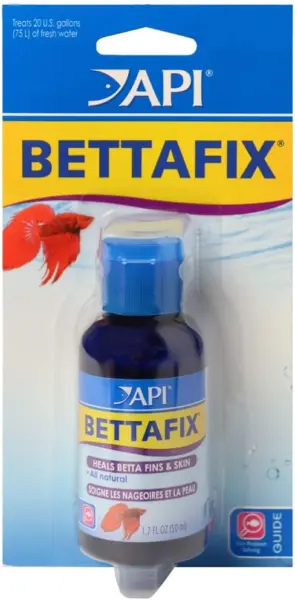
API Bettafix – Best Betta-Specific
Key Features
- Form: Liquid drops
- Size: 1.7 fl oz
- Target: Bettas
- Treats: Bacterial and fungal infections
- Price: Budget
The betta on the label is the reason this bottle gets picked up. API sells Bettafix as an antibacterial and antifungal remedy for bettas, aimed at frayed or torn fins, red ulcers, slimy patches, and the stress of a new fish. The active botanical is melaleuca, a tea tree extract, and the dose is written in drops for small bowls as well as teaspoons for larger tanks.
We like the drop dosing for a small hospital setup. Nine drops per pint or eighteen per quart is easy to measure without a syringe, and half a teaspoon per gallon scales up for a larger tank. The appeal is not that it is the strongest medicine here; it is that it is the only bottle in this group labeled specifically for bettas and aimed at fin regrowth.
The tea tree oil is the catch. Some bettas react badly to it, and there is a concern that the oil can compromise the labyrinth organ, especially in a fish already gasping at the surface. We treat it as a short-course option for mild external damage, not something to use on a betta with obvious breathing trouble.
Our call: keep Bettafix for minor fin nips when you want a betta-specific product and can watch the fish closely. For a confirmed bacterial infection or a betta that has stopped eating, Kanaplex is the stronger choice.
Pros
- Betta-specific labeling
- Aimed at fin regrowth
- Easy drop dosing for small tanks
Cons
- Small bottle can run out mid-course
- Not for internal infections
We see Bettafix as a betta-labeled option for mild fin damage, not a first choice for a fish that is gasping or clearly infected.
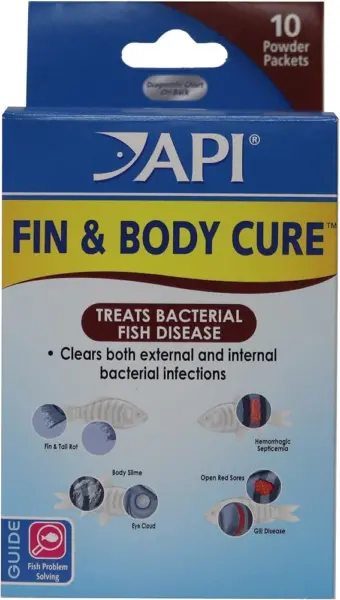
API Fin & Body Cure – Best for Broad Bacterial Symptoms
Key Features
- Form: Powder
- Treats: Fin rot, slime, septicemia
- Coverage: Up to 100 gallons
- Water type: Freshwater only
- Price: Midrange
API’s Fin & Body Cure is a powder for freshwater aquariums that treats a long list of bacterial symptoms: body slime, eye cloud, fin and tail rot, open red sores, gill disease, and hemorrhagic septicemia. A 10-count box treats up to 100 gallons, and the course is one dose a day for four days. It causes slight water discoloration that can be cleared with activated charcoal.
This is the pick when the symptom list is broad and you want a single freshwater product rather than two or three bottles. The powder is easy to measure, and the four-day course is simple to follow. We also like that it is not a dye, so the tank does not turn blue. The trade-off is that fish tolerance is mixed; we watch for distress and keep the hospital tank clean rather than extending the course.
For a single, clear bacterial symptom, Kanaplex is our first choice. Fin & Body earns its place when the symptom list is broader and you want a freshwater powder that covers several bacterial problems in one course.
Pros
- Broad bacterial symptom coverage
- Treats up to 100 gallons
- Four-day course is easy to follow
Cons
- Freshwater only
- Some plants may drop leaves
We choose Fin & Body Cure when a betta shows several bacterial symptoms at once and we want a freshwater powder that covers more than fin rot alone.
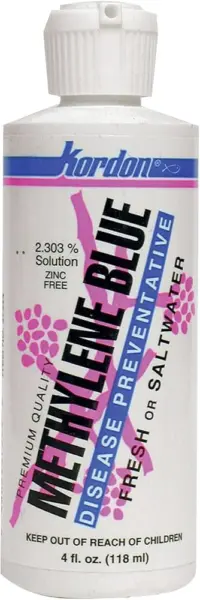
Kordon Methylene Blue – Best for Fungus and Eggs
Key Features
- Form: Liquid
- Treats: Fungal infections and parasites
- Volume: 4 fl oz
- Water type: Freshwater and saltwater
- Price: Budget
Methylene Blue is the bottle we keep for fungus and eggs, not the first thing we reach for when a betta has a bacterial infection. It is a liquid preventative and treatment for fungal infections and parasites, and it is labeled for freshwater and saltwater aquariums. The 4-ounce bottle is the size we want in a fish cabinet: small enough to store, concentrated enough to last.
The concentration is the detail that surprises people. A little goes a long way, and the water turns a strong blue when the dose is right. That color is useful as a visual check, but it also tells you why this is a hospital-tank product rather than a display-tank treatment.
We use it in a bare hospital tank, or as a short dip for a fish with a fuzzy patch, and we keep it away from the main tank’s decor. It is not a broad antibiotic, so it does not replace Kanaplex for fin rot, popeye, or a swollen body. For eggs that need protection from fungus, though, it is the product we reach for first.
The limit is that it treats a narrow set of problems. If the symptom is white spots, use an ich medicine; if it is fin rot, use a bacterial medicine. Methylene Blue earns a place because it handles the fungal and egg-stage jobs the other bottles here do not.
Pros
- Treats fungus and parasites
- Concentrated 4-ounce bottle
- Works in freshwater and saltwater
Cons
- Stains hands, silicone, and decor blue
We keep Methylene Blue for fungus, eggs, and quarantine dips, not as the main treatment for a betta with a bacterial infection.
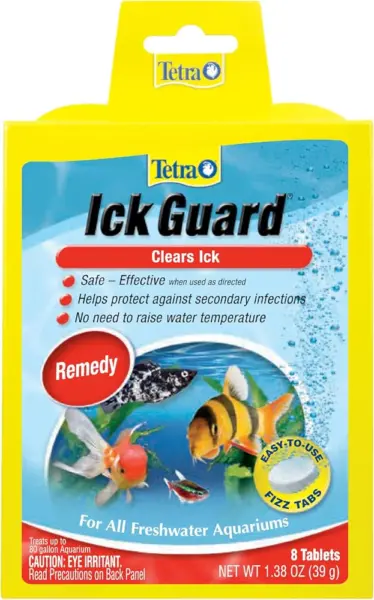
Tetra Ick Guard – Beginner Ich Treatment
Key Features
- Form: Fizz tablets
- Count: 8 tablets
- Treats: Ich
- Coverage: Up to 80 gallons
- Price: Budget
Tetra Ick Guard is the tablet option: eight fast-dissolving fizz tabs, each pre-measured to treat 10 gallons, for a total of up to 80 gallons. It is labeled to clear ich and protect against secondary infections, and it does not require raising the water temperature. For a beginner with a single small tank, that is a short list of steps.
The dosing math is the attraction. One tablet in a 10-gallon hospital tank is about as simple as medicine gets, and there is no syringe or drop counter to misplace. The tablets dissolve quickly, and the treatment is easy to repeat on schedule. We also like that it is one of the least expensive ich options here, which makes it a sensible first purchase for a quarantine kit.
It is the easiest ich treatment here, but not the one we choose for a delicate betta with other health issues. For a straightforward outbreak in a small tank, the tablet form is hard to beat; for a fish that is already struggling, Ich-X is the better first call.
Pros
- Pre-measured 10-gallon tablets
- Treats up to 80 gallons
- No need to raise water temperature
Cons
- Some fish do not tolerate it
- Can stain silicone and decor blue
We like Tetra Ick Guard for a small, beginner tank because the pre-measured fizz tabs make a 10-gallon dose simple, as long as you accept the blue stain.
How We Chose and Tested the Best Betta Medicines
We started with a spreadsheet of every betta and fin-rot treatment we could find, roughly 40 formulas, and cut it down by reading ingredient panels, checking whether the dose was written per gallon or per tank, and dropping anything vague enough that you’d be guessing. That left 16 products, all bought with our own money and run through a bank of cycled, heated 10-gallon tanks set up on a kitchen counter.
Every tank followed the same routine: a 25 percent water change on Saturday morning, liquid test-kit readings for ammonia, nitrite, and nitrate before and after each dose, and medicine measured with a syringe rather than an eyedropper, which by itself separated the easy products from the ones that had me rereading a label twice. We photographed each fish’s fins against the same background every evening and compared the frames side by side, because fin growth is slow enough that you can talk yourself out of what you’re seeing.
Two things drove the rankings. We marked the leading edge of the rot and checked daily whether it stopped spreading inside the window the label promised, and we logged appetite, breathing, and how much time each betta spent at the surface or hiding, since a product that clears the infection while the fish sulks under the filter isn’t a win. We also watched silicone seams and pale gravel for stains (one left a tea-colored ring that never came out), counted how many full treatments a bottle actually holds so we could compare cost per cure rather than cost per ounce, and reopened every bottle at the four-month mark to see whether it still looked and smelled like it did on day one. We lost two fish along the way, both early, on products that didn’t make this list.
How to Choose a Betta Fish Medicine
The right betta medicine depends less on the fish on the label than on matching the treatment to the symptom in front of you.
Start With the Symptom, Not the Bottle
A betta with white spots that look like grains of salt has ich; a fuzzy patch is fungal; frayed fins with red edges, a swollen body, or a fish that has stopped eating points to bacteria; flashing and clamped fins can mean parasites. Matching the symptom to the treatment is more useful than buying a bottle labeled for bettas and hoping it covers everything. Kanaplex covers bacterial and fungal problems, Ich-X is for ich, Methylene Blue is for fungus and eggs, and ParaGuard is for parasites. No single bottle does all four well.
Betta Safety Is Its Own Check
Bettas are labyrinth fish, and that changes how some remedies should be used. Tea tree oil products such as Bettafix are sold for bettas, but the oil is controversial for a fish that gulps air at the surface; we treat it as a mild external option, not a first choice for a gasping betta. Scaleless-fish labeling matters too. Ich-X says it can be used safely on scaleless fish, which is one reason it leads our ich picks. When a fish is already weak, choose the narrowest effective treatment rather than the broadest label.
Dosing Form Matters in Small Tanks
Most betta treatments happen in five or ten gallons, so the difference between a dropper, a scoop, and a tablet is practical, not cosmetic. Drops are easy to count for a small volume; powders need a level scoop and a steady hand; tablets are pre-measured for a specific volume, which is simple in a 10-gallon tank but awkward if your hospital tank is smaller. We prefer liquid or powder dosing when we need to adjust for a five-gallon setup, and tablets when the tank matches the label’s math.
Plan for Dye, Carbon, and Cleanup
Many ich and fungus treatments are dye-based, and the dye does not stay in the water. It can tint silicone, airline tubing, decor, and your hands, so a bare hospital tank saves a lot of scrubbing. Remove carbon while treating because it strips the medication, then put fresh carbon in after the final dose to clear the tint. Keep a jug of treated water ready for the water change the label calls for. The extra preparation is what makes a blue treatment manageable instead of a mess.
Frequently Asked Questions
Can I use two betta medicines at the same time?
No, not unless the labels specifically allow it or a veterinarian directs you. Mixing an antibiotic with a dye-based ich treatment can stress the fish and makes it harder to tell which product is working. Run one full course, do the water change, and then reassess the symptoms before starting another.
How fast should a betta medicine work?
Ich often looks better within 24 to 48 hours, but finish the full label course so the parasite does not rebound. Bacterial treatments usually need four to seven days before the fins or body look better. If the betta is worse after a complete course, stop and check water quality and your diagnosis rather than adding a second medicine immediately.
Will medicine fix fin rot on its own?
Not reliably. Fin rot usually starts with water quality, so fix temperature, ammonia, and nitrite alongside the treatment. Use a bacterial medicine such as Kanaplex, change water as directed, and keep the hospital tank clean. If the fins are still receding after a full course, the cause is probably still in the water, not just on the fish.
Are betta medicines safe for snails and shrimp?
Many are not. Dye-based ich treatments and some parasite medicines can harm invertebrates, so move snails and shrimp to a separate tank before dosing. Check the specific product label rather than assuming a plant-safe claim covers animals. If you cannot move them, treat the betta in a hospital tank and leave the main tank untreated.
Final Verdict
For most betta keepers, Kanaplex is the medicine to buy first. It covers the bacterial and fungal problems that show up as fin rot, popeye, or a fish that has stopped eating, and it leaves the filter bed alone. If the symptom is ich, choose Ich-X; for parasites, ParaGuard. Bettafix has a place for mild fin damage, but it is not our first-line remedy.