This post contains affiliate links. We may earn a small commission when you buy through our links — at no extra cost to you.
Black sand transforms an aquarium into a striking backdrop for fish and plants. But the reality of setup often clashes with the product photo: a cloud of dust that lingers for days, a color that fades to gray, or sand that surprises you with gravel-like texture.
The gap between marketing claims and lived experience is wide. Most brands say ‘pre-washed,’ yet nearly every bag needs multiple rinses to run clear. True deep black is rarer than expected, and the choice often comes down to how much prep work you can tolerate versus how much root nutrition your plants need.
This guide breaks down the real differences between grain texture, dust levels, color retention, and planted-tank performance. No single sand works for every setup, but the right match saves hours of frustration and keeps your tank looking sharp from day one.
Top Picks
Best for General Freshwater
Imagitarium Black 20lb
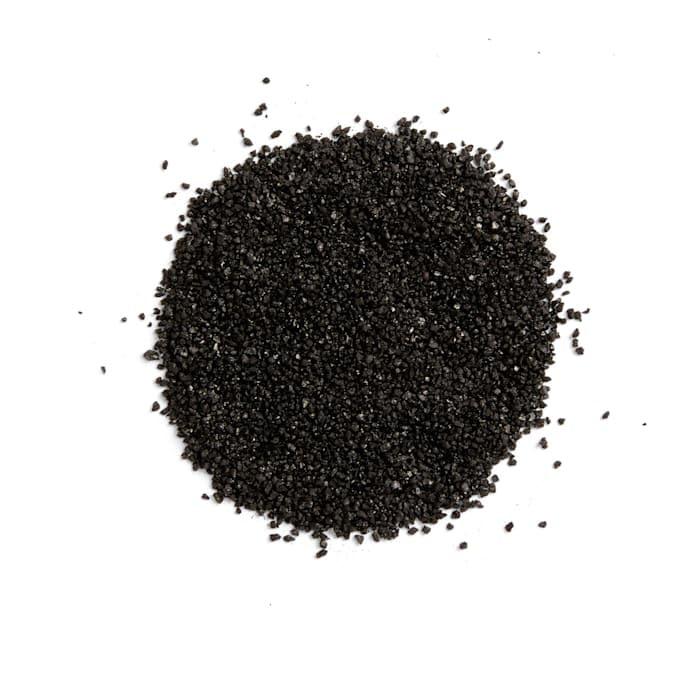
Rating: 4.6 ★ | Price: Budget | Dustiness: Low | Color Trueness: Deep matte black | Planted Suitability: General | Value per Pound: Excellent
The Imagitarium Black 20lb stands out for its genuinely low dust content — most bags need only a quick rinse before going into the tank, saving time compared to other budget sands that demand repeated washing. The matte black finish stays dark and makes fish and plants pop without the grayish haze that cheaper alternatives often develop after a few weeks.
A small fraction of grains may float after filling, requiring a quick skim with a net or fine mesh. This is more of an initial setup quirk than an ongoing problem — the particles either settle or get caught in the filter within a few days. For most community and freshwater tanks, this tradeoff is minor given the overall ease of preparation.
This sand suits budget-conscious aquarists setting up a 20-gallon or larger tank who want a clean black substrate without heavy prep work. It is not for high-end planted tank enthusiasts needing long-term root nutrition — that use case is better served by specialty soils. The floating particles may annoy those who insist on crystal-clear water immediately after setup, but for general use the visual payoff is worth the short wait.
Pros
- Matte black color that keeps fish and plants visually distinct without fading.
- Low dust level; requires minimal rinsing compared to other budget sands.
- 20-pound bag offers strong value for the price per pound.
Cons
- Some floating particles may persist after rinsing and need to be skimmed off.
If you want a large bag of black sand that goes in clean and stays dark without breaking the bank, this is the one to grab.
Best for Planted Tanks
Seachem Flourite Black 15.4lb
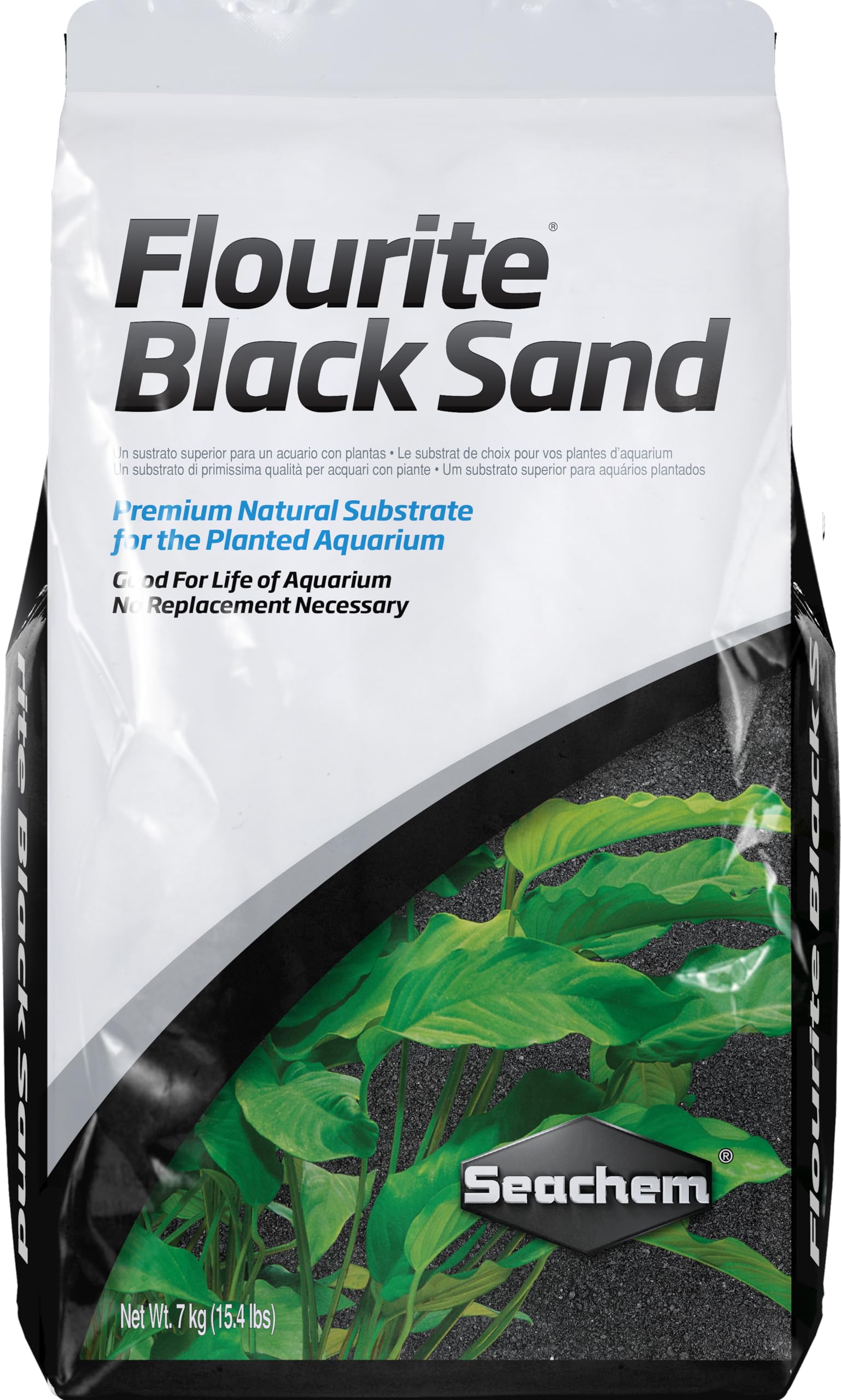
Rating: 4.5 ★ | Price: Mid-Range | Dustiness: High | Color Trueness: Deep black | Planted Suitability: Excellent | Value per Pound: Good
The fractured porous clay structure of this black sand delivers nutrients directly to plant roots, supporting strong growth without the need for root tabs or frequent fertilizer additions. The dark color also provides a clean visual contrast against green foliage.
This substrate suits aquascapers who prioritize long-term plant nutrition over quick setup. The tradeoff is significant: the sand is extremely dusty out of the bag and can require many rinses — water may stay cloudy for days even after thorough washing. Patience during preparation is a requirement, not an option.
Pros
- Deep black sand that creates strong contrast with plant colors
- Promotes robust root growth in planted tanks
- Durable, quality substrate that does not need replacement over time
Cons
- Dust from the bag can make setup messy and time-consuming
- Cloudiness may linger for days after rinsing, requiring extra patience
If you’re a serious planted tank keeper who values root nutrition over convenience, Seachem Flourite Black delivers — but only if you’re willing to invest the rinsing effort.
Best for Small Planted
Aqua Natural Bio-Substrate 5lb

Rating: 4.5 ★ | Price: Mid-Range | Dustiness: Moderate | Color Trueness: Deep black | Planted Suitability: Good | Value per Pound: Fair
The key difference here is the live nitrifying bacteria embedded in the sand. This gives new aquariums a biological head start, reducing the wait time before adding fish. The deep black color with subtle sparkle enhances tank aesthetics, and the substrate supports healthy plant growth, especially when used as a cap over nutrient-rich layers.
This 5lb bag fits well in nano or medium tanks where bio-activity is a priority. For larger setups, the cost of multiple bags adds up quickly, making the top pick a better value. The water may become cloudy after adding the sand, and the instant cycling claim is not guaranteed — patience and good filtration are needed to clear it.
Pros
- Deep black color with sparkle that looks great in planted tanks.
- Live nitrifying bacteria help cycle new aquariums faster.
- Supports healthy plant growth and works well as a cap sand.
Cons
- Multiple bags are needed for larger tanks, driving up the total cost.
- Water may become cloudy after adding, requiring time and filtration to clear.
A solid option for small planted tanks that need a microbial jump-start, but only if you can accept the temporary cloudiness and limited bag size.
Best for Aesthetics
Estes Marine Black 5lb

Rating: 4.5 ★ | Price: Premium | Dustiness: Low | Color Trueness: True black | Planted Suitability: Poor | Value per Pound: Low
Estes Marine Black delivers the most consistent jet-black color among aquarium substrates — the color stays deep underwater without fading over time. This focus on color fidelity is its main differentiator from the top pick, which emphasizes value and ease of setup.
This substrate suits aquarists who prioritize aesthetics over cost and do not keep sand-sifting bottom dwellers like corydoras or loaches. The grain size is fine gravel rather than soft sand, and the premium per-pound price makes it a better fit for smaller display tanks or accent areas than for large aquariums.
Pros
- True deep black color that stays vibrant underwater with no fading.
- Filters water quickly, clearing cloudiness after setup.
- Non-toxic formulation safe for shrimp, fish, and planted tanks.
Cons
- High cost per pound makes it a premium choice best for smaller tanks.
For aquarists who want the deepest black and are willing to pay for it, Estes Marine Black delivers unmatched color — just plan for a coarse texture and limited volume.
Best for Cichlids
CaribSea Cichlid Sand 20lb

Rating: 4.4 ★ | Price: Premium | Dustiness: Low | Color Trueness: Not pure black | Planted Suitability: Poor | Value per Pound: Fair
Raises and stabilizes pH to 8.0–8.2, making it essential for rift lake cichlids. Unlike typical black sand substrates focused on appearance, this product sacrifices uniform color and fine texture to deliver reliable alkalinity. It is not suitable for planted tanks or community setups where lower pH is needed. The top pick offers a true black finish with minimal dust, but this Carib Sea substrate prioritizes water chemistry for specialized cichlid habitats.
This substrate is for African cichlid enthusiasts who need consistent pH maintenance. The coarse gravel texture works well for cichlids and prevents filter clogs, but it is not fine sand. White particles may be visible in the mix, and initial water discoloration can occur. Those seeking pure black sand for general aquascaping should look elsewhere.
Pros
- Buffers pH to 8.0–8.2 for African cichlids
- Clears to crystal water after initial setup
- Coarse grain resists filter intake clogs
Cons
- White particles prevent a uniform black appearance
- Water may become tinted brown after installation
For cichlid keepers who need stable alkaline water, this substrate delivers where aesthetic-focused sands fall short.
Best for Multi-Purpose
FANTIAN Black Sand 20lb

Rating: 4.5 ★ | Price: Mid-Range | Dustiness: High | Color Trueness: Black | Planted Suitability: Fair | Value per Pound: Good
The 20-pound bag delivers plenty of sand for larger tanks or multi-purpose projects at a cost-effective per-pound price. While the top pick in this set requires minimal rinsing, the FANTIAN sand is significantly dustier — expect to rinse ten or more times before the water runs clear.
This sand suits aquarists who have the time and patience for a labor-intensive setup, or those using it for crafts or terrariums where cloudiness is less critical. For a dedicated aquarium substrate that works right out of the bag, the extra effort here may not be worthwhile.
Pros
- Glossy black grains create a sleek, attractive tank bed.
- Even coverage and deep color enhance aquascaping.
- Cost-effective choice when you need a large quantity of substrate.
Cons
- Excessive dust means you may need to rinse the sand ten or more times before the water clears.
- For certain tank setups, persistent cloudiness after rinsing can defeat the goal of a quick setup.
If you have the patience for extensive prep and need a bulk black sand for a large project, the FANTIAN offers good value — but for a hassle-free aquarium substrate, the top pick is a cleaner choice.
Best for Nano Tanks
YISZM Black Sand 2lb
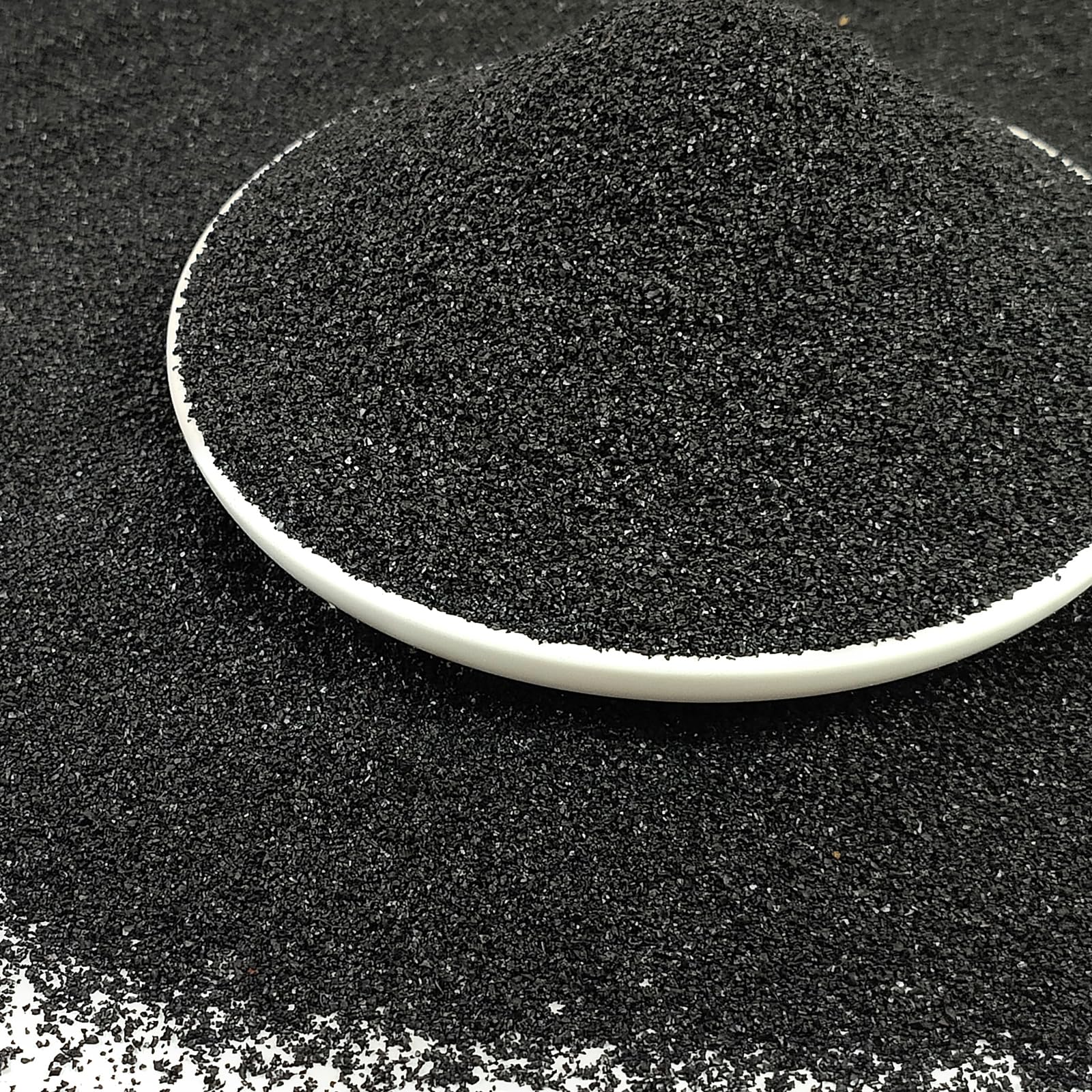
Rating: 4.5 ★ | Price: Budget | Dustiness: Moderate | Color Trueness: Black | Planted Suitability: Fair | Value per Pound: Low
The YISZM Black Sand stands out for its smooth, rounded grain shape, which is gentle on bottom feeders like corydoras and shrimp. While the top pick Imagitarium Black 20lb offers better per-pound value for larger tanks, this 2lb bag is designed for small-scale setups. Its fine black sand delivers a sleek aesthetic, though the small quantity and higher per-pound cost mean it’s best for tanks under 5 gallons.
This sand is for budget-conscious aquarists with nano tanks, jarrariums, or dedicated shrimp bowls. It provides a safe, attractive substrate without the commitment of a large bag. Be aware that the sand may cloud water if not rinsed thoroughly before use, and the per-pound cost escalates if you need multiple bags for a bigger tank.
Pros
- Smooth, rounded grains prevent injury to bottom feeders like corydoras and shrimp
- Deep black color adds a sleek look to small aquascapes
- Affordable price point for a single nano tank or jarrarium
Cons
- Small 2lb bag restricts use to nano tanks and jarrariums only
- Per-pound cost is higher than larger bulk options like Imagitarium 20lb
For a single nano tank or jarrarium where smooth grain and black color are priorities, this sand delivers without breaking the bank.
Best for Glofish
GloFish Black Sand 5lb
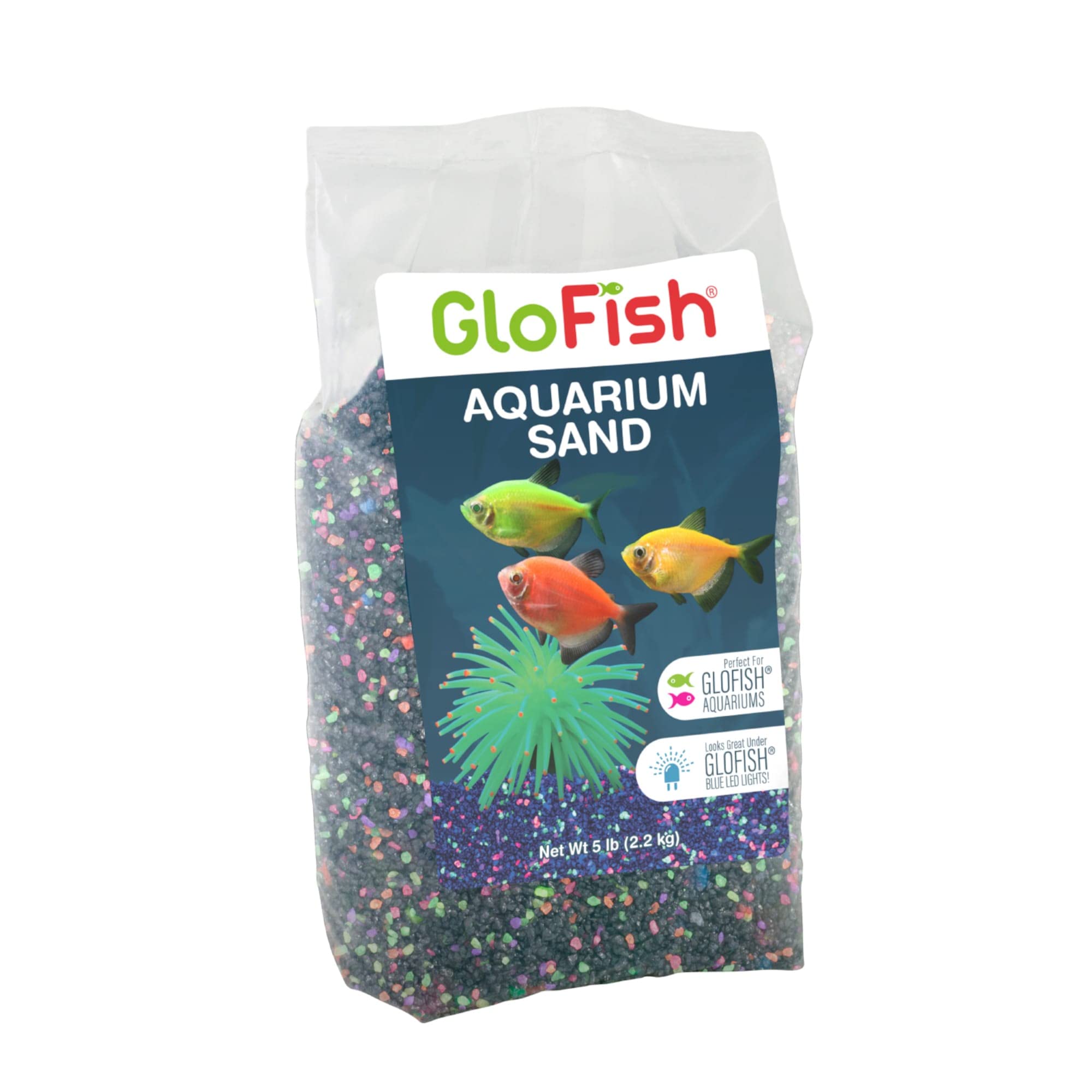
Rating: 4.2 ★ | Price: Budget | Dustiness: Moderate | Color Trueness: Black with glow | Planted Suitability: Poor | Value per Pound: Fair
The GloFish Black Sand delivers a fluorescent glow under blue LED lights that stands out in themed tanks — a fun effect for kids’ setups or GloFish displays. However, dye can bleed into the water, creating black discoloration, and the sand is difficult to clean without disturbing the glow. For standard planted aquariums or general use, the Imagitarium Black Sand is a better choice, but if you want a glow effect, this budget-friendly option works within its narrow niche.
Pros
- Vibrant glow effect under blue LED lighting for visual impact
- Creates a playful contrast when paired with GloFish decor
Cons
- Dye may bleed into the water, causing black discoloration and making cleaning difficult
Best for GloFish displays where the glow effect outweighs water clarity concerns.
How to Choose
Almost every black sand requires rinsing regardless of ‘pre-washed’ claims; the difference is how much effort you’ll need to get clear water.
Grain Size: Fine Sand vs Coarse Gravel
Grain size affects both the look and the fish that can live in it. Fine sand (under 1mm) feels soft and is safe for burrowing species like corydoras and loaches, but it compacts over time, which can suffocate plant roots. Coarser particles (1-2mm) allow better water flow and root penetration, but may be too rough for delicate barbels.
Check the product description for grain diameter. If it’s labeled ‘sand’ but arrives as small gravel, bottom dwellers may get stressed. For planted tanks, a medium grain (0.5-1.5mm) balances root health and fish safety.
Dustiness and Rinsing Requirements
Dust is the most complained-about issue across all black sands. Even bags marked ‘pre-washed’ often release fine particles that turn the water cloudy for days. The amount of dust depends on the material: silica sands tend to be dustier than clay-based substrates like Seachem Flourite.
Plan to rinse sand in a bucket under running water until it runs clear. This can take 5 to 15+ rinses. Skipping this step means weeks of cloudy water and clogged filters. Products that claim ‘no rinse needed’ still benefit from at least one quick rinse.
Color Trueness: Deep Black vs Gray
Some black sand is naturally dark (basalt, magnetite), while others are coated or dyed. Coated sand can fade over time or bleed dye into the water, especially if the coating is not cured well. Natural black sands retain their color indefinitely but may have a slight gray tint when dry.
Look for reviews that mention color underwater after a month. Estes Marine Sand is consistently praised for staying jet-black, while some budget options shift to a dull charcoal within weeks. If you want true black that lasts, avoid products with ‘fluorescent’ or ‘dyed’ in the description.
Suitability for Planted Tanks
Not all black sands provide nutrients for plants. Inert sands (silica, play sand) require root tabs or liquid fertilizers to support growth. Clay-based substrates like Seachem Flourite and Aqua Natural contain iron and other minerals that feed roots directly.
For heavily planted aquascapes, choose a substrate specifically labeled for planted tanks. If you just want a few low-light plants like Java fern or Anubias, a nutrient-neutral sand with root tabs works fine. The trade-off is cost: nutrient-rich sands cost more per pound but reduce the need for supplements.
Value per Pound
Price per pound varies widely. Small 5-pound bags cost more per pound than large 20-pound bags, but you may not need a huge quantity for a nano tank. For a standard 20-gallon tank, you’ll need about 15-20 pounds for a 2-inch depth. Buying a larger bag often saves 30-50% on unit cost.
Beware of ‘budget’ sands that cost under $1 per pound but require excessive rinsing or fade quickly. The time and frustration of dealing with dust or poor color can outweigh the savings. Mid-range options around $1.50-$2 per pound usually offer the best balance of quality and effort.
FAQ
Why does my black aquarium sand turn the water cloudy?
Cloudiness comes from fine dust particles clinging to the sand grains. Even ‘pre-washed’ sand releases dust when added to water. The fix is thorough rinsing: put the sand in a bucket, run water over it while stirring, and pour off the cloudy water. Repeat until the water runs clear. This can take 10+ rinses for dusty brands, but it saves weeks of cloudy tank water.
How many times do I need to rinse black sand before adding it to my tank?
There’s no universal number; it depends on the brand. Low-dust sands like Imagitarium may need only 2-3 rinses, while dusty options like FANTIAN or Seachem Flourite can require 10-15 rinses. The goal is water that runs clear from the bucket. Never add sand that still produces a cloudy swirl when disturbed.
Is black sand safe for bottom feeder fish like corydoras?
It depends on grain shape and size. Smooth, rounded grains (like YISZM) are safe for corydoras, loaches, and other sand-sifting fish. Sharp-edged or coarse grains (like Estes Marine Sand, which is more like fine gravel) can damage their barbels. Always check the product description for ‘smooth’ or ’rounded’ grains if you keep bottom dwellers.
Does black sand fade or lose its color over time in an aquarium?
Natural black sands (basalt, magnetite, clay-based) do not fade. Dyed or coated sands can lose color after a few months, especially if exposed to strong light or aggressive cleaning. Products like Estes Marine Sand and Seachem Flourite are known for long-lasting color. GloFish sand uses fluorescent dye that may bleed and weaken over time.