This post contains affiliate links. We may earn a small commission when you buy through our links — at no extra cost to you.
You’ve probably seen photos of pristine white sand beds, only to find your bag turns the tank into a murky mess for days. The marketing often promises ‘pure white’ but delivers off-white, and the rinsing instructions are optimistic at best.
The good news is that some sands actually deliver on their claims. Triple-washed sands from dedicated aquarium brands cut setup time dramatically, while others require a bucket and patience. The key is matching the sand’s grain size and cleanliness to your tank type.
This guide focuses on sands that minimize frustration: ones that come clean, hold their color, and suit specific needs—whether you’re planting heavily or keeping delicate bottom feeders.
Top Picks
Best for Community Tanks
Aqua Natural Sugar White 10lb

Rating: 4.7 ★ | Price: Mid-Range | Grain Size: Fine 0.5-1 mm | Cleanliness: Triple washed | Color: Off-white | Value per Pound: Mid-range
This sand arrives triple-washed and kiln-dried, so it needs only a quick rinse before going into the tank — less prep than most white sands. The 0.5–1mm grains are soft enough for corydoras and loaches to sift through without risk to their barbels, and the bright off-white color makes fish colors pop.
Best in freshwater community tanks and aquascapes where a clean, bright substrate is the priority. The off-white tone may look tan under warm lighting — those seeking pure white should look elsewhere. The 10lb bag covers roughly a 10-gallon tank to 1–2 inch depth; heavily planted tanks requiring deeper substrate will need a second bag or a nutrient layer underneath.
Pros
- Exceptionally clean with minimal rinsing required
- Bright off-white appearance enhances fish colors
- Soft grain safe for bottom feeders like corydoras
Cons
- Color is off-white/light tan rather than pure white; may appear tan in certain lighting
- 10lb bag may be insufficient for planted tanks needing deeper substrate depth
For freshwater keepers wanting a clean, bright sand that needs almost no prep, this is the most convenient option at a mid-range price — just accept the off-white color.
Best for Planted Tanks
Seachem Flourite Black 15.4lb
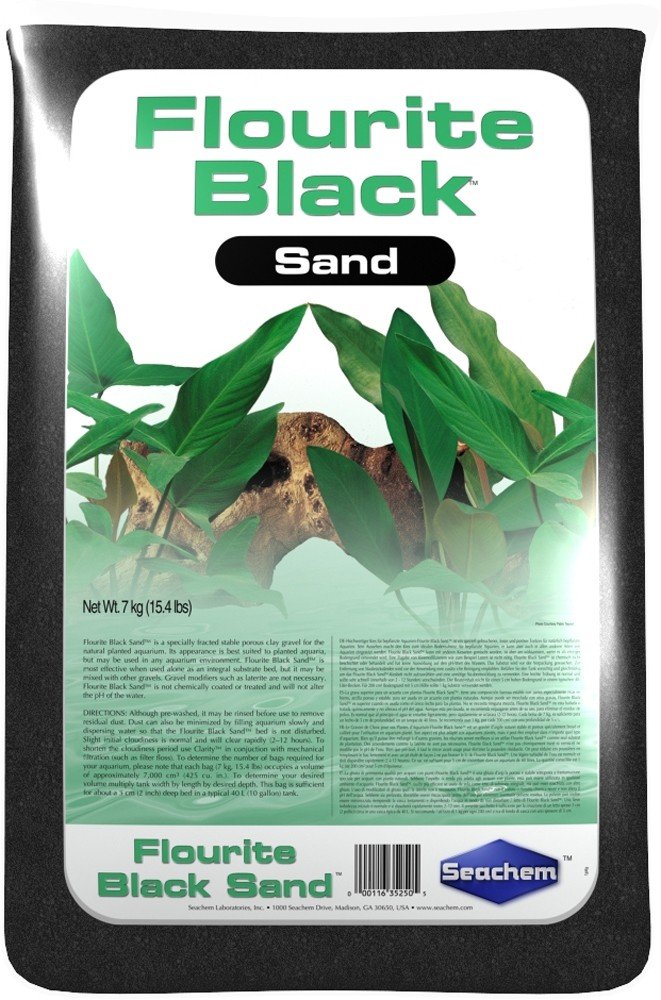
Rating: 4.5 ★ | Price: Premium | Grain Size: Fine to medium | Cleanliness: Dusty, needs rinsing | Color: Black/gray | Value per Pound: Premium
The Seachem Flourite Black Sand is a nutrient-dense clay substrate that gives root-feeding plants a strong anchor and steady nutrient supply. The deep black color (gunmetal gray under light) creates sharp contrast with green foliage. However, the preparation is demanding — dust requires multiple rinses, and water clarity may take days to settle. This sand suits aquascapers who prioritize plant health over quick setup and are comfortable with a multi-step rinse process. For those who want a plant-friendly substrate without the dust, the triple-washed option (our top pick) is a cleaner alternative.
Pros
- Porous clay structure anchors roots and supplies nutrients for lush plant growth
- Deep black color creates striking contrast with green foliage
- Reduces need for additional root tabs in heavy root-feeder setups
Cons
- Water may remain cloudy for several days even after thorough rinsing
- Requires extensive manual rinsing (10+ washes) to remove embedded dust
Best for dedicated planted-tank enthusiasts who can invest time in preparation; not for beginners or those seeking instant clarity.
Best for Reef, Cichlids
CaribSea Arag-Alive 20lb

Rating: 4.7 ★ | Price: Premium | Grain Size: Fine sugar-sized | Cleanliness: Live, cloudiness possible | Color: White/pink tint | Value per Pound: Premium
Arag-Alive Fiji Pink Sand uses live aragonite to actively buffer pH and support biological filtration from setup day. The fine sugar-sized grains create a natural bed for corals and burrowing fish, making it a practical choice for saltwater reef systems and African cichlid habitats.
This substrate targets aquarists who need a calcium carbonate buffer for stable water chemistry. The sand appears white/off-white despite the “pink” label, and it should not be rinsed to preserve the live bacteria — temporary cloudiness for up to a day is part of the setup process.
Pros
- Fine grain size suits reef and cichlid tanks while aiding biological filtration.
- Active aragonite buffers pH and improves water stability from the start.
Cons
- Color reads as white/off-white, not pink — a mismatch for those expecting a pink tint.
- Cloudiness can persist for hours to a day if sand is not rinsed, but rinsing removes the beneficial bacteria.
Best for reef and cichlid setups requiring aragonite buffering — just expect a white sand bed and a short cloudy period after adding water.
Best for Bottom Feeders
CaribSea Moonlight 10lb (2×5)
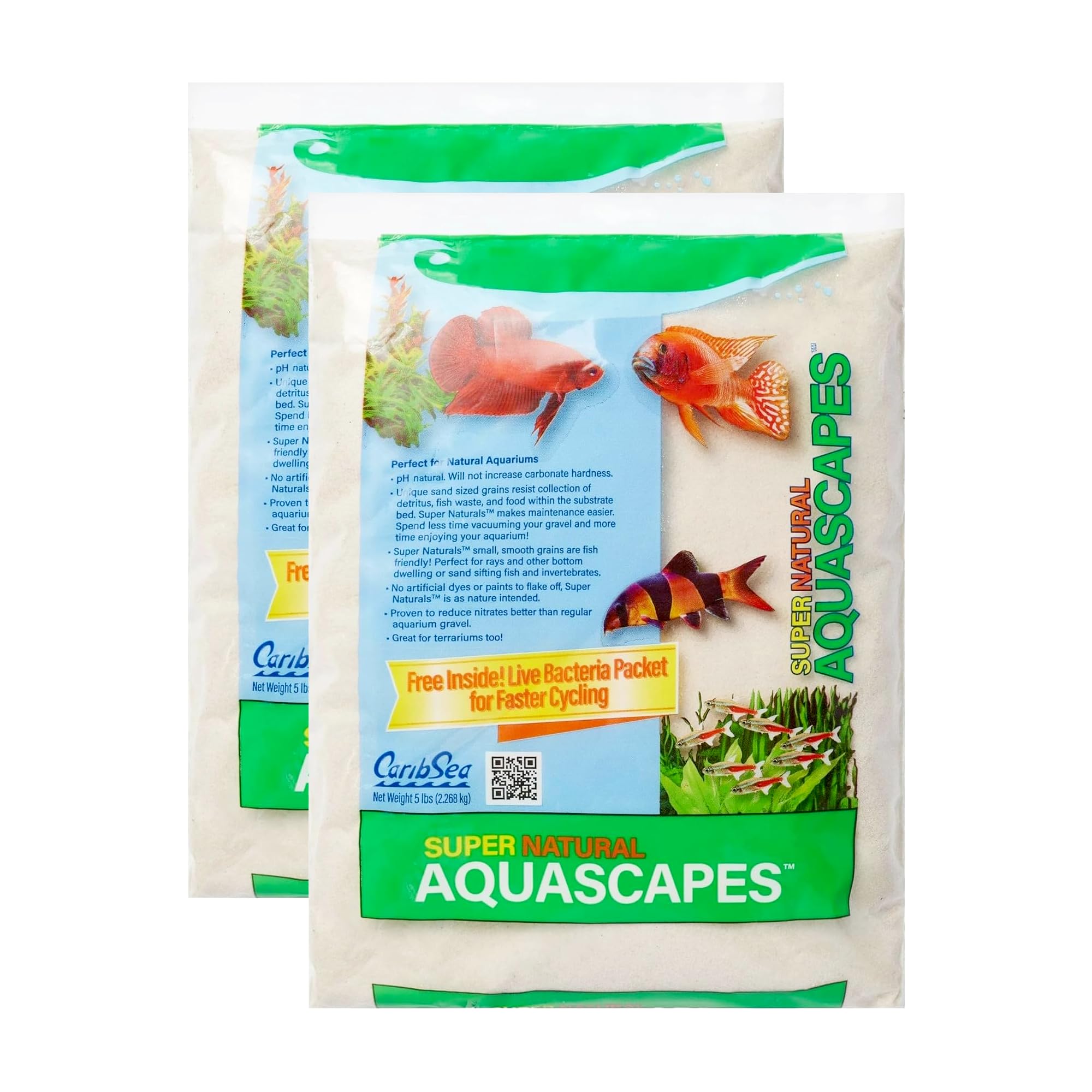
Rating: 4.5 ★ | Price: Premium | Grain Size: Very fine | Cleanliness: Needs rinsing | Color: Off-white/tan | Value per Pound: Premium
Carib Sea Moonlight Sand has sugar-fine grains that won’t scratch corydoras or loach barbels, and its natural off-white/tan color blends into tropical beach biotopes. The sand does require thorough rinsing to prevent cloudiness, and the color leans tan rather than pure white – so buyers wanting a crisp white look should look elsewhere. This is a premium choice for small to medium freshwater tanks where fish safety matters more than budget or color purity.
Pros
- Ultra-fine grains are safe for soft-bellied bottom feeders and sand-sifting species.
- Natural beach-sand appearance that suits biotope and natural aquascapes.
Cons
- In tanks expecting bright white sand, the off-white/tan tone may seem dull – it’s a natural sand color, not a bleached white.
- For large tanks that need multiple bags, the per-pound price adds up quickly – budget buyers may prefer larger-volume options.
If you keep soft-bottom fish in a small to medium tank and want the safest possible sand, this delivers – but the color tradeoff and per-pound cost make it a runner-up to the triple-washed top pick.
Best for Planted Tanks
Aqua Natural Prairie 10lb

Rating: 4.7 ★ | Price: Mid-Range | Grain Size: Coarse 0.8-1.2mm | Cleanliness: Triple washed, clean | Color: Tan/apricot | Value per Pound: Mid-range
Among coarse aquarium sands, this is the one that arrives clean enough to pour straight into the tank — no pre-rinse, no cloudiness. The 0.8–1.2 mm grains anchor stem plants and root feeders without compaction, making it a low-effort choice for planted or biotope setups. That same texture, however, is too rough for corydoras or any sand-sifting species that prefer soft, fine sand. If your stocking includes bottom feeders with sensitive barbels, the top pick Sugar White offers a finer, gentler alternative.
Pros
- Requires little to no rinsing before use; tank stays clear from day one.
- Coarse grain size holds plant roots securely without compacting.
Cons
- Coarse texture may irritate barbels of sand-sifting fish like corydoras.
- Color is limited to a tan-brown palette; not for those wanting white or black substrate.
For planted tank keepers who value instant clarity and root support over fine-sand compatibility, this is a time-saving, mid-range sand that delivers exactly what it promises.
Best for Nano Tanks
YISZM Beige 2lb

Rating: 4.5 ★ | Price: Budget | Grain Size: Fine | Cleanliness: Needs rinsing | Color: Beige | Value per Pound: Budget
This beige sand offers a natural look and good value for very small tanks or craft use. The 2lb bag covers about 1 sq ft at 1 inch depth, so it is only enough for nano tanks under 3 gallons. It also requires 10–15 minutes of rinsing to clear dust. For standard aquariums, a larger bag is more practical.
Pros
- Pleasant beige color that looks natural
- Good value for very small tanks or crafting
Cons
- Requires extensive rinsing (10–15 minutes) to remove dust
Best for nano tanks under 3 gallons or decorative craft projects where the small bag and rinsing requirement are acceptable.
Best for Budget Tanks
FANTIAN Silica 5lb

Rating: 4.5 ★ | Price: Mid-Range | Grain Size: Fine 0.4-0.8mm | Cleanliness: Very dusty | Color: Beige, may bleed | Value per Pound: Mid-range
The FANTIAN silica sand delivers a natural beige look for budget freshwater tanks. Its 0.4–0.8mm grain works well for mixing substrates. However, the sand can be very dusty—needing multiple washes to clear fine particles—and some bags may release a pinkish tint during rinsing. These limitations make it less reliable for quick, stand-alone aquarium setups, but it remains a decent option for craft projects or as a substrate mix-in.
Pros
- Natural beige color blends with most freshwater tank designs.
- Grain size (0.4–0.8 mm) suits general freshwater substrate use.
Cons
- Heavy rinsing needed to remove fine dust—can take up to 20 washes.
Best for craft projects or mixing with other substrates where dust and dye are less of a concern, rather than as a primary aquarium sand.
How to Choose
The biggest mistake buyers make is choosing sand based on photos rather than grain size and cleanliness — the two specs that determine daily maintenance and plant health.
Grain Size
Fine sand (0.5–1 mm) looks smooth and is ideal for bottom feeders like corydoras, but it packs tighter and can trap debris. Coarse sand (1 mm+) allows water flow and root penetration, making it better for planted tanks but uncomfortable for sand-sifting fish.
If you keep sensitive barbels or want a natural beach look, fine sand is the way. For heavy root feeders or easy cleaning, choose coarse. There is no wrong choice — only the wrong fish for the grain.
Cleanliness
Triple-washed sands from reputable brands come nearly ready to use — a quick rinse removes shipping dust. Others are loaded with fine particles that cloud the water for days and require repeated washing. The difference is hours of effort.
Read product descriptions carefully. If it says ‘triple washed’ or ‘kiln dried’, you can trust it. If it’s sold as ‘natural silica sand’, expect to spend 20 minutes rinsing per bag.
Color Accuracy
White sand is almost never pure white — it’s off-white, tan, or cream. Black sand can fade to dark gray or contain dye residues that bleed. The most accurate colors come from natural sands (tan, brown, golden) that aren’t dyed.
If you need a specific color for a biotope or aesthetic, buy from a brand that shows unedited customer photos. Ignore marketing renders.
Value per Pound
Small 1–5 lb bags are fine for nano tanks under 5 gallons, but per-pound prices are high. For a standard 20-gallon tank, you need 20–30 lbs. A 10–20 lb bag from a mid-range brand often delivers the best cost-to-coverage ratio.
Premium sands (CaribSea, Seachem) cost more but offer unique benefits like pH buffering or nutrients. Only pay extra if your tank actually needs those features.
FAQ
Why is my aquarium sand still cloudy after rinsing multiple times?
Some sands, especially natural silica or dyed black sands, contain ultra-fine dust that takes many washes to remove. If you’ve rinsed 10+ times and it’s still cloudy, the sand may be releasing dye or residue. Try using a fine mesh sieve and rinsing until the water runs clear. If it never clears, consider swapping to a pre-washed brand like Aqua Natural.
How much sand do I need for a 20-gallon aquarium?
For a 20-gallon long tank (30×12 inches), a 1-inch layer requires about 20 pounds of sand. For planted tanks needing 2–3 inches, plan on 40–60 pounds. Most 10–20 lb bags are designed for smaller tanks, so buy multiple bags or a larger bulk option.
Can I use pool filter sand instead of aquarium sand?
Yes, pool filter sand is often cheaper and inert — it won’t alter pH or leach colors. However, it is coarser (0.5–1 mm) and may not be soft enough for delicate bottom feeders. It also requires thorough rinsing to remove silica dust. It’s a valid budget option for hardy fish but not for corydoras or shrimp.
Does black sand make fish waste more visible?
Yes, black sand creates high contrast, making fish waste, uneaten food, and plant debris stand out clearly. This means more frequent spot cleaning but also easier maintenance because you can see exactly where to vacuum. White sand hides waste better but shows algae faster.