This post contains affiliate links. We may earn a small commission when you buy through our links — at no extra cost to you.
Many tap water conditioners claim to detoxify ammonia, but in reality they only bind it temporarily—giving a false sense of security during water changes. Then there’s the odor: concentrated formulas often smell like rotten eggs, making the routine even less appealing. The key is finding a conditioner that actually neutralizes ammonia and nitrite without the stench.
Beyond detox, you need reliable chlorine and chloramine removal, safe dosing for sensitive fish, and no cloudiness. This guide focuses on conditioners that deliver on these fronts, with honest trade-offs like price per gallon or small-bottle convenience. We highlight options with proven emergency capabilities and straightforward dosing, so you can act fast during spikes without guesswork.
Whether you keep a single betta or a reef tank, you’ll find a pick that matches your priorities. Each product is chosen for its strength in a specific use case, not for being the ‘best’ overall.
Top Picks
Best for All Tanks
Seachem Prime 500ml

Rating: 4.8 ★ | Price: $$ | Concentration: 5,000 gal | Ammonia Detox: Yes | Slime Coat: No | Odor: Strong sulfur | Water Type: Fresh/Salt
Seachem Prime neutralizes chlorine, chloramine, ammonia, nitrite, and heavy metals in both freshwater and saltwater tanks. One 500ml bottle covers up to 5,000 gallons, so refills are infrequent for most setups. The formula is safe to use at up to five times the normal dose during ammonia spikes, giving keepers a reliable emergency option.
The strong sulfur smell immediately after dosing is the main trade-off—it dissipates quickly but will be noticeable in enclosed spaces. This conditioner fits aquarists with high bioloads or sensitive fish who need dependable ammonia detox, and anyone wanting a single product that handles spikes. It is less suited for those extremely sensitive to odor or who only require basic dechlorination.
Pros
- Removes chlorine, chloramine, and detoxifies ammonia, nitrite, and heavy metals.
- One 500ml bottle treats up to 5,000 gallons, reducing long-term cost.
- Safe to use at up to five times the normal dose for ammonia emergencies.
Cons
For any aquarist who wants a single conditioner that does more than dechlorinate, Seachem Prime is the straightforward choice.
Best for Stress Recovery
API Stress Coat 16oz

Rating: 4.8 ★ | Price: $$ | Concentration: ~95 gal | Ammonia Detox: No | Slime Coat: Yes | Water Type: Fresh
The aloe-based formula supports fin repair and reduces stress after water changes or introducing new fish. Unlike the top pick which detoxifies ammonia, this conditioner only removes chlorine and chloramine. Dosing is simple with the cap, and a 16-ounce bottle treats around 95 gallons. For freshwater keepers who prioritize slime coat recovery over ammonia control, this is a solid option — but for emergency water parameter issues, combine with an ammonia detoxifier or choose the top pick.
Pros
- Helps fish recover from minor injuries and reduces stress during water changes
- Cost-effective for its bottle size compared to smaller alternatives
- Simple dosing cap and guidelines make it beginner-friendly
Cons
- Aloe content may leave a temporary oily film on the water surface
Choose API Stress Coat for its slime coat benefits if you keep freshwater fish and have ammonia/nitrite control handled separately.
Best for Large Tanks
API Tap Water 16oz

Rating: 4.7 ★ | Price: $ | Concentration: 9,460 gal | Ammonia Detox: No | Slime Coat: No | Water Type: Fresh
The API Tap Water Conditioner delivers the best value per gallon for basic chlorine and chloramine removal. Unlike Seachem Prime, it does not detoxify ammonia or nitrite – it’s a straightforward dechlorinator for those who already have a separate ammonia binder. Best suited for owners of large tanks (50+ gallons) who go through lots of water and want to minimize cost. The ultra-concentrated formula (1 ml per 20 gallons) requires careful measurement – a few drops too many can be an issue in smaller tanks.
Pros
- Extremely concentrated – one bottle treats up to 9,460 gallons, lasting years for most home tanks.
- Effective chlorine and chloramine removal, neutralizing them instantly.
- Budget-friendly price – the cheapest option for basic dechlorination.
Cons
- Ultra-concentration makes dosing tricky for small tanks; precise measurement is needed.
If you need pure dechlorination at the lowest cost per gallon and already have an ammonia detoxifier, this is the right choice – just measure carefully.
Best for Betta Tanks
Tetra BettaSafe 1.69oz

Rating: 4.7 ★ | Price: $ | Concentration: ~25 gal | Ammonia Detox: Yes | Slime Coat: No | Water Type: Fresh
Drop-based dosing at 14 drops per gallon removes chlorine and ammonia for bettas without measuring caps or syringes. The 1.69 oz bottle treats roughly 20-25 gallons—enough for months of small-tank water changes, but not cost-effective for anything beyond 5 gallons. This makes it a sensible pick for anyone keeping a single betta in a bowl or nano tank who values simplicity over bulk value.
Best for new betta owners or those with a single small setup who want a conditioner that’s already matched to their fish’s needs. The trade-off: per-gallon cost runs higher than concentrated alternatives—fine if you’re only treating a few gallons each week, but not the right fit for multiple tanks or larger aquariums.
Pros
- Simple 14-drop dosing eliminates measuring tools for small tanks
- Specifically formulated for betta fish, improving water quality and activity
Cons
- Small bottle expensive per gallon compared to concentrated conditioners
For betta keepers with one small tank who want a fish-specific, no-fuss dosing routine, this conditioner fits without overcomplicating water changes.
Best for Odor-Sensitive
TankFirst 500ml
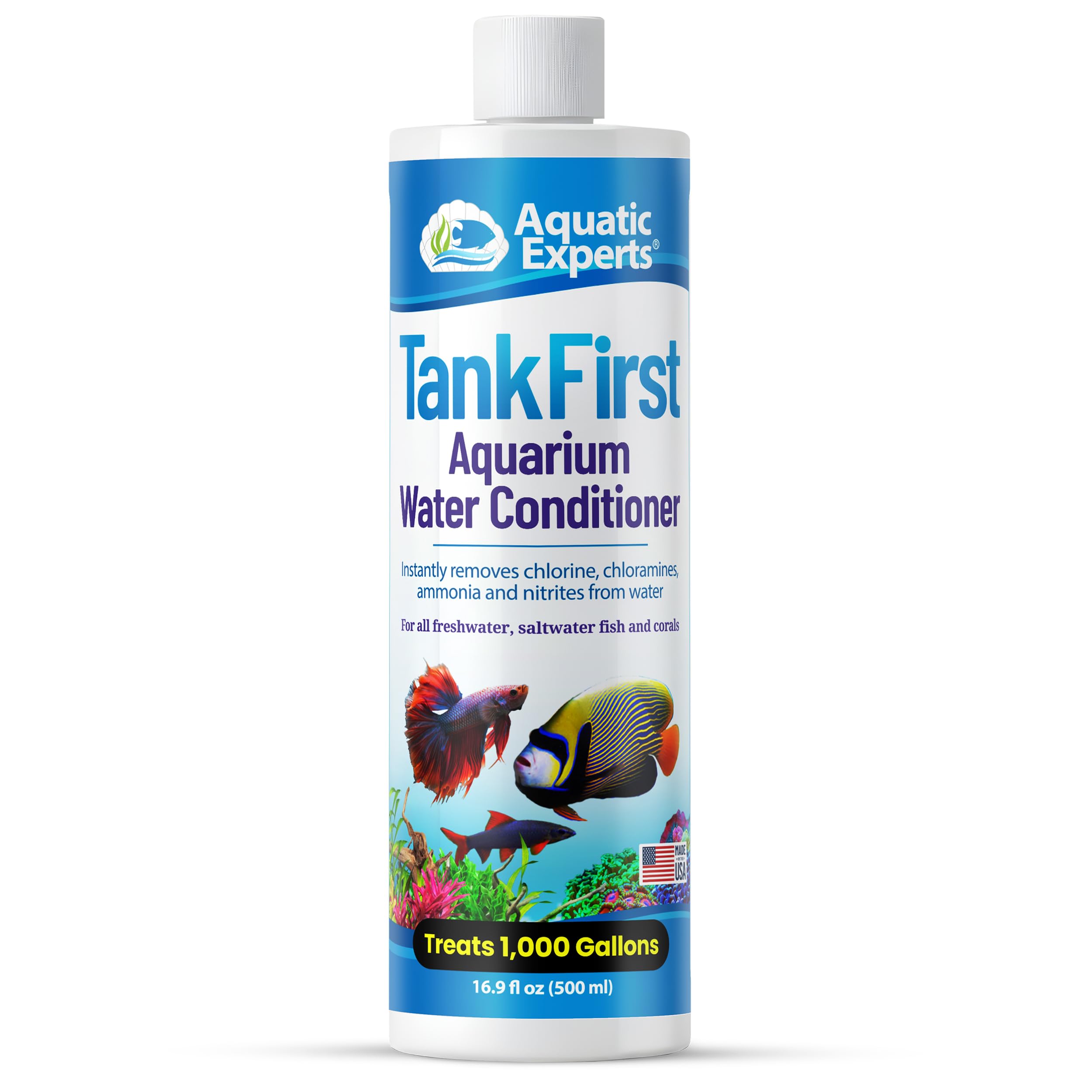
Rating: 4.7 ★ | Price: $$ | Concentration: 1,000 gal | Ammonia Detox: Yes | Slime Coat: No | Water Type: Fresh/Salt/Reef
TankFirst eliminates the strong sulfur odor that comes with Prime, making it a better fit for reef tanks and saltwater setups where smell matters. It effectively removes chlorine and chloramines, and binds ammonia for 24–48 hours. The trade-off is nitrite detox: some keepers report that nitrite levels stay unchanged, so this conditioner is less reliable for emergency nitrite control. Best suited for those who prioritize an odor-free experience and are willing to manage nitrite levels through routine water changes rather than chemistry.
Pros
- No sulfur smell after dosing
- Handles chlorine, chloramines, and ammonia effectively
- Compatible with freshwater, saltwater, and reef tanks
Cons
- Nitrite reduction may not be as strong as claimed – worth monitoring levels after dosing
A smart pick for odor-sensitive aquarists, but if you need reliable nitrite detox, the top pick is the safer bet.
Best for Sensitive Fish
Kordon Novaqua 16oz

Rating: 4.8 ★ | Price: $ | Ammonia Detox: No | Slime Coat: Yes | Water Type: Fresh
Kordon Novaqua Plus adds vitamins and immunizers that support fry and sensitive freshwater fish during water changes. It removes chlorine, chloramine, and heavy metals while providing slime coat protection, but it does not detoxify ammonia or nitrite. This makes it a strong choice for keepers who already rely on a dedicated ammonia detoxifier like the top pick and want extra health benefits for delicate tank inhabitants.
Pros
- Gentle formula with vitamins that support fish health
- Budget-friendly price for a 16-ounce bottle
- Slime coat protection helps fish recover from stress
Cons
- Does not detoxify ammonia or nitrite; only removes chlorine, chloramine, and heavy metals
Best used alongside a dedicated ammonia detoxifier for keepers who want added vitamins and slime coat support for sensitive freshwater fish.
Best for Small Tanks
Tetra AquaSafe 3.38oz
Rating: 4.8 ★ | Price: $ | Ammonia Detox: No | Slime Coat: Yes | Water Type: Fresh
This conditioner removes chlorine and heavy metals while adding slime coat and vitamins — a practical starter for beginners with bettas or small tanks. The 3.38 oz bottle keeps the initial cost low, but the concentration is too low to be economical for tanks over 10 gallons, and it does not detoxify ammonia or nitrite as more concentrated formulas do.
Pros
- Consistent dechlorination for small tanks up to 10 gallons
- Low entry price with added slime coat and vitamins for fish health
Cons
- Small 3.38 oz bottle requires frequent repurchase for tanks over 10 gallons
Best left to first-time fish keepers with a single small tank who want a simple, low-cost conditioner — anyone with a larger setup will save money by switching to a concentrated alternative like Seachem Prime.
Best for Small-Medium
Fluval Conditioner 8.4oz

Rating: 4.7 ★ | Price: $$ | Ammonia Detox: No | Slime Coat: Yes | Water Type: Fresh
Fluval’s conditioner effectively removes chlorine and chloramines while coating scales to reduce stress, suiting 10-30 gallon freshwater tanks. It includes stress-coat properties popular among cichlid keepers. It’s reasonably priced per bottle, but less concentrated than top picks and does not detoxify ammonia.
Pros
- Effectively removes chlorine and chloramines with added slime coat protection.
- Reasonable price for the bottle size in small to medium tanks.
Cons
- Some tanks may become cloudy after dosing.
A dependable choice for Fluval loyalists with 10-30 gallon freshwater tanks who prefer the brand’s consistency over maximum concentration per dollar.
Best for Experimenters
Natural Rapport All-in-1 16oz

Rating: 4.5 ★ | Price: $$$ | Concentration: 960 gal | Ammonia Detox: Yes | Slime Coat: Yes | Water Type: Fresh/Salt
Natural Rapport’s all-in-one formula tackles chlorine, chloramine, ammonia, and heavy metals in one dose, plus pH buffering. Water cloudiness can occur after dosing, and results on nitrate/nitrite removal vary. This conditioner suits hobbyists who want a single-bottle solution and are willing to accept occasional clarity issues and uncertain detox performance.
Pros
- All-in-one convenience handles multiple water parameters in one bottle.
- Concentrated formula treats up to 960 gallons, offering value for larger tanks.
Cons
- Water cloudiness can appear after dosing, especially in clear-water setups.
Suitable for hobbyists who prioritize convenience over consistency and are willing to monitor water parameters closely – specialized conditioners offer more predictable results.
How to Choose
The most important buying insight is that not all conditioners remove ammonia permanently—many only bind it temporarily, so choose one with proven detox for emergency situations.
Concentration and Coverage
Higher concentration means fewer bottles and lower cost per gallon, but requires precise dosing for small tanks. A 16-oz bottle treating 9,000+ gallons is great for large water changes but a few drops too many can overdose a tiny bowl.
For small tanks under 10 gallons, look for a conditioner with a clear drop-based dosing system. For big tanks, a concentrated formula saves money and shelf space.
Ammonia and Nitrite Detox
Many conditioners claim to detoxify ammonia but only bind it temporarily, leaving your fish vulnerable during spikes. True detoxifiers like Seachem Prime convert ammonia into a non-toxic form that stays safe until the filter cycles or a water change removes it.
If your tank is heavily stocked or you’re cycling, choose a conditioner with proven emergency dosing—up to 5x normal dose—to handle sudden ammonia or nitrite surges.
Slime Coat Additives
Aloe vera and other slime coat enhancers help fish recover from handling, injury, or stress. The trade-off is a possible oily film on the water surface, which usually dissipates but can be bothersome in small tanks.
These additives are beneficial for wound healing and new fish acclimation. If your fish are healthy and you don’t need extra healing, skip the additives and save money with a pure dechlorinator.
Odor and Scent
Concentrated formulas often use sulfur-based stabilizers, producing a strong rotten egg smell immediately after dosing. The odor is harmless and fades within minutes, but it can be off-putting for some keepers.
Odor-free alternatives exist, but they may not match the detox power or concentration of the smelly options. If you are sensitive to smells, look for conditioners specifically marketed as ‘no odor’.
Freshwater vs Saltwater
Not all conditioners are safe for saltwater or reef tanks. Some contain additives that can harm invertebrates or alter water chemistry. Always check the label if you keep marine life.
Universal conditioners that work in both fresh and saltwater are convenient, but they often cost more per gallon than freshwater-only options. Reef keepers should verify that the product is safe for corals and invertebrates.
FAQ
Why does my tap water conditioner smell like rotten eggs?
That’s the sulfur compound used to stabilize the concentrated formula. It’s harmless and dissipates quickly after dosing. If the smell bothers you, switch to an odor-free option like TankFirst.
Can I use a betta water conditioner in a large community tank?
You can, but it’s not economical. Betta-specific conditioners come in small bottles with low coverage per dollar. For a large tank, buy a concentrated all-purpose conditioner like Seachem Prime instead.
Does Seachem Prime remove ammonia permanently or just detoxify it?
Prime binds ammonia into a non-toxic form that remains in the tank until removed by the biological filter or water change. It doesn’t eliminate it permanently, but it makes it safe for fish during the cycling process or spikes.
What’s the difference between API Stress Coat and API Tap Water Conditioner?
Stress Coat adds aloe vera for slime coat and stress reduction, but does not detoxify ammonia. Tap Water Conditioner is ultra-concentrated for pure dechlorination without extras. Choose Stress Coat if your fish need healing, Tap Water if you just need cheap dechlorination.