This post contains affiliate links. We may earn a small commission when you buy through our links — at no extra cost to you.
The most common mistake in shrimp keeping is buying the wrong remineralizer type. A GH+ product meant for bee shrimp can starve cherry shrimp of needed KH, slowing molting and breeding. The reverse is worse — GH/KH+ in a low-KH Caridina tank can spike carbonate hardness and destabilize sensitive species.
This guide cuts through the confusion by matching each product to the shrimp it actually supports. You’ll see exactly which parameter each product adjusts, how fast it dissolves, and whether it’s built for precision breeding or casual top‑offs. No more guessing based on package labels.
The real difference isn’t brand reputation — it’s understanding GH versus KH needs for your specific colony. Once you know that, choosing becomes straightforward.
Top Picks
Best for Neocaridina Shrimp
Salty Shrimp GH/KH+
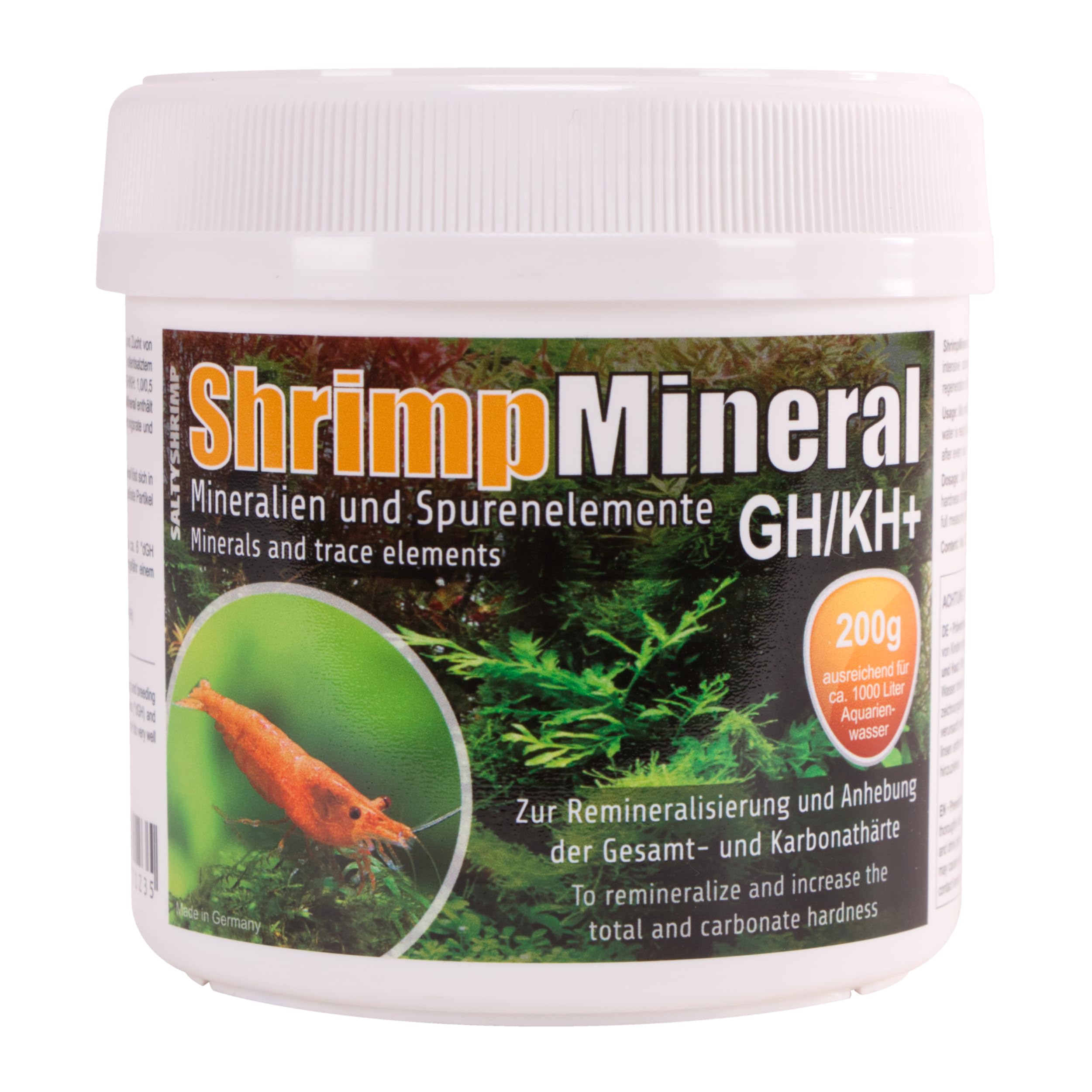
Rating: 4.7 ★ | Price: $$$ | GH vs KH: GH + KH | Form: Powder | Dissolve Speed: Moderate, slight haze | Dosing Precision: Scoop with fill line | Cost per Gallon: Low
Salty Shrimp GH/KH+ raises both GH and KH in the ideal 2:1 ratio for cherry shrimp, treating up to 264 gallons per container. The powder dissolves quickly with minor stirring, and the included scoop makes dosing simple. Some temporary cloudiness can occur before full dissolution, but it clears within minutes and doesn’t affect water quality.
This is the right choice for Neocaridina keepers who want consistent mineral levels for molting and breeding. Not for Caridina species that require low KH — the GH-only version serves those setups. The scoop has a subtle catch: fill to the imprinted line, not the rim, to avoid doubling the dose.
Pros
- Raises both GH and KH in a consistent ratio for healthy shrimp molting and breeding.
- Easy dosing with a scoop that dissolves quickly in water.
- Promotes colony growth with reliable mineral supplementation.
Cons
- Powder can create temporary cloudiness before fully dissolving.
- Scoop’s rim fill gives more than the intended 2g dose, risking over-mineralization if filled to the rim instead of the imprinted line.
For Neocaridina keepers who want precise GH/KH balance without guesswork, this is the most cost-effective per-gallon option.
Best for Caridina Bee Shrimp
Salty Shrimp GH+
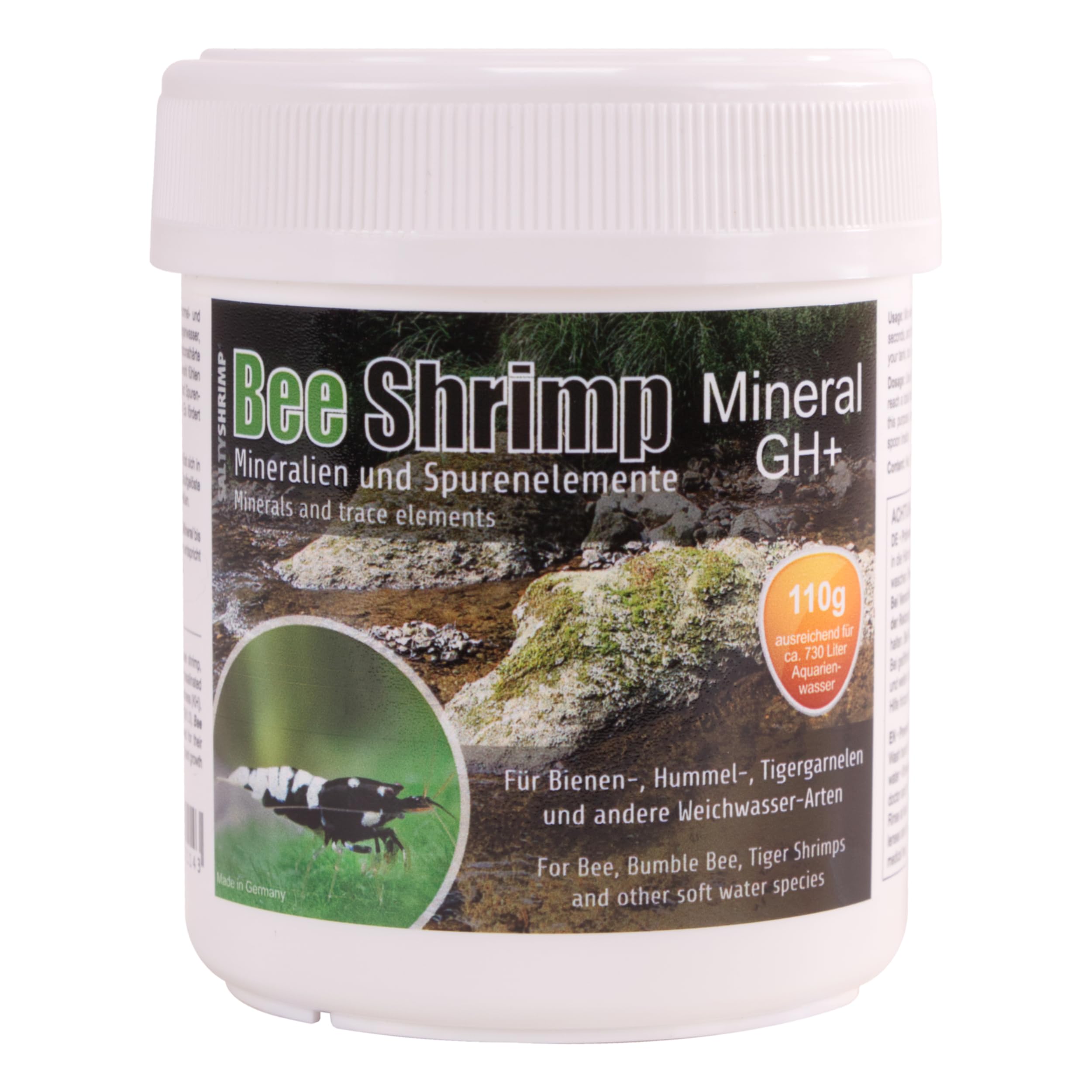
Rating: 4.8 ★ | Price: $$ | GH vs KH: GH only | Form: Powder | Dissolve Speed: Fast | Dosing Precision: Scoop with line | Cost per Gallon: Mid
This GH-only remineralizer gives Caridina keepers exact control over general hardness while keeping KH at zero — critical for sensitive bee shrimp. Unlike the top pick GH/KH+ which balances both for Neocaridina, this version avoids any KH increase, making it the right choice for low-KH species. Best suited for breeders of Crystal Red, Bee, and Taiwan Bee shrimp who use RO/DI water and need to maintain specific water parameters without unwanted carbonate shifts. It does not raise KH, so it cannot be used for Neocaridina or any shrimp that require carbonate hardness.
Pros
- Pure mineral composition raises GH precisely without additives or unwanted ions.
- Supports healthy molting and breeding success in sensitive bee shrimp.
Cons
- Cost per dose is higher than all-purpose remineralizers, making it a premium option.
For Caridina specialists who need absolute KH control, this is the precise tool — not a general-use remineralizer.
Best for Nano Shrimp Tanks
Crystalpro Shrimp Min

Rating: 4.7 ★ | Price: $ | GH vs KH: GH + KH | Form: Liquid | Dissolve Speed: Instant | Dosing Precision: Drop or capful | Cost per Gallon: High
Crystalpro Shrimp Minerals comes as a pre-mixed liquid, so there is no powder to dissolve or measure – just count drops or capfuls into your tank. This convenience makes it a strong option for small setups (5–20 gallons) where the included 125 mL bottle lasts several water changes. The formula delivers calcium, magnesium, potassium, and sodium needed for healthy molting and breeding, and reports show it supports shrimp survival rates well.
The liquid format is especially beginner-friendly: no guesswork with scoops or incomplete dissolving. However, it only raises GH (general hardness) – it does not add KH, so it suits Caridina species that need low carbonate hardness. Neocaridina keepers who also want KH should pair it with a separate KH buffer or choose an all-in-one product like the top pick. Shipping packaging can cause the bottle cap to leak or crack, so inspect upon arrival.
Pros
- Drop-by-drop dosing for precise GH adjustment in small tanks
- Supports molting and breeding with essential minerals
- No mixing required – use directly from the bottle
Cons
- Bottle cap may crack or leak during shipping, causing product loss
For nano Caridina or low-KH shrimp tanks where convenience matters more than cost per gallon, this liquid remineralizer delivers reliable GH boost without powder fuss.
Best for Large Planted Tanks
Seachem Equilibrium

Rating: 4.7 ★ | Price: $$ | GH vs KH: GH only | Form: Powder | Dissolve Speed: Slow, residue possible | Dosing Precision: Scoop (no fill line) | Cost per Gallon: Low
Seachem Equilibrium raises GH in soft or RO water without altering KH, making it a fit for Caridina shrimp or planted tanks that require a mineral boost without carbonate hardness. Unlike the top pick Salty Shrimp GH/KH+, this powder focuses solely on GH, allowing keepers to control KH separately. The tradeoff is dissolving patience: the powder can leave a white film if not mixed aggressively, so pre-dissolving in warm water helps.
Pros
- Raises GH without affecting KH
- Contains potassium as a plant nutrient
- Free of sodium chloride
Cons
- Powder may leave a white film if not stirred vigorously—more noticeable in larger tanks where mixing is less practical
An economical GH booster for shrimp keepers who want precise control over KH, provided they accept the mixing effort.
Best for Small Gh-Only Tanks
Seachem Replenish

Rating: 4.8 ★ | Price: $$ | GH vs KH: GH only | Form: Liquid | Dissolve Speed: Instant | Dosing Precision: Capful marked | Cost per Gallon: Mid
Unlike powdered GH/KH boosters, Seachem Replenish is a ready-to-use liquid – no stirring or waiting. Each capful reliably raises GH in tanks under 20 gallons, making it a convenient option for nano shrimp setups. However, it only adds general hardness, not carbonate hardness, so it’s limited to shrimp species that tolerate near-zero KH (e.g., some Caridina) or as a GH supplement alongside a separate KH source. Cost-per-gallon is higher than powder alternatives, so larger tanks are better served by the top pick or Equilibrium.
Pros
- Liquid form eliminates mixing – just capful dosing into your tank.
- Raises GH quickly and consistently in small freshwater shrimp tanks.
- Contains essential minerals for healthy shrimp molting and breeding.
Cons
- For Neocaridina or shrimp that need both GH and KH, this requires a separate KH additive – not a standalone remineralizer.
- Cost per gallon is higher than powder GH boosters – less economical for tanks over 20 gallons.
Seachem Replenish suits small Caridina tanks or as a GH supplement alongside KH products – the top pick is more complete for Neocaridina and better value for larger volumes.
Best for Snails and Shrimp
Weco Wonder Shell

Rating: 4.5 ★ | Price: $ | GH vs KH: GH + KH (slow) | Form: Tablet | Dissolve Speed: Fast (1–2 weeks) | Dosing Precision: One shell per tank | Cost per Gallon: Low
The Weco Wonder Shell offers a slow-release calcium source that snails and hardy shrimp actively benefit from, improving shell quality in low-GH tanks. For keepers who want a set-and-forget supplement rather than measuring powders, this passive block fits the bill — just drop it in and let it dissolve over 1–2 weeks.
This works best for low-budget, low-maintenance setups with snails or Neocaridina, not for breeding Caridina that need exact KH control. The shell dissolves quickly and can temporarily cloud the water; its effect on GH and KH is inconsistent, so it’s a calcium boost rather than a full remineralizer.
Pros
- Improves snail and shrimp shell health noticeably
- Helps balance water parameters in tanks with very low GH
- Budget-friendly and requires no mixing or measuring
Cons
- Dissolves within 1–2 weeks, needing frequent replacement
- Can cause temporary water cloudiness after adding a new shell
A cheap way to boost calcium for snails and hardy shrimp, but not a replacement for a proper GH/KH remineralizer when breeding requires precision.
Best for Hardy Shrimp Tanks
SunGrow Shrimp Rocks

Rating: 4.4 ★ | Price: $ | GH vs KH: GH + KH (variable) | Form: Rock | Dissolve Speed: Slow, months | Dosing Precision: One rock per 14 gal | Cost per Gallon: Low
At a budget price, these natural-looking rocks provide supplemental calcium and magnesium that shrimp and snails actively graze on, supporting shell health and molting over several months. However, they can temporarily cloud the water and the rocks may be smaller than expected, making them less reliable for precise remineralization in display tanks or sensitive breeding setups.
Pros
- Supports healthy molting and shell growth for shrimp and snails.
- Shrimp and snails actively graze on the rocks, taking in minerals directly.
Cons
- Can cloud the water temporarily, which may be an issue for tanks where clarity matters.
Suitable as a supplementary calcium source in low-tech tanks where water clarity isn’t critical and precise GH/KH control isn’t required.
How to Choose
Choosing a shrimp remineralizer comes down to matching the mineral profile to your species — the wrong ratio can stall molting or even kill shrimp.
GH vs GH/KH
GH (general hardness) measures calcium and magnesium — essential for shell formation and molting. KH (carbonate hardness) buffers pH and is required by Neocaridina but harmful to Caridina in excess. The choice boils down to your shrimp: Neocaridina need both GH and KH; Caridina need GH only (low KH).
Buying the wrong type is the top cause of colony crashes. A GH/KH product in a Caridina tank raises KH too high, softening the water and stressing the shrimp. Conversely, GH-only in a Neocaridina tank leaves pH unstable, risking failed molts.
Form
Powders offer the lowest cost per gallon and precise control, but require pre-dissolving in a container to avoid cloudy tanks. Liquids are instant and mess-free, ideal for nano tanks where mixing small volumes is impractical. Slow-release rocks or tablets are the most hands-off but provide inconsistent parameter changes and can muddy the water.
Dissolve Speed
Fast-dissolving powders and liquids cause little to no cloudiness if mixed properly. Slower powders or those with larger particles (e.g., Equilibrium) may leave a white film if not stirred vigorously. Rocks and tablets dissolve gradually but often release minerals unevenly, leading to temporary spikes or cloudiness that clears over days.
Dosing Precision
Scoops packaged with powders often have unclear markings — the Salty Shrimp GH/KH+ scoop, for example, gives a double dose if filled to the rim. Always use the imprinted fill line, not the rim. Liquids with marked capfuls or drops provide the most repeatable dosing. A TDS meter or GH/KH test kit removes all guesswork.
Cost per Gallon
Powders treat hundreds of gallons for under $20, making them the most economical choice for large tanks. Liquids cost 2–3 times more per gallon but eliminate mixing hassle for small setups. Passive rocks and tablets appear cheap upfront but dissolve quickly, often requiring replacement every 1–2 weeks, which adds up over time.
FAQ
Why does my shrimp remineralizer make the water cloudy?
Cloudiness usually comes from undissolved powder or fine particles in rock-type products. Powders should be fully dissolved in a separate container before adding to the tank, especially for large doses. Rock products like Weco Wonder Shell often release mineral dust initially — the cloudiness is harmless but can take 24–48 hours to clear.
Can I use Seachem Equilibrium for shrimp tanks?
Yes, but only if your shrimp need a GH boost without KH (Caridina). Equilibrium raises GH with calcium, magnesium, and potassium — it contains no KH buffer. For Neocaridina that need both GH and KH, you’ll need a separate KH source or choose a GH/KH+ product.
How much Salty Shrimp GH/KH+ should I use per gallon of RO water?
The manufacturer recommends 2 grams per 10 liters (2.6 gallons) to raise GH by 1 dGH and KH by 0.5 dKH. Use the provided scoop filled to the imprinted line — not the rim — to avoid overdosing. Always test with a TDS or GH/KH kit to confirm your target.
What is the difference between Salty Shrimp GH+ and GH/KH+?
GH+ raises only general hardness (calcium and magnesium) with zero impact on KH — it’s designed for Caridina (bee shrimp) that need low KH. GH/KH+ raises both GH and KH in a 2:1 ratio — it’s the right choice for Neocaridina (cherry shrimp) that need stable carbonate hardness. Using the wrong one can cause molting problems or pH swings.