This post contains affiliate links. We may earn a small commission when you buy through our links — at no extra cost to you.
Adding pH down to an aquarium often feels like a temporary fix. The pH drops, then slowly creeps back up over the next day or two, forcing you to dose again. That frustration is common, and it usually comes down to picking something formulated to stay down versus something designed for a quick swing.
Most products sold as ‘pH down’ on Amazon aren’t made for fish at all. They’re intended for hydroponic nutrient solutions, where stability matters less because plants adjust. In a tank with fish, shrimp, or plants, the water chemistry behaves differently — and a product that doesn’t address carbonate hardness will let pH bounce.
The real choice isn’t between brands but between a buffered system that slows the rebound and a liquid acid that simply drops the number. The right pick depends on whether you want a one-time adjustment or a solution that holds.
Top Picks
Best for Planted Tanks, Soft Water
Seachem Acid Buffer

Rating: 4.8 ★ | Price: $ | Form: Granules | Buffering Capability: Yes – reduces KH | Concentration: ~5g per 50 gal | Intended Use: Aquarium, planted, soft water
Seachem Acid Buffer lowers pH by converting alkalinity into CO2, reducing carbonate hardness and preventing the pH rebound that plagues liquid acid drops. The phosphate-free formula makes it safe for planted tanks and shrimp, and the granular form, while slower to dissolve, provides longer-lasting stability without the need for constant re-dosing. The buffering mechanism targets carbonate hardness (KH) directly, so pH remains stable even if water conditions shift.
A single measured dose typically holds pH steady for weeks in moderately soft water, eliminating the frustration of bounce-back. To use, dissolve the granules in a cup of tank water before adding to the aquarium – direct addition can cause localized pH shock. The potency of the product means precise measurement is critical; a small scoop per 10 gallons is a common starting point, but overdosing can cause a rapid pH crash that may harm fish.
Best for planted tank keepers and soft-water hobbyists who have tried other pH down products with limited success. This is not for beginners looking for a simple drop-and-go liquid; it requires careful measurement and patience as the granules dissolve. If you’re tired of pH instability and are comfortable with precise dosing, this budget-friendly buffer delivers stable low pH without the constant re-dosing of liquid alternatives.
Pros
- Reduces carbonate hardness to prevent pH bounce-back, delivering stable lower pH for weeks.
- Phosphate-free formula protects planted tanks and shrimp from algae triggers and chemical sensitivity.
- Solves the pH rebound problem that liquid acid drops cannot address in hard water.
Cons
- Granules take longer to dissolve than liquid alternatives, requiring pre-dissolving in water.
- Overdosing can cause a rapid pH crash that may harm fish – requires precise measurement.
For planted tank keepers and soft-water hobbyists who want stable low pH and are comfortable with precise dosing, this is the most effective solution on the market.
Best for Beginner Freshwater Tanks
API pH Down 16 oz

Rating: 4.6 ★ | Price: $$ | Form: Liquid | Buffering Capability: No | Concentration: 5mL per 10 gal | Intended Use: Freshwater aquariums
API pH Down gets you a no-mess liquid that mixes into a freshwater tank with a quick pour. Unlike the top pick’s powder buffer, there’s nothing to weigh — you count drops, stir, and test. The trade-off is that it doesn’t reduce carbonate hardness, so results depend on your source water’s natural buffering. For tanks where the pH is only slightly elevated and water isn’t exceptionally hard, this is a cost-effective quick fix. If your tap water has high KH, you may see little to no pH shift.
Pros
- Easy liquid dosing — just count drops, no powder to measure or spill.
- Effective pH reduction for standard 30–55 gallon freshwater setups.
- Priced below local pet store alternatives for the same 16 oz volume.
Cons
- Less practical for aquariums above 55 gallons; the dilution requires larger, repeated doses of this 16 oz bottle.
- May produce little to no pH movement in hard or high-KH water, where natural buffers resist acid dosing.
API pH Down is the right call for beginners with standard freshwater tanks and tap water that isn’t mineral-heavy; it sidesteps the measuring and cost of buffered powders.
Best for Hydroponics Bulk Use
GH pH Down 1 Gal
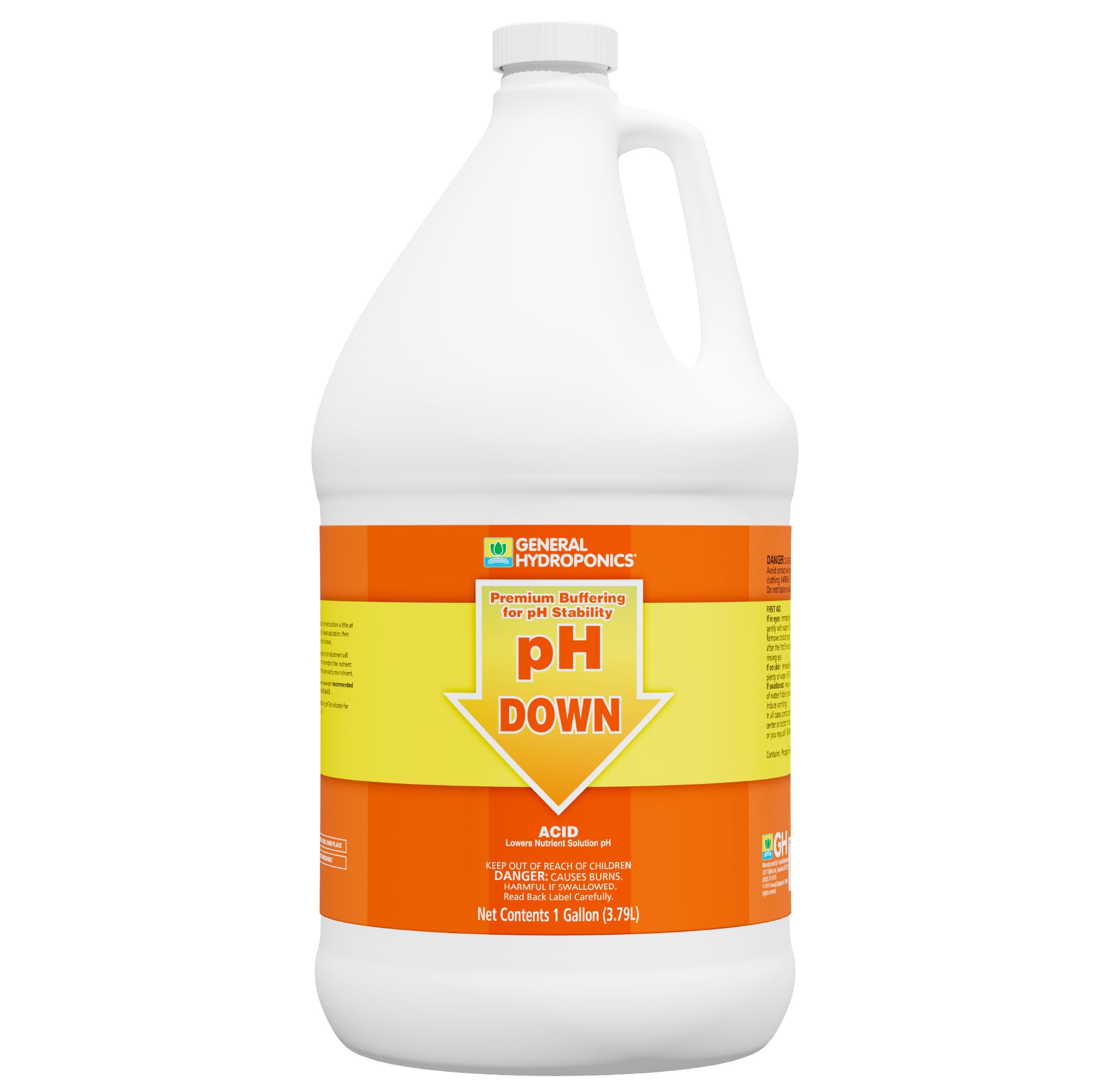
Rating: 4.8 ★ | Price: $$$ | Form: Liquid | Buffering Capability: No | Concentration: 1mL per gal | Intended Use: Hydroponics
This gallon of food-grade phosphoric acid provides consistent pH reduction across varying water hardness, making it a practical choice for hydroponic setups. However, it is not formulated for aquariums—the lack of buffering agents can cause pH instability in fish tanks, and additives may not be fish-safe. For planted tanks or soft-water aquariums, a buffered product like Seachem Acid Buffer is more appropriate.
Pros
- Highly effective pH reduction across varying water hardness
- Good value per gallon for large-scale use
Cons
- Concentration may vary between bottles, affecting dose consistency
This gallon is a cost-effective option for hydroponic growers managing large reservoirs. Not recommended for aquariums.
Best for Hydroponic Growers
Bloom City pH Down
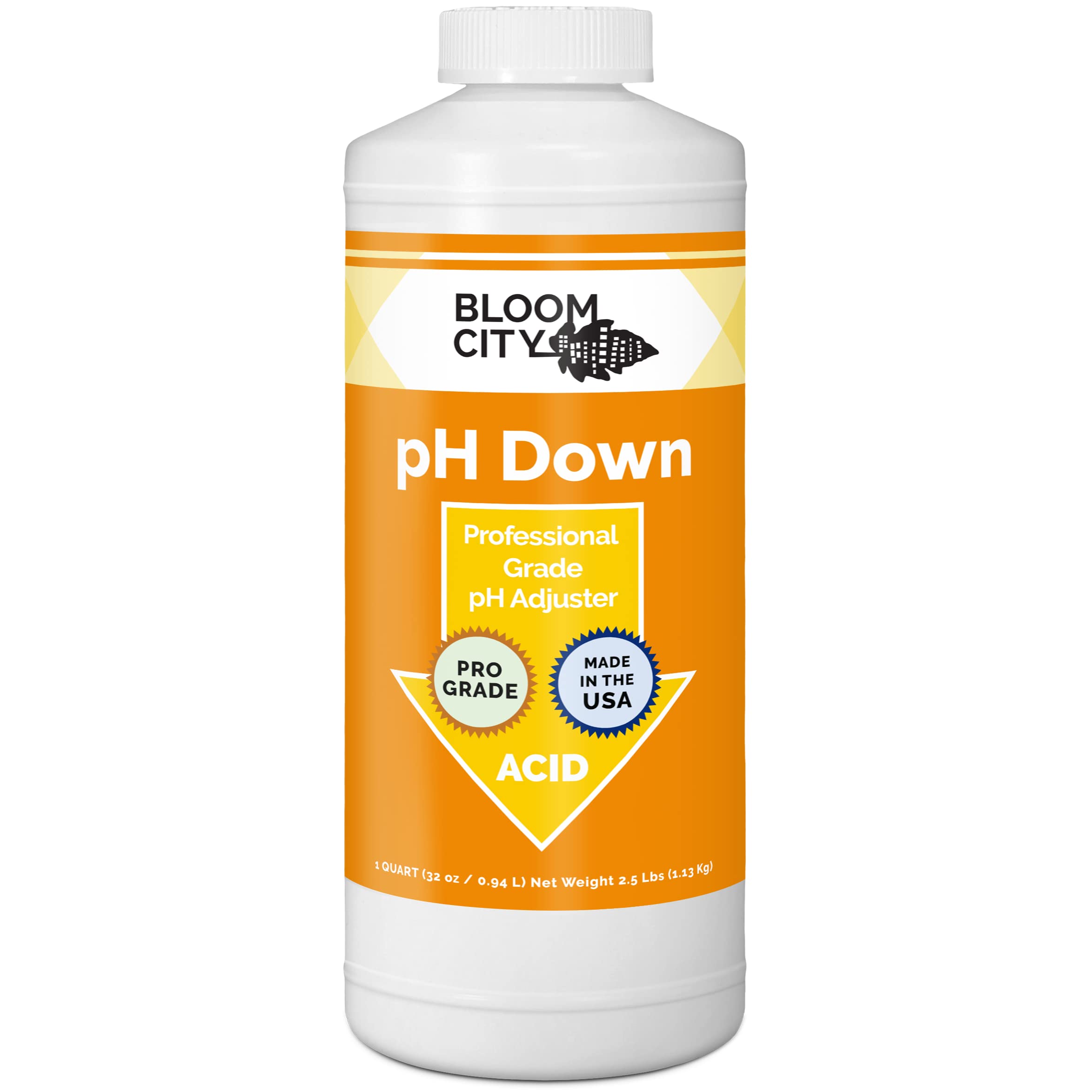
Rating: 4.6 ★ | Price: $$ | Form: Liquid | Buffering Capability: No | Concentration: 1mL per gal | Intended Use: Hydroponics, soil
Very concentrated formula requires only small doses per gallon, offering good value for large setups. However, the product lacks buffering and can cause pH bounce-back in aquariums, and some units arrive with leaking caps — better suited to plant cultivation.
Pros
- Highly concentrated – small amount per gallon reduces refill frequency.
- Large 32 oz bottle provides cost-effective supply for ongoing use.
Cons
- pH stability can be inconsistent in water with high carbonate hardness, requiring frequent re-dosing.
- Packaging may arrive with compromised seals, leading to leaks during shipping.
A practical option for hydroponic and soil growers on a budget, but not a substitute for a buffered aquarium pH adjuster.
Best for Quick Soil Fixes
FoxFarm pH Down

Rating: 4.5 ★ | Price: $$ | Form: Liquid | Buffering Capability: No | Concentration: 0.5mL per gal | Intended Use: Soil, hydroponics quick fix
FoxFarm pH Down is highly concentrated for quick pH adjustments in soil and hydroponics. Its citric acid base causes pH to rebound over time, making it unsuitable for aquarium use where stable pH is essential. For fish tanks, buffered options like Seachem Acid Buffer prevent this bounce-back.
Pros
- Extremely concentrated – a few drops can lower pH significantly.
- Works immediately for soil and hydroponic feeding adjustments.
Cons
- For aquarium use, the citric acid formula can cause pH rebound and may require frequent re-dosing.
This pH down suits gardeners who need fast corrections in soil or hydroponics and can monitor pH closely, but not aquarium owners seeking stable, long-term pH control.
How to Choose
The most important factor in an aquarium pH down isn’t speed—it’s whether the product buffers the water to prevent rapid rebound.
Liquid vs. Granular Form
Liquids dissolve instantly and give a fast pH drop. That speed comes at a cost: the acid is consumed quickly by the water’s carbonate hardness (KH), often causing the pH to bounce back within hours. Granular powders take longer to dissolve but can carry buffers that slow that neutralization.
For most aquarium owners, the extra minute spent stirring in powder pays off in days of stable pH. Liquids work best as a quick fix when you need a temporary adjustment for a specific event.
Buffering Capability
Buffering is what separates a temporary drop from a lasting change. Products without buffers simply add acid; the water’s KH neutralizes it, pushing pH back up. Buffered products reduce KH itself, so the acid has less to fight.
If you have hard tap water (KH above 8 dKH), an unbuffered liquid will feel like pouring water into a sieve. A buffered granular product addresses the root cause, not just the symptom.
Concentration and Dosage
Concentration varies wildly across products. A concentrated liquid might require only 0.5 mL per gallon, while a weaker one needs 5 mL. Overdosing with a concentrated product can crash pH rapidly, stressing or killing fish.
Always measure with a syringe or graduated cylinder, never by guess. Start with half the recommended dose and test after 30 minutes before adding more. This is especially important with powders, where a teaspoon can be far too much.
Fish Safety and Intended Use
Many pH down products are formulated for hydroponic nutrient solutions, not for tanks with live animals. Hydroponic formulas may contain additives that affect fish gills or beneficial bacteria, and they rarely include buffers to maintain stability.
Stick to products explicitly labeled for aquariums (like API or Seachem). If you use a hydroponic product, you assume the risk of pH swings and unknown ingredients. The few dollars saved aren’t worth the stress to your fish.
FAQ
Why does my aquarium pH keep bouncing back after adding pH down?
That bounce-back is caused by carbonate hardness (KH) in your water. KH acts as a buffer that neutralizes acid. Most liquid pH-down products only add acid without reducing KH, so the pH drops temporarily and then climbs back as the KH neutralizes the acid. The fix is to use a buffered product like Seachem Acid Buffer that lowers KH itself, preventing the rebound.
Is citric acid pH down safe for freshwater fish?
Citric acid-based pH down (like FoxFarm) is not recommended for aquariums. Citric acid is an organic acid that degrades quickly, leading to unstable pH and frequent re-dosing. More importantly, it can feed bacterial blooms and may harm sensitive fish or shrimp. Stick to phosphoric acid-based products made for aquariums.
How much pH down should I use for a 55 gallon aquarium?
There is no single answer because dosage depends on your starting pH, target pH, and water hardness. For API pH Down, start with 5 mL per 10 gallons, test after 15 minutes, and add more in small increments. For Seachem Acid Buffer, a typical dose is 5 g (about 1 teaspoon) per 50 gallons to lower pH by ~0.5. Always test after each addition and go slowly.
Can I use hydroponic pH down in my fish tank?
Technically yes, but it’s risky. Hydroponic pH down is not buffered for aquarium use and often contains phosphoric or nitric acid at concentrations that can cause rapid pH crashes. It also lacks the stabilizers found in aquarium-specific products. If you must use one, dilute heavily and test constantly, but the safer choice is to buy a product designed for fish.