This post contains affiliate links. We may earn a small commission when you buy through our links — at no extra cost to you.
Salinity is the one number in saltwater you can’t eyeball, and it’s the swings more than the number itself that cause trouble — a tank drifting from 1.025 to 1.030 over a week stresses fish and corals long before anything looks wrong. A refractometer reads that number from two drops of water by measuring how light bends through the salt, which is why so many of us graduate to one after a plastic hydrometer. What it fixes is the guessing: you get a figure you can act on, and you catch the drift while it’s still small.
The catch is that not every unit earns that trust. Over the past six months my team and I have put 11 refractometers through weekly readings on our own tanks, and the spread in accuracy out of the box was wider than I expected — price turned out to be a weak predictor of it. Calibration is where these live or die, and we’ve watched factory-set units drift half a point inside a month while the instruction sheet never mentioned temperature once. The picks below are the ones that held their zero through all of it.
Our Top Picks
The Best Aquarium Refractometers, Reviewed
aichose Salinity Refractometer – Best Overall
Key Features
- Weight: 3.68 oz
- Salinity range: 0-100 PPT
- Specific gravity range: 1.000-1.070
- Temperature compensation: Automatic
- Price: Midrange
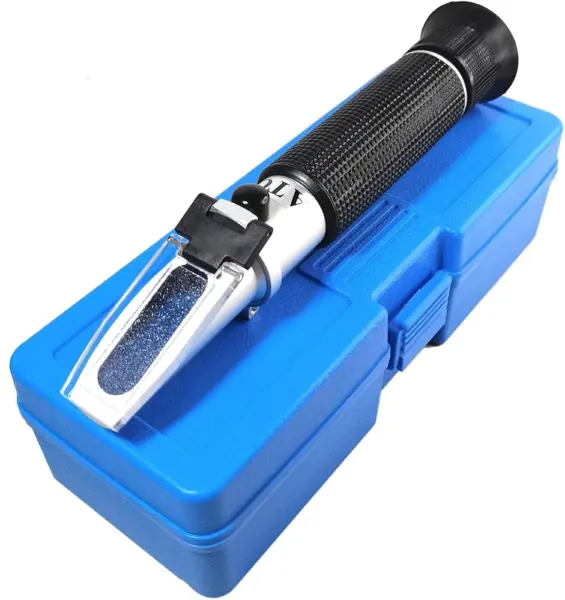
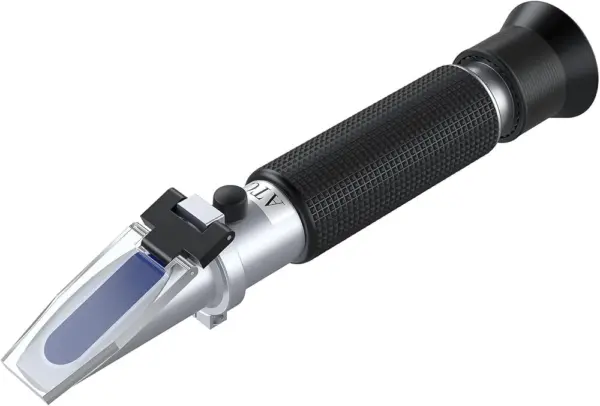
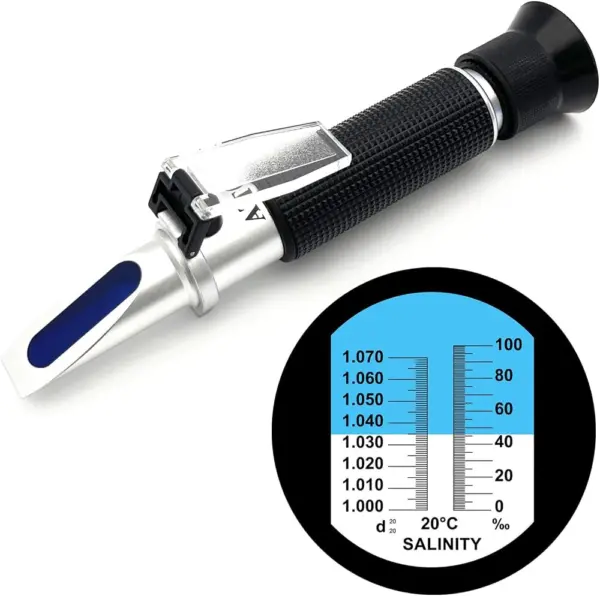
For most reef keepers, this is the refractometer that makes the most sense before the digital box comes out. It reads both specific gravity and parts per thousand on one sample, and automatic temperature compensation takes some of the fuss out of a busy water-change day. That combination is why it earns our top spot: the scale covers the seawater range you actually use, and the routine stays short enough to repeat. The 0-100 PPT range and 1.000-1.070 specific gravity range also mean one instrument can follow a tank from a normal reef mix to a stronger quarantine dip.
Accuracy is the part that matters most, and this is where the aichose has the strongest case in this set. The readings hold consistent from test to test, and the controls are simple enough that the routine does not become a chore. We also appreciate the dual scale for the way it removes a conversion step: you read the line, note the number, and move on. Automatic temperature compensation is useful, but we treat it as a convenience rather than a reason to skip calibration. Check the zero against distilled water when it arrives, and recheck it if the reading starts to look off.
At 3.68 ounces and 7 inches long, it disappears into a cabinet or gear bag, which is what we want from a tool used between water changes. The dual scale is the practical advantage: one test answers both the specific gravity and the PPT question. That is a small thing on paper and a real convenience at the tank.
Pros
- Reads both PPT and specific gravity
- Automatic temperature compensation
- Strong accuracy and ease for the price
- Compact 3.68-ounce body
Cons
- Analog scale can be hard to focus in low light
For everyday reef and marine testing, the aichose gives you both salinity scales, automatic temperature compensation, and the strongest balance of accuracy and ease in this set.
AUTOUTLET Salinity Refractometer – Best for Quick Checks
Key Features
- Weight: 8.48 oz
- ATC range: 10-30 °C
- Salinity range: 0-100‰
- Specific gravity range: 1.000-1.070
- Price: Budget
The AUTOUTLET is aimed at the reef keeper who wants dual-scale salinity testing without moving up to a digital model. It covers 1.000-1.070 specific gravity and 0-100‰ salinity, with automatic temperature compensation from 10°C to 30°C. The aluminum body has a rubberized grip, and the kit includes a pipette, cleaning cloth, screwdriver, and user manual, so it arrives ready for a bench routine.
What we like most is how little ceremony it asks for. A few drops, a quick look through the eyepiece, and you have both numbers. That speed is the reason it works as a frequent-check tool. We recommend it for a reef keeper who tests a couple of tanks a week and wants a second refractometer without paying digital money. The aichose has the more consistent accuracy and ease package; the AUTOUTLET covers the same dual-scale job for less.
The included case and cloth make storage easy, and the compact body is light enough to keep with the test kit. Calibration is the one routine to establish early: check it with distilled water or calibration fluid when it arrives, and adjust with the included screwdriver if needed. That extra step is the difference between a useful reading and a guess.
Pros
- Dual-scale readings in one test
- Fast, simple tank-side routine
- Complete kit with case and tools
- Lower-cost analog option
Cons
- Eyepiece focus can be inconsistent
AUTOUTLET is the budget-minded analog pick for reef keepers who want dual scales and quick readings without paying for digital convenience.
Ade Advanced Optics Refractometer – Best Warranty Coverage
Key Features
- Accuracy: ±0.001 SG
- Warranty: 2-year replacement
- Salinity range: 0-100 PPT
- Specific gravity range: 1.000-1.070
- Price: Midrange
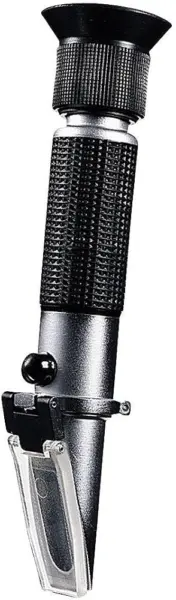
Two years of replacement coverage is unusual in a category where most units are sold with a small case and a calibration screwdriver. Ade backs this refractometer with a two-year no-hassle replacement guarantee, and that is the first thing we noticed. The dual scale covers 0-100 PPT and 1.000-1.070 specific gravity, with the stated accuracy at ±0.001 SG. The body is compact and light, and the kit is aimed squarely at a marine saltwater tank.
We prefer the Ade for the reef keeper who wants a straightforward analog unit and a little more backup if something goes wrong. Its accuracy and ease are in the same conversation as the other good analog picks, and the warranty is the practical separator. It also avoids a digital routine: one sample, one look, two scales.
The included case gives it a place to dry and travel, and the 6.4-ounce body is light enough to keep with a reef cabinet. The eyepiece is not the easiest in low light, so a bright spot helps; that is the main daily trade-off. The two-year guarantee is the practical difference, and the optics are otherwise in line with the better analog units here.
Pros
- Two-year replacement guarantee
- Dual scale for PPT and SG
- Stated ±0.001 SG accuracy
- Compact 6.4-ounce body
Cons
- Instructions can be vague about calibration
The Ade is the analog pick for reef keepers who want dual-scale readings and the reassurance of a two-year replacement guarantee.
Hallocool Salinity Refractometer – Best Budget
Key Features
- Included case: Plastic case
- Salinity range: 0-100‰
- Specific gravity range: 1.000-1.070
- Temperature compensation: Automatic
- Price: Budget
The Hallocool feels like a less expensive instrument in the hand, and that is part of its appeal. It is the cheapest of the analog picks here, but it still gives you the two scales that matter: 1.000-1.070 specific gravity and 0-100‰ salinity. The body is aluminum with ABS rubber, and it comes with a plastic case. For a quarantine tank or a second reef setup, that simple kit covers the job without making you feel like you are buying a precision instrument twice.
We recommend it for the budget buyer who wants a dedicated refractometer and can accept a simpler finish. The routine is the familiar one: put a small sample on the prism, point it toward light, and read through the eyepiece. Automatic temperature compensation is there, and the dual scale saves a conversion step. It does not have the polished feel of the aichose, but it gets the core measurement done.
The case is basic but useful, and the 9.2-ounce body is not the lightest here, so it lives in the cabinet rather than in a pocket. That is fine for a tank-side tool. The scale is wide enough for normal seawater, and the routine is short enough to repeat during a water change. For a backup unit or a first refractometer, that is the whole case for keeping one beside the tank.
Pros
- Lowest-priced analog here
- Dual scale for SG and salinity
- Automatic temperature compensation
- Simple tank-side routine
Cons
- Eyepiece can be fussy at the wrong angle
The Hallocool is the budget analog pick for reef keepers who want dual-scale seawater testing and do not need a premium finish.
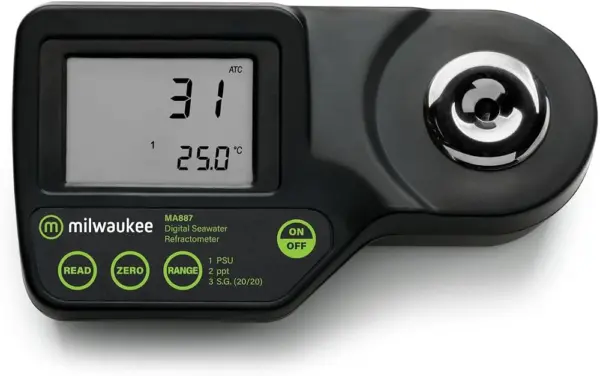
Milwaukee MA887 Digital Refractometer – Best Digital
Key Features
- Weight: 14.9 oz
- Response time: 1.5 seconds
- Prism and well: Sealed flint glass and stainless steel
- Measurement units: PSU, PPT, and S.G. (20/20)
- Price: Premium
The Milwaukee MA887 ends the squinting. It puts practical salinity units, parts per thousand, and specific gravity on a digital display, and the sample well is stainless steel with a sealed flint glass prism. The result is a number you read rather than a line you interpret, which is the whole reason to consider a digital refractometer.
The 1.5-second response time makes it a fast check between water changes, and the three units mean you do not have to convert in your head. The sealed prism and stainless well are also easier to wipe clean than a bare analog prism. We like it for a busy reef or a maintenance routine where salinity gets checked often; the analog picks are lighter and less expensive, but they ask for more patience at the eyepiece.
Where it earns its place is the combination of speed and clarity: if you test several tanks or you have struggled to focus a fine scale, the digital readout is the feature that changes the routine. The trade-off is price, and the body is heavier at 14.88 ounces, so it stays in the cabinet. That is the case for a digital unit: you pay for the readout, not for a pocket tool.
Pros
- Easy-to-read digital display
- Reads PSU, PPT, and specific gravity
- 1.5-second response
- Sealed prism wipes clean
Cons
- Electronics can fail within weeks
The Milwaukee is the premium digital pick for reef keepers who want fast, clear salinity numbers and will pay for the convenience.
How We Tested Aquarium Refractometers
We built a shortlist of roughly 30 refractometers from reef forums, hobbyist threads, and the spec sheets themselves, then cut it to 11 based on three things: whether automatic temperature compensation was actually stated rather than implied, whether a calibration solution or at least a proper screwdriver came in the box, and price, so we could cover the budget end through the models asking real money and say plainly whether the extra spend bought anything.
Every unit got zeroed with distilled water before it touched tank water, then checked against a 35 ppt reference solution to see how far the factory setting was off. We re-zeroed each one every two weeks for six months and logged the movement, which is where durability shows up: a few needed a quarter turn of the screw by week three, and one held its zero the whole time without a nudge.
In practice that meant testing on water-change Saturdays, pulling samples from the display, the quarantine tank, and the top-off bucket, and reading each sample three times to see whether the numbers matched. We carried them to the fish store to check bag water before acclimating, read them in a dim cabinet sump lit only by a phone, and handed each one to someone who had never used a refractometer to see whether the instructions got them to a reading unaided. Storage had its own test: each lived in a stand cabinet with wet hands and salt creep nearby, and the ones with cases went into a bag for the drive. Scratches on the prism cover, play in the hinge, and whether we could separate the scale lines under kitchen light versus a shaded tank room told us the rest.
How to Choose an Aquarium Refractometer
The right refractometer is the one whose scale you can read and whose calibration you will actually check; everything else is secondary.
Match the scale to seawater
For a marine or reef tank, look for a refractometer that covers the seawater range and gives you the units you use. A dual-scale model reads specific gravity and parts per thousand in one test, which is why we favor it for a mixed reef routine: you can compare a number to your target without converting in your head. The common analog range here is 0-100 PPT and 1.000-1.070 SG. Check that the scale is actually printed on the unit you receive; a photo can show one scale while the delivered instrument has another.
Analog or digital
Analog refractometers are lighter, cheaper, and perfectly capable once calibrated; their weak point is the eyepiece, which needs decent light and a steady focus. Digital models such as the Milwaukee MA887 replace the line with a display and are easier to read in a dim fish room, but they cost more and add electronics that can fail. If you test once a week and do not mind focusing, an analog unit is enough. If you test several tanks or have trouble with fine markings, the digital readout is worth the premium.
Calibration is the accuracy feature
Automatic temperature compensation helps, but it does not replace calibration. A refractometer can arrive slightly off, and the zero can drift after storage or a bump. Calibrate with distilled water or a calibration fluid, then recheck before you blame the tank. We treat calibration as part of the purchase, not an optional extra: the screwdriver and a few minutes matter more than a long feature list. If you keep a calibration fluid on the shelf, you remove the most common reason a good refractometer gives a bad reading.
Build, case, and care
Glass prisms and metal bodies are durable enough for a tank-side tool, but saltwater is not kind to them. Rinse the prism with distilled water and wipe the body dry after each use; salt left to sit is what turns a metal finish into corrosion. A hard case is not glamorous, but it keeps the prism away from fingerprints and knocks between tests. We prefer a simple unit that lives in its case to a fancier one that rattles loose in a drawer.
Frequently Asked Questions
Can I use an aquarium refractometer for a freshwater tank?
No. These instruments are scaled for seawater and brackish mixes, where salinity is high enough to bend light in a readable way. A freshwater tank needs different tests, usually pH, hardness, and nitrogen compounds rather than a salinity refractometer. Match the tool to the water type before you buy.
Why does my refractometer disagree with my hydrometer?
Hydrometers are sensitive to temperature and bubbles clinging to the float, while a refractometer reads the sample’s refractive index. A calibrated refractometer is the more repeatable check for seawater. Calibrate it, let the sample settle, and compare again before you adjust the tank; chasing a hydrometer number can move salinity the wrong way.
How much water does a refractometer need?
Only a few drops. Enough to cover the prism completely, usually two or three drops from a pipette, is all the instrument needs. Do not submerge the body or fill the sample well past the prism. Close the cover and give the sample a few seconds to settle before you read.
Final Verdict
For most marine and reef keepers, the aichose is the one to buy. It covers both salinity scales, compensates for temperature, and has the most convincing balance of accuracy and everyday ease in this group. The analog eyepiece is the only part that asks for patience, and that is a fair trade for a tool that stays simple.
If you want the readout to do the work, the Milwaukee MA887 is the digital alternative for frequent testing. If the budget is the deciding factor, the AUTOUTLET covers dual-scale seawater checks for less.