This post contains affiliate links. We may earn a small commission when you buy through our links — at no extra cost to you.
Live aquarium plants promise a lush tank, but too often arrive brown, melted, or carrying unwanted snails. The problem isn’t the plant species—it’s the seller’s quality control and shipping stress.
This guide focuses on the packs that consistently arrive healthy and grow as expected. We’ve highlighted hardy species that thrive in typical home tanks without special equipment, so you can skip the guesswork.
Whether you need a tall background, a compact foreground, or floating cover, the right choice depends on matching plant type to your light and tank size—and knowing which sellers take care in packing.
Top Picks
Best for Background Coverage
Marcus 3X Amazon Sword

Rating: 4.6 ★ | Price: Mid-Range | Type: Amazon Sword (background) | Quantity: 3 plants | Size: 7-12 inches | Light: Partial Sun | Pest Risk: Moderate
These Amazon Swords arrive with vibrant green leaves and sturdy root systems, ready to anchor into substrate immediately. They grow quickly to 7-12 inches tall, providing dense background coverage that fills in gaps within weeks.
This three-pack suits beginners and budget-focused aquascapers who want maximum plant mass without premium pricing. Nano tanks under 10 gallons won’t accommodate their size. As with any live plant, a brief quarantine helps avoid unexpected snails in your display.
Pros
- Healthy plants arrive vigorous and green, with well-developed root systems.
- Great value for three large plants at a mid-range price.
- Root systems are clean and strong, making planting straightforward.
Cons
- May introduce bladder snails into the aquarium, as is possible with any live plant shipment.
- Individual plants may arrive slightly smaller than the expected 7-12 inch range.
If you need tall, fast-growing background plants and can accept a minor quarantine step, this pack delivers consistent results without overspending.
Best for Nano Foreground
Marcus Anubias Nana Petite

Rating: 4.6 ★ | Price: Mid-Range | Type: Anubias Nana Petite (foreground) | Quantity: 1 pot | Size: 2-3 inches | Light: Low to medium | Pest Risk: Low
While the top pick delivers tall background coverage, this Anubias stays compact at 2-3 inches – a genuine petite size for nano tanks and foreground accents. Plants arrive healthy with dark green leaves and strong roots, consistent with the species’ slow growth habits. That same slow growth means it won’t fill in quickly, and some may find the size underwhelming for the mid-range price. Best suited for betta tanks, shrimp tanks, or low-light setups where a small foreground detail matters more than volume.
Pros
- Arrives healthy with vibrant green leaves and intact roots.
- True to petite size – fits foreground of 5-gallon tanks and smaller.
- Dark green leaves add a clean, low-maintenance accent.
Cons
- Size is genuinely small – some may expect more plant mass for the price.
- Growth is very slow, as expected from Anubias – not a fast ground cover option.
A dependable foreground choice for nano and low-light tanks, provided you want a small, slow-growing accent rather than quick coverage.
Best for Floating Cover
Water Spangles 60+ Leaves
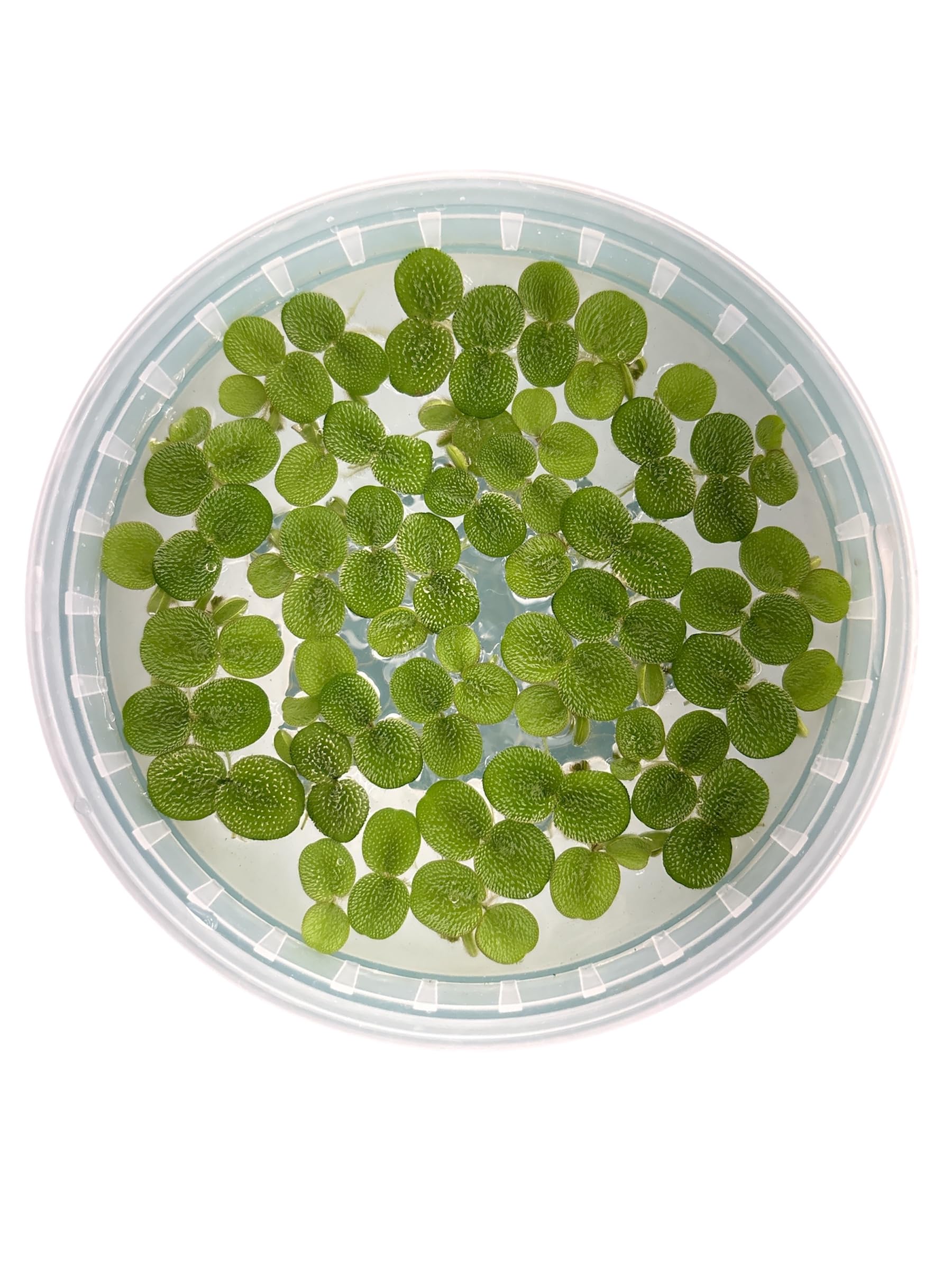
Rating: 4.6 ★ | Price: Mid-Range | Type: Floating (Water Spangles) | Quantity: 60+ leaves | Size: Small, dense mat | Light: Partial Sun
These water spangles arrive pest-free and consistently healthy — a clean start for surface cover without unwanted hitchhikers. The 60+ leaf pack provides a dense mat for medium aquariums, suiting betta and shrimp tanks or beginners wanting an easy floating plant.
Pros
- Exceptionally healthy plants on arrival
- Pest-free and clean — no reports of snails or worms
- Great value for the quantity of floating cover
Cons
- Pack size covers medium tanks; large aquariums will need multiple orders
A consistently clean and healthy floating plant that’s an easy win for betta and shrimp tanks — no pest drama.
Best for Color Accent
Aquarigram Red Root Floaters

Rating: 4.3 ★ | Price: Mid-Range | Type: Floating (Red Root Floater) | Quantity: 60+ leaves | Size: Long red roots | Light: Bright, indirect | Pest Risk: Moderate
Unlike the larger-leafed Amazon Frogbit, these Red Root Floaters bring a vivid red hue to the water surface, with long roots that betta keepers particularly appreciate. They arrive well-packed and often include a bonus floating plant. However, these plants can melt after introduction if your water parameters are unstable, so they suit tanks with stable conditions and moderate surface movement. Best for aquascapers wanting that red accent and those looking to export nutrients from a heavily planted setup.
Pros
- Red roots add striking color under bright lights.
- Plants arrive healthy and well-packed.
Cons
- May introduce pest snails common to floating plants.
- Can melt after introduction if water parameters shift.
A visually striking floater that delivers on color, but best suited for aquascapers who can maintain stable water conditions.
Best for Budget Starter
Big Pete’s Fern & Anubias

Rating: 4.3 ★ | Price: Budget | Type: Midground/Foreground | Quantity: 2 plants | Size: Small starts | Light: Low to medium | Pest Risk: Low
This bundle offers two of the easiest aquatic plants at a budget-friendly price, making it a popular entry point for new aquascapers. The tradeoff is that plants may arrive smaller than expected, and occasional plants fail to establish — quality control varies. This works best for those willing to propagate from small starts and who accept some inconsistency in exchange for a low-cost introduction to Java Fern and Anubias.
Pros
- Low cost for a pair of classic, easy-to-grow plants.
- Plants often arrive in healthy, green condition.
Cons
- Plants may be smaller than expected, requiring patience to grow in.
- Some plants can arrive in poor condition or fail to thrive after planting.
For budget-minded beginners who can work with small starts and occasional losses, this is a cost-effective way to get two staple plants.
Best for Budget Background
Water Plants Amazon Sword

Rating: 4.4 ★ | Price: Budget | Type: Amazon Sword (background) | Quantity: 3 plants | Size: 20-50 cm | Light: Partial Shade | Pest Risk: Low
The Water Plants three-pack is a budget-friendly way to add Amazon swords to a background. When they arrive fresh, the green leaves look promising, but quality control varies — some plants have stunted roots or leaves that melt rapidly after introduction.
This pack suits experienced aquarists who quarantine new arrivals and keep backup stock. Beginners expecting guaranteed health will find the risk of dead or dying plants frustrating. It’s a low-cost gamble better matched to someone who can absorb occasional losses.
Pros
- Budget-friendly way to get three tall background plants
- When healthy, plants arrive with vibrant green leaves
Cons
- Size and root development can be smaller than expected
For hobbyists who quarantine new arrivals and accept occasional losses, this is the lowest-cost Amazon sword option available.
Best for Budget Single
AquaLeaf Java Fern

Rating: 4.2 ★ | Price: Budget | Type: Java Fern (midground) | Quantity: 1 plant | Size: Up to 10 inches | Light: Full Shade to Low | Pest Risk: Low
This is the cheapest way to get a Java fern into your setup, and the plant will grow well in low light with minimal effort. However, the low price comes with a trade-off: individual plants may arrive damaged or smaller than expected. This works for experienced keepers who can propagate from small pieces, but not for anyone needing instant tank coverage.
Pros
- Budget-friendly entry point for a hardy low-light Java fern.
- Grows reliably in shade with minimal maintenance.
Cons
- Plants may arrive dead or in poor condition — inspect right away.
Suitable for budget-conscious aquascapers willing to accept the risk of a damaged plant; better options exist for guaranteed health.
Best for Fast Food
APC Giant Duckweed

Rating: 4.3 ★ | Price: Budget | Type: Floating (Giant Duckweed) | Quantity: 30 plants | Size: Small leaves | Light: Partial Shade | Pest Risk: High
This giant duckweed multiplies rapidly, providing a cost-effective way to cover the water surface and offer live food for goldfish. Plants typically arrive healthy and green. However, the batch can include pest snails or worms, and the duckweed may not thrive in low-nutrient tanks without supplementation.
Pros
- Budget-friendly surface coverage for goldfish tanks.
- Healthy green plants on arrival.
Cons
- Hitchhiker snails or worms may be present in the bunch.
Best suited for goldfish keepers who can accept the risk of pests and need a fast-replenishing floating plant.
Best for Premium Floater
Aquarigram Amazon Frogbit

Rating: 4.2 ★ | Price: Premium | Type: Floating (Amazon Frogbit) | Quantity: 20+ leaves | Size: Long hanging roots | Light: Moderate | Pest Risk: Moderate
Amazon Frogbit delivers the classic floating look with large leaves and cascading roots, but the premium price comes with some risk. Plants can arrive in poor condition or remain smaller than expected. This suits experienced hobbyists willing to quarantine and accept occasional losses.
Pros
- Vibrant, large leaves with well-developed roots when they arrive healthy.
- Fast growth quickly creates an attractive green surface cover.
Cons
- Inconsistent arrival condition — some plants can arrive dead or deteriorate shortly after arrival.
A premium-priced floater for dedicated frogbit fans who have quarantine procedures ready and don’t mind occasional plant loss — not for those wanting guaranteed healthy plants on arrival.
Best for Budget Spangles
APC Water Spangle 12 Plants

Rating: 4.2 ★ | Price: Budget | Type: Floating (Water Spangles) | Quantity: 12 plants | Size: Small | Light: Partial Shade | Pest Risk: Moderate
This is the cheapest option for Salvinia minima, and many arrive looking healthy and green. The tradeoff is that not every plant survives the trip, and there is a chance of unwanted snail visitors. For cost-conscious buyers willing to quarantine and accept some losses, this is a low-risk experiment.
Pros
- Very affordable for the quantity offered.
- Plants often arrive green and in good shape.
Cons
- Some plants can arrive dead or turn black after arrival.
Best for budget-minded hobbyists who have quarantine space and can accept partial die-off.
How to Choose
Start by matching plant type to your tank’s light, size, and your tolerance for pests—the right combination saves time and money.
Plant Type
Background plants like Amazon Sword grow tall and fill vertical space, while foreground plants like Anubias stay short for accents. Floating plants cover the surface and help control algae by blocking light.
Choosing the wrong type leads to poor growth or constant trimming. A 20-gallon tank needs 2-3 background plants, while nano tanks under 10 gallons rely on petite foreground species.
Number of Plants per Pack
More plants per pack give instant coverage but often come from a single source, increasing the risk of introducing pests or diseases. Single-plant packs are cheaper per unit but require patience to propagate.
For a quick setup, mid-range packs of 3 plants balance cost and risk. Budget packs of 30 floaters can overwhelm low-nutrient tanks and may die off if conditions aren’t stable.
Mature Size and Growth Rate
Fast-growing plants like Amazon Sword need regular trimming and can overtake small tanks within weeks. Slow growers like Anubias stay compact but won’t cover large areas quickly.
Check the mature size before buying: a ‘petite’ Anubias stays under 3 inches, while a Tiger Lotus can reach 12 inches across. Missizing leads to overcrowding or bare spots.
Light Requirements
Low-light plants (Java Fern, Anubias) thrive under standard LED hoods and need only 8-10 hours of indirect light. Medium-light plants like Amazon Sword grow faster but may need a dedicated light.
High-light plants like Tiger Lotus require strong fixtures and CO2 to reach their full color. Placing a high-light plant in a low-light tank will cause slow, leggy growth and eventual die-off.
Pest Risk
Live plants from any seller can carry snail eggs, nematodes, or algae. Pest-free sellers quarantine stock, but even top-rated packs occasionally introduce hitchhikers.
Quarantine all new plants in a separate container for 1-2 weeks. A dip in a diluted bleach or potassium permanganate solution kills most pests but requires careful rinsing to avoid plant damage.
FAQ
How do I prevent snail hitchhikers in live aquarium plants?
Quarantine new plants in a separate tank or container for at least one week. Before adding, dip the plants in a diluted bleach solution (1 part bleach to 19 parts water) for 2-3 minutes, then rinse thoroughly in dechlorinated water. This kills snail eggs without harming most hardy plants like Anubias or Java Fern.
Why are my new aquarium plants dying after arrival?
Shipping stress often causes ‘melting’—leaves turn yellow or brown within the first week. This is normal for many species, especially Amazon Swords and floaters. Provide moderate light, a root tab or liquid fertilizer, and patience. Trim off dead leaves to encourage new growth.
Can I return dead aquarium plants from Amazon?
Amazon’s live plant policy varies by seller, but most accept returns within 30 days for dead-on-arrival plants. Photograph the plants immediately and contact the seller. Some sellers, like Marcus Fish Tanks, offer replacements. Always check the product page for a guarantee before ordering.
What is the best way to acclimate live aquatic plants?
Float the sealed bag in your tank for 15-20 minutes to equalize temperature, then rinse the plants under dechlorinated water to remove debris. Remove any rock wool or sponge material, trim damaged leaves, and plant into substrate or attach to hardscape. Avoid sudden light changes—start with 6 hours per day and increase gradually.