This post contains affiliate links. We may earn a small commission when you buy through our links — at no extra cost to you.
Many aquarium sands advertise as ‘pre-washed’ yet still turn your tank cloudy for days. Buyers often spend more time rinsing than expected, and the color may not match the photo. That gap between promise and reality is the top frustration for keepers setting up a new freshwater aquarium.
The real trade-off isn’t between black and white sand—it’s between fine soft grains that protect bottom dwellers and coarser grains that anchor plant roots. Fine sand feels soft underfoot for corydoras but can shift with water flow and clog filters. Coarser sand stays put and supports plant roots but may be too rough for delicate barbels. Each serves a different purpose, and no sand does both equally well.
This guide focuses on sands that actually deliver on cleanliness and match your specific setup goals, whether you need a gentle substrate for shrimp or a root-friendly base for heavy planters. Knowing the difference between grain types saves hours of maintenance and keeps your fish comfortable.
Top Picks
Best for Community Tanks
Aqua Natural Sugar White 10lb

Rating: 4.7 ★ | Price: $$ | Grain Size: 0.5-1mm fine | Cleanliness: Triple washed | Color: Off-white | Bio-Active: No | Bag Weight: 10lb
The Aqua Natural Sugar White Sand is exceptionally pre-washed – it goes into the tank with minimal clouding, even without rinsing. The grains are fine (0.5–1mm) and smooth, similar to sugar, making it safe for corydoras, loaches, and shrimp that sift through the substrate.
Color is where expectations need adjusting. The sand appears off-white or light tan rather than pure white, especially under daylight bulbs. While many buyers find the natural beige enhances fish colors, it won’t satisfy those after a stark, snowy look. The tint is consistent across the bag and doesn’t fade or change over time.
This sand is a strong fit for community freshwater tanks with soft water and neutral pH. It works well for tanks up to around 15–20 gallons per bag; larger setups require multiple bags. Bottom-dwelling fish with delicate barbels are safe here, but if you’re growing rooted plants, the grain lacks the coarseness to anchor stems – a dedicated plant substrate would be better suited. Color purists should look elsewhere, as the off-white tone is a known characteristic, not a flaw in a bag.
Pros
- Exceptionally clean out of the bag – minimal rinsing needed, water stays clear on setup
- Fine, soft grain safe for bottom dwellers like corydoras and loaches
- Bright natural look that enhances fish colors in community tanks
Cons
- For aquascapers wanting a pure white substrate, the sand shows a light tan tint that won’t match product photos
- Single 10lb bag covers only smaller tanks (up to ~15 gallons) – larger aquariums need multiple bags
If you value a fast, cloud-free setup and fine sand that’s gentle on fish, this is a reliable pick for community tanks – just factor in the natural beige color and bag size for your tank dimensions.
Best for Planted Aquariums
Aqua Natural Prairie 10lb

Rating: 4.7 ★ | Price: $$ | Grain Size: 0.8-1.2mm coarse | Cleanliness: Triple washed | Color: Natural tan | Bio-Active: No | Bag Weight: 10lb
The 0.8–1.2mm grain size holds plant roots firmly without compacting, which is a genuine advantage for planted aquascapes or tanks with sifting cichlids. It arrives triple-washed and kiln-dried, so setup involves little to no cloudiness — a rare convenience in aquarium sands. Against the top pick’s ultra-fine grain, this one trades softness for root stability and a more rugged natural look.
This sand suits aquarists building Amazon biotopes, planted tanks where root support matters more than softness, or setups with fish that sift through coarse substrate. The grain is too rough for delicate bottom feeders like corydoras or loaches — those species are better served by the fine alternative in this category. The natural tan color with apricot specks hides debris well but won’t deliver a bright white bottom.
Pros
- Coarse grain anchors plant roots securely without compacting over time.
- Triple-washed and kiln-dried; minimal rinsing needed, water stays clear on setup.
- Earthy tan with apricot specks hides leftover food and fish waste neatly.
Cons
- Natural tan color with apricot specks — not a bright white look; may not match aesthetic expectations.
- Grain is coarse (0.8–1.2mm) and may feel rough to bottom-dwelling fish that prefer fine sand.
This is the right substrate when root support, natural aesthetics, and minimal cleanup matter more than fine softness — skip it if your tank houses sensitive bottom dwellers.
Best for Large Community
imagitarium Black 20lb
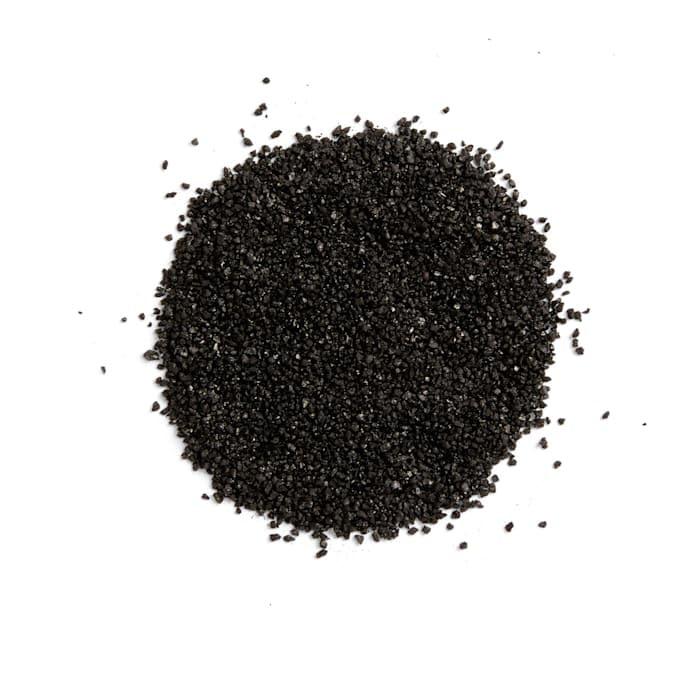
Rating: 4.6 ★ | Price: $$ | Color: Black | Bag Weight: 20lb
This sand delivers a striking black aesthetic that makes fish pop, and the 20 lb bag covers sizable tanks without breaking the bank. Unlike nutrient-rich clay substrates focused on plant growth, this sand prioritizes visual impact and value.
Best for community tanks 30 gallons and up where a dark bottom is desired and currents stay moderate. The lightweight grains can be stirred up in high-flow setups and may clog sponge filters over time, so avoid strong powerheads or use a pre-filter sponge. It works well in planted tanks as a cap or inert base, though it lacks added nutrients.
Pros
- Deep black color that makes fish colors stand out.
- Good value for a large bag; relatively clean out of the box.
- Works well in planted tanks as an inert substrate.
Cons
- Lightweight grains can be stirred up easily and may clog sponge filters in high-flow tanks.
A cost-effective way to get a black sand bottom in large community tanks — just mind the filter intake if you run strong currents.
Best for Bottom Feeders
Carib Sea Moonlight 2x5lb
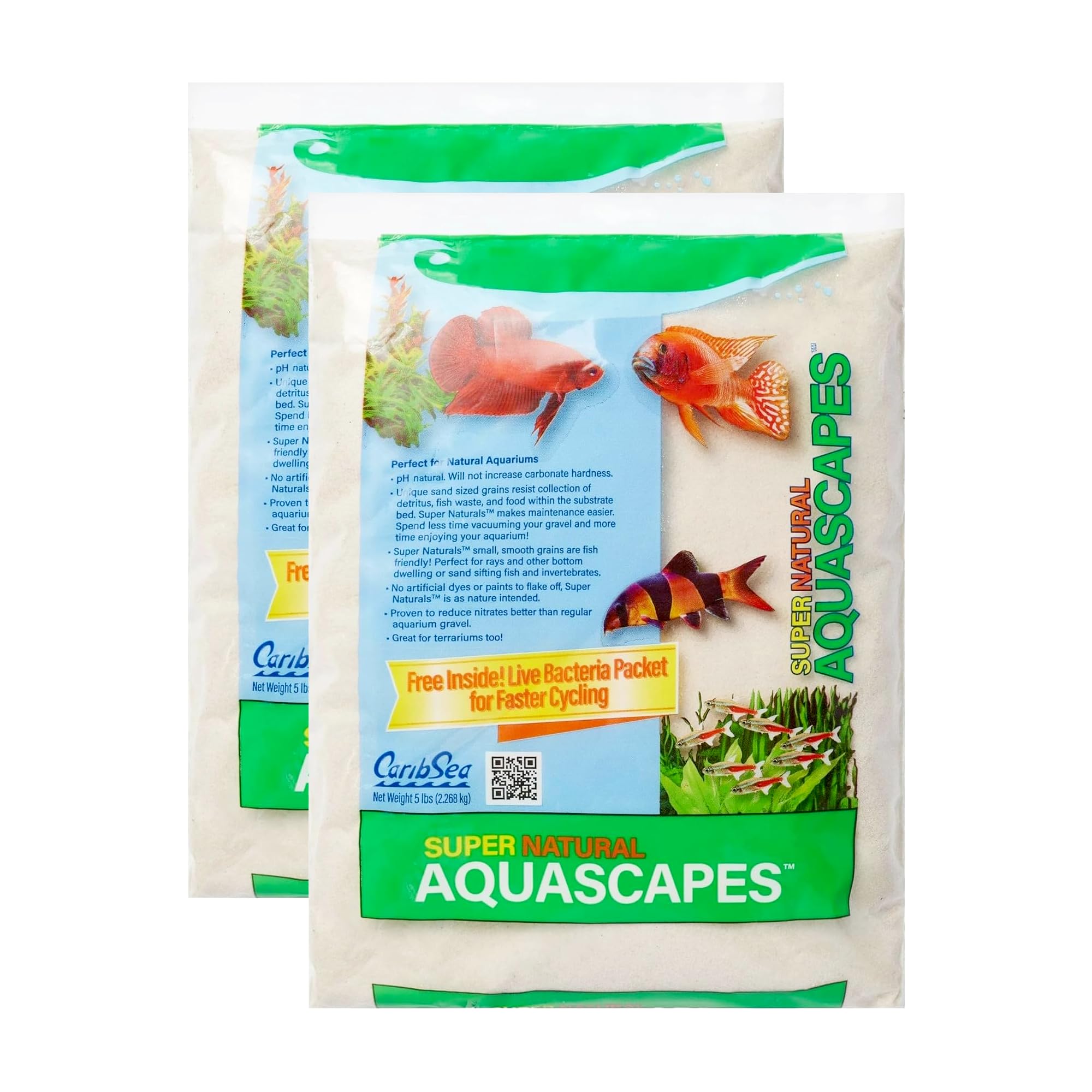
Rating: 4.5 ★ | Price: $$ | Grain Size: Very fine | Color: Light tan | Bio-Active: No | Bag Weight: 10lb
The Carib Sea Moonlight Sand is among the finest-grained substrates available — soft enough to be described as silk-like by many owners, making it a top choice for tanks with corydoras, kuhli loaches, or other fish with delicate barbels. Unlike the triple-washed Aqua Natural Sugar White (our top pick), this sand requires more patience during setup because of its natural light tan color and tendency to cloud if not rinsed thoroughly.
This sand suits aquascapers who want a beach-like, moonlit appearance and keep bottom-dwelling species that thrive on gentle substrates. The tradeoff? The color is a warm beige, not pure white, and the fine grains can be drawn into filters or siphons in high-flow areas — best in a low-current community tank where fish rather than powerheads dictate the movement.
Pros
- Extremely fine, soft texture that protects sensitive barbels of bottom feeders.
- Natural moonlit appearance creates a soft, natural-looking aquascape.
- Pack includes a water clarifier to help cloudiness settle faster after setup.
Cons
- Color is a light tan/beige rather than the bright white many expect from beach-style sand.
- Very fine grains can be pulled into filter intakes or siphons in tanks with higher water flow.
A smart fit for dedicated soft-bottom setups where fish comfort matters more than a white-white floor — just plan for extra rinsing and gentle flow.
Best for Large Aquariums
CLASSIC Natural 40lb

Rating: 4.5 ★ | Price: $$$ | Grain Size: Fine | Cleanliness: Pre-washed | Color: Light beige | Bio-Active: No | Bag Weight: 40lb
This bag arrives noticeably cleaner than most aquarium sands — the pre-washing and kiln drying process means you can add it directly to the tank with only minor cloudiness that clears within hours. The natural light beige color blends well with most aquascaping styles and doesn’t wash out fish colors. Grain consistency is even, with no sharp edges that could bother bottom-dwelling fish.
Where this sand fits best: large tanks (50 gallons and up) where the time saved on rinsing multiple smaller bags adds up. The premium price per pound is a real consideration — pool filter sand costs a fraction of this, but requires extensive rinsing. Some users still notice slight cloudiness after first fill, though it resolves faster than with most alternatives. If your priority is a quick, low-fuss setup and you’re not hyper-focused on budget, this is a practical option.
Pros
- Minimal prep required; can be added directly to tank with little cloudiness.
- Natural beige color looks clean and complements a wide range of fish and plants.
- Consistent grain size and smooth texture safe for bottom feeders.
Cons
- Slight cloudiness may still appear on first fill, though it clears faster than unwashed sands.
- Price per pound is higher than bulk pool filter sand or generic playsand.
If you’re setting up a large community tank and want to skip the rinse-and-wait cycle, this bag delivers on convenience. The extra cost buys you hours of saved work — a fair trade for the right buyer.
Best for Planted Tanks
Seachem Flourite Black 15.4lb
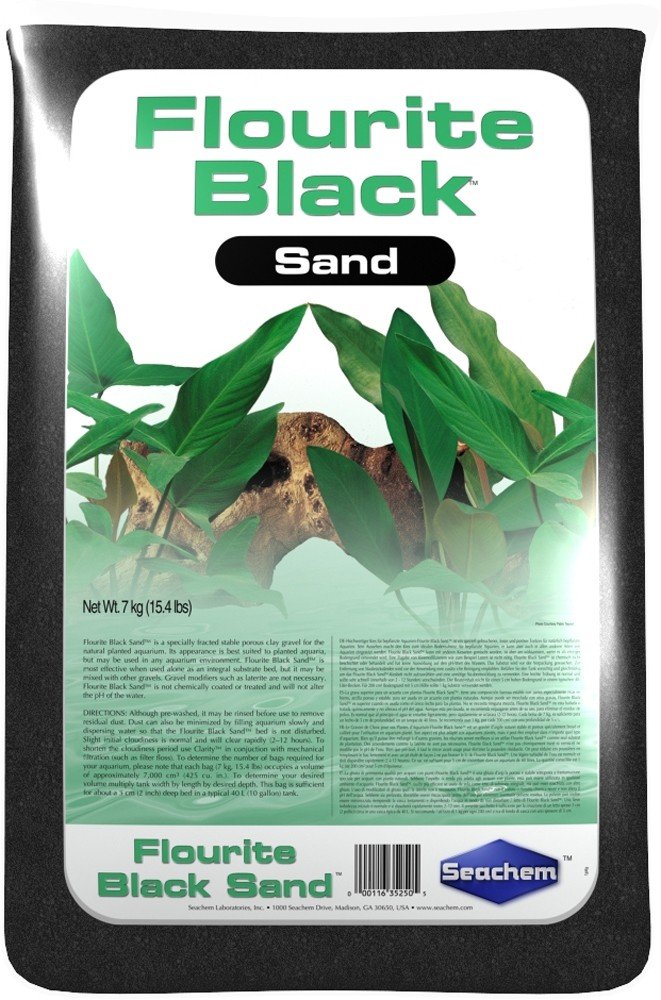
Rating: 4.5 ★ | Price: $$$ | Cleanliness: Dusty | Color: Black | Bio-Active: No | Bag Weight: 15.4lb
Seachem Flourite Black Sand delivers natural iron and nutrients that give planted aquariums a clear growth advantage. Unlike the ultra-clean, fine-grained top pick, this clay-based substrate prioritizes root support and water chemistry stability over ease of setup. Its porous clay structure never needs replacement and keeps pH neutral, while the deep black color creates strong contrast for fish and plants.
This sand suits aquascapers willing to invest time in a labor-intensive rinse and who keep robust fish rather than delicate bottom feeders. Tanks with corydoras or other sensitive barbel-feeding species should choose a softer alternative. For planted tanks focused on lush growth and a dark aesthetic, the prep effort is a worthwhile tradeoff.
Pros
- Provides natural iron and nutrients for lush plant growth
- Deep black color makes fish and plants stand out
- Porous clay structure never needs replacement, supporting long-term root health
Cons
- Requires extensive rinsing (10+ times) to avoid cloudy water – a significant setup investment
- Grain edges can be rough, posing a risk for sensitive bottom dwellers like corydoras
A strong match for planted tank enthusiasts who want natural nutrient delivery and a black backdrop, provided they accept the rinsing ritual and skip bottom dwellers.
Best for New Tanks
Aqua Natural Galaxy Bio 5lb

Rating: 4.6 ★ | Price: $$ | Grain Size: Fine gravel | Cleanliness: Cloudy | Color: Black sparkling | Bio-Active: Yes | Bag Weight: 5lb
The Aqua Natural Galaxy Sand uses live bacteria to accelerate biological cycling in new tanks, and its black sparkle finish adds visual appeal under lights. However, the grain texture is more like fine gravel than soft sand, which can be rough for delicate bottom feeders like corydoras. This tradeoff keeps it from serving as a primary substrate for community tanks.
Pros
- Accelerates biological cycle in new tanks with live bacteria
- Deep black color with subtle sparkle enhances tank aesthetics
Cons
- Water cloudiness can persist for days even if the product is not rinsed
Best used as a cycling substrate for new tanks where quick bacterial establishment is the priority, and where the gravel-like texture and temporary cloudiness are acceptable tradeoffs.
Best for Nano Tanks
FANTIAN Silica 5lb

Rating: 4.5 ★ | Price: $ | Grain Size: 0.4-0.8mm fine | Cleanliness: High dust | Color: Beige | Bio-Active: No | Bag Weight: 5lb
This budget sand offers a natural beige color and fine 0.4–0.8mm grain that blends well in planted nano tanks or craft projects. The tradeoff is significant dust content — expect to rinse repeatedly before the water runs clear, and the 5-pound bag only suits tanks under 5 gallons. For larger community tanks or anyone wanting a quick setup, this sand requires more prep than most buyers anticipate.
Pros
- Natural beige color blends naturally in planted nano tanks and decorative uses.
- Fine grain size works for small tanks, potted plants, and craft fillers.
Cons
- High dust content requires extensive rinsing before the water clears.
Best for hobbyists with very small tanks or craft projects who don’t mind extra rinsing.
Best for New Startups
Aqua Natural Delta Bio 5lb

Rating: 4.5 ★ | Price: $ | Grain Size: Fine brown | Cleanliness: Cloudy | Color: Brown | Bio-Active: Yes | Bag Weight: 5lb
The Aqua Natural Delta Sand Bio-Substrate jump-starts aquarium cycling by introducing live bacteria directly into the substrate, reducing the wait time for new tanks. However, the fine brown sand creates persistent cloudiness that can last several days—a tradeoff for the quick biological start. The natural brown color hides waste well, but the muddy hue may not suit all aesthetics, and this bag is best suited for tanks under 20 gallons.
Pros
- Jump-starts the nitrogen cycle with live bacteria, cutting down the initial cycling period for new aquariums.
- Natural brown color effectively conceals fish waste and debris, maintaining a cleaner appearance.
Cons
- Water may remain cloudy for several days after setup, which can be noticeable in smaller tanks where clarity is desired.
Ideal for small new community tanks where speeding up the cycle is more important than immediate water clarity.
Best for Themed Tanks
GloFish Black 5lb
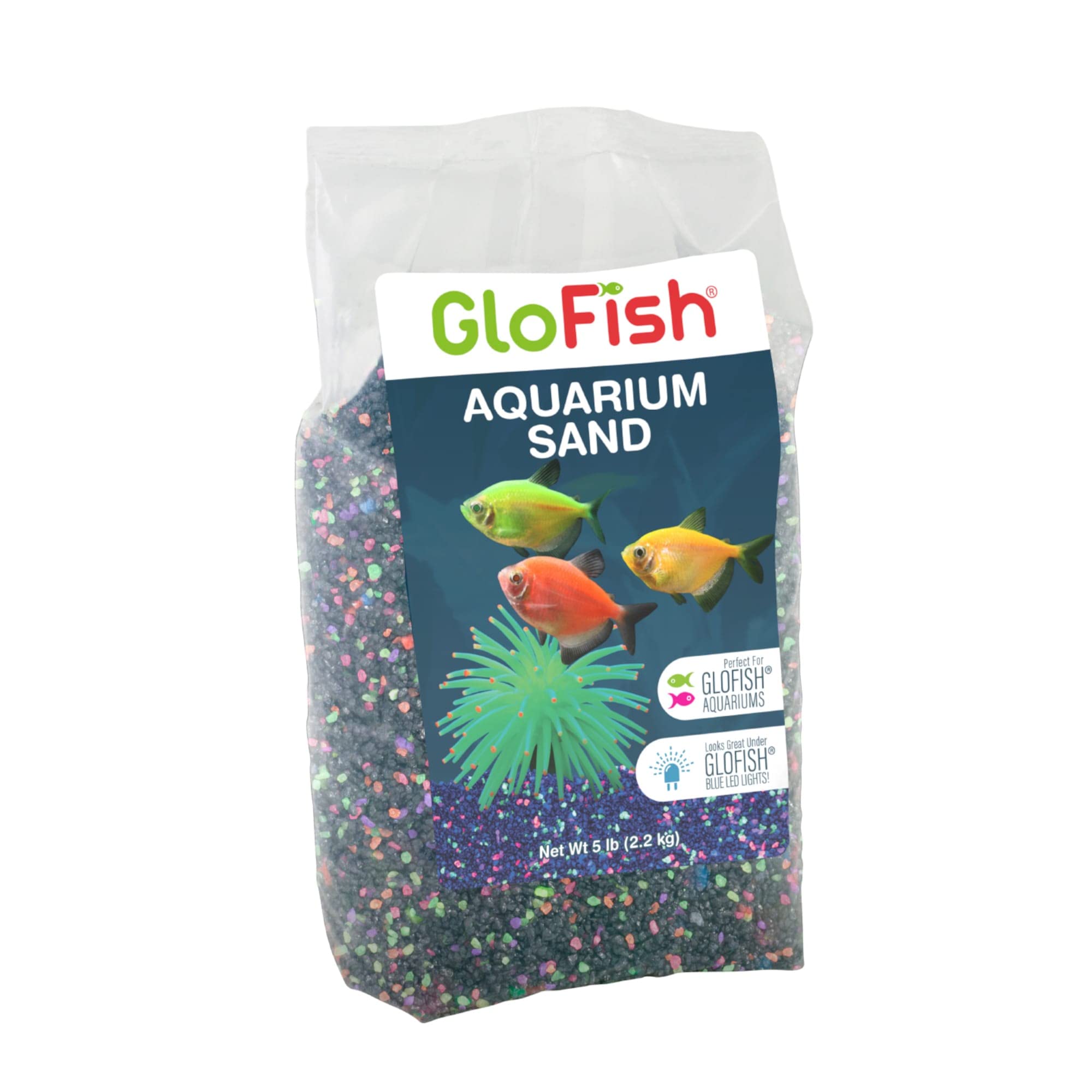
Rating: 4.3 ★ | Price: $ | Grain Size: Extremely fine | Cleanliness: Dusty | Color: Black highlights | Bio-Active: No | Bag Weight: 5lb
This sand delivers a dramatic glow under blue LED lights, making it a natural fit for GloFish or blacklight-themed tanks. The black base with fluorescent highlights creates a unique visual effect that stands out in a display. However, the extremely fine silica grains make cleaning difficult and can clog standard filter intakes and gravel vacuums. Dye may also leach into the water over time, particularly in long-term setups. For a short-run decorative tank where frequent water changes are part of the plan, these tradeoffs are manageable. For a community aquarium meant to run stable for months, other sands offer better maintenance and water chemistry predictability.
Pros
- Creates a vivid fluorescent glow under blue light, ideal for themed displays.
- Budget-friendly entry point for trying aquarium sand in small tanks.
Cons
- Fine grains can clog filter intakes and siphons during routine cleaning.
- In long-term setups, dye may leach into the water, requiring extra water changes.
Reach for this sand when you need a short-term visual punch — a glow-themed tank or seasonal display. Skip it if you’re setting up a community aquarium you want to run low-maintenance for months.
Best for Aquascaping
LANDEN Namale 11lb

Rating: 4.5 ★ | Price: $$$ | Grain Size: 0.3-0.5mm very fine | Cleanliness: Dusty | Color: Natural wheat | Bio-Active: No | Bag Weight: 11lb
This sand’s 0.3mm grain size creates a smooth, natural-looking bed that holds fine detail in planted or biotope setups. The uniform particles settle into a clean aesthetic without the coarse edges of larger sands. However, the tradeoff for that refined texture is significant: the sand arrives extremely dusty, requiring 10–20 thorough rinses before water runs clear, and the per-pound cost runs well above basic alternatives. For dedicated aquascapers who plan the extra prep and have the budget, the visual payoff is real — but for a quick, low-fuss community tank, the top pick in this comparison offers similar safety with far less effort.
Pros
- Very fine grain (0.3mm) gives a polished, natural appearance ideal for detailed layouts.
- Uniform grain size and quality ensure consistent look and even settling.
Cons
- Per-pound cost is high compared to standard sands — adds up for larger tanks.
- Extensive rinsing (10–20 rounds) is needed to clear dust before use.
Best suited for aquascapers who value ultra-fine grain and natural color enough to invest extra time and money — not the right choice for budget or quick-setup community tanks.
Best for Small Tanks
Estes White 5lb

Rating: 4.3 ★ | Price: $$ | Grain Size: Fine | Cleanliness: Needs rinse | Color: White | Bio-Active: No | Bag Weight: 5lb
The Estes White 5lb sand brightens small tanks with a clean white color once it settles. However, the sand can float and cause cloudiness during initial setup, and the 5-pound bag delivers limited coverage for the price. This sand suits nano or small aquariums where white color is the priority and you’re prepared for extra prep work; for larger community tanks, other options present fewer setup challenges.
Pros
- Bright white color that brightens small tanks after settling.
- Rinses faster than many white sands, reducing prep time.
Cons
- The 5-pound bag provides limited coverage for the price; larger tanks require multiple bags.
Best suited for small tanks or craft projects where white color is the priority and you’re willing to accept the extra prep work.
How to Choose
The most important decision is grain size—it determines suitability for fish, plants, and maintenance effort.
Grain Size
Fine sand (0.3–0.8mm) feels soft and safe for bottom dwellers like corydoras but can shift with water flow and get sucked into filters. Coarse sand (0.8–1.2mm) stays in place and holds plant roots well but may be too rough for delicate barbels. Choose based on your tank’s primary inhabitants.
No sand perfectly balances both—this trade-off is fundamental.
Cleanliness
Even when labeled ‘pre-washed’, most sands release dust that clouds water for hours or days. The true cleanliness depends on whether the sand is kiln-dried after washing—that process eliminates fine particles. Without it, you’ll need 15–30 minutes of rinsing before use.
Look for ‘triple washed and kiln dried’ to minimize setup effort.
Color
White and light-colored sands show waste easily, making tank maintenance more visible but also making the tank look cleaner. Black sands hide debris but can make fish appear darker and reduce contrast. Natural tan or beige sands offer a middle ground that hides waste while keeping a natural look.
Marketing photos often exaggerate whiteness—real white sand is rare; most are off-white or light tan.
Bio-Active Sand
Sands seeded with nitrifying bacteria can jump-start the nitrogen cycle in new tanks, reducing the time before adding fish. However, they must not be rinsed, which means any dust remains in the water for days. This trade-off makes bio-active sand best for cycling, not for instant clarity.
Bag Weight
Plan for roughly 1 pound of sand per gallon of tank water to achieve a 1-inch depth. A 10lb bag covers a 10-gallon tank, 20lb for a 20-gallon, and so on. Buying a larger bag is often more cost-effective per pound but heavier to handle.
FAQ
Why is my aquarium sand still cloudy after rinsing?
Most sands contain fine dust that requires multiple rinses to remove. Even after rinsing, some particles remain suspended; using a water clarifier or allowing the filter to run for 24 hours usually clears it. If cloudiness persists, the sand may be releasing clay or dye—consider replacing it.
How do I clean fine aquarium sand without creating a dust storm?
Use a gentle siphon or a turkey baster to spot-clean without disturbing the entire sand bed. Avoid deep vacuuming of fine sand as it can remove the sand itself. Instead, hover the siphon above the surface to lift debris without sucking up grains.
Is black or white sand better for planted fish tanks?
Black sand provides high contrast for plant colors and hides algae and waste, but it can make the tank look darker. White sand reflects more light and can highlight plant greens, but shows waste clearly. For planted tanks, black sand is generally preferred because it doesn’t compete with plant colors.