This post contains affiliate links. We may earn a small commission when you buy through our links — at no extra cost to you.
You pick up a bag of ‘pre-washed’ aquarium sand expecting clear water, but hours of rinsing later, your tank still looks like a dust storm. That’s because most sand marketing exaggerates cleanliness – the real difference is grain size and how much dust the sand actually contains.
The trade-off is straightforward: fine sand gives you that bright, beach-like look but compacts over time and shows every speck of waste. Coarser sand (0.8–1.2mm) stays cleaner, prevents compaction, and is easier to vacuum, but it may not suit delicate bottom feeders like corydoras.
Knowing which grain size matches your fish and plants before you buy saves you days of frustration and gets your tank up and running faster. This guide focuses on the sands that actually deliver on their promises – whether you prioritize instant clarity, deep root growth, or a specific color.
Top Picks
Best for Planted Tanks
Sugar White Sand 10lb

Rating: 4.7 ★ | Price: $$ | Grain size: 0.5–1 mm | Nutrient Content: Inert | Color: Off-white | Washability: Low | Bag Weight: 10 lb
This sand arrives triple-washed and kiln-dried, so you can pour it straight into the tank without the hours of rinsing other substrates demand. The fine 0.5–1 mm grains stay settled during water changes and vacuum cleanly, while the bright off-white color makes plant greens and fish colors pop against the substrate.
Planted-tank owners who want a natural, lake-bottom look will appreciate the soft texture corydoras and other bottom-dwellers prefer. Just be aware the color is off-white/light tan, not pure white – if you need a stark white floor, this isn’t it. For most planted setups, the warm tone actually looks more natural and hides mulm better than bright white sand would.
Pros
- Exceptionally clean – minimal dust, often ready to use without rinsing
- Bright appearance that enhances fish and plant colors
- Easy to clean and maintain; stays settled without blowing around
Cons
- Off-white/light tan color, not bright white – may disappoint buyers expecting pure white
If you value a clean, easy setup over a blinding white floor, this is the sand to buy – especially for planted tanks with soft-mouthed fish.
Best for Root-Feeding Plants
Seachem Flourite 15lb
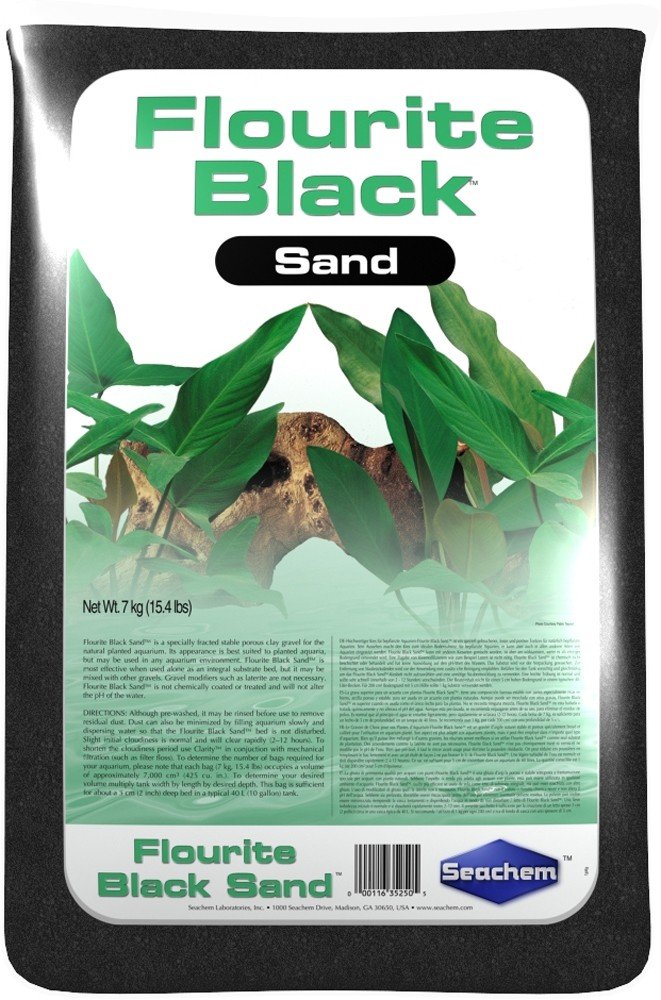
Rating: 4.5 ★ | Price: $$$ | Grain size: Fine porous clay | Nutrient Content: Nutrient-rich | Color: Black (gunmetal) | Washability: High | Bag Weight: 15.4 lb
Unlike inert aquarium sands, Seachem Flourite Black Sand is a porous clay substrate rich in iron, feeding rooted plants directly through their roots. Swords, crypts, and vals anchor firmly and show vigorous growth over time. The dark, gunmetal-gray sand creates a striking backdrop that makes green plants pop, while the porous surface hosts beneficial bacteria to stabilize water parameters.
This substrate suits dedicated planted-tank keepers willing to invest significant prep time. The fine clay dust demands 30-plus minutes of rinsing per bag—skipping this step can leave water cloudy for days. The premium cost also means large setups get expensive fast. But for aquascapers who prioritize plant health over convenience, the growth results speak for themselves.
Pros
- Plants like swords, crypts, and vals develop robust root systems
- Dark sand creates high contrast, making green and red plants stand out
- Porous clay grains host beneficial bacteria and retain nutrients long-term
Cons
- Premium pricing adds up quickly for tanks over 20 gallons
- Requires 30+ minutes of rinsing per bag—skipping this can leave water cloudy for days
For planted aquarium keepers who prioritize root nutrition, the upfront rinsing effort yields long-lasting plant growth that inert sands can’t match.
Best for Large Tanks
Moonlight Sand 50lb

Rating: 4.5 ★ | Price: $$$ | Grain size: 0.25–0.75 mm | Nutrient Content: Inert | Color: Off-white/tan | Washability: Medium | Bag Weight: 50 lb
This 50-pound bag delivers the lowest cost per pound among planted-tank sands, making it the go-to for large freshwater setups. Its fine 0.25–0.75 mm grain supports root growth and is gentle on bottom dwellers like corydoras. The trade-off: the color is off-white with a natural tan hue rather than bright white, and some bags have arrived at 40 pounds instead of the advertised 50. That makes sense for budget-conscious planted-tank owners focused on volume over pristine aesthetics.
Pros
- Largest economical bag – best per-pound value for big planted tanks
- Soft fine texture safe for delicate fish and root penetration
- Natural shimmering appearance under aquarium lighting
Cons
- Color is off-white/tan, not the bright white many expect
- Actual bag weight may be 40 lb instead of 50 lb as listed
A strong value for large planted tanks where budget and soft grain matter more than perfect whiteness.
Best for Root Feeders
Prairie Sand 10lb

Rating: 4.7 ★ | Price: $$ | Grain size: 0.8–1.2 mm | Nutrient Content: Inert | Color: Tan with specks | Washability: Low | Bag Weight: 10 lb
The Prairie Sand’s 0.8–1.2mm grain size prevents compaction and allows deep root growth for heavy feeders like swords and crypts. Unlike the finer top pick, this sand has a natural tan color that hides waste and requires minimal rinsing – many find it the cleanest sand they’ve used. It is not the right choice for tanks with corydoras or other bottom dwellers that sift through fine substrate.
Pros
- Coarse grain prevents compaction and allows excellent root penetration for heavy feeders.
- Very low dust – triple-washed and kiln-dried, often usable without rinsing.
- Natural tan color hides waste and looks earthy in the aquarium.
Cons
This is the go-to sand for planted tanks where root health matters more than fine substrate for fish – a clean, low-dust option that outperforms typical aquarium sand in that specific role.
Best for Black Substrate
Galaxy Bio 5lb

Rating: 4.6 ★ | Price: $$ | Grain size: Fine black sand | Nutrient Content: Inert + bacteria | Color: Black with glitter | Washability: Medium | Bag Weight: 5 lb
The Aqua Natural Galaxy Sand delivers a deep black color with shimmering sparkles that make fish and plants stand out, plus it contains live nitrifying bacteria to help cycle the tank faster. Unlike the top pick’s clean white sand, this substrate requires patience — the water will be cloudy for 24 to 48 hours after setup even with careful filling. It suits aquascapers who prioritize the dramatic look and want a biological boost, and can plan for the temporary haze without stressing fish. Keepers who need immediate crystal-clear water or are setting up a tank with sensitive livestock should consider a rinsed alternative.
Pros
- Stunning black appearance with sparkles enhances tank aesthetics.
- Live beneficial bacteria helps jumpstart the nitrogen cycle.
- Fine sand holds plants well and offers good quality for the price.
Cons
- Extremely cloudy water after setup can take 24–48 hours to clear – plan tank setup accordingly.
- Bacterial cycling benefit may not be consistent; some setups see no acceleration.
For aquascapers who want a deep black sand with a cycling head start and can tolerate temporary haze, this is a fair value.
Best for Nano Tanks
Sugar Bio 5lb

Rating: 4.6 ★ | Price: $$ | Grain size: Fine off-white sand | Nutrient Content: Inert + bacteria | Color: Off-white | Washability: Low | Bag Weight: 5 lb
The included live nitrifying bacteria can shorten the initial cycling period, making this a convenient option for a new nano setup. However, the 5lb bag is too small for a standard 10-gallon tank on its own, and the sand has an off-white, light tan hue rather than the bright white some expect. It works well as a bacterial booster mixed into an existing substrate.
Pros
- Live bacteria speeds up tank cycling for quicker stocking
- No rinsing required — pour directly from bag with minimal cloudiness
Cons
- 5lb bag covers only small tanks under 5 gallons; larger tanks require multiple bags
- Color is off-white/light tan, not pure white — may not match expectations for a bright white sand
A good fit for nano planted tanks under 5 gallons, or as a bacterial booster when combined with other substrate.
Best for Large Budget Tanks
Galaxy Sand 20lb

Rating: 4.6 ★ | Price: $$ | Grain size: Fine black sand | Nutrient Content: Inert | Color: Black with glitter | Washability: High | Bag Weight: 20 lb
The fine grain is safe for bottom dwellers and plant roots, and the black sparkle makes greenery pop. But it’s extremely dirty, demanding many rinses and still risking dye bleed into water. The low price per pound makes sense for large planted tanks if you accept the setup burden.
Pros
- Striking black sparkle that makes fish and plants stand out
- Fine texture safe for bottom dwellers and plant roots
Cons
- Extremely dirty – requires many rinses and can still cloud water for days
For large planted tanks where budget outweighs the time spent on rinsing, this sand delivers dramatic aesthetics at a low price per pound.
Best for Planted Tanks
Delta Sand 10lb

Rating: 4.6 ★ | Price: $$ | Grain size: 0.8–1.2 mm | Nutrient Content: Inert | Color: Dark brown earthy | Washability: Low | Bag Weight: 10 lb
Delta Sand’s dark brown tone gives planted tanks a natural look and hides waste. It arrives clean with minimal dust, and its 0.8–1.2mm grain prevents compaction for healthy root growth. The coarser texture may not suit fish needing fine sand—worth checking your stock. A darker alternative to Prairie Sand for planted tanks that prioritize root penetration over fine substrate.
Pros
- Beautiful dark brown color creates a natural, rich look in the tank.
- Coarse grain prevents compaction and anchors roots well for planted setups.
Cons
- Coarser than typical sand – may not suit fish that prefer fine substrate.
The best option for aquascapers who want a dark, plant-friendly substrate and can accept a coarser texture that isn’t ideal for delicate bottom feeders.
Best for River Bed
Peace River 5lb

Rating: 4.6 ★ | Price: $$$ | Grain size: Coarse sand/fine gravel | Nutrient Content: Inert | Color: Chestnut brown varied | Washability: Low | Bag Weight: 5 lb
The Peace River sand offers a natural mix of tan, red, brown, and white grains that create an attractive river-bed appearance. Its coarse texture (fine gravel) is ideal for sand-sifting fish like corydoras and resists vacuuming. However, it’s not actual sand – too coarse for planted tanks needing fine substrate for root growth – and the 5-pound bag covers only small tanks.
Pros
- Natural river-bed look with a mix of tan, red, brown, and white grains – very attractive.
- Ideal for sand-sifting fish like corydoras and loaches – grain size is large enough to not get sucked up by vacuum.
Cons
- It’s fine gravel, not sand – the coarse texture can be a surprise for buyers expecting a soft, fine substrate.
This works well for nano tanks under 10 gallons with sand-sifting fish where the natural look is the priority, but skip it if you need fine sand for planted root growth.
Best for Nano Tanks
Sunset Gold 5lb

Rating: 4.6 ★ | Price: $$$ | Grain size: Fine to medium | Nutrient Content: Inert | Color: Warm golden/yellow | Washability: Medium | Bag Weight: 5 lb
This sand delivers a warm golden hue that mimics natural lake beds, making it visually striking. It comes with a water clarifier. However, the 5‑pound bag is small and expensive per pound, limiting its use to nano setups under 5 gallons.
Pros
- Creates a warm, lake-like aesthetic with its natural golden color.
- Fine, soft texture that is gentle on bottom feeders and delicate fish.
Cons
- Requires extensive rinsing – dust and cloudiness can persist even after multiple washes.
Best for nano planted tanks or shrimp tanks where the warm golden look is desired despite the smaller bag size.
Best for Small Tanks
FANTIAN Silica 5lb

Rating: 4.5 ★ | Price: $$ | Grain size: 0.4–0.8 mm | Nutrient Content: Inert | Color: Beige | Washability: High | Bag Weight: 5 lb
Clean, uniform fine sand with a natural beige look that’s budget-friendly for small tanks. Colored variants may release dye, so it’s better suited for craft projects or very small aquariums than planted setups.
Pros
- Clean, uniform fine sand that looks natural in the tank
- Good quality and appearance for the price
Cons
- Very dusty – needs multiple rinses (sometimes 10+) to achieve clear water
Best for small nano tanks or craft projects where extra rinsing effort is manageable.
Best for Terrariums
FANTIAN 2lb Coarse
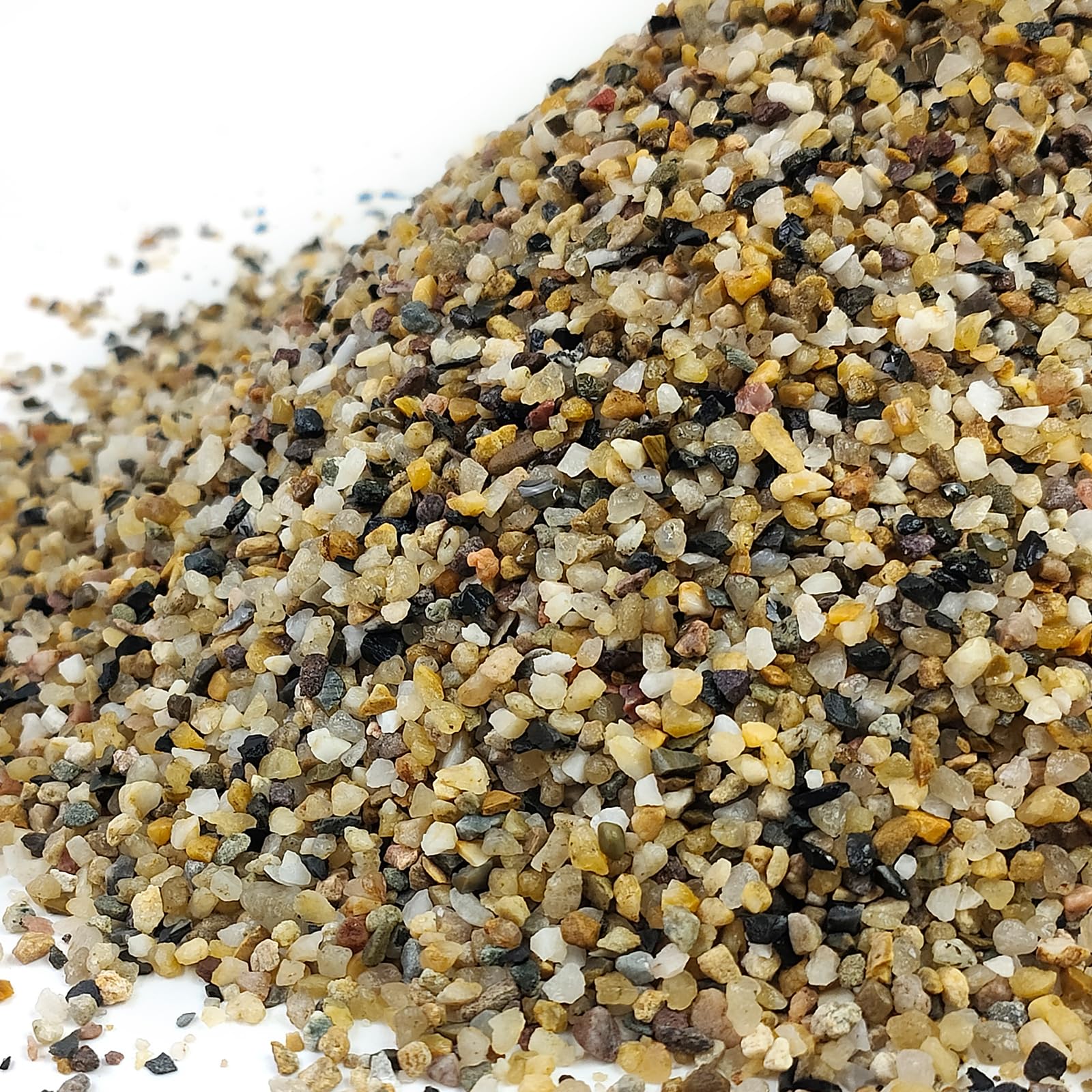
Rating: 4.8 ★ | Price: $ | Grain size: 1–2 mm | Nutrient Content: Inert | Color: Mixed natural | Washability: Medium | Bag Weight: 2 lb
This 2 lb bag offers a natural mixed-color look that enhances nano tanks and terrariums, and rinses clean with minimal clouding. However, the 1/16 inch grains are coarser than true sand—more like fine gravel—and the bag size is too small for standard planted tanks, making it a decorative or temporary substrate rather than a plant-friendly base.
Pros
- Visually appealing natural mix of colors that enhances underwater aesthetics.
- Easy to rinse with minimal clouding after washing.
Cons
- The 2 lb bag is small – for a standard planted tank, multiple bags are needed.
Best as a decorative topper for nano tanks or terrariums where a small, visually interesting substrate is needed, rather than as a primary planted tank substrate.
Best for Nano Tanks
YISZM Beige 2lb

Rating: 4.5 ★ | Price: $ | Grain size: Fine sand | Nutrient Content: Inert | Color: Beige | Washability: High | Bag Weight: 2 lb
This sand offers a natural beige color and smooth grains at a low price, making it a decent option for very small tanks or terrariums. However, the 2-pound bag is too small for any planted tank larger than a nano, and the sand requires thorough rinsing to avoid cloudy water – it’s a tradeoff that limits its use to simple aquascapes under 3 gallons.
Pros
- Natural beige color that looks clean and bright in small tanks.
- Smooth, rounded grains and good quality for the price.
Cons
- Heavy dust content can cloud water for days, making thorough rinsing necessary before use.
This sand works for tiny nano tanks or crafts where dust rinsing is acceptable, but for any standard planted aquarium, the 2-pound bag size and dust issues make it impractical.
Best for Small Tanks
Estes Black 5lb

Rating: 4.5 ★ | Price: $$$ | Grain size: Fine to medium | Nutrient Content: Inert | Color: Black (coated) | Washability: Medium | Bag Weight: 5 lb
The deep black color transforms small tanks into dramatic backdrops that make fish and plants stand out, and the fine grain works well for bottom dwellers. However, the black coating can bleed into the water in some batches, and the small bag carries a high per-pound cost — this is a visual choice for nano planted setups, not a practical option for larger or plant-heavy tanks.
Pros
- Deep black color enhances fish colors and hides debris.
- Fine grain suitable for bottom dwellers like corydoras.
Cons
- Black coating may release dye into the water in some cases.
This black sand is a good fit for small planted tanks (under 10 gallons) where a dark aesthetic takes priority over plant-specific substrate features.
How to Choose
The most important factor in choosing sand for a planted aquarium is understanding that no sand is truly ‘no-rinse’ – grain size and dust content determine how much work you’ll do before the tank clears.
Grain Size
Grain size is the single most impactful spec for planted tanks. Fine sand (under 0.5mm) packs tightly, restricting oxygen flow to roots and trapping debris. Coarse sand (0.8–1.2mm) stays loose, allowing roots to spread and waste to sit on top for easy vacuuming.
The trade-off: fine sand looks more natural and is gentle on bottom feeders, but compacts and clouds more. Coarse sand is cleaner and better for root health, but may irritate fish that prefer to sift through substrate.
Nutrient Content
Inert sand (like silica or quartz) provides no plant food – you must add root tabs or liquid fertilizers. Nutrient-rich clay substrates (like Seachem Flourite) release iron and minerals over years, supporting heavy root feeders without extra supplements.
For most hobbyists, inert sand is simpler and cheaper; just remember to dose ferts. Nutrient substrates are messy to install and expensive, but unmatched for demanding plants like Amazon swords.
Color
White or light sand makes fish colors pop but shows every speck of waste, requiring more frequent cleaning. Dark sand hides debris and creates a high-contrast background for plants, but can make the tank feel smaller.
Be aware that ‘white’ sands are rarely pure white – most are off-white or tan. Black sands may be dyed and can bleed, so look for ‘no paints or dyes’ if water clarity is a priority.
Washability
Even sand labeled ‘pre-washed’ often contains fine dust that turns water cloudy. Products with low dust (like Aqua Natural’s triple-washed sands) can be added with just a quick rinse, while high-dust options require 15–30 minutes of bucket washing.
Check reviews for real-world rinsing experiences – a sand that requires ‘no rinsing’ may still need 5–10 rinses. Budget sands often have the most dust.
Bag Weight
A 10-gallon tank needs roughly 10–15 lbs of sand for a 1–2 inch bed. Buying a single large bag (20–50 lbs) is usually more cost-effective per pound, but small bags are convenient for nano tanks or mixing colors.
Calculate your required volume before buying – multiple small bags often cost more than one large bag. Check the actual weight, as some 50-lb bags have been reported to weigh less.
FAQ
How long does aquarium sand stay cloudy after rinsing it?
Even after thorough rinsing, some sands can cloud the water for 24–48 hours. Fine dust particles settle slowly; using a filter with fine floss or adding a clarifier speeds it up. If cloudiness persists beyond 48 hours, the sand may need further rinsing or the filter may be clogged.
Can I use regular play sand or pool filter sand in a planted aquarium?
Play sand is often too fine and compacts, restricting root growth. Pool filter sand is coarser and cleaner, but lacks nutrients and may contain silica that encourages diatoms. For planted tanks, purpose-made aquarium sand with controlled grain size (0.5–1.2mm) is safer and more predictable.
What grain size is best for rooted aquarium plants?
A grain size of 0.8–1.2mm (coarse sand) prevents compaction and allows roots to spread easily. Fine sand under 0.5mm can compact over time, suffocating roots. Coarse sand also stays cleaner because waste sits on top rather than sinking in.
Does black sand fade or dye the water over time?
Some black sands are coated with dye that can bleed into the water, especially during the first few weeks. Natural black sands (like Aqua Natural’s Galaxy line) use inert minerals and won’t fade, but may cause temporary cloudiness from dust. Look for ‘no dyes or paints’ in the description to avoid bleeding.