This post contains affiliate links. We may earn a small commission when you buy through our links — at no extra cost to you.
Most aquarium keepers quickly learn that total dissolved solids (TDS) matters—but picking a meter that actually delivers consistent readings can be frustrating. Inexpensive models often read the same water sample differently each time, and calibration drift turns a simple check into a guessing game.
The truth is that nearly every budget TDS meter uses similar internals. The real difference isn’t the sensor—it’s whether the manufacturer invests in quality control and consistent calibration out of the box. After sorting through tens of thousands of real-world experiences, the standout performers are those that reliably return trustworthy numbers without demanding constant recalibration.
This guide walks you through the trade-offs between raw cost and long-term dependability, so you can match a meter to your tank type—whether you’re topping off a community freshwater, managing a planted setup, or dialing in parameters for a reef system.
Top Picks
Best for Frequent Testing
HM Digital TDS-3

Rating: 4.6 ★ | Price: $$ | Range: 0–9990 ppm | Accuracy: ±2% | ATC: Yes | Backlight: No
The HM Digital TDS-3 reads total dissolved solids within ±2% across its 0–9990 ppm range, and that accuracy holds up against calibration standards dip after dip. Automatic temperature compensation corrects for water temperature shifts, and the hold function locks the reading so you can pull the meter out and write the number down without rushing.
The body feels dense and well-sealed; there’s no flex or creak when you cap or rinse it. Owners who treat it gently — rinsing with distilled water and drying the probe after each use — report years of service without drift. The included carrying case with belt clip keeps the meter accessible but protected when not in use.
This meter suits aquarists who check TDS regularly and want one less variable in their water-quality routine. The tradeoff is a small, non-backlit LCD that can be hard to read in dim sump cabinets or low-light rooms — fine for well-lit counters or outdoor tanks. It is also not waterproof: the probe must be dipped no deeper than the submersible line, and the body should never be fully submerged. These are usability boundaries, not flaws, and they matter most to anyone who prefers a meter they can drop in a bucket without worry.
Pros
- Readings stay consistent against calibration solutions across repeated tests
- Solid construction that holds up to regular handling when properly maintained
- Simple dip-and-read operation with auto-off to preserve battery life
- Hold function and automatic temperature compensation improve reading confidence
- Includes a carrying case with belt clip for portability and storage
Cons
- Small screen without backlight — best in bright or moderate lighting
- Not waterproof; dipping depth must be monitored to avoid water damage
For aquarium keepers who prioritize reading reliability over flashy features, the TDS-3 delivers where it counts — consistent readings tank after tank.
Best for High-Volume Use
HoneForest TDS

Rating: 4.5 ★ | Price: $ | Range: 0–9990 ppm | Accuracy: ±? (varies) | ATC: Yes | Backlight: Yes
The HoneForest TDS meter stands out in the budget segment by including a backlit LCD and leather carrying case – extras rarely seen at this price. While the top pick prioritizes accuracy consistency, the HoneForest focuses on convenience and cost. Some units may read slightly outside expected tolerances, which makes it better suited for general monitoring than precise work with sensitive species. For routine checks on tap water, RO output, or general tank conditions, the consistency across multiple dips is sufficient for most users.
The temperature sensor responds slowly, so readings taken shortly after immersion may be slightly delayed. This is a minor nuisance for casual checks, not a deal-breaker for the target audience. New aquarists or those testing many different water sources will appreciate the backlit display in dim aquarium rooms and the included case for safe storage between uses. If you need tight ±2% readings for delicate shrimp or planted tanks, the extra few dollars for the HM Digital TDS-3 reduces the risk of unit variance.
Given the low entry price, the overall package delivers genuine value: a simple turn-on-and-dip operation combined with accessories that protect the meter between tests. The sheer number of satisfied owners underscores that, for most monitoring tasks, this meter performs well enough without requiring a calibration routine.
Pros
- Backlit display and leather case included at a budget price
- Simple dip-and-read operation with clear LCD
- Provides repeatable readings across multiple water sources
Cons
- Accuracy can vary between units, so checking against a calibration solution is advisable for sensitive applications
- Temperature reading takes several seconds to stabilize after the meter is placed in water
A sensible entry-level TDS meter for aquarists who want convenience and value without demanding laboratory-grade precision.
Best for Budget Beginners
Arendsace 4-in-1
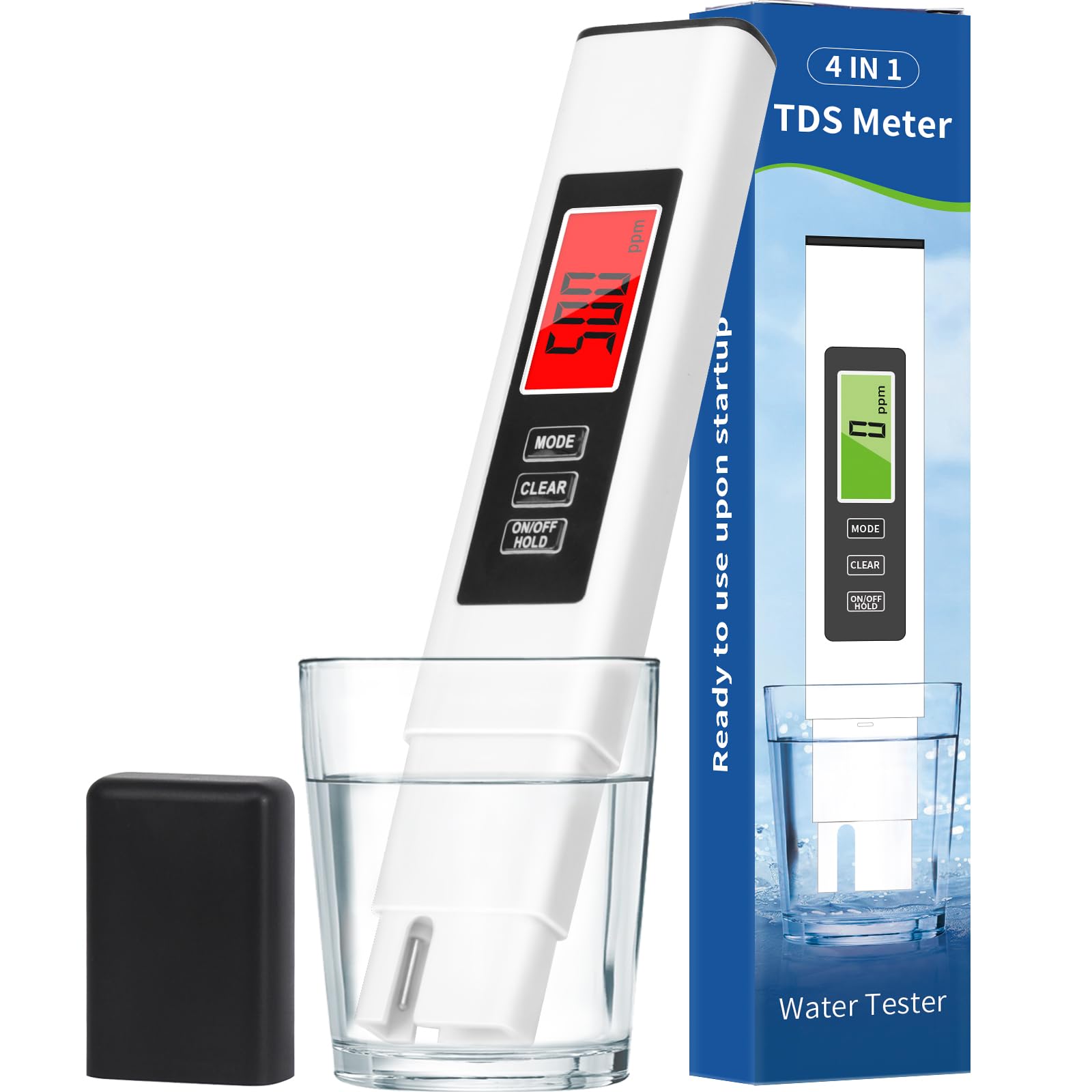
Rating: 4.5 ★ | Price: $ | Range: 0–9990 ppm | Accuracy: ±2% | ATC: Yes | Backlight: Yes
The Arendsace 4-in-1 fits a surprising number of features into a budget-friendly pen: backlit color LCD, auto-lock, and TDS/EC/temperature measurement all for a price that undercuts most competitors. Where it differs from the top pick is in consistency — the HM Digital TDS-3 delivers steadier long-term performance, while this unit’s temperature readings may be slightly off and a handful of units arrive non-functional.
A single button cycles through TDS, EC, and temperature readings. The backlit LCD shows a color indicator — green, yellow, or red — that gives a quick visual sense of water quality. The measurement range of 0–9990 ppm covers typical aquarium needs, and the auto-off prevents battery drain after two minutes of inactivity. Included LR44 batteries allow immediate use.
This meter suits the cost-conscious aquarist who maintains multiple tanks and wants a spare or a primary meter that won’t break the budget. Accepting that a small percentage of pens may need to be exchanged and that temperature data is approximate allows you to capture reliable TDS and EC numbers for a fraction of the cost of premium models.
Pros
- TDS readings are on par with significantly more expensive meters.
- Backlit LCD with color indicator makes readings easy to interpret at a glance.
- Strong value for money given the multi-function capability.
Cons
- Temperature readings can differ from actual water temp by several degrees.
- Some units may arrive non-functional or stop working after limited use.
The Arendsace 4-in-1 is a smart pick for budget-focused aquarists who can tolerate a small chance of early failure and don’t require pinpoint temperature accuracy — the savings are real, and the core TDS readings hold up.
Best for Advanced Setups
Apera PC60 5-in-1

Rating: 4.5 ★ | Price: $$$$ | Range: 0–9990 ppm | Accuracy: ±2% | ATC: Yes | Backlight: Yes
The Apera PC60 distinguishes itself from dedicated TDS meters by integrating pH, EC, salinity, and temperature measurements into a single waterproof package. While the top pick focuses on TDS accuracy alone, this meter adds the chemical parameters essential for planted tanks and reef systems where water chemistry goes beyond dissolved solids.
This meter suits advanced hobbyists who actively manage pH and conductivity — freshwater planted tank enthusiasts and reef keepers will get the most from its capabilities. The premium price and the need to store the probe in solution (included) are acceptable for those who already calibrate multiple sensors. Casual aquarists monitoring only TDS will find this overkill.
The large backlit LCD is easy to read in dim conditions, and the IP67 rating allows safe submersion. Calibration solutions are included, and the replaceable probe extends the meter’s service life if maintained properly — the electrode must stay hydrated to deliver consistent readings.
Pros
- Solid construction with a premium feel that withstands daily use.
- Stable and consistent readings across pH, EC, TDS, salinity, and temperature.
- Calibration process is straightforward with the included solutions and clear instructions.
Cons
- For casual aquarium keepers, the price is high relative to simpler TDS-only meters.
- The multi-parameter functionality adds complexity and cost for those who only need TDS readings.
Serious aquarists and hydroponic growers who need accurate pH and conductivity alongside TDS will find this meter’s capabilities justify the investment. For basic TDS-only checks, a simpler pen is more practical.
Best for Feature Budget
VARIFY 4-in-1 TDS
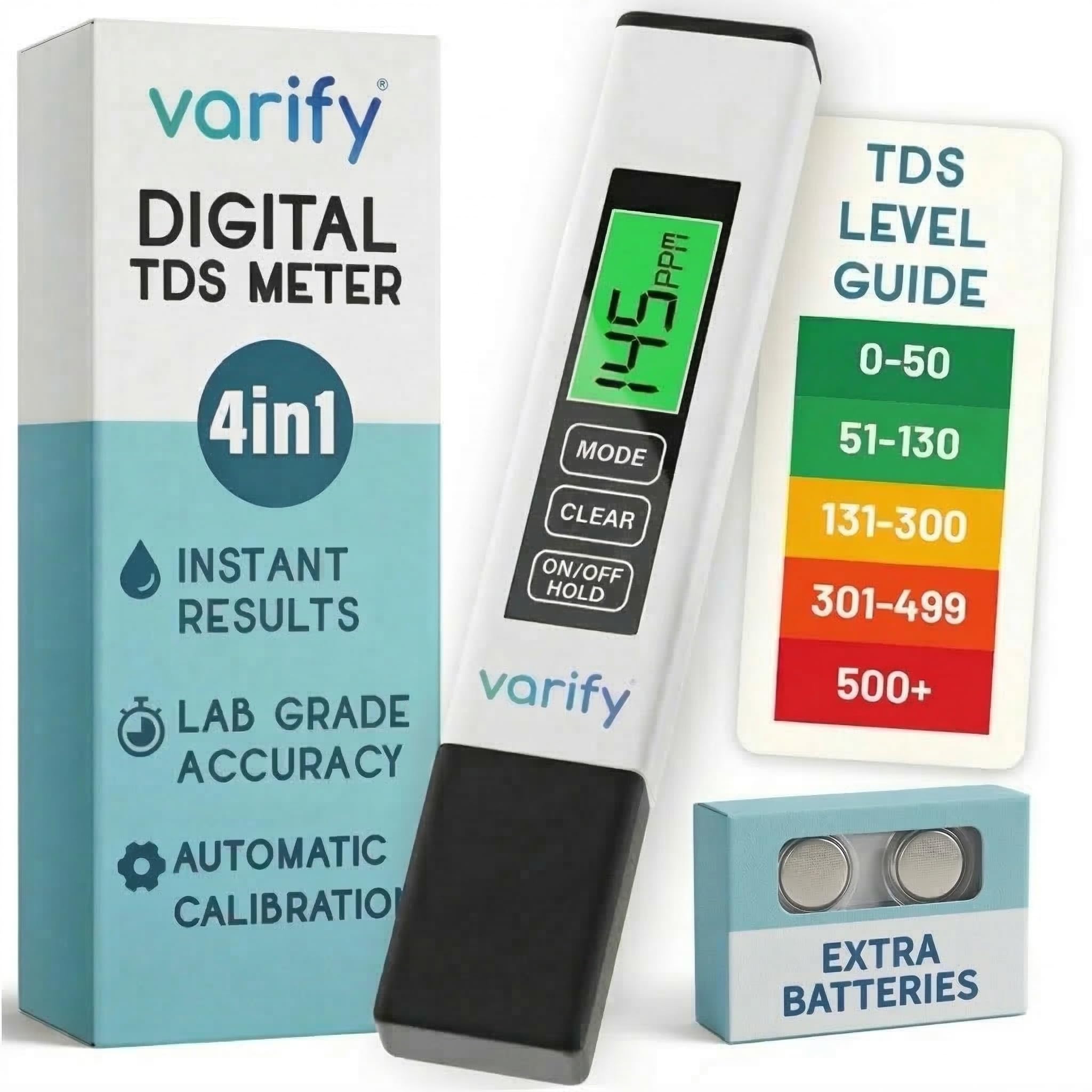
Rating: 4.5 ★ | Price: $ | Range: 0–9990 ppm | Accuracy: ±? (varies) | ATC: Yes | Backlight: Yes
The VARIFY 4-in-1 packs TDS, EC, and temperature readings into a compact pen with a backlit LCD and titanium alloy probe — a combination rarely seen at this price point. Readings come up quickly and the bright screen is easy to read even in dim aquarium rooms.
In practice, the meter delivers stable results for most freshwater tank setups. The single-button operation and auto-hold feature remove guesswork. However, accuracy can vary between individual units; some owners have noted readings that differ from their reference solution. Checking against a known standard soon after purchase is a sensible precaution.
This tester suits hobbyists who want a multipurpose tool for occasional water checks without spending much. It’s less appropriate for those who need consistent lab-grade precision over years of daily use — the HM Digital TDS-3 offers better long-term consistency for a few dollars more. The backlight and included batteries add convenience for casual use.
Pros
- Accurate and fast readings for TDS, EC, and temperature.
- One-button operation with a bright, backlit display.
- Solid build and included batteries at a budget-friendly price.
Cons
- Readings can differ between units; checking calibration after purchase is advised.
For budget-conscious aquarium keepers who don’t mind verifying initial accuracy, this meter offers a lot of functionality at a low price. If long-term consistency is more important, the HM Digital TDS-3 is a better investment.
Best for Occasional Checks
Craft911 TDS
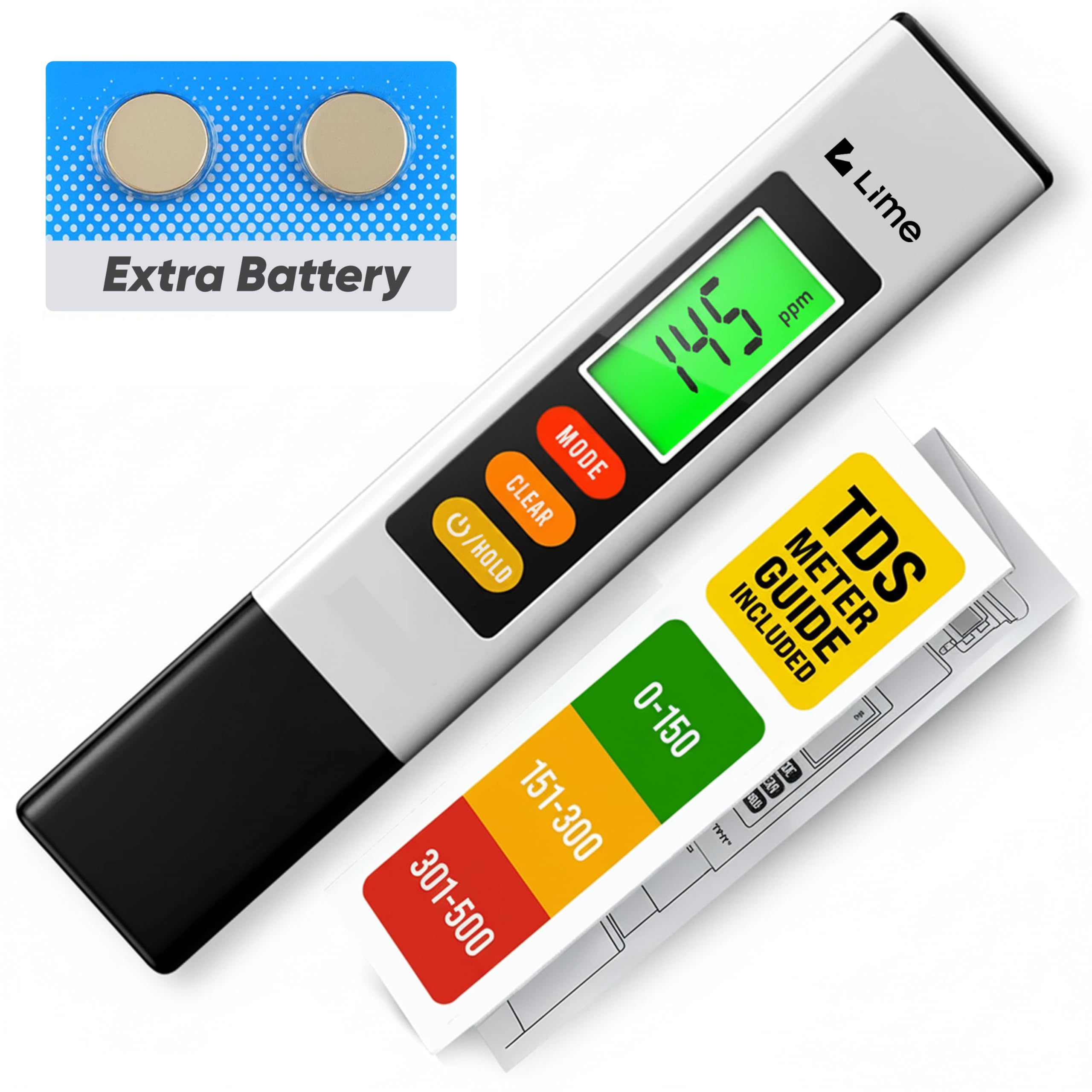
Rating: 4.5 ★ | Price: $ | Range: 0–9990 ppm | Accuracy: ±? (varies) | ATC: Yes | Backlight: Yes
A 3-year warranty and 90-day money-back guarantee distinguish this meter from most budget options, making it a low-risk entry for those wary of cheap electronics. The backlit LCD and included spare batteries add everyday convenience.
This meter suits homeowners checking filter performance or occasional aquarium water checks rather than daily rigorous testing. Accuracy consistency has been noted as variable between units, so it fits best when a close enough reading is acceptable and the goal is trend tracking rather than lab-grade precision.
Operation is straightforward: dip the titanium alloy sensor, press the button, and read the display. The large backlit digits are clear even in dim cupboards. For basic comparisons of tap vs. filtered water or a quick TDS check before a water change, it delivers usable results without fuss.
Pros
- Clear backlit display makes readings easy in any lighting
- Reliable for comparing tap and filtered water side-by-side
- Extra batteries and a 3-year warranty add long-term value
Cons
- Accuracy may vary from one unit to the next
For cautious buyers who want a low-risk entry with a warranty safety net, this TDS meter delivers the basics without demanding a high price — just keep expectations calibrated for occasional use.
Best for Atc Reliability
QNCIGER TDS

Rating: 4.5 ★ | Price: $ | Range: 0–9990 ppm | Accuracy: ±2% | ATC: Yes | Backlight: No
The QNCIGER TDS meter delivers accurate readings with automatic temperature compensation, making it a simple tool for checking water quality. Its low price and easy operation suit emergency or backup use. However, the lack of a backlit display means it needs decent light to read, and some units may show calibration drift over time — this is less a concern for occasional checks but worth noting for those who want a daily driver.
Pros
- Readings stay consistent across multiple water samples, thanks to ATC.
- Simple one-button operation with hold function for easy reading.
Cons
- Some units may become inaccurate after a short period of use.
For budget-minded aquarists who need a backup TDS tester or occasional water quality checks, this no-frills meter gets the job done — just keep it in good lighting.
Best for Portability
Pmlilb TDS

Rating: 4.4 ★ | Price: $ | Range: 0–9990 ppm | Accuracy: ±? (varies) | ATC: Yes | Backlight: No
This meter delivers straightforward dip-and-read measurements with a clear large display, making it practical for quick checks of aquarium water or travel use. The titanium alloy sensor and auto-calibration help maintain basic accuracy for typical TDS ranges. Some units have shown accuracy drift over time, and the product lacks the extensive usage history of more established models, so it is best viewed as a handy tool for occasional monitoring rather than a primary instrument for precision-dependent tasks.
Pros
- Simple dip-and-read operation with a large, clear display.
- Readings match expected values for routine TDS checks.
- Compact enough for travel or storage in a pocket.
Cons
- Accuracy consistency can vary between units, with possible drift noted in some.
- Not designed for high-frequency or precision-demanding testing.
For light aquarium use or as a travel backup where occasional accuracy checks are acceptable, this budget meter provides adequate performance at a low price.
Gidigi 4-In-1
GIDIGI 4-in-1
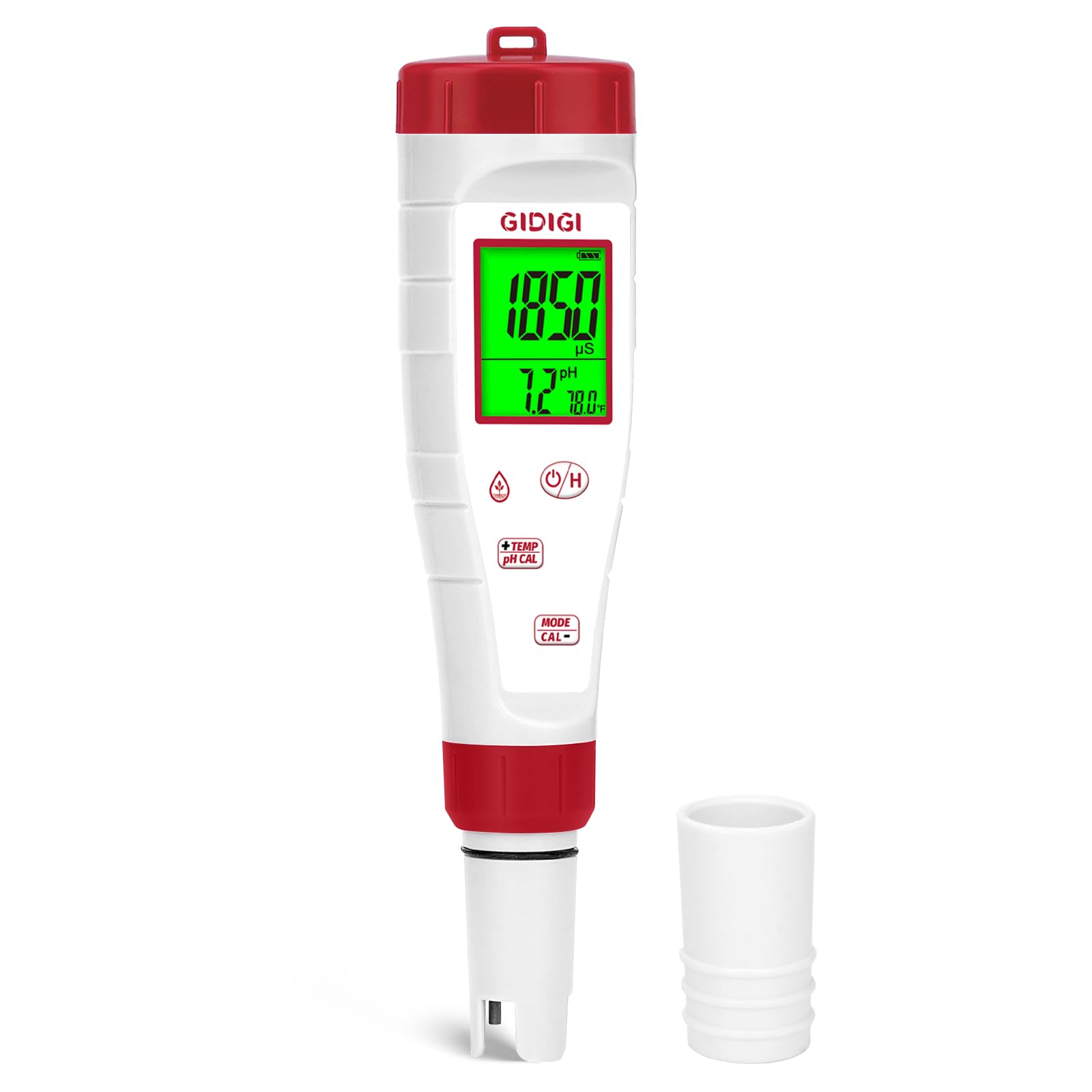
This GIDIGI meter combines pH, TDS, EC, and temperature readings in one device at a cost far below dedicated meters. The large backlit display makes it easy to read in dim aquarium rooms, and the included calibration powders let you set it up for pH accuracy. For hobbyists who already own a reliable TDS pen and want a secondary pH checker for occasional use, this package offers reasonable convenience.
The main limitations come from calibration confusion and unit variance. The EC calibration process requires mixing a specific solution from the powders, which some owners find poorly explained. More critically, a portion of units stop working after a few months of regular use. For a daily driver in a busy aquarium setup, this risk makes dedicated meters from HM Digital or Apera a better long-term choice.
Pros
- Multi-parameter (pH, TDS, EC, temp) in one pen at a budget price.
- Backlit LCD and simple one-key operation make readings quick, even in low light.
- Supplied calibration powders allow pH accuracy when the user follows the procedure.
Cons
- In a tank that needs daily monitoring, some units may stop working within a few months — better as a backup than a primary tool.
- EC calibration process is not intuitive; owners may need to search online for clear steps.
Works as a spare or occasional pH/TDS checker for freshwater tanks where calibration effort is acceptable, but not for daily reliability needs — dedicated meters are safer for consistent use.
Best for No-Frills Use
HM Digital TDS-EZ

Rating: 4.5 ★ | Price: $$ | Range: 0–9990 ppm | Accuracy: ±3% | ATC: Yes | Backlight: No
The HM Digital TDS-EZ delivers ±3% accuracy and a 1000-hour battery life — strong performance for aquarium TDS checks. A recalibration screw helps maintain consistency over years. Two limitations matter: the screen lacks a backlight, so readings in dim light are harder, and the unit is not waterproof — submerging it can cause damage. Because the nearly identical TDS-3 costs less and shares the same strengths, the TDS-EZ is best considered when the TDS-3 is out of stock or you prefer its design.
Pros
- Consistent accuracy within ±3% across the measurement range
- One-button operation with hold function and auto-off
- Durable build that holds up over years of aquarium use
Cons
- Screen lacks backlight, making readings difficult in low-light tanks
- Not waterproof — submersion can damage the meter, requiring careful dipping
A solid pick for aquarists who need a straightforward, accurate TDS meter and can work around the missing backlight and waterproofing — especially if the TDS-3 is unavailable.
Zerowater Zt-2
ZeroWater ZT-2

The ZeroWater ZT-2 targets a narrow but specific need: verifying that your ZeroWater filter is producing low-TDS water. It is easy to use, with a simple LCD display that updates in real time, and its accuracy in the 0–200 ppm range suits that task well.
For aquarium use, the limitation is clear: the maximum reading of 999 ppm cuts out most tanks, which can easily exceed that. Battery life is also an area to check upon purchase, as some units arrive with depleted cells. This meter is effective only for tanks with TDS consistently under 1000 ppm, making it a specialized tool rather than a general-purpose aquarium accessory.
Pros
- Very easy to use and portable
- Accurate for low TDS ranges
Cons
- Batteries may arrive with no charge; unit longevity can vary between samples
- Maximum reading of 999 ppm means it cannot measure high-TDS aquarium water
This meter is a viable option only if you own a ZeroWater filter and want to monitor its output. For aquarium use, it is not suitable due to its limited range and battery inconsistencies.
Aero-Gro 5-In-1
Aero-Gro 5-in-1
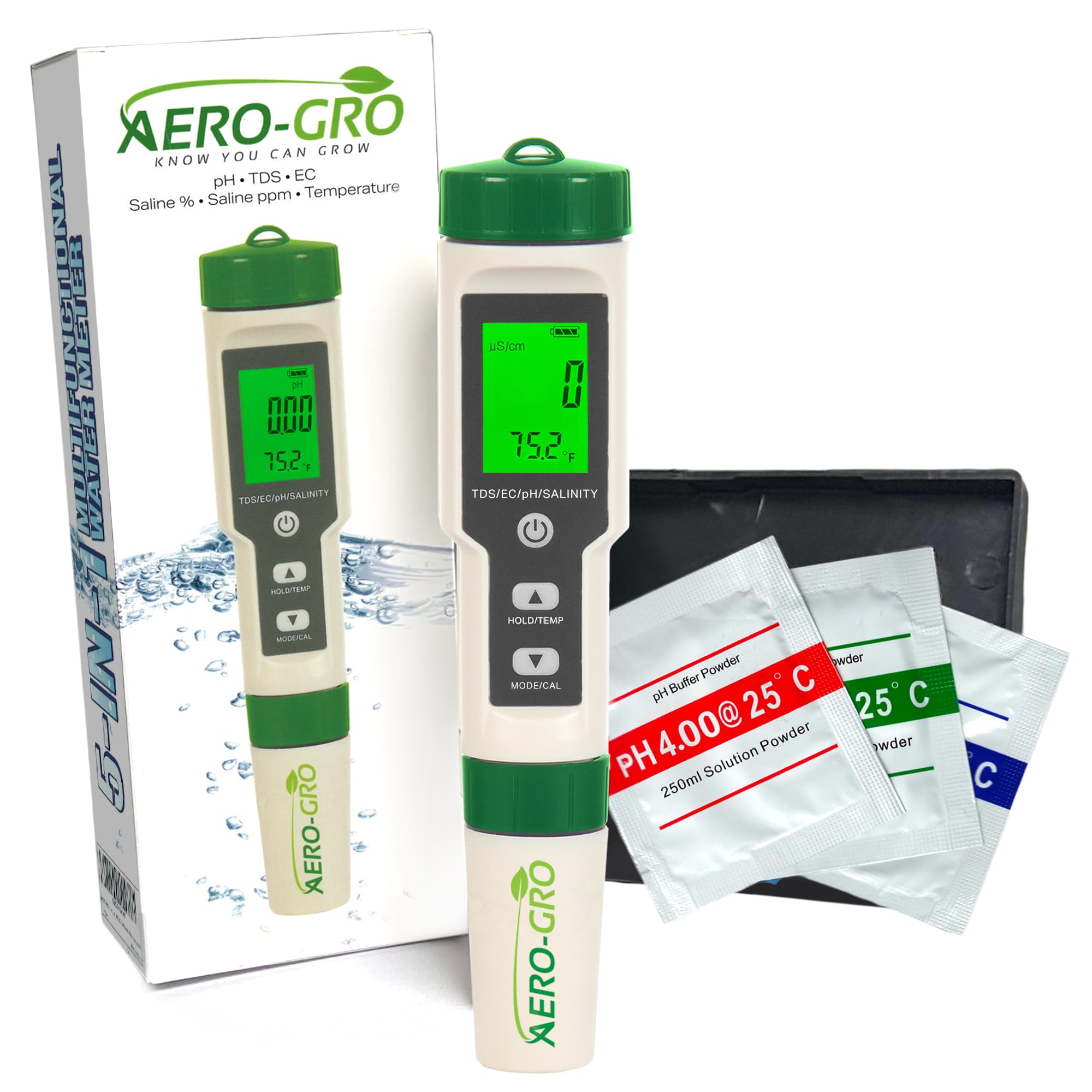
The Aero-Gro 5-in-1 gives aquarium keepers more than a basic TDS reading, with pH, EC, salinity, and temperature in the same handheld meter. The waterproof body and backlit display are practical upgrades over simpler pens, especially if you also test pool, spa, or hydroponic water. It sits lower in this guide because calibration and documentation issues undermine confidence at a premium price, and pH and salinity readings can vary enough that reef or planted-tank keepers should verify against a known standard.
Pros
- Waterproof body is easier to handle around tanks, sumps, pools, and wet work areas.
- Multiple water parameters reduce the need to carry separate pens for casual checks.
- Backlit digital display helps when reading measurements near cabinets or shaded tank stands.
Cons
- Aquarium pH and salinity readings may need confirmation before dosing or livestock decisions.
- Calibration takes patience, especially if you expect clear guidance from the included instructions.
Consider the Aero-Gro 5-in-1 if you want one waterproof meter for casual aquarium spot checks plus pool or spa testing. For aquarium TDS readings that guide sensitive tank maintenance, a dedicated TDS pen or a higher-grade multi-parameter meter is the safer buy.
How to Choose
The most important spec in a TDS meter is not the number of features—it’s how consistently the meter holds its calibration across water temperatures and over months of use.
Measurement Range
Almost all aquarium-grade handheld meters cover 0–9990 ppm, which handles everything from RO water (0–10 ppm) to brackish setups (up to 5000 ppm). A narrower range (like the ZeroWater’s 0–999 ppm) locks you out of standard freshwater and saltwater use entirely.
If you keep marine or African cichlid tanks, confirm the meter reads at least 0–9990 ppm. For pure freshwater community tanks, any full-range meter works, but the extra headroom costs nothing and future-proofs your purchase.
Accuracy Rating
Accuracy is stated as a percentage, typically ±2% or ±3%. A ±2% meter reading 400 ppm could actually be anywhere from 392 to 408 ppm—fine for most purposes. The trap is that this spec is factory-rated: a meter that drifts over time or wasn’t calibrated correctly at the factory will exceed that tolerance.
Budget meters with high accuracy variance (like 25%+ negative accuracy mentions) are risky if you track precise changes, such as in a planted tank with CO2 injection. For those, a brand with a proven track record of QC—like HM Digital or Apera—is worth the premium.
Automatic Temperature Compensation (ATC)
Conductivity changes with water temperature: a sample at 60°F reads lower TDS than the same sample at 80°F. ATC corrects this automatically, so you get consistent readings regardless of room temperature or seasonal shifts. Without it, your morning and evening readings may differ by 10–20 ppm even if nothing changed in the tank.
Every meter in our recommended list includes ATC. The few that don’t (very old models) should be skipped. ATC is not a luxury—it’s a baseline requirement for any useful TDS meter.
Backlit Display
A backlit screen lets you read the meter under tank cabinets, in dim fish rooms, or during evening water changes. Many budget meters omit this to save cost. If you test water after sunset or in low-light areas, paying $1–2 more for a backlight saves squinting and misread numbers.
The HM Digital TDS-3 and TDS-EZ lack backlights—a deliberate trade-off for battery life and simplicity. If you test only in bright kitchens, they’re fine. If you’re mixing saltwater at dawn, grab an Arendsace or VARIFY.
Build Quality and Waterproofing
No TDS meter is fully submersible unless it carries an IP67 rating (like the Apera PC60). Most handheld pens are splash-resistant at best—dunking them past the probe tip can kill the electronics. The practical consequence: you must hold the meter vertically and not let the body slide into the water.
For heavy daily use, consider a model with a replaceable probe (Apera) or a proven track record of surviving years of careful handling (HM Digital). Cheaper units may develop loose seals or failed buttons after a few months of regular use.
FAQ
Why does my aquarium TDS meter give different readings each time?
Two main reasons: water temperature changes and lack of automatic temperature compensation (ATC). A change of even 5°F can shift conductivity by 2–3%. If your meter has ATC, the issue may be a dirty probe (oils and mineral deposits interfere) or calibration drift. Rinse the probe in distilled water, dry it, and test again. If inconsistencies persist, recalibrate the meter using a 342 ppm or 500 ppm calibration solution.
Can a cheap TDS meter be accurate enough for a reef tank?
It depends on what you’re monitoring. For checking RO/DI water quality (target 0–10 ppm), most cheap meters are fine. For tracking salinity or mineral changes in a mixed reef (350–450 ppm TDS), a ±2% meter is acceptable but not ideal. The bigger risk is drift: a $10 meter that reads 420 ppm today and 450 ppm tomorrow is useless for fine-tuning. For reef tanks, invest at least in a proven budget meter like HM Digital TDS-3 or step up to a multi-parameter meter with replaceable probe.
How often should I calibrate my aquarium TDS meter?
Every 3–6 months for casual freshwater use. If you test multiple tanks daily or keep sensitive species (shrimp, discus, reef), calibrate monthly. Use a known standard solution (usually 342 ppm or 500 ppm KCl). If your readings drift more than 5% from the standard, calibrate immediately. A meter that cannot hold calibration for a month may have a failing sensor and should be replaced.
What is the ideal TDS level for a freshwater aquarium?
There’s no single number because different fish have different tolerances. For most community tanks (tetras, guppies, corydoras), 150–400 ppm is typical. Soft-water species (discus, rams, cardinal tetras) prefer 50–150 ppm. Hard-water fish (African cichlids, livebearers) thrive at 300–600 ppm. TDS alone doesn’t tell you which minerals are present—use it as a trend indicator, not a target.