This post contains affiliate links. We may earn a small commission when you buy through our links — at no extra cost to you.
Setting up a planted tank is exciting until you pour in the substrate and the water turns milky. That cloudiness—sometimes lasting days—is one of the most frequent complaints among aquarists. The good news: it doesn’t have to be a guessing game.
Some substrates need aggressive rinsing, others settle quickly with careful filling. A few even claim ‘no rinse’ but still cloud up. This guide breaks down exactly what to expect from each type so you can plan your setup—and your patience—accordingly.
Whether you’re after lush plant growth or a bright sandy bottom, the right choice comes down to matching the substrate’s real behavior to your tolerance for prep work.
Top Picks
Best for Heavily Planted Tanks
Fluval Plant & Shrimp Stratum
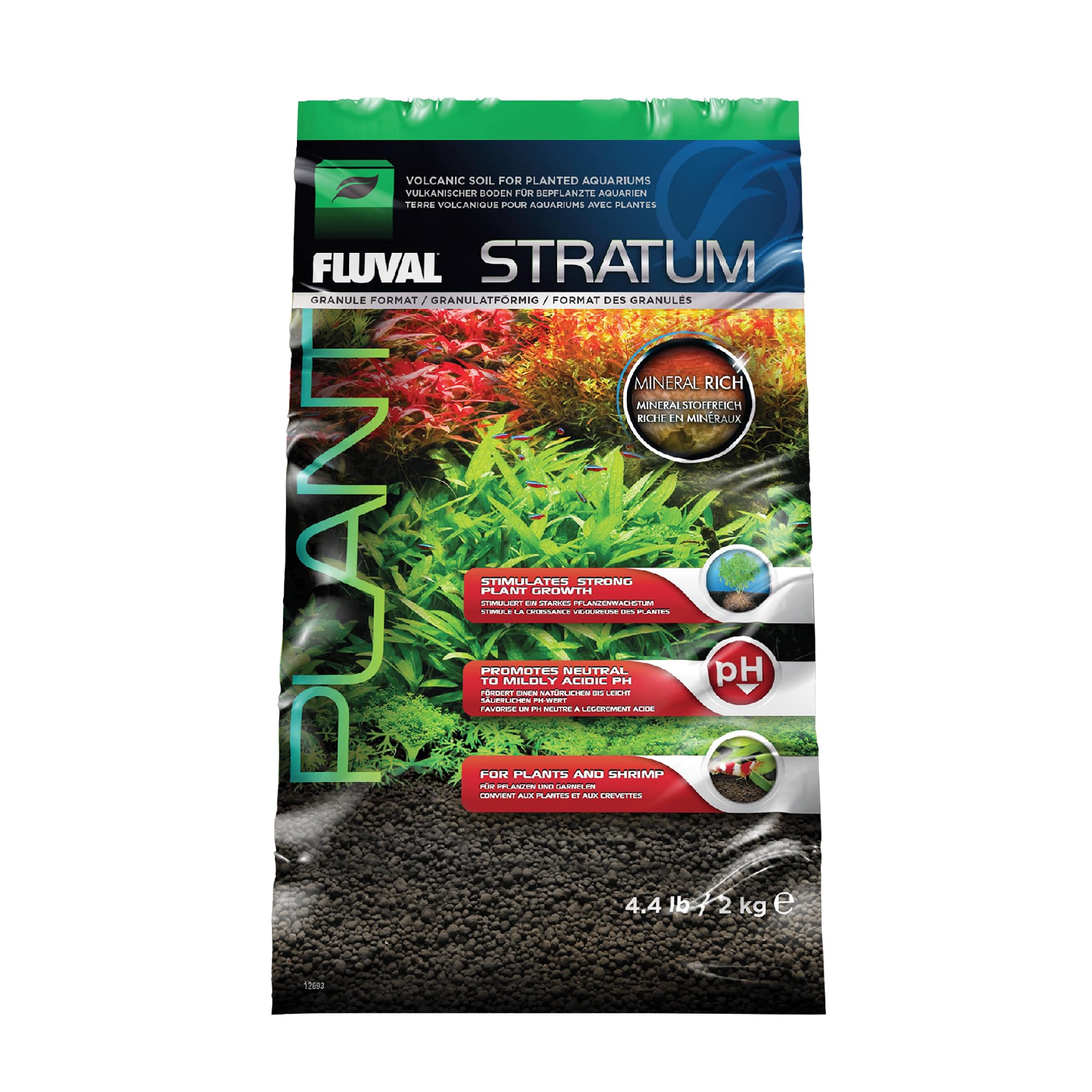
Rating: 4.7 ★ | Price: $$ | Nutrient Type: Active soil | Grain Size: Porous pellets | Cloudiness Risk: High | pH Effect: Neutral to acidic | Bag Weight: 4.4 lbs
Plant roots develop quickly in this active soil structure, and shrimp populations benefit from the buffered pH that stays neutral to slightly acidic. The porous pellets also provide surface area for beneficial bacteria, which helps maintain water quality without frequent adjustment.
This substrate suits beginners setting up a heavily planted tank or a dedicated shrimp tank. The lightweight pellets can float if disturbed, so planting with tweezers or using anchors is recommended. Water will appear cloudy for the first day or two — careful slow filling with a plate minimizes the haze.
Pros
- Supports rapid plant root development
- Maintains stable water parameters for shrimp
- Effective nutrient content for lush growth
Cons
- Cloudy water for the first few days after setup
- Lightweight pellets can allow plants to float without anchoring
For planted tank and shrimp keepers who accept a short cloudy period, this substrate delivers consistent growth without needing root tabs.
Best for Larger Planted Tanks
CaribSea Eco-Complete 20lb
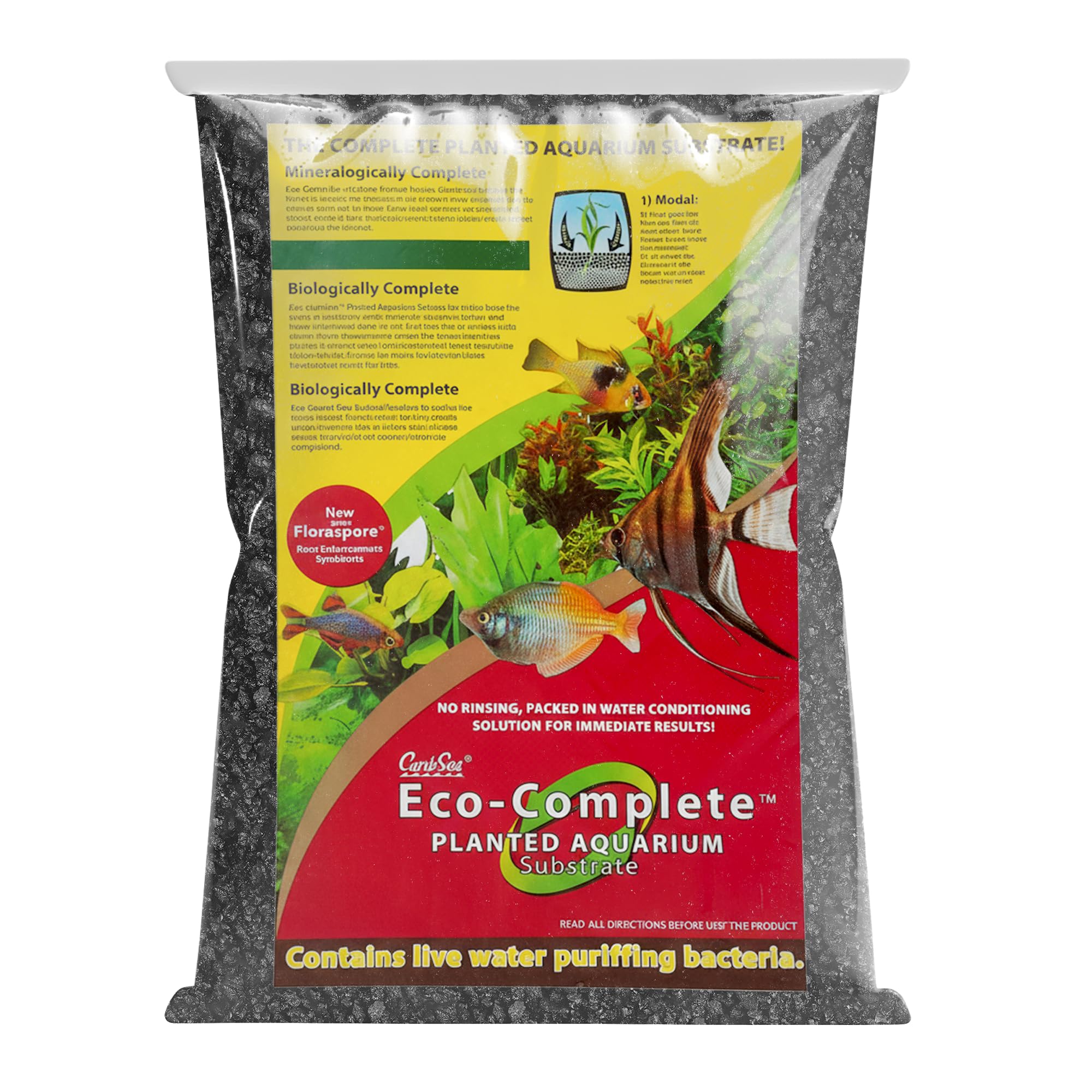
Rating: 4.6 ★ | Price: $$ | Nutrient Type: Nutrient-rich clay gravel | Grain Size: Clay gravel | Cloudiness Risk: High | pH Effect: Neutral | Bag Weight: 20 lbs
CaribSea Eco-Complete delivers a deep, nutrient-rich clay gravel bed that supports sustained plant growth in tanks up to 20 gallons at a 2–3 inch depth. The included beneficial bacteria liquid helps jump-start biological filtration, reducing the need for frequent fertilizer additions. For experienced aquascapers managing larger setups, this substrate offers a sturdy base that holds root systems well.
Initial cloudiness can appear when water is first added, requiring several water changes during the first week. This tradeoff is manageable for those who plan ahead, but beginners looking for instant clarity will find it frustrating. Best suited for hobbyists who prioritize long-term growth over a quick, clean setup.
Pros
- Rich in trace elements and packed with beneficial bacteria to reduce fertiliser needs.
- Dark black color enhances plant and fish contrast in the aquarium.
- Heavy weight keeps substrate placed, making planting and rescaping easier.
Cons
- Cloudy water after setup may need multiple water changes to clear.
Choose this if you run a larger planted tank and want a nutrient-dense base that reduces ongoing fertiliser work—just accept the initial prep.
Best for Bright Sand Tanks
Aqua Natural Sugar White Sand

Rating: 4.7 ★ | Price: $ | Nutrient Type: Inert sand | Grain Size: 0.5–1 mm | Cloudiness Risk: Low | pH Effect: Neutral | Bag Weight: 10 lbs
This sand arrives clean, with minimal rinsing needed to achieve clear water. Its fine 0.5–1 mm grain is gentle on corydoras and other bottom feeders. The color, however, skews toward light tan rather than pure white when submerged — a warm tone that suits natural aquascapes but not ultra-bright setups.
For planted tanks, a single 10 lb bag offers only about 1.5 inches of depth in a 10-gallon, which is thin for rooted plants without supplementing with additional bags or root tabs. This sand shines as a cap over nutrient-rich soil or for tanks focused on aesthetics and bottom feeders rather than dense plant growth. If your priority is a soft, bright substrate that doesn’t cloud water, this is a budget-friendly choice.
Pros
- Clean and easy to set up
- Bright aesthetic
- Gentle on bottom feeders
Cons
- Under water, the sand shows a light tan hue rather than the pure white some expect
- A single 10 lb bag provides only about 1.5 inches depth in a 10-gallon tank — not enough for deep-rooted plants without extra bags
For keepers who want a clean, soft sand for corydoras and a bright tank look, this is the top value inert option. Plan on extra bags or root tabs if you’re planting heavily.
Best for New Tank Setups
Aqua Natural Galaxy Sand Bio

Rating: 4.6 ★ | Price: $ | Nutrient Type: Bio-active sand | Grain Size: Fine sand | Cloudiness Risk: Medium | pH Effect: Neutral | Bag Weight: 5 lbs
Aqua Natural Galaxy Sand Bio brings live nitrifying bacteria directly into the substrate, cutting the nitrogen-cycle wait for new planted or shrimp tanks. The black sparkly sand looks great in nano setups, but it’s not a nutrient-dense plant soil — expect to supplement with root tabs for heavy plant growth. Cloudy water for the first day or two is part of the deal despite the no-rinse claim, so plan around that. Best suited for nano planted tanks and shrimp setups where quick cycling matters more than nutrient richness.
Pros
- Visually striking sparkly black sand enhances plant and shrimp tank aesthetics.
- Built-in beneficial bacteria reduces cycling time for new setups.
- Consistent grain size makes planting easy and stable.
Cons
- Water may remain cloudy for 24–48 hours despite the no-rinse instruction.
A cost-effective choice for jumpstarting new nano planted or shrimp tanks — just plan for temporary cloudiness and supplement with root tabs for heavier plant loads.
Best for Long-Term Planted Tanks
Seachem Flourite Black Gravel

Rating: 4.6 ★ | Price: $$$ | Nutrient Type: Clay gravel (inert) | Grain Size: Porous gravel | Cloudiness Risk: Very high | pH Effect: Neutral | Bag Weight: 15.4 lbs
Seachem Flourite Black Gravel provides stable, porous clay that never breaks down and won’t alter pH, giving rooted plants a firm anchor for years. The tradeoff is a messy setup — each bag requires 20+ minutes of rinsing to reduce the fine dust, and even then initial cloudiness may persist for days. This substrate suits dedicated planted-tank keepers who prioritize long-term stability over a quick fill-and-go process. It’s less ideal for beginners or tanks with soft-bellied bottom feeders, as the sharp edges of the gravel can cause injury.
Pros
- Plants establish deep roots and show vibrant growth in this porous clay.
- Rich black color creates a dramatic backdrop that makes fish and plants pop.
- Substrate remains stable and never needs replacement, maintaining structure for years.
Cons
- Extensive rinsing (20+ minutes per bag) is necessary to manage dust, and minor cloudiness may still appear.
- Even after rinsing, water can remain brown for days, requiring patience before full clarity returns.
A long-lasting, plant-friendly substrate for patient aquascapers who accept the prep time.
Best for Small Planted Tanks
Aqueon Plant & Shrimp

Rating: 4.6 ★ | Price: $$ | Nutrient Type: Clay-based substrate | Grain Size: Spherical pellets | Cloudiness Risk: Low | pH Effect: Neutral | Bag Weight: 5 lbs
Small, uniform clay pellets that rinse clean quickly and hold plant roots in place, ideal for nano planted or shrimp tanks up to 10 gallons. The 5-pound bag fits small setups but may require a second for larger tanks, and nutrient content is modest—root tabs are needed for heavy plant growth. Budget-conscious beginners will appreciate the easy setup and natural look, though those wanting a nutrient-rich soil without additives should consider larger Stratum-based alternatives.
Pros
- Encourages healthy plant growth and shrimp activity
- Uniform pellets rinse clean and are easy to work with
- Appealing natural appearance that fits most scapes
Cons
- 5-pound bag may be too small for tanks over 10 gallons without buying multiple bags
- Limited built-in nutrients mean heavy plant loads require root tab supplementation
A functional, easy-to-clean substrate for small shrimp and nano planted tanks, but expect to supplement with root tabs for dense plant growth and buy multiple bags for anything above 10 gallons.
Best for Planted Tanks
Fluval Bio Stratum
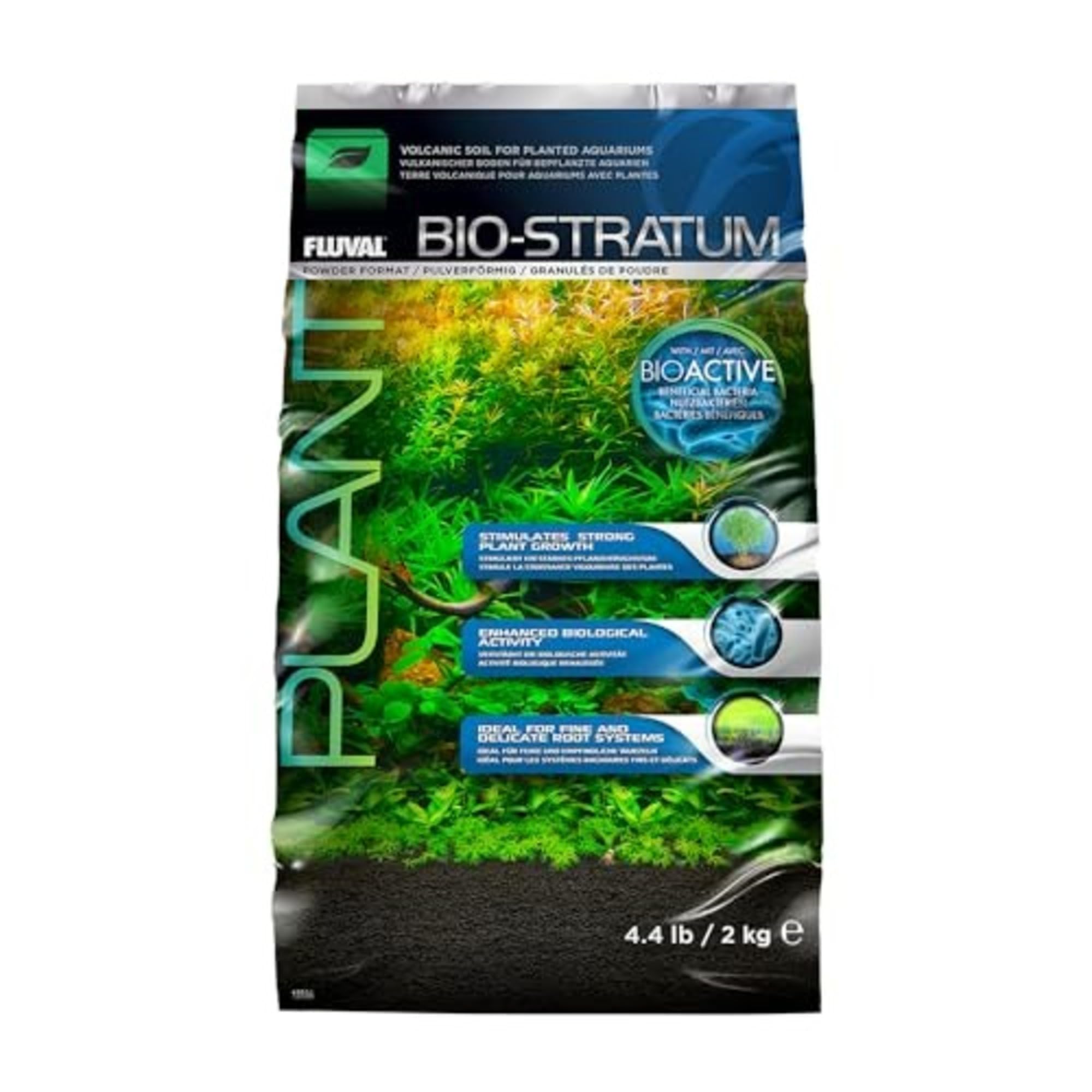
Rating: 4.7 ★ | Price: $$ | Nutrient Type: Active soil with bacteria | Grain Size: 1 mm powder granules | Cloudiness Risk: Medium | pH Effect: Slightly acidic | Bag Weight: 4.4 lbs
Fluval Bio Stratum’s volcanic soil pellets contain beneficial nitrifying bacteria that promote root development and reduce ammonia, leading to healthy plant growth in both submerged tanks and moist terrariums. However, the fine powder granules can cause water cloudiness for the first few days after setup. While it rivals the top pick for plant growth, its true strength lies in terrarium use and hoya propagation.
Pros
- Promotes healthy plant growth in both aquatic and terrestrial setups
- Natural dark color enhances aesthetics of aquariums and terrariums
Cons
- Initial cloudiness may require several water changes during the first few days
Best for aquarists who also set up terrariums or propagate houseplants, and are okay with a few days of cloudy water.
Best for High-Tech Planted Tanks
LANDEN Aqua Soil 5L

Rating: 4.6 ★ | Price: $$$ | Nutrient Type: Active soil | Grain Size: 3–5 mm | Cloudiness Risk: Medium | pH Effect: Mildly acidic | Bag Weight: 10 lbs
Provides the nutrient density and pH buffering that demanding plants require, but the ammonia spike during cycling can exceed 2 ppm and persist for weeks. The soil occasionally contains small organic debris. This makes it best for experienced hobbyists using CO2 injection rather than beginners.
Pros
- Rich in trace elements that promote vigorous plant growth.
- Mildly acidic pH ideal for shrimp and soft-water species.
Cons
- Ammonia levels can spike above 2 ppm during cycling, requiring weeks of patience.
For aquascapers with CO2 injection who can handle a lengthy cycling phase, this offers premium soil performance at a cost below that of established Japanese brands.
Best for Dark Aquascapes
Seachem Flourite Black Sand
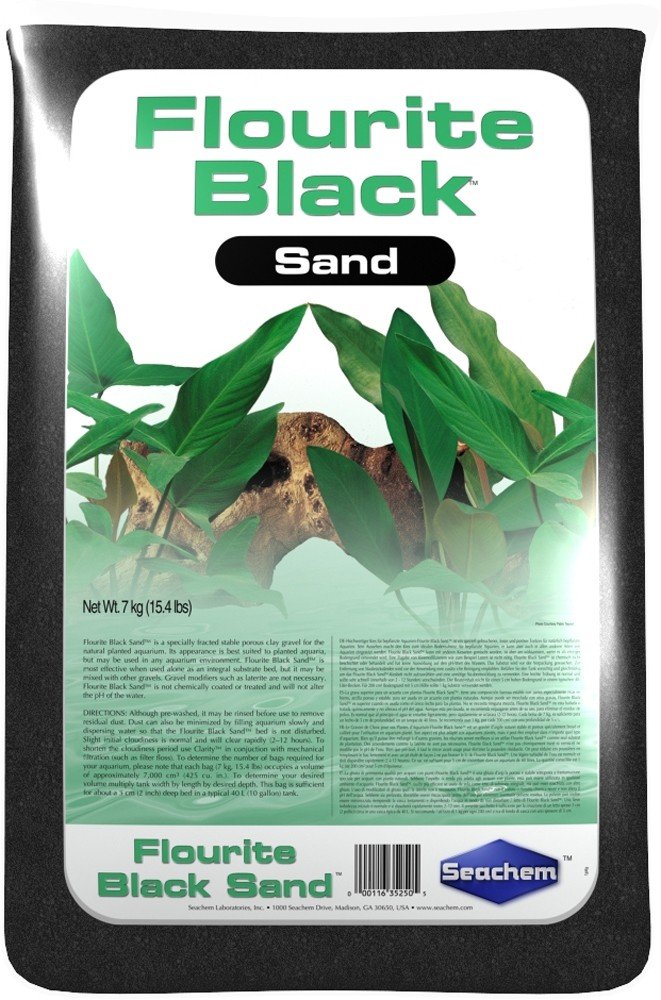
Rating: 4.5 ★ | Price: $$$ | Nutrient Type: Crushed clay sand | Grain Size: Crushed clay sand | Cloudiness Risk: Very high | pH Effect: Neutral | Bag Weight: 15.4 lbs
This crushed clay sand delivers a striking gunmetal-black look that enhances plant colors and supports root growth. But sharp particles can harm bottom feeders, and heavy dust demands prolonged rinsing. Best for experienced hobbyists who accept the prep work and skip soft-bellied fish.
Pros
- Deep black finish with subtle gunmetal shimmer under light.
- Promotes healthy root development in planted tanks.
Cons
- Sharp particles can injure soft-bellied bottom feeders like corydoras.
Best for experienced hobbyists building a dark aquascape who are willing to rinse thoroughly and avoid bottom feeders.
Best for Natural Aquascapes
Aqua Natural Midnight Pearl

Rating: 4.7 ★ | Price: $ | Nutrient Type: Natural gravel | Grain Size: 2–4 mm | Cloudiness Risk: Low | pH Effect: Neutral | Bag Weight: 10 lbs
Aqua Natural Midnight Pearl offers warm, mixed-brown tones that mimic a natural riverbed, making it an attractive base for low-tech tanks or as a decorative top layer. It rinses clean with minimal dust, but lacks nutrients for heavy plant growth – root tabs are necessary. The occasional post-rinse cloudiness clears quickly with a water change.
Pros
- Natural riverbed color with warm brown tones suits most aquascapes.
- Triple-washed gravel that cleans up quickly with minimal dust after initial rinse.
Cons
- Inert composition won’t feed plants – root tabs or liquid fertilizers required for sustained growth.
A cost-effective choice for low-tech tanks or as a decorative cap over nutrient-rich substrate – not a standalone solution for demanding planted aquariums.
How to Choose
The biggest surprise for most buyers is that even ‘no-rinse’ substrates often cloud the water, so plan for extra prep time regardless of the label.
Nutrient Content: Active Soil vs. Inert Sand/Gravel
Active soils contain organic matter that releases nutrients and buffers pH, but also produce an ammonia spike during the first two weeks. Inert sand or gravel offers no nutrition—plants rely entirely on root tabs or liquid fertilizer. The choice determines how much ongoing maintenance you’ll face.
Grain Size and Texture
Fine grains (under 1 mm) pack tightly and can suffocate roots if compacted. Larger grains (2–4 mm) allow water flow and root penetration but may be too loose for delicate plant anchors.
The right size depends on your plant species—stem plants prefer coarser media, while carpeting plants root better in finer sand.
Water Cloudiness and Prep Work
Many substrates, especially active soils and unwashed gravels, release fine dust that turns water milky for one to three days. Even ‘triple-washed’ bags often require additional rinsing.
A slow, careful water fill over a plate can minimize cloudiness, but some products demand a full water change cycle.
pH Buffering
Active soils like Fluval Stratum gently lower pH to neutral or slightly acidic, ideal for Amazon biotopes and shrimp. Inert materials such as playsand or clay gravel leave pH unchanged.
If your tap water is already high in pH, an active soil can help stabilize it without chemicals.
Bag Weight and Tank Coverage
A single 4.4 lb bag of active soil covers only a 5-gallon tank to a depth of 1–2 inches. Larger tanks need multiple bags, quickly raising cost.
Bag weights vary from 5 lb to 20 lb—calculate your tank’s floor area and desired depth (2–3 inches) before buying.
FAQ
Do I need to rinse aquarium plant substrate before use?
Even substrates labelled ‘triple-washed’ often release dust when first added. Rinse active soils gently in a colander until the water runs mostly clear—avoid over-rinsing as this can wash away nutrients. Inert sands benefit from a quick rinse too, but some bio-active sands explicitly ask you not to rinse them to preserve bacteria.
Why is my substrate making the water cloudy and how long does it last?
Cloudiness is usually from fine dust stirred up during filling. With careful water addition (pouring over a plate or plastic bag), it typically clears within 24–48 hours. Heavily dusty substrates like Seachem Flourite may require one or two water changes before the water fully clears.
Can I use sand instead of soil for a planted aquarium?
Yes, but sand is inert and provides no nutrients for plant roots. You’ll need to add root tabs or liquid fertilizer to support growth. Sand works well as a cap over a nutrient-rich soil layer, and it’s excellent for bottom-feeding fish like corydoras that prefer soft, fine substrates.
What is the difference between active soil and inert gravel for planted tanks?
Active soil contains organic matter that buffers pH softer and releases nutrients, but it will cause an initial ammonia spike that requires cycling. Inert gravel (clay, sand, or stone) does not alter water chemistry and lasts indefinitely, but requires external fertilization. Choose active soil for high-growth tanks and inert gravel for low-tech or biotope setups.