This post contains affiliate links. We may earn a small commission when you buy through our links — at no extra cost to you.
Walk into any aquarium forum and you’ll see the same question: ‘Why are my plants still yellow after dosing fertilizer?’ The answer often isn’t more fertilizer—it’s the wrong kind. Many all-in-one liquids skip nitrogen and phosphorus, while root tabs can spike nitrates if overused.
This guide cuts through the marketing to match fertilizers to your specific setup: low-tech, high-tech, shrimp-safe, or root-feeder heavy. We’ve mapped each product’s nutrient profile, dosing quirks, and real-world trade-offs so you can pick what works for your tank.
Whether you need a worry-free invert-safe formula or a growth accelerator for CO2-injected aquascapes, the right choice comes down to matching your livestock and lighting—not the biggest bottle.
Top Picks
Best for General Planted Tanks
Seachem Flourish 500ml

Rating: 4.7 ★ | Price: Premium | Form: Liquid | Nutrient Profile: Micro + trace | Safety: Not shrimp-safe | Refrigeration Needed: Yes | Dosing Method: Measured ml
Seachem Flourish is strongest as an all-purpose liquid micro supplement for planted freshwater tanks. It supplies trace elements alongside iron, potassium, calcium, and magnesium, which makes it a practical fit for aquarists trying to correct pale leaves, slow growth, or weak color without switching to root tabs or a separate trace-only bottle.
Plant response is the main reason this bottle keeps showing up in planted-tank routines. Stem plants, swords, crypts, and other freshwater species can show better leaf color and steadier growth when the tank is otherwise stable. The dosing is concentrated at 5 ml per 60 gallons weekly, so small tanks need careful measuring rather than a casual pour.
This is not the same job as a root tab. Heavy root feeders may still benefit from substrate nutrition, while Flourish mainly supports the water column with micronutrients and related minerals. It also is not the right match for shrimp tanks unless copper exposure is managed with strict dosing discipline and separation, since the formula contains copper traces.
The best buyer is running an established freshwater planted aquarium without shrimp and wants a premium-priced, concentrated supplement that can fit into a measured weekly routine. Refrigeration after opening is part of ownership, so this suits hobbyists who are willing to treat plant fertilizer more like a maintained additive than a shelf-and-forget bottle.
Pros
- Improves plant growth and health across a broad range of freshwater species.
- Strong formulation quality for aquarists who dose planted tanks long term.
- Helps leaves look greener and more vibrant when tank conditions are stable.
- Concentrated bottle offers cost-effective dosing despite its premium positioning.
Cons
- Algae may increase if dosing runs ahead of plant uptake.
- Opened bottles require cold storage to preserve potency.
Seachem Flourish is the right liquid supplement for planted freshwater tanks that need trace support and visible greening, especially when the aquarist is willing to measure doses carefully.
Best for Budget Beginners
API LEAF ZONE 18oz

Rating: 4.6 ★ | Price: Budget | Form: Liquid | Nutrient Profile: Iron + potassium | Safety: Not shrimp-safe | Refrigeration Needed: No | Dosing Method: Measured ml
API LEAF ZONE targets the two most common deficiencies in low-light planted tanks: iron and potassium. Users see greener leaves and less yellowing within a week of dosing the recommended 5 ml per 10 gallons. The chelated iron stays available for plants, and the price per ounce is significantly lower than the all-purpose micro supplement market leader.
This is a supplement, not a complete fertilizer. It deliberately omits nitrogen and phosphorus, so plants that need those macros — such as stem plants or heavy root-feeders — may still show pale growth or stunted new leaves. Best suited for beginner or budget-conscious hobbyists running low to moderate light without CO2 injection. The copper content, while low, means it’s not ideal for shrimp-dominated tanks.
Pros
- Effectively prevents yellowing and promotes vibrant leaf color in low-tech tanks.
- High-quality chelated iron and potassium at a budget-friendly price point.
- Safe for most fish and snails when dosed as directed.
Cons
- In tanks with high-demand plants, some may not respond well or continue yellowing.
- Overdosing past the label rate can cause temporary water cloudiness and algae blooms.
If your plants are yellowing and you run a simple low-light setup, this is the most cost-effective fix available — just don’t expect it to replace a complete fertilizer regimen.
Best for Shrimp Tanks
ThriveS Shrimp 500ml
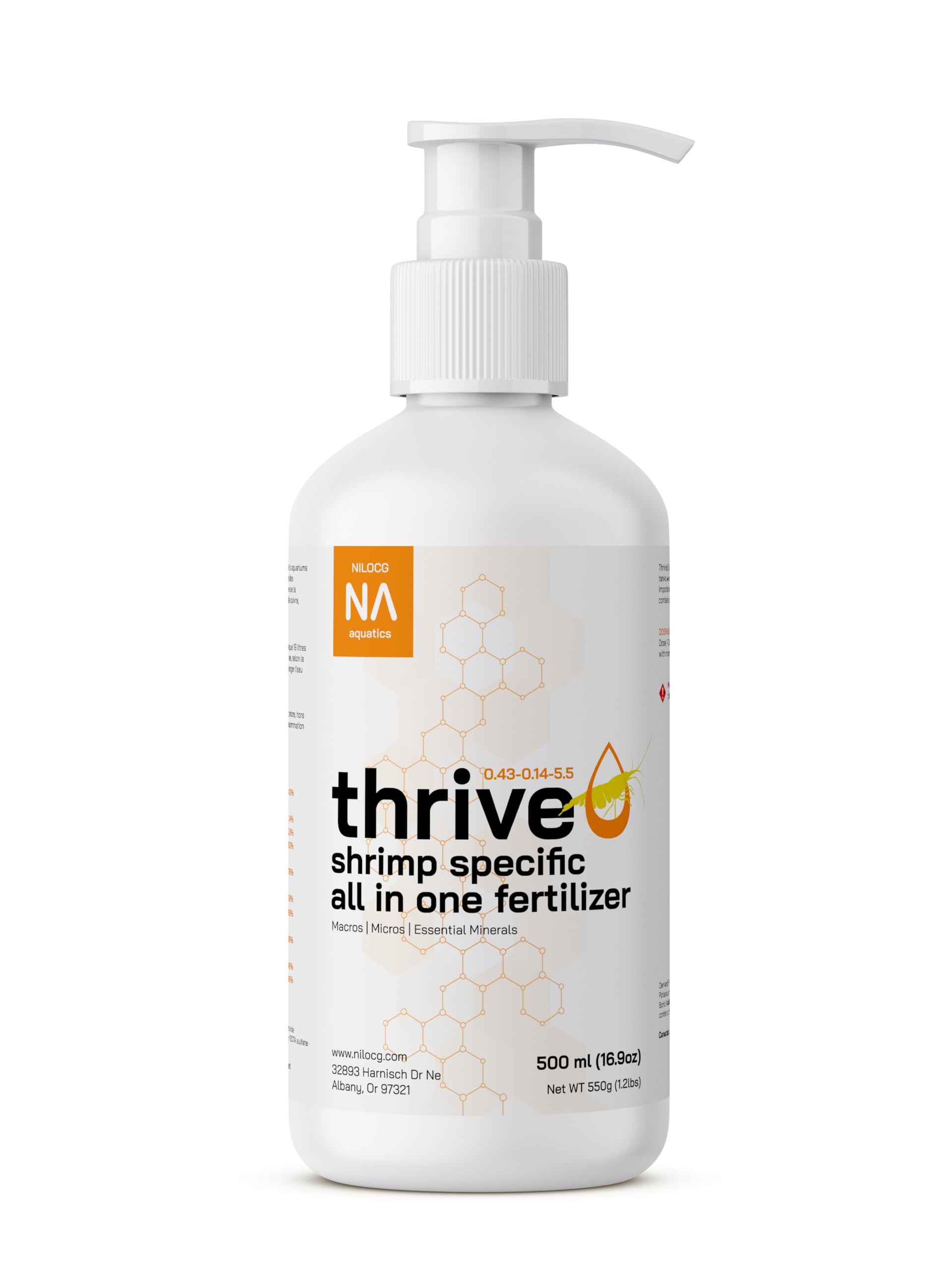
Rating: 4.7 ★ | Price: Premium | Form: Liquid | Nutrient Profile: Complete macro+micro | Safety: Shrimp-safe | Refrigeration Needed: No | Dosing Method: Pump bottle
ThriveS Shrimp delivers all macros and micros without copper – the key difference from standard all-in-ones that risk harming invertebrates. Plant response is fast, with new growth showing deeper greens and reds within a week, and TDS impact stays low enough to keep shrimp comfortable.
This bottle is built for shrimp breeders and invert-heavy planted tanks where avoiding copper is non-negotiable. The tradeoff: the pump can become stiff or seize after a few months, and at a premium price it costs more per dose than a general-purpose liquid that happens to omit copper – but for dedicated shrimp set-ups, that specificity is worth the extra cost.
Pros
- Shrimp-safe formula with all macros and micros – no copper detected in any batch.
- Minimal TDS spike simplifies dosing for sensitive inverts.
- Rapid plant growth and color improvement across many species.
Cons
- Pump mechanism may become unreliable over time – occasional replacements needed.
- Premium price per bottle compared to general-purpose all-in-ones without copper restrictions.
If you keep shrimp and want a worry-free liquid fertilizer that covers both macros and micros, ThriveS Shrimp delivers – just keep an eye on the pump.
Best for Root Feeders
Seachem Flourish Tabs 10

Rating: 4.6 ★ | Price: Mid-Range | Form: Root tabs | Nutrient Profile: Trace + vitamins | Safety: Safe | Refrigeration Needed: No | Dosing Method: Push into substrate
Seachem Flourish Tabs are formulated specifically for root-feeding plants, offering a time-release nutrient source that directly benefits Amazon swords, crypts, and lilies. Unlike liquid supplements that feed through the water column, these tabs place iron, potassium, and trace elements exactly where root-heavy plants need them.
Each tab lasts roughly three to four months in a medium-sized tank, making for a low-maintenance regimen — just push them into the substrate and replace quarterly. Overuse, however, can generate temporary nitrate spikes, which may require additional water changes to keep levels in check.
These tabs are best suited to tanks with rooted plants that actively feed from the substrate. Tanks dominated by epiphytes like Java fern or Anubias, or very large aquariums needing dozens of tabs, will find better value in liquid fertilizers or DIY alternatives.
Pros
- Dramatically improves growth of root-feeding plants like Amazon swords and crypts.
- Quarterly replacement reduces maintenance — one push into substrate lasts three to four months.
- Simple application: just insert into gravel or planted substrate with no mixing or measuring.
Cons
- Higher cost per tab compared to DIY root tab options like Osmocote.
- Overdosing may cause nitrate spikes, requiring monitoring and water changes.
For planted tanks with heavy root feeders, these tabs deliver targeted nutrition that liquids cannot replicate — just start with conservative dosing to avoid nitrate issues.
Best for Low-Tech Tanks
ThriveC Low Tech 500ml
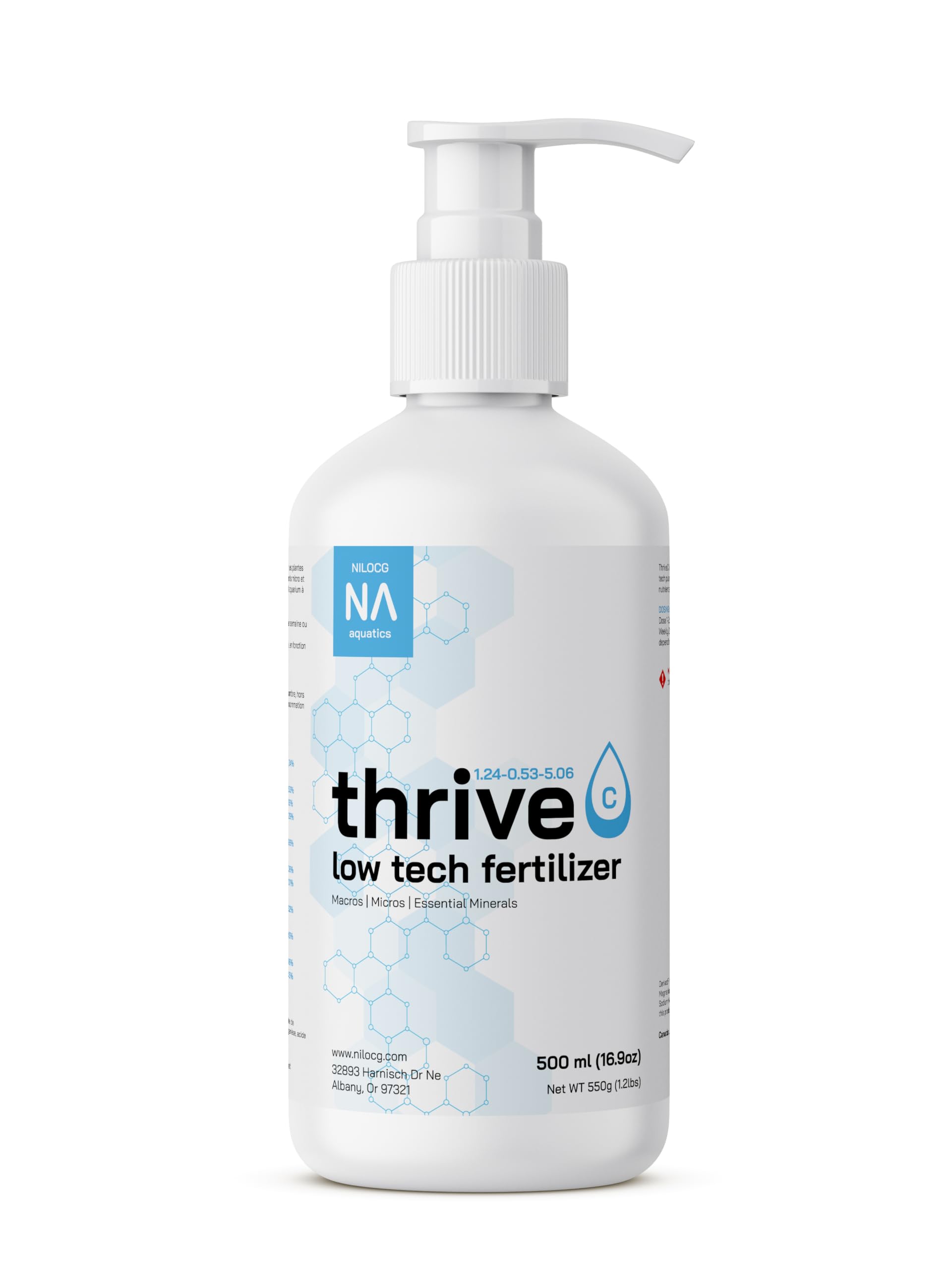
Rating: 4.6 ★ | Price: Premium | Form: Liquid | Nutrient Profile: Complete low NPK | Safety: Not shrimp-safe | Refrigeration Needed: No | Dosing Method: Pump bottle
Thrive C uses lower nitrogen and phosphorus concentrations than general-purpose plant foods, matching the slower nutrient uptake of tanks without CO2 injection. This targeted formulation supports steady leaf growth and improved coloration while keeping algae in check — a consistent outcome in low-tech setups with moderate light.
This fertilizer suits hobbyists running low-light, non-CO2 planted tanks who want a single-bottle solution for plants like anubias, ferns, and crypts. Dosing too high can trigger nitrate spikes that stress or kill sensitive fish — starting at half the recommended amount helps gauge your tank’s tolerance. The pump bottle has also been known to leak during shipping, so checking the seal on arrival is worth doing.
Pros
- Formulated to keep algae low in low-tech tanks without CO2.
- Visible weekly growth and deeper green color in non-CO2 plants.
- Lockable pump makes dosing easy and precise for any tank size.
Cons
- Bottle seal or pump may leak during shipping or storage, requiring inspection on arrival.
- Overdosing can cause nitrate spikes and fish loss in sensitive tanks.
Thrive C delivers on its promise for low-tech planted tanks — just dose conservatively to protect livestock and check the bottle for leaks before use.
Best for Budget Root Feeding
API Root Tabs 10ct

Rating: 4.5 ★ | Price: Budget | Form: Tablets | Nutrient Profile: Iron, potassium, carbon | Refrigeration Needed: No | Dosing Method: Push into substrate
API Root Tabs deliver essential nutrients to heavy feeders like crypts and swords at a budget-friendly price. The tablets dissolve quickly when inserted, creating temporary cloudiness in the water column, and their fragile structure can crumble during handling. This makes them a better fit for hobbyists who prioritize cost over aesthetics and can accept some mess, rather than those seeking the tidy, longer-lasting performance of Seachem Flourish Tabs.
Pros
- Boosts root growth for heavy feeders in low-tech tanks.
- Cost-effective way to feed root-heavy plants.
Cons
- Tablet structure can crumble during handling, especially in humid conditions.
- Rapid dissolution causes noticeable cloudiness in the water column.
Budget aquarists who can tolerate temporary cloudiness and handle tablets with care will find these effective for feeding heavy root feeders.
Best for High-Tech Tanks
Thrive+ All-in-One 500ml
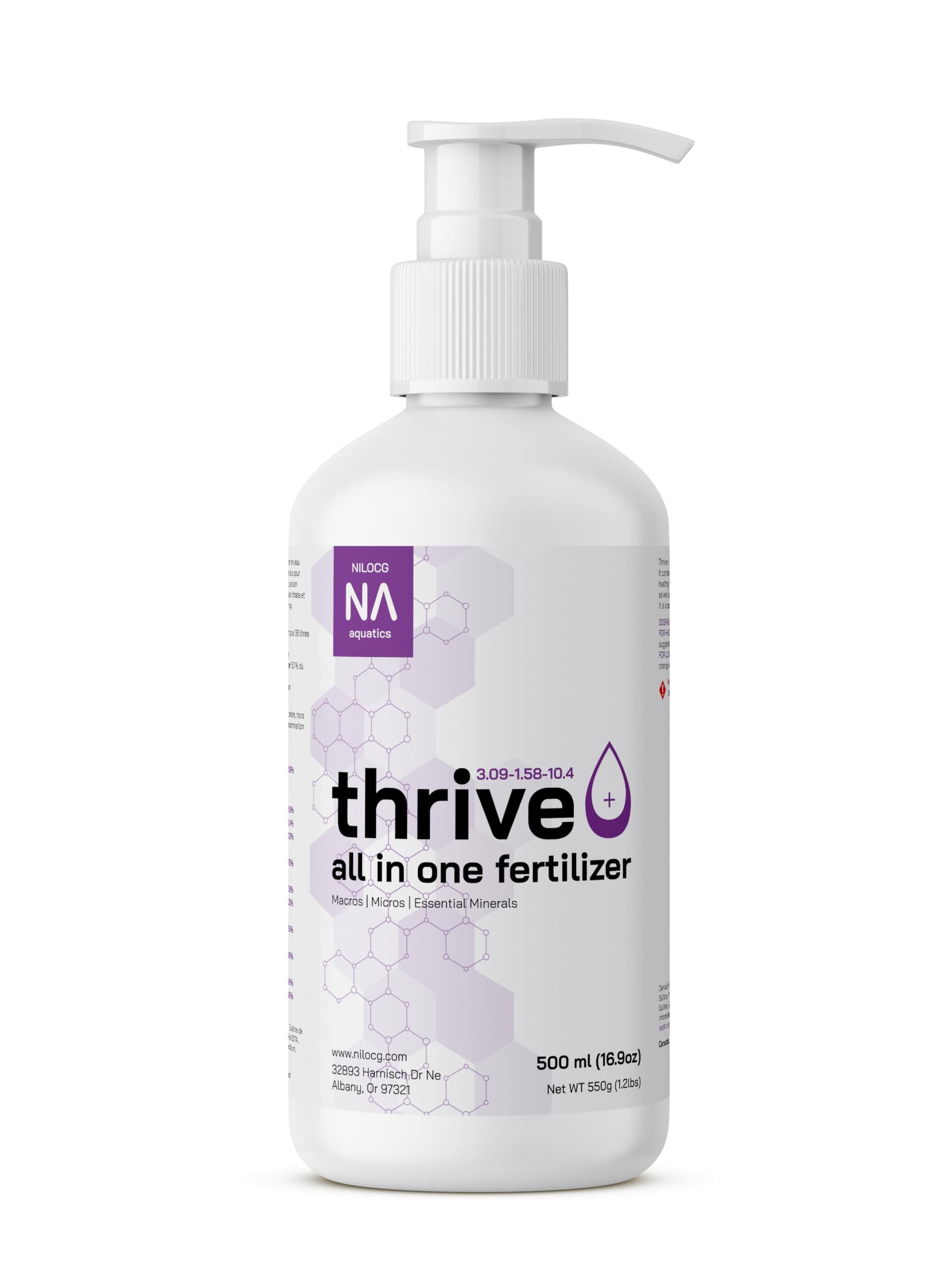
Rating: 4.5 ★ | Price: Premium | Form: Liquid | Nutrient Profile: Complete macro+micro | Safety: Not shrimp-safe | Refrigeration Needed: No | Dosing Method: Pump bottle
Thrive+ drives rapid, vibrant plant growth in high-tech aquariums with CO2 injection thanks to its concentrated all-in-one formula. However, the concentration introduces real risk: overdosing can trigger ammonia spikes that harm fish and shrimp, and the pump cap may arrive brittle or crack over time. This product demands precise dosing and stable water parameters – a poor match for beginners or anyone keeping sensitive invertebrates.
Pros
- Promotes fast plant growth and vivid leaf coloration in high-tech tanks
- Pump bottle design simplifies measuring and dosing
Cons
- Pump cap may crack after some use, potentially causing leakage
- In tanks with sensitive livestock, even slight overdosing can lead to ammonia spikes and loss of fish or shrimp
Best suited for experienced aquascapers running CO2 injection who can manage exact dosing – for anyone else, the growth benefits come with risks that outweigh the convenience.
Best for Advanced Regimens
Seachem Trace 500ml

Rating: 4.8 ★ | Price: Mid-Range | Form: Liquid | Nutrient Profile: Trace only | Safety: Not shrimp-safe | Refrigeration Needed: No | Dosing Method: Measured ml
Seachem Flourish Trace Elements delivers a concentrated blend of essential trace nutrients for planted tanks, making it a cost-effective addition to a multi-bottle regimen. It is not a standalone fertilizer — users must dose macros separately. The formula contains copper, which can harm shrimp in small or lightly stocked tanks, so it suits setups without sensitive invertebrates. For hobbyists already using Flourish or other macro supplements, this provides precise trace control at a mid-range price.
Pros
- Effective when combined with other Seachem products for complete plant nutrition
- Concentrated formula offers good value for trace supplementation
Cons
- Requires separate macro fertilizer dosing — not a complete solution on its own
- Contains copper, which can be lethal to shrimp in smaller tanks
Best for experienced aquarists who already dose macros and do not keep shrimp.
Best for Budget Supplement
Fluval Micro Nutrient 8.4oz

Rating: 4.5 ★ | Price: Budget | Form: Liquid | Nutrient Profile: Micro only | Safety: Not shrimp-safe | Refrigeration Needed: No
Fluval Plant Micro Nutrient delivers trace elements that green up leaves within days, at a price that’s hard to beat for nano tanks. However, it’s strictly a micro supplement – no nitrogen, phosphorus, or potassium – so it can’t replace an all-in-one fertilizer. The copper content makes it unsafe for shrimp or other sensitive invertebrates, and the dosing instructions don’t specify frequency, leaving some trial and error. It works best as a budget-friendly add-on for hobbyists already dosing macros in a low-tech setup, but falls short as a standalone solution.
Pros
- Notably improves plant health and green color within days of use.
- Very affordable option for small aquariums.
Cons
- Lacks macro-nutrients (N, P, K) – not a complete fertilizer.
- Contains copper – potentially harmful to shrimp and other invertebrates.
This supplement fits only if you already have a macro fertilizer and don’t keep shrimp – for a complete all-in-one, look to the top pick.
How to Choose
The right fertilizer depends on your tank’s lighting, CO2 level, and whether you keep shrimp.
Liquid vs. Root Tabs
Liquid fertilizers feed plants through the water column and are ideal for stem plants, mosses, and species that absorb nutrients via leaves. Root tabs, on the other hand, deliver nutrition directly to the substrate, making them essential for heavy root feeders like Amazon swords and crypts. The trade-off: liquids require consistent weekly dosing, while tabs can last months but may cause nitrate spikes if overplaced.
Nutrient Profile – Micro vs. All-in-One
Many products labeled ‘complete’ actually skip nitrogen and phosphorus, which are critical for growth. Micro-only fertilizers like Seachem Flourish supply trace elements and iron but will still leave plants pale if macros are lacking.
All-in-one formulas include NPK, but in high-tech tanks the ratios may be too low—meaning you’ll need separate nitrogen and phosphorus supplements.
Shrimp Safety – Copper and Invertebrates
Copper is a common micronutrient in plant fertilizers but is toxic to shrimp, even at low levels. If you keep Neocaridina or Caridina, look for a product explicitly labeled shrimp-safe, like ThriveS. Otherwise, you risk wiping out a colony with a single overdose.
Refrigeration – Not Just a Preference
Some premium liquid fertilizers, especially those with concentrated trace elements, require refrigeration after opening to maintain potency. Ignoring this can cause nutrient breakdown and cloudy water. If you don’t have fridge space, choose a formula that doesn’t need cooling.
Dosing Convenience – Pump vs. Measured Drops
Pump bottles (like the Thrive line) simplify dosing to one or two pumps per tank, reducing measurement errors. Measured milliliters require a syringe and are more prone to overdose. The downside: pump mechanisms can jam or break, especially after exposure to dry storage.
FAQ
Can I use Seachem Flourish in a shrimp tank?
Yes, but with caution. Seachem Flourish contains trace copper, so overdosing can kill shrimp. Use at half the recommended dose and monitor. If you have sensitive inverts, choose a shrimp-safe product like ThriveS instead.
Why are my aquarium plants turning yellow even after adding fertilizer?
Most likely your fertilizer lacks nitrogen or phosphorus. Many liquid products are micro-only and don’t supply these macros. Check the label for NPK; if absent, add a separate macro supplement or switch to an all-in-one formula.
Should I refrigerate liquid aquarium fertilizer?
Only if the product specifically requires it, like Seachem Flourish. Refrigeration preserves potency and prevents nutrient breakdown. Most other fertilizers can be stored at room temperature. Always check the manufacturer’s instructions.
How often should I replace root tabs in a planted tank?
Most root tabs last 3–4 months. Replace them when you notice slowing growth or yellowing new leaves. As a check, gently pull one tab—if it’s mostly dissolved, it’s time to replenish.