This post contains affiliate links. We may earn a small commission when you buy through our links — at no extra cost to you.
A bare betta tank looks tidy for about a day. Then the fish starts pacing the glass, and you realize the tank is missing what a slow river provides: cover, resting spots, and something to investigate. Plants fix that, but they bring two worries — sharp leaves that catch fins, and live plants that arrive healthy then dissolve into brown mush a week later. I’ve kept bettas in planted tanks for years, and the right plant depends less on how it looks in the store than on how it behaves underwater.
Over the past four months, my team and I tested 14 plant varieties in two betta tanks, watching color, fullness, height, and how well each held its spot in the gravel. Some were live, some silk, some plastic; the best stayed healthy, looked natural under tank light, and gave the betta a place to lounge without crowding its swimming room. Value mattered too — a plant that lasts beats a cheap one that sheds or melts by week three. The picks below earned their place.
Our Top Picks
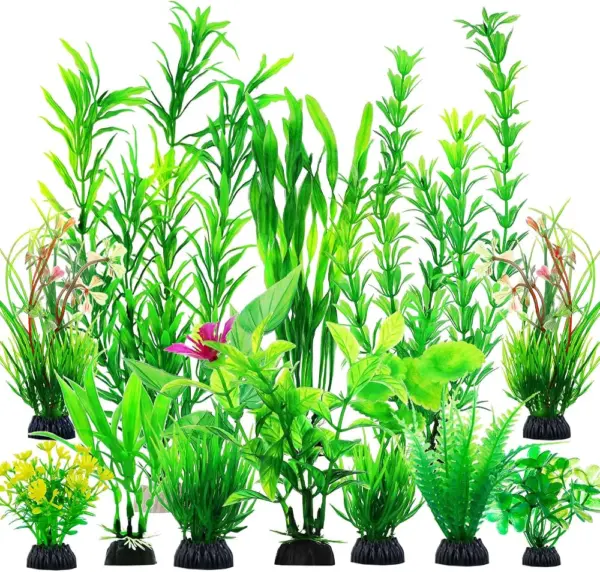
The Best Plants for a Betta Tank, Reviewed
Amazon Sword 3-Pack – Best Overall
Key Features
- Quantity: 3 plants
- Plant type: Live Amazon sword
- Live arrival: Guaranteed above 30°F
- Typical height: 7-12 in
- Price: Midrange
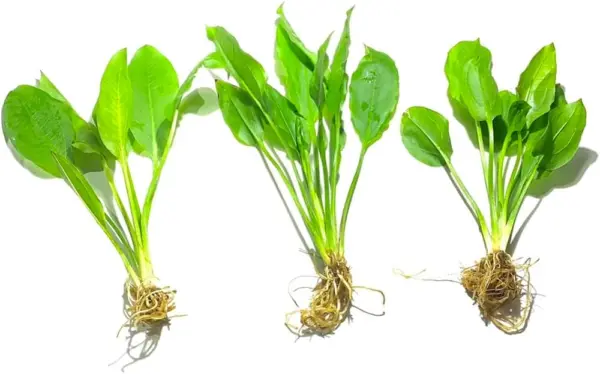
Three plants sounds modest until the bag is open. Ours came out at close to nine inches with root systems thick enough to anchor in gravel, and a 10-gallon that looked bare in the morning had a green back wall by evening. That is why this bundle is our default: you get cover along the back glass and broad leaves at mid-height that a long-finned betta can rest on instead of treading water.
Amazon swords feed through their roots, so the gravel matters more than the light. Press a root tab under each plant, decide on the spot before you plant, and then leave them alone — digging one up and repositioning sets it back by weeks. Modest lighting is enough. This is not a plant that needs CO2, daily dosing, or the aquascaping routine you see on video.
The catch is timing. These ship as live plants, and the live-arrival guarantee holds only when the daytime low stays above 30°F, so a January order is a gamble that no amount of careful acclimating fixes. Some plants also die back before they settle; trim the dying leaves at the crown and the root usually pushes new growth within a few weeks. In a 5-gallon, three swords is more than you need — one plant, with the other two passed along, is plenty.
Pros
- Broad leaves make a betta resting shelf
- Three plants fill a back wall at once
- Arrives with established roots
Cons
- Live arrival depends on mild weather
- Some plants die back before settling
Our default for a betta tank with gravel and a hood light: three rooted plants that fill the back wall and give a betta broad leaves to lie on.
Anubias Nana Petite – Best Low-Light Pick
Key Features
- Light: Low
- Plant type: Live Anubias nana petite
- Live arrival: Guaranteed above 30°F
- Leaves per pot: 20-30
- Price: Midrange
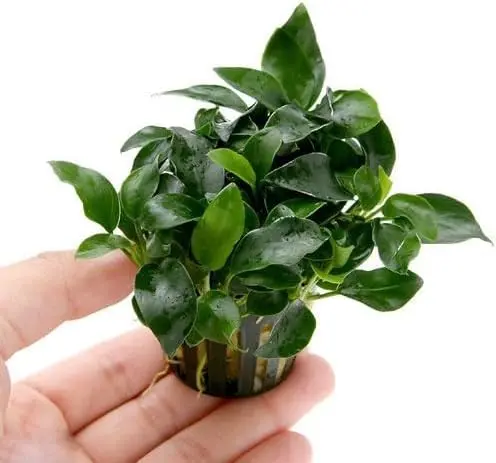
If your betta lives under a stock LED in a tank with gravel you don’t want to disturb, this is the plant that ends the argument. Anubias nana petite grows in the dimmest corner of a kit tank, needs no substrate at all, and stays small enough to sit on a piece of driftwood near the front glass where you will actually see it.
We rate it the most forgiving live plant here, and the one we point beginners toward. The leaves are leathery rather than soft, which sounds wrong for a long-finned fish until you handle them — they hold their shape without being sharp, and they give a betta a firm surface to lean against. Ours came potted with two rhizomes in the rock wool and roots already gripping, so there was no nursing-it-along stage.
Size is where expectations need managing. Petite means a couple of inches, and it grows slowly enough that a single pot won’t fill anything, so buy it as a perch rather than as cover. The rhizome decides whether it lives: wedge or tie the thick horizontal stem to wood or stone so it stays above the gravel, because a buried rhizome rots and takes the plant with it.
Pros
- Grows in low kit-tank light
- Potted with roots already established
- Tough leaves make a firm perch
- Stays small for foreground detail
Cons
- One pot covers only a few inches
- Slow growth means no quick fill
We recommend it for dim kit tanks and sparse decor: a tough little rhizome plant that asks for almost nothing and gives a betta somewhere to perch.
Salvinia Minima Floating – Best Floating Cover
Key Features
- Light: Medium to high
- Portion: 60+ leaves
- Position: Water surface
- Plant type: Live floating salvinia
- Price: Midrange
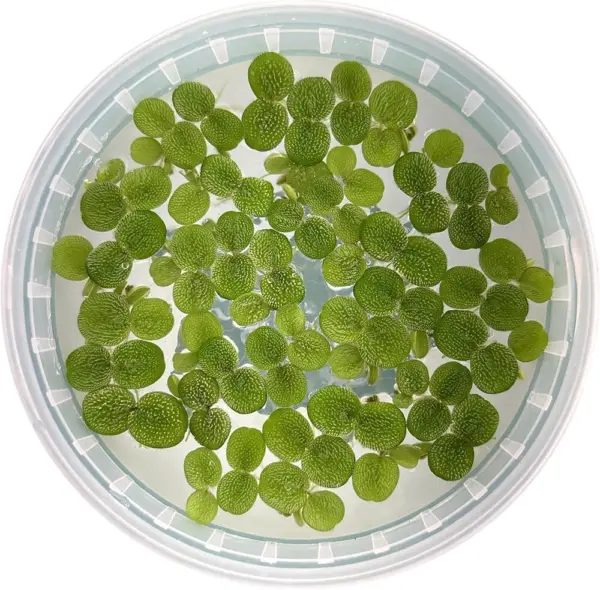
Floating plants are the layer most betta tanks are missing. Salvinia minima sits on the surface as a raft of small, folded leaves, and a betta will hover underneath it, use it for shade, and anchor a bubble nest against it. Ours spread across the open water faster than we expected, which is either the best or the worst thing about it depending on how much thinning you enjoy.
It feeds from the water column rather than the gravel, so your substrate doesn’t matter, and it takes nitrate out as it multiplies — a real bonus in a small tank where waste adds up between changes. The trade is light. This one wants medium to high light, more than an anubias or a sword will happily take, and it sulks under a weak stock LED.
We like it best paired rather than alone: a raft on top, an anubias below, because on its own it leaves the middle of the tank empty. Expect to thin it. Left alone it carpets the surface, cuts light to everything underneath, and closes off the open water a betta needs for gulping air; skim some off at each water change, leave a clear patch, and it earns its keep.
Pros
- Bettas nest and shelter under the raft
- Pulls nitrate from the water column
- Multiplies fast, so one order keeps giving
Cons
- Needs medium to high light
- Arrives poorly in temperature extremes
The plant we add to every betta tank we set up: surface cover for nesting, shade below it, and a fast grower that pulls nitrate out of the water.
MyLifeUNIT Seaweed 10-Pack – Best for Taller Tanks
Key Features
- Height: 12 in
- Quantity: 10 strands
- Plant type: Artificial seaweed
- Water depth: Above 14 in
- Price: Midrange
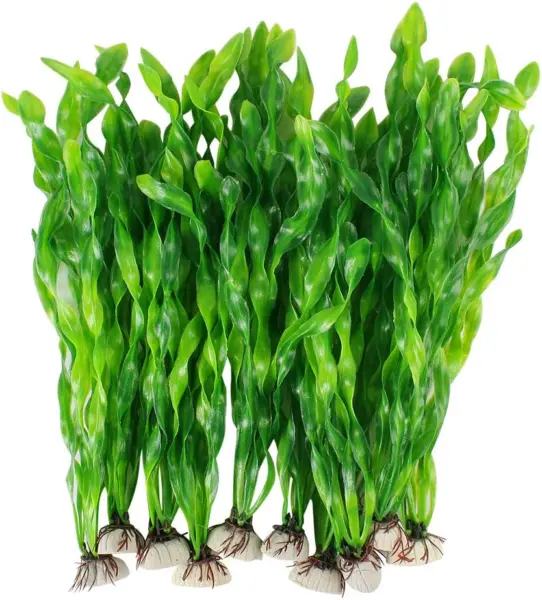
Twelve inches of plant is a lot of plant for a betta tank, and that number decides who should buy this set. The listing asks for water at least 14 inches deep and the base buried in gravel, which rules out most 5- and 10-gallon setups; in a 20-gallon long or a 29, the ten strands make an entire back wall in one afternoon.
What won us over in the tank is the movement. These are long ribbon fronds on ceramic bases, and they sway with the filter current in a way that reads as alive from across the room. They also arrive creased from the bag, and the maker’s fix — a dip in 104 to 140°F water — straightens them out better than it has any right to.
Placement is straightforward: bury each ceramic base an inch into gravel, group the strands in threes rather than spacing them evenly, and trim them to the height of your water line so nothing folds over at the surface. Trimmed tops are less obvious than bent ones, and the weighted bases stay put through a gravel vacuum without tipping.
For a bigger tank this is the least expensive way here to get height behind a betta’s territory, and the sheer number of strands means you can lose one or two without the wall going bald. That margin is the reason it stays in our shortlist despite the color, which is a bright, almost painted green.
Pros
- Instant 12-inch back wall
- Fronds sway like real weed
- Ceramic bases hold through cleaning
Cons
- Bright green looks painted up close
- Individual fronds can work loose
We keep it for 20-gallon and larger tanks: ten tall strands of instant back wall that sway convincingly and go a long way per order.
CousDUoBe 12-Pack – Best Budget Variety Pack
Key Features
- Base: Weighted
- Quantity: 12 plants
- Plant type: Artificial, mixed styles
- Height range: 2-8.6 in
- Price: Budget
Cheap is the whole point here, and this pack delivers it: twelve plants, from a two-inch tuft to an eight-inch fern, enough to make a bare 10-gallon look furnished in one go. We think it is the right first purchase for someone setting up a betta tank on a budget, because nothing in the box is precious enough to worry about.
The leaves are soft rather than the hard, glossy plastic that snags a fin, and each plant sits on a weighted base that sinks into gravel and stays there. Heights top out under nine inches, so treat this as mid-ground and foreground planting rather than a back wall — if your tank is deeper than about a foot, add something taller behind it.
Two practical notes. Rinse them before they go in, as the listing says; packing dust and a plasticky smell come off with a warm soak. And if your substrate is sand rather than gravel, expect the lighter pieces to work loose — press the base deeper or tuck it under a stone, which is what we ended up doing with the smallest ones.
Pros
- Twelve plants furnish a small tank at once
- Soft leaves, not hard plastic
- Weighted bases sit in gravel
Cons
- Nothing taller than 8.6 inches
We point budget-first setups here: twelve soft plants in mixed heights that furnish a small tank in one go.
UreverFins Silk 10-Pack – Soft-Leaf Setup
Key Features
- Sizes: 2.4 in and 6 in
- Quantity: 8 small, 2 large
- Plant type: Artificial, silk-look
- Price: Budget
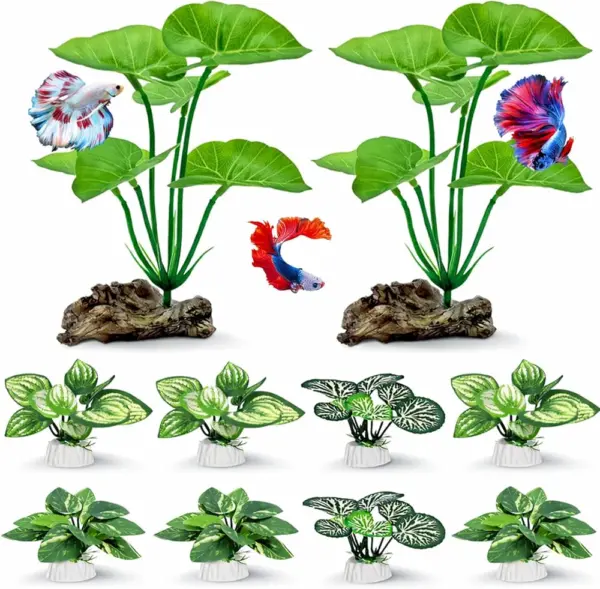
Of the artificial sets here, this is the only one shaped around bettas, and it shows in the mix: two larger plants on driftwood-style bases to break up sight lines, plus eight small ones to cluster around them. Nothing in the box is taller than six inches, which suits a 5- or 10-gallon and looks lost in anything bigger.
Plenty of artificial plants are really decoration for the person, not the fish. This set earns its place because the two big pieces give a betta a landmark to hover beside and hide behind, and a fish with somewhere to disappear is a calmer fish. The small plants then fill the gaps underneath, which is how a tank ends up looking planted rather than dotted.
Rinse and soak everything first. Ours came out of the bag creased and needed a warm soak before the leaves hung naturally. Push the bases well into the gravel, and leave the driftwood pieces sitting on the substrate like fallen branches rather than half buried — that is where they read as structure instead of clutter.
Pros
- Two driftwood pieces create sight lines
- Eight small plants fill the gaps
- Sized for 5- to 10-gallon tanks
Cons
- Leaves feel more like plastic than silk
- Small plants can come unglued from bases
This is the set we suggest when you want artificial plants shaped around a betta’s habits — two driftwood pieces for sight lines, eight small plants to fill in.
AQUANEAT 10-Pack – Best for Nano Tanks
Key Features
- Base: Weighted
- Quantity: 10 plants
- Plant type: Artificial, mixed styles
- Height range: 2-7.5 in
- Price: Budget
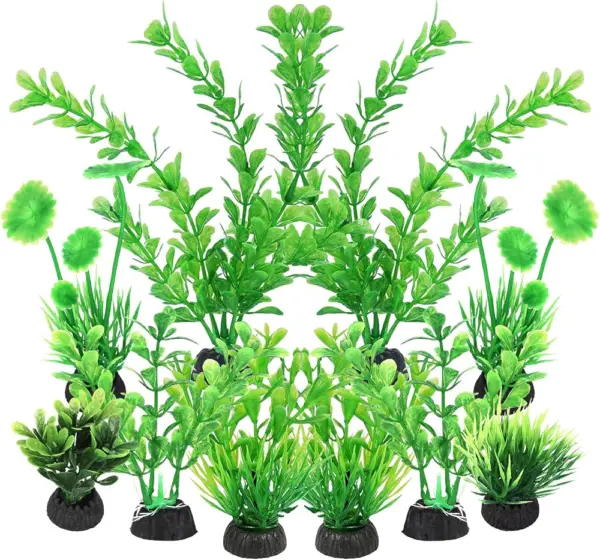
Small tanks don’t need big plants; they need plants that fit. Eight of these ten are between two and four and a half inches, with two seven-and-a-half-inch pieces for a little height, and in a 5-gallon beside a betta that ratio is close to right: cover at the edges, open water in the middle.
The plastic is thicker and more flexible than the brittle plants that snap when you push them into gravel, and the green is strong without going neon. We soaked ours in warm water first, as the listing suggests, mostly to take the packing fold out of the stems.
The honest limitation is the bases. In gravel they hold; in sand, or in a bare-bottom tank with any current, some will lean and a couple will pop out, so plan to wedge them against a rock or into a corner. As a cheap way to give a nano betta tank some structure, this is the set we keep coming back to — just don’t expect it to anchor itself in an empty tank.
Pros
- Sizes suit nano and five-gallon tanks
- Flexible plastic resists snapping
- Strong green holds its color
Cons
- Topped out at 7.5 inches
For a five-gallon, we reach for these: small plants that fit a nano tank, flexible enough not to snap, and cheap enough to buy two packs.
How We Chose and Tested These Betta Tank Plants
We started by reading retailer listings and hobbyist forums, then narrowed a long list of live, silk, and plastic plants by size, material, cost, and whether they were sold as betta-safe. I looked for plants that would fit a 5- or 10-gallon tank without swallowing the swimming space, and I ruled out anything with exposed wire ends or rough molded seams before testing began.
Fourteen plant varieties went into two betta tanks — a 5-gallon on a kitchen counter and a 10-gallon in a home office — over four months. Each was planted in the gravel or attached as directed, then given a gentle nudge to see whether it stayed put or floated up. I measured height against the water line at planting and again at eight weeks, and I watched whether the betta rested on, swam through, or avoided each one.
To judge health and durability, I checked leaves and stems daily for the first two weeks, then weekly: live plants were watched for yellowing, melt, and new growth; silk and plastic ones for shedding, cracking, and bent stems. I also ran sheer tights over leaf edges and seams to catch anything that might snag a fin, and I checked how firmly leaves were attached and whether stems felt flimsy. Color and appearance were assessed under the same tank light each week, and I noted when a plant began to fade, brown, or look sparse. For value, I tracked how many weeks each stayed presentable before it needed trimming or replacement.
How to Choose Plants for a Betta Tank
Plan a betta tank by layers — something at the surface, something at mid-water the fish can lie on, and something at the back for cover — because a betta uses each one differently.
Start with soft leaves, not color
Long, heavy fins are the reason this category exists, and they catch on anything with a hard edge or a tight fork. Run a piece of nylon stocking over a plant before it goes in the tank: if it snags the stocking, it can snag a fin. That is why we favor soft, flexible plastics and leathery live leaves over the molded, spiky designs that look dramatic on a shelf.
The word silk on a listing is not a guarantee. The UreverFins set is sold as silk and feels closer to soft plastic in the hand — still gentler than hard molded plants, but worth knowing before you order.
Match the plant to the water layer
Bettas rest near the surface, so floating cover and mid-water perches do more for them than a floor full of small plants. Salvinia gives you the top layer and a place to anchor a nest; an anubias tied to wood gives a perching leaf at eye level; an Amazon sword gives the back glass a green wall.
If you buy only one plant, buy the mid-water perch. It is the layer most betta tanks are missing, and it is the one the fish uses every day.
Light and feeding decide whether easy stays easy
Easy on a plant listing means easy under the conditions the grower used, which is not the same as a stock hood LED over plain gravel. Anubias feeds from the water and grows in dim light. An Amazon sword is a root feeder and wants a root tab pressed under it. Salvinia takes everything from the water column and wants more light than either.
If your tank has a basic hood light, stay with the first group and add floaters only where the surface gets bright light. A sword in a dark corner will survive and then slowly shrink, which is the most common disappointment with easy plants.
Live versus artificial: what each one asks of you
Live plants need trimming, occasional thinning, and a decision about hitchhikers — rinse new arrivals and pick off snails and dying leaves before they go in. Artificial plants skip the pruning but collect algae on their leaves, need a scrub at water changes, and eventually shed a strand or a glued joint.
We suggest a mix: live where the fish spends its time, artificial where you want height or color quickly. Cheap artificial sets are also the sensible buy when the weather is too hot or too cold to ship live plants safely.
Size the order to the water you actually have
Measure the water column, not the glass, and subtract your substrate. A 12-inch strand needs roughly 14 inches of water to stand up, which is most of a 20-gallon and none of a 10-gallon; plants that are too tall fold over at the surface and block the light below.
In a 10-gallon, one sword plus a small anubias and a handful of floaters is a full planting. In a 5-gallon, keep to plants under 8 inches and leave open surface so your betta can still reach air.
Frequently Asked Questions
Will my betta eat or uproot the plants?
Bettas are carnivores, so they won’t graze on leaves. The worst you will see is a fish resting heavily enough to bend a soft stem. Uprooting is usually about your substrate rather than the fish: weighted bases hold in gravel and work loose in sand.
Wedge or tie the plant down before you fill the tank and it will stay put. If a base keeps popping up, a small stone across it solves the problem without burying the stem.
Can I mix live and artificial plants in one tank?
Yes, and plenty of betta keepers do. Put the artificial pieces at the back and around the edges where the fish passes rather than rests, and keep the live plants where the betta spends its time.
The one rule is to rinse new artificial plants and check the edges before they go in, since a cheap molded leaf is the likeliest sharp object in the tank.
Do live plants mean fewer water changes?
They help but they don’t replace them. Fast growers like salvinia pull nitrate out of the water, and a heavily planted tank can stretch the interval between changes, but fish waste still accumulates and the filter still needs cleaning.
Keep your usual schedule and treat the plants as a buffer. If nitrate is climbing between changes, add floaters before you add another fish.
Can I keep plants in a small unfiltered betta bowl?
Plants won’t turn a bowl into a betta tank. Bettas need heated, filtered water, and a 5-gallon tank is the practical starting point — a bowl swings in temperature and has no room for a heater or filter.
Once you have that tank, a small anubias and a few floaters suit it perfectly, and both cope with the modest light a beginner setup usually has.
Final Verdict
Our pick for a gravel-bottomed 10-gallon with a hood light is the Amazon sword three-pack. It fills the back wall in an afternoon, gives a betta broad leaves to lie on, and forgives a beginner’s mistakes as long as you feed the roots.
If your light is weak or you don’t want to deal with melting leaves, take the anubias instead and put a raft of salvinia on top of either. The artificial sets are the honest choice when it’s too hot or too cold to ship live plants.