This post contains affiliate links. We may earn a small commission when you buy through our links — at no extra cost to you.
Aquarium glue seems simple—until you see that white residue appear on your driftwood. The frustration is real, but it’s not a flaw of the glue; it’s a sign you’re using the wrong type for your project.
Most cyanoacrylate gels are repackaged super glue, and the real difference is how they handle moisture. Some dry clear if kept dry, others turn milky the moment they touch water. Silicone and epoxy serve completely separate roles—repairs and rock structures—and using one for the other guarantees failure.
This guide maps each adhesive to its intended job: cyanoacrylate for plants and corals, epoxy for rock arches, silicone for tank seals. You’ll know exactly which tube to reach for and where to hide the inevitable white spots.
Top Picks
Best for Plants & Wood
Seachem Flourish Glue

Rating: 4.3 ★ | Price: $$ | Adhesive Type: Cyanoacrylate gel | Residue: White when wet | Cure Time: Seconds | Underwater Use: Yes (dry better)
Seachem Flourish Glue is a cyanoacrylate gel that holds moss, anubias, and other aquatic plants securely to driftwood and rock. The thick formula stays where you put it during application, reducing frustration compared to runnier alternatives that slide off vertical surfaces.
The glue bonds within seconds on dry surfaces, which is the recommended method even though it can work underwater. The tradeoff of drying surfaces first is minor compared to the benefit of a bond that doesn’t let plants float away during tank filling. This predictable behavior makes it a staple in planted tank setups.
Where the glue falls short is appearance: the white residue that forms when exposed to moisture is visible if not placed strategically. This doesn’t affect hold but matters for visible mounting points — behind leaves or in crevices hides it well. For aquascapers who value invisible bonds, a different product (like a gel that dries clear) would be a better fit.
Freshwater planted tank hobbyists will get the most out of this glue — attaching epiphytes like anubias, bucephalandra, or moss to hardscape. It’s less suited for coral mounting in saltwater (the reef-focused sibling in this set handles that better) or for applications where the residue can’t be covered. The tube design is standard for cyanoacrylate gels: a nozzle that can clog if not cleaned, though this is typical for the category.
Pros
- Holds moss and anubias securely to wood and rock
- Thick gel stays in place during application on vertical surfaces
- Bonds within seconds, reducing time holding plants in position
- From a brand with a long track record in the aquarium industry
Cons
- White residue after drying is visible if not placed behind leaves or in crevices
- Some tubes may arrive with hardened or uncured glue inside
Flourish Glue is the right call for freshwater planted tank hobbyists who want a consistent plant-to-hardscape bond and don’t mind working around the visible residue by strategic placement.
Best for Coral Frags
Seachem Reef Glue

Rating: 4.4 ★ | Price: $$$ | Adhesive Type: Cyanoacrylate gel | Residue: Clear when dry | Cure Time: 5 min full | Underwater Use: Yes (dry better)
The thick gel consistency of Seachem Reef Glue stays put on vertical or overhanging rock surfaces without running off, and it cures quickly even when applied underwater. This makes it a go-to for mounting coral frags in saltwater setups. Compared to the top pick (Seachem Flourish Glue), which is better suited for freshwater plant attachment, Reef Glue trades a cleaner application for a more tacky, fast-setting formula that reefers rely on for precise frag placement.
This glue is best for experienced reef hobbyists who already have a system for handling cyanoacrylate tubes. The cap has a tendency to fuse shut after the first open, and the nozzle can clog, requiring a small pin or cap-clearing tool to keep it flowing. The gel also continues to ooze from the tip after use, which can lead to wasted product and a sticky work surface. Those willing to manage these packaging quirks will get a strong, reliable bond for coral mounting.
Pros
- Thick gel clings to vertical rock without running off
- Fast underwater cure for mounting coral frags
- Forms a strong bond that holds frags securely once set
Cons
- Tube cap may glue itself shut after first use, and nozzle clogging can interrupt the job
- Glue continues to ooze from the nozzle after application, leading to sticky cleanup and wasted product
Best for reef hobbyists who prioritize strong vertical hold and fast underwater curing over a mess-free tube design; expect to manage the packaging quirks with a little prep.
Best for Budget Plants
Hygger CO2 Glue 2pk

Rating: 4.4 ★ | Price: $ | Adhesive Type: Cyanoacrylate gel | Residue: Can dry white | Cure Time: 5 min full | Underwater Use: Yes (dry better)
The Hygger CO2 twin-pack delivers functional cyanoacrylate gel for a low per-tube cost, making it an economical choice for attaching moss and small plants to hardscape. While the top-selling Seachem plant glue offers more consistent bond strength, the Hygger’s price advantage matters when you need to glue multiple small items across a tank. The savings come with occasional variability in how well each tube holds, so this glue is better suited to projects where a loose spot can be easily re-glued.
Best for hobbyists on a tight budget who are adding plants to established aquascapes rather than building from scratch. The adhesive’s consistency can vary from tube to tube, so it’s not the right choice for anchoring prized driftwood or heavy rock structures. White residue is possible on visible surfaces, though it can be hidden behind foliage.
The gel consistency stays put on vertical surfaces during application, and the formula is safe for fish and invertebrates once cured. Drying time is adequate for most small jobs, but in humid conditions it may take longer to set—allowing time to adjust plant placement if needed.
Pros
- Good bond quality for basic aquascaping tasks at a low per-tube cost
- Twin-pack provides two tubes for small to moderate projects
- Specifically formulated for aquarium use, safe for plants and fish
Cons
- White residue can appear on exposed surfaces if not placed strategically
- In humid environments, the curing period may exceed the stated 5 minutes
An entry-level glue that works for basic aquascaping when you’re willing to trade a bit of consistency for a lower price.
Best for Rock Structures
Instant Ocean Epoxy

Rating: 4.3 ★ | Price: $$ | Adhesive Type: Epoxy putty | Residue: Dries white | Cure Time: 24 hours | Underwater Use: No
This epoxy putty forms rock-hard bonds on dry rock surfaces within 24 hours, making it a practical choice for building arches, caves, and stable hardscape before adding water. Unlike cyanoacrylate glues used for plant or coral attachment, this product is purpose-built for structural aquascaping on land.
This is for aquascapers who plan their hardscape layout before flooding the tank – a common approach for achieving stable, sculptural rock formations. The sticky putty requires kneading with wet hands to avoid a messy application, a minor trade-off for the structural strength it delivers.
Pros
- Creates strong bonds on dry rock for structural aquascaping
- Reasonable price for the amount, suitable for large projects
- Cures to a rock-hard finish within 24 hours
Cons
- Will not bond to wet or submerged surfaces – requires dry application
- Sticky putty that clings to fingers; wet hands help during kneading
A targeted tool for dry rock aquascaping, not a general aquarium adhesive – ensures stable structures when applied correctly.
Best for Tank Repairs
SELSIL Silicone Sealant
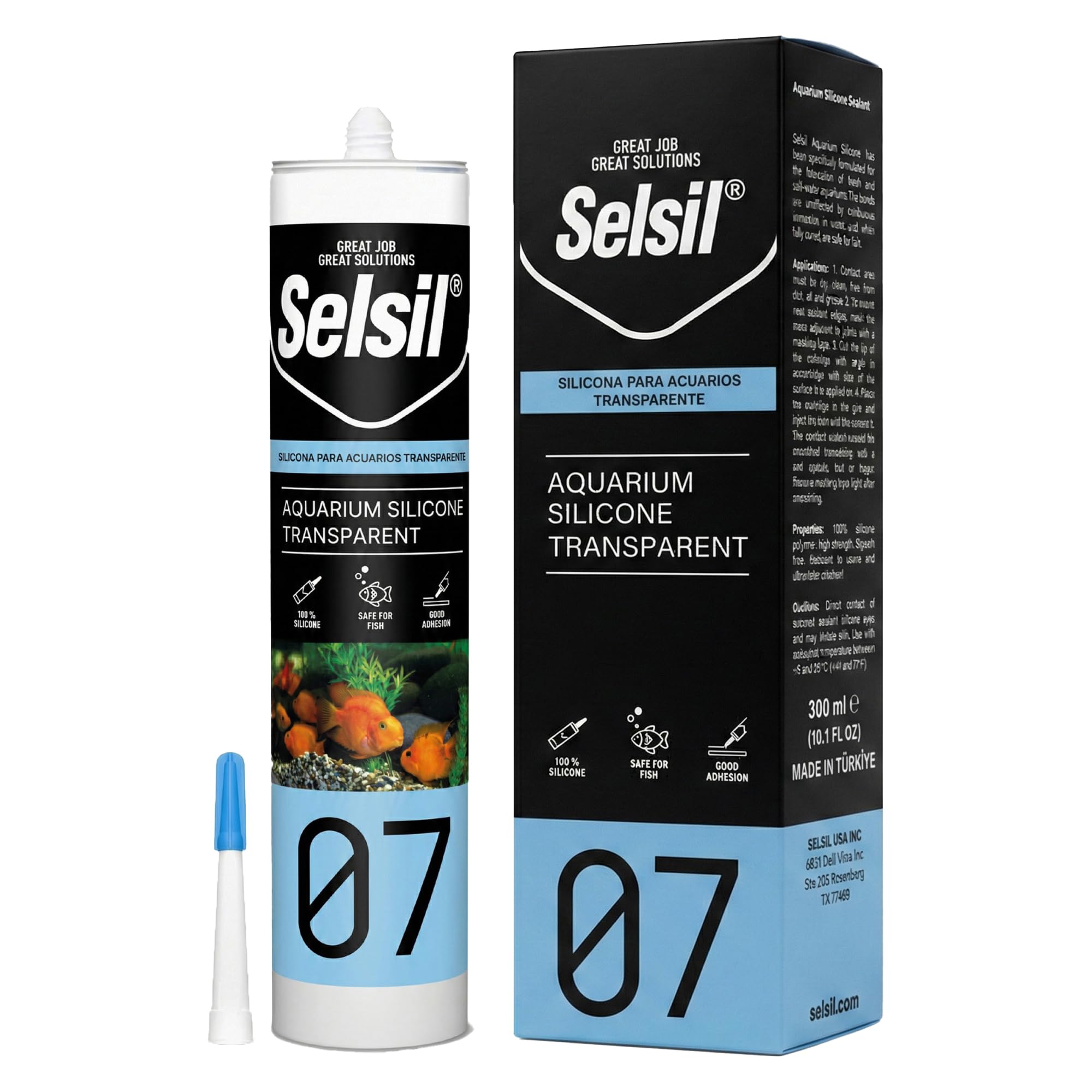
Rating: 4.6 ★ | Price: $$ | Adhesive Type: Silicone sealant | Residue: Clear when cured | Cure Time: 24 hours | Underwater Use: No
For tank repairs and securing heavy decorations, this clear silicone forms a flexible, leak-stopping bond that holds up in both freshwater and saltwater environments. Unlike cyanoacrylate glues designed for plant attachment, this sealant is intended for glass-to-glass and glass-to-silicone seams.
This is the right choice for hobbyists resealing aging seams or anchoring heavy rocks and driftwood. The tradeoff: a strong vinegar-like odor during curing requires good ventilation, and full cure takes 24 hours. Adhesion may not hold on old silicone residue or wet surfaces, so proper surface prep is necessary.
Once cured, the sealant remains flexible rather than brittle, accommodating the slight movements of glass panels under water pressure. This reduces the chance of future leaks from stress points.
Pros
- Seals leaks and bonds glass securely.
- Remains flexible after curing, preventing cracks from tank movement.
- Suitable for both freshwater and saltwater aquariums.
Cons
- Adhesion may not hold on old silicone residue or wet surfaces; careful surface prep is needed.
For tank resealing and securing decorations, this silicone does the job at a mid-range price—just ensure good ventilation during cure.
Best for Multi-Project
RA AquaTech 4pk

Rating: 4.3 ★ | Price: $ | Adhesive Type: Cyanoacrylate gel | Residue: White when wet | Cure Time: 10 min full | Underwater Use: Yes
This 4-pack offers a practical cost-per-tube advantage over single-tube options, giving hobbyists a ready supply for repeated small gluing jobs without repurchasing often. The trade-off is that the glue dries white—noticeable in visible placements—and cure time can stretch past 30 minutes in humid conditions.
Best suited for budget-minded aquascapers who value having glue on hand over invisible bonding. The white residue is acceptable for hidden attachment points or underwater where aesthetics matter less, and the variable cure time simply requires patience during application.
Pros
- Affordable multi-pack for multiple small gluing projects
- Works in both freshwater and saltwater tanks
- Heat resistant and safe for aquarium use
Cons
- In visible locations, the glue leaves a white residue that stands out
- Cure time can extend beyond 30 minutes in humid conditions
For hobbyists who glue often and want a cost-effective supply, this four-pack delivers functional bonds—just account for the visible residue and slower cure pace.
Best for Tank Sealing
Aqueon Silicone

Rating: 4.5 ★ | Price: $ | Adhesive Type: Silicone sealant | Residue: Clear | Cure Time: 24-48 hours | Underwater Use: No
For resealing glass aquariums, this silicone creates a durable, flexible barrier that stops leaks. It is not a glue for attaching plants or corals — those require cyanoacrylate-based adhesives. The tube seal may burst when squeezing, causing messy spills, and the strong vinegar odor calls for good ventilation during cure.
Pros
- Creates a waterproof, flexible bond for tank repairs.
- Easy to apply and cures to a clear finish.
- Budget-friendly price for a single tube.
Cons
- Tube seal may burst during application, causing messy spills.
- Strong vinegar odor requires ventilation during the 24-48 hour cure.
Choose this if your project is strictly resealing a tank — for plant or coral attachment, look to a cyanoacrylate gel instead.
Best for Underwater Fixes
1DFAUL Glue 2pk

Rating: 4.3 ★ | Price: $ | Adhesive Type: Gel cyanoacrylate | Residue: White when wet | Cure Time: 20 sec initial | Underwater Use: Yes
Holds plants and rocks when applied submerged, even on wet surfaces, making for quick underwater fixes without draining the tank. The gel-based cyanoacrylate bond sets in about 20 seconds, and the included tweezers help with precise placement. However, the glue leaves a white residue that is more pronounced when cured underwater, so it’s not suited for appearance-critical aquascapes. Adhesion can be inconsistent on smooth surfaces, with some tubes providing a weaker hold. For budget-friendly aquascaping where visible glue lines won’t be front and center, this trade-off is manageable.
Pros
- Bonds underwater without draining the tank, holding plants and rocks in place.
- Includes tweezers for precise placement, adding value at a low price.
Cons
- Visible white residue can appear when applied underwater, distracting in prominent spots.
- Adhesion may be inconsistent on smooth surfaces, with some tubes providing a weaker bond.
If you need a quick, budget-friendly glue for underwater repairs where appearance isn’t a priority, this 2-pack holds plants and rocks well enough for the price—just avoid using it on display pieces.
Best for Hardscape Only
Hygger Liquid Glue
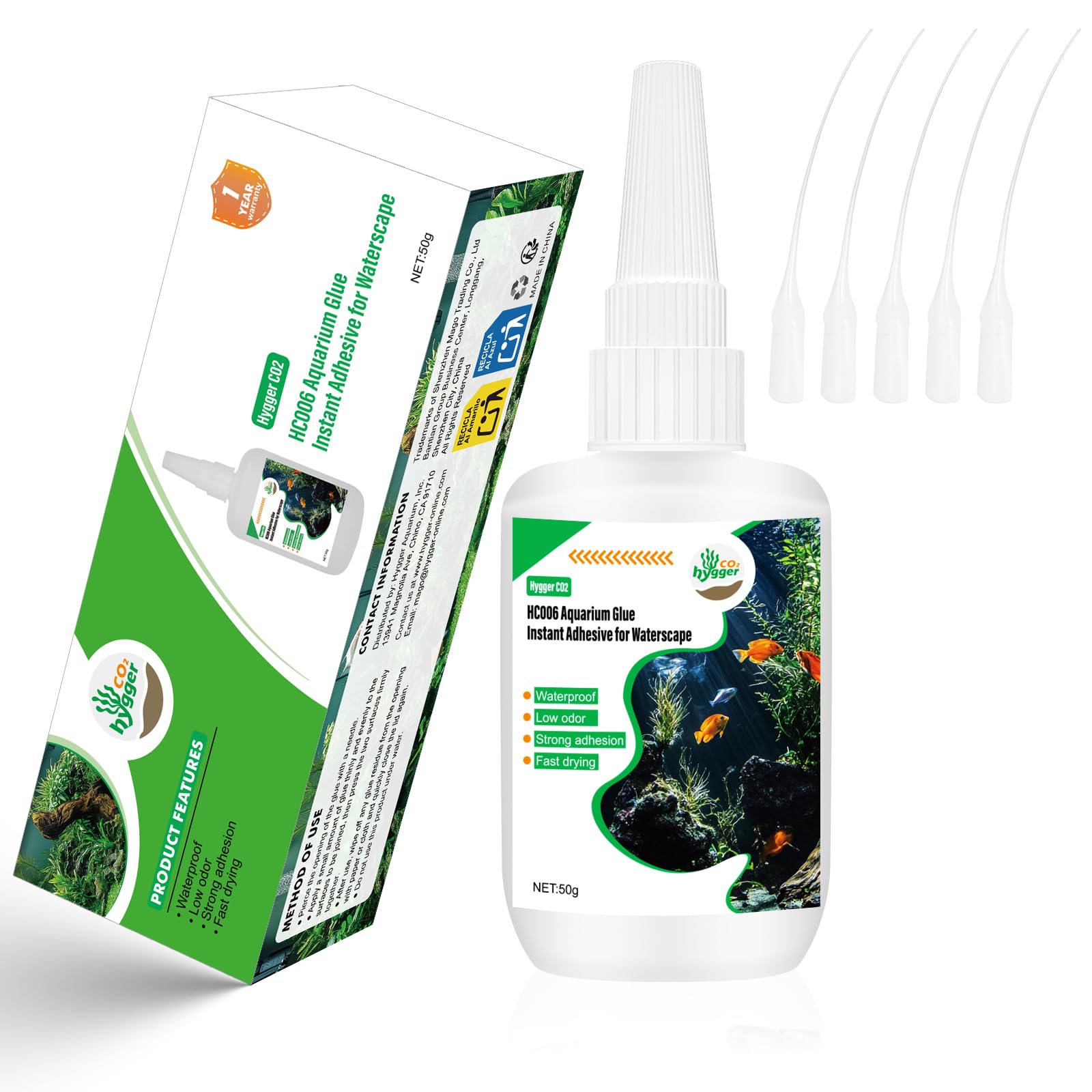
Rating: 4.4 ★ | Price: $$ | Adhesive Type: Liquid cyanoacrylate | Residue: Transparent dry | Cure Time: 24h full | Underwater Use: No
The Hygger liquid glue creates an extremely strong bond between rocks and wood, holding heavy pieces together like cement when used with a cotton or wood powder medium. It dries quickly, making structural aquascaping straightforward. However, this is a specialized adhesive: it cannot be used on live plants or corals, and it is not suitable for underwater application. The strong fumes during curing also require good ventilation. If your project is purely dry rock or wood assembly, this glue performs well – but for attaching plants or corals, look to a cyanoacrylate gel designed for that purpose.
Pros
- Creates a cement-strong bond between heavy rocks and driftwood.
- Fast curing when used with a medium (cotton or wood powder) – speeds up aquascaping projects.
Cons
- Not suitable for live plants or corals – the bond will not form on organic or underwater surfaces.
- Strong fumes and smoke during curing can cause eye irritation; ventilation is required.
This glue fits dry rock aquascaping projects where a permanent, cement-like bond is needed – but only if you skip plant attachment and work above water.
Best for Cheap but Risky
Bellisinno Glue 2pk
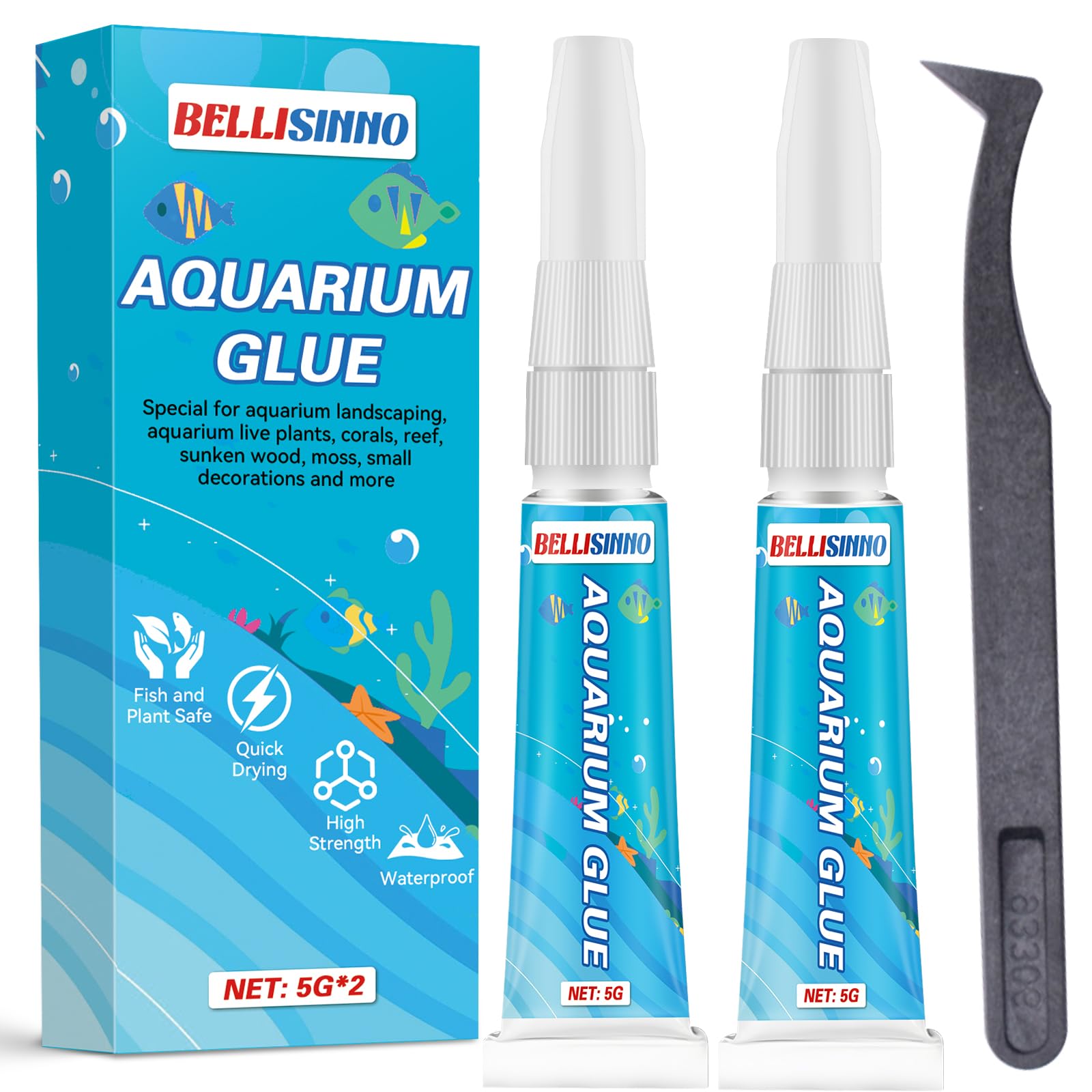
Rating: 4.2 ★ | Price: $ | Adhesive Type: Cyanoacrylate gel | Residue: White underwater | Cure Time: 5 min full | Underwater Use: Yes
This two-pack of cyanoacrylate gel costs less than most single tubes from name brands. It bonds moss and small plants to wood or rock underwater, making it a quick option for budget builds. However, performance varies between tubes, and some applications may produce white residue. These factors make it a gamble for valuable aquascapes but acceptable for temporary fixes or non-critical projects.
Pros
- Budget-friendly two-pack costs less than most single tubes of aquarium glue.
- Bonds moss and small plants to wood or rock underwater.
Cons
- Water cloudiness and a strong chemical smell have occurred in some cases.
- Bonding strength can vary; some tubes may crumble or fail to hold.
This two-pack works for hobbyists who need an inexpensive glue for non-essential attachments where a failed bond or visible residue won’t cause problems.
Best for Budget Sealing
LISRUX Silicone
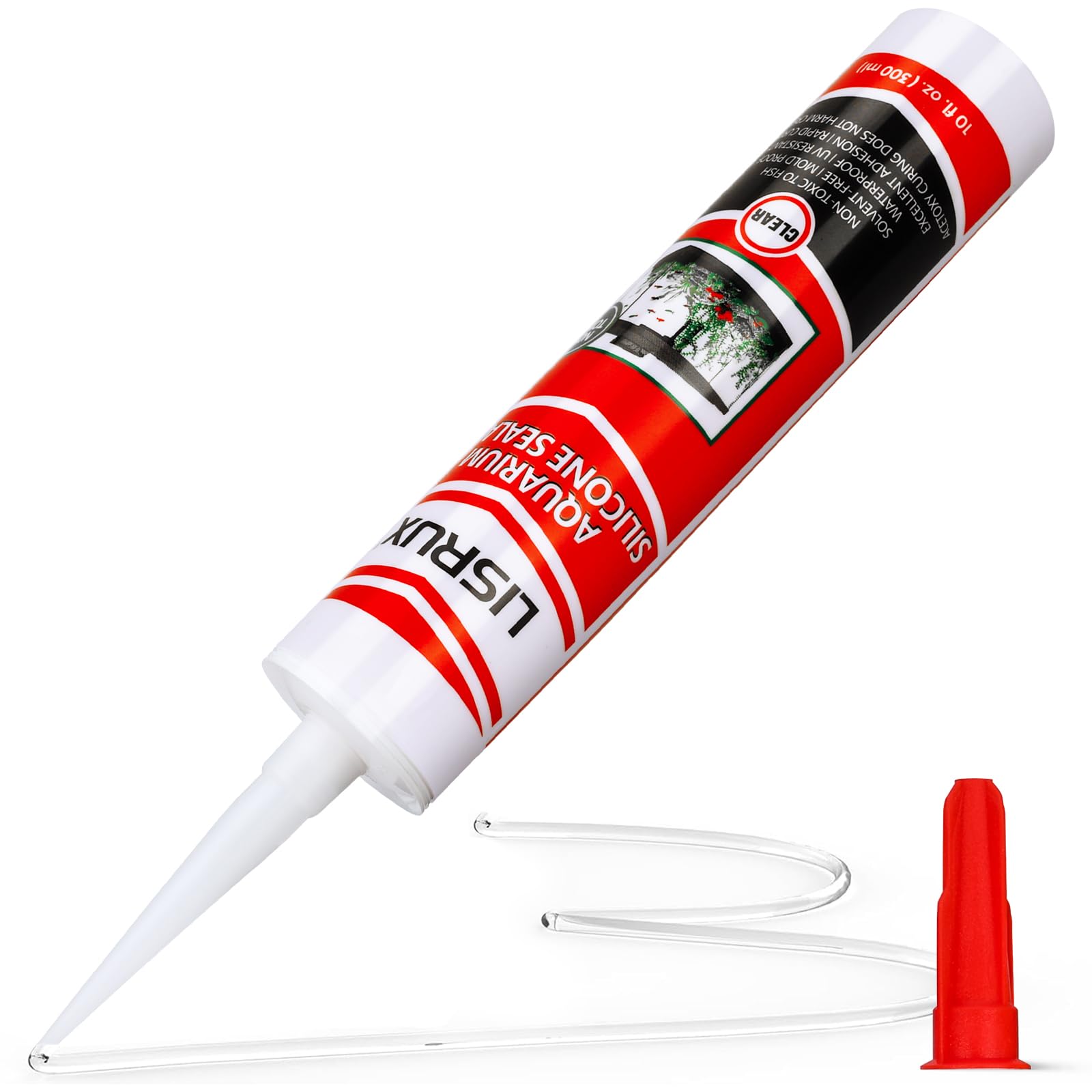
Rating: 4.5 ★ | Price: $ | Adhesive Type: Silicone sealant | Residue: Clear | Cure Time: 48h full | Underwater Use: No
The LISRUX Silicone delivers a smooth, consistent bead that cures to a clear, flexible seal in about 48 hours — a good fit for sealing terrariums, vivariums, or smaller tanks where absolute long-term holding isn’t the primary concern. The application is notably mess-free, and the price per volume undercuts most competitors. However, this sealant has a shorter track record compared to established brands, so it’s best reserved for projects where you can accept some uncertainty about durability beyond the first year. Strong vinegar odor during cure requires good ventilation, typical of silicones in this category.
Pros
- Smooth, consistent application with minimal mess.
- Good value for the volume compared to other clear silicones.
Cons
- Strong vinegar odor during curing requires good ventilation.
A solid choice for budget-conscious hobbyists sealing terrariums, vivariums, or small tanks where you can trade some long-term track record for smooth application and low cost.
How to Choose
The single most important insight: cyanoacrylate glue turns white when applied to wet surfaces, so plan to hide glue points behind plants or rocks.
Adhesive Type
Cyanoacrylate gel is the go‑to for attaching plants and corals—it bonds in seconds and is fish‑safe once cured. Silicone sealant is for glass‑to‑glass repairs and large decorations; it stays flexible but takes a full day to cure. Epoxy putty creates rock‑solid connections on dry hardscape but fails on wet surfaces.
Choosing the wrong type is the most common mistake: silicone won’t hold a plant, and cyanoacrylate won’t seal a leak. Match the adhesive to the job.
Cure Time and Underwater Use
Most cyanoacrylate gels set in under a minute on dry surfaces, but application underwater slows the bond and increases white residue. Gels that claim underwater use still perform best when both surfaces are blotted dry first.
Silicone requires 24–48 hours of dry curing—adding water too early weakens the seal. Epoxy needs a full 24 hours on dry rock before the tank is flooded. If you need an instant hold in a wet tank, only cyanoacrylate gel (applied with care) will work.
White Residue Visibility
White residue is a chemical reaction between cyanoacrylate and moisture—it’s unavoidable when the glue touches water. Gels that market themselves as ‘clear’ often still turn white underwater, just less noticeably.
The practical solution is strategic placement: put glue on the back of a rock, under a moss patch, or behind a piece of wood. If you need invisible bonds in a highly visible spot, consider epoxy putty on dry land or a clear‑drying silicone for non‑plant applications.
Tube Reliability
Cyanoacrylate tubes are prone to clogging, especially when the nozzle gets wet or the cap isn’t sealed tightly. A single clog can waste half a tube. Multi‑packs offer backups but don’t solve the root issue.
Look for tubes with a long, narrow nozzle that you can cut small to control flow. Squeeze gently—hard squeezing can burst the tube seam. Some brands (like Seachem Reef Glue) have a reputation for cap failure; storing the tube upright and wiping the nozzle before capping helps.
Volume per Pack
Cyanoacrylate gels degrade once opened—exposure to air cures the glue inside the nozzle. Multiple small tubes (5‑10g each) are more practical than a single large tube because you can replace a clogged tube without losing the whole supply.
For occasional use, a two‑pack or four‑pack lasts months. For frequent aquascapers, a five‑pack provides backup but introduces the same quality‑control variation across tubes. Budget packs often have inconsistent adhesion, so the discount may cost you in failed bonds.
FAQ
Why does aquarium glue turn white after I put it in water?
Cyanoacrylate reacts with moisture and forms a white, foamy byproduct. This happens instantly when the glue touches water or humid surfaces. The only way to avoid it is to apply the glue on completely dry surfaces and let it cure before submerging. Even then, some white edges may appear over time.
Can I use regular super glue in my aquarium?
Yes, if it is 100% cyanoacrylate with no additives. Most standard ‘super glue’ gels are chemically identical to aquarium glues, but you must avoid any product labeled ‘brush‑on,’ ‘no‑run,’ or that contains rubber, plasticizers, or solvent accelerators. Pure cyanoacrylate is safe once cured, but you take the same white‑residue risk.
How long does aquarium silicone sealant take to cure before I can add fish?
Full cure time is 24–48 hours at room temperature with good ventilation. After 24 hours the seal feels dry but may still off‑gas acetic acid (vinegar smell). Wait the full 48 hours before filling the tank, then cycle the water for at least 24 hours before adding fish to ensure no residual acidity remains.
What’s the best glue for attaching moss to driftwood?
A cyanoacrylate gel like Seachem Flourish Glue or RA AquaTech works well. Apply a thin layer to the wood, press the moss onto it, and hold for 10–15 seconds. The glue will turn white, but you can hide it by placing more moss on top. Avoid liquid cyanoacrylate—it soaks into the wood and leaves a weaker bond.