This post contains affiliate links. We may earn a small commission when you buy through our links — at no extra cost to you.
The gap between marketing claims and first-week reality is wide in aquarium fertilizers. Active soils promise lush growth but often deliver a dust storm that tests your patience. Root tabs boast simplicity but some leave your water looking like tea for days.
Understanding which nutrients each product actually provides—and how it behaves in your tank—is the real shortcut. This guide matches each option to specific tank setups so you know exactly what to expect before the bag hits the substrate.
Top Picks
Best for Planted Tanks & Shrimp
Fluval Plant & Shrimp Stratum
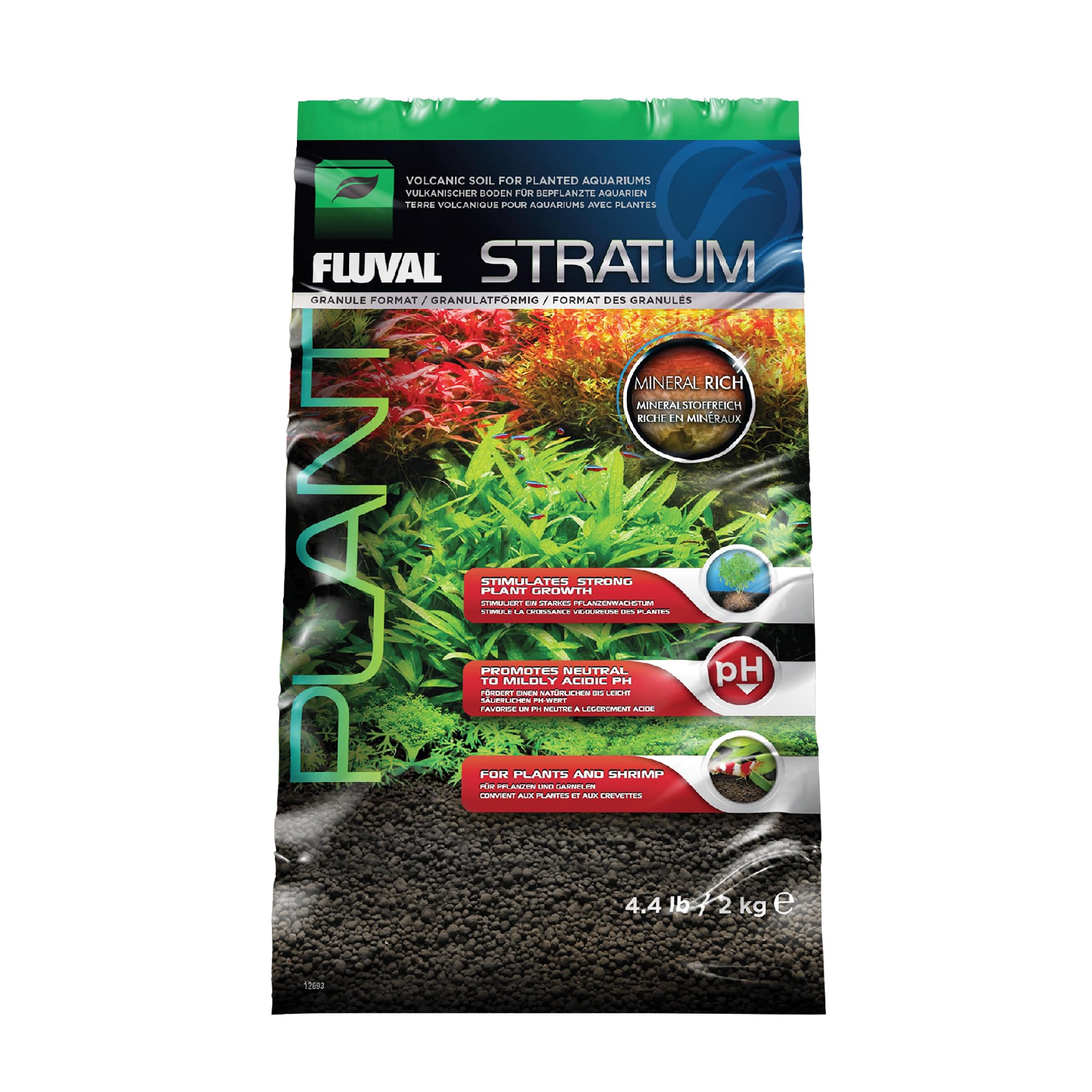
Rating: 4.7 ★ | Price: $$ | Nutrient Profile: Active soil (buffers pH) | Dose Format: Bag (4.4 lbs) | Water Clarity: Cloudy 24-48 hrs | Dose Duration: Permanent | pH & Shrimp Safe: Lowers pH, shrimp-safe
Root development accelerates noticeably with this nutrient-rich granular soil, and the porous structure encourages colonization of beneficial bacteria. The substrate cycles quickly and is safe for fish and shrimp straight out of the bag, which simplifies the initial setup process.
This substrate is best for planted tank enthusiasts and shrimp keepers who want a nutrient-dense base that lowers pH slightly. The tradeoff is significant initial water cloudiness for 24–48 hours, which requires a patient approach and strong filtration. Tanks with heavy-digging fish may disturb the soil layer and create dust, so it’s best suited for setups without bottom-scouring inhabitants.
Pros
- Promotes rapid root growth and strong plant development in planted tanks.
- Cycles quickly and is safe for fish and shrimp straight from the bag.
- Ideal for planted aquariums and shrimp breeding tanks due to its nutrient content and pH effect.
Cons
- Water clarity suffers initially, with a muddy appearance that can last 24–48 hours; strong filtration and patience are needed.
For planted tank and shrimp keepers who can tolerate a few days of murky water, this substrate delivers the growth results worth the wait.
Best for Heavy Root Feeders
Seachem Flourish Tabs 10ct

Rating: 4.6 ★ | Price: $$ | Nutrient Profile: Trace elements, no NPK | Dose Format: Tablets (10 ct) | Water Clarity: Clear | Dose Duration: 3-4 months | pH & Shrimp Safe: Safe, no pH change
Seachem Flourish Tabs deliver trace elements, amino acids, and vitamins directly to root-zone plants without the water clouding that accompanies many root tabs or active soils. The trade-off is a deliberate lack of nitrogen and phosphorus, which means this product works best in tanks where a liquid all-in-one fertilizer already supplies NPK. For setups with heavy root feeders like Amazon swords, or for hobbyists who prefer a simple, low-mess supplement, these tabs offer a clean way to boost growth without disturbing water clarity.
This is the right choice for planted tanks that already receive liquid NPK dosing or have a nutrient-rich substrate. The absence of clouding makes it especially useful for aquascapes where water clarity matters immediately after planting. It is less suitable for very small tanks where a single tablet may provide too many trace elements, or for anyone expecting a complete all-in-one root fertilizer.
Pros
- Promotes strong growth in heavy root feeders like Amazon swords.
- Does not cloud water when inserted correctly into gravel.
- Lasts about two months in a 55-gallon tank before replacement.
Cons
- Tablets may crumble or break during handling or insertion.
- Nitrate levels can spike if too many tabs are used in a small tank.
A clean, easy root tab for tanks already covering NPK through liquid fertilizers or nutrient-rich substrate — no water clouding, no fuss.
Best for Quick Cycling & Shrimp
Fluval Bio Stratum 4.4lb
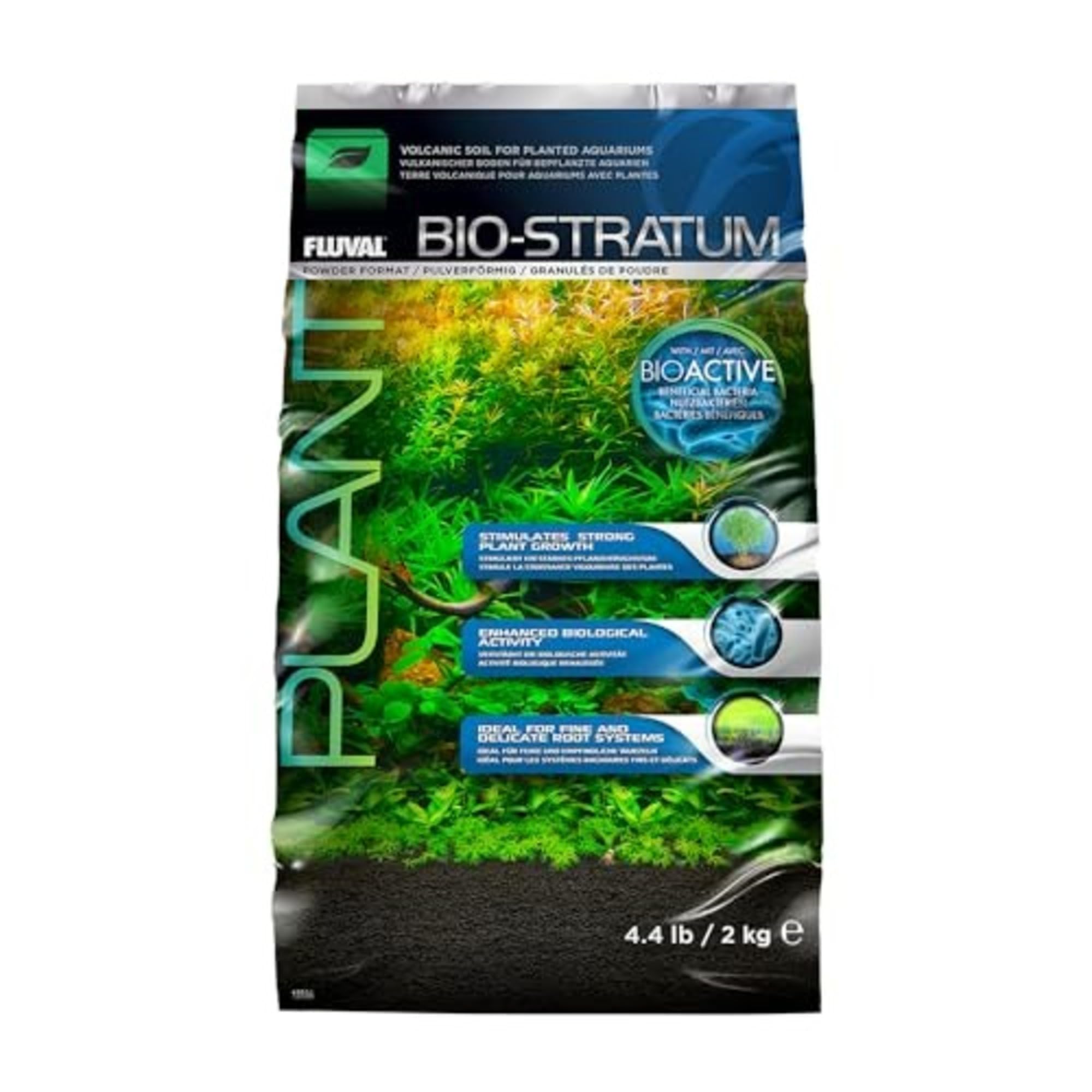
Rating: 4.7 ★ | Price: $$ | Nutrient Profile: Active soil + bacteria | Dose Format: Bag (4.4 lbs) | Water Clarity: Cloudy if disturbed | Dose Duration: Permanent | pH & Shrimp Safe: Stabilizes pH, shrimp-safe
Unlike standard Stratum, this version includes dormant nitrifying bacteria that can accelerate tank cycling and reduce ammonia spikes when used as directed. The fine 1mm granules support delicate root systems and produce a natural, professional look that makes plants pop. This setup suits new planted tanks, shrimp-only enclosures, and aquascapes where the substrate won’t be frequently disturbed.
Pros
- Rapid root penetration and plant growth from fine granules
- Contains live bacteria that speed up initial tank cycling
- High-quality, natural appearance that enhances plant colors
Cons
- Very fine powder can create significant cloudiness if disturbed – best left untouched after installation
For anyone prioritizing a faster cycle and fine-grained root environment over absolute water clarity, this is the active soil to choose.
Best for Nano Tanks & Shrimp
Aqueon Plant & Shrimp Substrate

Rating: 4.6 ★ | Price: $$ | Nutrient Profile: Inert clay spheres | Dose Format: Bag (5 lbs) | Water Clarity: Clear | Dose Duration: Permanent | pH & Shrimp Safe: Safe, no pH change
These clay-based spheres rinse quickly and won’t cloud the water, letting you enjoy a crisp, dark substrate from the moment you fill the tank. The tradeoff is that the substrate is inert — it won’t feed plants on its own. That makes it ideal for low-tech setups or shrimp-first tanks where heavy root feeding isn’t the goal. Supplemental root tabs handle any real plant demand, turning this into a clean-looking foundation without the initial haze of active soils. At its size and cost, a single bag covers a nano tank nicely, and the uniform bead texture resists compaction, making siphoning straightforward.
Pros
- Clean, dark appearance and round texture that looks natural and won’t snag on delicate shrimp.
- Minimal initial rinsing required; water stays clear after setup, making it beginner-friendly for small tanks.
- Cost-effective for nano and shrimp setups, stretching well in 5-gallon or smaller tanks.
Cons
- A single 5-lb bag yields a thin 1.5-inch layer only in tanks up to 10 gallons; larger setups will need extra bags.
If water clarity from day one matters more than an all-in-one nutrient base, and you’re building a nano tank or shrimp scape, this substrate delivers a clean, low-fuss foundation.
Best for Budget Planted Tanks
API Root Tabs 10ct

Rating: 4.5 ★ | Price: $ | Nutrient Profile: Iron, potassium, no NPK | Dose Format: Tablets (10 ct) | Water Clarity: Cloudy (rust haze) | Dose Duration: Monthly | pH & Shrimp Safe: May stress shrimp
API Root Tabs are the cheapest root-zone option available, and they deliver on their primary job: swords and other heavy root-feeders show rapid new growth after insertion. The tradeoff is water clarity — unlike mess-free alternatives, these tablets release a rust-colored haze that can linger for days and may require multiple water changes to clear.
These are a practical choice for budget-conscious aquarists who already have strong filtration and don’t mind extra maintenance. Avoid them for display tanks where immediate clarity matters, or tanks with sensitive fish or shrimp that could be stressed by the cloudy conditions.
Pros
- Lowest price per tab among root-zone fertilizers
- Swords and other root feeders show fast new growth after application
Cons
- Tablets are fragile and may break apart during insertion if not pushed in quickly
- Can cause rust-colored water haze that may require multiple water changes to clear
Best for experienced aquarists on a tight budget who are prepared to manage the cloudiness with extra water changes.
Best for Experienced Tank Keepers
ThriveCaps Root Caps 60ct

Rating: 4.4 ★ | Price: $$ | Nutrient Profile: Complete NPK + micros | Dose Format: Capsules (60 ct) | Water Clarity: Possible foam/film | Dose Duration: Every 1-2 months | pH & Shrimp Safe: Safe for shrimp
This is the only root tab that delivers a full NPK plus micronutrient profile, making it a nutritional standout for planted tanks. The 60-count pack offers strong per-dose value compared to competitor tabs that lack nitrogen and phosphorus. However, the gelatin capsules are buoyant and can pop back up after insertion unless buried deeply or pre-poked to release trapped air. This makes it better suited for experienced aquarists who don’t mind a learning curve, rather than beginners expecting hassle-free application. Occasional surface foam has been noted, but the plant growth response — particularly for heavy root feeders — is what keeps committed hobbyists coming back.
Pros
- Complete NPK plus micronutrients in every capsule
- Cost-effective for larger tanks at 60 capsules per pack
- Promotes vigorous root growth and lush foliage
Cons
- Capsules can float to the surface unless inserted deeply or pre-poked to release air
The right call for experienced planted-tank keepers who prioritize nutrient completeness over plug-and-play convenience.
How to Choose
The most important thing to know is that not all base fertilizers provide the same nutrients—some are active soils that supply a broad range, while others are inert tabs that need supplementation.
Nutrient Profile
Active soils contain a reservoir of macronutrients and micronutrients that slowly release over months. Inert substrates like clay beads offer no nutrition on their own. Root tabs vary widely: some provide only trace elements, while others include nitrogen and phosphorus.
If you grow heavy root feeders like Amazon swords, choose either an active soil or a root tab with complete NPK. For low-light setups with easy plants, trace-element tabs may be sufficient.
Dose Format
Substrates come in bags and cover the entire tank floor. They are a one-time purchase but require careful rinsing and planning for the initial cloudiness. Root tabs and capsules let you target specific plants but need reapplication every few months.
For large tanks, capsules offer the best value per dose. For small nano tanks, a single bag of substrate is simpler than placing multiple tabs.
Water Clarity
Active soils release fine dust that turns water murky for 24 to 72 hours. Strong filtration and patience clear it up. Some root tabs, especially budget ones, can cause a rust-colored haze from iron compounds.
If crystal-clear water immediately after setup is important, stick with inert substrates or premium root tabs that don’t cloud. Otherwise, plan your fish introduction a few days after the dust settles.
Dose Duration
Active soils typically last 6 to 12 months before their nutrient charge depletes. Inert substrates last indefinitely. Root tabs and capsules need replacement every 1 to 4 months depending on plant density and tank size.
For low-maintenance tanks, choose a permanent substrate. For high-growth tanks, plan a re-dosing schedule that matches your plant’s appetite.
pH & Shrimp Safe
Some active soils naturally lower pH and soften water, which benefits shrimp and soft-water fish. Others are pH-neutral. Root tabs generally do not alter pH, but some can temporarily spike ammonia or nitrate if overdosed.
If you keep sensitive shrimp, avoid products known to cause cloudy water or nutrient spikes. Stick to shrimp-safe labels and dose conservatively.
FAQ
Why is my water cloudy after adding root tabs or aquarium soil?
Cloudiness is normal for active soils and some root tabs. Active soils release fine dust that settles after 24-72 hours with good filtration. Root tabs like API can cause a rust-colored haze from iron compounds. Plan your stocking schedule around this period—no water changes needed unless it persists beyond a week.
How do I keep root capsules from floating to the top of my substrate?
Capsules like ThriveCaps have trapped air that makes them buoyant. To fix, pinch the capsule gently to release air before inserting, or use tweezers to bury it deep (at least 2 inches) in the substrate. If they still pop up, weigh them down with a small pebble.
Do I need root tabs if I already use active soil like Fluval Stratum?
Active soils contain nutrients but they deplete over time (6-12 months). For heavy root feeders like Amazon swords, adding root tabs after the first year replenishes nutrients. For low-light tanks with minimal plants, you may not need them at all.
Can aquarium plant substrate be reused from an old tank or is it one-time use?
Active soils lose their nutrient charge after about a year and can become compacted. Reusing them is not recommended for plant growth. Inert substrates like Aqueon clay beads can be rinsed and reused indefinitely since they don’t provide nutrients—they just need new root tabs.