This post contains affiliate links. We may earn a small commission when you buy through our links — at no extra cost to you.
Most clay aquarium substrates claim to be pre‑rinsed. Yet the top complaint across dozens of options is the same: dust that turns water cloudy for days, no matter how many times you wash it. That disconnect between marketing and real‑world use wastes time and frustrates new aquarists.
The trade‑off is straightforward: inert clays are inexpensive but demand heavy cleaning and often need root tabs to stay fertile. Active soils buffer pH and feed plants from day one but can leach ammonia during cycling. The right choice depends entirely on your tank size, plant ambitions, and willingness to prep.
This guide breaks down five clay substrates into the specific setups they actually serve — from nano shrimp tanks to 20‑gallon planted aquascapes. No hype, just the cleaning reality and growth results you can expect.
Top Picks
Best for Large Planted Tanks
CaribSea Eco-Complete 20lb
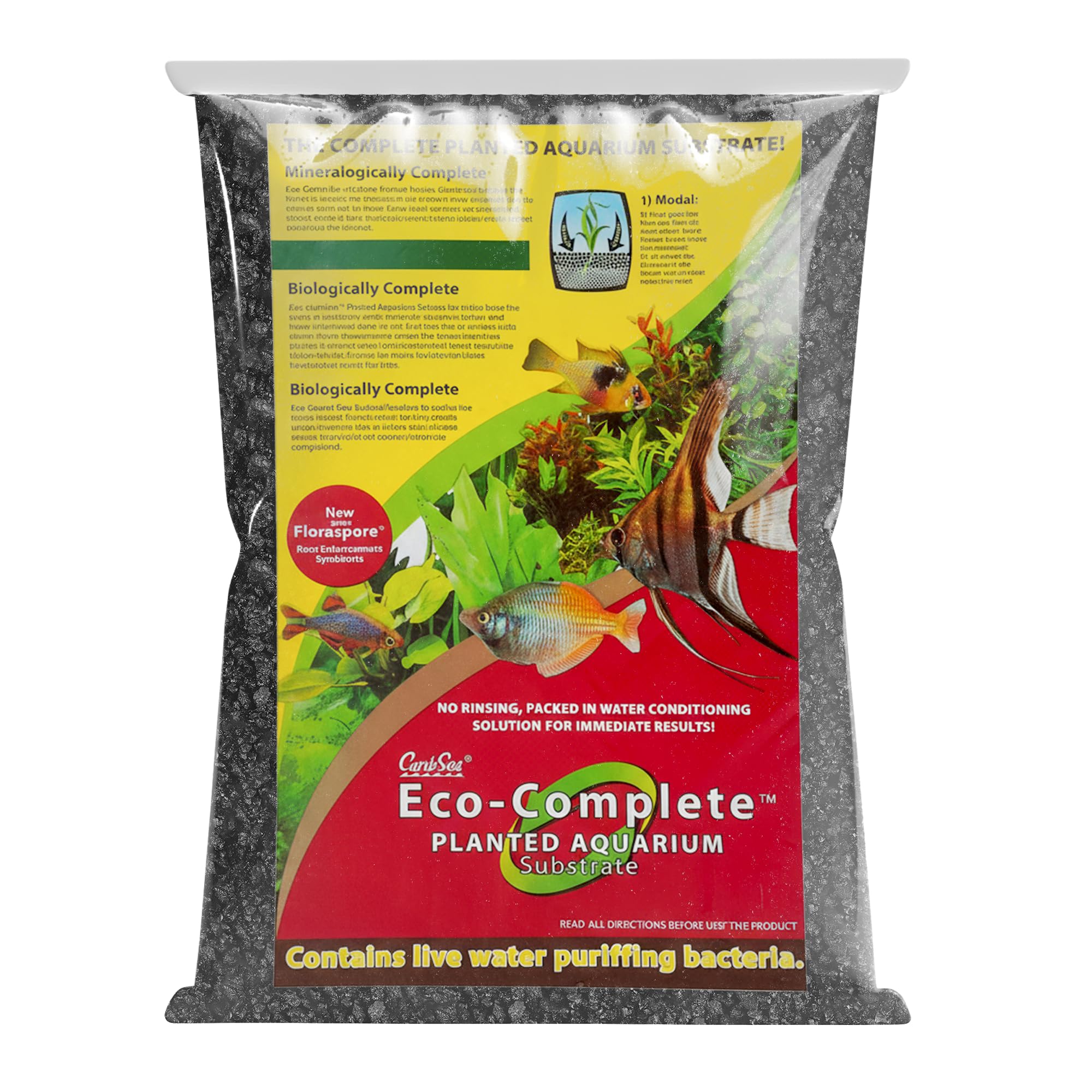
Rating: 4.6 ★ | Price: $$ | Weight/Volume: 20 lbs | Grain Size: Gravel (varied) | Dustiness: Moderate | Nutrient Content: Nutrient-absorbing
Eco-Complete’s nutrient-rich gravel structure supports immediate root development, and the included live bacterial starter accelerates cycling. Roots anchor easily in the varied grain sizes, and the porous surface absorbs nutrients from the water column, reducing the need for root tabs upfront. The black grain color makes fish and plant colors stand out sharply. Water cloudiness is possible in the first few days despite the pre-rinsed label, but running the filter clears it quickly. At 20 pounds, the bag covers a 20-gallon or larger tank with good depth at a per-pound price that keeps large setups affordable.
This substrate fits hobbyists setting up large planted tanks who want reliable plant growth without having to constantly push root tabs into the gravel. It’s forgiving for beginners willing to wait through a brief cloudy cycling period before adding fish. Smaller nano tanks will find the bag size excessive—this is not a small-aquarium product, and leftovers may sit unused. While it looks and behaves differently from classic clay gravels, its nutrient-absorbing ability and generous volume hit the sweet spot for larger, plant-heavy scapes.
Pros
- Strong root development and visible plant growth without immediate root tabs
- Deep black grain color creates a striking contrast for fish and plants
- Generous 20-lb bag covers a 20-gallon tank with good depth at a reasonable per-pound price
Cons
- Some dust remains despite ‘pre-rinsed’ labeling; a light rinse still helps reduce water clouding
- Water cloudiness can persist for several days after setup, even with careful filling, so the tank won’t be display-ready immediately
For large planted tanks, this substrate’s per-pound cost and nutrient-absorbing design eliminate the need for constant root tabs, making it a sensible choice. Small tanks should consider smaller portions elsewhere.
Best for Small Planted Tanks
Aqueon Plant & Shrimp Sub

Rating: 4.6 ★ | Price: $$ | Weight/Volume: 5 L (5 lbs) | Grain Size: Small spherical | Dustiness: Moderate | Nutrient Content: Inert
The Aqueon Plant & Shrimp Substrate stands out for its spherical clay beads that rinse clean with almost no dust, a clear benefit over larger bag options like the top pick. Setup is quick with less pre-washing required. However, the 5-pound bag is small — a standard 10-gallon tank will likely need two bags, raising the per-gallon cost. This substrate suits small planted or shrimp tanks (5–10 gallons), where its inert neutral pH and easy maintenance are ideal. Beginners will appreciate the simple cleanup routine.
Pros
- Supports healthy plant growth and is safe for shrimp
- Rinses clean with minimal dust — less prep work
- Good value for small tanks given the easy maintenance
Cons
- 5-pound bag covers only nano tanks; larger tanks need multiple bags
- Water may appear cloudy during initial setup despite rinsing
Best for hobbyists committed to small nano tanks who value easy cleanup over bulk economy.
Best for Shrimp & High-Tech
LANDEN Aqua Soil 5L

Rating: 4.6 ★ | Price: $$$ | Weight/Volume: 5 L (10 lbs) | Grain Size: 3-5 mm | Dustiness: Low | Nutrient Content: Active soil
This active clay soil softens and acidifies water to ~6.0-6.5, creating ideal conditions for shrimp and demanding plants. Unlike standard clay gravels that need extensive rinsing, it produces very little dust — but the active nature means a significant ammonia spike during the first few weeks of cycling. Experienced aquarists who can manage that cycle will appreciate the consistent pH buffering and low clouding, making this a deliberate choice for a controlled biotope over inert substrates like the top pick.
Pros
- Softens and acidifies water to ~6.0-6.5, supporting shrimp and sensitive plants.
- Low dust compared to many clay substrates — less clouding during setup.
Cons
- Some bags contain organic debris (twigs, leaves) that need manual removal before use.
Choose LANDEN Aqua Soil for active pH buffering and low dust in a shrimp or planted tank, provided you’re prepared to cycle carefully.
Best for Large Planted Tanks
Seachem Flourite Black Gravel

Rating: 4.6 ★ | Price: $$ | Weight/Volume: 15.4 lbs | Grain Size: Gravel (varied) | Dustiness: High | Nutrient Content: Inert
Seachem Flourite’s porous clay structure promotes healthy root development, and the dark color complements planted tank aesthetics. However, the gravel arrives with significant dust that demands thorough rinsing—multiple washes—before use, and some cloudiness may persist after initial filling. This substrate suits experienced hobbyists who prioritize plant growth and don’t mind the prep work.
Pros
- Porous clay encourages strong root development and overall plant health.
- Dark natural appearance enhances the visual appeal of planted aquariums.
Cons
- Requires extensive rinsing—multiple washes—to remove dust before the gravel is safe for the tank.
A solid choice for experienced planted-tank keepers who can invest the time in proper rinsing and don’t mind occasional cloudiness during setup.
Best for Fine Sand Aesthetic
Seachem Flourite Black Sand

Rating: 4.5 ★ | Price: $$ | Weight/Volume: 15.4 lbs | Grain Size: Fine sand | Dustiness: High | Nutrient Content: Inert
This crushed clay sand delivers the fine, natural aesthetic shrimp keepers and aquascapers look for. Plant rooting and shrimp foraging are well supported. However, the dust load is substantial — expect thorough rinsing before use. The color reads more gray than black, so those wanting a deep black substrate should look elsewhere.
Pros
- Fine sand texture creates a smooth, natural look in planted tanks
- Porous clay structure supports plant rooting and shrimp foraging
Cons
- Water may stay cloudy for days even after careful rinsing
Best suited for shrimp tanks and planted aquascapes where the visual payoff justifies the preparation effort.
How to Choose
The biggest surprise when buying aquarium clay substrate is that nearly every bag needs real rinsing, not just a quick shake.
Weight and Volume
Substrate coverage scales linearly with weight, but bag sizes vary wildly. A 5‑pound bag covers about a 5‑gallon tank to a depth of 1–2 inches. A 20‑pound bag handles a 20‑gallon tank at the same depth. Always measure your tank’s footprint and calculate the volume you need before buying — multiple small bags cost more per pound than one large bag.
Grain Size
Sand‑sized grains (under 1 mm) give a smooth, natural look and are gentle on bottom‑dwelling shrimp and fish, but they compact over time and can trap debris. Gravel‑sized grains (2–5 mm) allow better water flow through the bed and support deep rooting, but sharp edges on some crushed clay varieties can injure soft‑bodied fish like corydoras.
The trade‑off is between aesthetics and ease of maintenance: sand looks cleaner initially but requires more careful siphoning, while gravel hides mulm better and is easier to vacuum.
Dustiness and Rinsing
No matter what the label promises, expect dust. Clay substrates are fired or crushed, and fine particles are inherent. Rinsing in a bucket until the water runs clear is the only reliable method — some products need 10+ washes. Skipping this step guarantees cloudy water for days, even with strong filtration.
If you want minimal prep, choose spherical clay substrates (like the Aqueon spheres) or active soils that are less dusty. The Seachem line is notorious for requiring the most thorough cleaning.
Nutrient Content
Inert clays (like most of the Seachem range and the Aqueon spheres) provide a stable base but do not feed plants. You will need to add root tabs or liquid fertilizers for heavy root feeders like crypts and swords. Active soils (like LANDEN) contain organic matter that buffers pH to acidic levels and releases ammonia initially — perfect for Caridina shrimp and high‑tech tanks, but they demand careful cycling before adding livestock.
Think of inert substrates as neutral scaffolding: they hold plants and let you control nutrition yourself. Active soils are pre‑loaded but also pre‑loaded with a cycling curve.
FAQ
Why is my aquarium substrate making the water cloudy?
Clay dust trapped in the substrate is the most common cause. Even products labeled ‘pre‑rinsed’ release fine particles when you fill the tank. Rinse the substrate in a bucket until the runoff runs mostly clear, then fill slowly using a plate or bowl to minimize disturbance. Cloudiness usually clears within 24–72 hours with a good filter.
Do I need to rinse clay aquarium substrate even if it says ‘pre‑rinsed’?
Yes. ‘Pre‑rinsed’ is a marketing term — virtually every clay substrate still contains enough dust to cloud the water. A 5‑minute rinse in a colander will save you days of cloudy frustration. The only exception is active soils like LANDEN, which produce noticeably less dust but still benefit from a light rinse.
How long does it take for cloudy water to clear after adding new substrate?
With proper rinsing and a running filter, most tanks clear within 24 hours. If you skip rinsing, cloudiness can last 3–7 days. Fine mechanical filter media (like a polishing pad) speeds up the process. Adding activated carbon also helps remove fine particles.
Can I use clay substrate in a shrimp tank?
Yes, and many shrimp keepers prefer it. Inert clay substrates (like the Aqueon spheres or Seachem Flourite) are safe for neocaridina and caridina shrimp. Active soils (like LANDEN) create the soft acidic water that Caridina shrimp need, but require a full cycling period due to ammonia leaching. Avoid substrates with sharp gravel edges that can damage shrimp exoskeletons.