This post contains affiliate links. We may earn a small commission when you buy through our links — at no extra cost to you.
Cleaning canister filter hoses is a necessary chore, but most flexible tube brushes fail the moment they hit a tight bend. The coiled wire design that makes them bendable also means they buckle when pushed, and bristle density rarely matches the product photos.
Durability is another gamble—brush heads detach, wires kink, and what looked like a solid tool becomes a one-time job. The real trade-off is between a simple, no-frills brush that handles straight runs reliably and a multi-piece kit that adds small brushes but may compromise the long brush’s stiffness.
This guide focuses on brushes that actually scrub algae without getting stuck or falling apart, based on what thousands of aquarium owners have found in practice.
Top Picks
Best for Canister Filter Hoses
ICEYLI 2-Pack 60"

Rating: 4.6 ★ | Price: Budget | Total Length: 60 in | Brush Head Diameters: 0.75/0.5 in | Number of Pieces: 2 | Bristle Material: Nylon/stainless
The ICEYLI 2-pack combines a 60-inch reach with a flexible stainless steel wire that follows most canister filter hose bends, and nylon bristles that scrub away algae and debris in one or two passes. It clears buildup in aquarium tubing, refrigerator drain lines, and car sunroof drains—anywhere a long, narrow passage needs cleaning. The double-ended design with a larger and smaller brush head (roughly 0.75 and 0.5 inches) means you can tackle both wide filter hoses and narrower drain lines.
For routine aquarium hose cleaning, the wire is sufficiently sturdy to push through typical curves. If you encounter a stubborn blockage or a tight 90-degree fitting, the wire can kink. That’s the tradeoff for the flexibility that makes it so easy to thread through long hoses. Having two brushes in the pack means a backup is always at hand—grab the second one while you order a replacement, so maintenance never halts. At the cost of a single brush elsewhere, the value is clear.
Aquarium owners with canister filters who clean long hoses regularly will find the 60-inch length and flexible feel perfectly suited to the task. Multi-tank households and those who also maintain refrigerator drains or car sunroofs will appreciate the second brush as a ready spare. If your cleaning demands frequent sharp 90-degree bends or heavy, caked-on sludge, a sturdier, more rigid brush may be a better fit; this model trades brute strength for reach and ease of use.
Pros
- Removes algae and grime from aquarium hoses, refrigerator drains, and car sunroof drains quickly.
- 60-inch length and flexible wire follow most bends in canister filter hoses.
- Two brushes for the price of one cover multiple tanks or provide an instant spare.
Cons
- Wire can buckle when forcing through sharp 90-degree bends or very tight fittings.
- Brush head or wire coil may separate after repeated aggressive use, especially if pushed past its limits.
The ICEYLI 2-pack is the pragmatic pick for aquarium keepers who need a long, flexible brush for hose cleaning and want a spare on hand—the low price and dual count offset the potential for wire wear.
Best for Multi-Purpose Set
Ixiaoyoo 11-Piece Set
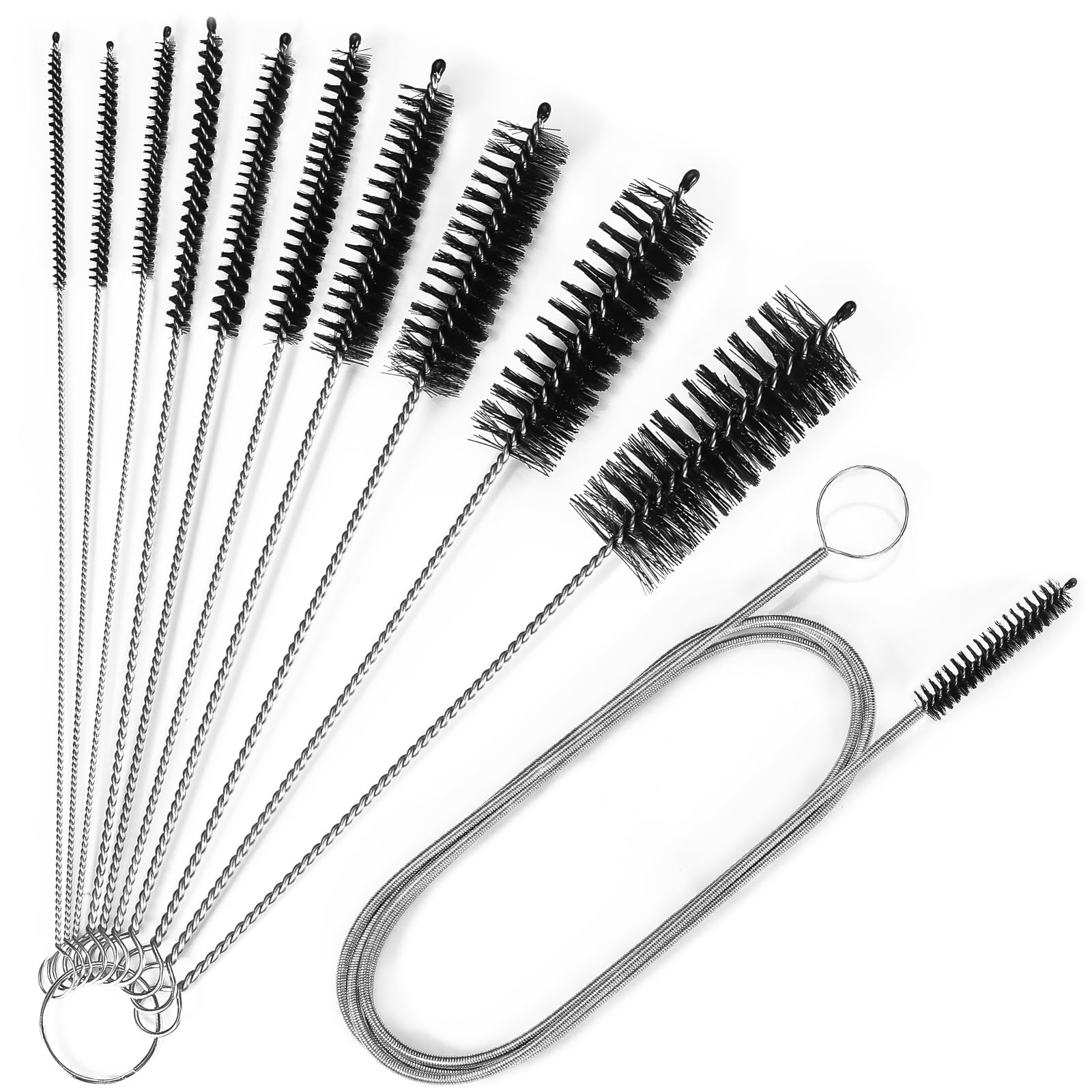
Rating: 4.7 ★ | Price: Mid-Range | Total Length: 60 in | Number of Pieces: 11 | Bristle Material: Nylon/stainless
Where the top pick focuses on two long brushes for straight canister hoses, the Ixiaoyoo set expands the scope with ten small brushes covering diameters from 2mm to 24mm. The long brush handles straight runs adequately, but its flexibility is mixed — it can struggle with tight U-bends, which limits its usefulness for curved tubing.
This set suits aquarists who need one tool for the canister hose and another for filter parts, spray bars, or even drinking straws and bottle necks. For those whose setup includes many sharp 90-degree bends, the long brush may require patience or a separate straight-hose brush.
Pros
- Cleans a wide range of items from tiny straws to large aquarium tubes effectively.
- Ten different brush sizes on a keychain cover almost any narrow opening around the house.
- Food-grade stainless steel and nylon construction resists rust and holds up over time.
Cons
- The wire handles on the smallest brushes can bend if too much force is applied during scrubbing.
For households that want a single set to clean everything from fish tank hoses to drinking straws, this kit delivers outstanding variety at a budget-friendly price.
Best for Canister Hose Cleaning
yueton 61"

Rating: 4.4 ★ | Price: Budget | Total Length: 61 in | Brush Head Diameters: 1.2/0.7 in | Number of Pieces: 1 | Bristle Material: Nylon/stainless
This brush uses durable nylon bristles at both ends to scrub algae and debris from canister filter tubing and hoses. A 61-inch length handles most setups, while the two brush head sizes fit different hose diameters. Where the top pick includes a second brush as insurance, this single unit covers all the essentials at a rock-bottom price—ideal for a single tank with no need for a spare.
It’s best for hobbyists who deep-clean hoses on a single tank every few months. The 61-inch length suits most canister filter setups, and the two brush head sizes cover common hose diameters. While long-term durability isn’t its strong suit, the low price makes occasional replacement a trivial cost. For straight runs or gentle bends, this brush gets the job done without fuss.
Pros
- Scrubs gunk, algae, and mold from canister filter tubing effectively.
- Flexible yet sturdy wire handles moderate bends without kinking.
- Budget-friendly way to avoid replacing expensive hoses.
Cons
- Too flexible for sharp 90-degree bends; limited to straight runs and gentle curves.
- Wire spring may snap or bristles can detach after extended use, shortening lifespan.
A practical choice for single-tank owners who want effective hose cleaning without paying for an extra brush, as long as occasional replacement fits your budget.
Best for Complete Filter Kit
SLSON 11-Piece Set

Rating: 4.6 ★ | Price: Mid-Range | Total Length: 61 in | Brush Head Diameters: 1.5/0.6 in | Number of Pieces: 11 | Bristle Material: Nylon/stainless
The SLSON 11-piece set reaches places the top pick can’t — its ten small brushes are sized for spray bars, intake strainers, and drinking straws. The long brush cleans hoses effectively, and the assortment saves digging for separate tools. The tradeoff is that the long brush’s durability is less predictable than a dedicated single brush; some owners find the double-ended head detaches after repeated use.
This set suits aquarium keepers who clean both hoses and small plastic components regularly. If you’re willing to treat the long brush as a replaceable item, the convenience of having all sizes in one kit outweighs the occasional early wear.
Pros
- Cleans algae and crud from canister filter tubes and hoses effectively.
- Ten different brush diameters fit a range of small filter parts and accessories.
- Reduces cleaning time by matching the right brush to each component.
Cons
- Double-ended brush head can detach from the wire after moderate use.
- Wire flexibility may not handle tight U-bends effectively.
The most complete brush set for canister filter maintenance — ideal for those who need small part brushes and are comfortable with potential brush head separation.
Best for Budget Tube Cleaning
SLSON Double-Ended 61"

Rating: 4.5 ★ | Price: Budget | Total Length: 61 in | Brush Head Diameters: 1.5/0.6 in | Number of Pieces: 1 | Bristle Material: Nylon/stainless
The SLSON double-ended brush scrubs algae and debris from straight canister hoses and small vases effectively—its nylon bristles handle the job well for occasional cleaning. Unlike the top-pick 2-pack, this is a single brush, so the cost savings only hold if the brush lasts; there’s no spare if issues arise.
This brush suits aquarium owners with straight or gently curved tubing who need an infrequent cleaning tool and accept that durability can be a limiting factor—some brushes may experience head detachment or bristle shedding. The cable’s flexibility also matters: it works best on runs without sharp 90-degree bends, where it can be pushed through smoothly.
Pros
- Effectively removes buildup from canister filter tubing and narrow vases with nylon bristles.
- Saves the cost of replacing dirty hoses when cleaning is an option.
- 61-inch length covers standard aquarium hose runs and slides through with minimal effort.
Cons
- The cable may be too rigid to navigate tight 90-degree bends without buckling.
- The cable may be too floppy to push through longer hoses without losing momentum.
A low-cost option for straight-tube cleaning—worth trying if you’re willing to accept a shorter lifespan.
Best for Multiple Hose Lengths
Patelai 3-Piece Set

Rating: 4.4 ★ | Price: Mid-Range | Total Length: 35-78.7 in | Brush Head Diameters: 1.18/0.7 in | Number of Pieces: 3 | Bristle Material: Nylon/stainless
The Patelai set stands out by offering three different brush lengths in a single package, making it easy to match short hang-on-back hoses, standard canister tubing, and longer runs without buying separate tools. The double-ended design with large and small bristle heads adds flexibility for different hose diameters. The tradeoff is that the bristles are noticeably soft — heavy algal buildup may require multiple passes, and some users have noted the brush heads can detach after a few uses. This set works well for routine maintenance on straight hoses, but it’s not the best choice for tackling stubborn deposits or navigating tight bends.
This kit is a practical fit for aquarium owners who maintain multiple tanks with different hose lengths and prefer to keep a color-coded brush for each setup. The soft bristles and occasional head detachment mean it’s best suited for light to moderate cleaning where scrubbing power isn’t critical. If your hoses see heavy buildup or you need a single brush that can handle sharp corners, the top pick with firmer bristles may be a better match.
Pros
- Three specific lengths cover short, standard, and extra-long hoses in one purchase.
- Double-ended design reaches both wide and narrow tubing without swapping tools.
- Build quality feels appropriate for the price, with a stainless steel core for flexibility.
Cons
- On hoses with thick, built-up algae, the soft bristles require repeated passes to clean thoroughly.
- The brush head can separate from the wire after limited use, which may leave a brush stuck inside a hose.
Best for aquarium owners with a mix of hose lengths who prioritize having the right size brush over maximum scrubbing power.
Best for Straight Hoses
UEETEK 61"

Rating: 4.6 ★ | Price: Mid-Range | Total Length: 61 in | Brush Head Diameters: 1/0.5 in | Number of Pieces: 1 | Bristle Material: Nylon/stainless
This double-ended brush removes algae and debris from straight tubing and canister hoses efficiently, with 61 inches of reach for most standard setups. However, its price sits higher than similar brushes, and feedback on flexibility and durability is mixed, making it a less obvious value pick. Best for owners who want a single dedicated brush for straight runs and can accept the tradeoffs in bend handling and long-term wear.
Pros
- Effectively cleans algae and crud from straight aquarium tubing and canister filter hoses.
- 61-inch length provides enough reach for long hose runs without needing extensions.
Cons
- Wire stiffness varies — may be too stiff for gradual bends or too flimsy for tighter curves, depending on hose type.
- Bristles can bend or detach after several uses, and the wire may stretch when pulled back forcibly.
This brush suits aquarium owners with predominantly straight hoses who prefer a single cleaning tool and are comfortable paying a bit more for a mid-priced option, while understanding that flexibility and durability are not guaranteed.
Best for Small Parts Cleaning
Patelai 12-Piece Set

Rating: 4.5 ★ | Price: Mid-Range | Total Length: 61 in | Brush Head Diameters: 1.18/0.7 in | Number of Pieces: 12 | Bristle Material: Nylon/stainless
This set excels with ten small brushes in diameters from 0.12 to 0.98 inch, ideal for cleaning spray bars, filter components, straws, and other narrow items. The double-ended long brush, however, is too flimsy to push through tube bends and its bristles are soft for stubborn buildup. Value lies in the small brushes; the long brush is less reliable than simpler alternatives. Best suited for aquarium owners who also clean small parts around the house.
Pros
- Ten different brush diameters cover cleaning needs from straws to filter parts.
- Nylon bristles lift algae from aquarium tubing effectively on straight sections.
Cons
- Long brush may coil up in tube bends rather than push through.
- Bristles can be too soft for thick, hardened buildup.
Ideal for detail-oriented cleaning of small parts, but if your main need is cleaning long aquarium hoses, consider a dedicated 2-pack brush.
Best for Straight Hoses
SunGrow 61"

Rating: 4.4 ★ | Price: Mid-Range | Total Length: 61 in | Number of Pieces: 1 | Bristle Material: Nylon/stainless
The SunGrow 61-inch brush handles straight uplift tubes and canister hoses with effective scrubbing, and some owners have noted it holds up over years of use. The trade-off is limited flexibility: the wire won’t hold a shape and can’t navigate sharp 90-degree bends, narrowing its use to straight or gently curved pipes. Bristle density is lighter than product images suggest, which means heavier buildup may require extra passes. For tanks with under-gravel filter lift tubes or straight hose runs, this is a workable mid-range choice; anyone with tight U-bends or rigid fittings should look to the top-pick ICEYLI 2-pack instead.
Pros
- Cleans narrow tubes effectively, especially uplift tubes and intake pipes.
- Build quality can support repeated use over several years in some cases.
Cons
- Wire does not hold a curve, so it can’t scrub tight 90-degree bends or U-shaped pipes.
- Bristle density is less full than advertised; heavy deposits may need multiple passes.
A sensible pick if your aquarium plumbing is mostly straight runs and you value a specific pet-brand tool over a generic alternative.
Best for Fridge Drains
Much Hotter 61"

Rating: 4.6 ★ | Price: Budget | Total Length: 61 in | Brush Head Diameters: ~0.5 in | Number of Pieces: 1 | Bristle Material: Nylon/metal
This brush cleans narrow straight tubes like fridge drains and AC lines effectively for the low price. The wire is too flimsy to push through curved hoses, making it unsuitable for typical aquarium tubing. For one-time straight pipe jobs, it does the job at a minimal cost.
Pros
- Works well for narrow straight tubes such as fridge drains and AC lines.
- Budget-friendly price for one-time or occasional use.
Cons
- Brush head can detach on first use – best treated as a disposable tool.
- Wire is too flimsy to handle curved hoses – straight runs only.
Acceptable for one-time cleaning of straight fridge drains, but not for aquarium hose maintenance.
Best for Light-Duty Cleaning
yueton/Blovess 63"

Rating: 4.4 ★ | Price: Budget | Total Length: 63 in | Brush Head Diameters: 0.79 in | Number of Pieces: 1 | Bristle Material: Nylon/stainless
The loop handle on this 63-inch brush adds a practical safety net: if the brush gets caught inside a tube, you can pull it back out rather than abandoning it. That said, the brush head can separate from the wire during first use, and the wire may rust over time. The flexibility is also limited — it buckles when pushed through 90-degree bends, so it’s best kept for straight runs like AC drains or cooler lines. This makes sense for occasional light-duty tasks, not for frequent cleaning of bent aquarium hoses.
Pros
- Loop handle allows safe extraction if brush gets stuck in a tube.
- Cleans straight tubes effectively at a budget-friendly price.
Cons
- Brush head can detach from the wire during initial use in some cases.
- Wire is too flimsy to navigate tight bends — best for straight sections only.
This brush works for occasional straight-tube cleaning where the loop handle offers peace of mind against getting stuck.
Best for Ac Drain Lines
desin 67" Drain Brush
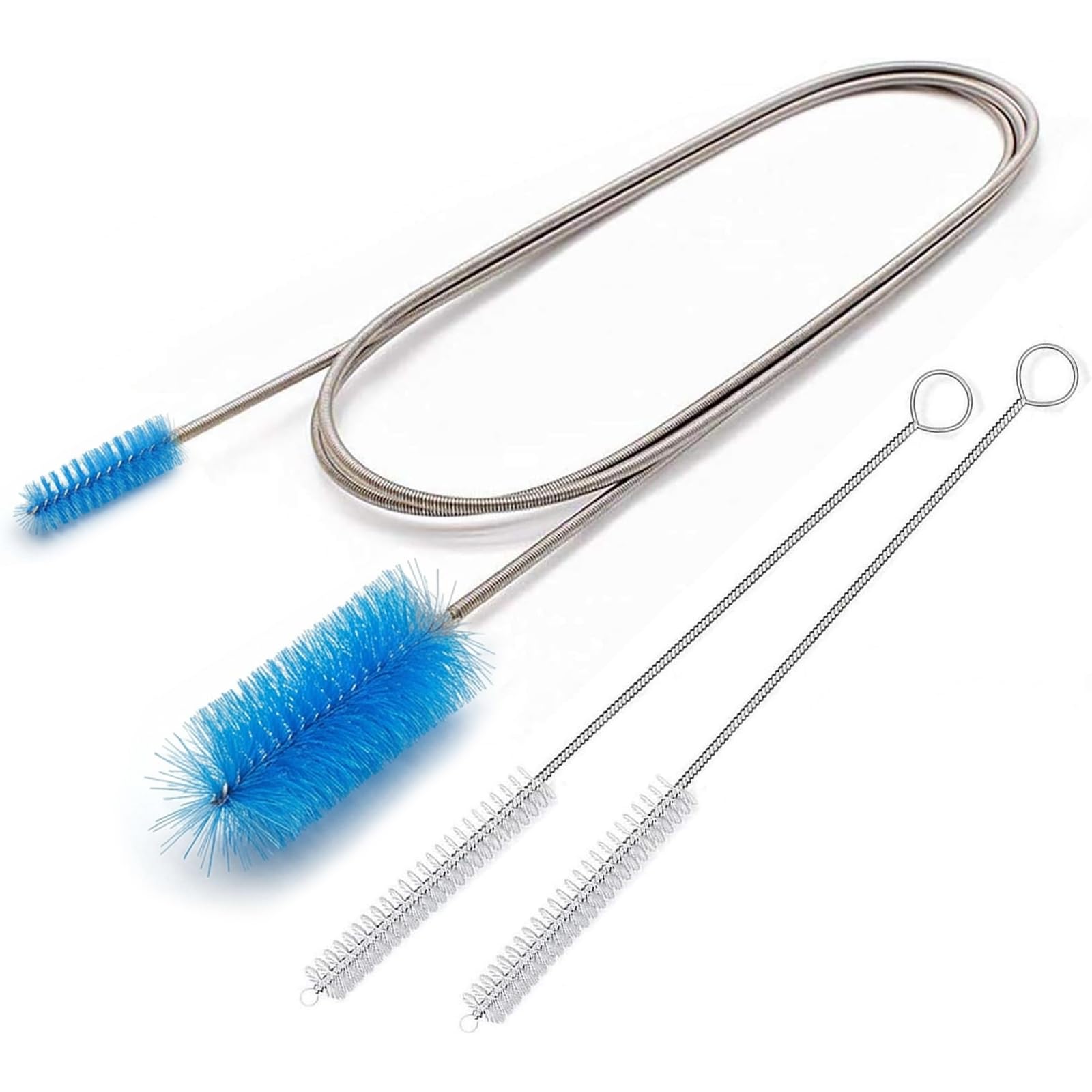
Rating: 4.2 ★ | Price: Budget | Total Length: 67 in | Number of Pieces: 3 | Bristle Material: Nylon/stainless
The desin 67-inch drain brush is effective for clearing straight AC condensate lines and refrigerator defrost drains, where its long reach is a clear advantage and the low price makes it a disposable option. However, the thin wire cannot navigate tight curves or P-traps without bunching up, and the brush heads are too small for effective scrubbing in standard aquarium tubing. This makes it unsuitable for fish tank use with U-bends or glass lily pipes, despite the appeal of its length and cost. For straight household drains it works fine, but aquarium owners should look at brushes designed for flexible tube cleaning.
Pros
- 67-inch length reaches deep into straight pipes and drains
- Budget-friendly price for one-time or occasional use
Cons
- Flimsy wire bends and bunches up when pushed through curves, increasing the risk of getting stuck
Only consider this brush if you need to clean straight AC or fridge drains — for aquarium tubing with any bends, the limited flexibility makes it a poor fit.
How to Choose
The most important thing to know: aquarium tube brushes rely on a coiled wire core that cannot push through sharp 90-degree bends, so if your filter has tight U-bends, only the stiffest brushes will work.
Total Length
For canister filter hoses, a brush at least 60 inches long is necessary to reach from one end to the other. Shorter brushes may not cover the full length, leaving uncleaned sections that can reintroduce algae.
Longer brushes (up to 78 inches) are useful for extra-long hoses or multiple tanks, but they tend to be floppier because the wire has more slack. A 60–61 inch length offers the best balance for standard setups.
Brush Head Diameters
Most double-ended brushes come with a small end (around 0.5–0.7 inches) for airline tubing and a large end (1–1.5 inches) for standard 1/2- to 5/8-inch hoses. If your hose diameter falls outside this range, the brush may not contact the walls well.
A head that’s too wide will bind and get stuck; one that’s too narrow won’t scrub effectively. Measure your hose inner diameter before choosing, and look for a set that explicitly lists both head sizes.
Number of Pieces
A single double-ended brush is all most aquarists need for hose cleaning. Multi-piece sets add convenience for cleaning spray bars, impeller wells, and straws, but the long brush in these sets often has the same design limitations as the standalone brush.
If you already have small brushes for other tasks, a 2-pack of long brushes (like the top pick) gives you a backup without extra clutter. Only choose a multi-set if you frequently clean small diameter parts.
Bristle Material
Nylon bristles are standard and work well for algae and soft gunk. The key is bristle density—photos often exaggerate how full the brush ends are. Finer bristles may be too soft to scrape off stubborn biofilm, requiring multiple passes.
Stainless steel wire core provides the structure; avoid brushes with plastic cores that kink easily. Some brushes use metal springs that can rust over time; look for stainless steel to resist corrosion.
FAQ
How do you clean the inside of aquarium filter tubing without removing it?
You can’t fully clean tubing without disconnecting it—water pressure will push the brush back out. Remove the hose, run the brush through from one end while holding the free end, and repeat until the brush comes out clean. For stubborn clogs, soak the hose in a diluted bleach solution first.
Will a flexible drain brush damage my glass lily pipes?
Yes, if the brush gets stuck and you pull hard, the wire can scratch or crack the glass. Only use a brush with a smooth, rounded tip in lily pipes, and never force it. The safest option is a dedicated pipe cleaning tool with a soft end.
What size brush do I need for 1/2 inch aquarium hose?
A brush with a head diameter of about 1.2 to 1.5 inches on the larger end works well for 1/2-inch (inner diameter) hose. The bristles need to compress slightly to scrub the walls—a head that’s exactly the same diameter will be too tight and risk getting stuck.
Why does my tube brush keep getting stuck in the U-bend?
The coiled wire design buckles when pushed against a sharp bend, causing the brush to bunch up and lodge in the curve. To prevent this, use a brush with a stiffer wire (thicker gauge) and push slowly. If it does get stuck, gently rotate and pull back—never yank, as that can break the wire.