This post contains affiliate links. We may earn a small commission when you buy through our links — at no extra cost to you.
Not all tubing sold as ‘CO₂-proof’ actually prevents gas from escaping. Many clear silicone tubes look the part but slowly let your injected CO₂ diffuse through the walls, wasting gas and money.
The right material—polyurethane (PU)—keeps CO₂ inside the line. The tradeoff is stiffness: PU tubing is noticeably harder to bend and fit onto connectors compared to flexible silicone.
This guide breaks down the differences so you can decide between gas-tight PU and easier-to-install silicone, knowing exactly what you’re sacrificing for your planted tank.
Top Picks
Best for Planted Tanks
FZONE 16ft CO₂ Proof Tubing

Rating: 4.6 ★ | Price: Budget | Material: Polyurethane (PU) | Length: 16 ft | Inner Diameter: 4mm | Ease of Installation: Stiff
Polyurethane is the right material for CO₂-proof tubing — silicone breathes gas out, PU holds it in. FZONE’s 16-foot spool delivers exactly that material at a price that undercuts most alternatives, with a claimed loss rate below 1%. For planted tank setups where CO₂ retention is the priority, this tubing removes the guesswork: the gas you inject stays in the water.
The stiffness that comes with PU is the tradeoff for gas-tight performance. Routing around tight bends may require gentle heat from a hairdryer, but once in place the tubing holds its shape without kinking. Build quality has been consistent across units, with no signs of brittleness or cracking under normal use — the tubing fits standard 3/16” fittings snugly, including gang valves and inline diffusers.
This is the right fit for planted tank hobbyists who want a reliable CO₂ line without paying for brand markup or extra accessories. If you prefer tubing that bends around corners without effort, silicone alternatives offer flexibility but higher gas permeability — a tradeoff FZONE avoids. Not for those who need a complete kit with check valves or who want maximum installation convenience out of the box.
Pros
- Minimizes CO₂ loss effectively — gas stays in the water where it belongs
- Durable construction that holds up over months of continuous use
- Snug fit on standard 3/16” CO₂ equipment without adapters
Cons
- Routing around tight corners may require gentle heat — a normal characteristic of PU tubing
- A small number of units may develop leaks or tears after extended use — worth periodic inspection
For planted tank owners who want genuine CO₂-proof material without overspending, this is the tubing to buy. If you need maximum flexibility for tight spaces, the silicone alternative in this set trades gas retention for easier bends.
Best for Co₂ Systems
JARDLI 16ft CO₂ Tubing

Rating: 4.6 ★ | Price: Budget | Material: Silicone | Length: 16 ft | Inner Diameter: 4mm | Accessories: Suction cups | Ease of Installation: Stiff, requires heat
The JARDLI tubing has the largest user feedback pool among silicone options, with extensive reviews confirming long-term durability and noticeably better CO₂ retention compared to standard airline tubing. Where the top pick uses genuine PU for theoretical gas tightness, JARDLI’s silicone material is inherently more permeable – yet the vast majority of planted tank owners find it effective in practice.
This tubing suits hobbyists who value community-validated performance and are comfortable using hot water to soften the stiff material for installation. Stiffness can be a hassle for complex runs with tight bends, and forced installation risks cracking glass fittings – but for straightforward setups, the tradeoff is minimal.
Pros
- Improved CO₂ retention over standard airline tubing
- Resists tearing and pinholes for long-term durability
- Works reliably with most regulators and diffusers
Cons
- Silicone material is theoretically less gas-tight than PU – some users may notice minor gas loss over time
- Very stiff material requires heat to install; can crack delicate glass fittings if forced without softening
A well-reviewed choice for planted tank owners who want the confidence of a massive user base and are willing to use heat for installation – the silicone gas loss is negligible for most setups.
Best for Beginners
Clscea 16ft CO₂ Tubing Kit
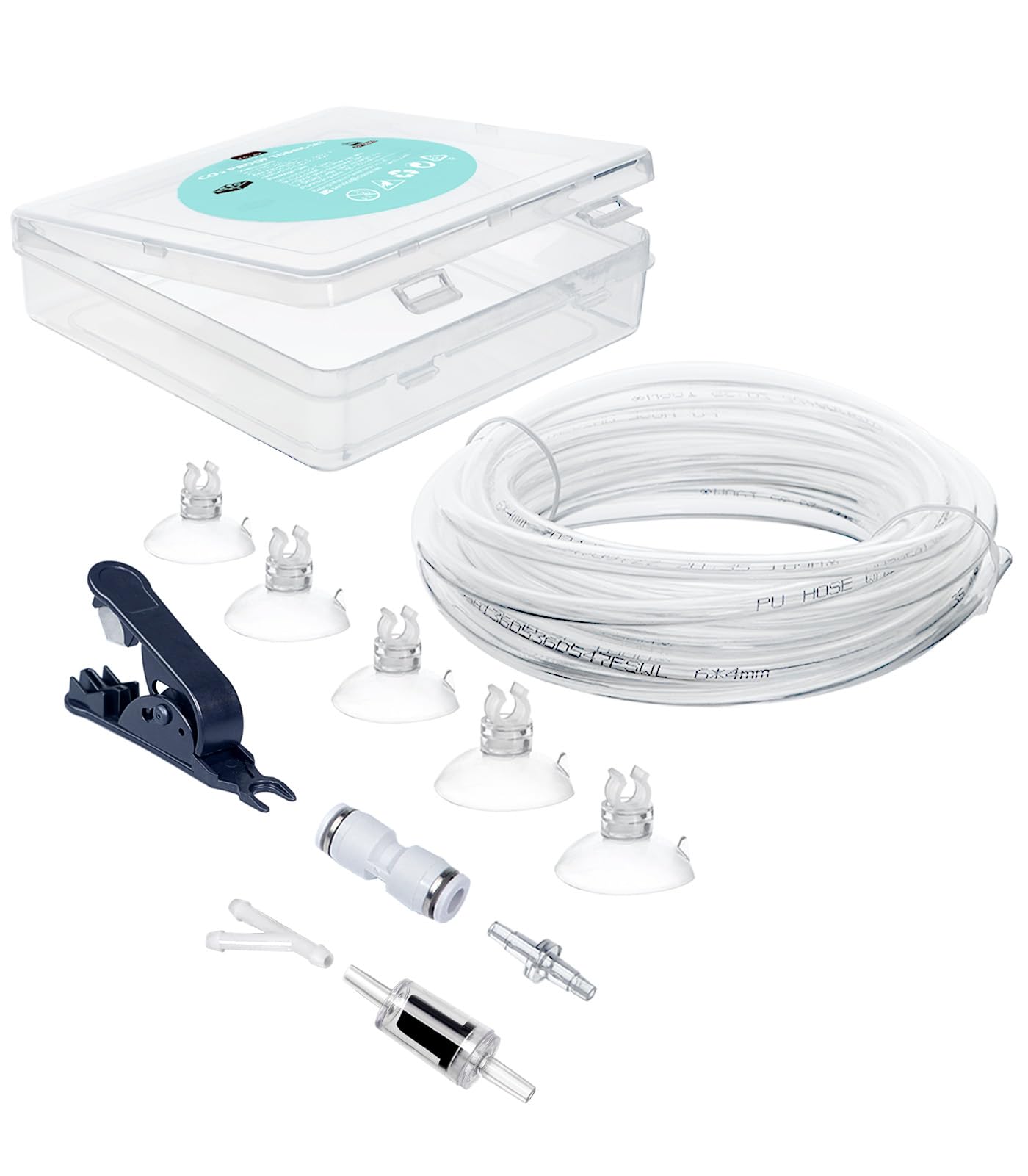
Rating: 4.6 ★ | Price: Mid-Range | Material: Polyurethane (PU) | Length: 16.4 ft | Inner Diameter: 4mm | Accessories: Storage box, cutter, connectors | Ease of Installation: Extremely stiff, coil memory
The Clscea kit adds organization that bare tubing rolls don’t provide — a storage box, a precise tube cutter, and connectors keep everything together for first-time setups. However, the PU tubing is noticeably stiffer than the top pick’s, and its tight coil memory makes straight runs challenging without persistent clamping or warm water treatment. Additionally, the product listing mentions a check valve, but it is sometimes missing from the box, leaving you to source one separately.
This kit suits new hobbyists who value a fully stocked toolbox over maximum tubing flexibility. If you plan to route tubing around tight corners or want the peace of mind that all listed pieces are included, the top pick’s simpler but more pliable approach will fit better.
Pros
- Complete kit with storage box, tube cutter, and connectors eliminates separate accessory shopping.
- Durable PU material rated up to 98.4 psi, resisting CO2 permeation.
- Neat coiled storage keeps tubing organized between uses.
Cons
- Tubing retains tight coil memory, making straight runs difficult without heat or clamping.
- The advertised check valve is sometimes absent, requiring a separate purchase.
An organized starter set that trades some tubing pliability for a complete accessory bundle, with the caveat that you may need to add your own check valve.
Best for Non-Co₂ Use
ZRDR 16ft CO₂ Tubing Kit
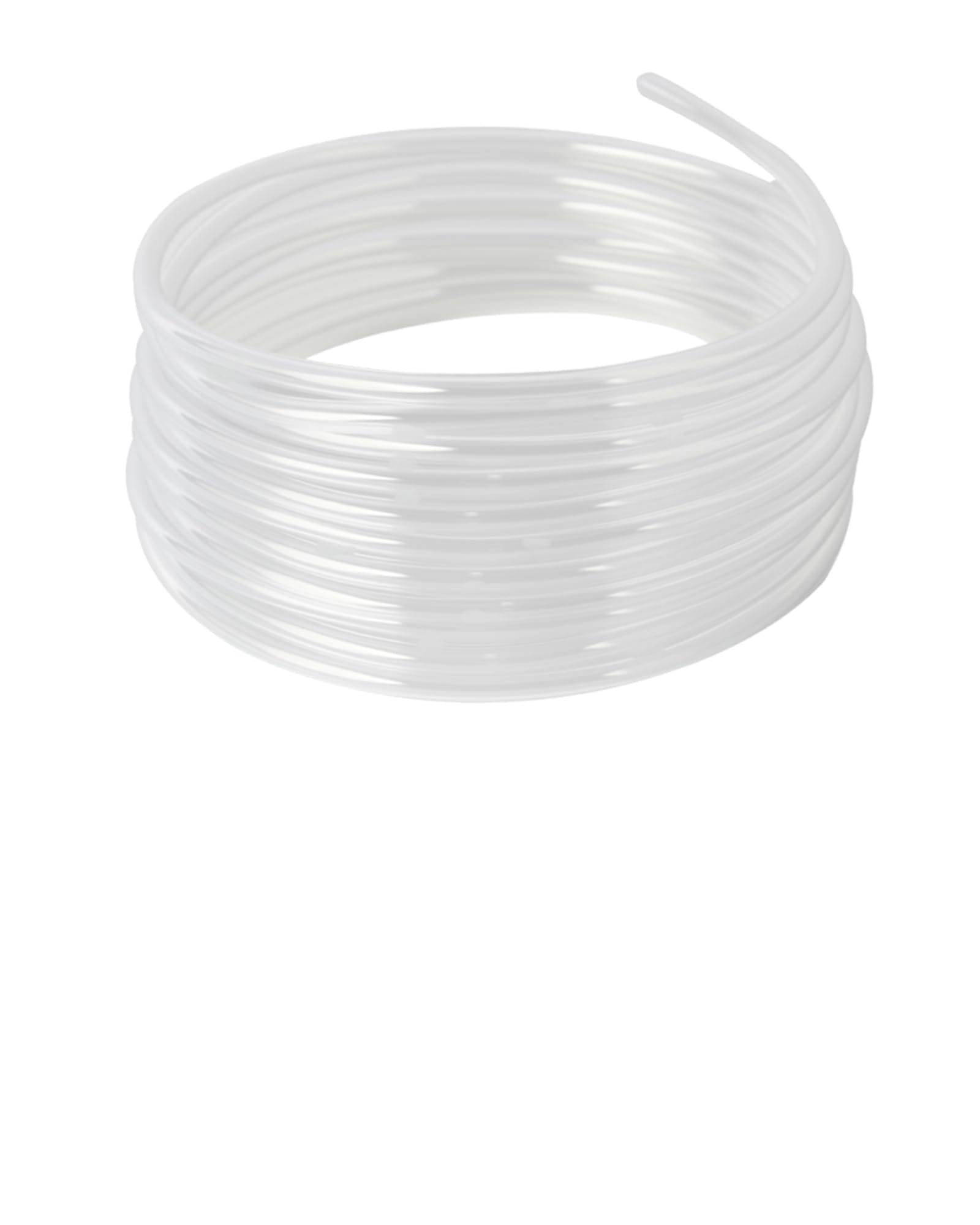
Rating: 4.5 ★ | Price: Budget | Material: PU (claimed) | Length: 16.4 ft | Inner Diameter: 4mm | Accessories: 2 check valves, 4 cups
The ZRDR CO2 Tubing Kit comes at a very low price and includes two check valves and four suction cups, making it accessible for tight budgets. However, the tubing appears to be standard airline tubing rather than true CO₂-proof polyurethane, which can lead to gas loss over time. This makes it unsuitable for planted tanks needing consistent CO₂ injection. The kit is best reserved for temporary air-only setups or trial runs where CO₂ efficiency is not a priority.
Pros
- Very low price includes two check valves and four suction cups.
- 16.4-foot length provides flexibility for routing in most tank layouts.
Cons
- Included check valves may not hold pressure consistently for precise CO₂ control.
Only consider this kit for temporary, non-CO₂ air applications or trial runs where gas retention is not a concern.
How to Choose
The material—polyurethane (PU) or silicone—determines how much CO₂ your tubing loses; choose PU for gas retention, silicone for flexibility.
Material: PU vs Silicone for CO₂ Retention
Polyurethane (PU) is the industry standard for CO₂-proof tubing because its molecular structure prevents gas from diffusing through the walls. Silicone, while more flexible, allows CO₂ molecules to slowly escape over time—especially noticeable in high-pressure injected systems. For planted tanks where every bubble counts, PU is the reliable choice.
Inner Diameter: 3/16-Inch Standard
Most aquarium CO₂ equipment—regulators, diffusers, check valves—uses 4mm (3/16-inch) barbed fittings. Sizing the tubing correctly ensures a snug, leak-free connection. Using tubing with a different inner diameter risks slipping or forced fit that cracks glass components.
Length: Buying Enough for Your Setup
Tubing runs from the regulator to the diffuser often need 4 to 6 feet, but 16-foot rolls give you room for routing around the tank and leaving slack for maintenance. Longer tubes also allow you to hide the CO₂ line behind the stand, though excessive length introduces unnecessary pressure drop.
Accessories: What Comes in the Box
Some kits include check valves, suction cups, and tube cutters. Check valves are critical to prevent water backflow into the regulator when the CO₂ tank runs empty. Suction cups help secure the tubing to the tank wall, reducing accidental disconnects. Verify the check valve is actually included—some listings advertise it but fail to ship it.
Ease of Installation: Stiffness and Heat
PU tubing is naturally stiff, especially when cold, making it difficult to push onto barbed fittings. The solution is to dip the end in hot water for 10 seconds—this softens it just enough to slide on without cracking glass. Silicone tubing is easier to install but fails on gas retention.
FAQ
Can I use regular silicone airline tubing for CO₂?
No. Silicone is gas-permeable, meaning CO₂ molecules slowly escape through the walls over time. Polyurethane (PU) tubing is specifically made to minimize gas loss and should be your choice for planted tanks.
How do I soften stiff CO₂ tubing to make it easier to install?
Dip the end in hot water for about 10 seconds. This softens the PU material enough to push onto barbed fittings. Avoid forcing cold tubing onto glass components as it can crack them.
Why does my CO₂ tubing keep leaking after a month?
Likely because the tubing is not genuine CO₂-proof material (silicone or standard airline) or the connection was not fully seated after softening. Also inspect for tears from forcing stiff tubing onto sharp fittings. Replacing with proper PU tubing usually solves this.
Do I need a check valve for a CO₂ system?
Yes. A check valve prevents water from backflowing into the regulator when the CO₂ tank runs out. Most budget kits include one, but verify it’s present. Without it, a sudden pressure drop can cause water to damage the regulator.