This post contains affiliate links. We may earn a small commission when you buy through our links — at no extra cost to you.
A bubble counter seems simple: a clear chamber that lets you count CO2 bubbles per second. But between plastic housings that crack under fingertip pressure and threads that don’t match your regulator, the wrong pick turns a $10 part into a weekend headache.
The real choice isn’t between cheap and expensive—it’s between a counter that protects your equipment and one that leaves you sourcing extra components. A built-in check valve stops water from siphoning back into your regulator, a feature many basic models omit. Metal-reinforced ends survive the occasional overtightening that shatters all-plastic designs.
This guide cuts through the near-identical listings to five counters that actually differ in practical ways: check valve inclusion, refill convenience, and multi-tank capability. Match one to your setup and you’ll spend more time watching your plants grow than refilling chambers.
Top Picks
Best for Budget All-In-One
Clscea Bubble Counter
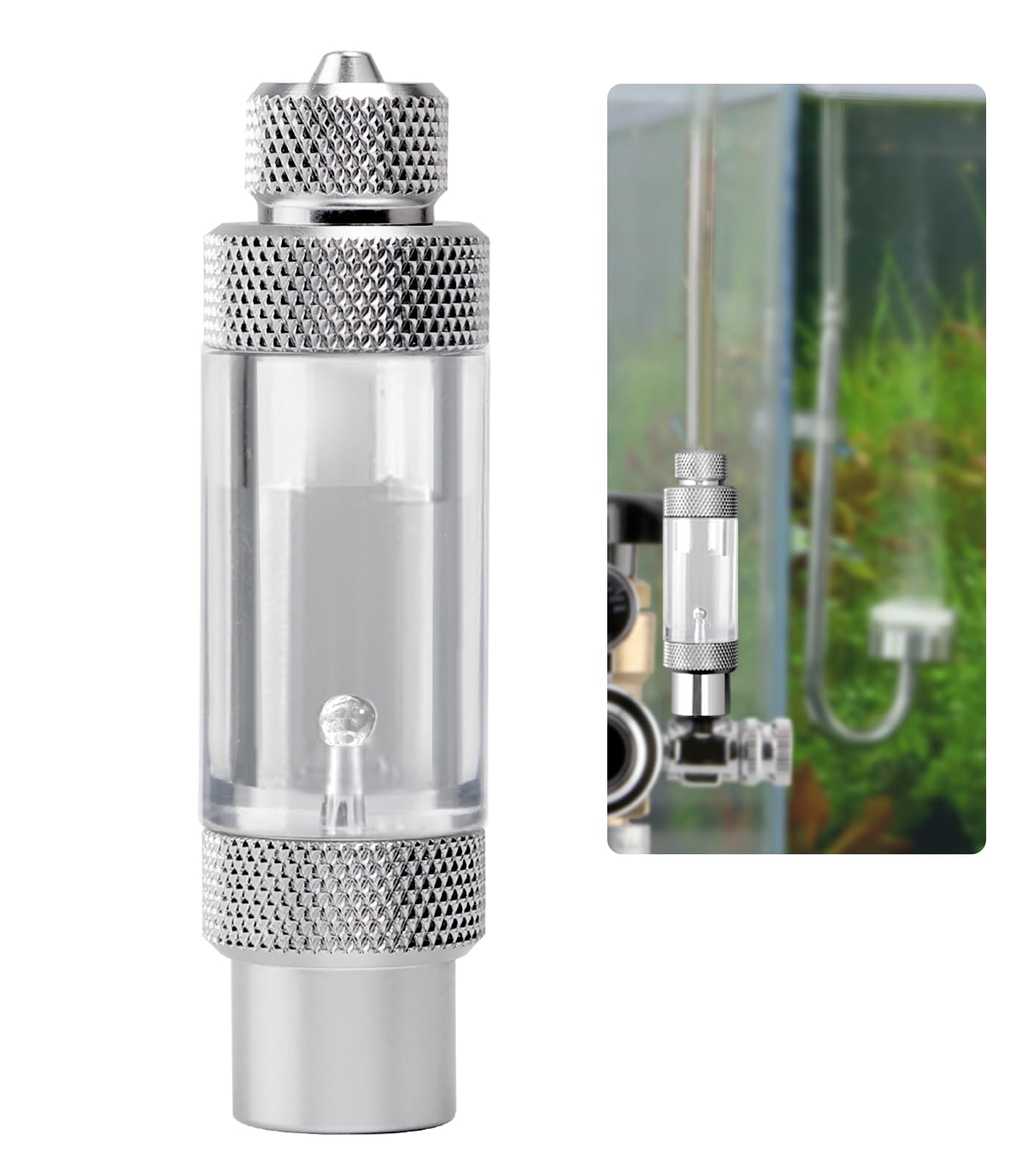
Rating: 4.5 ★ | Price: Budget | Check Valve: Built-in | Material: Aluminum ends + PC | Refill Method: Disassembly required | Thread Type: M10x1 compatible | Multi-Tank: No
The Clscea bubble counter bundles two upgrades that usually cost extra: a built-in check valve prevents back-siphoning, and aluminum-reinforced ends reduce the risk of cracking common with all-plastic counters. Setup is tool-free, and the price undercuts most basic models without these features.
This is the right pick for budget-conscious hobbyists with standard M10x1 threaded regulators who want a complete solution in one box. The check valve eliminates the need for a separate purchase, and the metal ends add durability. Two caveats worth noting: if overtightened, the threads can strip; and in isolated units, the bubble rate may drift over time. These are not dealbreakers for most beginners, but careful handling is advised.
Pros
- Built-in check valve prevents back-siphoning without needing an extra component
- Metal-reinforced ends feel sturdier than plastic and resist cracking
- Tool-free installation and clear bubble visibility at a budget-friendly price
Cons
- Bubble rate may gradually increase on some units, leading to faster CO2 depletion
- Thread stripping or check valve dislodging can occur if overtightened or if the bottom is unscrewed
For beginners seeking a complete CO2 bubble counter with integrated backflow protection, this is the value pick — just avoid overtightening the threads.
Best for Diy & Budget
Fluval Bubble Counter

Rating: 4.5 ★ | Price: Budget | Check Valve: Not built-in | Material: All-plastic | Refill Method: Disassembly required | Thread Type: Compression fittings | Multi-Tank: No
Hundreds of thousands of hobbyists trust this counter for clear bubble visibility and consistent performance. That simplicity comes at a cost: no built-in check valve means backflow protection is an extra purchase, and the all-plastic body can crack if compression fittings are overtightened. The weak suction cup loses grip over time, though a bracket or adhesive mount solves that easily. This makes the Fluval a practical choice for DIY CO2 users who already own a check valve, budget-focused hobbyists wanting a replaceable unit, or first-time planted tank owners testing the waters without a big investment.
Pros
- Transparent body makes bubble counting effortless, even at low flow rates.
- Budget-friendly price point with easy replacement when needed.
- Compression fittings secure standard 4/6 mm tubing without leaks.
Cons
- No built-in check valve — must be purchased separately to protect regulator and solenoid from backflow.
- Plastic body can crack if compression nuts are overtightened, requiring careful hand-tightening only.
For hobbyists who already own a check valve and want a no-frills backup or first counter, the Fluval delivers where it counts — bubble visibility — at a price worth the plastic tradeoffs.
Best for Easy Refill Users
LINLAN Refill Bubble Counter
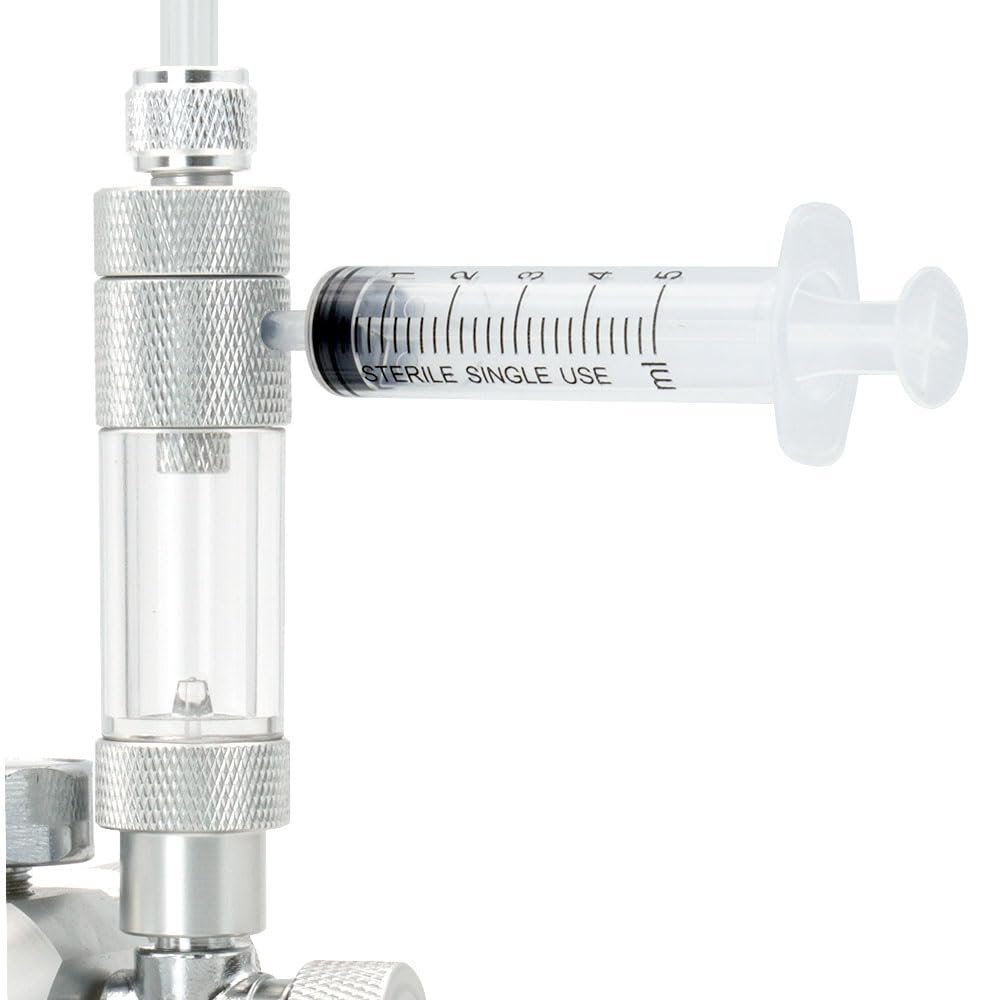
Rating: 4.3 ★ | Price: Budget | Check Valve: Built-in | Material: Plastic | Refill Method: Side port + syringe | Thread Type: M10x1 male thread | Multi-Tank: No
The LINLAN bubble counter’s side-port refill with included syringe means you never need to unscrew the counter from your CO2 line to add water. This is a meaningful time-saver for hobbyists with cramped multi-tank arrangements or counters tucked behind furniture. However, build quality varies: some units arrive with refill ports that fail to seal, spraying water back during injection instead of accepting it. That makes this counter best for buyers who value convenience over absolute consistency and are willing to order from a seller with a flexible return policy.
Pros
- Side-port refill eliminates the need to disassemble CO2 lines for water addition
- Built-in check valve prevents backflow from counter to regulator
- Includes a syringe for precise, mess-free water injection
Cons
- Refill port seal can be inconsistent — some units may spray water back instead of accepting it
- Thread compatibility limited to M10x1; non-standard regulators require additional adapters
Buy this if you’re tired of disassembling your CO2 line every week and can accept the possibility of a port defect — otherwise the top pick’s more consistent build is the safer call.
Best for Durable Dual Head
Fdit Double Head Counter

Rating: 4.3 ★ | Price: Mid-Range | Check Valve: Built-in | Material: Acrylic body | Refill Method: Disassembly required | Thread Type: Standard threads | Multi-Tank: No (single/double head)
The acrylic body withstands pressure better than the thin plastic on budget counters, and the built-in check valve stops backflow without extra parts. Its double-head design separates bubble counting for two diffuser lines, a feature the single-output top pick can’t match. This counter best serves hobbyists with standard-threaded regulators who don’t mind topping off the water chamber weekly—ideal for dual diffuser setups where monitoring both lines independently matters.
Pros
- Acrylic construction resists cracking and leaking better than all-plastic counters
- Integrated check valve eliminates the need for a separate non-return device
- Dual-head design allows simultaneous bubble monitoring on two outputs
Cons
- Thread size can be incompatible with some regulators—measure before ordering
- Water evaporation may require refilling roughly once a week
If you’re directing CO2 to two tanks and have confirmed standard threads, this acrylic counter is a solid, leak-resistant upgrade over all-plastic models—just plan on weekly water top-ups.
Best for Multi-Tank Setups
ZRDR Splicing Counter

Rating: 4.0 ★ | Price: Mid-Range | Check Valve: Built-in | Material: PC cylinder + metal ends | Refill Method: Syringe port | Thread Type: Standard threads | Multi-Tank: Yes (modular)
The ZRDR Splicing Counter stands apart with its modular design that lets you chain multiple counters to monitor bubble rates across several planted tanks from one CO₂ cylinder. The built-in check valve and easy refill port (syringe included) add convenience, and early users report leak-free seals out of the box.
This bubble counter suits advanced hobbyists running multiple planted tanks from a single CO₂ source — the intended use case. Single-tank owners will find basic counters more cost-effective and equally functional. Some online reviews appear to describe a full regulator kit rather than this standalone counter, so specific performance claims should be taken with context.
Pros
- Modular splicing allows independent bubble monitoring across multiple tanks from one CO₂ source.
- Refill port with included syringe eliminates need to disassemble for water top-ups.
- Connections seal well with no reported leaks out of the box.
Cons
- Costs more than simple bubble counters — the multi-tank capability is its main justification.
- Some review content may describe a full regulator kit rather than the standalone counter, making it harder to assess standalone performance.
Best for hobbyists centralizing CO₂ distribution across multiple tanks — skip if you only need a simple counter for one aquarium.
How to Choose
The most overlooked factor when buying a CO2 bubble counter is thread compatibility – a mismatch means the counter simply won’t attach to your regulator.
Check Valve
A built-in check valve prevents water from flowing backward into your regulator when the CO2 supply stops (e.g., when the canister runs empty). Without it, water can creep up the tubing and damage the regulator’s diaphragm or solenoid. Many budget counters omit this part, forcing you to buy a separate in-line check valve – which adds cost and another potential leak point. If your regulator lacks a built-in check valve, prioritize a counter that has one.
Material
Bubble counters are typically made of plastic, acrylic, or plastic with metal end caps. All-plastic models are cheapest but crack easily if the compression nuts are overtightened – a common user error. Acrylic bodies are more impact-resistant but can still scratch. Metal-reinforced ends (aluminum or brass) handle the mechanical stress of repeated tightening and protect the threaded connections. For setups that will be assembled and disassembled multiple times, metal ends are worth the small price premium.
Refill Method
Water evaporates from a bubble counter over time, requiring periodic refills. Most counters need you to disconnect the tubing or unscrew the chamber to add water – a fiddly process if the counter is mounted in a tight space. Some newer designs include a side port with a syringe, letting you top off the water without breaking the CO2 line. This saves minutes and reduces the chance of introducing air bubbles into the system. If your counter is hard to reach or you run multiple tanks, the refill port becomes a major convenience.
Thread Compatibility
Most CO2 regulators use an M10x1 male thread to attach the bubble counter, but some brands (notably Fzone and certain paintball-style regulators) use different sizes or compression fittings. Screw-on counters that don’t match your regulator’s thread simply won’t connect. Always check your regulator’s thread specification before ordering. Compression-fit counters (like the Fluval) work with any tubing but lack the rigid connection of a threaded counter – they can be knocked loose more easily.
Multi-Tank Capability
If you run CO2 to more than one aquarium from a single cylinder, you need a way to split the gas into independent lines. Standard bubble counters only handle one output. Modular counters allow you to chain multiple chambers together, each with its own check valve and bubble rate adjustment. This avoids the expense of buying separate regulators per tank. For single-tank setups, this feature is irrelevant – you pay extra for hardware you won’t use.
FAQ
Why does my bubble counter need to be refilled with water every few days?
Water in a bubble counter evaporates because the CO2 gas stream carries moisture out of the chamber. Room humidity and temperature affect the rate, but weekly refills are normal. Models with a side refill port let you add water without disconnecting the tubing, saving time and reducing the risk of introducing air locks.
Do I still need a separate check valve if my bubble counter has one built in?
No – a built-in check valve in the bubble counter prevents backflow from the diffuser to the regulator, covering the same function as an in-line valve. You only need a separate check valve if your counter lacks this feature (like the Fluval). Running two check valves in series isn’t harmful but adds unnecessary complexity.
What thread size do most CO2 regulators use for bubble counters?
The vast majority of standard aquarium CO2 regulators use an M10x1 male thread. However, some budget regulators (especially from Fzone or paintball conversions) use imperial threads or compression fittings. Always check your regulator’s thread type before buying a screw-on counter. A thread gauge is cheap and prevents returns.
Can I run multiple aquariums from one CO2 tank using spliced bubble counters?
Yes, but only if your counter is designed for multi-tank use – standard counters have a single input and output. Modular counters like the ZRDR allow chaining several chambers together, each with its own check valve. You also need a splitter valve and needle valves per line to independently adjust each tank’s bubble rate. It’s a niche setup for advanced hobbyists with multiple planted tanks.
How do I prevent plastic bubble counters from cracking when tightening the fittings?
Hand-tighten the compression nuts only until they feel snug – do not use pliers or wrenches. Overtightening is the primary cause of cracks in all-plastic models. If your counter has metal end caps, they distribute the stress more evenly, so you get a leak-free seal without risking damage. For plastic-only counters, consider adding a thin layer of plumber’s tape on the threads to reduce friction.