This post contains affiliate links. We may earn a small commission when you buy through our links — at no extra cost to you.
Many all-in-one aquarium kits advertise convenience, but the saltwater environment quickly exposes weak points – filters that hum, lights that flicker within months, and seals that may not hold up against corrosion.
The difference between a setup that stays quiet and one that becomes a headache often comes down to specific component choices: corrosion-resistant pumps, higher-gauge glass, and LED fixtures sealed against moisture.
This guide focuses on tanks that either deliver on those specs out of the box or set clear expectations for where to invest your upgrade budget – so you don’t end up replacing half the system in the first year.
Top Picks
Best for First-Time Saltwater
Aqueon 20 Gal Kit
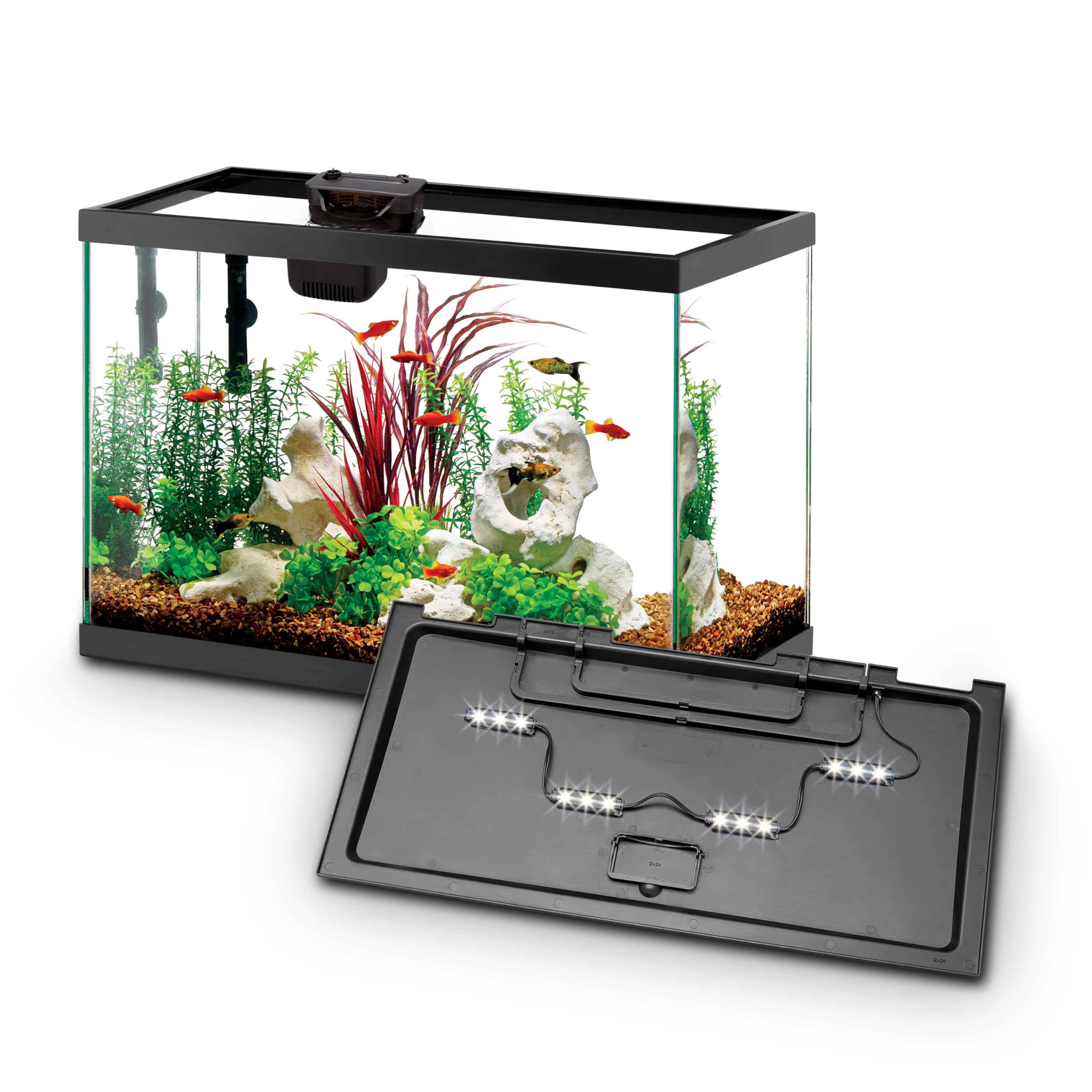
Rating: 4.3 ★ | Price: $$ | Tank Volume & Dimensions: 20 gal, 27.5x16x20.25 in | Included Filtration, Heater, Light: SmartClean filter, 50W heater, LED hood | Saltwater Compatibility: Yes (explicit) | Noise Level: Filter hum
The Aqueon 20-gallon kit arrives with explicit saltwater compatibility — a rarity among all-in-one setups. Unlike freshwater-only kits, the included internal filter and preset heater are rated for marine use, and the package bundles a net and lid, so you’re not hunting for accessories on day one. Assembly is quick: the SmartClean filter slots in intuitively, and the low-profile LED hood snaps on in minutes. Water movement is gentle enough for most fish, though the filter motor may produce a low hum that’s often fixable with a simple impeller cleaning or repositioning.
This kit fits first-time marine hobbyists who want a fish-only or live-rock display without light-demanding corals. The included LED is bright enough for viewing but lacks the spectrum or intensity for reef invertebrates. The 50W preset heater maintains baseline temperature, though accuracy can drift, so pairing it with a separate thermometer is wise. The real tradeoff is longevity: the LED is vulnerable to moisture corrosion and may fail within the first year, and heater performance varies unit to unit. For a beginner willing to treat these as near-term replacement items, the value holds up well.
Pros
- Explicit saltwater compatibility — filter and heater are marine-rated out of the box.
- Quick assembly with an intuitive filter and lid design.
- Comprehensive bundle includes heater, net, and hood for immediate setup.
Cons
- Moisture exposure can corrode the LED hood, causing premature failure.
- Heater temperature accuracy varies — some units run hot or cold out of the box.
For a saltwater beginner who wants a generous 20-gallon footprint and everything needed to start on day one, this kit delivers where it counts — plan for a light upgrade and a backup heater within the first year.
Best for Nano Reef Starter
Fluval Evo 13.5

Rating: 4.3 ★ | Price: $$ | Tank Volume & Dimensions: 13.5 gal, 22×11.5×15 in | Included Filtration, Heater, Light: 3-stage sump, 16W LED | Saltwater Compatibility: Yes (designed for saltwater) | Noise Level: Pump hum
Fluval’s Evo XIII is purpose‑built for saltwater nano reefs, combining a three‑stage rear sump and a 16W LED that supports soft corals and LPS without modification. Where the top pick offers a larger 20‑gallon tank and explicit beginner support, this 13.5‑gallon setup is better suited for desk or countertop spaces and reef‑focused beginners. It’s a strong entry point for first‑time saltwater keepers willing to accept that glass breakage and pump or LED failures have been reported with some units — worth buying with a flexible return policy.
Pros
- Integrated sump and LED designed for marine use support soft corals and LPS out of the box.
- Compact 13.5‑gallon footprint fits small spaces while providing a complete system.
- Nearly everything included for setup — add water, live rock, and fish.
Cons
- Pump and LED may need replacement within the first year of ownership.
For nano reef beginners who prioritize a compact all‑in‑one over tank volume, this Fluval Evo is the right choice — provided you’re prepared for possible component issues.
Best for Premium Display Tank
LANDEN 37 Rimless
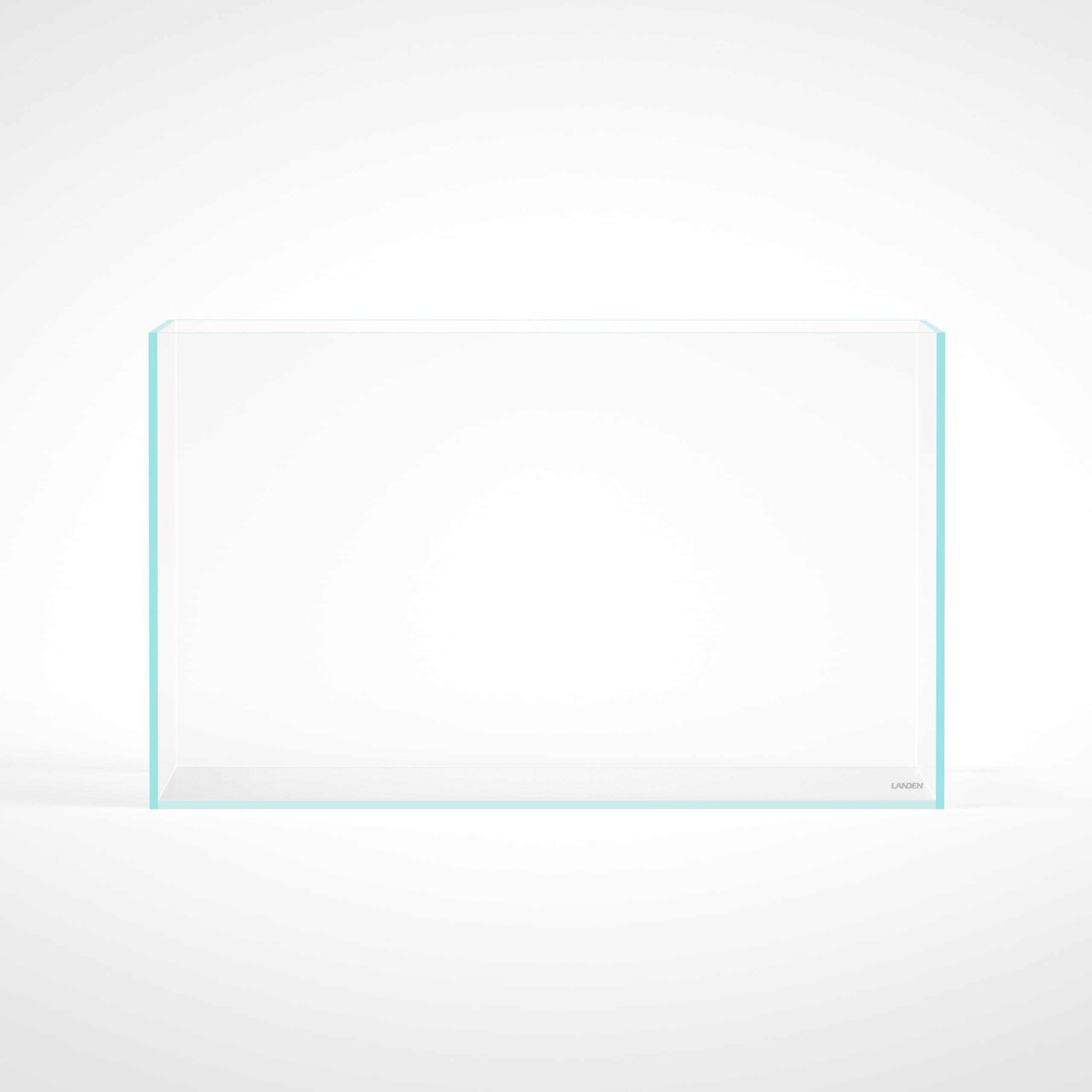
Rating: 4.5 ★ | Price: $$$ | Tank Volume & Dimensions: 37 gal, 29.5×17.7×17.7 in | Saltwater Compatibility: Yes (glass suitable)
The low-iron glass delivers crystal-clear viewing without the green tint typical of standard aquariums, and the rimless construction with clean silicone seams gives it a polished look that stands out in a living room or office. This is a bare tank — you’ll need to add your own filtration, lighting, heater, and lid. For aquascaping enthusiasts and reef keepers who want a showpiece, the optical clarity and minimalist design are worth the extra investment over a typical kit.
Long-term durability is worth a cautious eye: seal failures have been noted after months of use, though not in every tank. The foam leveling mat included helps reduce stress on the glass, and careful inspection on arrival can catch any shipping chips or scratches. This tank suits buyers who prioritize display aesthetics and are comfortable managing separate components and occasional maintenance.
Pros
- Low-iron glass eliminates green tint for true color viewing
- Rimless design with clean silicone seams looks premium in any room
- Well-constructed with sturdy wooden crate packaging
Cons
- In some cases, the tank arrives with chips or scratches from shipping
- Seal failures have been noted after months of use, worth checking over time
For aquascapers and reef keepers who want a showpiece tank with unmatched clarity, this rimless design delivers — just budget for separate equipment and keep an eye on seam integrity.
Best for Large Budget Tank
Tetra Glass 55 Gal

Rating: 4.6 ★ | Price: $$ | Tank Volume & Dimensions: 55 gal, 48x13x20 in | Saltwater Compatibility: Yes (glass suitable)
The Tetra 55-gallon offers the lowest cost per gallon at this size with thick glass and clean seams that hold up well. Unlike premium rimless tanks, this is a standard framed design that requires separate equipment for filtration, lighting, and a lid. The 48 x 13 x 20-inch footprint gives ample swimming room for fish-only saltwater or even small freshwater turtles.
Best for hobbyists who already own the necessary gear and want a spacious bare tank without paying for a kit. Sealant QC can vary between units, so inspecting seams before filling is essential. This is not a beginner’s ready-to-use system — plan on a separate budget for a filter, heater, and lid.
Pros
- Thick glass with clean seams at a competitive price point.
- Spacious 55-gallon footprint with plenty of swimming room for fish or small turtles.
Cons
- Sealant quality can vary, and some units develop leaks after setup.
A cost-effective option for experienced keepers who want a large tank without paying for a kit, but budget time for a fill-test and separate equipment purchases.
Best for Advanced Lighting Nano
Coralife BioCube 16

Rating: 4.3 ★ | Price: $$$ | Tank Volume & Dimensions: 16 gal, 21.75×20.25×23.25 in | Included Filtration, Heater, Light: Sump pump, 3-channel LED | Saltwater Compatibility: Yes | Noise Level: Pump hum
The Coralife BioCube 16 differentiates itself with a three-channel LED that offers programmable sunrise/sunset effects – a feature that appeals to reef beginners wanting natural light cycles without manual adjustments. The integrated rear sump simplifies filtration, but the stock pump can produce a noticeable hum in quiet spaces, and occasional glass cracking has been reported in some units, making a thorough inspection on arrival worthwhile. This kit is best for buyers who prioritize lighting control and are open to upgrading the pump or skimmer for a quieter, more reliable setup.
Pros
- Three-channel LED with programmable sunrise/sunset timer mimics natural light cycles.
- Integrated rear sump and plug-and-play design simplify nano reef setup.
Cons
- In quiet rooms, the pump hum can be noticeable – less intrusive in a living area.
- Spontaneous glass cracking has been noted in some units – inspect the tank upon delivery.
A capable nano reef kit for those who value LED timing features, with the caveat that pump noise and glass integrity may require attention.
Best for Freshwater Beginners
Tetra ColorFusion 20
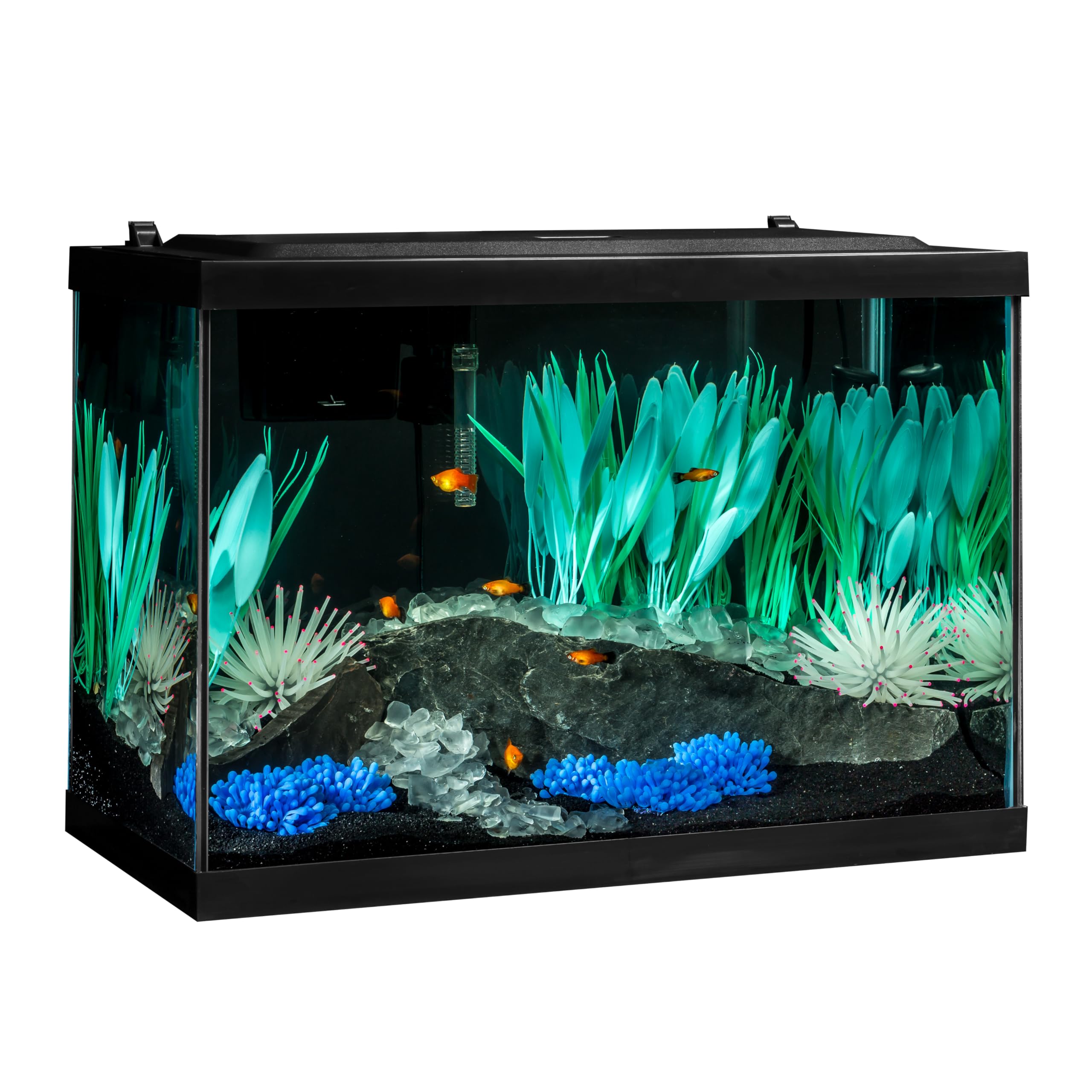
Rating: 4.3 ★ | Price: $ | Tank Volume & Dimensions: 20 gal, 24.2×12.4×16.7 in | Included Filtration, Heater, Light: Filter, heater, LED, decor | Saltwater Compatibility: No (freshwater only) | Noise Level: Loud filter
Tetra ColorFusion 20 is the most affordable complete kit for freshwater beginners, offering easy assembly and an attractive look. However, its components lack corrosion resistance and the filter can be noisy, making it unsuitable for saltwater setups.
Pros
- Very affordable complete starter kit for freshwater beginners
- Easy to assemble with clear instructions and an appealing look
Cons
- Not suitable for saltwater due to non-corrosion-resistant components, and the filter can be noisy in quiet environments
A good value for freshwater-only setups on a tight budget, but saltwater buyers should skip this and invest in a purpose-built saltwater kit.
Best for Large Freshwater Kit
Tetra Complete 55

Rating: 4.2 ★ | Price: $$ | Tank Volume & Dimensions: 55 gal, 50.63×14.75×23.25 in | Included Filtration, Heater, Light: Whisper PF60 filter, 200W heater, LED hood | Saltwater Compatibility: No (not designed) | Noise Level: Loud filter
This kit delivers a large tank with all essentials for quick freshwater setup at a competitive price. However, the filter, heater, and glass have been reported to develop issues – the tank is not designed for saltwater use, and component durability is a known vulnerability. Better suited to freshwater buyers who plan to upgrade key parts.
Pros
- All-in-one package saves time and effort when setting up a large freshwater tank.
- Lower total cost compared to buying components separately, with affordable filter refills.
Cons
- Glass panels may crack during shipping or shortly after setup – inspect seams before filling.
For freshwater enthusiasts who want a large tank and are comfortable replacing the filter and light, this kit offers value – but saltwater hobbyists should skip it entirely.
How to Choose
The difference between a saltwater tank that thrives and one that frustrates often comes down to the quality of the included filtration and lighting – components that many kits treat as afterthoughts.
Tank Volume & Dimensions
Larger volumes (55+ gallons) offer more stable water chemistry and allow a wider fish selection, but require a dedicated stand and heavier floor load. Smaller tanks (13–20 gallons) are easier to maintain and fit on desktops, but salinity and temperature can swing more rapidly.
Consider your available space and your willingness to perform weekly water changes – a 20-gallon tank needs about 4–5 gallons changed weekly, while a 55-gallon may need 10–12 gallons.
Included Filtration, Heater & Lighting
Many kits ship with undersized filters that lack the media volume needed for saltwater bio-load. A power filter rated for 2–3 times the tank volume is a safer baseline. Heaters should be titanium or quartz-sheathed to resist corrosion – glass heaters crack in saltwater.
LED lights in budget kits typically emit PAR values too low for stony corals. If you plan to keep anything beyond soft corals, budget for an aftermarket light from the start.
Saltwater Compatibility
Not all “aquarium” kits handle saltwater. Seals, gaskets, and pump impellers in freshwater-only models corrode quickly when exposed to salt creep. Look for explicit “saltwater-ready” labeling or corrosion-resistant materials like ceramic shafts and silicone seals.
Even in saltwater-labeled kits, inspect the heater – some preset freshwater heaters fail within weeks in marine tanks.
Noise Level of Pump & Filter
Saltwater pumps often hum louder than freshwater ones because higher flow rates and salt crust vibration amplify sound. Internal filters with foam blocks tend to be quieter than hang-on-back units that vibrate against glass.
If the tank will be in a bedroom or living area, consider a canister filter or a sump system with noise-dampening pads – they reduce audible resonance by 50–70%.
Lighting Capability for Corals
Stock LED hoods in most kits output PAR levels around 30–50 µmol/m²/s at the substrate – enough for fish-only or low-light soft corals (mushrooms, zoanthids). LPS corals need 80–120 PAR, and SPS require 200+ PAR, which only aftermarket fixtures or premium integrated units like the Fluval Evo’s 16W can approach.
Check the fixture’s wattage and whether it has independent color channels. A 3-channel timer allows sunrise/sunset simulation but doesn’t guarantee PAR density.
FAQ
Can I use a freshwater aquarium kit for saltwater?
It’s not recommended. Freshwater kits use materials that corrode quickly in saltwater – plastic impellers, non-silicone gaskets, and unsealed LED boards. Within months, pumps fail and lights flicker. Buy a kit explicitly labeled for saltwater or a bare tank with marine-grade components.
How long do aquarium LED lights typically last before failing?
Stock LED hoods in budget kits often fail within 6–12 months due to moisture ingress. Higher-end fixtures with sealed optics can last 3–5 years. If your kit’s light dims or flickers early, plan to replace it with a corrosion-resistant unit rated for marine humidity.
What causes a saltwater aquarium filter to be so loud and how do I fix it?
Noise usually comes from pump vibration against the tank wall or air bubbles trapped in the impeller. Check that the pump is fully submerged, use rubber mounting pads, and clean the impeller monthly. If humming persists, a canister filter with soft hoses is quieter than hang-on-back units.
Is a 20‑gallon tank big enough for a beginner saltwater reef?
Yes, 20 gallons is a common starting size. It offers enough water volume to buffer temperature swings while being manageable for weekly water changes. You can keep a few small fish (clowns, gobies) and soft corals. Just note that a 20-gallon tank limits fish selection to species that stay under 3 inches.