This post contains affiliate links. We may earn a small commission when you buy through our links — at no extra cost to you.
Live plants transform a shrimp tank, providing biofilm for grazing, hiding spots for fry, and natural filtration. But ordering plants online often brings dead leaves, melted stems, and unwanted snail hitchhikers. That frustration is common, but avoidable with the right choices.
Shrimp keepers need plants that arrive healthy, grow in low light without CO2, and never introduce pests. The top performers come from sellers with strong quality control and accurate sizing, so you spend less time dealing with dead plants and more time watching your shrimp thrive.
From reliable foreground Anubias to fast-growing floaters, each pick here addresses a specific need—background cover, surface shade, or compact accents—without the typical risks of melting or pest contamination.
Top Picks
Best for Reliable Low-Light
SubstrateSource Anubias
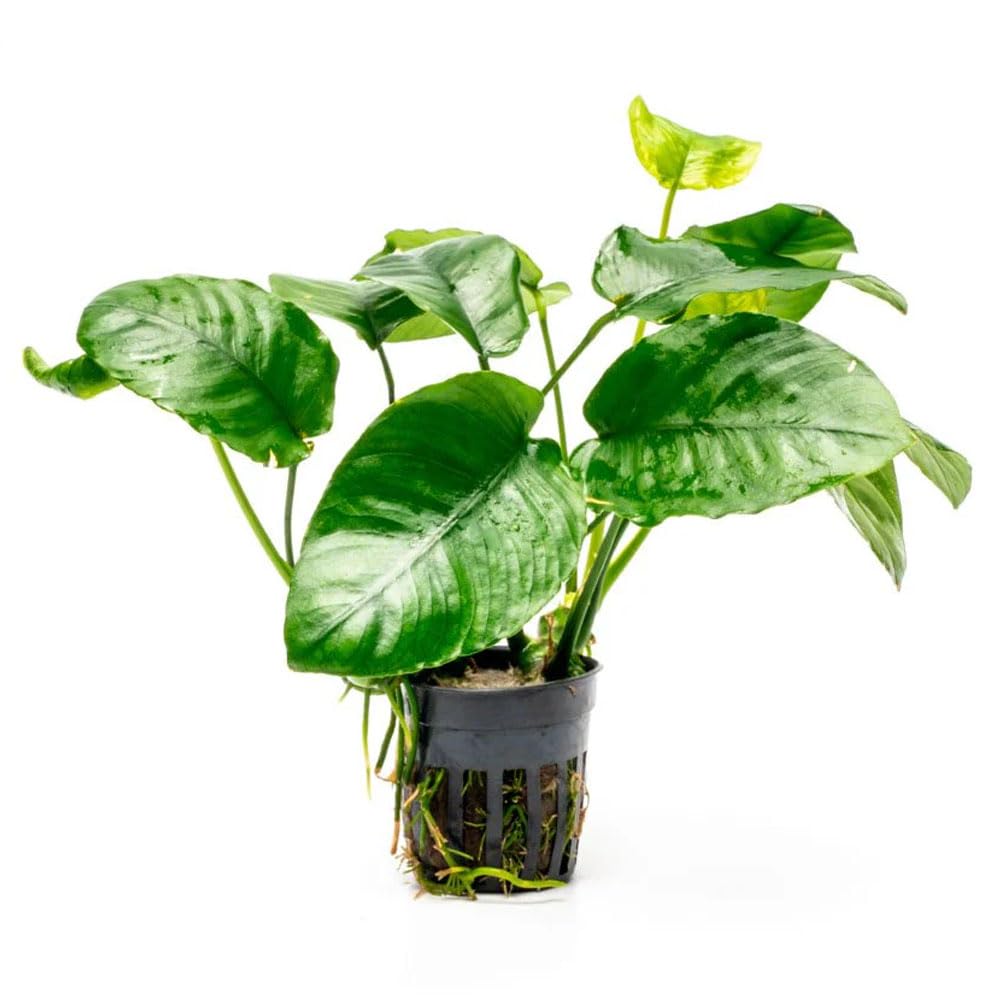
Rating: 4.5 ★ | Price: $$ | Low Light Tolerance: Excellent | Growth Habit: Midground epiphyte | Transition Risk: Low | Root Structure: Rhizome | Leaf Surface Area: Moderate
This Anubias arrives green, robust, and free of snails or worms – a clean start that matters when shrimp tanks are sensitive to hitchhikers. The thick rhizome and strong root system give shrimp a stable perch to graze biofilm, and there’s no need to quarantine or treat for pests before adding to the tank.
Growth stays steady under standard LED lighting without CO2 injection, making it a low-fuss addition for low-tech setups. Shrimp will pick at the leaves for biofilm, and the compact shape provides hiding spots without overwhelming smaller tanks. The leaves tend to stay under 2 inches – a trait of the ‘Wrinkle Leaf’ variety that doesn’t limit its function as a grazing surface or shelter.
This plant suits shrimp breeders who prioritize reliability over instant size – it won’t fill a background quickly, but it will survive without special care. The smaller leaves are standard for this variety, not a defect, so buyers expecting broad leaves typical of other Anubias should adjust expectations. For low-tech tanks where every plant must thrive without fuss, this is the straightforward option.
Pros
- Arrives pest-free and fully green – no quarantine needed before adding to shrimp tanks.
- Robust root system and thick rhizome provide stable structure for shrimp biofilm grazing.
- Thrives in low light without CO2, matching the conditions of most shrimp-focused tanks.
Cons
- Leaves can appear smaller than product images suggest – typical for the ‘Wrinkle Leaf’ variety and not a defect.
For shrimp keepers who want plants that show up healthy and stay that way without hidden surprises, this Anubias is the straightforward pick.
Best for High-Light Floaters
Aquarigram Red Root Floaters

Rating: 4.3 ★ | Price: $$$ | Low Light Tolerance: Moderate (needs high) | Growth Habit: Floating | Transition Risk: Moderate | Root Structure: Floating roots | Leaf Surface Area: High
Aquarigram’s Red Root Floaters deliver vibrant red roots and leaves that outshine most floating plants in a low-flow shrimp tank. Unlike the top pick, which offers pest-free reliability under low light, these floaters require moderate to high light and a still surface to keep their color and prevent melt. Shrimp eagerly graze the long roots, and buyers may receive bonus plants.
This plant suits shrimp keepers who prioritize visual impact and can provide a calm surface, gentle filtration, and consistent parameters. It is not ideal for high-flow HOB filters or tanks with sudden parameter shifts; in those conditions, the plant may brown and melt quickly. For aquascapers wanting a red accent at the surface and willing to dial in their setup, the health and beauty are worth the extra care.
Pros
- Vibrant red roots and leaves add striking color to the surface while shrimp graze on biofilm.
- Arrives healthy and well-packaged, often with extra plants included.
- Long, trailing roots (up to 65 cm) create additional cover and grazing area for shrimp.
Cons
- May introduce ramshorn snails or other hitchhikers; inspect before adding to established tanks.
- Sensitive to strong surface agitation and sudden parameter changes; can melt if flow is too high.
A beautiful floating plant that rewards careful tank setup with vivid color and happy shrimp – best for keepers with gentle filtration and stable water.
Best for Background Cover
Marcus Amazon Sword 3-Pack

Rating: 4.6 ★ | Price: $$ | Low Light Tolerance: Moderate | Growth Habit: Background rooted | Transition Risk: Moderate (snail risk) | Root Structure: Rooted | Leaf Surface Area: Large
These Marcus Amazon Swords arrive noticeably healthier and larger than the mixed-quality swords common at lower price points. Deep green leaves with well-developed roots establish quickly in medium light, forming a dense backdrop within weeks. Unlike slower-growing epiphytes that anchor to hardscape, these rooted plants shoot upward and create the tall, shade-providing cover that shrimp breeders value for molting and grazing.
Shrimp keepers with tanks over 10 gallons who want a fast-growing background plant will find these a good fit. The main tradeoff is that bladder snails occasionally hitch a ride on the leaves, so a quick inspection or dip before planting is wise. These swords also rely on root nutrients; they thrive best in tanks with a nutrient-rich substrate or root tabs, and may stall in inert gravel. They are not suited for nano tanks or for keepers who demand a completely snail-free setup.
Pros
- Arrive in robust condition with strong root systems, minimizing initial melt and die-off.
- Excellent value for three large plants, keeping per-plant cost low for deep backgrounds.
- Fill in quickly under moderate light to create lush hiding spots and biofilm grazing surfaces for shrimp.
Cons
- Can carry bladder snail hitchhikers, requiring inspection or treatment before planting.
For those willing to do a quick snail check, this 3-pack delivers the healthy, large swords that undercut the inconsistent quality of cheaper bundles.
Best for Budget Fern Fill
Marcus Java Fern 3pk

Rating: 4.3 ★ | Price: $ | Low Light Tolerance: Good | Growth Habit: Epiphyte | Transition Risk: Low-moderate | Root Structure: Rhizome | Leaf Surface Area: Moderate
Three Java Ferns for the cost of one from other sellers makes this the best bulk epiphyte deal for low-light shrimp tanks. Unlike premium nano Anubias that command a higher price per plant, this pack lets you fill multiple driftwood perches without straining a budget. Java Fern thrives in dim conditions without CO2, so it slots easily into a shrimp-only tank. The broad, leathery leaves double as biofilm grazing stations and dense cover for shrimplets.
Budget-minded shrimp keepers aiming to fill background gaps on a tight budget will find this pack a strong value. Rhizomes can arrive on the small side, with only a leaf or two, but Java Fern is resilient—trimming away a meager leaf and attaching the rhizome to wood often leads to fresh growth within weeks. A plant may occasionally struggle to establish, so if you want every specimen flawless from day one, a higher-priced, single-pot Anubias is a safer bet.
Pros
- Healthy, vibrant green fronds that arrive with good color and size for the price.
- Three plants for what one typically costs elsewhere—exceptional value for budget builds.
- Epiphyte that attaches to hardscape and needs no substrate, ideal for shrimp hiding and grazing.
Cons
- Rhizomes can arrive undersized, with just one or two leaves—this may delay filling in the background.
- A plant may decline or fail to root within the first few weeks—watch for firm rhizomes and trim away damaged leaves early.
If you need multiple ferns to anchor a shrimp tank’s layout without spending much, this pack delivers—just budget a little patience for a rhizome that starts small.
Best for Nano Foreground
Marcus Anubias Nana Petite

Rating: 4.6 ★ | Price: $$ | Low Light Tolerance: Excellent | Growth Habit: Foreground epiphyte | Transition Risk: Low | Root Structure: Rhizome | Leaf Surface Area: Small
The Marcus Anubias Nana Petite arrives with consistently vibrant green leaves and strong root systems, making it one of the healthiest live aquatic plants available for nano setups. Its compact size is exactly as advertised — ideal for foreground use in 5-10 gallon tanks where a low, bushy accent is desired without overwhelming the space.
This petite Anubias is best matched to shrimp tanks where every leaf provides valuable biofilm surface and hiding spots for fry. Because it stays compact and thrives under low light with no CO2 injection, it reduces maintenance while maintaining water quality through gentle nutrient uptake. Keepers who measure their tank space precisely and understand the naturally slow spread of Anubias will get exactly what they paid for — a healthy, pest-free foreground plant that looks established from day one.
Pros
- Vibrant green leaves and strong roots on arrival — no melting or die-back.
- Exactly the right scale for 5-10 gallon foregrounds — stays compact without needing frequent trimming.
- Low-light tolerant and pest-free arrival, ideal for simple shrimp setups.
Cons
- Growth is naturally slow — expect visible spread over months, not weeks.
- The ‘petite’ size may be smaller than imagined — best to check dimensions before buying.
For shrimp keepers with small tanks who want a reliably healthy plant that stays exactly where it’s placed, the Anubias Nana Petite is a low-hassle, high-certainty choice.
Best for Small Tank Cover
APC Water Spangles 60+ Leaves
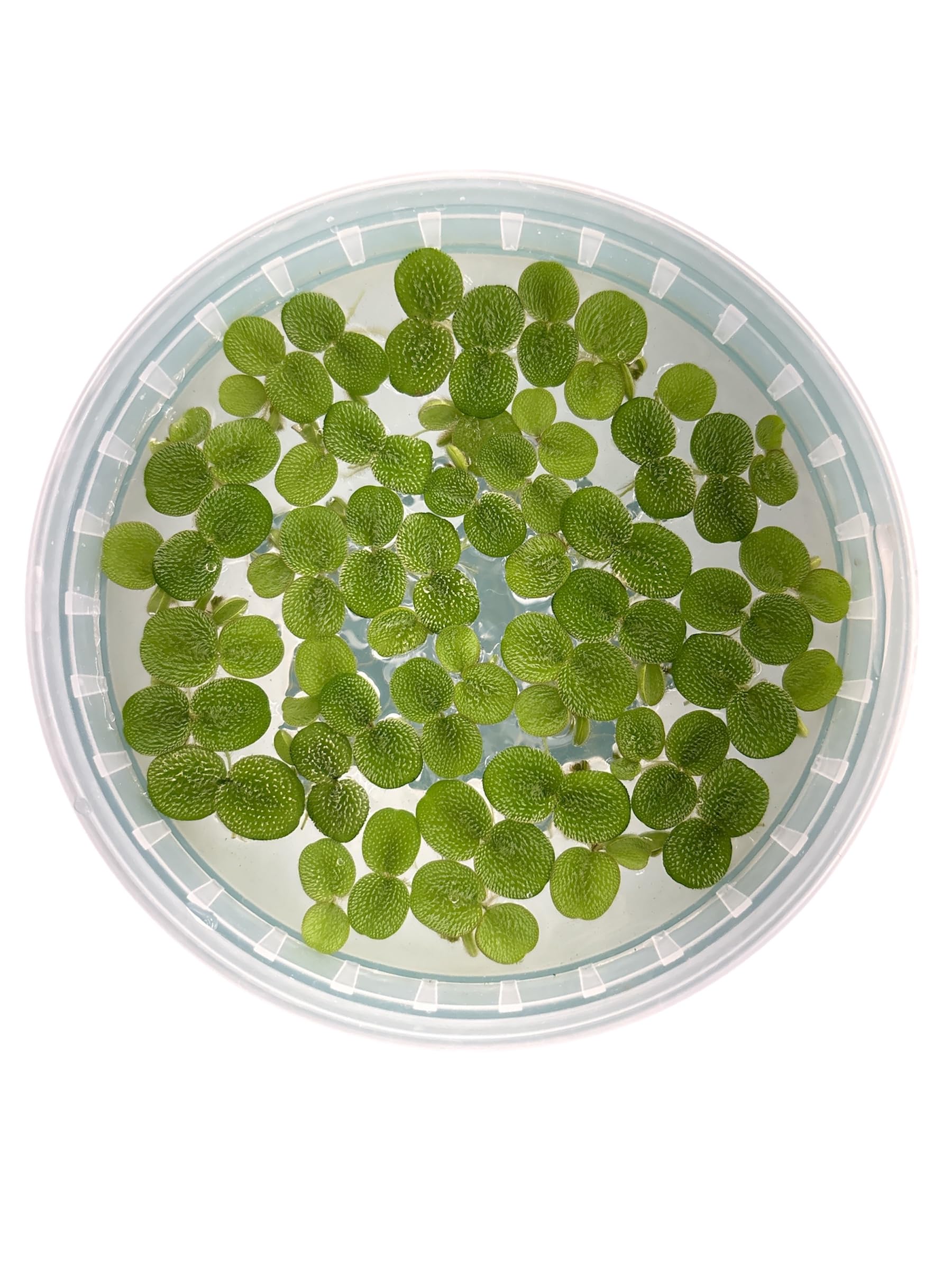
Rating: 4.6 ★ | Price: $$ | Low Light Tolerance: Moderate | Growth Habit: Floating | Transition Risk: Low (early data) | Root Structure: Floating roots | Leaf Surface Area: High
These Water Spangles arrive in excellent condition and grow quickly, providing shrimp with surface cover and biofilm. The limited track record means consistency over time is unproven, making this a cautious pick for those who prefer established sellers.
Pros
- Arrives remarkably healthy and pest-free, ready for immediate use.
- Fast growth provides quick surface cover and hiding spots for shrimp.
Cons
- Some plants may carry hidden snail hitchhikers despite careful packaging.
Best suited for shrimp keepers with small tanks who are willing to accept the uncertainty of a newer seller in exchange for healthy, fast-growing floaters.
Best for Pop of Color
APC Red Root Floaters
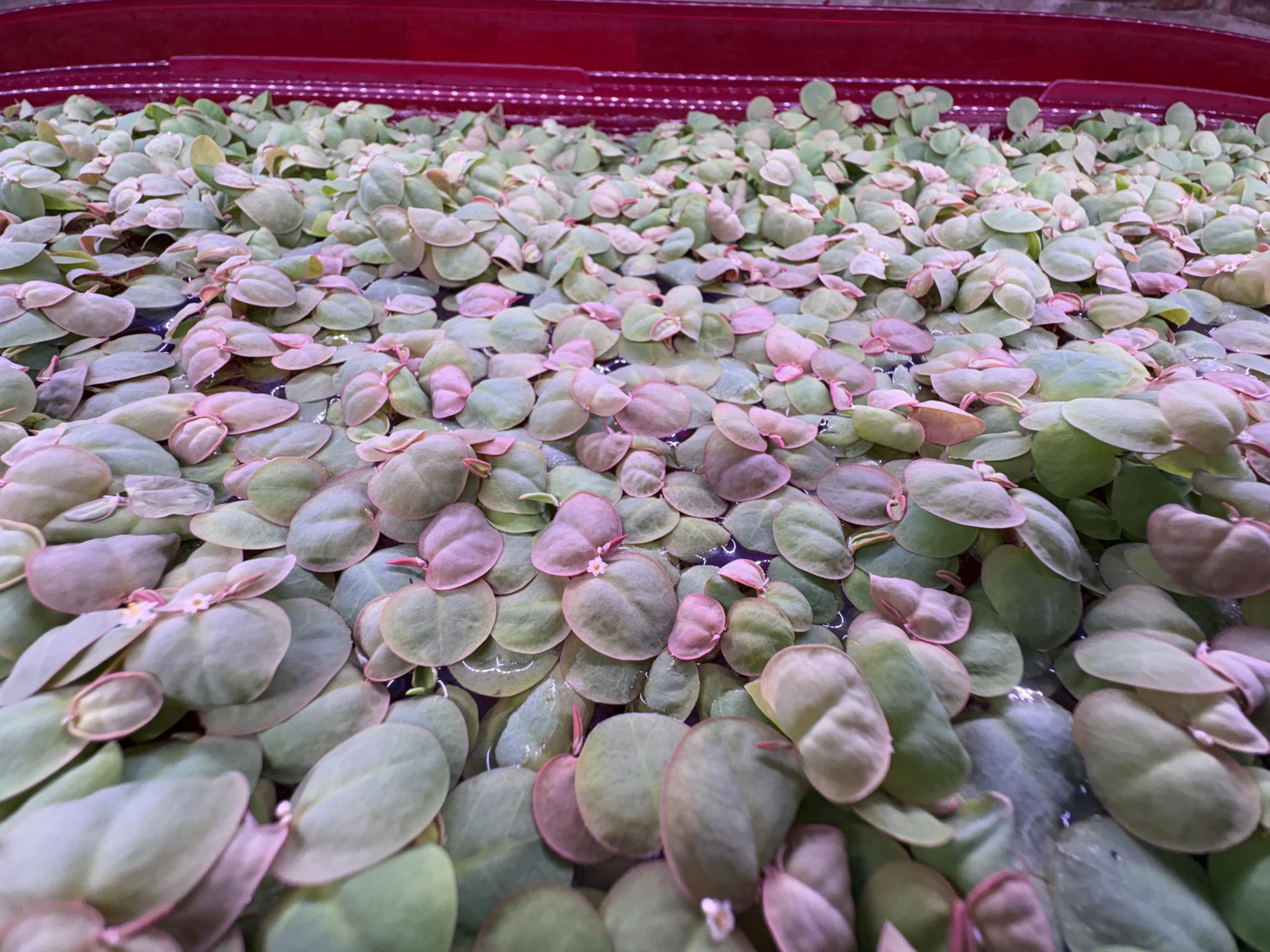
Rating: 4.4 ★ | Price: $$$ | Low Light Tolerance: Moderate-high | Growth Habit: Floating | Transition Risk: Moderate | Root Structure: Floating roots | Leaf Surface Area: Moderate
These Red Root Floaters arrive in exceptional condition, with vivid red roots and leaves that make them one of the most striking floating plants available. The health and pest-free arrival are among the best in this category. However, the portion is small relative to the premium price – expect a cup that covers only a small area of a 5-gallon tank. Additionally, they are sensitive to condensation and strong water flow, so covered tanks or high-current setups may cause deterioration. Best suited for shrimp keepers who want a colorful accent rather than full surface coverage.
Pros
- Striking red roots and leaves add vibrant color to small shrimp tanks.
- Arrives in excellent health with no signs of pests or damage.
Cons
A premium-priced accent piece for nano shrimp tanks where visual impact matters more than surface coverage.
Best for Two Classic Plants
Big Pete’s Fern & Anubias

Rating: 4.3 ★ | Price: $ | Low Light Tolerance: Good | Growth Habit: Epiphyte (two) | Transition Risk: Moderate | Root Structure: Rhizome | Leaf Surface Area: Small-moderate
The Big Pete’s Java Fern and Anubias bundle delivers two hardy, low-light epiphytes that shrimp keepers value for grazing and cover. These are entry-level specimens: plants may arrive small and some leaves can melt during acclimation. Growth to fill a tank takes months, and those expecting instant coverage or large individual plants will be disappointed. For the price, however, it’s a reasonable way to add both species to a nano tank or starter setup. If you’d rather skip the variability, spending a bit more on a single reliable Anubias from SubstrateSource is a safer bet.
Pros
- Two classic shrimp-safe plants – Java Fern and Anubias – in one budget-friendly bundle.
- Plants typically arrive with healthy, established root systems, reducing transplant shock.
Cons
- Months of growth needed before plants reach full size – immediate coverage is minimal.
Worth considering as a low-cost entry point for shrimp keepers willing to wait for growth and accept some leaf melt as part of the process.
Best for Massive Moss Coverage
Swimming Creatures Java Moss
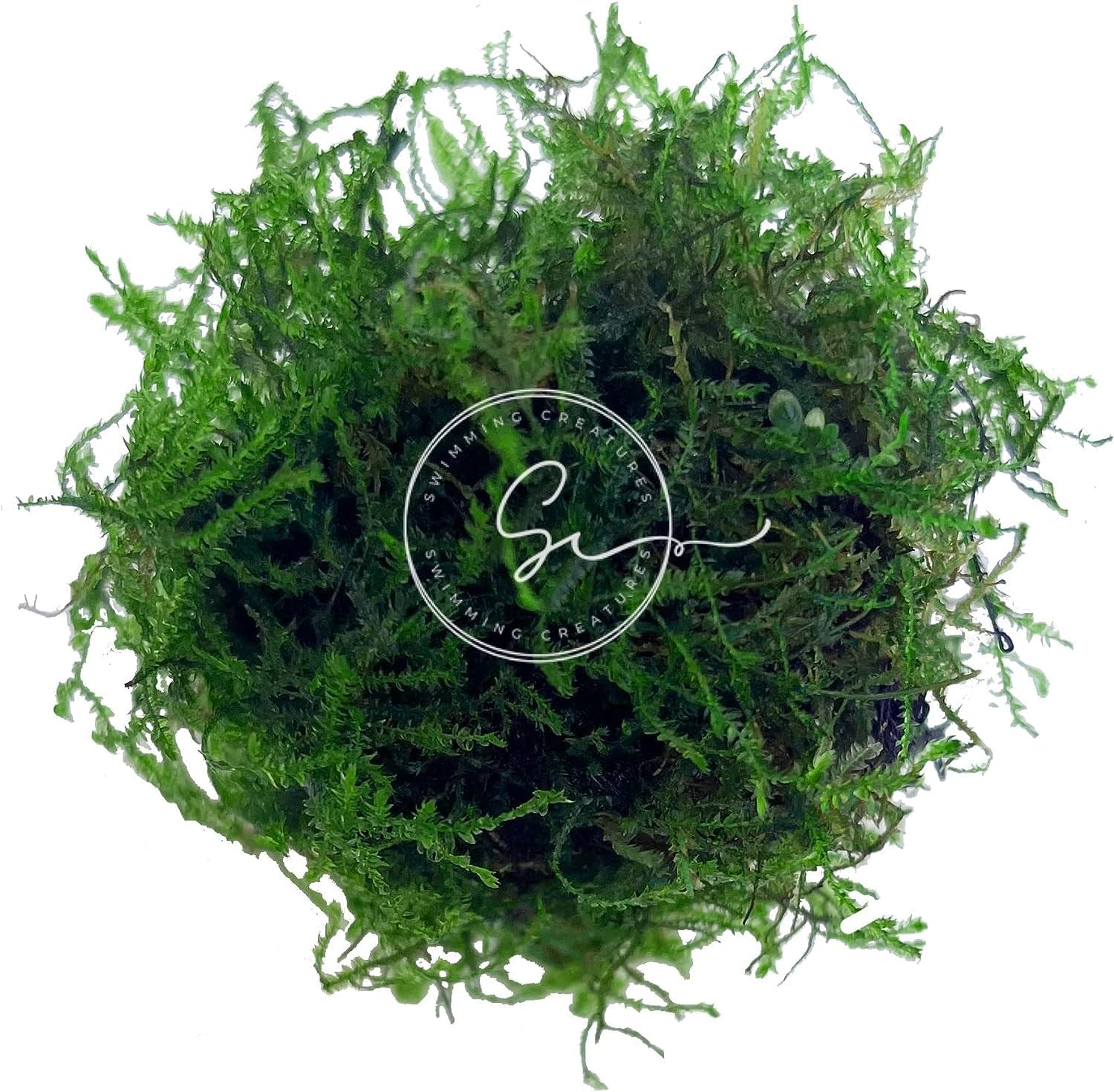
Rating: 4.2 ★ | Price: $$$ | Low Light Tolerance: Good | Growth Habit: Moss carpet | Transition Risk: High (dead portions) | Root Structure: None (attaches) | Leaf Surface Area: Very high (dense)
Generous 25 sq inch portion supports shrimp breeding with hiding spots and biofilm. A notable portion of the moss may arrive brown or brittle, requiring trimming before use. After cutting away dead sections, the usable amount is smaller than the size suggests, making the premium price less attractive for those seeking consistent health. Best suited for breeders who need volume and can handle some dead material.
Pros
- Generous portion size covers a large area for dense shrimp refuge
- Excellent for shrimp breeding – provides fry refuge and biofilm for grazing
Cons
- After removing dead material, the cost per square inch of live moss may be higher than alternative portions
- Some of the moss may arrive brown or brittle, requiring trimming before use
If you need a large portion quickly and can accept some dead material, this moss covers ground at a premium price. For those prioritizing healthy live moss from the start, smaller portions from reliable sellers are a better choice.
Best for Temporary Surface Cover
APC Water Spangles 12pk

Rating: 4.2 ★ | Price: $ | Low Light Tolerance: Good (low-medium) | Growth Habit: Floating | Transition Risk: Moderate | Root Structure: Floating roots | Leaf Surface Area: High
As a floating plant for shrimp tanks, the Water Spangle offers attractive tiny leaves that shrimp enjoy gathering under, and it grows well in low light with minimal flow. However, some shipments arrive with blackened leaves or melt shortly after — a quality inconsistency that matters when you need a reliable cover. For shrimp keepers who already have healthy water spangles and just need a booster, this budget pack can work, but first-time plant buyers should expect variance.
Pros
- Thrives in low light and gentle water flow
- Attractive tiny floating leaves that shrimp love to congregate under
Cons
- Can arrive mixed with duckweed or other unwanted floating plants
A cost-effective surface cover for shrimp keepers who can tolerate batch inconsistency and are willing to inspect arrivals.
Best for Showpiece Gamble
Marcus Tiger Lotus

Rating: 4.3 ★ | Price: $$ | Low Light Tolerance: Moderate-high | Growth Habit: Bulb stem | Transition Risk: High (bulb rot) | Root Structure: Bulb rooted | Leaf Surface Area: Large (once grown)
When this tiger lotus takes off, the red and green leaves add serious visual depth to a planted tank. The bulb can produce new leaves within days under moderate to high light. But the bulb itself arrives small — sometimes under an inch — and may not sprout at all or rot before growth begins. That makes it a risk for shrimp keepers who need reliable cover and biofilm; it’s better suited to experienced growers who can coax a bulb back to health and accept the possibility of failure.
Pros
- Once established, leaves grow quickly and display vivid red and green coloration.
- The bulb itself is hardy when it takes — it can survive even poor initial condition.
Cons
- Bulb upon arrival can be under an inch in size, less impressive than expected.
- In some cases the bulb may never sprout or rot before growth begins.
This lotus works for the shrimp keeper who wants a bold centerpiece and is comfortable with a higher risk of loss — or for the experienced grower who enjoys coaxing bulbs back to life. For reliable shrimp cover, the top pick offers far better odds.
Best for Budget Gamble
Water Plants Amazon Sword 3-Pack

Rating: 4.4 ★ | Price: $$ | Low Light Tolerance: Moderate | Growth Habit: Background rooted | Transition Risk: High (DOA risk) | Root Structure: Rooted | Leaf Surface Area: Large
These Amazon swords provide the tall, broad leaves shrimp use for hiding, perching, and biofilm grazing — beneficial coverage when the plants arrive healthy. The pack costs less than the Marcus alternative for a similar species, but a notable share of shipments include plants that are dead or half-dead on arrival, and the size may be smaller than listed. This makes the set a better fit for experienced keepers who can quarantine and revive plants rather than those needing immediate, dependable establishment.
Pros
- Large leaf surface area creates ample grazing spots for shrimp and helps improve water quality through nutrient uptake.
- Low-maintenance and adapts to a range of water parameters, making it a good fit for low-tech shrimp tanks.
Cons
- Size of the plants can be noticeably smaller than advertised, reducing the immediate coverage for shrimp.
Worth considering for shrimp keepers who have the space and patience to quarantine and potentially revive plants — those seeking instant, consistent growth should look to the Marcus sword.
Best for Pest-Tolerant Ponds
APC Giant Duckweed 30pk

Rating: 4.3 ★ | Price: $ | Low Light Tolerance: Moderate-high | Growth Habit: Floating | Transition Risk: Moderate (pest risk) | Root Structure: Floating roots | Leaf Surface Area: High
Grows quickly enough to strip nitrates from a pond or quarantine tank within days, making it a low-cost nutrient export tool. Batches can arrive with snail or worm hitchhikers, and the plant requires consistent skimming to prevent blocking light to rooted plants. For shrimp tanks where clean conditions and control are priorities, this floating plant demands more management than it provides.
Pros
- Removes nitrates rapidly with surface coverage in days.
- Costs very little and arrives looking healthy.
Cons
- Requires frequent skimming to prevent blocking light to bottom plants.
Use this in a dedicated grow-out or quarantine tank where you can isolate and treat for pests before adding to your display.
How to Choose
The most important rule for shrimp keepers: choose plants that thrive in low light without CO2 and have a proven track record of arriving pest-free.
Low Light Tolerance
Shrimp tanks rarely use high-intensity lighting, so plants that require strong light will struggle or melt. Low-light tolerant species like Anubias, Java Fern, and Java Moss grow steadily under standard LED strips without CO2 injection.
The trade-off is slower growth — a low-light plant may take months to fill a space. But for shrimp, slower growth means less trimming and fewer nutrient swings, which keeps the water stable.
Growth Habit
Plants occupy different layers: foreground (Anubias, moss), background (Amazon Sword, stem plants), and floating (floaters, duckweed). Each layer affects water flow and shrimp access. Foreground plants create low hiding spots for fry; floaters provide shade and biofilm at the surface.
Floating plants are excellent for nitrate export but can block light to lower plants if they cover the entire surface. Background plants like Swords need root tabs and can shade the tank if too tall.
Transition Risk
The transition from emersed (grown above water) to submerged growth causes many plants to melt or lose leaves. Tissue-cultured plants avoid this but are rarer. Most online plants are grown emersed, so some die-off is normal.
What separates risky from reliable is how quickly the plant recovers. Species with robust root systems or rhizomes (Anubias, Java Fern) bounce back faster than delicate bulbs or moss portions that arrive already stressed.
Root Structure
Root structure determines how you plant them. Rhizome plants (Anubias, Java Fern) must be tied to wood or rock — burying the rhizome kills them. Rooted plants (Swords, crypts) need substrate and root tabs. Floaters take nutrients from the water column and can be scooped out easily.
The hidden trade-off: rooted plants require more maintenance to trim and replant, while epiphytes grow slowly but are nearly impossible to kill once attached. For shrimp, epiphytes are often the safer choice because they don’t disturb the substrate.
Leaf Surface Area
Shrimp graze on biofilm that grows on leaf surfaces. Broad leaves (Swords, Anubias) provide large flat areas; fine leaves (moss, fern) offer more surface area per volume and trap food particles for baby shrimp.
Moss and fine-leaved plants create the best hiding spots for fry, but they also trap detritus and require occasional cleaning. Broad leaves are easier to keep clean and support visible biofilm, which is ideal for adult shrimp.
FAQ
Will an Amazon Sword plant grow well in a shrimp tank without CO2?
Yes, Amazon Swords can grow without CO2 injection as long as they receive moderate light and root tabs for nutrients. They are heavy root feeders, so plain gravel won’t sustain them long-term. Expect slower growth and smaller leaves than in a CO2-injected tank, but they will still provide good background cover for shrimp.
How do I prevent bladder snails from coming in with live aquarium plants?
The most effective method is a bleach dip (1 part bleach to 19 parts water for 2 minutes) followed by a thorough rinse and dechlorinator soak. Alternatively, quarantine new plants in a separate container for two weeks and manually remove any snails you see. Tissue-cultured plants are guaranteed snail-free but cost more.
Can Red Root Floaters survive in a tank with a HOB filter that creates surface agitation?
Red Root Floaters prefer still or very gentle surface movement. Strong HOB flow pushes them under, causes leaves to stay wet, and leads to rot. They work best with sponge filters or canister returns that can be adjusted to low flow. If you have a HOB, try floating a ring of airline tubing to create a calm zone.
Is Java Moss or Java Fern better for baby shrimp to hide in?
Java Moss is better for baby shrimp because its dense, fine leaves create a tangled refuge that tiny fry can hide in and graze on. Java Fern has larger, stiffer leaves that offer less cover for very small shrimp. For breeding tanks, a moss wall or clump of Java Moss is the superior choice.