This post contains affiliate links. We may earn a small commission when you buy through our links — at no extra cost to you.
A CO2 drop checker is a simple tool: add reagent, watch the color change, adjust your bubble count. But the real world is less forgiving. Many models leak solution into the tank, show colors that never match the chart, or arrive without the reagent you assumed was included.
This guide focuses on drop checkers that actually do their job consistently. Glass models with good seals and clear color transitions are the benchmark, while acrylic and plastic options often introduce problems that undermine the whole point of monitoring CO2.
The key is matching the checker to your tank size, your patience for refilling, and whether you want a complete kit or already have solution on hand. These picks cover the range so you can monitor CO2 with confidence, not guesswork.
Top Picks
Best for Planted Tank Enthusiasts
NilocG Drop Checker

Rating: 4.5 ★ | Price: Mid-Range | Material: Glass | Solution Volume: 60 mL | Suction Cup(s): 1
The 60ml 4dKH solution means you will refill far less often than with smaller bottles. Installation takes about 30 seconds with the included suction cup. In lower-lit tanks, the color change from blue to green can be harder to read clearly – this is a known tradeoff of the thin glass design. The suction cup may also loosen over time, so occasional reattachment or replacement is something to plan for.
This drop checker suits serious planted tank keepers who want a well-documented tool with a generous reagent supply. If you need perfect color visibility in dim setups or prefer a thicker-walled glass for durability, other options may fit better. The large solution bottle and straightforward setup make it a practical choice for most hobbyists.
Pros
- 60ml reagent bottle reduces refill frequency
- Quick installation with clear instructions
- Well-documented performance from extensive community use
Cons
- Color readability can be challenging in dimly lit tanks
- Suction cup grip may weaken over extended use
For most planted tank setups, this is the drop checker to start with – the large solution bottle and strong community track record are hard to beat at this price.
Best for First-Time Co2 Users
FZONE CO2 Drop Checker

Rating: 4.6 ★ | Price: Budget | Material: Glass | Solution Volume: 15 mL | Suction Cup(s): 1
The FZONE drop checker includes 15ml of 4dKH solution right in the box, saving beginners the extra step of sourcing reagent separately. Its glass construction feels substantial for the price, and the suction cup holds securely against most aquarium walls. Setup takes under a minute—fill the chamber, attach inside the tank, and watch for the color shift that indicates CO2 levels.
This is the right choice for first-time CO2 users who want a complete, budget-friendly kit without hunting for extra parts. The color change from blue to green to yellow is generally readable, but the shades can be harder to distinguish in dimmer tank lighting—something to check against your specific setup. Experienced aquarists may prefer the larger solution bottle of the top pick, but for the price, the FZONE is a functional entry point.
Pros
- Includes 4dKH solution, so no separate purchase needed
- Glass body feels sturdy and well-made for the price
- Quick to install and read, even for first-timers
Cons
- Glass may crack if dropped or handled carelessly
- Color differences can be subtle under certain lighting conditions
Ideal for budget-focused beginners who want everything needed to start monitoring CO2 out of the box—just be aware that color readability is less consistent than pricier alternatives.
Best for Design-Conscious Users
JARDLI Standard Drop Checker

Rating: 4.4 ★ | Price: Mid-Range | Material: Borosilicate Glass | Solution Volume: 15 mL | Suction Cup(s): 1
The JARDLI drop checker uses a unique, elegant glass shape that blends into planted tanks better than standard designs. The narrow chamber is tricky to fill—most owners use a syringe to avoid spills. Best for hobbyists who prioritize appearance and don’t mind the extra step; those wanting quick refills may prefer a wider opening like the top pick.
Pros
- Elegant borosilicate glass design that feels premium and blends into the tank visually.
- High-quality construction with durable glass that stands up to regular use.
- Provides accurate CO2 readings once the initial setup is done correctly.
Cons
- Filling the small chamber can be cumbersome and typically requires a syringe.
- The narrow opening may get clogged with debris, affecting color visibility.
A visually appealing drop checker for those who value design over convenience; works well once set up but requires more effort to maintain.
Best for Nano Tank Owners
JARDLI Nano Drop Checker
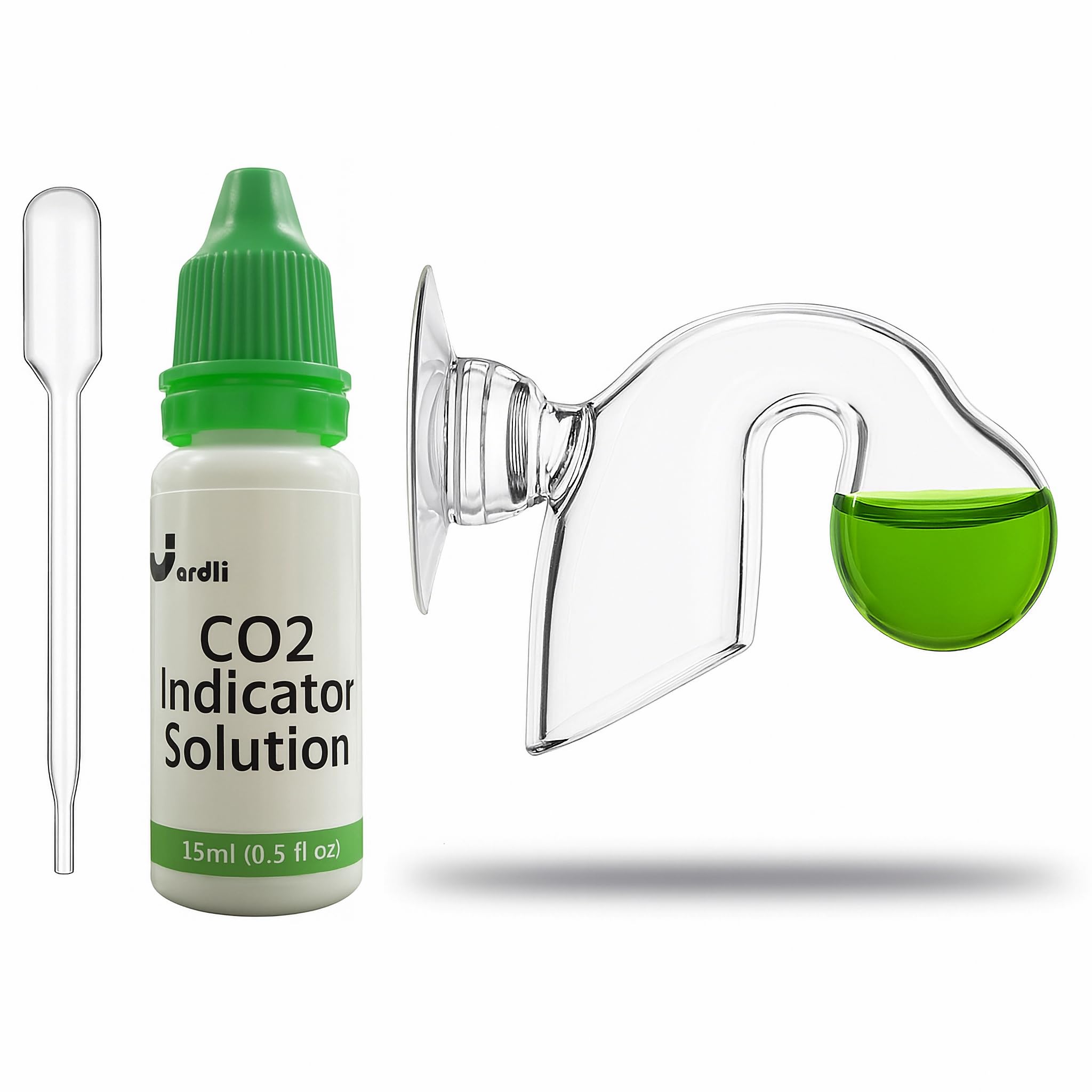
Rating: 4.5 ★ | Price: Mid-Range | Material: Borosilicate Glass | Solution Volume: 15 mL | Suction Cup(s): 2
JARDLI’s nano checker keeps a low profile in compact planted tanks, making it a better match for setups under 10 gallons than bulkier drop checkers with prominent glass bulbs. Where some shapely borosilicate designs call attention to themselves, this one’s strength is its discreet size. Owners of desktop nano tanks who need a precise CO2 indicator without visual interference will appreciate its responsiveness. The suction cup can lose grip after mounting, but soaking it in hot water before use typically resolves the issue.
Pros
- Slim design vanishes in nano tanks without distracting from the aquascape.
- Color change accurately reflects CO2 concentration for timely adjustments.
- Spare suction cup included in case the first one is misplaced.
Cons
- Suction cup may detach if not pre-treated, requiring a quick fix.
Small-scale aquascapers get a tidy, functional monitor; just give the suction cup a warm water soak before relying on it.
Best for Budget-Conscious Aquarists
Pawfly CO2 Drop Checker
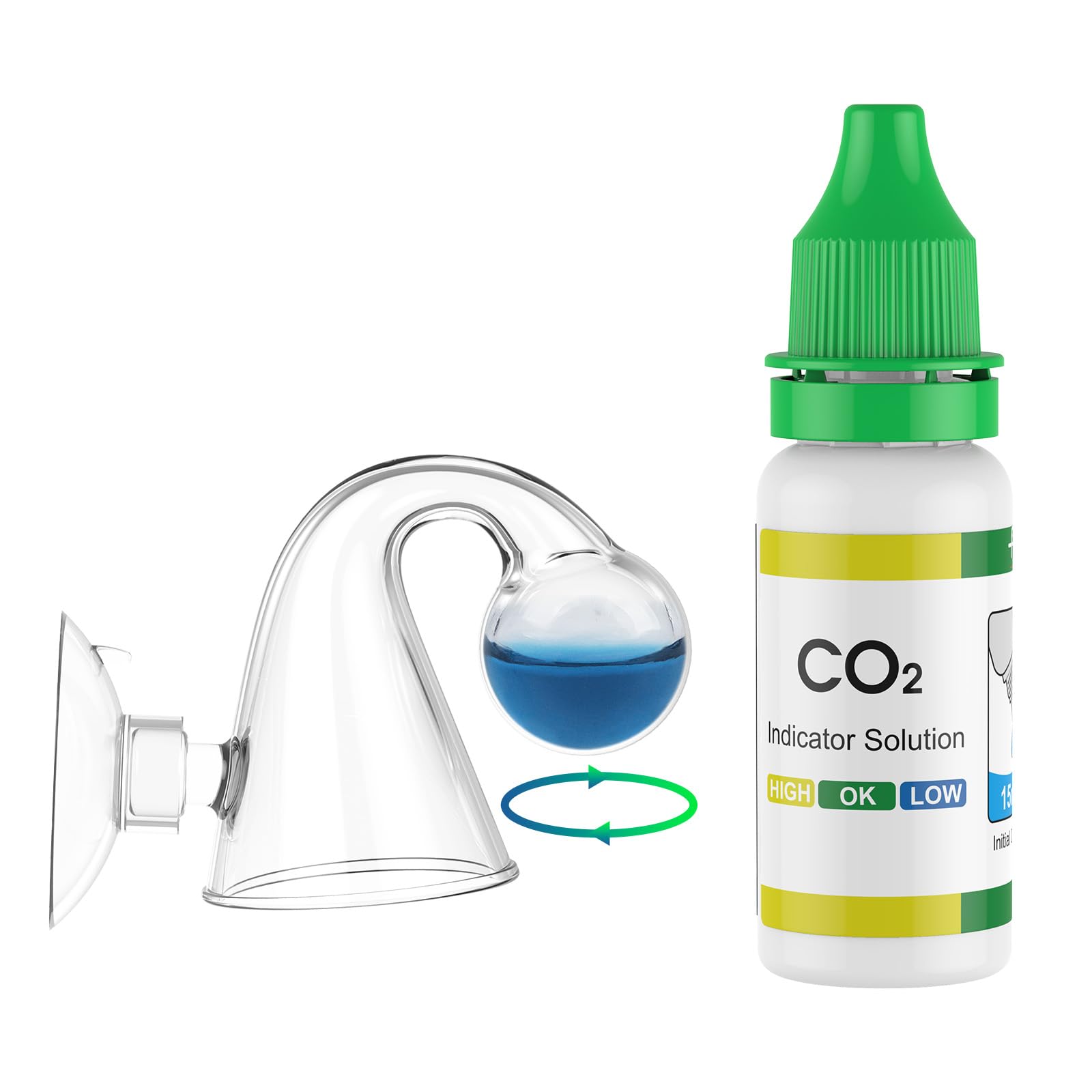
Rating: 4.5 ★ | Price: Budget | Material: Glass | Suction Cup(s): 2
The Pawfly kit offers a complete package — reagent solution and two suction cups — at the lowest price in this roundup, making it an easy entry point for planted tank hobbyists. The color-change indicator works consistently for monitoring CO2 levels. However, suction cup grip can vary between units, and reading the exact shade may be tricky against darker tank backgrounds. This checker suits budget-conscious aquarists who want a functional setup without extra spending and are comfortable with occasional mounting adjustments.
Pros
- Monitors CO2 levels consistently for planted tank use.
- Complete kit with solution and two suction cups at a budget price.
- Quick to install with the included mounting hardware.
Cons
- Suction cup grip may weaken over time, needing occasional replacement.
- Color shade can be hard to discern against certain tank backgrounds.
For aquarists on a tight budget who need a basic CO2 indicator, this kit delivers the essentials — just expect to manage the suction cups’ grip over time.
Best for Experienced Aquarists
Rhinox Drop Checker
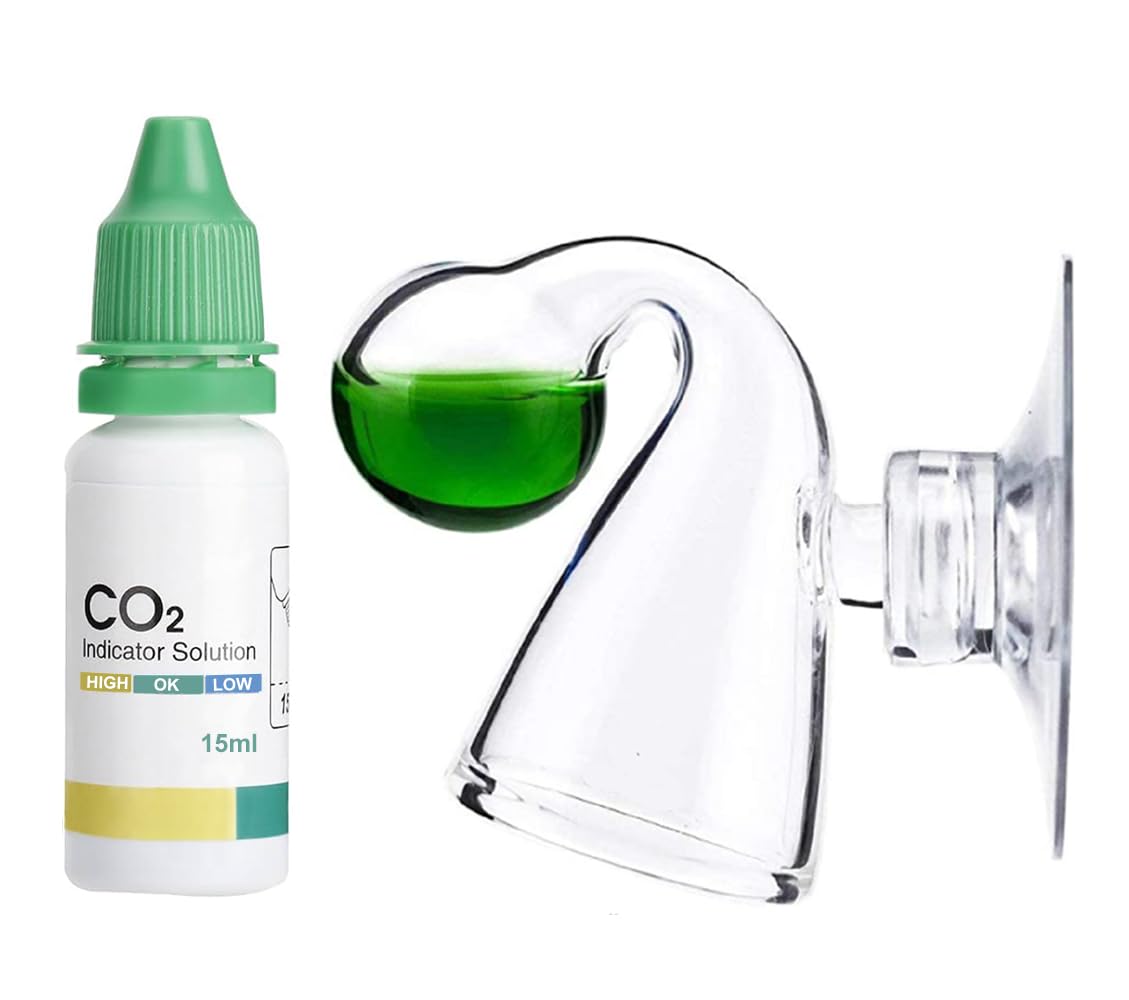
Rating: 4.4 ★ | Price: Budget | Material: Glass | Solution Volume: 10 mL | Suction Cup(s): 1
A functional, budget-friendly drop checker for aquarium CO2 monitoring — the included solution and reagent save extra purchases. The setup process demands some prior knowledge because the printed instructions can be ambiguous, making this kit more suitable for experienced aquarists who can troubleshoot on their own.
Pros
- Functions well as a CO2 indicator when set up correctly
- Budget-friendly price with pre-mixed solution included
Cons
- Instructions may contain conflicting dosage information (3 vs 15 drops)
- Some units ship with non-English instructions only
A practical budget option for aquarists who already know the drop checker procedure and can disregard poor documentation.
Best for Experienced Hobbyists
Yagote Drop Checker

Rating: 4.3 ★ | Price: Budget | Material: Glass | Suction Cup(s): 1
This glass drop checker offers sturdy construction and reliable CO2 monitoring for those who already have 4dKH solution. The missing indicator solution (despite the title’s implication) means first-time buyers need an extra purchase. Best suited for experienced hobbyists with spare reagent.
Pros
- Reliable color change for monitoring CO2 levels.
- Sturdy glass construction holds up well in typical use.
Cons
- Glass checker can break if dropped – handle with care.
Best for experienced aquarists who already have 4dKH solution and want a cheap glass checker without extra reagent.
Best for Spare Checker Users
WEAVERBIRD Glass Checker

Rating: 4.5 ★ | Price: Budget | Material: Glass | Suction Cup(s): 1
Provides basic CO2 indication at a budget price for those who already own 4dKH solution. Minimal user feedback and occasional reports of glass chipping or residue buildup make this best kept as a spare or beater unit for experienced hobbyists.
Pros
- Lowest price point among glass drop checkers.
- Functions as a basic CO2 indicator when used with your own 4dKH solution.
Cons
- Glass may chip under normal handling, and residue can build up quickly, requiring frequent cleaning.
A no-frills spare for experienced aquarists who already have 4dKH solution and need a cheap backup checker.
How to Choose
Most drop checkers work on the same principle, but build quality determines whether they leak, show accurate colors, or last.
Solution Volume and Type
The reagent is a 4dKH pH indicator that changes color based on CO₂ concentration. A larger bottle means fewer refills, but the solution itself has a shelf life. A 15mL bottle typically lasts 2–4 months with weekly use, while 60mL covers a year or more.
Some kits include solution, others do not. If you already have 4dKH solution, buying a bare checker saves money. If not, factor in the separate purchase cost—typically $8–12 for a small bottle.
Glass vs Acrylic Construction
Glass checkers (especially borosilicate) resist clouding and are chemically inert, but they can break if bumped. Acrylic models are lighter and shatterproof, but their seams are prone to leaking under constant water pressure.
For long-term reliability, glass is the safer bet. Acrylic may work for low-pressure setups, but the leak risk climbs after a few months of use.
Ease of Filling and Cleaning
Narrow openings make refilling or fully emptying the chamber difficult. Some designs require a syringe or pipette to avoid spilling. Wider openings simplify maintenance but may allow debris to enter.
Check whether the chamber separates from the body. Detachable models are easier to clean and refill, but the seal must be tight to prevent leaks.
Color Readability
The color change (blue → green → yellow) is most visible against a white or neutral background. Dark tank backgrounds or dim lighting wash out subtle shades. Some checkers have a white backing plate; others rely on the solution’s own clarity.
Reading the exact green-yellow boundary is subjective. For consistent results, place the checker in a well-lit area of the tank and use the same viewing angle each time.
Suction Cup Quality
Suction cups lose grip over time due to temperature fluctuations and algae buildup. Models with two cups offer redundancy, but cup material varies greatly. Soaking new cups in hot water improves initial adhesion.
A loose drop checker can sink or fall behind hardscape. If your tank has strong flow or frequent maintenance, consider a model with a spare cup or plan to replace the cup every few months.
FAQ
Why does my CO2 drop checker stay blue even after I inject CO2?
Blue means low CO₂. The most common cause is an air bubble trapped inside the checker chamber—solution must fully contact the air pocket. Shake gently to release bubbles, then wait 1–2 hours for equilibrium. If it still stays blue, check for leaks in your CO₂ system or a misadjusted bubble counter.
How do I fill a glass drop checker without spilling the solution?
Use a blunt-tip syringe or pipette to slowly inject solution into the small opening. Fill until liquid reaches the fill line, then cap immediately. Avoid overfilling—solution expansion from temperature changes can cause leaks. Some designs have a detachable chamber; remove it, fill in a dish, then reattach.
Can I use a CO2 drop checker without the reagent solution?
No. The checker works by reacting with a specific 4dKH pH buffer solution. Plain water or tank water will not change color. You must use a commercial 4dKH reagent or mix one yourself (baking soda + distilled water). Without it, the checker is just a glass ornament.
What does yellow color in a drop checker mean for my fish?
Yellow indicates CO₂ above 30–40 ppm, which can be harmful to fish, especially in unplanted tanks. Reduce your bubble rate immediately or increase surface agitation to gas off excess CO₂. Run an airstone for a few hours until the checker returns to green. Prolonged yellow readings risk fish suffocation.