This post contains affiliate links. We may earn a small commission when you buy through our links — at no extra cost to you.
Many new aquarists assume any water conditioner makes tap water safe for fish. The reality is most only remove chlorine and chloramine—not the ammonia that builds up during cycling or in overstocked tanks. That gap leads to frustrated hobbyists wondering why fish struggle despite regular conditioner use.
The key difference lies in whether a conditioner uses sulfur-based compounds that bind ammonia and nitrite or relies on simpler dechlorinators. Choosing the wrong one can cost you fish, especially in new or heavily stocked setups.
This guide focuses on conditioners that go beyond basic dechlorination, helping you match the product to your tank’s stage and stocking level—whether you need emergency ammonia protection or just routine water changes.
Top Picks
Best for All Levels
Seachem Prime 500ml

Rating: 4.8★ | Price: Mid-Range | Detoxifies: Ammonia, nitrite, nitrate | Concentration: 5mL per 50 gallons | Slime Coat: No | Odor: Sulfur | Compatibility: Fresh+Salt
Seachem Prime handles the full range of tap water contaminants – chlorine, chloramine, ammonia, nitrite, and nitrate – in one dose. At 5 mL per 50 gallons, the concentration is high enough that a single bottle treats dozens of water changes. It is also safe to use up to five times the recommended dose during emergencies like power outages or cycling crashes, giving you a margin of error that most conditioners lack.
In both freshwater and saltwater setups, Prime keeps fish active and water parameters stable even when ammonia or nitrite spikes occur. Hobbyists with heavily stocked tanks or those who need to set up a quarantine tank quickly find it particularly useful. The formula does not just mask toxins – it binds them in a non-toxic form that the biological filter can process.
This is a strong fit for aquarists of any experience level who want a single product that covers dechlorination and ammonia detox. Those sensitive to strong chemical odors should note that Prime has a noticeable sulfur (rotten eggs) smell when opening the bottle – dosing near an open window or using a separate measuring cup reduces the impact. The odor does not linger in the tank water after mixing.
Pros
- Detoxifies chlorine, chloramine, ammonia, nitrite, and nitrate in one product
- Highly concentrated – 5 mL treats 50 gallons, delivering long-lasting value
- Safe to overdose up to 5x in emergencies without harming fish
- Works reliably in both freshwater and saltwater tanks
Cons
- Strong sulfur odor when opening the bottle may be unpleasant in enclosed spaces – dosing near a window reduces the smell
For aquarists who need ammonia and nitrite protection alongside basic dechlorination, Prime delivers without requiring multiple products – the sulfur smell is a minor inconvenience for the peace of mind it provides.
Best for Beginners
API Stress Coat 16oz

Rating: 4.8★ | Price: Budget | Detoxifies: Chlorine, chloramines only | Concentration: 5mL per 10 gallons | Slime Coat: Aloe vera | Compatibility: Fresh+Salt
API Stress Coat adds aloe vera to its chlorine and chloramine removal, creating a conditioner that also helps fish recover from transport or minor injury. Unlike the ultra‑concentrated basic dechlorinator, this formula prioritizes healing alongside water safety. It instantly detoxifies chlorine and heavy metals while the aloe vera coats stressed tissue, reducing the slime coat loss that leaves fish vulnerable.
It’s the right choice for well‑established freshwater and saltwater tanks where the biological filter reliably manages ammonia and nitrite. The main boundary: it does not detoxify ammonia or nitrite, so new aquariums or tanks with heavy bioloads still need a conditioner that neutralizes these compounds. For those scenarios, the top pick offers that extra protection.
Pros
- Effectively removes chlorine and chloramines while adding aloe vera barrier repair.
- Aloe vera helps reduce stress and heal damaged fins after handling or aggression.
- Economical 16‑oz bottle with an easy‑measure cap treats a typical tank for months.
Cons
- Contains no ammonia or nitrite detoxification, meaning it cannot prevent toxicity spikes in uncycled or heavily stocked aquariums.
API Stress Coat is an affordable, no‑fuss conditioner for aquarists whose tanks are fully cycled and who want the added benefit of healing and stress relief.
Best for High-Volume Users
Seachem Safe 250g

Rating: 4.7★ | Price: Mid-Range | Detoxifies: Ammonia, nitrite, nitrate | Concentration: 1.25g per 300 gallons | Slime Coat: No | Odor: Strong sulfur | Compatibility: Fresh+Salt
A single 250g jar of Safe dechlorinates up to 50,000 gallons or detoxifies ammonia for 12,500 gallons, making it by far the most cost-effective option for anyone treating large volumes regularly. While the liquid Prime offers effortless dosing for small water changes, Safe’s powdered formula slashes the per-gallon cost to a fraction. It removes chlorine, chloramines, and detoxifies ammonia and nitrite using the same chemistry that made Prime the benchmark in the hobby.
This jar is built for advanced hobbyists running 50-gallon-plus displays, breeders, or fish rooms where liquid conditioners become expensive fast. The boundary lines are clear: mixing the powder releases a potent sulfur odor that some find overwhelming, and accurately measuring doses for tanks under 50 gallons is fiddly unless you own a precision scale. If your routine consists of small buckets on a single aquarium, the top pick liquid version spares you the smell and the measuring math.
Pros
- Treats up to 50,000 gallons per jar — a fraction of the cost of liquid conditioners for high-volume use.
- Detoxifies ammonia, nitrite, and removes chlorine/chloramines just like Prime, in a shelf-stable powder.
- Ideal for breeders and multi-tank fish rooms where large water changes make liquid bottles impractical.
Cons
- Mixing releases a strong sulfur smell, more pungent than the liquid Prime — best prepared in ventilated areas.
- Requires precise sub-gram measuring for tanks under 50 gallons; not a grab-and-go solution for small water changes.
For large-scale water treatment, Safe delivers unmatched economy; for anyone managing a single small tank, the convenience of a pre-dosed liquid conditioner outweighs the cost savings.
Best for Large Cycled Tanks
API Tap Water 16oz

Rating: 4.7★ | Price: Budget | Detoxifies: Chlorine, chloramines only | Concentration: 1mL per 20 gallons | Slime Coat: No | Compatibility: Fresh+Salt
At 1 mL per 20 gallons, this is the most concentrated dechlorinator in this comparison – a single bottle handles thousands of gallons, making it the most economical option for owners of large, established aquariums. It reliably neutralizes chlorine, chloramines, and heavy metals with a simple dosing routine. While the top pick adds ammonia detoxification, this conditioner strips away that feature to deliver maximum value for those who don’t need it.
This product is for experienced aquarists with fully cycled, stable tanks where ammonia spikes are not a concern. For anyone managing new tanks, emergency setups, or overstocked systems, the lack of ammonia detoxification can lead to fish stress – this conditioner is not designed for those scenarios.
Pros
- Treats 20 gallons per mL – exceptional value for large tanks.
- Effectively removes chlorine, chloramines, and heavy metals.
- Simple drop dosing with consistent, reliable performance.
Cons
- Concentrated dosing is impractical for nano tanks under 10 gallons – requires dilution or careful drop counting.
- Lacks slime coat or stress-reducing additives found in some conditioners.
The right choice if you run a large, cycled tank and want the lowest cost per gallon – no need to pay for ammonia protection you don’t use.
Best for Odor-Sensitive Tanks
TankFirst 500ml
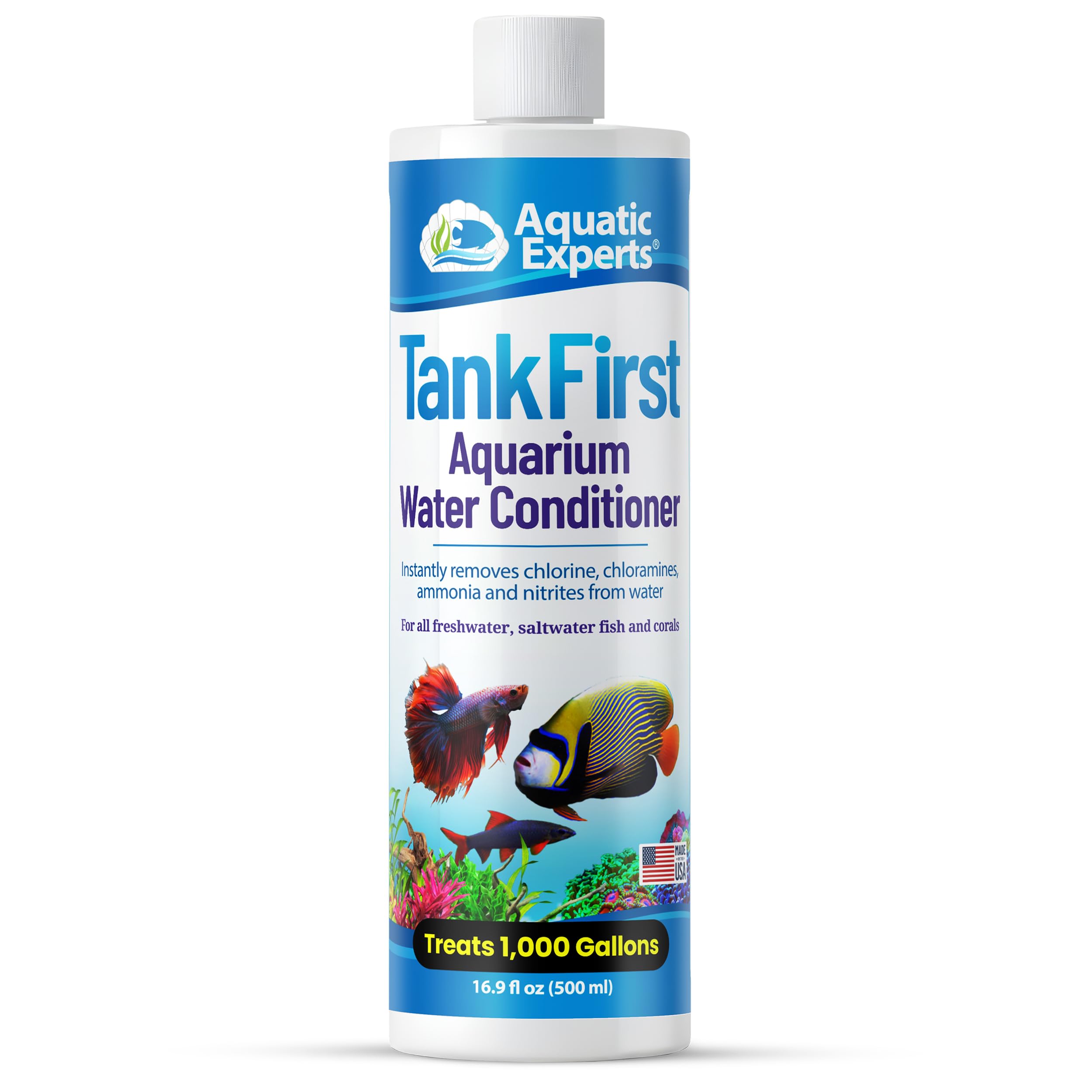
Rating: 4.7★ | Price: Mid-Range | Detoxifies: Chlorine, chloramines, ammonia | Concentration: 1 tsp per 10 gallons | Slime Coat: Supports slime coat | Odor: Odor-free | Compatibility: Fresh+Marine+Reef
Aquatic Experts TankFirst removes chlorine, chloramines, and ammonia without the sulfur odor that most all-in-one conditioners carry. Seachem Prime handles the same chemistry but comes with a distinct sulfur smell — TankFirst trades that for a neutral scent, making it the better fit for reef tanks or open‑air rooms where odor lingers. Users report clear water with no residue after dosing.
This conditioner works across freshwater, marine, and reef setups, and it’s gentle enough for sensitive corals and fish. It suits aquarists who want effective detoxification without odor. The brand is less established than market leaders, and the liquid formula is less concentrated than powder options — budget‑conscious buyers with large tanks may prefer a more concentrated alternative.
Pros
- No sulfur smell — eliminates chlorine and ammonia without the typical chemical odor.
- Gentle on sensitive species — safe for reef tanks and delicate fish.
- Clear water results with easy liquid dosing.
Cons
- Brand is less recognized than Seachem or API, which may matter for buyers who prefer established names.
- Liquid formula treats fewer gallons per bottle than concentrated powder conditioners — larger tanks require more frequent repurchases.
A solid choice for reef keepers and anyone bothered by sulfur smells — just be aware of the higher per‑gallon cost compared to powder alternatives.
Best for Multiple Tanks
Tetra AquaSafe 33.8oz
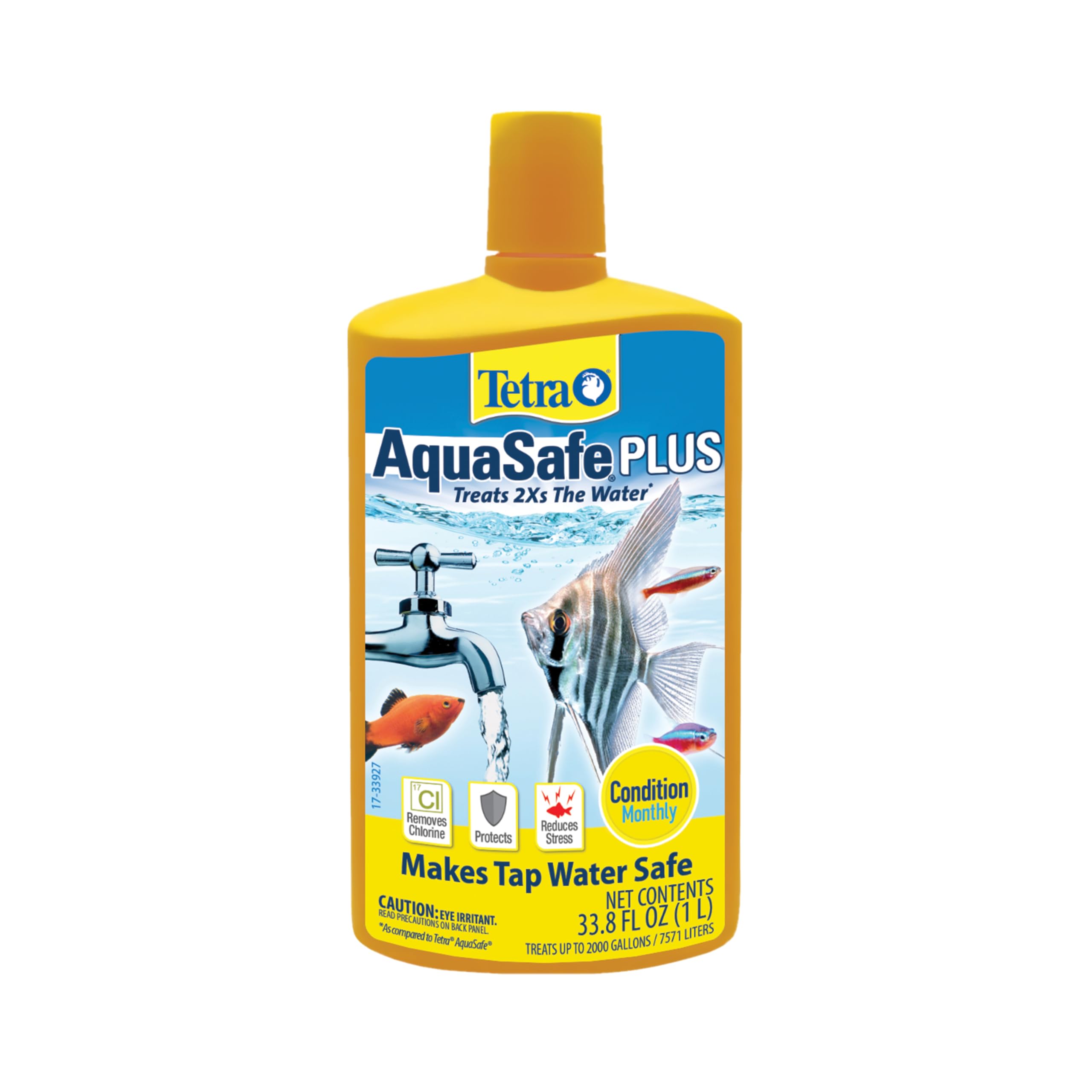
Rating: 4.8★ | Price: Mid-Range | Detoxifies: Chlorine, chloramines only | Slime Coat: Enhances slime coat | Compatibility: Fresh+Marine
The 33.8 oz bottle delivers enough conditioner for multiple tanks or frequent water changes, and the added biopolymers and vitamins support slime coat health and fish recovery. Unlike the top pick, it does not detoxify ammonia — a tradeoff that matters most for uncycled tanks or emergency setups where ammonia spikes are a concern.
This is a strong fit for hobbyists managing several established tanks who want a single bottle that lasts, value the slime coat benefits, and can accept occasional water cloudiness after dosing. The temporary haze is harmless and clears within hours, but those with display tanks sensitive to clarity may prefer a different formula.
Pros
- Large bottle treats many tanks and reduces refill frequency
- Neutralizes chlorine, chloramines, and heavy metals while supporting slime coat
- Adds vitamins and minerals that aid fish health and recovery
Cons
- Large bottle may expire before use in smaller tanks
- Does not detoxify ammonia, limiting use for uncycled tanks or emergencies
Best suited for aquarists with multiple or large established tanks who want slime coat support and don’t need ammonia detoxification.
Best for Betta Tanks
Tetra BettaSafe 50ml

Rating: 4.7★ | Price: Budget | Detoxifies: Ammonia, chlorine, chloramines | Concentration: 14 drops per gal | Slime Coat: No | Compatibility: Fresh (betta)
Formulated specifically for bettas, Tetra BettaSafe removes chlorine, chloramine, and ammonia while reducing stress — its drop-wise dosing makes water changes simple for small bowls. The 50ml bottle is best suited for single betta tanks or occasional use; larger or mixed tanks will deplete it quickly, making general-purpose conditioners a more cost-effective choice.
Pros
- Formulated for bettas with stress-reducing ingredients that neutralize ammonia
- Drop-wise dosing allows precise, mess-free water changes in small tanks
Cons
- The 50ml bottle may require frequent repurchase when used for multiple tanks or larger aquariums
Best reserved for betta owners with a single small bowl or tank — its specialized formula and easy dosing are a good fit there, but for larger or mixed setups a general-purpose conditioner offers better value.
Best for Betta Bowls
Aqueon Betta 4oz

Rating: 4.6★ | Price: Budget | Detoxifies: Chlorine, chloramines, ammonia | Concentration: 5 mL per gallon | Slime Coat: No | Compatibility: Fresh (betta)
This formula is tailored for betta bowls, removing chlorine and ammonia while adding trace elements to support fish health. However, the 4-ounce bottle is small, requiring more frequent purchases than larger alternatives, and there have been instances where fish loss occurred, often tied to overdosing or water chemistry issues.
Pros
- Neutralizes both chlorine and ammonia in betta tanks
- Clear dosing instructions make it easy to use
Cons
- Small 4 oz bottle requires frequent repurchases for regular water changes
Best for betta owners who want a specialized formula with ammonia removal and have a small bowl, but those on a budget may find larger general conditioners more economical.
Best for Budget Buyers
Aqueon Water Cond 16oz

Rating: 4.7★ | Price: Budget | Detoxifies: Chlorine, chloramines, ammonia | Slime Coat: Supports slime coat | Compatibility: Fresh+Salt
Effectively removes chlorine, chloramines, and detoxifies ammonia at a budget-friendly price. Its overall dependability is lower than the top pick, making it a secondary option for careful buyers.
Pros
- Removes chlorine, chloramines, heavy metals, and detoxifies ammonia in one product.
- Budget-friendly price for a 16 oz bottle, good value for basic water treatment.
Cons
- Bottle cap can leak during shipping, causing product loss and mess.
- Some fish death reports after use, though cause may relate to misuse or sensitivity.
Best for budget-focused fish keepers who can transfer the liquid to a secure container and accept the added risk.
Best for Small Tanks
Fluval Cond 8.4oz

Rating: 4.7★ | Price: Budget | Detoxifies: Chlorine, chloramines only | Slime Coat: Coats scales | Compatibility: Fresh+Salt
Fluval’s Water Conditioner removes chlorine, chloramines, and heavy metals at a budget-friendly price – a straightforward option for small to medium tanks. The catch: it does not detoxify ammonia, so this conditioner works best in well-cycled aquariums or when paired with a separate ammonia binder. Beginners managing new tanks may need a more feature-rich product.
Pros
- Reliable removal of chlorine, chloramines, and heavy metals.
- Good value for small to medium freshwater and saltwater tanks.
Cons
- No added slime coat protection – less critical for established tanks but missed during stock additions.
- Does not detoxify ammonia – requires a well-cycled tank or separate ammonia binder for safety.
A budget-friendly choice for basic conditioning in small cycled tanks, but skip it if you need ammonia detox or extra slime coat protection.
How to Choose
The most crucial distinction between water conditioners is whether they simply dechlorinate or also detoxify ammonia – the latter is essential for cycling tanks and heavy stocking.
Ammonia and Nitrite Detoxification
Conditioners that detoxify ammonia use sulfur-based compounds that bind free ammonia into a less harmful form the biological filter can handle. Products without this feature only remove chlorine and chloramine, leaving ammonia untouched.
If you have a newly cycled tank, a heavily stocked system, or need emergency protection during power outages, choose a conditioner that lists ammonia, nitrite, or nitrate detoxification on the label. For mature, lightly stocked tanks, a basic dechlorinator is sufficient.
Concentration per Dose
Concentration determines how many gallons each milliliter or scoop treats. Higher concentration means a smaller bottle treats more water, reducing long-term cost and storage space.
For example, Seachem Prime treats 50 gallons per 5 mL capful, while cheaper conditioners may treat only 10 gallons with the same volume. Always compare cost per treated gallon, not bottle size.
Slime Coat Support
Some conditioners add aloe vera or synthetic polymers to replace or supplement the fish’s natural slime coat. This helps reduce stress from handling, disease, or minor injuries.
If you frequently transport fish, treat for parasites, or have sensitive species, a conditioner with slime coat additives can reduce mortality. For robust fish in stable tanks, this is a minor benefit.
Odor Profile
Effective sulfur-based conditioners often smell like rotten eggs because they use sodium thiosulfate or similar compounds. This odor is harmless and indicates the chemical is actively binding toxins.
Odor-free alternatives replace sulfur with different binders, but some may be less effective at detoxifying ammonia. If you are smell-sensitive or dose in a living area, an odor-free product like TankFirst is worth the compromise.
Freshwater and Saltwater Compatibility
Most conditioners work in both fresh and saltwater, but some are optimized for one. Saltwater and reef tanks have higher sensitivity to certain additives like aloe vera, which can cause foam or cloudiness.
Check the label for marine or reef-safe certification if you keep saltwater. Most conditioners are fine for both, but betta-specific formulas are typically freshwater only.
FAQ
Does API Stress Coat detoxify ammonia?
No, API Stress Coat only removes chlorine, chloramine, and heavy metals. It does not bind ammonia or nitrite. For ammonia protection, choose a conditioner like Seachem Prime or TankFirst that explicitly lists ammonia detoxification.
Why does my water conditioner smell like rotten eggs?
The sulfur smell comes from sodium thiosulfate, the active ingredient used to neutralize chlorine and detoxify ammonia. It’s completely harmless to fish and indicates the product is working. Odor-free alternatives are available but may use different chemistry that is less effective on ammonia.
Can I use a betta water conditioner for my goldfish tank?
Technically yes, but it’s not cost-effective. Betta conditioners are sold in small bottles with a lower concentration per dollar. For goldfish tanks, a standard full-size conditioner like Seachem Prime works equally well and treats far more water for the same price.
How much Seachem Prime do I need for a 10-gallon tank?
For a 10-gallon tank, use 1 mL of Prime, which is roughly 2 drops per gallon or one-fifth of a capful. The cap treats 50 gallons, so a 10-gallon tank needs 1/5 cap. Overdosing up to 5 times the normal dose is safe in emergencies.