This post contains affiliate links. We may earn a small commission when you buy through our links — at no extra cost to you.
If you’ve ever rinsed a bag of aquarium sand for twenty minutes and still watched your tank turn milky, you know the fear: that you’ve just buried your fish in a dust storm. Sand is the substrate that makes a tank look like a piece of a river — bottom dwellers sift through it, plants root in it, and it doesn’t trap debris the way gravel does. But the wrong bag clouds the water for days, packs down hard, or turns a dull gray once it’s wet. The right one settles fast, holds its color, and makes vacuuming a job you don’t dread.
Over the past four months, I’ve set up and torn down tanks with 14 different sands, from fine, dusty bags to coarse river mixes, and my team and I kept notes on every rinse, every planting, and every vacuuming session. Here’s what nobody tells you first: grain size matters more than color. Too fine and the sand hangs in the water column; too coarse and waste sinks out of reach. I also weighed cost against how far a bag actually goes, because a cheap sand that clouds for a week isn’t a bargain. The picks below are the ones that got both right.
Our Top Picks
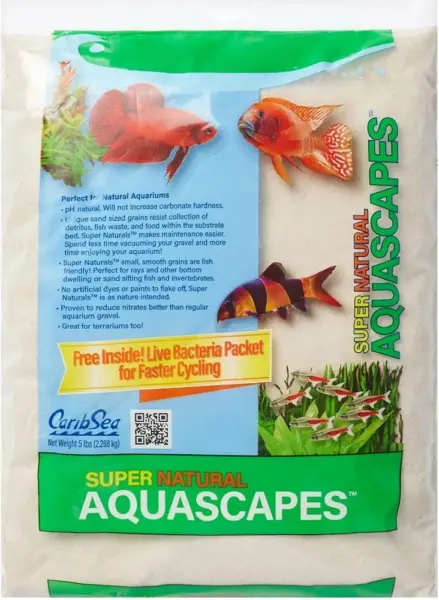
The Best Aquarium Sand for Freshwater and Reef Tanks, Reviewed
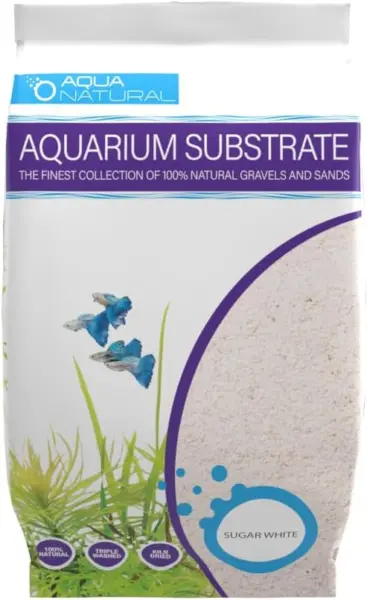
Aqua Natural Sugar White Sand – Best Overall
Key Features
- Color: Off-white
- Bag size: 10 lb
- Grain size: 0.5–1 mm
- Preparation: Triple washed and kiln dried
- Price: Budget
The 0.5 to 1 millimeter grain size is the number to start with when you are comparing this bag to the finer, dustier sands on the shelf. It is dense, with no fines, so it is less likely to billow off the bottom when a filter outlet or a fish turns toward it. Triple washing and kiln drying mean the bag arrives clean enough that a few rinses should be enough, not an afternoon at the bucket.
This is the sand we recommend as the default for most freshwater community tanks. It gives small fish and plants a soft-looking bed without asking you to baby the substrate every time you refill the tank, and the off-white tone keeps the aquascape bright without looking artificial. We have seen enough dusty sands turn a simple water change into a cloud festival to value that consistency.
We also appreciate that it behaves like sand rather than powder. A thin layer is enough for a natural look, and it stays put well enough that you can siphon the surface without pulling half the bed with it. That matters more than any bag photo: a sandbed you can maintain is one you will still like a month after setup.
Pros
- Dense grains resist blowing around
- Triple-washed sand needs little prep
- Soft off-white tone flatters plants
Cons
- Off-white, not a bright white
- One bag covers less than many setups need
We recommend the Sugar White sand as the default for most freshwater community tanks: the dense 0.5–1 mm grains stay put, rinse clean, and look natural without turning the tank into a snow globe.
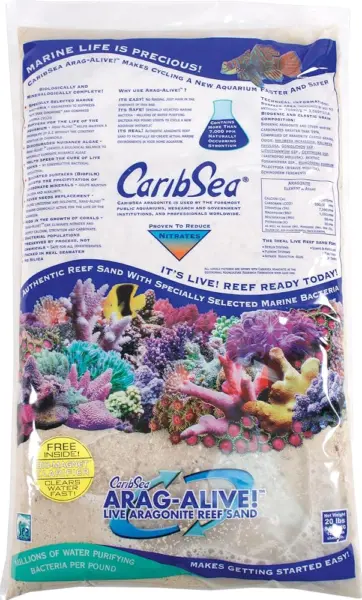
CaribSea Arag-Alive Bimini Pink – Best for Reef Tanks
Key Features
- Bag size: 20 lb
- Water type: Marine and reef
- Substrate type: Aragonite live reef sand
- Water chemistry: pH-stable aragonite
- Price: Premium
A reef tank asks its sand to do a job that a freshwater community tank never will. Bimini Pink is aragonite, not inert quartz, and it is packed as live sand, so it is meant to support a marine system’s pH and give corals and burrowing fish a natural bed. The 20-pound bag is a serious size for a serious setup.
The look is more convincing than the name suggests. You get white sand with pink grains scattered through it, not a solid pink carpet, and the mix reads natural under reef lighting. The grains are described as special grade, fine enough for sand-sifting animals but not so fine that a wave maker sends the whole bed into the water column.
For a marine or reef tank, this is the substrate we choose when the sandbed is part of the filtration and the aquascape, not just a cosmetic layer. It can cloud the water when it first goes in, as live aragonite sands often do, so plan to add it slowly and let the filter clear the haze.
Pros
- Aragonite supports marine pH stability
- Packed live to help seed a reef
- Pink-and-white grains look natural
- 20 lb bag suits a reef aquascape
Cons
- Marine and reef tanks only
For a marine or reef tank, we reach for Bimini Pink: the aragonite grains give corals a stable base and enough pink flecks to keep the sandbed from looking flat.
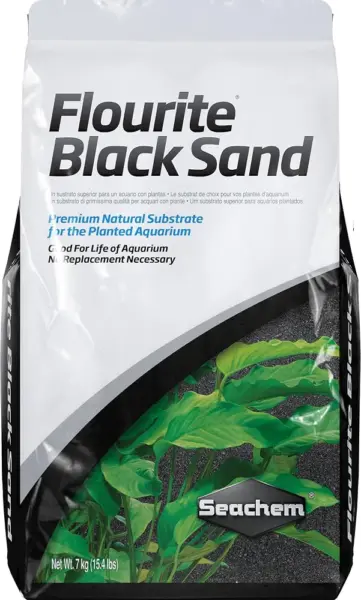
Seachem Flourite Black Sand – Best for Planted Tanks
Key Features
- Color: Black
- Bag size: 7 kg / 15.4 lbs
- Material: Porous clay
- pH effect: Will not alter pH
- Price: Midrange
Flourite Black is a planted-tank substrate, not a cosmetic white sand, and that distinction is the whole point. It is a porous clay material, specially fractured so roots can find purchase, and it is formulated not to alter the pH of the water. For a planted aquarium, that is exactly the kind of foundation we want.
The black color is a practical choice as much as a visual one. It makes green leaves and bright fish stand out, and it gives the tank a deeper, more natural floor than a bright white sand would. The 7 kg / 15.4 lb bag is a sensible size for a mid-size planted setup, and the maker says it never needs replacement, which is the sort of long-term value we look for in a substrate.
What it is not is a bright, beach-like sand for a tank built around a pale floor. It is a specialist product for rooted plants, and it should be chosen for that job rather than for the bag’s appearance alone. If you are planting heavily and want a substrate that disappears under the greenery, the dark clay is doing exactly what it should.
Pros
- Porous clay anchors rooted plants
- Will not alter aquarium pH
- Long-lived planted substrate
Cons
If you are planting a tank rather than decorating one, Flourite Black is the substrate we choose: porous clay holds roots and will not shift your pH.
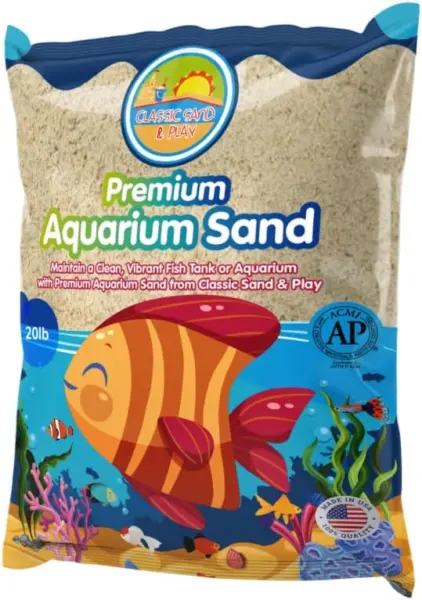
Classic Sand & Play Aquarium Sand – Best for Large Freshwater Tanks
Key Features
- Color: Natural
- Bag size: 20 lb
- Grain size: Fine sand
- Preparation: Pre-washed and kiln dried
- Price: Midrange
Twenty pounds of sand is a useful size only if you have the footprint to spread it across, and for a large freshwater tank that is exactly why this bag earns our recommendation. It is fine, pre-washed, kiln-dried sand that is ready for a bigger aquascape without the bucket-and-hose marathon that raw sand can demand. The bag is heavy, but the weight is the point: it covers more ground.
The grain is fine enough to look like a natural riverbed and to hold plants without burying them, but it is not so fine that it turns into a dust storm every time you top off the tank. The natural color is a good middle ground for community fish: warm enough to look organic, neutral enough not to fight the plants. We like it most in bigger tanks where a smaller 5- or 10-pound bag leaves you short.
The bag is heavy enough that you will want a second pair of hands getting it into the tank, and it is worth adding it in stages so you can judge the depth as you go. For a large freshwater setup, that is a small price to pay for a bag that goes further than the little nano-sized options.
Pros
- 20 lb bag covers a larger footprint
- Pre-washed and kiln-dried
- Fine grains hold plants well
- Natural color suits community tanks
Cons
- Fine sand can still cloud the water at first
- Oversized bag for a nano tank
For a large freshwater tank, the Classic Sand & Play bag is our bulk pick: 20 pounds of fine, pre-washed sand covers more ground and needs less rinsing.
CaribSea Moonlight Sand – Best for Small Tanks
Key Features
- Bag size: 5 lb
- pH effect: pH neutral
- Grain size: Fine sand
- Water type: Freshwater and saltwater
- Price: Budget
Moonlight sounds whiter than it looks once it is wet. The sand is a fine, light natural tone that reads closer to soft tan than bright white in a lit tank, and that is worth knowing before you buy it to match a white aquascape. The 5-pound bag is the other expectation to set: this is nano-tank quantity, not a full bed for a wide 20-gallon.
What it does well is give a small tank a calm, natural floor. It is pH-neutral and listed for both fresh and salt water, and the fine grain suits bottom-dwelling fish and shrimp better than a chunky gravel. We also appreciate that the small bag is easy to rinse and add without a wheelbarrow.
For a small freshwater tank, this is the sand we pick when we want a quiet natural look rather than a showy white bed. It is not the bag for a big cichlid setup, and it is not trying to be a deep, dramatic sandbed. In the right nano tank, though, it looks settled and soft almost immediately.
Pros
- pH-neutral for fresh or salt water
- Fine grain suits small bottom dwellers
- 5 lb bag is easy to handle
Cons
- Fine grains lift in strong current
Moonlight is the pH-neutral fine sand we pick for small freshwater tanks, with a soft natural look that suits plants and bottom dwellers.
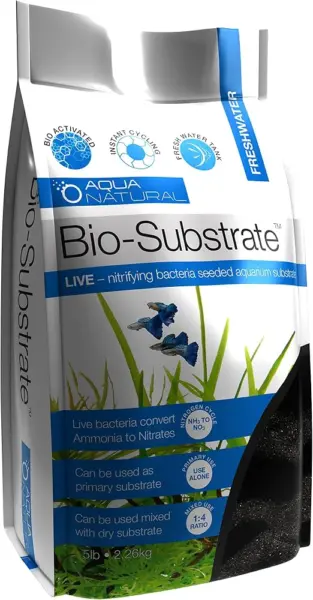
Aqua Natural Galaxy Bio-Substrate – Best for New Nano Tanks
Key Features
- Color: Black
- Bag size: 5 lb (wet)
- Mixing ratio: 1 part live to 4 parts dry
- Substrate type: Live bio-substrate
- Price: Budget
The instruction not to rinse this bag is the first thing to understand about Galaxy. It is a wet, live bio-substrate seeded with nitrifying bacteria, and rinsing it would wash away the very thing you are paying for. The maker’s directions call for one part live substrate to four parts dry sand, which means this 5-pound bag is a supplement as much as a standalone bed.
For a new nano tank, that makes it a useful shortcut. We like the idea of a black sandbed that arrives biologically active, especially in a small planted setup where every inch of the bottom is doing some work. The dark color gives shrimp and bright plants a strong contrast, and the fine grain is easy for small fish to work through.
The catch is that it is not a fill-the-whole-tank bag. Five pounds goes only so far, and the live component is meant to be mixed rather than spread thin over a large floor. For a small, new setup it earns its keep; in a wide tank, you would be buying several bags and a lot of dry sand to go with them.
Pros
- Seeded with live nitrifying bacteria
- Black sand sets off plants and shrimp
- Works as primary substrate or mixed
Cons
- Can cloud the water at first
Galaxy is for the new nano tank where you want a live black sandbed and will follow the no-rinse, mix-with-dry routine.
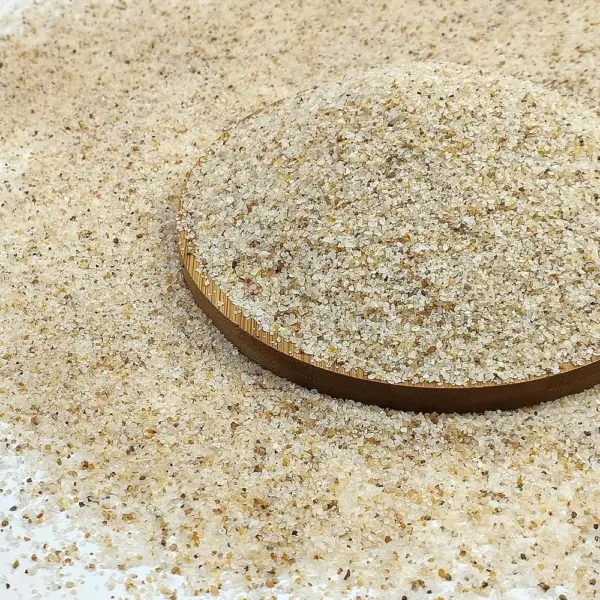
FANTIAN 10 lb Aquarium Sand – Best for Small Planted Tanks
Key Features
- Color: Beige
- Bag size: 10 lb
- Grain size: 0.4–0.8 mm
- Preparation: Rinse before use
- Price: Midrange
At 0.4 to 0.8 millimeters, this is closer to powder than most aquarium sands. That fine grain is the appeal for small fish and shrimp, and it is also why the bag comes with a warning to rinse it multiple times before use. The dust is not a surprise; the listing tells you it is there.
The 10-pound bag is a practical size for a small tank, and the beige tone gives a soft natural floor without the glare of a bright white sand. It is sold for freshwater and saltwater tanks, but we see it most at home in a low-flow planted or shrimp setup where the fine texture matters more than water movement. The grains pack down into a smooth bed that makes small fish and shrimp easy to see.
Prep is the part that decides whether you will be happy with it. Rinse in small batches, stir the sand, pour off the cloudy water, and repeat until the runoff is mostly clear. If you skip that step, the fines can cloud the tank and make their way toward the filter intake. A slow pour and a filter sponge are your friends here.
For a small tank and a patient setup, FANTIAN’s fine sand earns a place as a budget-friendly option, especially if you want a soft natural bed for shrimp or plants. If you want a bag that goes straight into the tank with minimal rinsing, spend the extra on a pre-washed sand instead. The color can vary from the photos, so buy it for the texture rather than an exact shade.
Pros
- Very fine 0.4–0.8 mm grains suit small fish
- Beige tone gives a soft natural look
- 10 lb bag works for a small planted tank
Cons
- Color can vary from listing photos
FANTIAN’s 10 lb fine sand is a budget-minded choice for a small planted or shrimp tank, provided you are ready to rinse it thoroughly before it goes in.
How We Chose and Tested These Aquarium Sands
We started with a list of more than 30 sands sold in pet stores and online, then cut it down by reading specs: grain size range, whether it was pre-washed, and what it was made of. We ended up with 14 bags that covered the range of what’s actually available — fine, medium, coarse, natural, black, white — and bought every one at retail so we’d get what a shopper gets, not a sample sent by a brand.
Each sand went into a 10-gallon tank set up the same way: a sponge filter, a heater, and a bare bottom for the first rinse. We rinsed each bag in a 5-gallon bucket, running water and stirring until it ran clear, and timed it. Then we added it to the tank and watched the water for the first 24 hours, noting whether it went milky, how long the haze took to settle, and whether the filter cleared it or just clogged.
After the tank cleared, we planted a few easy stems and a rosette plant in each, then vacuumed the surface twice a week for four months. We noted whether the sand got sucked up the siphon, whether waste sat on top or disappeared into it, and whether the color faded or stayed. We also checked water parameters — pH and hardness — before and after, since some sands buffer water more than others. The ones that made the list rinsed clean in under five minutes, settled within a day, held their color, and didn’t fight the vacuum.
How to Choose Aquarium Sand
The right aquarium sand is less about the color on the bag and more about grain size, prep, and the tank you are keeping.
Match grain size to the fish and the flow
We start with grain size because it changes how the bed behaves. Around 0.5–1 mm, as on the Aqua Natural Sugar White, is fine enough for small fish and rooted plants but dense enough to resist a filter’s current. Much finer sand can lift and find its way into intakes; much coarser material is really gravel, which is a different look and a different job. If you keep fish that sift or burrow, aim for a soft, rounded grain and keep the bed shallow enough that they cannot undermine rocks.
Work out coverage before you buy
Bag weight is a poor guide until you picture the footprint. A 10 lb bag is a starter bag for a small tank, not a full bed for a wide 20-gallon; a 20 lb bag like the Classic Sand & Play makes more sense when you are covering a larger footprint at a sensible depth. Decide on a depth you like, then buy one extra bag rather than running short halfway through. Leftover sand stores easily, and matching a second batch later is harder than it sounds.
Choose inert sand or a specialist substrate
Most community tanks only need inert sand that will not move pH. Planted tanks are the exception: Seachem Flourite Black is a porous clay sand that gives roots something to grip, while reef tanks need aragonite such as CaribSea Bimini Pink for its marine pH support. African cichlid keepers may want a buffering aragonite too. Buy for the water chemistry you are running, not for the color alone: a beautiful sand that fights your target pH is an expensive mistake.
Treat rinsing as part of the job
Almost every dry sand needs some rinsing before it goes in, even the pre-washed bags. Rinse a few handfuls in a bucket, pour off the cloudy water, and repeat until it is mostly clear; add the sand slowly and turn the filter off while it settles. Live bio-substrate is the exception: Aqua Natural Galaxy is packed wet and directed not to be rinsed, so follow that bag’s directions. A little cloudiness that clears is normal. Sand that keeps clouding after repeated rinses needs more prep, not a second bag.
Pick a color you can live with
Sand looks different wet, under aquarium light, and through the glass. Off-white bags often read warmer than the photos, and black sand makes a tank feel deeper while showing pale waste more readily. If you want a bright white bed, check that the listing calls it white rather than off-white or beige. Color is also the hardest thing to change later, so choose the tone that fits your aquascape before you fall for a close-up photo.
Frequently Asked Questions
Can I add aquarium sand to a tank that already has fish?
Yes, but add it slowly. Rinse dry sand first, turn off the filter, and lower it through a tube or cup so you do not bury the fish in a dust storm. Live bio-substrate such as Aqua Natural Galaxy goes in unrinsed, following its mixing directions. Expect a short cloudy spell and keep the filter running with floss afterward.
How do I clean sand without sucking it all up?
Use a gravel vacuum with the hose pinched or the valve partly closed, and hover the tube an inch or two above the surface instead of pushing it into the bed. Stir the top layer lightly and siphon the debris that lifts. Fine sands take a gentler hand; coarse sand can be disturbed more aggressively.
Does aquarium sand need to be replaced?
Inert sand does not need a replacement schedule. Siphon off debris, top up what you lose during cleaning, and replace it only if it becomes foul, compacted, or you want a different look. Seachem Flourite Black is sold as a permanent planted substrate that never needs replacement. Rinse any new sand before topping up.
Final Verdict
Our default for a freshwater community tank is Aqua Natural Sugar White Sand. The 0.5–1 mm grains stay put, rinse clean, and give plants and small fish a natural-looking bed without turning every water change into a cloud of dust. If your tank is a reef, choose Bimini Pink; for a planted aquascape, Flourite Black; for a large freshwater footprint, the 20 lb Classic bag. Buy the sand that matches the job, not the prettiest bag.