This post contains affiliate links. We may earn a small commission when you buy through our links — at no extra cost to you.
Many aquarium substrates claim to be ‘nutrient-rich,’ but the truth is often more complicated. Inert clay gravels can look the part without providing any nutrition for your plants.
True aquasoils contain organic matter that feeds roots and buffers pH, but they release ammonia during cycling and can cloud water temporarily. The key is matching the substrate type to your setup, not the marketing label.
This guide cuts through the confusion to help you pick a substrate that actually supports plant growth based on your tank size, livestock, and willingness to manage initial trade-offs.
Top Picks
Best for Planted & Shrimp
Fluval Stratum 4.4 lb
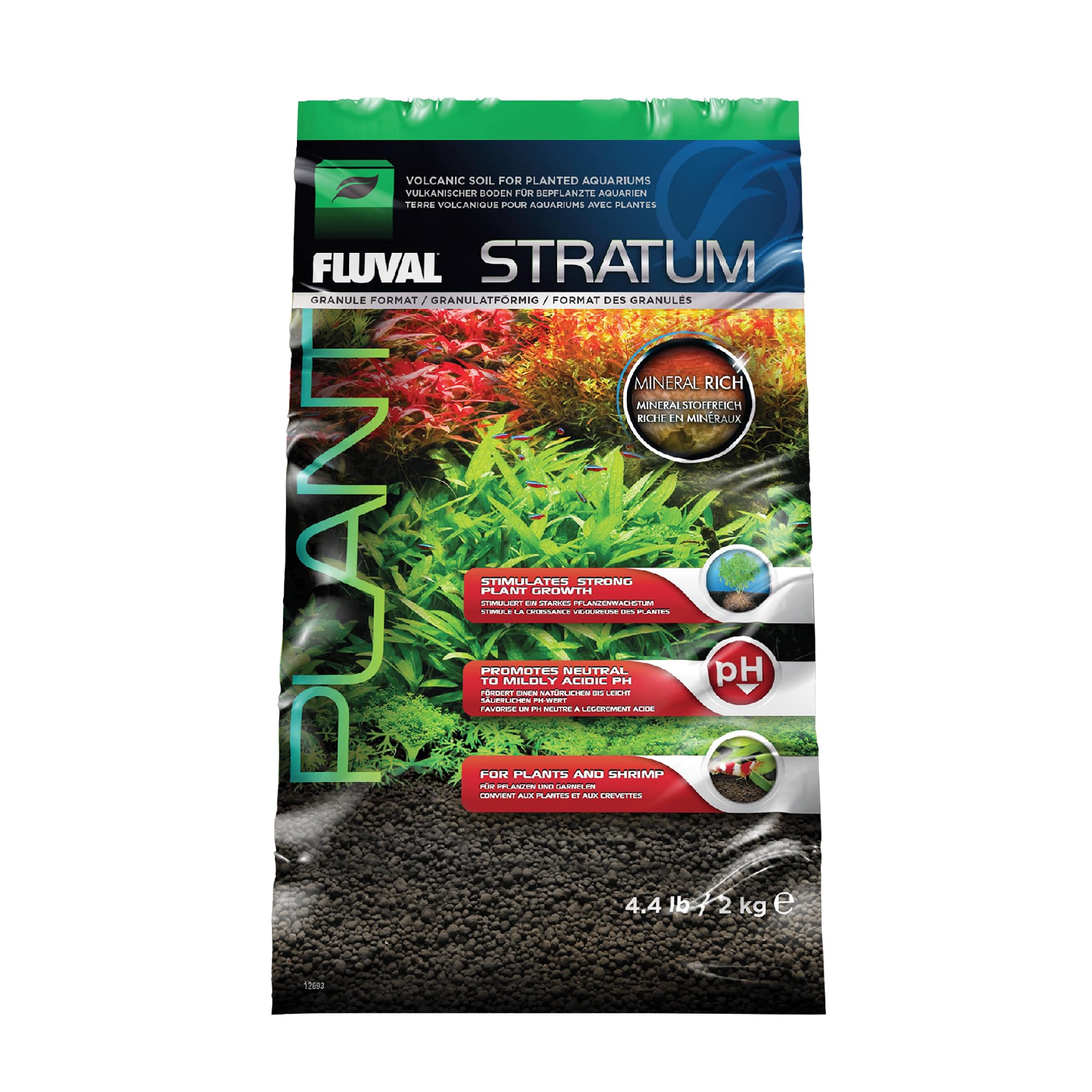
Rating: 4.7 ★ | Price: $$ | Substrate Type: Aquasoil | Nutrient Content: Nutrient-rich | Cloudiness Risk: Common | Bag Size: 4.4 lb
Fluval Stratum’s porous granules allow roots to spread easily while hosting beneficial bacteria that help stabilize water conditions. The soil buffers pH to a neutral-to-slightly-acidic range, which suits most low-tech planted tanks and shrimp colonies without requiring CO2 injection or additional fertilizers.
This substrate is a natural fit for first-time planted tank owners and shrimp keepers who want reliable plant growth without complicated water management. The tradeoff is that water may appear cloudy for a day or two after setup — a temporary haze that settles on its own if the substrate isn’t rinsed. For larger tanks (over 20 gallons), budget for multiple bags.
Pros
- Promotes strong root development and lush plant growth with minimal transplant shock.
- Porous structure supports biological filtration, helping maintain stable water parameters.
- Ideal for shrimp breeding and low-tech planted setups without CO2 or root tabs.
Cons
- Single 4.4 lb bag covers only small tanks; larger aquariums need multiple purchases.
- Water may appear cloudy for 1–2 days after filling, requiring patience before it clears.
The safest starting point for planted tank newcomers — plant growth is reliable, and the pH stays in a shrimp-friendly range.
Best for Large Planted Tanks
Seachem Flourite 15.4 lb

Rating: 4.6 ★ | Price: $$ | Substrate Type: Inert clay | Nutrient Content: Inert | Cloudiness Risk: High | Bag Size: 15.4 lb
Seachem Flourite delivers 15.4 lbs of inert clay gravel that won’t alter pH, making it a solid choice for deep substrate beds in large planted tanks. Unlike nutrient-rich aquasoils that buffer and feed plants, Flourite is inert — root tabs are needed for heavy plant growth. The deep black color enhances natural aesthetics, but the gravel arrives dusty and requires thorough rinsing; even after washing, fine particles may resuspend in the water column. This tradeoff suits hobbyists who prioritize volume and pH neutrality over convenience.
Pros
- Deep black color adds natural contrast to planted tanks.
- Supports strong root growth in large planted beds.
- Large 15.4 lb bag offers good value for deep substrate layers.
Cons
- Heavy dust requires extensive rinsing before use; particles may resuspend after setup.
Best for large planted tanks where volume and pH stability matter, and you’re prepared to spend time rinsing before setup.
Best for High-Tech Aquascapes
ADA Amazonia Ver 2 9L

Rating: 4.7 ★ | Price: $$$ | Substrate Type: Aquasoil | Nutrient Content: Nutrient-rich | Cloudiness Risk: High | Bag Size: 9L
ADA Amazonia Ver 2 delivers a level of nutrient density and pH buffering that outperforms the top pick in heavily planted, CO2-injected tanks. The strong ammonia release during cycling and pH drop to 5.5 demand patience and careful monitoring — this soil is suited for experienced aquascapers willing to manage water parameters, not beginners or shrimp breeders.
Pros
- Delivers exceptional plant growth and health in high-tech setups
- Effective pH buffering ideal for soft water plants
Cons
- Premium price per volume compared to budget-friendly alternatives
For advanced aquascapers running high-tech CO2 systems who can manage cycling and water parameters, this soil provides unmatched plant growth support.
Best for Budget Planted Tanks
LANDEN Aqua Soil 5L

Rating: 4.6 ★ | Price: $$ | Substrate Type: Aquasoil | Nutrient Content: Nutrient-rich | Cloudiness Risk: Moderate | Bag Size: 10 lb
Lower per-pound cost than premium soils like ADA or Fluval, with solid growth results from natural clay and volcanic soil. The ammonia release is real and can last several weeks, requiring a proper cycle before adding any livestock.
Best for budget-conscious planted tank enthusiasts who plan to cycle properly and want soft water for shrimp or plants. Not suitable for instant setups or sensitive Caridina shrimp as the pH drop may be too strong.
Pros
- Affordable per-pound compared to premium aquasoils
- Natural soil composition supports healthy plant growth
- Minimal cloudiness when installed correctly
Cons
- Significant ammonia release during the first weeks requires patience and multiple water changes before adding livestock
For patient aquascapers who want true aquasoil performance at a lower cost, LANDEN delivers — just don’t rush the cycle.
Best for Shrimp & Aquascaping
Aqueon Plant & Shrimp 5 lb

Rating: 4.6 ★ | Price: $$ | Substrate Type: Inert clay | Nutrient Content: Inert | Cloudiness Risk: Low | Bag Size: 5 lb
The spherical clay grains rinse cleanly and won’t compact, making maintenance straightforward. This inert substrate relies on root tabs for plant nutrition — a non-issue for shrimp tanks or low-tech setups where you’re already supplementing. For those who want a stable, good-looking base without worrying about clouding or pH shifts, it’s a practical choice.
Pros
- Spherical clay shape rinses clean and won’t compact over time
- Dark natural color enhances planted tank aesthetics
Cons
- Bag size only provides a thin layer in tanks larger than 10 gallons; multiple bags needed for full depth
- No fertilizers included; root tabs are necessary for any significant plant growth
For shrimp keepers and low-tech tanks where root tabs are already part of the plan, this substrate offers a clean, stable base at a mid-range price.
Best for Cuttings & Terrariums
Fluval Bio Stratum 4.4 lb
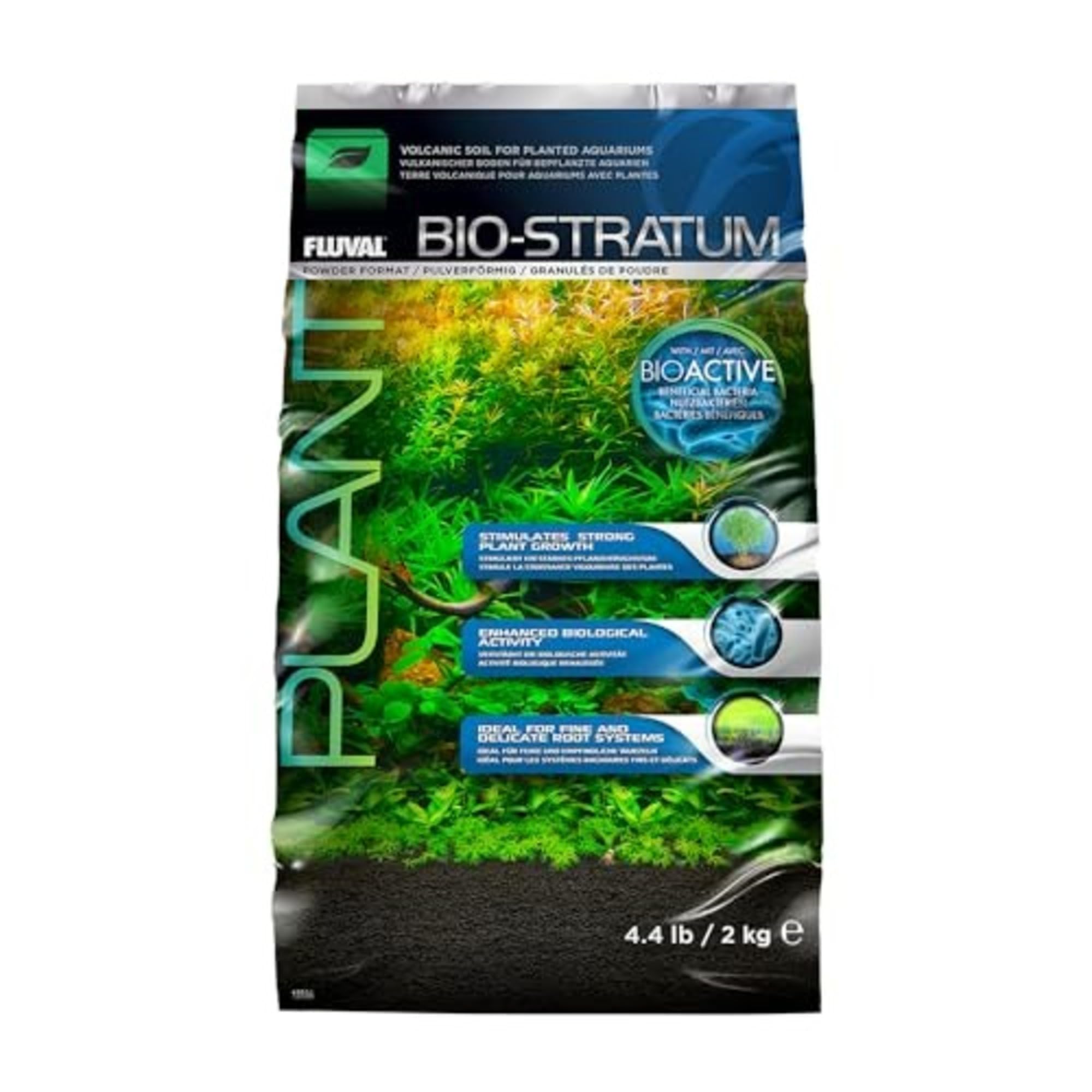
Rating: 4.7 ★ | Price: $ | Substrate Type: Aquasoil | Nutrient Content: Nutrient-rich | Cloudiness Risk: Common | Bag Size: 4.4 lb
Its fine 1mm granules create a dense rooting medium that encourages rapid root development in cuttings. The finer particle size can produce more noticeable initial cloudiness than standard Stratum, requiring slower water addition during setup. This makes it a strong choice for propagation projects and terrarium setups rather than general planted tank use.
Pros
- Fine 1mm granules provide an ideal rooting medium for plant cuttings.
- Works effectively in both aquariums and terrariums, allowing flexible use.
Cons
Best for propagation enthusiasts or terrarium owners who want a budget-friendly substrate and can manage the initial cloudiness.
Best for Root Tab Users
CaribSea Eco-Complete 20 lb
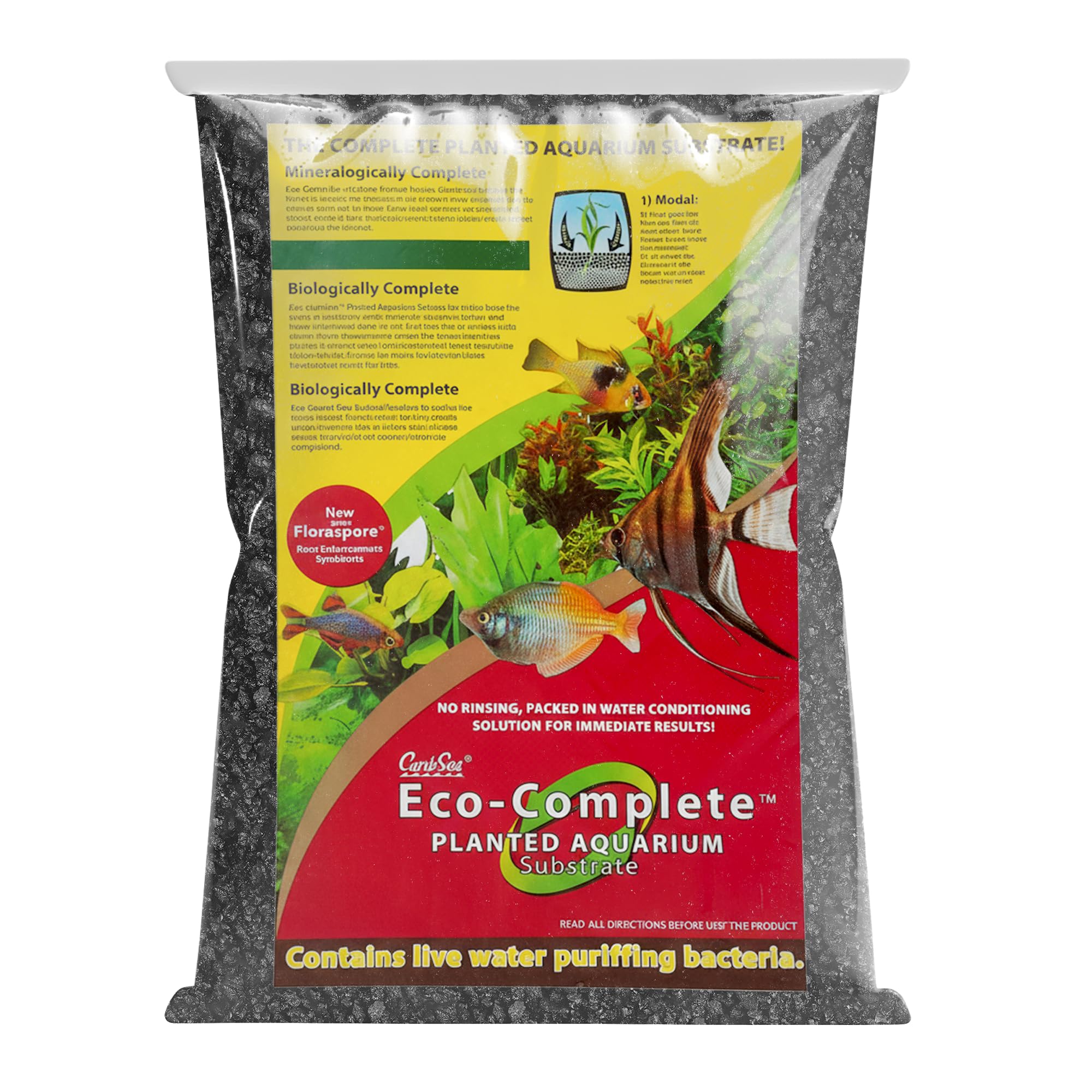
Rating: 4.6 ★ | Price: $$ | Substrate Type: Inert clay | Nutrient Content: Inert | Cloudiness Risk: Low | Bag Size: 20 lb
Large 20 lb bag with a dark, attractive finish makes this a popular choice for deep substrate beds. However, the gravel is inert despite being marketed as nutrient-rich, so root tabs are necessary for plant growth – a distinction worth noting for buyers expecting a complete soil.
Pros
- Dark color enhances fish colors and tank appearance.
- Easy to plant and settles quickly if the brand’s no-rinse instructions are followed.
Cons
- Marketed as ‘nutrient-rich’ but is actually inert clay; requires root tabs for optimal plant growth.
If you already use root tabs and want a dark, deep substrate bed for a large tank, this is a cost-effective option – just don’t expect nutrients from the gravel itself.
How to Choose
The most important decision is whether you want a true aquasoil that feeds plants from day one or an inert clay that needs fertilizer supplements.
Substrate Type: Aquasoil vs. Inert Clay
Aquasoils are baked or fired clay pellets rich in organic nutrients. They release ammonia initially, which cycles the tank and feeds plants, but requires patience before adding fish. Inert clays like gravel do not break down or alter water chemistry, making them stable for delicate shrimp but useless for plants without root tabs.
Choose aquasoil if you want lush growth and can manage the cycle. Choose inert clay if you prioritize water stability or already plan to use fertilizers.
Nutrient Content and Fertilization
Not all ‘nutrient-rich’ labels are accurate. Some substrates contain beneficial bacteria or trace elements but lack macronutrients like nitrogen and phosphorus. Plants will eventually deplete these and require root tabs or liquid fertilizers.
For heavily planted tanks, a true aquasoil with ongoing fertilization delivers the best results. Inert clays work well as a base layer with root tabs placed under the root zone.
Particle Size and Planting Ease
Small particles (1–2 mm) pack tightly, holding fine roots well but can compact over time and limit water flow. Larger grains (3–5 mm) allow better water circulation and are easier to plant in without disturbing the substrate, but may not hold very small plants as securely.
Match particle size to your plant type: fine grains for carpet plants, larger grains for stem plants or heavy root feeders.
Initial Cloudiness and Rinsing
Most substrates release dust when first added to water. Aquasoils often instruct not to rinse, but cloudiness can persist for 24–48 hours. Inert clays like Flourite require thorough rinsing to remove fine dust; skipping this step leads to murky water that takes days to clear.
Use a plate or bowl when filling the tank to minimize disturbance. A quality filter with fine filter floss will clear the haze faster.
Bag Volume vs. Tank Size
A standard planted tank needs a 2-inch deep substrate bed. For a 20-gallon tank, that’s roughly 10–15 lbs of dry weight. A 4.4 lb bag covers only about 5 gallons at that depth, so calculate carefully before buying.
Larger bags (15–20 lbs) are more economical for big tanks, but make sure the substrate type matches your needs before committing to a bulk purchase.
FAQ
Why is my aquarium water still cloudy after adding Fluval Stratum?
Fluval Stratum should not be rinsed. Cloudiness usually clears within 24–48 hours as the dust settles and the filter removes fine particles. If it persists, ensure you didn’t disturb the substrate when filling the tank, and use a fine filter pad.
Does Seachem Flourite need to be rinsed before use?
Yes, thoroughly. Flourite is a fractured clay gravel that contains a lot of dust. Rinse it in a bucket until the water runs mostly clear, then add it to the tank. Even after rinsing, some cloudiness may appear initially but will settle quickly.
How long does ADA Amazonia take to stop releasing ammonia?
Typically 3–4 weeks. The initial ammonia spike can exceed 2 ppm and drops gradually as beneficial bacteria colonize. Do not add fish until ammonia and nitrite read zero. Frequent water changes help speed up the cycle.
Can I use CaribSea Eco-Complete without adding fertilizers?
Not for heavy plant growth. Despite marketing claims, Eco-Complete is an inert clay gravel that does not contain meaningful nutrients. For healthy plant development, use root tabs or liquid fertilizers from the start.