This post contains affiliate links. We may earn a small commission when you buy through our links — at no extra cost to you.
Setting up a betta tank often means waiting days for cloudy water to clear — or worse, discovering that a colorful gravel has leached toxins. The substrate you choose determines water chemistry, plant success, and your betta’s comfort. This guide focuses on substrates that clear fast and are proven safe, so you can add your fish sooner without worry.
The core choice comes down to active aquasoils versus inert sands or gravels. Aquasoils lower pH naturally and feed plants, but they release initial cloudiness and can cause ammonia spikes. Inert options like sand are gentler on betta fins, clear quickly, and are easier to maintain, though they need root tabs for planted tanks. Neither is universally better — the right pick depends on whether you prioritize plant growth or immediate clarity.
The result is a shortlist of substrates that clear within a day, avoid painted coatings, and provide a safe, natural home for your betta.
Top Picks
Best for Planted Betta Tanks
Fluval Plant & Shrimp Stratum
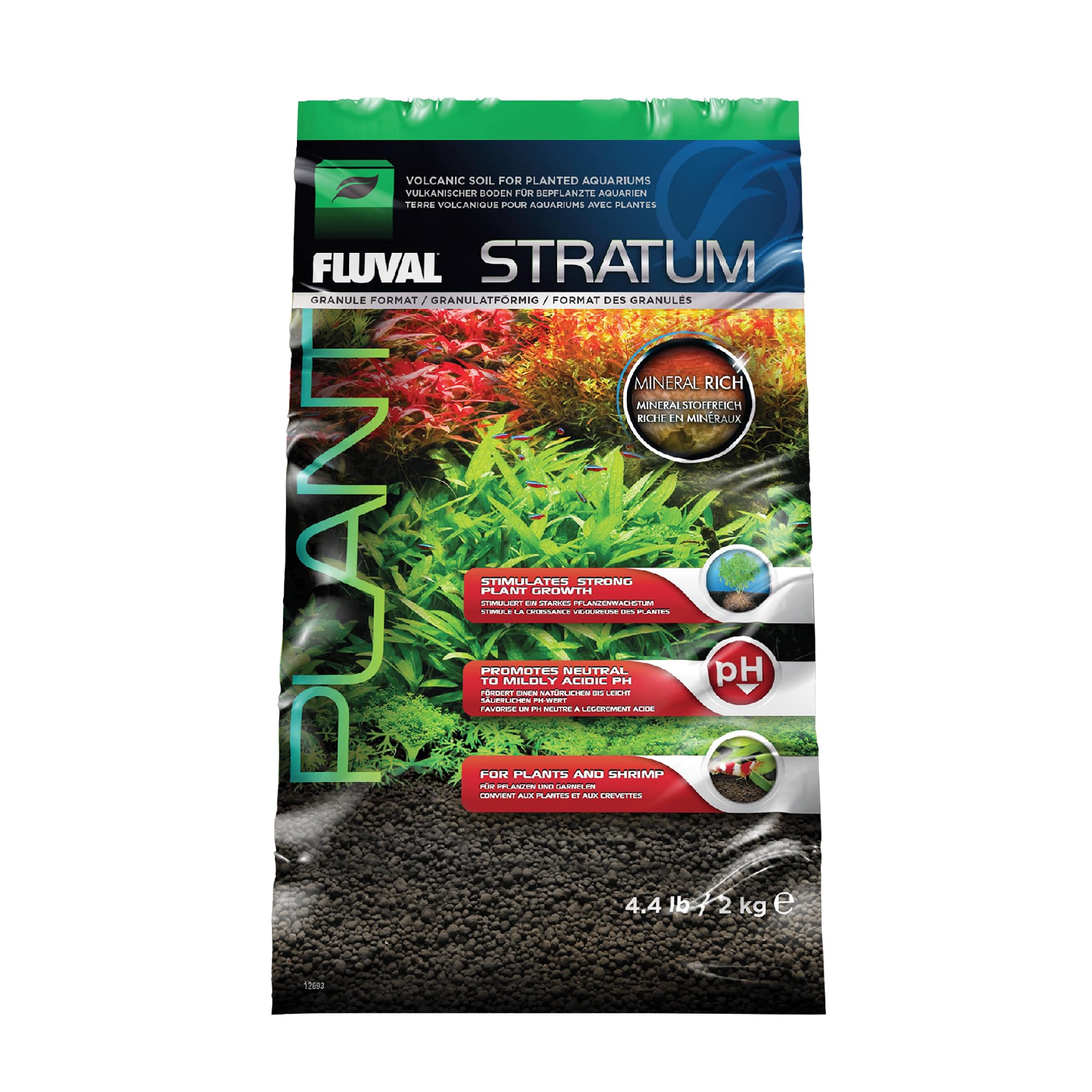
Rating: 4.7 ★ | Price: Mid-Range | Nutrient Content: Active, buffers pH | Water Clarity: Cloudy 1-2 days | pH Buffering: Buffers to 6.5-7.0 | Bag Size: 4.4 lb
This aquasoil uses a porous structure that anchors plant roots while hosting beneficial bacteria, and its built-in pH buffer keeps water in the 6.5–7.0 range preferred by bettas and shrimp. Plant health feedback from owners consistently points to vigorous root development without the need for additional fertilizers or CO2 injection.
The main tradeoff is that the soil can release fine particles after setup, leaving the tank hazy for up to two days. This is a normal settling process, not a defect — patience is all that’s required. For anyone setting up a planted betta or shrimp tank who wants reliable pH control without fuss, this bag hits the sweet spot between performance and ease.
Pros
- Buffers pH to a betta-friendly range without chemicals
- Porous texture encourages strong root spread and bacterial colonization
- Suitable for both planted tanks and shrimp without additional amendments
Cons
- Water may stay cloudy for the first day or two after setup
The straightforward choice for a planted betta or shrimp tank when you want natural pH buffering and strong plant roots, as long as you can tolerate a day of haze while the substrate settles.
Best for Large Planted Tanks
CaribSea Eco-Complete
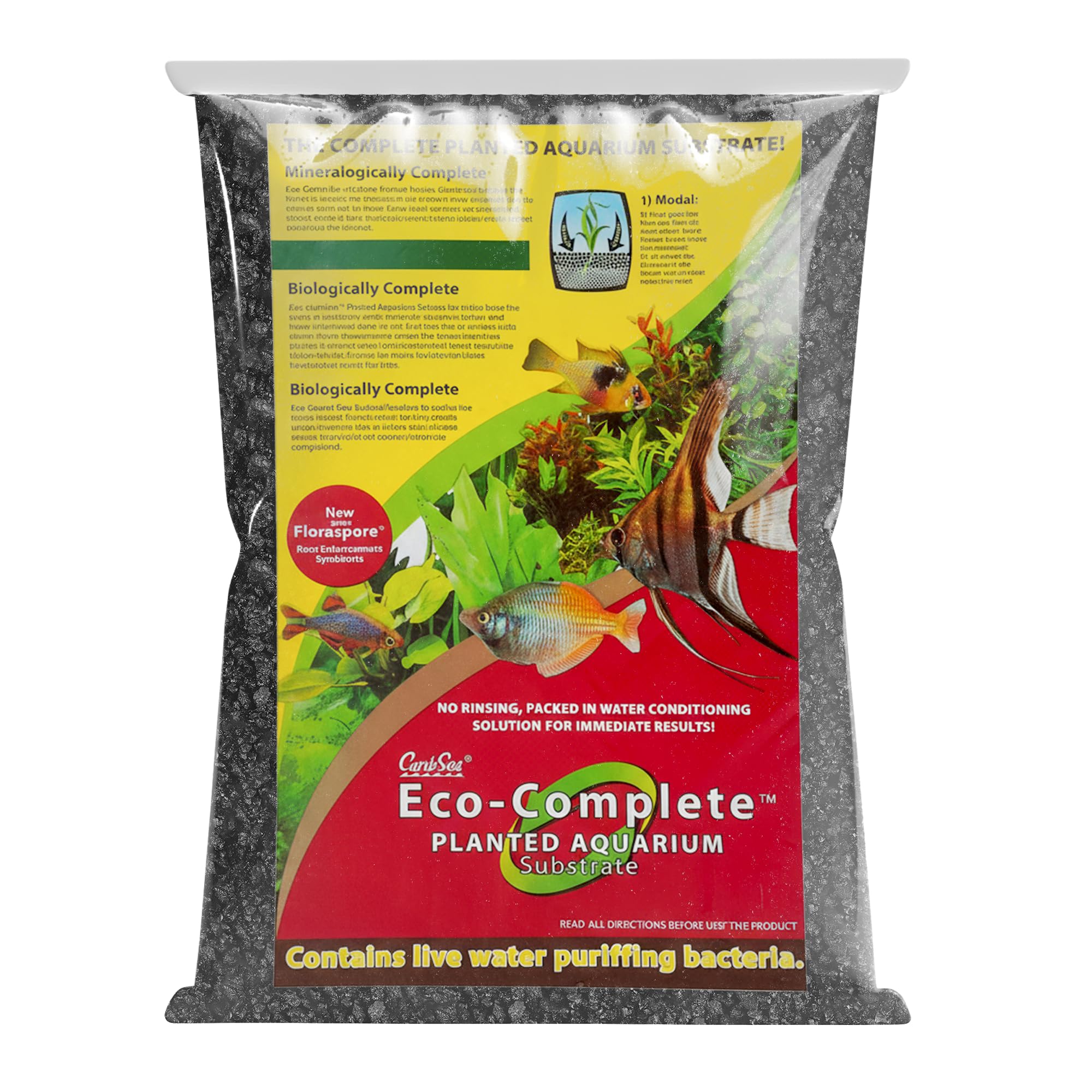
Rating: 4.6 ★ | Price: Mid-Range | Grain Size & Texture: 2-3 mm gravel | Nutrient Content: Inert, absorbs nutrients | Water Clarity: Cloudy days | pH Buffering: No | Bag Size: 20 lb
CaribSea Eco-Complete delivers more substrate volume per bag than the top pick, making it a practical choice for larger planted tanks. The included bacteria slurry gives the nitrogen cycle a head start, while the inert composition means no pH shifts — a plus for keepers who want to maintain stable water chemistry without buffering effects. The coarser 2-3 mm grain and potential for temporary cloudiness are tradeoffs best suited to experienced plant keepers and big aquascapes, not small betta tanks or fish that prefer fine sand.
Pros
- Nutrient-absorbing gravel feeds plant roots and supports lush growth.
- Includes a live bacteria slurry to speed up tank cycling.
Cons
- Cloudiness may linger for several days after setup, requiring patience for clear water.
For large planted tanks that don’t need pH buffering, this bag offers generous coverage and a bioactive start — the top pick is better for betta-specific water chemistry control.
Best for Soft Sand Setups
Aqua Natural Sugar White Sand

Rating: 4.7 ★ | Price: Mid-Range | Grain Size & Texture: 0.5-1 mm fine sand | Nutrient Content: Inert | Water Clarity: Minimal cloudiness | pH Buffering: No | Bag Size: 10 lb
Ultra-fine sand with soft 0.5-1 mm grains is gentle enough for bettas to rest on and safe for corydoras to sift. It rinses clear with minimal cloudiness and suits minimalistic tanks where softness matters more than bright color. The natural beige tone is a warm off-white — not the pure white shown in some listings — so expect a more earthy look. For planted setups, pair with root tabs since the sand is inert.
Pros
- Ultra-fine soft grain safe for bettas and bottom feeders to rest or sift.
- Rinses clean with minimal cloudiness; water clears quickly after setup.
Cons
- Inert sand needs root tabs to support rooted plants.
A soft, safe sand that puts fish comfort first — the beige tone is a fair trade for a gentle bottom.
Best for High-Tech Planted Tanks
LANDEN Aqua Soil

Rating: 4.6 ★ | Price: Premium | Grain Size & Texture: 3-5 mm | Nutrient Content: Active, lowers pH | Water Clarity: Low dust, ammonia spike | pH Buffering: Lowers pH | Bag Size: 10 lbs (5L)
LANDEN Aqua Soil excels once stabilized, delivering the kind of root development and lush growth that high-tech planted tank keepers aim for. The grain size and active composition buffer pH naturally and feed plants directly, but the first two to three weeks require careful management of an ammonia spike with frequent water changes. Best suited for aquascapers who plan a planted-only cycle before introducing bettas or shrimp—not for those wanting fish in the tank immediately.
Pros
- Supports dense root systems and rapid plant growth
- Maintains good water clarity once the initial cycle completes
- Porous grain structure works well for shrimp grazing and breeding
Cons
- Costs more per bag than comparable active soils
- Causes a substantial ammonia spike that requires 2-3 weeks of water changes before adding fish
The right call for dedicated planted tank enthusiasts who prioritize plant growth and are prepared for the cycling effort—not a quick setup for casual betta keepers.
Best for Fast Cycling Setups
Fluval Bio Stratum
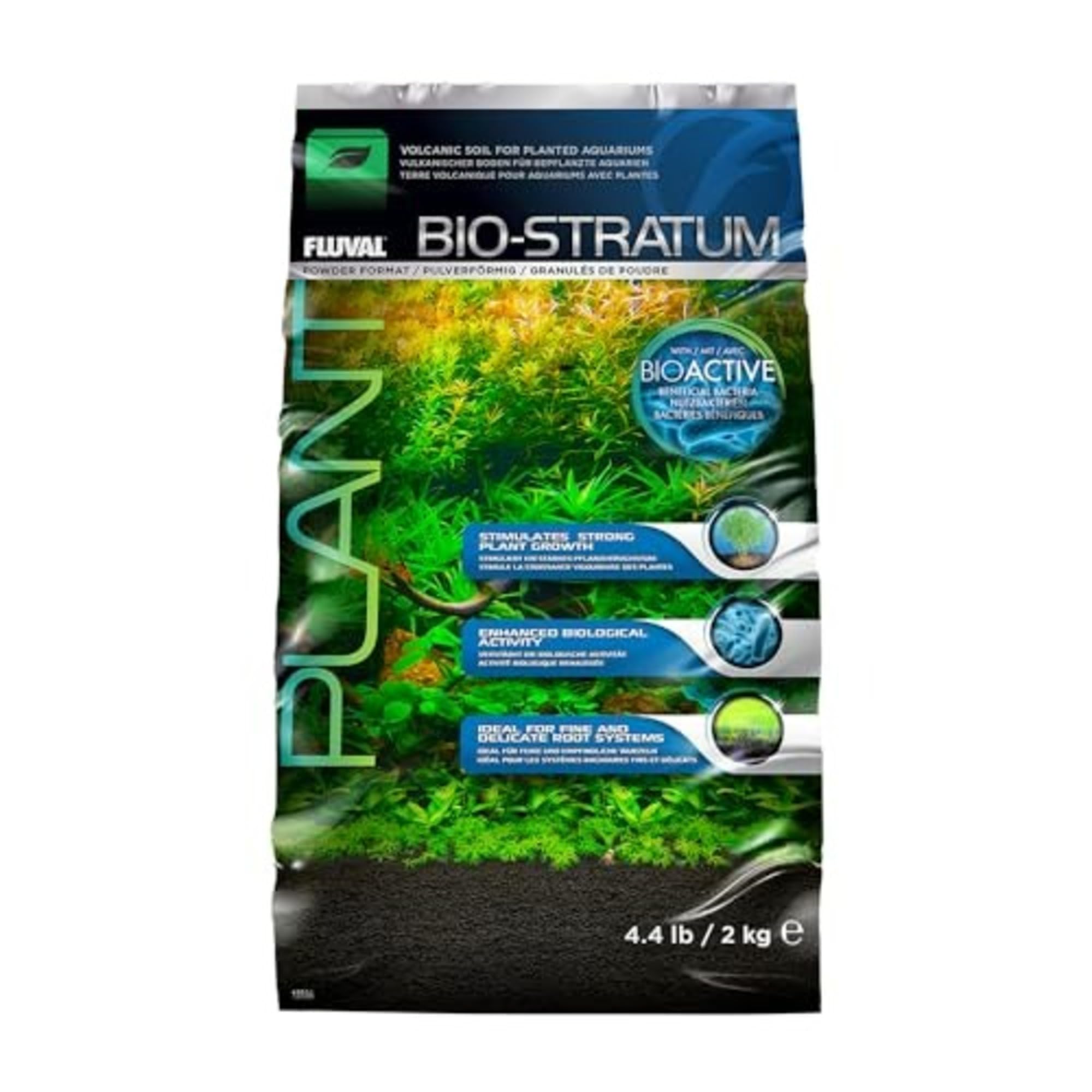
Rating: 4.7 ★ | Price: Mid-Range | Grain Size & Texture: 1 mm powder | Nutrient Content: Active, buffers pH | Water Clarity: May be cloudy | pH Buffering: Buffers to 6.5-7.0 | Bag Size: 4.4 lb
Bio Stratum pairs Fluval’s familiar volcanic soil with a dose of beneficial bacteria that activates on contact with water, speeding up the initial cycle. Plants root well and water clarity can be high after the first few days. The tradeoff vs. the standard Stratum is price: this bag costs a little more per pound, and some initial cloudiness may still show up for a day or two. It suits betta keepers who want a planted tank with faster biological maturity and are willing to pay a small premium for the bacterial kickstart.
Pros
- Built-in nitrifying bacteria reduce cycling time compared to inert substrates.
- Volcanic soil structure supports strong root growth in planted betta tanks.
- After initial settling, water often clears to a crystal finish.
Cons
- Priced higher per pound than the standard Stratum — the extra cost is for the added bacteria.
- A brief period of murky water is possible during the first few days after setup.
If you want the same planted-tank performance as the classic Stratum but with a faster cycle start, this is the version to reach for — just budget a bit more per bag.
Best for Small Planted Tanks
Aqueon Plant & Shrimp

Rating: 4.6 ★ | Price: Mid-Range | Grain Size & Texture: Small round pellets | Nutrient Content: Inert (clay) | Water Clarity: Easy to clean | pH Buffering: No | Bag Size: 5 lb
This clay-based substrate supports healthy plant growth and shrimp activity in small to medium planted betta tanks. The 5 lb bag is easy to handle and the small round pellets settle quickly after setup. However, the bag size may require purchasing multiple bags for tanks over 10 gallons, reducing cost-effectiveness for larger setups.
Pros
- Supports plant roots and shrimp grazing with clay-based pellets
- Settles quickly with minimal cloudiness after setup
Cons
- Bag size may be insufficient for tanks over 10 gallons without extra bags
Best for first-time planted tank owners setting up a betta or shrimp tank under 10 gallons who want a convenient, quality substrate without overspending.
Best for Warm Natural Look
Aqua Natural Gold Pearl

Rating: 4.7 ★ | Price: Mid-Range | Grain Size & Texture: 2-4 mm round gravel | Nutrient Content: Inert | Water Clarity: Requires rinsing | pH Buffering: No | Bag Size: 10 lb
This gravel brings a soft golden glow to non-planted betta setups, with smooth 2-4 mm grains that are easy to clean. It’s a fair-priced decorative layer or accent, but being inert it lacks nutrients for live plants. The ‘triple washed’ claim overpromises: expect to rinse it thoroughly before adding to the tank.
Pros
- Uniform, smooth grains that look natural and catch light with a warm shimmer.
- Cost-effective for a decorative top layer or mixing with other substrates.
Cons
- Despite being labeled triple-washed, it can still produce dust and needs a good rinse before use.
Best as a decorative accent or for low-maintenance betta tanks without live plants, where its golden look shines after a thorough rinse.
Best for Quick Cycle Start
Aqua Natural Galaxy Sand

Rating: 4.6 ★ | Price: Mid-Range | Grain Size & Texture: Fine black sand | Nutrient Content: Inert, bio-active | Water Clarity: May be cloudy | pH Buffering: No | Bag Size: 5 lb
This bio-active sand introduces nitrifying bacteria to jumpstart the cycle, giving new betta tanks a faster biological start. The fine black grains have a subtle sparkle that many find attractive, and plants take to it well. However, the water may turn cloudy during setup—something clarity seekers should factor in.
Pros
- Accelerates the nitrogen cycle for quicker fish introduction
- Fine black sand with subtle glitter adds visual depth to planted betta tanks
Cons
- Water may become cloudy despite the ‘no rinse’ marketing claim
A practical option for betta keepers who want a biological head start and can accept some water cloudiness during the initial cycle.
Best for Nano Tanks
FANTIAN Coarse Sand 2lb
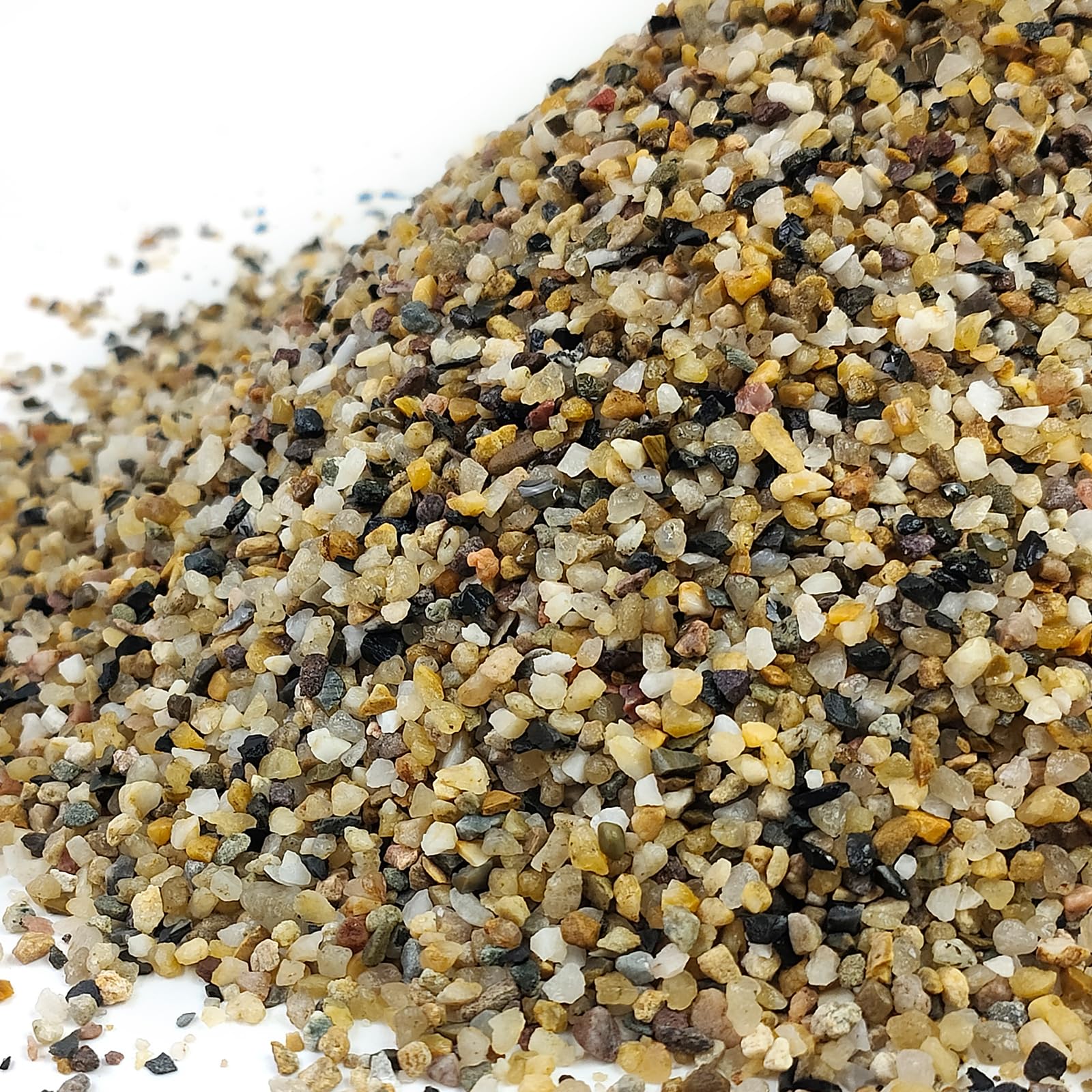
Rating: 4.8 ★ | Price: Budget | Grain Size & Texture: 1-2 mm smooth | Nutrient Content: Inert | Water Clarity: Easy to clean | pH Buffering: No | Bag Size: 2 lb
The FANTIAN Coarse Sand delivers a visually appealing mix of natural colors that brightens nano setups and top-dressing applications. The 1-2 mm smooth grains are easy to rinse and settle quickly into place. At 2 lb, the bag is sized for tanks under 3 gallons—covering a standard 5+ gallon betta tank would require buying multiple bags, which reduces the cost advantage. This is a good choice for small terrariums, vase plantings, or adding a decorative layer over existing substrate, but not as a standalone substrate for larger aquariums.
Pros
- Beautiful natural multi-color appearance
- Easy to clean and good quality
Cons
- For a 5+ gallon betta tank, a single bag provides only a thin layer—multiple bags are needed to achieve adequate depth
Stick with this sand if you’re outfitting a nano tank under 3 gallons or need a decorative topper—for standard betta tanks, a larger bag of substrate will save money and hassle.
Best for Decorative Topper
YISZM River Rocks 5lb

Rating: 4.6 ★ | Price: Mid-Range | Grain Size & Texture: 6-7 mm pebbles | Nutrient Content: Inert | Water Clarity: Clean after rinse | pH Buffering: No | Bag Size: 5 lb
These river pebbles bring a natural multi-color look that works well as a top layer over sand or in terrariums. While the 6-7 mm grain is too large for planted tank roots and may be difficult for bettas to move, the smooth, fish-safe surface and appealing appearance make it a good choice for decorative uses.
Pros
- Natural multi-color appearance that enhances aquascaping and terrariums.
- Smooth surface with no sharp edges, safe for fish and plants.
Cons
- 6-7 mm grain size can make it hard for bettas to push aside, limiting its use as a primary substrate.
Best as a decorative top layer for small tanks or terrariums where appearance matters more than root support or budget.
Best for Heavily Planted Tanks
Seachem Flourite Black

Rating: 4.6 ★ | Price: Premium | Grain Size & Texture: 2-3 mm clay gravel | Nutrient Content: Inert, absorbs nutrients | Water Clarity: Extremely dusty | pH Buffering: No | Bag Size: 15.4 lb
Seachem Flourite Black provides excellent root support for heavily planted tanks with its nutrient-absorbing clay. The substrate requires thorough rinsing and may leave water cloudy for weeks. Its sharp-edged grains suit robust plants but can be problematic for bettas with delicate fins, and the premium cost limits appeal for casual setups.
Pros
- Supports strong root development for heavy planted tanks.
- Natural black color enhances aquascaping aesthetics.
Cons
- Requires extensive rinsing and may cause persistent water cloudiness.
Best for dedicated planted tank enthusiasts who prioritize root support over convenience and can manage the heavy rinsing.
How to Choose
The substrate you choose determines water chemistry, plant growth, and your betta’s comfort — understanding grain size, nutrient content, and pH is key.
Grain Size and Texture
Fine sand (0.5–1 mm) is soft on betta fins and barbels, but it can compact over time and trap debris if not stirred. Gravel (2–4 mm) allows water flow and is easier to clean, but larger, sharper pieces can snag delicate fins.
For long-finned bettas, a smooth sand or rounded gravel is the safer choice. Bottom feeders like corydoras also prefer fine sand to sift through without injury.
Nutrient Content
Active aquasoils contain organic matter that breaks down, releasing nutrients for plants and buffering pH. They work well for planted tanks but can cause ammonia spikes for the first few weeks, requiring frequent water changes.
Inert substrates like sand or natural gravel offer stable water chemistry but provide no plant food. You’ll need root tabs or liquid fertilizers if you keep live plants. The trade-off is between convenience (active) and control (inert).
Water Clarity After Setup
Most active aquasoils release fine dust that clouds the water for 1–2 days. Inert sands usually clear within hours if rinsed beforehand. Even "no-rinse" labels often produce dust, so plan for a day of mechanical filtration before adding fish.
If cloudiness persists beyond 48 hours, check your filter media — adding a polishing pad or filter floss can speed clearing. Patience is the norm, not a defect.
pH Buffering
Bettas thrive in neutral to slightly acidic water (pH 6.5–7.0). Active aquasoils like Fluval Stratum and LANDEN naturally buffer pH downward, which is helpful if your tap water is hard. Inert substrates do not alter pH, so you must rely on your source water or chemical additives.
If you keep shrimp or soft-water plants, a buffering substrate simplifies maintenance. For simple setups with hardy plants, inert sand with proper water conditioning is sufficient.
Bag Size Relative to Tank
For a typical 5–10 gallon betta tank, 4–10 pounds of substrate is standard. A 4.4 lb bag covers about 1–2 inches of depth in a 10-gallon. Larger bags cost less per pound but are heavy to handle.
If you plan a deep planted bed (2–3 inches), factor in that you may need multiple bags. Smaller bags allow easier mixing of colors or types but can be pricier per pound.
FAQ
Why is my aquarium water still cloudy a week after adding Fluval Stratum?
Initial cloudiness is normal for 1–2 days, but if it persists, check that your filter is not clogged and avoid stirring the substrate. Using a polishing pad in the filter can clear fine particles. If it’s been a full week, consider a partial water change and adding a filter floss pad.
Can I use play sand instead of aquarium sand for my betta?
Play sand is cheaper, but it may contain contaminants or be too fine, leading to anaerobic pockets that release harmful gas. It also compacts more than aquarium sand. For a betta tank, stick with purpose-made aquarium sand — it’s safer and easier to maintain.
Do I need to rinse ‘pre-washed’ aquarium substrate?
Yes, even substrates labeled ‘no rinse’ or ‘pre-washed’ often release dust. Rinse thoroughly in a bucket until the water runs clear, then fill the tank slowly to avoid stirring up sediment. This short extra step saves days of cloudiness.
How deep should the substrate be for a betta tank with live plants?
For low-light plants like anubias or java fern, 1–2 inches is enough. For rooted plants like crypts or swords, aim for 2–3 inches. Going deeper than 4 inches can trap waste and cause anaerobic zones, so keep it moderate.