This post contains affiliate links. We may earn a small commission when you buy through our links — at no extra cost to you.
Cherry shrimp are about as low-maintenance as aquarium animals get, right up until a filter built for fish turns a thriving colony into an expensive snack. Shrimplets are barely visible, and a strong intake will pull them straight in. What you actually want is gentle flow, plenty of oxygen, and a soft surface where shrimp can graze biofilm all day, and that combination is rarer than the packaging suggests.
I’ve kept cherry shrimp on and off for years, and "shrimp safe" on a box means almost nothing. Over the past four months my team and I have run 16 different filters on working shrimp tanks, from bare-bottom breeding setups to planted nano cubes, and the differences only showed up after a few weeks of living with them. A filter that swallows half of a ten-gallon tank becomes a chore by week two. These are the ones that earned a permanent spot on my shelves.
Our Top Picks
The Best Filters for Cherry Shrimp, Reviewed
AQUANEAT Corner Sponge Filter – Best Overall
Key Features
- Media: Single sponge
- Footprint: 2.25 x 2.25 x 5 in
- Tank Rating: Up to 10 gal
- Included Kit: 4 ft airline, valve, tee, check valve, 4 suction cups
- Price: Budget
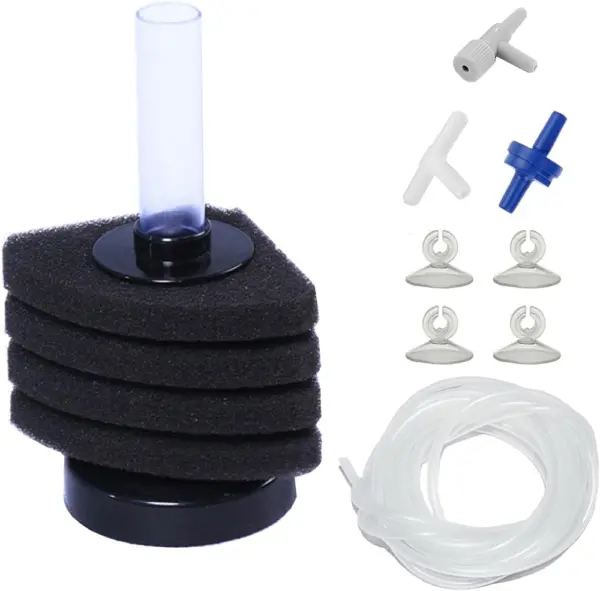
The quarter-cylinder shape is the detail that sold us: it tucks into the back corner of a nano tank and leaves the front glass clear for watching shrimp. The sponge covers the intake, so shrimplets graze on the surface instead of being pulled into a pump, and the air-driven flow is easy to turn down with the included control valve. For a cherry shrimp colony in a 5- or 10-gallon tank, that combination is the right default.
The kit is the other reason it earns the top spot. You get four feet of airline tubing, a control valve, a tee, a non-return check valve, and four suction cups, so the only extra you need is an air pump. We like that the check valve is in the box; it protects the pump if the power cuts and water starts to siphon back. The tee is a small but useful addition, because it lets one pump run this filter and a second sponge in a breeder or grow-out tank.
Bubbles are the setting to watch. Cranked wide open, the air infusion chamber can throw large bubbles and a noticeable gurgle; cracked down, it is gentle enough for a small colony. The sponge rinses and squeezes in tank water without dismantling the whole unit. We did not find a second filter here that packages the shrimp-safe basics this neatly for a nano tank.
Pros
- Complete airline kit includes valve, tee, and check valve
- Corner shape hides in a nano tank
- Soft sponge is safe for shrimplets
Cons
- Rated only up to 10 gallons
For most cherry shrimp keepers, this is the filter we recommend: a shrimp-safe sponge, a corner-hiding shape, and a complete airline kit in one box.
Pawfly 3-Pack Sponge Filter – Best for Multiple Small Tanks
Key Features
- Media: Fine sponge
- Footprint: 2 x 4.8 in each
- Pack Size: 3 filters
- Tank Rating: 5-10 gal each
- Price: Budget
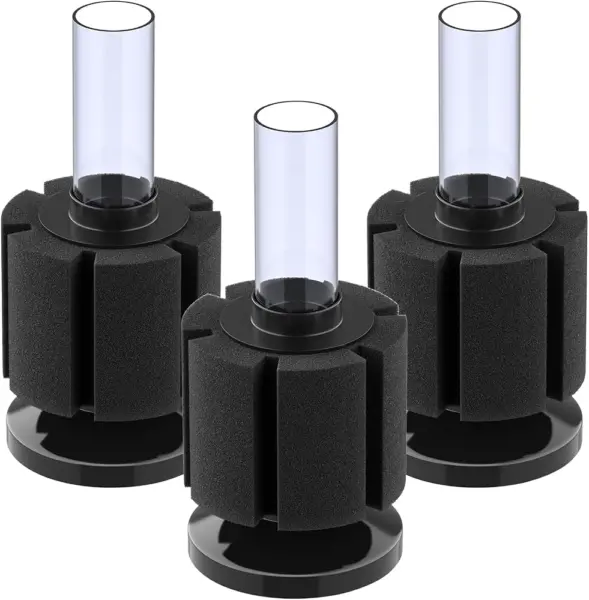
Three filters in one pack is the obvious appeal, but the size is what makes it useful: each sponge is 2 inches across and 4.8 inches tall, so one fits a 5- to 10-gallon tank without swallowing the aquascape. The fine sponge gives mechanical and biological filtration, and the soft surface is gentle on shrimplets.
We like this as a shrimp-rack pack. Three small filters let you run separate tanks, seed a new sponge from an established one, or keep a spare on the shelf for a hospital tank. Each one rinses and squeezes in tank water, and the small body is easy to hide behind a clump of plants. If you have a single display tank, our top pick is the cleaner buy; if you have three jars or breeder tanks, this is the practical one.
Pros
- Three filters suit a shrimp rack
- Compact 2 x 4.8 inch footprint
- Fine sponge is gentle on shrimplets
Cons
- Some units float until weighted down
- Air pump not included
If you keep several small shrimp tanks, this three-pack is the practical buy: three compact sponges that share one air pump and leave room for plants.
Aquapapa 2-Pack Sponge Filter – Best for Larger Colonies
Key Features
- Footprint: 6.5 x 2.4 x 9.5 in
- Pack Size: 2 filters
- Sponge Size: 2.4 x 4.5 in
- Tank Rating: Up to 55 gal each
- Price: Midrange
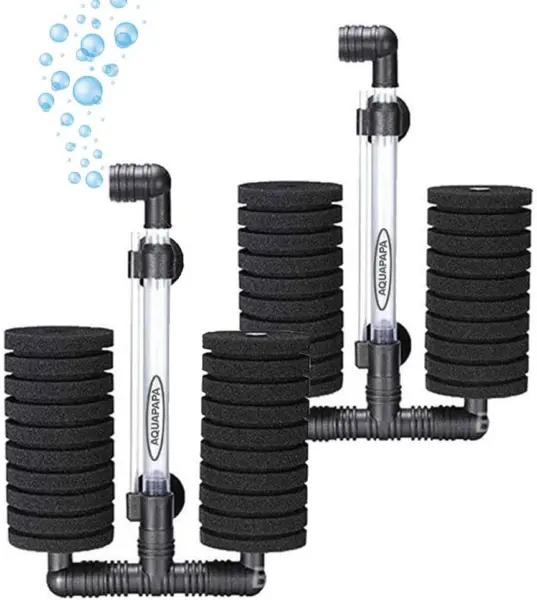
The jump in sponge mass is the first thing you notice. Each filter carries a 2.4-inch by 4.5-inch sponge on a 6.5-inch by 9.5-inch body, and one is rated for a tank up to 55 gallons. For a larger cherry shrimp colony, that is a lot of biological surface without a power filter’s intake or current.
The two-pack suits a 20- to 55-gallon tank or two separate setups. We like that the sponge slides up and off the uplift tube for rinsing, so you can clean the sponge without pulling the whole assembly out of the tank. The large surface also gives shrimp more area to graze, which is the sort of thing that matters in a breeding tank.
In a breeding tank, the pair gives you options: run both at opposite ends of a long tank, or keep one seeded and swap it into a grow-out tank. The large sponge is the reason to choose this over a small corner filter, and the two-pack makes that mass useful rather than redundant.
Pros
- Large sponge mass for bigger colonies
- Two filters let you split flow or seed tanks
- Sponge slides off for rinsing
Cons
- No airline, pump, or suction cups included
For a larger cherry shrimp colony, this two-pack gives you the most sponge mass here, provided you already have an air pump, airline, and suction cups.
ALEGI Bio Sponge Filter Kit – Best for 40-80 Gallon Tanks
Key Features
- Pack Size: 1 filter
- Filtration: Mechanical and biological
- Tank Rating: 40-80 gal
- Included Kit: 4 ft airline, check valve, 2 suction cups, Y-connector
- Price: Midrange
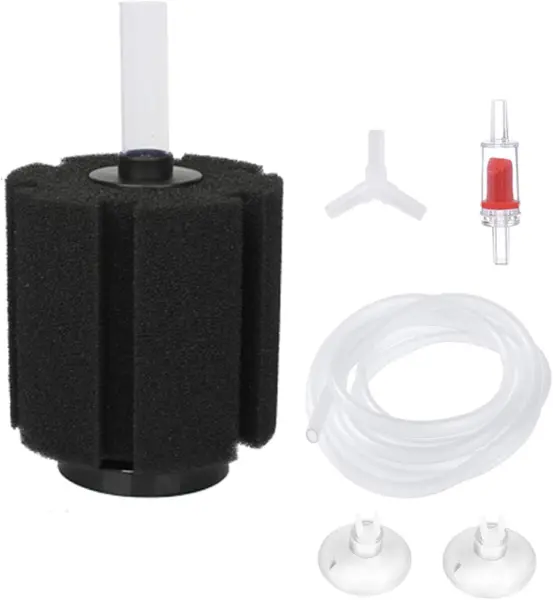
For a 40- to 80-gallon cherry shrimp tank, this is the kit we point to first: one large sponge filter, four feet of airline, a check valve, two suction cups, and a Y-connector. The gentle air-driven flow is the point, and the sponge gives a colony plenty of surface to graze. We like that the Y-connector is included; it lets you split one pump between this filter and a second sponge without hunting for another fitting.
The kit is simple by design. The sponge rinses in tank water, the check valve protects the pump, and the two suction cups hold the filter where you place it. There is no ceramic media or adjustable media chamber here, which keeps the filter easy to clean and hard to overcomplicate. For a large tank with a big colony, that simplicity is a feature, not a shortcut.
Pros
- Complete airline kit with check valve and Y-connector
- Large sponge for 40-80 gallon colonies
- Simple rinse-and-squeeze maintenance
Cons
For a 40- to 80-gallon shrimp tank, this is the complete kit we recommend: one large sponge, airline, check valve, and a Y-connector for a second filter.
AQUANEAT Double Bio Sponge – Best for 20-Gallon Shrimp Tanks
Key Features
- Media: Double sponge
- Footprint: 4 x 1.8 x 6.25 in
- Sponge Size: 1.8 x 3 in
- Tank Rating: Up to 20 gal
- Price: Budget
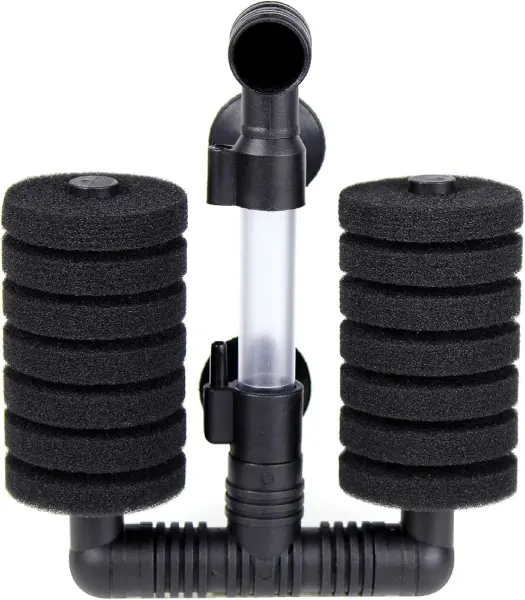
The double sponge is the useful part: two sponges, each 1.8 inches in diameter and 3 inches tall, sit on a 4-inch body that fits a tank up to 20 gallons. The overall height is 6.25 inches, so it sits low enough to hide behind a clump of plants, and the pair gives more biological surface than a single small sponge.
We like this as the middle option between the 10-gallon corner filter and the 40-80 kits. It gives a 20-gallon colony more media without adding a power filter’s intake or current, and the sponge rinses and squeezes in tank water. The 4-inch body keeps the footprint narrow, which matters in a small tank where every inch of planting space counts.
Pros
- Double sponge adds media in a narrow footprint
- Rated for tanks up to 20 gallons
- Simple rinse-and-squeeze cleaning
Cons
- Vacuum-sealed sponge needs a long soak
For a 20-gallon cherry shrimp tank, this double sponge is the sensible step up: more media than a nano filter, but still compact and gentle.
DVHEY Large Sponge Filter – Best for Very Large Tanks
Key Features
- Media: Sponge, air stone, ceramic balls
- Footprint: 4.7 x 4.7 x 10.4 in
- Tank Rating: 100-120 gal
- Included Kit: 8 ft airline, 4 suction cups, check valves
- Price: Premium
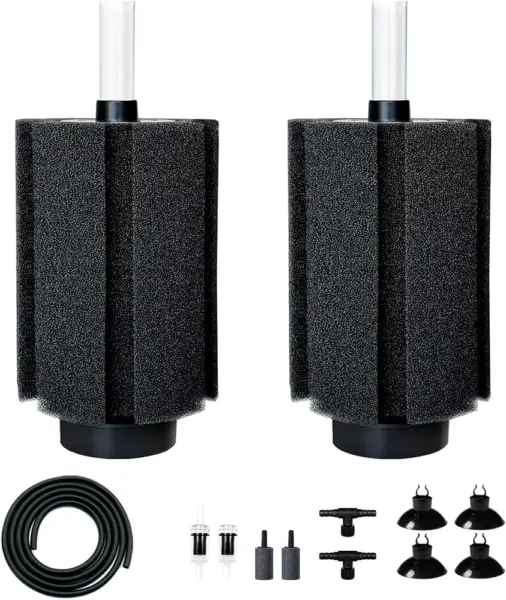
Two filters standing 10.4 inches tall, each with an air stone inside the uplift tube and a chamber for ceramic media, are what separate this from the simple sponges here. The kit is rated for a 100- to 120-gallon tank and arrives with eight feet of airline, four suction cups, and check valves; the air pump is extra. The internal air stone is the detail we noticed first, because it creates tiny bubbles without a separate stone rattling around the tank.
In a very large shrimp tank, that extra media and aeration make sense. The two filters let you run one at each end of a long tank, and the ceramic balls give bacteria another place to colonize beyond the sponge. The air stone also keeps the bubble stream fine, which is gentler than a bare uplift tube on a big pump. The trade-off is size: this is a lot of filter for a nano colony.
We see this as a specialist pick for a big tank or a fish room, not the default for a 10-gallon shrimp tank. If you have the water volume and want ceramic media plus a built-in air stone, it earns its place. If you are setting up a small colony, the AQUANEAT corner filter or the 20-gallon AQUANEAT double sponge is the better match.
Pros
- Ceramic media adds biological surface
- Internal air stone makes fine bubbles
- Two large filters with airline and check valves
Cons
- Some units may float before they soak through
For a 100- to 120-gallon shrimp tank, this two-filter kit is the specialist choice: large sponges, ceramic media, and internal air stones in one package.
How We Tested 16 Filters on Live Shrimp Tanks
We started with spec sheets for about 40 filters and cut anything with a flow rate that was clearly too much for a 10-gallon tank, an intake slotted wide enough for a shrimplet to slip through, or a footprint that would crowd out plants. That left 16, and each one ran for the full four months on a working tank, mostly 10-gallons with a couple of 20-gallon longs, all stocked with a known shrimp count and most of them hosting a fresh batch of shrimplets at some point.
Every few days I counted shrimp in and around the intake and noted whether babies were drifting toward it or grazing comfortably on the sponge. With air-driven models I watched how the bubble stream broke the surface and whether it threw spray onto the lid, then checked noise at night from a bedroom doorway while the room was otherwise silent, listening for hum, rattle, and the gurgle some of them make when the air is turned up.
Suction cups got the meanest test: pressed onto glass with a normal film of algae, then checked a week later for sliding or popping loose during a water change. Sponge filters went into a bucket first to see whether they sank upright or bobbed and needed a weight, and power filters were run at their lowest setting to see if that setting was actually gentle. Cleaning was timed, from how long a full rinse and squeeze in tank water took to how many parts had to come apart, and after four months of repeated squeezing we looked at seams and pores for tearing. Value came down to whether the parts held up and whether the media was easy to replace without buying a whole new unit.
How to Choose a Filter for Cherry Shrimp
The right filter for cherry shrimp is less about turnover and more about a sponge-covered intake, gentle current, and enough biological media to keep the water stable.
Match the filter to the tank, not the biggest number
A 5- or 10-gallon shrimp tank has different needs from a 40-gallon colony. In a nano tank, a small corner sponge rated up to 10 gallons is plenty; in a 20-gallon, a double sponge gives more media without a jump in flow. For 40 gallons and up, a larger air-driven sponge with more surface area is the better fit. We treat the tank rating as a guide, not a contest: two small filters can be more useful than one oversized unit because you can clean one at a time and keep the cycle intact.
Put shrimp safety before turnover
Cherry shrimp and shrimplets are small enough to be pulled into an open intake, so the sponge is not an accessory; it is the reason the filter is safe. Air-driven sponges also keep the current gentle, which matters in a small tank where a strong filter can push shrimp around. Look for a sponge that covers the entire intake and an uplift tube with a control valve. Then set the valve by watching the tank: if the bubbles are throwing water across the surface, turn them down.
Decide how complete you want the kit
Some sponge filters arrive as a bare sponge, while others include airline tubing, a check valve, a control valve, and suction cups. A complete kit is the easier first purchase because you only add an air pump; a bare filter makes sense if you already keep airline and fittings on hand. Check whether the package includes a check valve, especially if the air pump sits below the tank line. That small part protects the pump from a siphon if power cuts.
Plan for cleaning and the air pump
Sponge filters are easy to clean, but the cleaning matters as much as the filter. Rinse the sponge in tank water, not tap water, and squeeze it gently; you want to keep the bacteria that make the filter work. Clean one filter at a time if you run two. Suction cups are the usual weak point, so check them at each water change and reposition or replace them before the filter drops. The air pump is the part that makes noise, so give it a soft surface or a longer airline if the hum bothers you.
Frequently Asked Questions
Can I use a hang-on-back filter with cherry shrimp?
An open hang-on-back intake can pull shrimplets in, so it is not the safest choice for a breeding colony. If you already own one, add a sponge prefilter over the intake and turn the flow down; that gives you the filter’s media volume with a shrimp-safe surface. A sponge filter is still the simpler default for a small shrimp tank.
Do I need to cycle a new sponge filter before adding cherry shrimp?
Yes. A new sponge has little beneficial bacteria, and cherry shrimp are sensitive to ammonia and nitrite. Run it on an established tank for a few weeks, or squeeze a seasoned sponge over the new one; add shrimp only after ammonia and nitrite read zero. A seeded sponge from a healthy tank is the faster route.
Will a sponge filter clear cloudy water in a shrimp tank?
It will clear the particles it can trap, but a sponge is not a polisher. Fine dust and bacterial blooms can pass through or take time to settle. Keep up water changes, avoid overfeeding, and rinse the sponge in tank water when flow drops. If the cloudiness is green, treat the light and nutrients, not just the filter.
Final Verdict
For most cherry shrimp keepers, the AQUANEAT Corner Sponge Filter is the one to buy. It gives you a shrimp-safe sponge, a corner-hiding shape, and the airline parts that otherwise turn a simple filter into a shopping list. The 10-gallon rating is the boundary; a 20-gallon colony wants more sponge mass.
If that is your tank, the Aquapapa two-pack is the better buy, and for a 40- to 80-gallon setup the ALEGI kit is the cleaner match. Either way, match the filter to the water volume and keep the air valve turned down; that is the decision that matters more than the brand on the box.