This post contains affiliate links. We may earn a small commission when you buy through our links — at no extra cost to you.
Choosing a canister filter for a 75-gallon tank often comes down to flow rate numbers, but those numbers rarely hold up once the media baskets are full. A filter that claims 400 GPH may drop to 250 GPH with a few sponges and bio balls inside. What matters more is how much media the filter can hold and how well it seals.
Leaks and motor failures are the top frustrations owners report, no matter the brand. A quiet pump and easy maintenance are great, but if the o-ring dries out or a fitting cracks, you’re mopping the floor. This guide cuts through the spec sheet noise to highlight filters that deliver reliable performance over years, not just out of the box.
The right filter balances flow, media volume, and build quality for your specific bioload and budget. You don’t need the biggest GPH number—you need a filter that keeps your water clear without springing a leak.
Top Picks
Best for Best Value Uv
SunSun HW303B
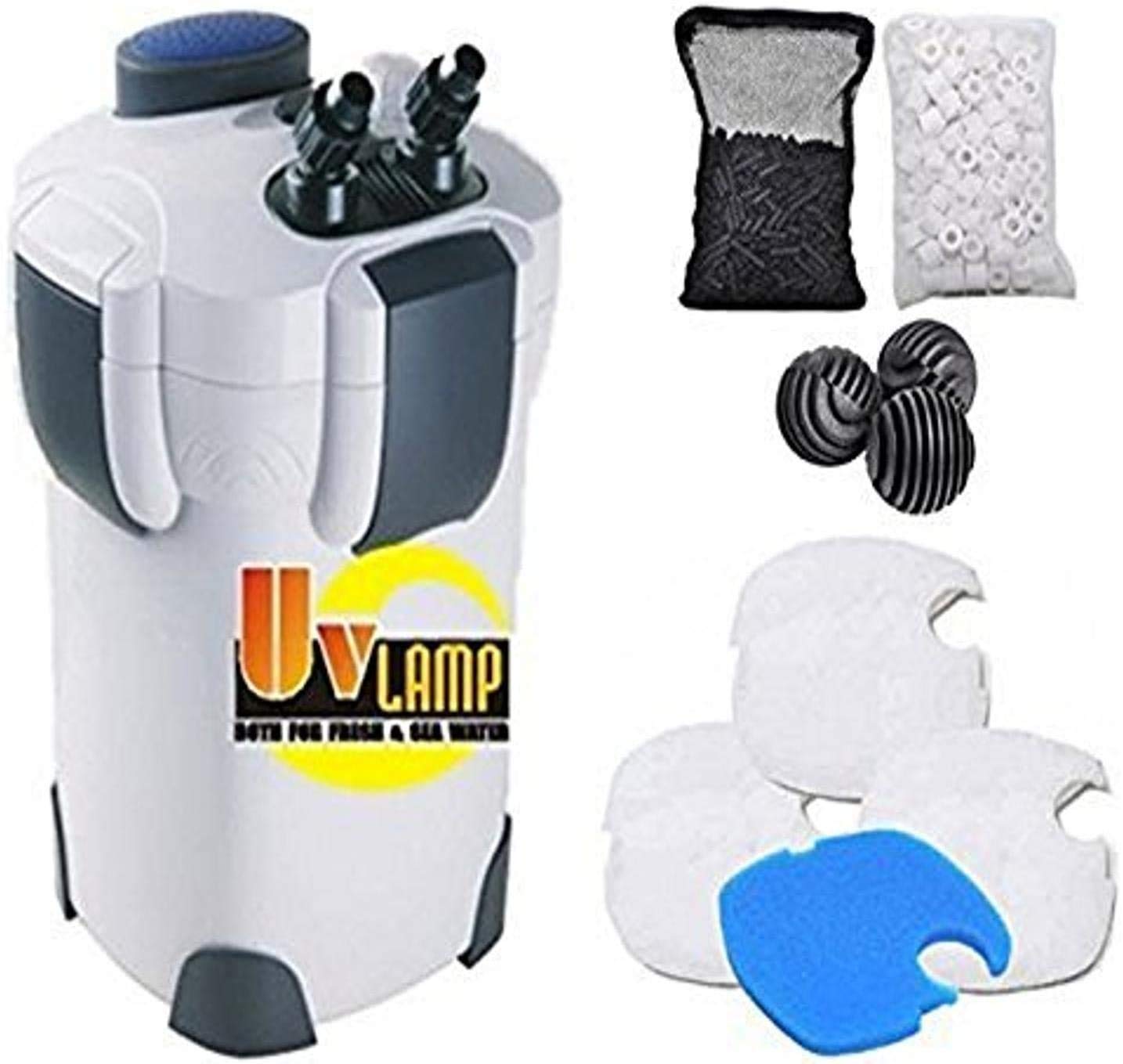
Rating: 4.3 ★ | Price: Mid-Range | Flow Rate: 370 GPH | Media Capacity: 3 large baskets
The built-in 9W UV sterilizer and 370 GPH flow keep 75-gallon tanks clear without breaking the bank. Media capacity is generous – three large baskets – and the pump runs quietly enough for a living room setup.
This filter suits value-conscious aquarists who are comfortable with a hands-on assembly: the plastic fittings require gentle hand-tightening, not overzealous torque, to avoid cracking. Those who prioritize whisper-quiet operation above all may prefer a premium brand like Fluval, but for the price, the HW303B’s noise level is minimal.
Pros
- Includes UV sterilizer and all media at a mid-range price point.
- Quiet performance that keeps 75-gallon water clear with minimal sound.
- Straightforward setup and maintenance with ample media capacity.
Cons
- In very quiet rooms, the pump hum may be slightly more audible than premium brands like Fluval.
- Plastic fittings can crack if over-tightened – worth handling gently during assembly.
For 75-gallon tank owners who want UV sterilization without Fluval pricing, the HW303B delivers reliable filtration with a straightforward setup – just handle the fittings with care.
Best for Quiet, Brand Support
Fluval 407

Rating: 4.5 ★ | Price: Premium | Flow Rate: 383 GPH | Media Capacity: 3 EZ-Lift baskets
The Fluval 407 delivers near-silent operation and tool-free media access that rivals any competitor in this price range—a clear advantage for planted-tank keepers who need adjustable flow without noise. Against the top-pick SunSun HW303B, you gain stronger brand support and parts availability, but you trade the UV sterilizer and pay a premium for quieter running. This filter suits aquarists who prioritize a peaceful living space and easy maintenance, and who value the security of a major brand with widely available replacement parts.
Pros
- Near-silent operation even in quiet living rooms
- Tool-free media access with EZ-Lift handles simplifies cleaning
- Flow rate of 383 GPH reliably clears debris in 75-gallon tanks
Cons
- After prolonged use, the top seal or hose connections may develop leaks – o-ring replacement can be needed within the first year.
- In certain units, the motor may lose prime or stop pumping within the first few months.
For first-time canister buyers who can’t tolerate pump noise, the Fluval 407 is the right call—provided you’re willing to occasionally replace the top-seal o-ring.
Best for Heavy Bioload
Fluval FX4
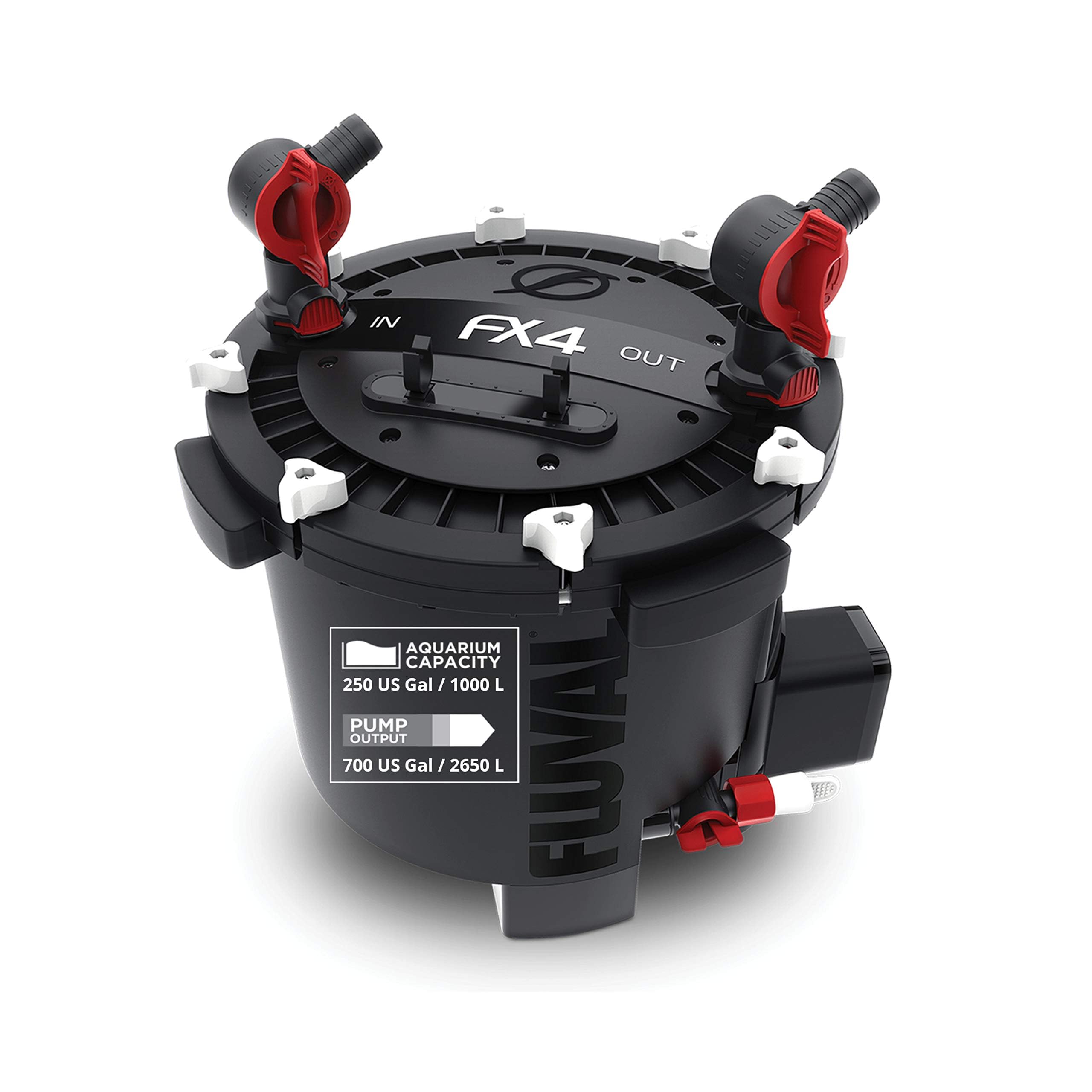
Rating: 4.5 ★ | Price: Premium | Flow Rate: 700 GPH | Media Capacity: 1 gal capacity
With 700 GPH and a full gallon of media capacity, the FX4 moves water aggressively and handles heavy biological loads that would overwhelm smaller canisters. For a standard 75-gallon community tank, this is more filter than needed — the extra flow and media volume only pay off if you keep cichlids, goldfish, or turtles, or intend to move up to a larger aquarium. The 15.6-inch cube footprint requires generous cabinet space, so measure your stand before buying.
Pros
- Pumps 700 GPH — polishes water in large tanks within minutes.
- Smart Pump auto-primes and runs quietly inside a cabinet.
- Media basket holds over a gallon of biomedia for heavy bioloads.
Cons
- Large 15.6-inch cube may not fit under compact stands — measure carefully.
- Motor can fail or lose prime after several months in some cases.
For aquarists who need heavy biological filtration and room to grow, the FX4 delivers — just be sure you have the space and budget.
Best for All-In-One
OASE BioMaster 2
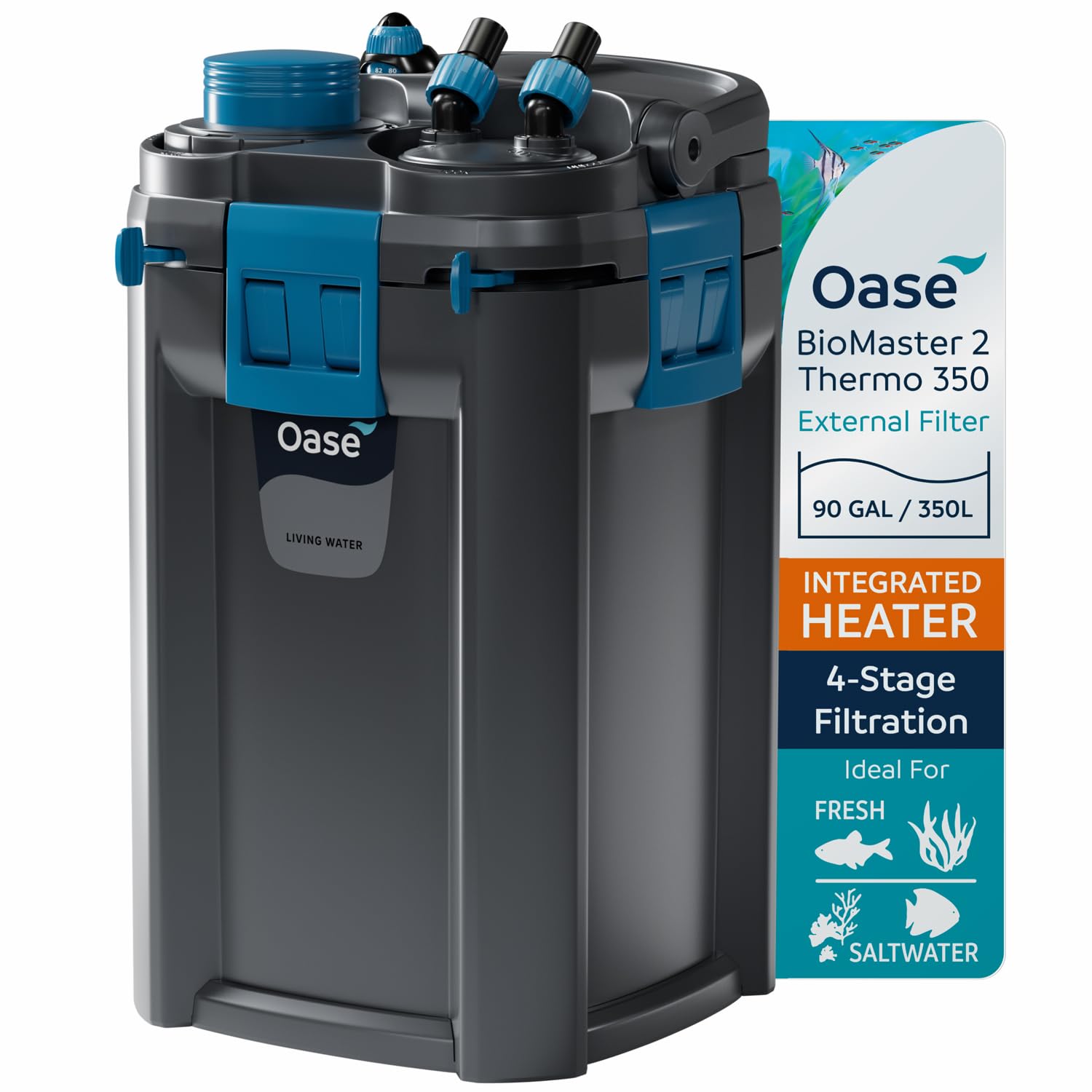
Rating: 4.7 ★ | Price: Luxury | Flow Rate: Up to 90 gal
The OASE BioMaster 2 Thermo 350 is the only external filter that integrates a 100W heater, eliminating the need for a separate heater inside the display tank. This all-in-one design keeps the aquarium clean and reduces equipment clutter. Some units have been noted to trap air, requiring occasional tilting to purge. That minor upkeep makes this a better fit for aquascapers with moderate bioloads who prioritize a clutter-free look and are willing to pay for the convenience.
Pros
- Built-in heater keeps the tank clutter-free and safe for fish.
- Very quiet operation suits living-room setups.
- EasyClean pre-filter allows quick rinsing without opening the main canister.
Cons
- 100W heater may not provide enough heat for high-bioload 75-gallon tanks.
- Premium price limits accessibility for budget-focused buyers.
For aquascapers who value a clean tank and can work around the occasional air purge, the OASE delivers a unique all-in-one solution. Just verify that the 100W heater matches your tank’s heating demands.
Best for Simple & Long
Eheim 2213

Rating: 4.1 ★ | Price: Mid-Range | Flow Rate: Up to 60 gal | Media Capacity: 1 liter media
The Eheim 2213 delivers dead-silent operation and a build quality that can last for decades. Flow becomes marginal once media is loaded, so it struggles as a primary filter on a 75-gallon tank with any significant bioload. This makes it a strong fit for smaller tanks up to 55 gallons or as a secondary filter alongside a higher-flow unit.
Pros
- Known for decades of service and high build quality.
- Extremely quiet – often described as dead silent.
Cons
- Clips and small parts may arrive damaged in some units – inspect upon delivery.
A durable workhorse for smaller tanks or as a back-up, but not the primary choice for a 75-gallon setup.
Best for Water Clarity
Aqueon QuietFlow

Rating: 4.3 ★ | Price: Premium | Flow Rate: Up to 150 gal | Media Capacity: 3 + polishing unit
The Aqueon QuietFlow’s unique polishing stage removes microscopic debris that standard canister filters leave behind, delivering noticeably clearer water in planted or heavily stocked tanks. However, motor failures and brittle plastic components have been reported within the first year, making this a better fit for hobbyists who prioritize water clarity over long-term, hassle-free ownership. For those willing to monitor the filter closely, the polishing unit is a genuine advantage.
Pros
- Polishing cartridge removes fine debris for crystal-clear water that other filters leave behind
- Quiet enough for a bedroom – nearly silent during normal operation
- Straightforward disassembly and washable media simplify routine maintenance
Cons
- Motor may stop pumping within the first year of use
- Plastic parts can crack during maintenance, shortening usable life
For aquarists who want the clearest possible water and accept the chance of early motor issues, the Aqueon QuietFlow’s polishing stage is a unique draw.
Best for High Flow
SunSun HW304B

Rating: 4.1 ★ | Price: Mid-Range | Flow Rate: 525 GPH | Media Capacity: 4 stackable baskets
The HW-304B delivers 525 GPH flow and four media baskets at a mid-range price, suited for tanks over 100 gallons. For a 75-gallon tank, the flow is ample, but leakage from the lid seal and UV housing is more frequent than the HW303B, and plastic parts may degrade over time. Best for those who prioritize high flow and accept minor tradeoffs.
Pros
- Powerful 525 GPH flow handles heavy bioloads in tanks up to 150 gallons.
- Great value with built-in UV sterilizer at a mid-range price.
Cons
- Plastic components may degrade over time, and the UV bulb housing can shatter if handled roughly.
A high-flow option for larger tanks where circulation is critical — choose the HW303B if you value seal reliability over maximum GPH.
Best for Brand Longevity
Penn-Plax Cascade 1000

Rating: 4.3 ★ | Price: Mid-Range | Flow Rate: 265 GPH | Media Capacity: 3 stackable
The Cascade 1000 carries the weight of a brand that’s been in the aquarium business for over six decades, joined by more than 10,000 ratings. Yet the lack of accessible customer feedback means its day-to-day reliability in a 75-gallon setup remains unverified — a situation that suits buyers who trust aggregate scores over individual accounts.
Pros
- Brand longevity spanning over six decades with thousands of aggregated ratings.
- Push-button primer simplifies priming compared to many canister filters.
Cons
- For buyers who need verified owner experiences, the lack of accessible feedback leaves real-world performance unconfirmed.
Best considered if brand heritage and strong aggregate ratings carry more weight than detailed owner testimonials.
Best for Troubleshooter
Marineland Magniflow

Rating: 4.1 ★ | Price: Premium | Flow Rate: 360 GPH
Restores water clarity within 24 hours with quiet operation. However, the valve block and lid seal can develop leaks, and the motor may stop priming — issues that demand comfort with seal replacement and troubleshooting. Best reserved for experienced users who prioritize rapid water clearing and are prepared for periodic maintenance.
Pros
- Clears water quickly – visible improvement within 24 hours
- Quiet operation for a canister filter of this size
Cons
- In a display tank where water spillage risks damage, the valve block and lid seal may develop leaks
Only suitable for experienced aquarists who can handle periodic seal maintenance and accept the possibility of motor issues.
Best for Temporary
SunSun HW302

Rating: 4.2 ★ | Price: Budget | Flow Rate: 265 GPH | Media Capacity: 3 baskets
This budget canister runs quietly and provides adequate filtration for the price. Leakage from the lid seal and hose connections can occur, and plastic components may crack under normal handling. For a 75-gallon display tank, the slightly more expensive HW303B offers fewer compromises and better long-term value.
Pros
- Budget-friendly with solid filtration for the cost
- Quiet operation acceptable for most living spaces
Cons
- Lid seal and hose connections can leak during operation
A usable secondary filter for temporary or low-risk setups where occasional leakage is manageable — not recommended as a primary 75-gallon solution.
Best for Budget Beginner
PONDFORSE Canister
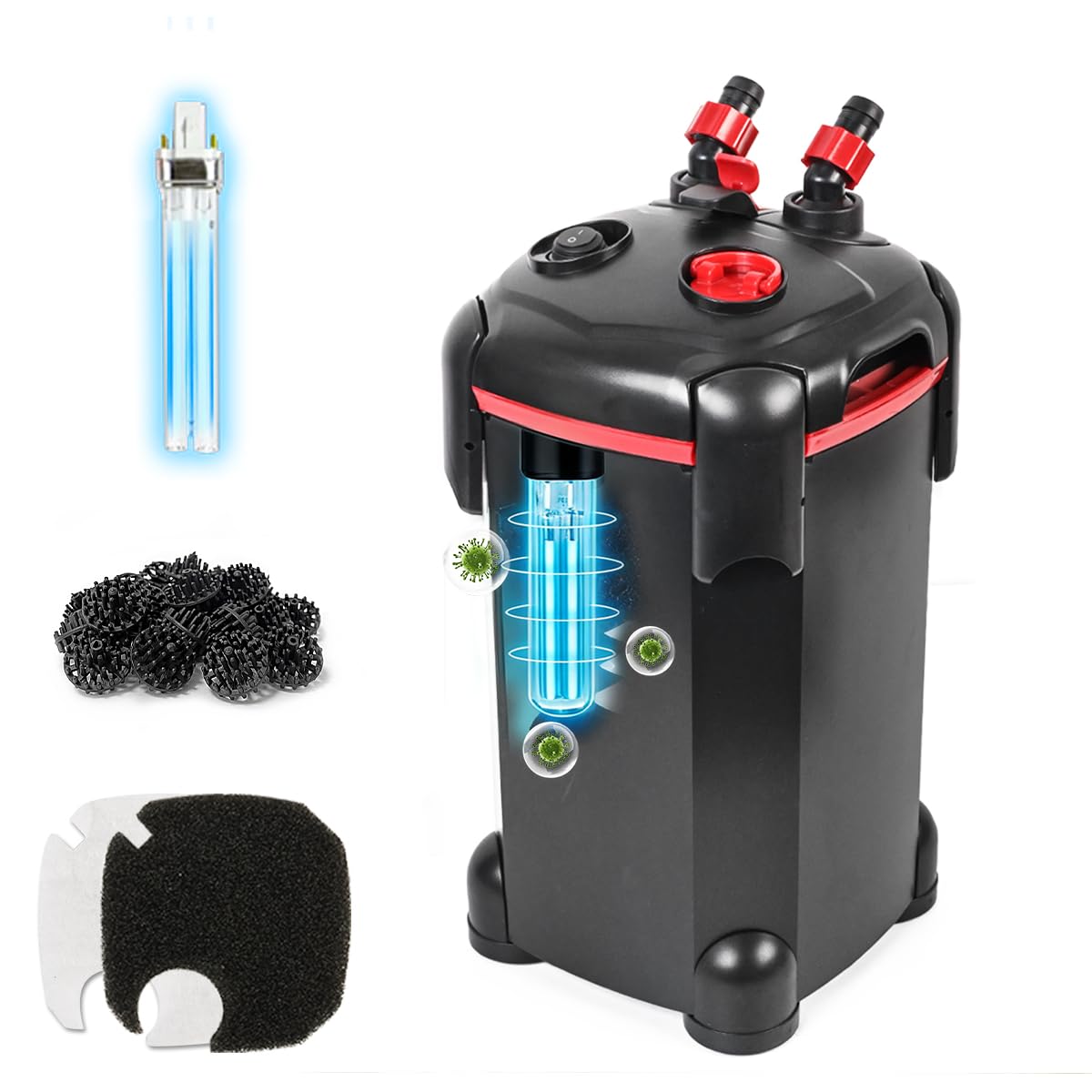
Rating: 4.1 ★ | Price: Budget | Flow Rate: 264 GPH
The PONDFORSE canister delivers exceptional value at a budget price, including a UV sterilizer. It runs quietly. However, for a permanent 75-gallon aquarium, motor reliability is unconfirmed – occasional loss of prime or stoppage has been noted. Best for temporary or backup use where downtime is less critical.
Pros
- Very low price includes UV sterilizer, saving on separate purchase.
- Operates quietly enough for living room placement.
Cons
- In a permanent 75-gallon setup, motor reliability can be a concern – better for temporary use where downtime is acceptable.
A low-cost stopgap for quarantine or backup duty – not durable enough for primary filtration on a valued 75-gallon tank.
How to Choose
Most canister filters claim higher flow rates than they deliver when loaded with media; media volume matters more than raw GPH.
Flow Rate and Turnover
Flow rate (GPH) determines how many times tank water passes through the filter per hour. For a 75-gallon tank, aim for 4–6x turnover (300–450 GPH). But rated GPH is measured with empty media baskets—once you add sponges and bio balls, actual flow drops 20–40%.
A filter rated for 370 GPH may deliver closer to 250 GPH when fully loaded. That’s still sufficient for most community tanks. If you have heavy feeders like goldfish or cichlids, overshoot to 500–700 GPH to maintain clarity.
Media Basket Capacity
More media volume means more surface area for beneficial bacteria and longer intervals between cleanings. A filter with three large baskets (like the SunSun HW303B) can hold a mix of mechanical, chemical, and biological media tailored to your stocking levels.
Media basket layout also matters: stackable baskets allow you to rearrange layers, while single-basket designs limit flexibility. Look for easy access to each media type without dumping everything out.
Included Media
Most canisters ship with basic sponges and carbon, but some include bio balls, ceramic rings, or a UV sterilizer. UV units reduce algae and pathogens but need bulb replacement every 6–12 months—budget for that cost.
Avoid filters that come only with cheap carbon packs; you’ll replace them monthly. Filters with high-quality ceramic media or bio balls save money long-term because those media last for years.
Self-Priming Mechanism
Self-priming filters (e.g., push-button or Smart Pump) restart automatically after power outages or maintenance. Manual-siphon models (like the Eheim 2213) require you to fill the intake hose and create a siphon—a skill that takes practice.
If you travel often or have unreliable power, self-priming is worth the premium. If you’re hands-on and prefer simplicity, a manual design can be just as reliable once you learn the routine.
Leak Prevention and Build Quality
Leaks usually originate from the lid seal (o-ring) or hose connections. O-rings dry out over time; applying silicone grease during each cleaning extends their life. Some filters use valve block designs that reduce spill risk when disconnecting hoses.
Brittle plastic fittings are a common weak point. Look for reinforced connection points and stress-tested seals. A filter with consistently positive feedback on seal integrity (like the SunSun HW303B) is less likely to cause a wet floor.
FAQ
Why does my canister filter keep losing prime after cleaning?
Air trapped in the hoses or head unit is the usual cause. Make sure all hose connections are tight and that the filter is positioned lower than the tank. If your filter has a priming button, press it until water flows steadily. If it still loses prime, check the o-ring for dryness or damage—replace and apply silicone grease.
Can I use a canister filter rated for 100 gallons on a 75-gallon tank?
Yes, and often it’s a smart choice. A filter rated for 100 gallons will run at a lower percentage of its capacity, meaning quieter operation, less frequent cleaning, and extended media life. Just ensure the flow is adjustable (most canisters have valves) so you don’t create a current that stresses smaller fish.
How often should I replace the UV bulb in my canister filter?
UV bulbs lose intensity after 6–12 months of continuous use. Replace the bulb annually to maintain effective sterilization. Mark your calendar—running a dead bulb wastes electricity and gives false confidence. If you notice algae growth returning despite the UV being on, it’s time for a new bulb.
What should I do if my canister filter starts leaking from the top seal?
Turn off the filter and check the o-ring for cracks, flattening, or debris. Clean the o-ring and its groove, apply silicone grease, and reseat the lid. If the leak persists, replace the o-ring (most brands sell spares). For valve block leaks, tighten fittings gently—overtightening can crack plastic housings.