This post contains affiliate links. We may earn a small commission when you buy through our links — at no extra cost to you.
Internal aquarium filters have a dirty secret: many electric submersible models stop working within weeks or months. The failure rate is high enough that relying on one for a permanent setup is a gamble. Sponge filters, which need an external air pump, sidestep this problem entirely — they run for years with minimal fuss and deliver excellent biological filtration.
For tanks with delicate fish like bettas, shrimp, or fry, gentle flow isn’t optional. Sponge filters provide that without the risk of a motor burning out. This guide focuses on the filters that balance reliability, ease of maintenance, and the right flow for your specific setup — so you don’t end up replacing your filter every season.
Top Picks
Best for Fry, Shrimp, Bettas
AQUANEAT Bio Sponge Filter

Rating: 4.7 ★ | Price: Budget | Tank Size: 40–60 gal | Filtration Type: Mechanical + biological | Power Source: Air pump (not incl.)
The AQUANEAT sponge filter uses a large-pore sponge to capture debris while cultivating beneficial bacteria, delivering both mechanical and biological filtration without disturbing sensitive fish. It requires an external air pump (sold separately), but that simplicity translates into long-term dependability and near-zero maintenance — the sponge rinses clean under tap water and rarely needs replacement. Rated for tanks up to 60 gallons, its gentle outflow makes it especially suited for nano tanks, breeding setups, and shrimp enclosures where current must be minimal.
This filter works best for breeders, shrimp keepers, and betta owners who prioritize gentle flow and low maintenance over a clutter-free view or whisper-quiet operation. The 8-inch-tall body can visually dominate a small tank, and the air bubbles produce a steady hum that will be noticeable in quiet bedrooms or offices — tradeoffs that matter less in larger aquariums, living rooms, or dedicated fish rooms where ambient sound masks the noise.
Pros
- Sponge traps debris while cultivating beneficial bacteria for clear, healthy water.
- Gentle outflow protects delicate fry, shrimp, and bettas from stress.
- Easy to clean and maintain — rinse and reuse without replacing cartridges.
Cons
- In smaller tanks, the 8-inch height and 4.5-inch diameter can visually dominate the space.
- Bubble noise from the air stone may be noticeable in quiet rooms — less of an issue in living areas.
For anyone keeping fry, shrimp, or bettas on a budget, this sponge filter delivers dependable biological filtration with minimal current — just be prepared for the bubble noise and its size in smaller setups.
Best for Small-Medium Tanks
Fluval U2
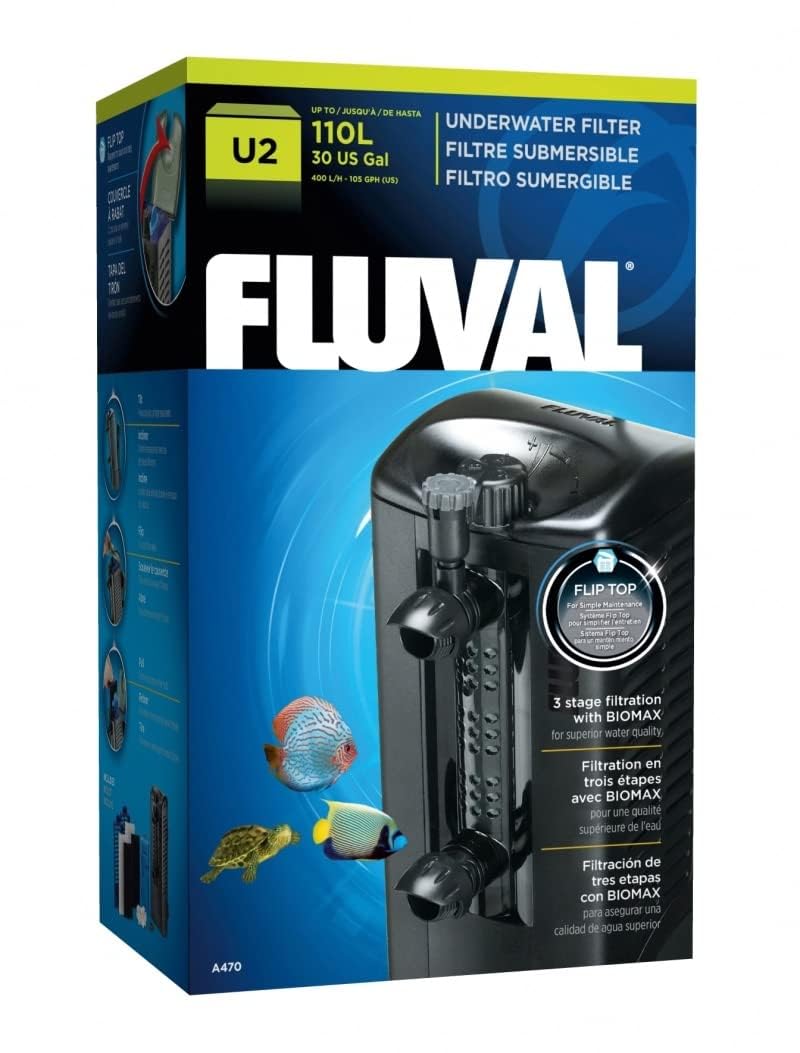
Rating: 4.1 ★ | Price: Premium | Tank Size: Up to 30 gal | Filtration Type: Mech. + bio. + chemical | Power Source: Electric (submersible)
Exceptionally quiet operation and robust build with 3-stage filtration set the Fluval U2 apart from other submersible filters.
This filter is best suited for aquarists with small to medium tanks who prioritize near-silent operation. Motor reliability over the long term is a known vulnerability — some units may stop working within a year. Those who accept this tradeoff will appreciate the solid construction and effective cleaning.
Pros
- Near-silent operation when fully submerged.
- Robust build quality with a premium feel.
- Effective three-stage filtration for tanks up to 30 gallons.
Cons
- Proprietary replacement media costs more than standard foam blocks.
The Fluval U2 is a solid pick for silence-focused aquarists who are comfortable with the potential for motor replacement and higher media expenses.
Best for Turtle & Reptile Tanks
TARARIUM Turtle Filter

Rating: 4.5 ★ | Price: Premium | Tank Size: 20–75 gal | Filtration Type: Mech. + bio. (sponge + ceramic) | Flow Rate: 290 GPH | Power Source: Electric (submersible)
The TARARIUM filter runs in as little as 2.6 inches of water, a rare capability for electric internals. It moves 290 GPH with adjustable flow and a guarded intake, making it a strong match for messy reptile and amphibian enclosures. Unlike sponge filters, which prioritize gentle current and long-term reliability, this unit trades some durability for high output and shallow-water support. Media access from the top simplifies cleaning. Some units may produce cloudy water despite regular maintenance, and pump longevity can vary — choosing a seller with a flexible return policy is a sensible precaution.
Pros
- Quiet operation with adjustable flow stays unobtrusive in most setups.
- Three-stage mechanical and biological filtration keeps turtle tanks clean.
- Top-access media tray makes routine maintenance straightforward.
Cons
Right for turtle keepers who need strong flow and low-water support, but consider a sponge filter if reliability is the top priority.
Best for Planted Tanks
Penn-Plax Undergravel

Rating: 4.4 ★ | Price: Mid-Range | Tank Size: 15–20 gal (high) | Filtration Type: Biological + chemical | Power Source: Air pump / powerhead
This undergravel system cultivates bacteria in the substrate, leading to clear water once the filter matures. It requires an external air pump or powerhead (not included) to operate. Some units arrive with cracked tubes from packaging, so it’s worth inspecting on delivery. This system best suits experienced aquarists with planted tanks using fine gravel who are comfortable with the setup demands.
Pros
- Biological filtration that supports a healthy tank ecosystem.
- Water clarity improves once the system stabilizes.
- Simple assembly with basic tools.
Cons
- Packaging can result in cracked tubes or broken parts upon arrival.
A capable biological filter for those committed to undergravel systems, though QC variability makes a return policy a smart precaution.
Best for Medium Tanks
hygger Double Sponge

Rating: 4.4 ★ | Price: Budget | Tank Size: 15–55 gal | Filtration Type: Mech. + bio. (sponge + ceramic) | Power Source: Air pump (not incl.)
The hygger Double Sponge adds ceramic bio-balls to the standard layout, giving you control over both sponge and loose biological media. It runs on an air pump (not included) and produces bubble noise typical of sponge filters — not silent, but no louder than others. Four extra sponges and a bag of ceramic rings make it a budget-friendly way to keep spares.
This internal filter suits hobbyists who like modular media and gentle flow in tanks 20–40 gallons. Suction cups can lose grip as the sponge gains weight; wedging behind décor or using a heavy base helps. Sharp plastic edges on some units can injure fish, so run a finger along any edge before submerging. It’s a practical alternative to the top pick when customization matters more than absolute simplicity.
Pros
- Multi-stage filtration with replaceable sponges and ceramic bio-media handles mechanical and biological waste well.
- Assembles and disassembles quickly for cleaning.
- Includes extra sponges and ceramic rings, stretching the value for a budget price.
Cons
- Suction cups may not hold the filter securely, especially once saturated sponges add weight.
- Sharp plastic edges on some units can injure fish — inspect before installation.
If customization and spare media matter to you, this filter is a solid alternative worth the minor prep of checking edges and securing placement.
Best for Large Freshwater Tanks
TARARIUM Large Filter

Rating: 4.2 ★ | Price: Mid-Range | Tank Size: 55–150 gal | Filtration Type: Mechanical + biological | Flow Rate: 300 GPH | Power Source: Electric (submersible)
Strong water flow and circulation make this filter effective for large tanks with fish that enjoy current, such as cichlids or goldfish. The sponge is easy to clean. However, motor longevity can vary—some units may stop working after a few months—and the current is too strong for small or delicate fish. Best for experienced keepers who need high flow and can accept possible motor issues.
Pros
- Delivers strong water flow that keeps large tanks well-circulated.
- Sponge design makes cleaning and maintenance simple.
Cons
- Buzzing or vibrating noise may be noticeable in quiet rooms.
This filter suits large cichlid or goldfish tanks where strong flow is desired and occasional motor replacement is acceptable.
How to Choose
Reliability is the single biggest factor: sponge filters outlast most electric internal filters by years.
Tank Size Compatibility
A filter rated for a 20-gallon tank may struggle to keep a 10-gallon clean if it’s oversized for flow, or conversely, you’ll need to oversize for heavy bioloads. Sponge filters are more forgiving — they scale with the air pump you pair them with. Electric filters have a fixed flow rate that must match your tank volume within their published range.
For small tanks (5–10 gallons), avoid high-flow electric models that create strong currents. Sponge filters or low-flow internal units are safer for bettas and shrimp.
Filtration Type
Mechanical filtration removes debris; biological filtration cultivates beneficial bacteria. Chemical filtration (carbon) removes odors and discoloration but needs regular replacement. Many electric filters rely on disposable cartridges that combine all three, driving up ongoing costs. Sponge filters excel at mechanical and biological filtration without cartridges.
If you need chemical filtration (e.g., after medication), look for models with a dedicated carbon media slot. Otherwise, a quality sponge filter alone handles most freshwater tanks well.
Flow Rate and Adjustability
Flow rate measured in GPH tells you how much water moves per hour, but high flow doesn’t equal better filtration — it can stress fish and blow plants. Adjustable flow lets you dial in the right current. Sponge filters have no adjustable flow; you control it by choosing the air pump size.
For a 10-gallon betta tank, a flow rate below 100 GPH or a sponge filter with a gentle air stone is ideal. For cichlids or goldfish, higher flow (200+ GPH) helps handle waste.
Noise Level
Two noise sources exist: the pump motor (electric filters) and bubbling (air-driven filters). Electric filters can develop humming or grinding sounds as motors age. Sponge filters are near-silent except for bubble noise — which can be reduced with a fine-pore airstone or by adjusting the air valve. Air pumps themselves vary in noise; diaphragm pumps are quieter than piston types.
If the filter will sit in a bedroom or living room, prioritize an electric model with a reputation for quiet operation (like the Fluval U2) or pair a sponge filter with a quality silent air pump.
Ease of Maintenance
Electric internal filters typically require disassembling the motor and replacing cartridges every 2–4 weeks. Sponge filters need only a squeeze in old tank water every few weeks — no replacement parts. Undergravel filters need vacuuming of gravel and careful maintenance to avoid clogs.
If you want a low-maintenance setup, a sponge filter is the easiest. If you need chemical filtration, be prepared for ongoing cartridge costs.
Common Mistake
Assuming a higher price means better reliability. Many expensive electric internal filters fail as often as cheap ones. The key is to read past the initial star rating and look at what owners say about durability after 6 months.
FAQ
Why does my aquarium filter stop working after a few months?
Most electric internal filters use small, non-replaceable motors that accumulate debris and overhear. Impeller shafts can warp or become jammed. Sponge filters avoid this entirely because they have no motor — only an air pump that can be swapped separately. For reliability, choose a sponge filter or a premium electric brand with a proven service life.
How can I reduce noise from a sponge filter?
Bubble noise is the main source. Use a fine-pore airstone to produce smaller, quieter bubbles, and add an air control valve to reduce flow. Place the filter in a corner where bubbles break the surface less. Also choose a quiet air pump — diaphragm pumps (like the Tetra Whisper) are louder than linear piston models.
What is the best internal filter for a 10-gallon tank with a betta?
A sponge filter is the safest choice — it provides gentle flow and won’t suck in delicate fins. The AQUANEAT Bio Sponge Filter (large) can be run with a small air pump to keep current minimal. If you prefer an electric filter, choose one with adjustable flow and a low GPH (under 80), but expect to replace it more often.
Can I use a turtle tank filter in a regular fish tank?
Yes, but only if the flow is adjustable and you have robust fish. Turtle filters like the TARARIUM produce strong currents suitable for cichlids or goldfish, not for tetras or bettas. They also take up more space and may not provide fine mechanical filtration needed for small community aquariums.