This post contains affiliate links. We may earn a small commission when you buy through our links — at no extra cost to you.
Many pond filter kits promise crystal clear water but deliver a UV bulb that burns out in weeks and a pump that stops mid-season. The key is knowing which components are actually built to last. This guide breaks down the real differences between models that look identical on paper.
For ponds with fish—whether a few goldfish or a full koi collection—filtration isn’t optional. But spending more doesn’t automatically buy reliability. The sweet spot is the $60–$100 range, where you get UV and pump without paying for a brand name that adds nothing to performance. We focus on what holds up over time: UV bulb replaceability, pump build, and ease of cleaning. A common trade-off is UV wattage: a 13W unit clears green water faster than a 9W, but you’ll pay more. We help you decide if the extra wattage is worth the premium.
Top Picks
Best for Small to Medium
CNZ All-in-One UV Filter
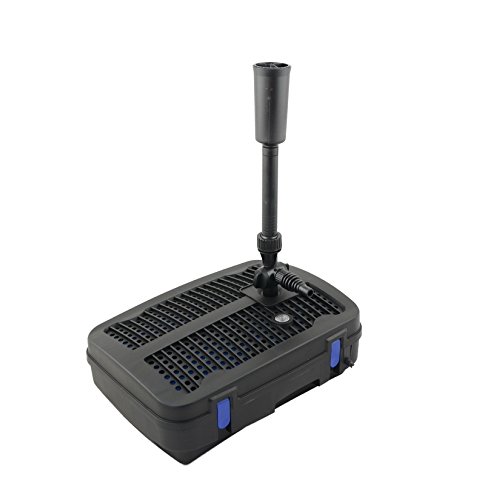
Rating: 4.3 ★ | Price: Mid-Range | Flow & Capacity: 660 GPH | UV Clarifier: 13W UV | Filter Type: Submersible all-in-one | Ease of Cleaning: Removable compartments | Pump Included: Yes
The 13W UV bulb in this all-in-one kit knocks out green water algae within days, a noticeable upgrade over the 9W units common at this price point. The three bio-baskets and foam media provide solid mechanical and biological filtration for small to medium ponds, and the adjustable valve lets you fine-tune flow to your fountain or waterfall.
The filter compartments are accessible for cleaning without tools, though the UV bulb and pump can wear out sooner than external pressurized filters would. This makes the CNZ a better fit for seasonal ponds where replacement every couple of years is acceptable, rather than year-round koi setups that demand consistent long-term reliability.
Pros
- UV and foam-bio filtration clear green water quickly
- Filter compartments open easily for routine cleaning
- 13W UV at a mid-range price with 660 GPH pump
Cons
- UV bulb may stop working after a few months in some units
- Pump can lose performance or stop running after a year of continuous use
For a small seasonal pond where quick algae control is the priority and you’re comfortable budgeting for a replacement unit every couple of years, this kit delivers strong water clarity at a reasonable price.
Best for Large Koi Ponds
OASE BioSmart 5000

Rating: 4.4 ★ | Price: Luxury | Flow & Capacity: 1600-2700 GPH, 5000 gal | Filter Type: External gravity | Ease of Cleaning: One-touch cleaning | Pump Included: No
The BioSmart 5000’s one-touch cleaning and 5000-gallon capacity allow it to handle heavy koi loads with less weekly effort than any submersible filter. It creates crystal-clear water through large foam blocks, but this is a gravity filter requiring a separate pump and UV clarifier — total system cost is high. The solid build and easy maintenance make it a long-term investment for serious pond keepers who accept the upfront expense.
Pros
- Delivers crystal-clear water in large ponds with heavy fish loads.
- Built-in cleaning mechanism makes maintenance quick and easy.
- Solid build quality that holds up over years of outdoor use.
Cons
- Metric hose sizes can require adapter fittings to prevent leakage.
- Replacement foam blocks are pricey and may be hard to source.
For serious koi keepers with large ponds who prioritize low-maintenance biological filtration, the BioSmart 5000 is the right tool — just budget for a pump and UV separately.
Best for Waterfall & Filtration
TetraPond Waterfall Filter

Rating: 4.6 ★ | Price: Mid-Range | Flow & Capacity: Up to 3500 GPH, 1000 gal | Filter Type: Waterfall gravity | Ease of Cleaning: 5-minute setup, hose-off | Pump Included: No
The TetraPond filter delivers a natural waterfall effect while providing biological filtration with its included foam pad and media space. It requires an external pump (not included), and the hose fitting may need silicone sealant to avoid leakage. This works best for pond owners who already have a pump and want a visually appealing filter that integrates into a waterfall feature.
Pros
- Natural waterfall flow that keeps water clear.
- Simple 5-minute setup and easy cleaning.
- Handles pumps up to 3500 GPH for strong flow.
Cons
- Hose fitting may leak without proper sealing – worth applying silicone sealant.
- Requires a separate pump; total cost increases.
A good fit for pump owners who prioritize a natural waterfall look over an all-in-one kit, provided you’re comfortable with a quick seal fix.
Best for Small Ponds Combo
Pond Boss Filter Kit with Pump

Rating: 4.4 ★ | Price: Mid-Range | Flow & Capacity: 320 GPH, 500 gal | Filter Type: Submersible filter box with pump | Ease of Cleaning: Removable pads | Pump Included: Yes
This kit bundles a submersible pump, bio-ball filter box, and diverter valve that can run a fountain or waterfall together. For ponds up to 500 gallons, the 320 GPH flow keeps water clear with good mechanical and biological filtration. First-time pond owners get everything needed out of one box.
The tradeoff for skipping UV is that green water may persist in ponds with heavy sunlight or fish loads. The filter box floats and needs a few rocks inside to stay submerged — a minor setup step. This kit suits owners who want a simple, complete mechanical-biological filter without UV maintenance, and who can manage algae through shade or partial water changes.
Pros
- Everything included: pump, bio-balls, and fountain/waterfall diverter in one box.
- Effective mechanical and biological filtration for ponds up to 500 gallons.
- Good value for a pump-and-filter combo at a mid-range price.
Cons
- Green water can persist without UV clarification in ponds with ample sunlight or fish waste.
- Filter box floats and may need to be weighted down with rocks to stay fully submerged.
A straightforward, complete starter kit for small ponds where UV isn’t required — sets up quickly and cleans water reliably without extra purchases.
Best for Waterfall & Filtration
Aquascape Waterfall Filter

Rating: 4.6 ★ | Price: Mid-Range | Flow & Capacity: 1000 gal max | Filter Type: Waterfall gravity | Ease of Cleaning: Easy clean, hose-off | Pump Included: No
With a 5-year limited warranty and thick composite construction, the Aquascape 77020 stands out from typical submersible kits. It’s designed for ponds up to 1000 gallons and creates an attractive waterfall while providing mechanical and biological filtration. However, it does not include a pump or biological media—those must be purchased separately. The hose fitting may need sealing, a manageable step during setup. This filter suits pond owners who already have a pump and prioritize long-term build quality and brand support over the convenience of an all-in-one kit.
Pros
- Durable composite material backed by a 5-year warranty.
- Produces a pleasing waterfall effect while filtering mechanically and biologically.
Cons
- Biological media is not included, adding to the initial cost and setup steps.
For pond owners with an existing pump who value a sturdy build and warranty over all-in-one convenience, this filter delivers reliable performance with a natural waterfall — just factor in the extra media purchase.
Best for Pump Pre-Filter
TetraPond Flat Box Filter

Rating: 4.3 ★ | Price: Budget | Flow & Capacity: 500 gal | Filter Type: Submersible flat box | Ease of Cleaning: Hose-off foam pads | Pump Included: No
For pond keepers on a tight budget, the TetraPond Flat Box Filter delivers effective pump protection at an entry-level price. Its coarse and fine foam pads catch debris before it reaches your pump, keeping mechanical load low and rinsing clean in minutes. However, this is not a complete filtration solution — there’s no biological media or UV clarifier, so it won’t address green water or ammonia. It also floats unless weighted down with a rock or brick. This makes it best suited for DIY pond keepers who already have a pump and want a simple, easy-to-clean pre-filter for ponds up to 500 gallons.
Pros
- Catches debris before it reaches your pump, keeping pond water clear.
- Foam pads rinse clean under a hose in minutes, no tools required.
- Includes three different hose fittings to match most small pond pumps.
Cons
- Needs a rock or brick on top to keep it submerged — lid can also pop off.
- Only mechanical filtration; won’t clear green water or process fish waste.
If you already own a pump and just need affordable debris protection, this flat box filter does the job. But if you’re looking for a complete pond filtration system, consider a model with UV and biological media instead.
Best for Fountain & Uv
Goplus 4-in-1 Submersible Filter

Rating: 4.4 ★ | Price: Mid-Range | Flow & Capacity: 660 GPH | UV Clarifier: 9W UV | Filter Type: Submersible all-in-one | Ease of Cleaning: Removable compartments | Pump Included: Yes
The Goplus combines a 660 GPH pump, 9W UV clarifier, and three fountain nozzles at a competitive price, effectively clearing green water in small ponds. However, the UV lamp can stop working within months, and pump durability is inconsistent — making it a better fit for seasonal or temporary use than a long-term solution.
Pros
- Clears green water quickly with the UV/filter combination
- Removable filter compartments make cleaning simple
Cons
- UV lamp may fail early and replacement bulbs can be difficult to source
Best for budget-conscious buyers with small ponds who want fountain features and can accept the possibility of a shorter UV lifespan; the top pick offers better reliability with a 13W UV for a small price increase.
Best for Medium-Large Ponds
VIVOHOME Pressurized Filter
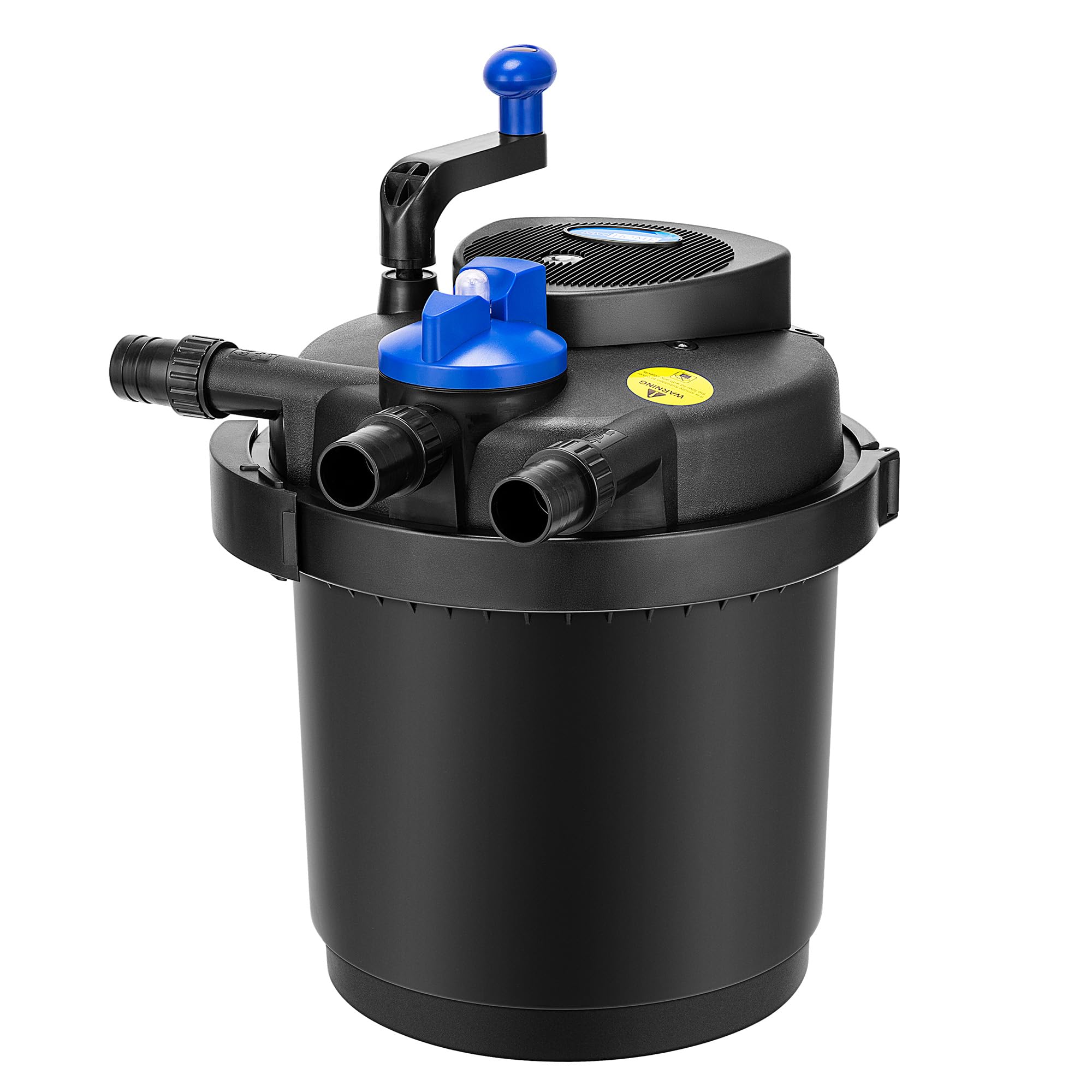
Rating: 4.2 ★ | Price: Premium | Flow & Capacity: 1580 GPH, 1600 gal | UV Clarifier: 13W UV | Filter Type: External pressurized | Ease of Cleaning: Backwash function | Pump Included: No
Fast water clearing and convenient backwash make this pressurized filter effective for medium to large ponds. Occasional UV bulb replacement and possible water leakage at the lid mean it suits buyers comfortable with minor sealing adjustments rather than those wanting a maintenance-free system.
Pros
- Clears pond water rapidly, often showing visible improvement overnight
- Backwash feature simplifies cleaning without disassembly
Cons
- UV bulb may need early replacement, and occasional water leakage from the lid or UV housing may require careful sealing
A solid option for pond owners who don’t mind a bit of tinkering and want fast filtration on a budget.
Best for Small Pond Pre-Filter
TotalPond Universal Filter Box

Rating: 4.6 ★ | Price: Budget | Flow & Capacity: 500 gal | Filter Type: Submersible pre-filter | Ease of Cleaning: Weekly hose-down | Pump Included: No
The TotalPond Universal Pump Filter Box is a budget-friendly pre-filter that keeps pump intakes clear of leaves and muck. It is easy to install and clean with a hose-down. Designed for ponds under 500 gallons, this unit protects your pump but is not a standalone filter. It works well as a protective add-on for small decorative ponds.
Pros
- Traps debris to keep pump intake clear and extend pump life.
- Easy to install and rinse clean with a hose.
Cons
- Plastic box may float in water; needs a brick or rock inside to stay submerged.
- Limited interior space may not fit larger pumps with filter media in place.
Best used as a pump protector for ponds under 500 gallons, not as the main filter for fish-heavy setups.
Best for Tiny Ponds
Danner Pondmaster PMK 190

Rating: 4.2 ★ | Price: Mid-Range | Flow & Capacity: 190 GPH | Filter Type: Submersible kit with pump | Ease of Cleaning: Double-layer pads | Pump Included: Yes
Straightforward pump/filter for ponds under 100 gallons — easy to clean and budget-friendly for seasonal use. Pump longevity can be inconsistent, with some units stopping within months, and flow rate is limited. Best for temporary ponds where annual replacement is acceptable.
Pros
- Straightforward filter pump for very small ponds
- Easy to clean and maintain
Cons
- Pump longevity may be inconsistent; some units stop working within months
A cost-effective pick for seasonal ponds under 100 gallons — just be prepared for possible pump replacement within a year.
Best for Small Ponds Starter
POPOSOAP 660 GPH Filter Kit

Rating: 4.3 ★ | Price: Mid-Range | Flow & Capacity: 660 GPH, 1180 gal | Filter Type: Submersible all-in-one | Ease of Cleaning: Removable sponges | Pump Included: Yes
This kit includes sponges, bio-balls, and ceramic rings — more biological media than many competitors — but its long-term dependability is less certain, making it best suited for seasonal or lightly stocked ponds. The included pump and fountain turn the unit into a complete water feature for a mid-range price.
Pros
- Complete kit with pump, bio-media, and fountain
- Easy to assemble and maintain
Cons
- The pump can stop working within a few months, which matters for continuous operation.
If you want more bio-media than the top pick and can accept possible pump replacement, this kit offers a cost-effective starting point.
Best for Budget Uv Filter
VIVOHOME 530 GPH Filter Pump

Rating: 4.3 ★ | Price: Mid-Range | Flow & Capacity: 530 GPH, 920 gal | UV Clarifier: UV (wattage not specified) | Filter Type: Submersible all-in-one | Ease of Cleaning: Removable compartments | Pump Included: Yes
Clears green water quickly for small ponds, and the included fountain nozzles add value. However, UV bulb and pump reliability can vary, and the filter housing may be difficult to open for cleaning. This makes it a reasonable choice for temporary setups where occasional part replacement is acceptable.
Pros
- Cuts through green water within days for small ponds.
- Includes multiple fountain nozzles at a budget price.
Cons
- UV bulb and pump may need replacement sooner than expected in continuous use.
Only consider for short-term or seasonal pond use where you’re prepared to monitor and swap components as needed.
How to Choose
The right pond filter depends more on your pond’s fish load and algae situation than on the price tag.
Flow Rate & Pond Size
Flow rate (GPH) determines how many times the pond volume cycles each hour. A good rule is to cycle the entire pond volume at least once per hour. For koi ponds with heavy waste, aim for 1.5 to 2 times per hour. Pond capacity ratings assume minimal fish load; if you have koi or lots of leaves, reduce the listed capacity by 30-50%.
UV Clarifier
UV clarifiers kill free-floating algae, turning green water clear. The wattage determines the kill rate: 9W is enough for small ponds under 500 gallons, while 13W handles up to 1000 gallons. The hidden trade-off is that UV bulbs are consumables—they lose effectiveness after 6-12 months of continuous use. Always check that replacement bulbs are available and affordable before buying a filter, especially from lesser-known brands.
Filter Type
Submersible all-in-one units are the easiest to install—just drop in the pond. But they sit in the water, so cleaning requires pulling them out, and they can’t handle heavy fish loads as well as external filters. External pressurized filters sit outside the pond and use a pump to push water through; they’re harder to install but much easier to maintain with backwash drains. Waterfall gravity filters combine aesthetics with biological filtration, but require a separate pump and proper sealing to avoid leakage.
Ease of Cleaning
Cleaning frequency directly affects water quality. Filters with removable foam pads or sponge compartments let you rinse the media without disassembling the whole unit. Backwash capable pressurized filters are the easiest—just turn a valve to flush out debris. The trade-off is that submersible filters often require you to lift a heavy, slimy box out of the water, which many owners find unpleasant. If you dislike maintenance, prioritize backwash or quick-release designs.
Pump Included
Some filters come with a pump, others don’t. Buying a kit with pump included saves the guesswork of matching flow rates, but the pump quality often matches the filter’s price point. Higher-end external filters rarely include pumps partly because serious pond keepers prefer to select a pump that fits their specific head height and pipe runs. If you already have a pump, a filter-only option can be more cost-effective.
FAQ
Why does my pond filter UV light stop working after a few months?
UV bulbs have a limited lifespan—typically 6 to 12 months of continuous use—and lose effectiveness gradually. Early failure within weeks usually indicates a defective bulb or a power supply issue. Always buy filters where replacement bulbs are widely available, and consider turning off the UV for a few hours each day to extend its life if algae isn’t severe.
Can a submersible pond filter handle a koi pond with heavy waste?
Submersible all-in-one filters are best for small to medium ponds with light fish loads (goldfish, not koi). Koi produce a lot of waste and need higher biological filtration capacity. For koi ponds, an external pressurized or gravity filter with larger media volume and a separate pump is more reliable. Submersible units often clog quickly and can’t keep up with ammonia production.
How often should I clean the sponge in my pond filter?
Clean the sponge every 1 to 2 weeks during peak algae season (summer). Rinse it in a bucket of pond water—not tap water, which kills beneficial bacteria. If you notice reduced water flow from the waterfall or fountain, it’s time to clean. Overcleaning can crash the biological filter, so avoid scrubbing the sponge too aggressively.
Is a pressurized pond filter better than a submersible one for a 1000 gallon pond?
For a 1000 gallon pond with fish, a pressurized external filter is generally better because it offers easier cleaning (backwash), higher media volume, and doesn’t take up space inside the pond. However, it requires a separate pump and careful hose sealing to prevent leaks. Submersible all-in-one units can work for 1000 gallon ornamental ponds with no fish, but for koi, go with pressurized.