This post contains affiliate links. We may earn a small commission when you buy through our links — at no extra cost to you.
Every bacteria starter bottle claims to ‘instantly cycle’ your tank, but anyone who has waited weeks for ammonia to drop knows the reality is different. The difference between a product that works and one that doesn’t often comes down to bacteria viability, dosing protocol, and your tank’s specific water chemistry.
This guide cuts through the marketing to focus on which starters consistently deliver. Whether you’re cycling a first 10-gallon freshwater tank or managing nutrient loads in a reef system, we’ve matched each product to the job it actually does well.
Top Picks
Best for New Tank Cycling
API Quick Start 4 oz

Rating: 4.8 ★ | Price: $ | Compatibility: Freshwater and saltwater | Bottle Volume: 4 oz (118 mL)
API Quick Start introduces live nitrifying bacteria that establish biological filtration in a single dose — no multi-day regimen required. Its 4-ounce bottle treats small to medium tanks (up to about 100 gallons) and works in both freshwater and saltwater, making it the most broadly compatible option in this category. The straightforward dosing instructions and clear water after application suit new aquarists and those who want a no-fuss cycling start.
The catch: effectiveness can vary depending on storage conditions and water chemistry — a small number of tanks may not cycle even after prolonged use. That tradeoff is manageable for most beginners because Quick Start is budget-friendly enough to re-dose, and its large user base confirms consistent results in standard setups. This is not a multi-strain advanced formula (that role belongs to Seachem Stability), but for the majority of hobbyists looking to cycle a new tank or boost bacteria after a water change, it does the job reliably.
Best for beginners cycling a new tank, small to medium aquariums, and fish-in cycling when combined with a detoxifier. If you have a very large tank (over 100 gallons) need a more concentrated formula, or prefer a week-long dosing protocol, consider the multi-strain alternative instead. For everyone else, this is the simplest, most affordable way to get biological filtration running.
Pros
- Works in both freshwater and saltwater without separate formulas.
- One-time dose eliminates daily tracking; simple to pour and forget.
- Lower price per dose than multi-strain starters for tanks under 100 gallons.
Cons
- In tanks with unusual water chemistry or after improper storage, cycling may not start — a second dose sometimes helps.
- Single bottle insufficient for tanks over 100 gallons; plan on buying multiple or a larger alternative.
For most aquarists cycling a small to medium tank, API Quick Start delivers dependable bacterial at a budget-friendly price with minimal effort.
Best for All Tank Sizes
Seachem Stability 16.9 oz

Rating: 4.8 ★ | Price: $$ | Compatibility: Freshwater and saltwater | Bottle Volume: 16.9 oz (500 mL)
The 7-day regimen with aerobic and anaerobic strains offers a controlled approach to cycling new tanks. This contrasts with single-dose starters, suiting hobbyists who monitor water parameters closely. Consistent daily dosing is required — skipping a day may stall progress. Works across freshwater and saltwater setups. For those willing to follow the protocol, Stability provides a methodical path to establishing biological filtration.
Pros
- Multi-strain formula covers aerobic, anaerobic, and facultative bacteria.
- Reduces ammonia spikes during the initial cycling period.
- Suitable for both freshwater and marine aquariums.
Cons
- Requires daily dosing for seven consecutive days; missing a dose can delay cycling.
For aquarists who prefer a hands-on cycling regimen with multiple bacteria strains, Stability delivers reliable results.
Best for Large Freshwater Aquariums
FritzZyme 7 32 oz
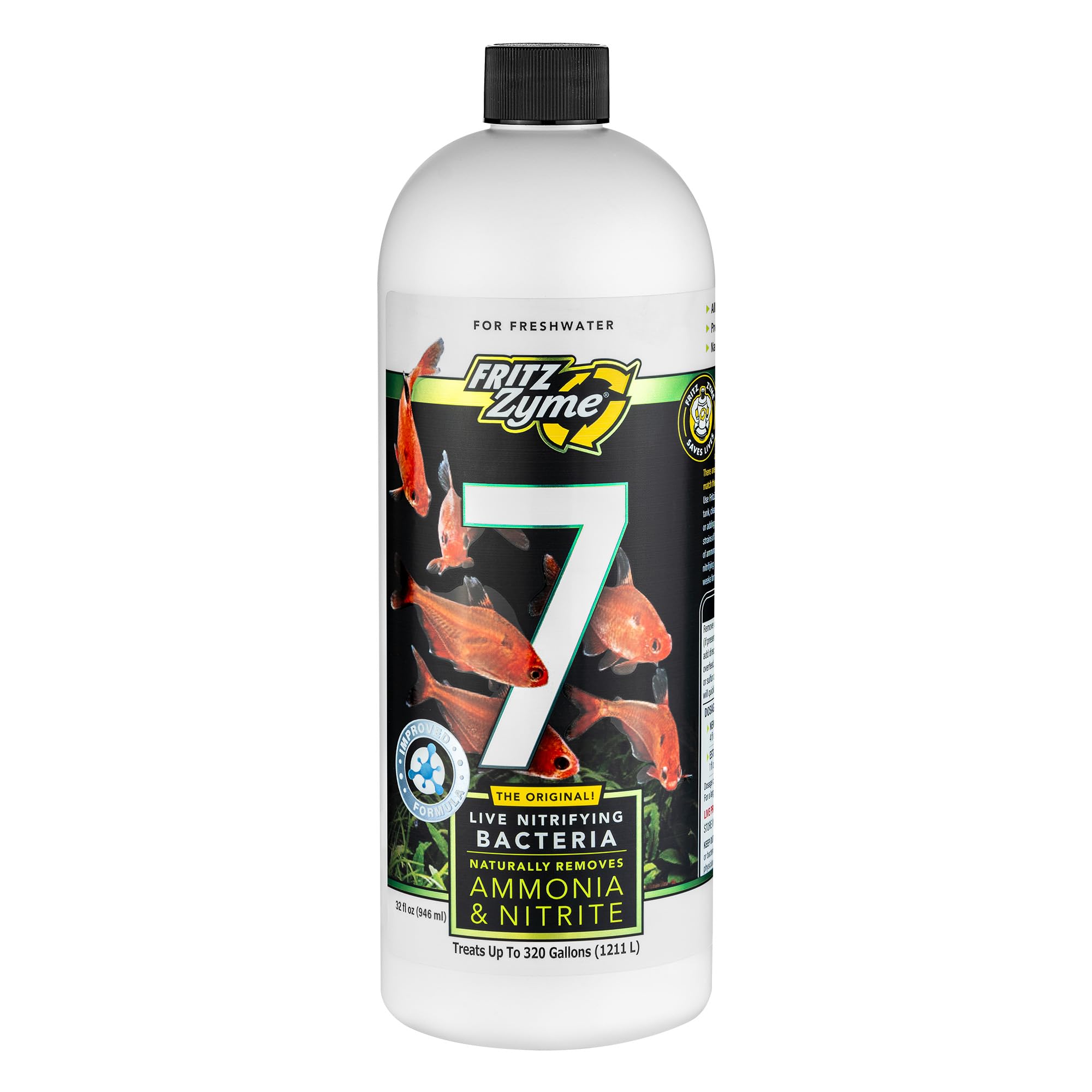
Rating: 4.6 ★ | Price: $$ | Compatibility: Freshwater only | Bottle Volume: 32 oz (946 mL)
Treating up to 640 gallons, this bottle provides an economical solution for large aquariums or multi-tank freshwater setups. Unlike the top pick’s universal formula, it is engineered for freshwater ecosystems, which keeps the per-gallon price low but excludes saltwater hobbyists. Occasional reports of expired product upon delivery mean checking the date stamp before dosing is a necessary step; a fresh bottle reliably accelerates cycling and improves water quality after water changes.
Pros
- Best per-gallon value for large aquariums and multiple tanks
- Reliable for both new tank cycling and post-change water stabilization
- Supports clear water and robust fish health
Cons
- Bottles may arrive expired, requiring a date check before use
For freshwater aquarists with large tanks, this is a cost-effective choice that demands a quick freshness check before dosing.
Best for Freshwater All Sizes
Tetra SafeStart 250 mL
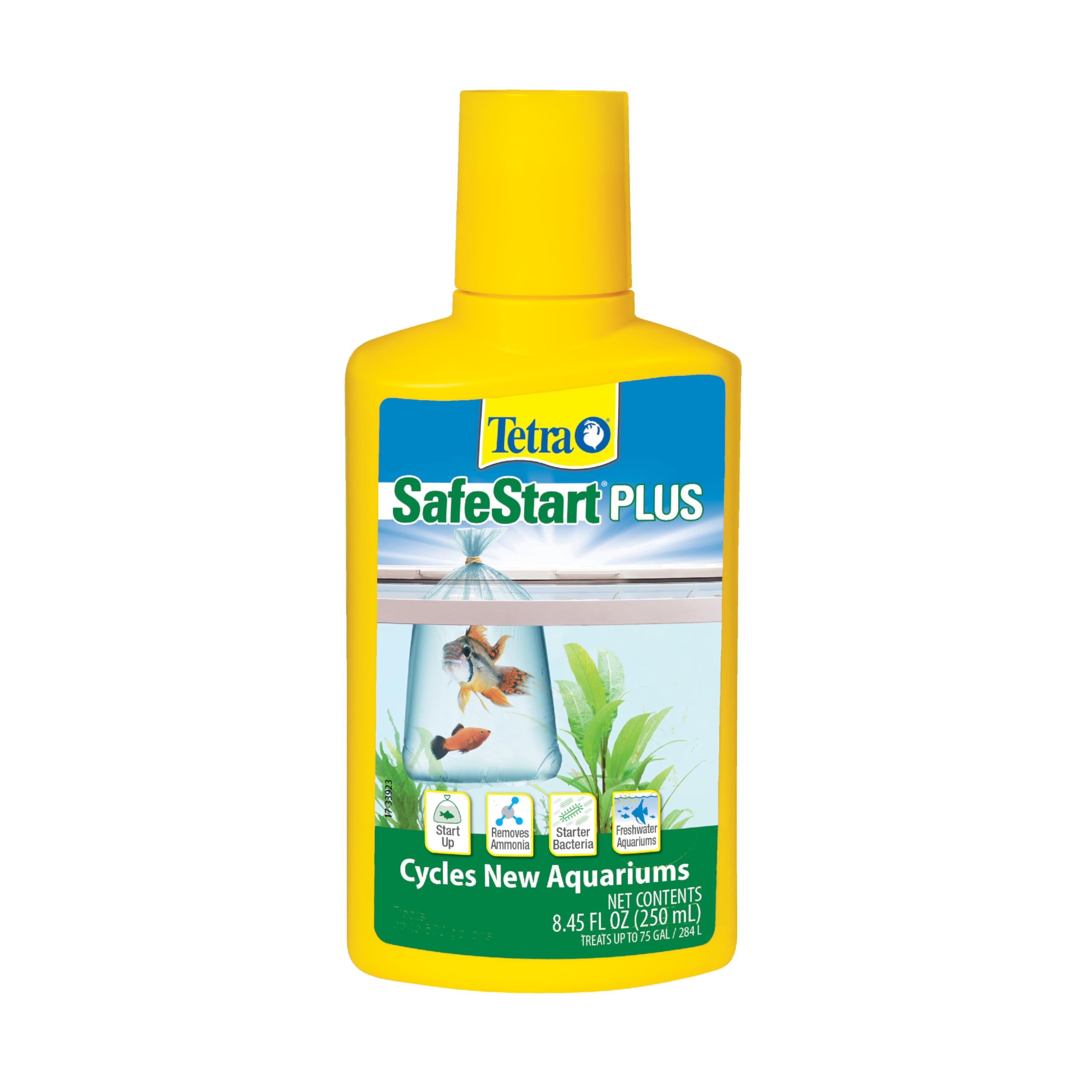
Rating: 4.6 ★ | Price: $$ | Compatibility: Freshwater only | Bottle Volume: 250 mL (8.5 oz)
Tetra SafeStart is a recognized option for freshwater cycling, especially when fish are already in the tank and regular water changes are part of the routine. The top pick offers simpler single-dose handling and a lower price, but Tetra’s brand familiarity and fish-in compatibility give it an edge for new owners who want a trusted name without a multi-day regimen.
This starter suits freshwater beginners who prefer a straightforward one-shot application and are comfortable monitoring ammonia during fish-in cycling. Effectiveness can vary with water chemistry and heavily stocked tanks, and the 250 mL bottle is smaller than some alternatives – better for standard aquariums than large or multiple tanks.
Pros
- Widely recognized brand with high effectiveness for cycling new freshwater tanks.
- Cycle times reported as fast, helping reduce new tank syndrome onset.
- Designed for fish-in cycling, lowering stress on fish during tank establishment.
Cons
- Effectiveness may be inconsistent depending on water conditions, particularly in heavily stocked tanks.
A solid choice for freshwater beginners who trust the Tetra name and plan to cycle with fish, though larger tanks or heavy stocking may call for a bigger bottle or alternative.
Best for Reef Tanks
Brightwell MicroBacter7 16.9 oz

Rating: 4.7 ★ | Price: $$$ | Compatibility: Freshwater and saltwater | Bottle Volume: 16.9 oz (500 mL)
MicroBacter7 reduces nitrate and phosphate through carbon dosing, giving reef keepers a precise tool for water clarity and algae control. It requires consistent dosing and is priced higher than basic starters, making it a niche choice for established tanks rather than new setups. Unlike the one-dose simplicity of the top pick, this bioculture demands an understanding of carbon dosing and nutrient balance, suited for experienced aquarists managing established systems.
Pros
- Reduces nitrate and phosphate levels effectively for clearer water and less algae.
- Supports both cycling and ongoing biological filter maintenance in saltwater and freshwater.
- Contains aerobic and anaerobic bacteria plus enzymes for comprehensive biofilter support.
Cons
- In reef tanks, removing too much nitrate may slow coral growth – a tradeoff for nutrient control.
- Premium pricing makes it less cost-effective for simple cycling or freshwater-only tanks.
A nutrient-control bioculture for advanced reef keepers who need precise management, not a budget cycling starter.
Best for Small Tanks
Microbe-Lift Nite-Out 8 oz

Rating: 4.6 ★ | Price: $ | Compatibility: Freshwater and saltwater | Bottle Volume: 8 oz (237 mL)
MICROBE-LIFT Nite-Out II offers the fastest ammonia and nitrite reduction in small tanks at a budget price, making it a go-to for emergencies or quick cycling of nano aquariums. Unlike the simpler one-dose top pick, this bottle requires deliberate handling: the lid can be very difficult to open, and the liquid may carry a strong sulfur odor. These quirks are manageable for budget-focused beginners with tanks under 20 gallons who prioritize low cost and fast results over convenience.
Pros
- Fast-acting for reducing ammonia and nitrite in small tanks
- Budget-friendly entry price for tanks under 20 gallons
- Fish thrive with regular use in nano setups
Cons
- Bottle lid can require tools or significant effort to open
- Liquid may have a strong sulfur smell that can be unpleasant
For nano tank owners on a tight budget who can overlook a stubborn lid and sulfur odor, this delivers fast ammonia control at the lowest price.
Best for General Aquariums
Fluval Cycle 16.9 oz

Rating: 4.7 ★ | Price: $$ | Compatibility: Freshwater and saltwater | Bottle Volume: 16.9 oz (500 mL)
Fluval Cycle works effectively in both freshwater and saltwater aquariums to establish nitrifying bacteria, with improved water clarity noted after dosing. Its competitive price per bottle makes it a budget-friendly option compared to multi-strain formulas like Stability. The product does not include the step-by-step dosing guide found in top picks — suited for aquarists who already know their dosing. Temporary cloudiness may appear after each dose, but it clears within hours and does not affect cycling.
Pros
- Establishes beneficial bacteria in fresh and saltwater tanks effectively.
- Dosing is associated with clearer water in many setups.
Cons
- Temporary cloudiness can appear after dosing — usually clears on its own.
Best for experienced aquarists who want a cost-effective bacteria starter without needing a detailed dosing protocol.
Best for Small Freshwater
Brightwell Start XLF 4.2 oz

Rating: 4.6 ★ | Price: $ | Compatibility: Freshwater only | Bottle Volume: 4.2 oz (125 mL)
Brightwell MicroBacter Start XLF packs concentrated nitrifying bacteria into a small bottle, ideal for tanks under 20 gallons. Quick cycling is possible in some cases, and it supports maintenance. However, batch-dependent variability means some bottles may not cycle the tank, making it less predictable than top picks for critical cycling.
Pros
- Ultra-concentrated 15x formula means a small bottle treats many doses for nano tanks.
- Some tanks cycle within a week with this starter, cutting down the waiting period.
Cons
- Batch-dependent consistency means some bottles may not initiate cycling as expected.
A space-saving option for small freshwater tanks, best when you can accept variable cycling success and have a backup plan.
Best for Beginners Small Tank
Seachem SureStart 3x100ml

Rating: 4.8 ★ | Price: $$ | Compatibility: Freshwater and saltwater | Bottle Volume: 3 × 100 mL
This three-bottle kit packs Prime dechlorinator, Stability bacteria, and Pristine enzyme cleaner for a coordinated start. The small 100 mL bottles suit nano tanks well but run out quickly in larger setups. Newcomers with a small tank get a convenient one-box solution, though per-volume cost is higher than buying full sizes separately.
Pros
- Three essential treatments in one kit simplify the setup process.
- Effective for cycling new tanks and routine maintenance in small aquariums.
Cons
- 100 mL bottles may not last long for larger tanks or frequent water changes.
Best for beginners with tanks under 20 gallons who want a one-stop kit, even if per-dose cost is higher.
How to Choose
A bacteria starter’s effectiveness depends more on the live bacteria viability and your tank’s water chemistry than on marketing claims like ‘instant cycle’.
Bacteria Strains and Their Roles
Most starters contain aerobic bacteria that consume ammonia and nitrite, which is sufficient for new tanks. Some products add anaerobic and facultative strains to also break down nitrate in established systems.
If you plan to maintain a mature tank prone to nitrate buildup, a multi-strain formula can reduce the need for water changes. For a simple cycle, aerobic-only starters work fine and are often cheaper.
Freshwater vs Saltwater Use
Not all bacteria survive in both environments. Products labeled for freshwater only contain species that thrive in low salinity, while dual-use starters must include halotolerant strains that work in marine conditions.
If you keep a reef tank or plan to convert a tank from fresh to saltwater, choose a bacteria starter explicitly tested for both. Using a freshwater-only product in saltwater wastes money and extends cycling time.
Dosage Requirements and Convenience
Some starters require a single dose at setup, while others demand daily dosing for a week. Single-dose options are simpler but rely on the bacteria surviving the initial shock of the tank environment.
Daily dosing protocols gradually build a biofilm and can be more reliable for heavily stocked tanks or fish-in cycling. Choose based on how much effort you can commit during the first week.
Bottle Size and Cost Per Dose
Larger bottles offer a lower cost per dose, but bacteria have a limited shelf life. A 32-oz bottle is ideal for a 75-gallon tank but may go bad before a small tank owner finishes it.
For nano tanks, a small 4–8 oz bottle often provides enough doses for several months. Always check the number of treatments per bottle against your tank volume and water change frequency.
Storage and Expiration Dates
Live bacteria are perishable. Some products are shelf-stable for up to a year at room temperature, while others require refrigeration to maintain potency. Heat exposure during shipping can kill bacteria even before you open the bottle.
Always verify the expiration date on arrival. A foul rotten-egg smell often indicates dead bacteria, and the product should be replaced. Proper storage extends effectiveness, especially in warm climates.
FAQ
Can I add fish immediately after using API Quick Start?
No, even with bacteria starters, the nitrogen cycle takes time. API Quick Start speeds up bacteria colonization, but you should still monitor ammonia and nitrite levels and wait until they drop to zero before adding fish. Typically this takes 1–2 weeks with daily testing.
Does Seachem Stability work for saltwater aquariums?
Yes, Stability is formulated for both freshwater and marine aquariums. It contains bacteria strains that adapt to saltwater conditions. Follow the same 7-day dosing protocol and continue testing your water parameters.
Why does my Tetra SafeStart smell like rotten eggs?
A sulfur smell is normal for live bacteria products. It indicates the presence of anaerobic bacteria that produce hydrogen sulfide. The smell does not affect performance, but if it is extremely strong or the product is past its expiration date, replace the bottle.
How long does it take for Brightwell MicroBacter7 to clear ammonia spikes?
MicroBacter7 works within a few days to reduce ammonia and nitrate, but it is not a fast emergency fix. For acute spikes, use a dedicated ammonia detoxifier like Seachem Prime first. In established tanks, regular dosing maintains low nutrients but is slow for sudden crashes.