This post contains affiliate links. We may earn a small commission when you buy through our links — at no extra cost to you.
Many aquarists discover that the biological media they bought doesn’t quite fit their filter compartment or leaves them with more questions than answers about which type works best. The reality is that most porous ceramic media will host beneficial bacteria effectively if used in sufficient quantity. The real deciding factors are how well the media fits your specific filter type and whether you need the added benefit of nitrate reduction.
This guide covers the most popular options based on filter compatibility, media size, and long-term value. Whether you run a canister, HOB, sump, or internal filter, the recommendations here focus on what actually works in everyday aquarium setups.
The best choice for your tank depends on your filter’s media compartment and whether you prioritize nitrate reduction.
Top Picks
Best for Canister Filter Users
Fluval BioMax 500g

Rating: 4.8 ★ | Price: $$ | Compatibility: Canisters, HOB, sump | Volume / Weight per Dollar: 500g, $$
Fluval BioMax establishes beneficial bacteria quickly, getting a new tank cycled ahead of schedule. Many aquarists see water clarity improve within days as the porous ceramic granules trap fine particles and host a dense colony of nitrifiers.
This media is designed for canister filters and larger filter compartments. The rings are roughly pea-sized, which means they won’t fit smaller HOB filters without modification — stick to the included Fluval canisters or similar roomy chambers. For medium to large freshwater or saltwater setups, BioMax delivers consistent biological filtration without the premium price of sintered glass alternatives.
At a mid-range price, BioMax offers the peace of mind that comes from thousands of tanks running on the same media. It’s not the flashiest option, but it does exactly what biological media should — no surprises.
Pros
- Colonizes quickly with beneficial bacteria for a stable cycle.
- Leaves water noticeably clearer within days of adding to the filter.
- Mid-range price with dependable long-term performance across thousands of setups.
Cons
- Rings are large — may not fit compact HOB filter compartments without modification.
For canister filter users who want a no-surprises biological media that works from day one, BioMax is the safest call in this category.
Best for Nitrate Reduction
Seachem Matrix 1L

Rating: 4.8 ★ | Price: $$ | Compatibility: Any filter type | Volume / Weight per Dollar: 1L, $$
Seachem Matrix’s porous structure creates anaerobic zones that reduce nitrates — a unique benefit for nitrate-conscious aquarists. The trade-off is the need to rinse thoroughly before first use to remove dust. This media never needs replacing, making it a cost-effective set-and-forget option for canisters and sumps, especially for those who want natural nitrate control over convenience.
Pros
- Effectively removes ammonia and nitrite with stable long-term performance.
- Durable material that never needs replacing, offering long-term value.
- Enables natural nitrate reduction through anaerobic zones, a unique advantage.
Cons
- Requires thorough rinsing before first use to remove dust.
The right pick for aquarists who want natural nitrate reduction and are willing to rinse before setup.
Best for Large Tanks, Ponds
AQUANEAT 6lb Rings

Rating: 4.7 ★ | Price: $$ | Compatibility: HOB, canister, pond | Volume / Weight per Dollar: 6lbs, $$
This 6-pound pack of ceramic rings delivers enough media to fill multiple filter trays or a pond sump without breaking the bank. Each ring measures about 11/16" x 5/8", a size that works well in most canisters and large HOB filters. The porous surface establishes biological filtration quickly, and owners typically notice clearer water within days. Some rings may arrive chipped or broken from shipping, so inspecting the bags before use is wise. This is a straightforward bulk option for anyone managing a large aquarium or multiple tanks who wants to stock up on quality media at a reasonable per-pound cost — not for small HOB filters where smaller media fits better.
Pros
- Generous 6 lbs in six mesh bags for multiple filter setups or pond use.
- Rings establish biological filtration quickly, improving water clarity within days.
Cons
- Shipping can break some rings; inspect each bag before adding to your filter.
Right for any keeper who needs volume at a reasonable cost and doesn’t mind checking for shipping damage.
Best for Eheim Canister Owners
Eheim Substrat Pro

Rating: 4.8 ★ | Price: $$$ | Compatibility: EHEIM filters only | Volume / Weight per Dollar: 1L, $$$
The 1800 sq ft per gallon surface area claim is realized through sintered glass beads that pack more pore space than standard ceramic rings — a meaningful upgrade for Eheim canister filter owners looking to maximize bacteria colonization. The tradeoff: some beads may release fine dust over time, noticeable during routine cleaning. This suits hobbyists who prioritize filtration density over media longevity, and is best paired with Eheim filters where the media fits securely.
Pros
- Exceptional surface area supports dense colonization of beneficial bacteria.
- Biological filtration performance keeps ammonia and nitrite levels low in established tanks.
Cons
The right choice for Eheim canister filter owners who want maximum biological filtration density — the premium price reflects the material and performance.
Best for Budget Setups
Marineland Bio-Balls

Rating: 4.7 ★ | Price: $ | Compatibility: Canisters, HOB | Volume / Weight per Dollar: 90 balls, $
At a budget-friendly price for 90 balls, these plastic bio balls deliver solid biological filtration for small hang-on-back filters or as a top-off in existing media trays. Unlike ceramic rings, they’re lighter and cost less per unit, though the 19.5mm diameter means they won’t fill space as quickly as standard bio balls.
This is the right pick for aquarists building a low-cost setup or supplementing an already established canister. If you’re looking for a single-buy solution to fill a large tray, the volume needed from multiple boxes makes ceramic media a more practical choice.
Pros
- Effective biological filtration at a very low cost per ball
- Cheap enough to buy multiple boxes without breaking the budget
- Fits most HOB and small canister compartments without modification
Cons
- Each ball is only 19.5mm — filling a large tray may require two or three boxes
A smart budget supplement or a dedicated media for small filters — not the most efficient way to fill a large canister in one go.
Best for High-Bioload Tanks
Biohome Ultimate 1lb

Rating: 4.7 ★ | Price: $$$ | Volume / Weight per Dollar: 1lb, $$$
Biohome’s sintered glass media delivers noticeably clearer water and measurable nitrate reduction in tanks that have fully cycled. The unique porous structure supports anaerobic zones that other ceramic media cannot match. However, the cost per pound runs higher than standard options, making this a premium choice best reserved for dedicated hobbyists with high-bioload setups rather than budget-conscious buyers.
Pros
- Superior water clarity after cycling
- Reduces nitrates through natural anaerobic zones
Cons
- Premium pricing compared to standard ceramic media
Worth the investment for aquarists who prioritize water clarity and nitrate control in high-bioload tanks and are willing to pay a premium.
Best for Fluval U Owners
Fluval U BioMax

Rating: 4.7 ★ | Price: $ | Compatibility: Fluval U internal filters | Volume / Weight per Dollar: Pre-installed, $
This ceramic insert is cut to the exact dimensions of Fluval U2, U3, and U4 filter compartments, so there is no cutting or bag juggling. The pre-bagged mesh keeps media contained while providing a stable home for beneficial bacteria. Because it is purpose-built for those specific models, it cannot be used in canister filters, HOBs, or any other system — this is a replacement part, not a general-purpose media.
Pros
- Precisely fits Fluval U2, U3, and U4 filters without modification.
- Good quality and cost-effective for the intended application.
Cons
- Only compatible with Fluval U series internal filters — no use in other filter types.
Buy this only if you own a Fluval U filter and want a no-hassle replacement that keeps biological filtration running.
Best for Fluval Spec Tanks
Fluval SPEC Biomax

Rating: 4.7 ★ | Price: $ | Compatibility: Fluval SPEC tanks | Volume / Weight per Dollar: 3×2.1oz, $
Pre-cut pellets drop directly into the Fluval SPEC filter compartment, keeping water clear and providing several months of biofiltration at a budget-friendly price. Unlike general-purpose ceramic media that fits most filters, this pack only works with SPEC aquariums — for standard hang-on-back or canister setups, a different media is needed.
Pros
- Pre-sized pellets slot directly into Fluval SPEC filter compartments — no cutting or bagging needed.
- Three-pack delivers multiple media changes at a budget-friendly cost.
Cons
- Only works with Fluval SPEC aquariums — not usable in other filter systems.
A hassle-free, well-priced refill for Fluval SPEC owners who want an exact-fit biomedia without cutting or making a mess.
Best for Small Tanks
Sukh Ceramic Rings
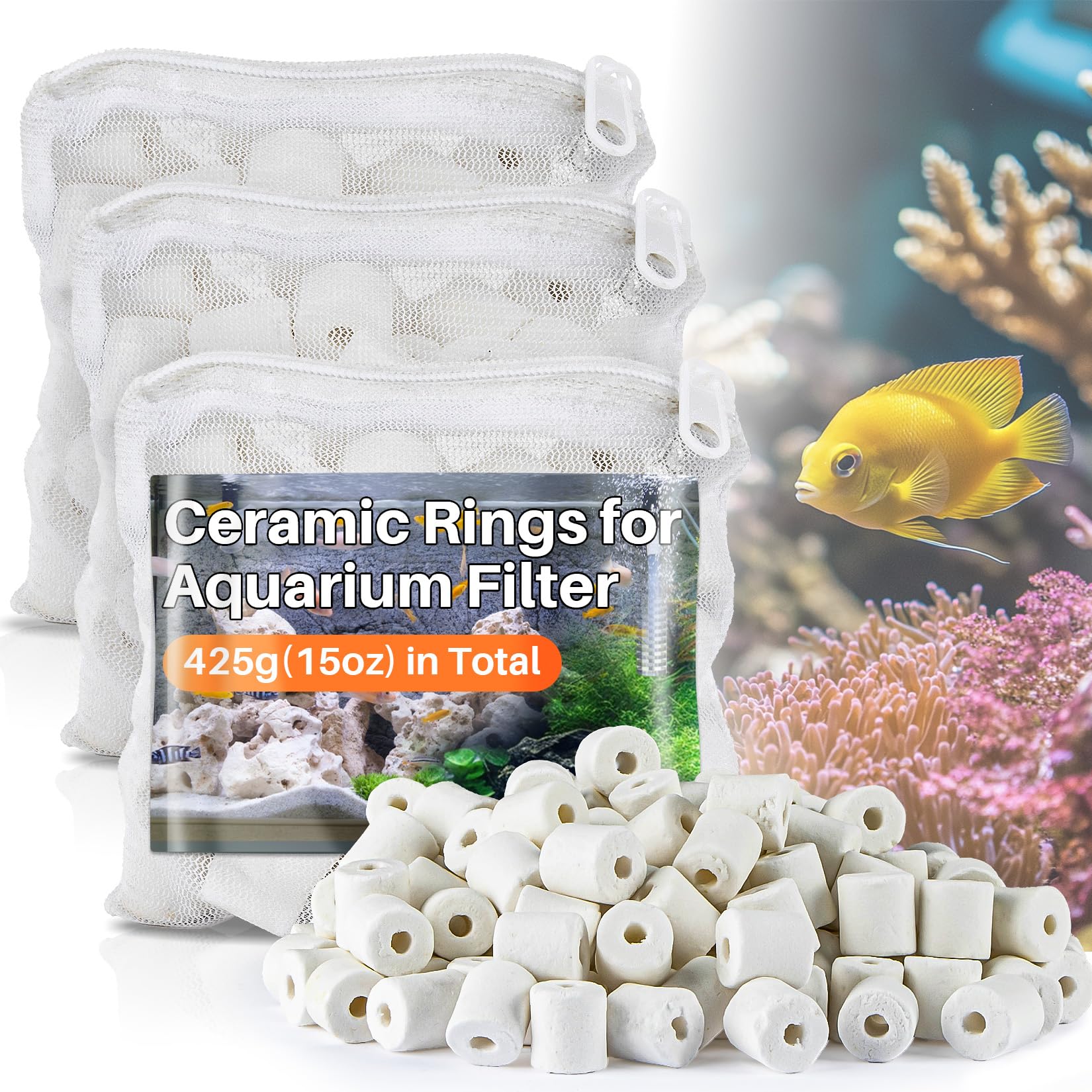
Rating: 4.7 ★ | Price: $ | Compatibility: HOB, canister, pond | Volume / Weight per Dollar: 425g, $
At a budget price, the Sukh ceramic rings provide effective biological filtration in a convenient three-bag format for small aquariums. They are best suited for tanks up to 20 gallons; those with larger canister filters will find better value in bulk media packs.
Pros
- Provides dependable biological filtration for small tanks without stretching the budget.
- Three pre-bagged rings simplify setup and reduce mess for new aquarists.
Cons
- Rings are smaller than typical ceramic media, so in larger filter compartments you may need extra bags to fill the space.
If you’re setting up a small tank under 20 gallons on a tight budget, these ceramic rings offer functional filtration without unnecessary spending.
Best for Sump Filter Users
Reefing Art Blocks

Rating: 4.7 ★ | Price: $$ | Compatibility: Sumps, canisters, AIO | Volume / Weight per Dollar: 24 blocks, $$
These large ceramic blocks offer high porosity and surface area ideal for sump and reef tank biological filtration, providing good value for the quantity. However, the blocks are fragile and may arrive cracked or chip during handling; they are best suited for sumps where they can be stacked securely, rather than tight filter compartments.
Pros
- High porosity provides vast surface area for beneficial bacteria.
- Good value for the volume of media included.
Cons
- Blocks can arrive cracked or chip during shipping and handling – inspect carefully upon delivery.
For sump and reef tank users who can stack blocks securely, this is a cost-effective way to add high-porosity bio media.
Best for Medium-Large Tanks
JIH Ceramic Rings 4lb
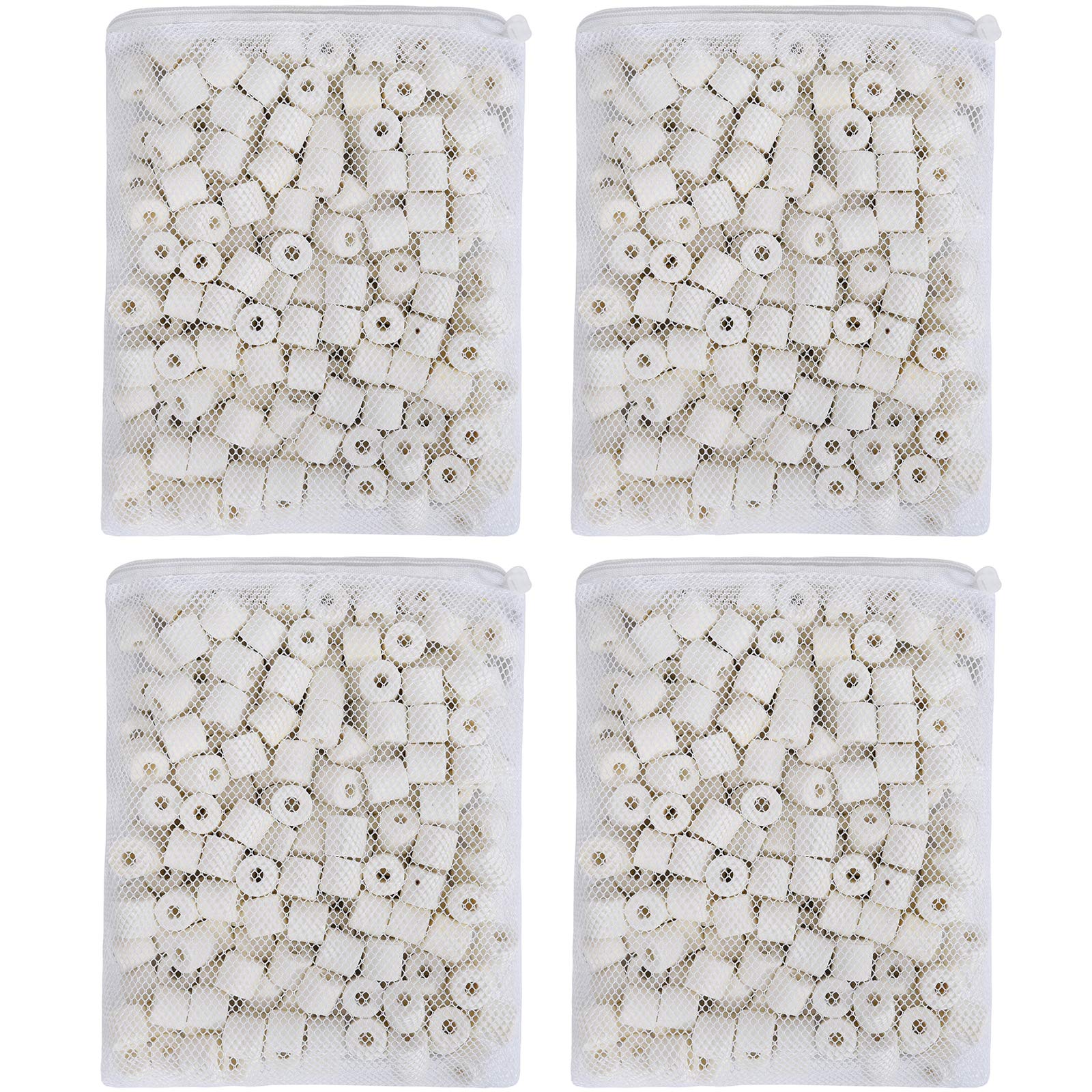
Rating: 4.7 ★ | Price: $$ | Compatibility: Canister, pond | Volume / Weight per Dollar: 4lbs, $$
This 4-pound pack of ceramic rings offers good value for medium to large tanks (40-75 gal) and works in both freshwater and saltwater systems. The ½-inch rings are best suited for canister or pond filters with ample space — they won’t fit ultra-compact filters requiring smaller media. While it doesn’t have the universal compatibility of the most reviewed ceramic media, it performs consistently for its intended use.
Pros
- Large quantity at a budget-friendly price.
- Effective biological filtration for both freshwater and saltwater.
Cons
- Rings are too large for ultra-compact filters — best suited for canister, sump, or pond setups.
This bulk ceramic ring pack is the right choice when you need cost-effective biological media for a canister or pond filter and don’t require compact-fit rings.
Best for Diy Filter Projects
Borlech Sponge Pad
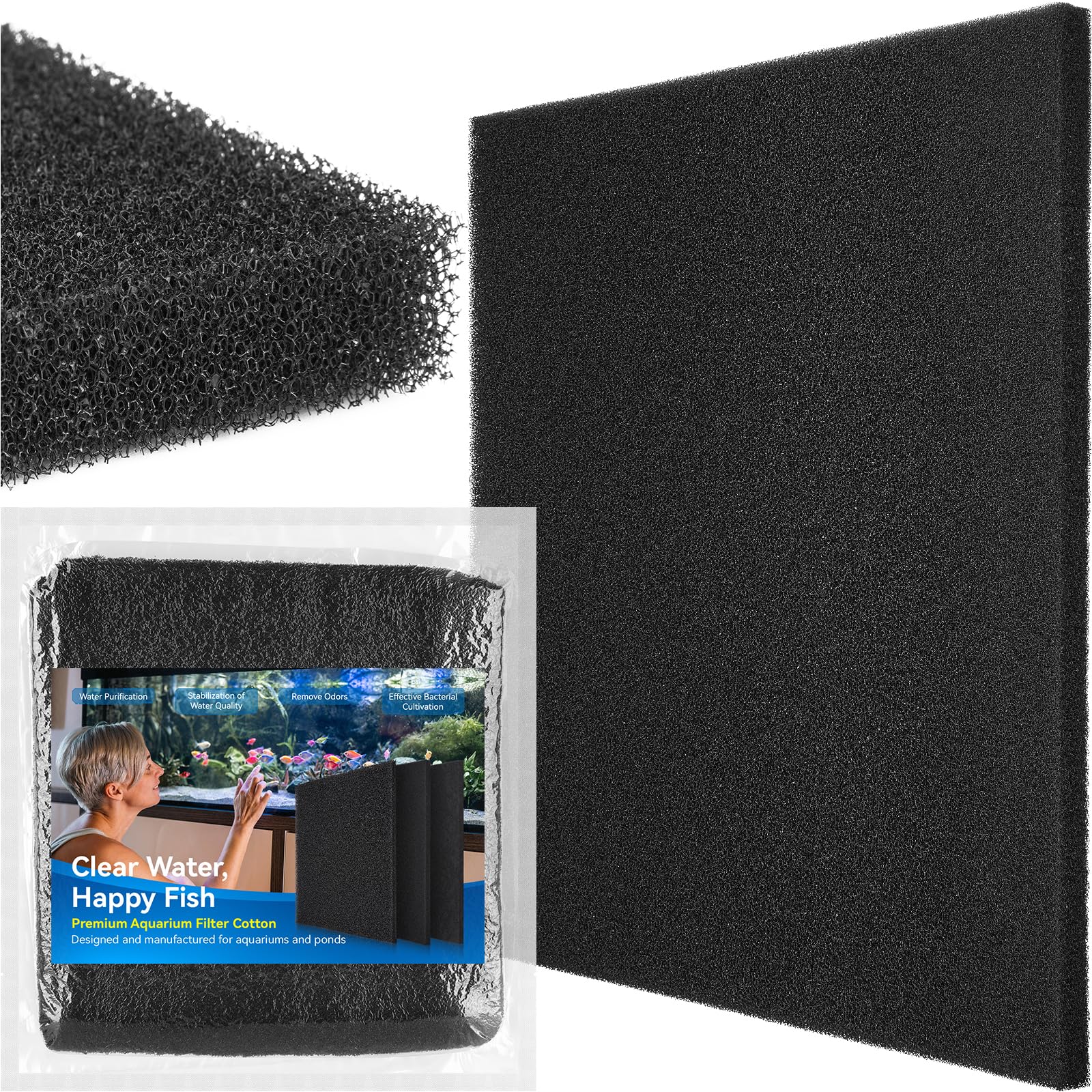
Rating: 4.6 ★ | Price: $ | Volume / Weight per Dollar: Large sponge sheet, $
This sponge pad can be cut to any shape, making it a flexible option for custom filter compartments. It provides mechanical filtration with some biological support. Thickness may vary after the pad expands from its vacuum packaging, so expect some inconsistency. It is not a replacement for dedicated bio media like ceramic rings, but serves well as a pre-filter with bio benefits.
Pros
- Cut-to-size design fits custom filter compartments for mechanical and biological filtration.
- Large sheet size provides good value for DIY filter projects.
Cons
- Not suited as a direct substitute for rigid ceramic bio media in standard trays.
Best for DIY aquarists building custom filter compartments who want a dual-purpose sponge rather than a dedicated bio media.
How to Choose
Choosing biological media comes down to filter compatibility and whether you need nitrate control – not just surface area claims.
Surface Area and Porosity
High surface area supports more bacteria, but all ceramic media provide enough for normal bioloads if used in sufficient volume. The real trade-off is that extreme porous materials like sintered glass are more brittle and may shed dust over time. For most aquarists, standard ceramic rings offer a good balance of durability and pore density.
Compatibility with Filter Type
Media size and shape determine whether it fits your filter. Canister filters have spacious media trays, while HOB filters often require smaller rings or bio balls. Oversized media can block water flow and reduce filtration efficiency. Measure your filter compartment before buying.
Sumps can accommodate large blocks, whereas internal filters have very specific replacement cartridges. Always check the product description for filter-specific compatibility.
Volume or Weight per Dollar
Bulk media like AQUANEAT 6lb rings offer the lowest cost per unit volume, but you may not need that much if your filter is small. Conversely, premium media like Eheim Substrat Pro costs more per liter because of its engineered pore structure. Buy just enough to fill your tray – leftover media can be stored dry indefinitely.
Ability to Host Both Aerobic and Anaerobic Bacteria
Standard ceramic media only host aerobic bacteria that convert ammonia and nitrite. For nitrate reduction, you need media with internal pores that create low-oxygen zones. Seachem Matrix and Biohome Ultimate are specifically designed for this. If nitrate buildup isn’t a problem in your tank, any porous media will work fine.
Ease of Cleaning and Long-Term Durability
Biological media should never be washed in tap water – chlorine kills bacteria. Rinse in tank water every few months to remove debris. Plastic bio balls last forever and never break down. Ceramic rings may develop minor dust or breakage over years, but that doesn’t affect filtration. Replace only if media crumbles into small pieces.
FAQ
Can I mix different brands of bio media in my canister filter?
Yes, mixing brands is completely fine as long as all media fits securely and water flows through them evenly. Different media provide varied pore sizes, which can actually support a more diverse bacterial colony. Just ensure none of the media blocks the filter’s intake or output.
How often should I clean biological filter media?
Clean bio media only when flow becomes noticeably restricted – typically every 3 to 6 months. Rinse it gently in a bucket of tank water (not tap water) to remove trapped debris without killing bacteria. Never scrub or replace media that isn’t crumbling.
Does Seachem Matrix actually reduce nitrates?
Yes, Seachem Matrix contains internal pores that create low-oxygen zones where denitrifying bacteria break down nitrate into nitrogen gas. This process is slow and works best when the media is packed loosely in a high-flow area. It won’t eliminate nitrates completely but can reduce them by 10–20 ppm in established tanks.
Why does my ceramic media produce dust when I first rinse it?
Ceramic media often has fine dust from manufacturing or shipping abrasion. Rinse thoroughly in tap water before adding to the filter (dust will wash away). If you skip rinsing, that dust can cloud your tank for a day or two. After the initial rinse, future maintenance produces no dust.