This post contains affiliate links. We may earn a small commission when you buy through our links — at no extra cost to you.
Maintaining stable alkalinity is critical for both freshwater planted tanks and reef aquariums, but the products designed for each are not interchangeable. Many hobbyists discover this only after buying the wrong supplement and seeing poor results or stressed livestock.
Freshwater buffers raise KH and pH without adding calcium, while reef supplements replenish carbonate hardness consumed by corals and often include calcium or trace elements. Using a reef product in a freshwater tank can spike calcium levels, and using a freshwater buffer in a reef tank can starve corals of essential ions.
This guide cuts through the confusion by matching each supplement to the tank it was built for — whether you need a simple KH boost for your planted aquarium or a complete two-part system for stony corals.
Top Picks
Best for Freshwater Planted Tanks
Seachem Alkaline Buffer

Rating: 4.6 ★ | Price: Budget | Form: Powder | Aquarium Type: Freshwater | System Type: Single
Seachem Alkaline Buffer consistently increases carbonate hardness in freshwater aquariums, giving planted tank owners control over pH stability. Its phosphate-free powder dissolves fast without clouding, and a single 300 g container treats up to 500 US gallons, keeping the cost per dose exceptionally low.
The powder works incrementally, lifting KH in small steps so pH shifts happen gradually rather than in a sudden spike that could stress fish. A single scoop goes a long way, so even with regular water changes a jar lasts months in a typical 40-gallon setup.
This buffer is built exclusively for freshwater planted tanks and hard-water systems—it’s not compatible with saltwater or reef aquariums. Aquarists with naturally soft or acidic tap water benefit most, gaining a phosphate-free way to prevent pH crashes that fuel algae. Reef keepers should choose a dedicated marine alkalinity product.
Pros
- Raises KH and stabilizes pH in soft water setups without phosphate buildup.
- Safe for sensitive fish and planted tanks with no reported harm to livestock.
- Dissolves clear without clouding, simplifying dosing for frequent water adjustments.
Cons
For freshwater keepers needing a cost-effective, phosphate-free alkalinity buffer that won’t upset delicate planted tanks, Seachem Alkaline Buffer is the clear benchmark.
Best for Beginner Reef Keepers
Seachem Reef Carbonate

Rating: 4.7 ★ | Price: Budget | Form: Liquid | Aquarium Type: Reef/Saltwater | System Type: Single
Seachem Reef Carbonate delivers the lowest cost per dose among reef alkalinity supplements, making it a budget-friendly entry point for saltwater keepers. Unlike the top pick for freshwater (Seachem Alkaline Buffer), this formula is tailored for reef tanks. The liquid format has a shorter shelf life than powders – a consideration for large tanks that need bulk dosing. This suits beginner reef enthusiasts with smaller setups who want a simple, effective alkalinity booster without committing to a two-part system.
Pros
- Raises alkalinity consistently – each dose works as intended.
- Lowest price among reef-specific alkalinity supplements.
- Easy to measure and dose for manual supplementation.
Cons
- For large reef tanks with high alkalinity demand, the liquid concentration may require more frequent dosing compared to concentrated powders.
A sensible starting point for reef beginners on a budget – dependable alkalinity control without overspending.
Best for Reef Two-Part
ESV B-Ionic 2-Part

Rating: 4.7 ★ | Price: Mid-Range | Form: Liquid (2 bottles) | Aquarium Type: Saltwater Reef | System Type: Two-Part
The ESV B-Ionic Calcium Buffer System is a gold-standard choice for keeping calcium and alkalinity stable in reef tanks, with a consistent formula that supports coralline algae and coral health. Dosing is straightforward whether done manually or via a doser. The main trade-off is the included measuring cups, which can arrive damaged in some shipments — using your own measuring tools avoids the issue. This system suits reef keepers who want a ready-to-use two-part solution with a trusted brand and don’t mind the mid-range price.
Pros
- Maintains pH and alkalinity effectively for coral and coralline growth.
- Consistent high-quality formula trusted by long-time hobbyists.
- Simple to measure and dose, compatible with manual or automated dosers.
Cons
- The plastic measuring cups can be fragile and may arrive broken in some shipments.
A reliable two-part system for reef keepers who want a balanced calcium and alkalinity solution with trace elements — just plan to use your own dosing cups.
Best for Experienced Reef Keepers
Red Sea Foundation B
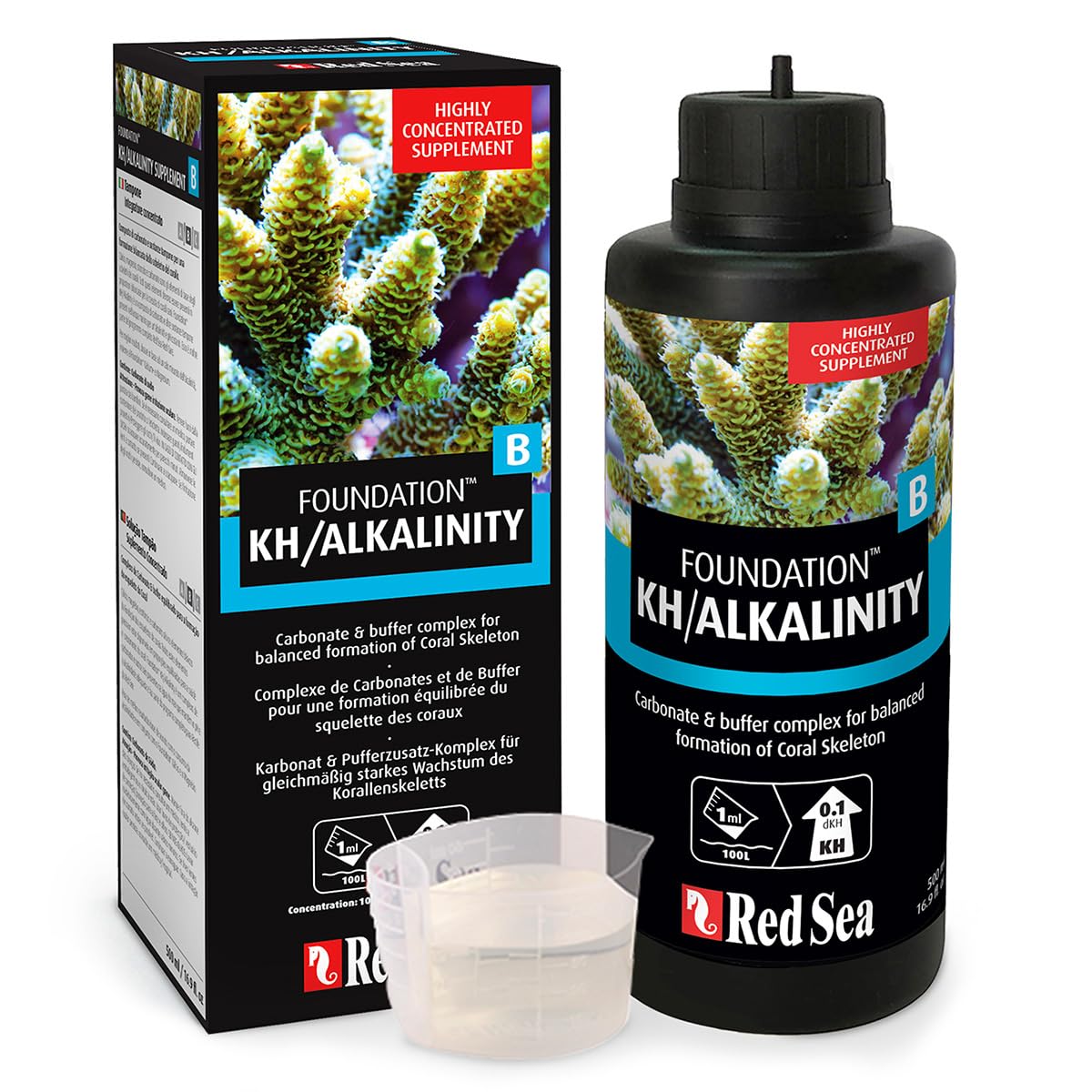
Rating: 4.7 ★ | Price: Premium | Form: Liquid | Aquarium Type: Reef/Coral | System Type: Single
This alkalinity supplement stands apart by using ultra-pure raw materials that require no mixing, directly supporting dosing consistency inside the Red Sea Reef Care Program. Against the budget-friendly reef option in this set, you pay more per liter but get a concentrated solution that aligns with a complete system approach. This is best suited for experienced reef keepers already running Red Sea equipment and willing to accept a higher per-dose cost; it’s not for freshwater tanks or hobbyists looking to minimize ongoing expenses.
Pros
- Maintains stable alkalinity in reef tanks with a pre-mixed, high-purity formula.
- No mixing or preparation needed – ready-to-dose liquid saves time and reduces measuring errors.
Cons
- Premium price per liter compared to Seachem alternatives increases total cost for larger tanks or high-demand systems.
Red Sea Foundation B is the right pick for dedicated reef keepers who value purity and system integration over upfront cost, and are already committed to the Red Sea dosing ecosystem.
How to Choose
The most important factor is matching the supplement to your aquarium’s water type — freshwater and reef have different chemical needs.
Form: Powder vs Liquid
Powder offers better value per dose and longer shelf life, but requires measuring and dissolving before use. Liquid is easier to dose precisely but may be less concentrated and has a shorter shelf life after opening.
For aquarists who dose infrequently, powder is more cost-effective. For those dosing daily or using automatic dosers, liquid’s convenience saves time and reduces measurement error.
Aquarium Type: Freshwater vs Reef
Freshwater buffers raise KH and pH without adding calcium, while reef supplements provide carbonate hardness for coral calcification and often include calcium or magnesium. Using a reef supplement in a freshwater tank can oversupply calcium to harmful levels; using a freshwater buffer in a reef tank can deplete the ions corals need to grow.
Always verify the label states the intended water type. A product labeled for ‘marine’ or ‘reef’ should never be used in a freshwater aquarium.
Single vs Two-Part System
Single alkalinity supplements are sufficient for low-demand tanks or occasional KH boosts. Two-part systems (alkalinity + calcium) are necessary for reef tanks with stony corals that consume both ions at a fixed ratio.
Buying a two-part system when you only need alkalinity adds unnecessary cost and complexity. Conversely, using a single alkalinity supplement in a high-demand reef tank can lead to calcium depletion and poor coral health.
Concentration and Dosage
More concentrated liquids require smaller doses and last longer, but they demand precise measurement to avoid swings. Powders typically list a dosage per volume (e.g., 1 scoop per 20 gallons).
Under-dosing leads to instability; over-dosing can cause rapid pH shifts. Always check the recommended dosage against your tank volume and test water parameters regularly to fine-tune the amount.
FAQ
Can I use a reef alkalinity supplement in a freshwater aquarium?
No. Reef supplements contain calcium and other ions unnecessary for freshwater tanks. Using them can raise calcium concentrations to harmful levels for many freshwater fish and plants. Stick to freshwater-specific buffers like Seachem Alkaline Buffer for safe results.
How often should I dose alkalinity buffer in a planted tank?
It depends on your water’s natural KH and plant uptake. Start by testing KH weekly and dose when it falls below 3-4 dKH. Many planted tank keepers dose once or twice a week after water changes. Consistent KH prevents pH crashes and keeps plants healthy.
What’s the difference between alkalinity buffer and pH buffer?
Alkalinity (KH) buffers directly raise carbonate hardness, which stabilizes pH. pH buffers adjust pH without necessarily affecting KH. For long-term stability, adjusting KH is more reliable than chasing a specific pH number. Most aquarium alkalinity supplements also raise pH as a secondary effect.